Newcomers to Canada: Is a Credit Card Really Required?

Loading article…
No law makes it mandatory, and yet a credit card remains the fastest way to build a credit file in Canada. Landlords, phone providers and car rental counters all look at that file before they say yes.
Arriving with a spotless banking record from another country does not change the math: in Canada, your file starts empty. That is why so many newcomers ask whether a credit card is required in Canada. The good news is that a first card is usually available within weeks, and often without a security deposit. Our roundup of the best credit cards for beginners gathers the most accessible options.
In Canada, a credit card mainly proves that you pay back what you borrow. Every on-time payment feeds your credit file, and that file then follows you through daily paperwork. This is where the Canadian system parts ways with most of Europe and Asia.
The list runs well beyond banks. According to the Financial Consumer Agency of Canada, several types of organizations may ask to see it.
The resulting score runs from 300 to 900. It climbs with payments made on time and drops with late ones. For the full mechanics, our guide explains how credit cards work in Canada.
In much of Europe, a debit card covers daily life and a bank statement is enough to reassure a landlord. Creditworthiness rests mainly on income and savings, and several countries keep no positive registry of good payment behaviour at all.
Canada works the other way around: here, having no credit file counts almost as much as having a poor one. A blank profile reassures nobody, because it proves nothing. Hence the local habit of opening a card early, even for small purchases.
Some newcomers carry their credit history across borders through Nova Credit, a bridge used by Scotiabank among others. The service covers a specific list of countries, and it is worth checking yours before assuming you start from scratch.
The StartRight program page lists the eligible countries. It covers Australia, India, Kenya, Mexico, Nigeria, the Philippines, South Africa, South Korea and the United States. In Europe, it retains Austria, Spain, Switzerland, Ukraine and the United Kingdom.
A first card comes through three distinct routes, and the most expensive one is never the first to try. Of the 193 active nationwide cards listed in our comparison tool, 114 require no minimum income and 61 combine no income requirement with no annual fee. The field is wider than it looks.
| Route | Deposit required | Typical timing | Best suited to |
|---|---|---|---|
| Bank newcomer program | None | When you open the account | Permanent residents, students, temporary workers |
| Card with no minimum income | None | A few days | Any profile with a Canadian address |
| Secured card | Yes, refundable | Once funds are received | Profiles declined elsewhere |
The big banks will issue a regular card to someone with no Canadian file, provided you fall inside their eligibility window. At RBC, the offer covers permanent residents and international students who arrived within the last 12 months, plus temporary workers who arrived within the last 48 months.
Scotiabank targets three profiles with StartRight. Permanent residents settled for five years or less, international students and foreign workers all qualify. BMO, CIBC and TD run comparable arrangements, handled in branch, which helps when your paperwork is unusual.
Among online banks, Simplii Financial opens its newcomer program to anyone who arrived within the last five years. You apply online once you are in the country, and the card that comes with it carries no annual fee.
Two criteria often get blurred: no minimum income, and no annual fee. Several cards tick both boxes.
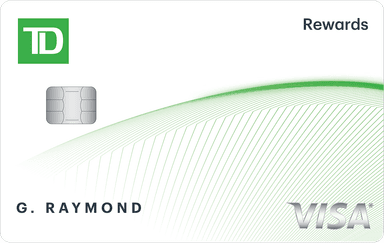
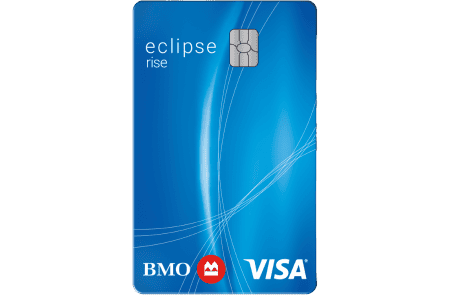
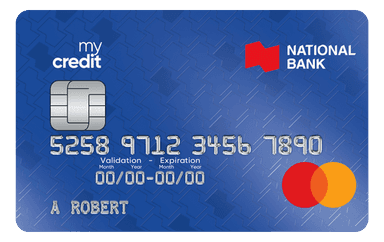
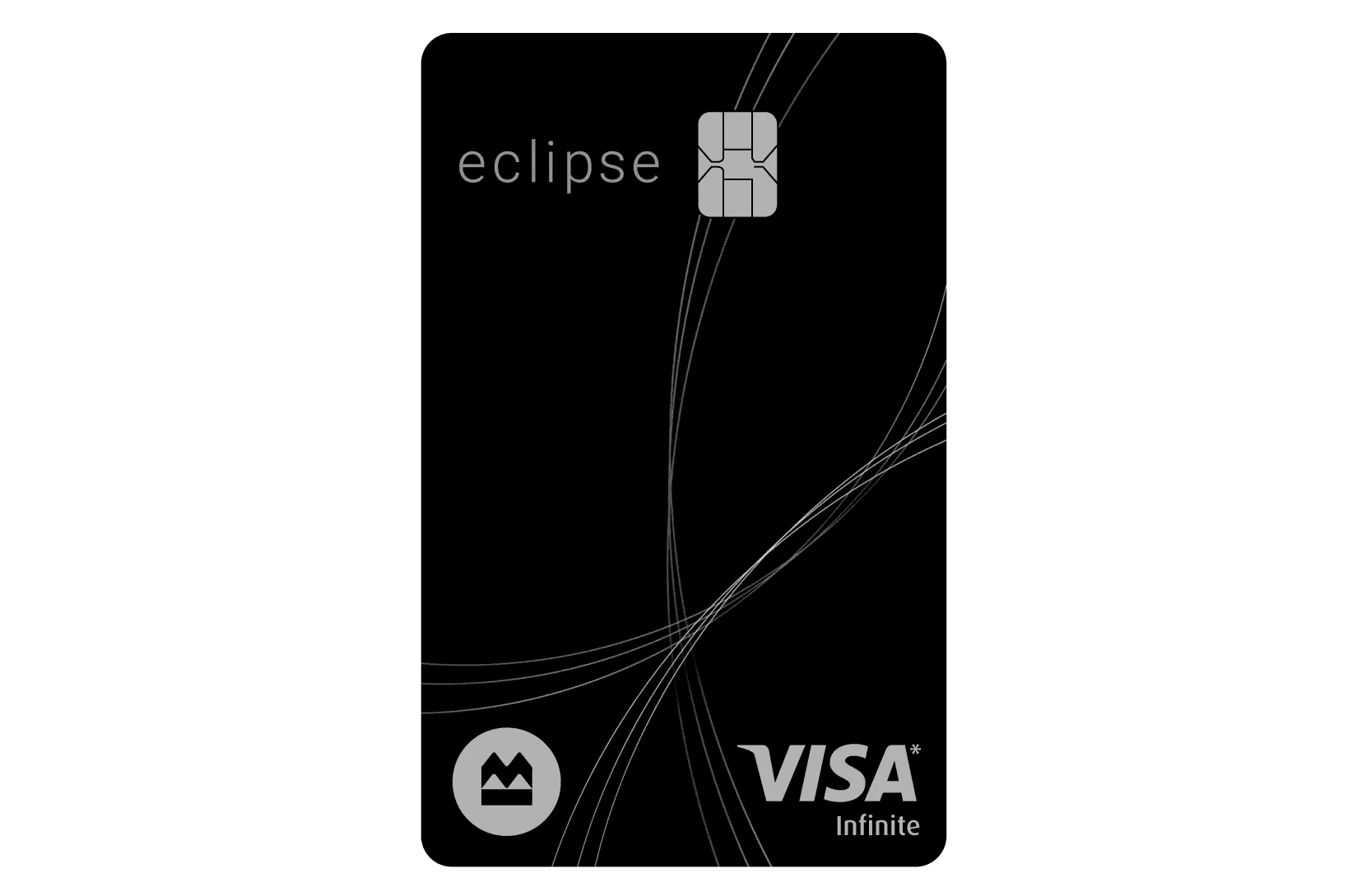
The National Bank mycredit™ Mastercard® asks for $0 in income and costs nothing per year. The BMO eclipse rise Visa* Card and the TD Rewards Visa* Card follow the same logic, with richer rates on groceries and restaurants.
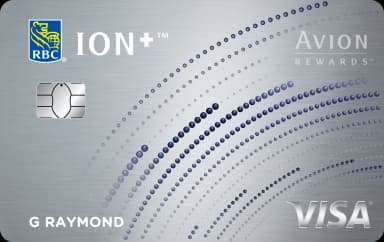
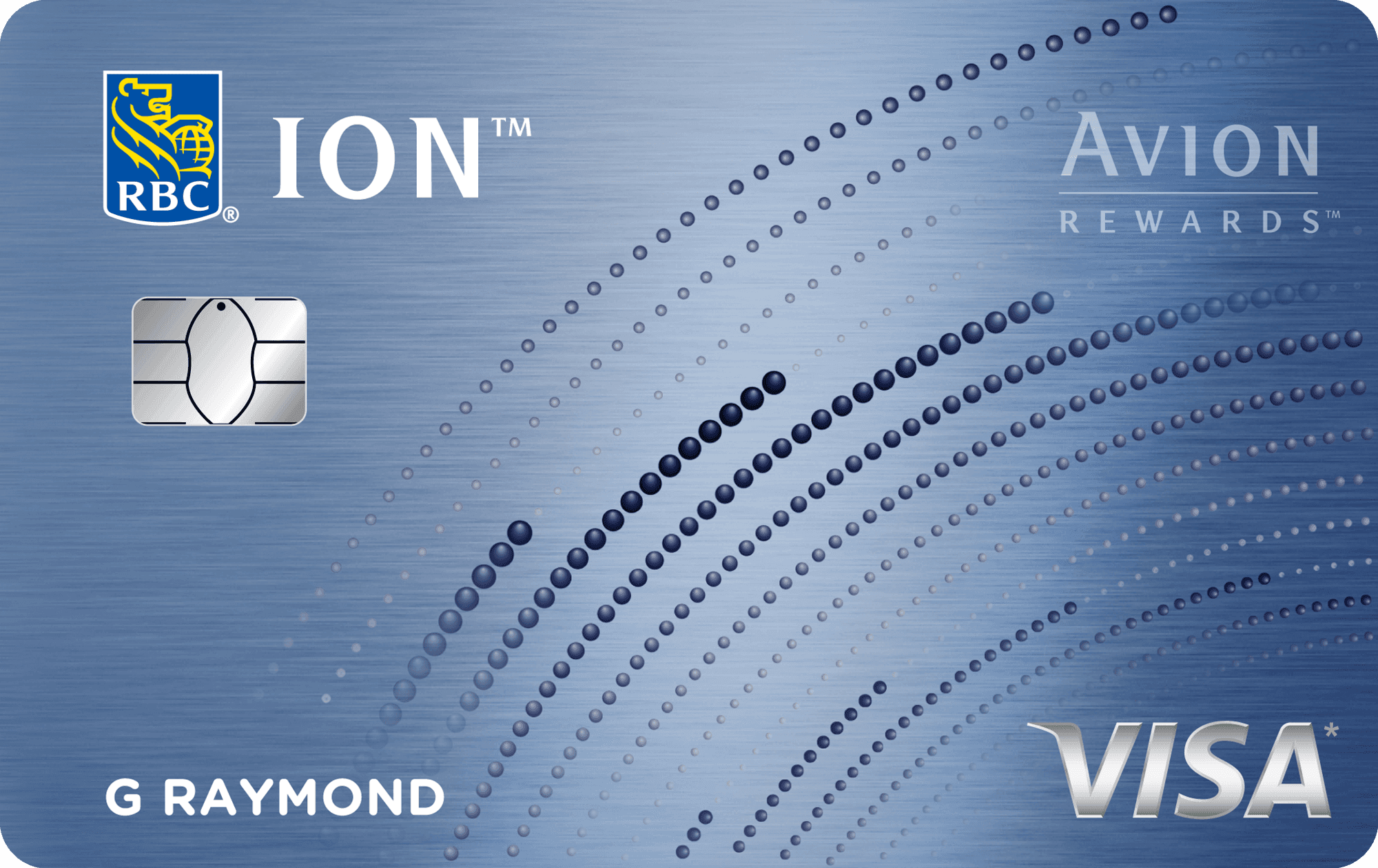
The RBC ION+ Visa Card costs $48 a year, with no income requirement either. It gives more back in return: $468 in first-year value, against $300 for the no-fee RBC ION Visa Card.
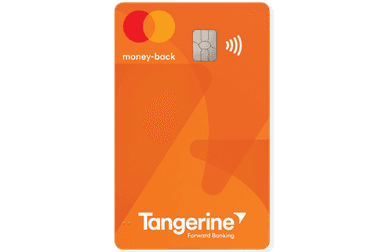
The Tangerine Money-Back Credit Card asks for $12,000 in annual income. A part-time job clears that threshold.
At BMO, the BMO Blue Rewards Mastercard®* opens another no-fee door. All of these cards pay cash back or points from the first purchase, which makes the exercise less abstract.
| Credit card | Annual fee | Welcome offer | |
|---|---|---|---|
| $0 | |||
| $48 | |||
| $0 | |||
| $0 | |||
| $0 |
A secured card accepts almost every profile, because you post the funds that back your own limit. That deposit comes back when you close the account with the balance paid. It is the fallback when the first two routes fail.
The Capital One Guaranteed Secured Mastercard® charges no annual fee. Its annual interest rate sits at 29.9%, except for Quebec residents, who get 21.9%. The Secured Neo Mastercard also opens regardless of credit history or income, through a monthly membership of $9.99, or $119.88 a year.
The Capital One Guaranteed Secured Mastercard is the secured version of Capital One’s guaranteed-approval card: it is designed for people who want to build or rebuild their credit score, with approval guaranteed as long as you meet the basic eligibility criteria. Unlike the standard version, security funds are required to open this account.
By using your card responsibly and making your payments on time, you show the credit bureaus that you can manage credit, which helps gradually improve your credit history. You can check whether you are pre-approved using the QuickCheck tool, with no impact on your credit score.
The card has no annual fee and gives you access to Mastercard benefits along with everyday protections such as Purchase Assurance and Extended Warranty. You can add an authorized user for free. The annual interest rate is 29.9% (21.9% for Quebec residents) on purchases, balance transfers and cash advances.
A solid score comes from simple habits, repeated every month. The rule fits in one sentence: use the card regularly and pay the full balance before the due date.
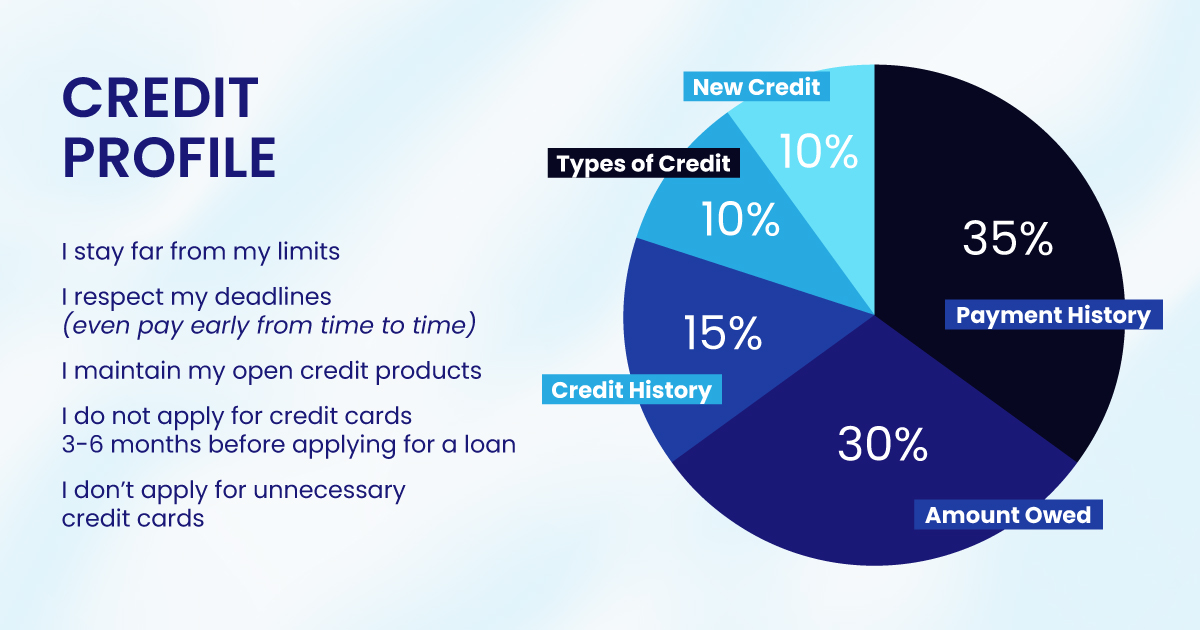
After six to twelve months of that routine, a score appears and doors start opening. Our guide then details how to use a credit card to build credit in Canada, step by step.
A few habits brought from abroad get expensive in Canada, and spotting them early pays off. Interest comes first: on a $1,000 balance carried all year at 20.99%, the interest bill lands near $210. A credit card pays you back when the balance hits zero every month.
Your chequing account deserves the same attention as the card, since the two are often opened together. Our comparison helps you pick which bank to choose when opening an account in Canada.
Legally, the answer is one word: no. Practically, a credit card keeps a lease, a phone plan or a rental car from slipping away for lack of a file. In other words, it buys you time.
The sensible move comes in three steps. Apply for a no-annual-fee card within your first weeks, use it for groceries and recurring bills, then aim higher once your score exists. To compare the whole market, see our page on the best credit cards in Canada.
With the RBC ION Visa card, earn up to 14,000 Avion points^, a value of up to $100 in gift cards†.
This RBC credit card with no annual fee lets you earn 1.5X Avion points per dollar in the following categories1:
You also earn 1 Avion point per dollar on all other eligible purchases1.
Plus, save 3¢ per litre on fuel at Petro-Canada and earn 20% more Petro-Points and Avion points when you pay with an eligible linked RBC card4.
on RBC's website
To follow the best card offers month after month, sign up for our newsletter.
Here are questions frequently asked in the milesopedia community about getting a first credit card in Canada.
No law requires you to hold one. In practice, several everyday steps get complicated without a credit file: signing a lease, taking a phone plan with a device, or renting a car. A card remains the simplest way to create that file, because every on-time payment is recorded in it.
Yes, and in most cases without going through a secured card. Newcomer programs at the major banks issue a regular card to people with no Canadian file, within an eligibility window that varies by immigration status. Several mainstream cards also carry no minimum income requirement at all.
It depends on your country of origin. The Nova Credit bridge used by Scotiabank covers the United Kingdom, India, the Philippines, Nigeria, Kenya, South Africa, Australia, Mexico and several others. If your country is on that list and you have been here under two years, your file can support a higher limit. Otherwise, your Canadian score starts from zero.
Count on six to twelve months of regular use with full payments made on time. The Canadian score runs from 300 to 900 and keeps improving with account age. Keeping that first card open, even lightly used, speeds up everything that follows.
It is a card whose limit rests on a deposit you place with the issuer yourself. The funds come back when you close the account with the balance paid. It works as a backstop when other applications fail, but it ties up cash exactly when you are settling in, which is why it ranks third.
Several Canadian agencies refuse debit cards at the rental counter, or impose an extra check and a larger deposit. A credit card in your own name settles the question. It is one of the situations where the absence of a card shows up fastest after arrival.
Not always. Of the 193 active nationwide cards listed in our comparison tool, 114 show no minimum income requirement, and 61 of those also come with no annual fee. The issuer still assesses your ability to repay, but an income threshold is not a universal barrier.
Aim for a card with no annual fee and no minimum income. Two examples: the National Bank mycredit™ Mastercard® and the RBC ION Visa Card. If your bank runs a newcomer program, ask for the card at the same time as the account. The file is then handled in one go, and eligibility is more flexible.
on BMO's website
Our reviews and rankings are based on an objective assessment. Advertisers do not influence our content. We may receive compensation through some links; our analysis and opinions remain independent.