

Credit Card Eligibility Criteria: Aim for the Right Tier

A credit card refusal rarely comes from your credit score alone. It’s usually the result of a gap between your file and the eligibility criteria of the card you’re applying for. Two cards issued by the same bank can post income thresholds that differ twofold, because they don’t carry the same minimum credit limit or the same benefits.
At Milesopedia, we analyze more than 350 Canadian credit cards and their published eligibility conditions. This guide explains how these thresholds are set, which factors weigh in during file review, and above all, how to choose upfront a tier your profile can actually get.
It doesn’t cover what to do after a refusal — that’s covered in our guide on applying for a new card, from « declined » to « approved ».
Why thresholds change from one card to another
The income threshold shown on a card page isn’t an isolated decision made by the bank. It largely stems from the rules of the payment network the card’s tier belongs to, then from the issuer’s own risk policy. Visa and Mastercard set a framework for their premium lineups; each bank then applies it to its own products.
The concrete result: the same institution can offer a card with no published threshold at all and, three lines down in its catalog, a card that requires $150,000 in personal income. Here are three tiers recorded on issuers’ websites on August 5, 2026.
| Card tier | Minimum personal income | Minimum household income | Verified example |
|---|---|---|---|
| Visa Infinite | $60,000 | $100,000 | RBC Avion Visa Infinite Card |
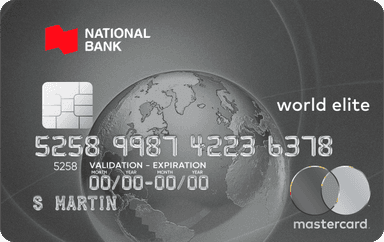
| World Elite Mastercard | $80,000 | $150,000 | National Bank World Elite Mastercard |
| Visa Infinite Privilege | $150,000 | $200,000 | CIBC Visa Infinite Privilege* Aeroplan Card |
These three cards come from three different banks, yet the logic repeats itself. In other words, the name of the institution matters less than the tier you’re targeting.
The Visa Infinite Privilege tier deserves a nuance: $150,000 in personal income and $200,000 in household income form the network’s common framework, which each issuer then completes in its own way. Scotiabank, for example, also accepts at least $400,000 in assets under management on top of these two thresholds. So check the targeted issuer’s grid before concluding that the tier is out of reach.
For a detailed breakdown of one issuer’s tiers, our article on Scotiabank’s minimum requirements for applying for a credit card details a full bank’s grid, from classic cards to Visa Infinite Privilege.
The credit limit sets the risk
A premium tier requires a higher minimum credit limit. The higher the granted limit climbs, the more the bank is exposed if the balance is never repaid. The income threshold exists precisely to contain that exposure.
As an illustration: a $2,000 limit and a $15,000 limit don’t carry the same amount for an identical default rate. The income threshold isn’t a prestige barrier, then — it’s a provisioning calculation.
Benefits have a real cost
Travel insurance, airport lounge access, concierge service, bonus earn rates: the bank pays for each of these benefits, whether you use them or not. It funds that cost through annual fees, through interchange fees charged to merchants, and through the volume of spending carried on the card.
A premium card only becomes profitable for the issuer if the holder spends a lot. That expected spending volume translates directly into an entry income threshold. A no-annual-fee card with no insurance, on the other hand, costs little to operate: the bank can afford to open the door more widely.
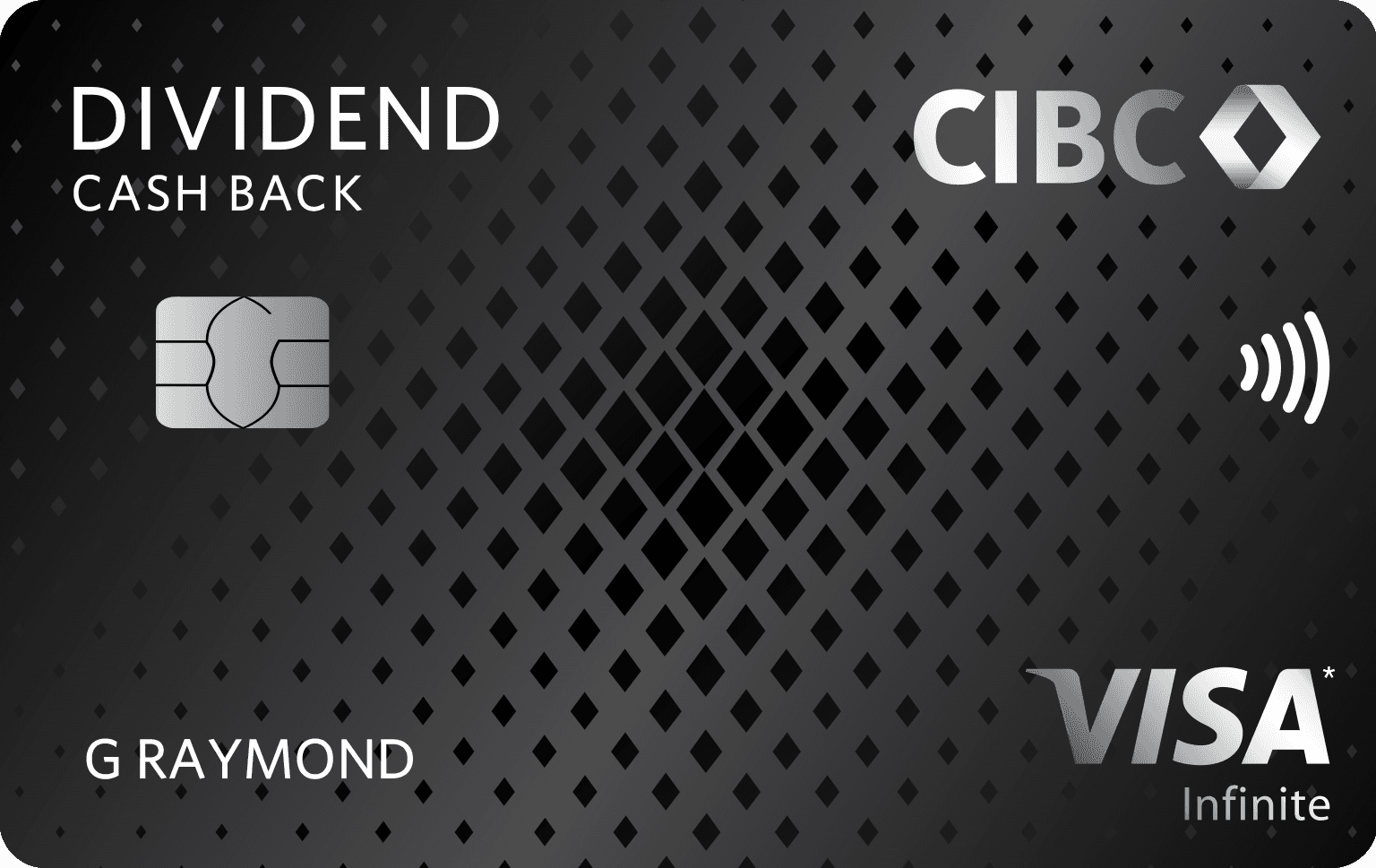

- Annual feeNo annual fee the first year
- $0 $120
- Our valuationMilesopedia first-year estimate First-year valueWelcome bonus$250Annual fee rebated$120Total$370Rewards on your spending are not included. The calculator that adds them from your own profile is on the card's page.
- $370
- Welcome offerAfter $2,000 in 4 months
- Up to $250 cash back
on CIBC's website
The criteria that matter beyond income
Income opens the door — it guarantees nothing. Two people declaring the exact same salary can get opposite decisions on the same card, because the issuer looks at several other angles of the file.

Credit already granted counts twice
Issuers add up the credit already granted across all lenders and weigh it against declared income. Someone earning $90,000 who already carries $60,000 in limits presents a very different profile than someone carrying $12,000, at the same income.
Two possible moves before an important application: voluntarily lower the limit on a rarely used card, or close an account that’s become useless. Watch for the side effect, though — closing an old account shortens the average age of your file.
The age of your credit file
A file open for 15 years, marked by regular payments, is more reassuring than an 18-month-old file showing the same score. Premium tiers are particularly unforgiving of young files, even when income far exceeds the published threshold.
This explains a common frustration among newcomers to Canada and well-paid young professionals: the income is there, the Canadian history isn’t yet.
To see where your own file stands, check out our guide on what makes a good credit score in Canada.
The pace of your recent applications
Every formal application leaves a hard inquiry on your file. Equifax Canada keeps it for 3 years, TransUnion for up to 6 years: the mark therefore lives longer at one bureau than at the other. Five applications in three months send a clear signal to the analyst: urgent need for cash, or welcome-bonus chasing.
Our recommendation: space out applications by at least 90 days, and stretch that delay even further before targeting a premium tier. A declined application uses up the same « patience credit » as an accepted one.
Real-world case: balance transfer, maxed-out cards, and income that’s just restarting
This scenario comes up often: a score around 660, one or two cards already close to their limit, and income that has just resumed after a job transition. At 660, you’re just entering the « good » range of Equifax Canada’s scale, with no room to spare. The temptation is to submit two balance transfer card applications on the same day to maximize the odds of getting at least one approval.
Here, the number of applications isn’t the heaviest factor. Credit utilization weighs more: Equifax Canada recommends staying at 30% or less of your granted limit, and maxed-out cards push that ratio close to 100%. Two hard inquiries added to an already strained file mostly raise the odds of a double refusal rather than the odds of approval.
The 90-day rule between two applications, mentioned above, applies here too. That delay does more than let the inquiry age: it gives you time to bring down your utilization rate, the fastest variable to improve, and to declare income you can document after two or three paycheques.
- Pay down what you can on the card closest to its limit first: a $1,500 payment on a card maxed out at $5,000 brings the ratio from 100% to 70% in a single billing cycle.
- Wait for two or three paycheques before submitting the application, so you can declare income you’re able to document.
- Target a single balance transfer card, the one whose promotional period and fees best fit your balance, rather than applying for two at random.
Our credit card comparator lets you filter for low-rate and balance transfer offers side by side, such as the Scotiabank Value® Visa* Card, built specifically to reduce interest costs rather than earn points. Our guide on how to quickly eliminate your credit card debt rounds out the picture if the goal is getting out of debt rather than just moving it around.
Your relationship with the institution
A customer who direct-deposits their paycheque, holds a mortgage, or keeps investments with the issuer gives it a direct view of their financial flows. That information often carries more weight than an « annual income » field filled in on a form.
The reverse effect exists too. Several issuers apply bonus-saturation rules: a welcome bonus already collected on the same product, an account closed recently, or a high number of cards already open with them can block a new application, regardless of income.
Address and matching data
Your form is automatically cross-checked against your file at Equifax and TransUnion. An outdated address, a differently spelled name, an employer that no longer matches: each of these discrepancies slows down verification and can sink an otherwise solid application.
Before any application, take ten minutes to review both of your files. Our guides explain how to read your Equifax credit report and how to read your TransUnion credit report.
The calculation few people make
Before clicking « Apply, » weigh the cost of a refusal against the expected gain. A refusal doesn’t just cost you a disappointment: it leaves a hard inquiry on your file for months and uses up an application you could have made elsewhere during that time.
Take a concrete profile: $95,000 in personal income, $110,000 in household income. The Visa Infinite tier ($60,000 / $100,000) is cleared twice over. The Visa Infinite Privilege tier ($150,000 / $200,000) is reached neither personally nor at the household level.
Applying anyway for the higher tier means betting a mark of 3 to 6 years on your file, depending on the bureau, on a candidacy that doesn’t meet the published criterion. So the right question isn’t « which card offers the biggest bonus, » but « what’s the best card my profile can get approved for on the first try. »
Five steps before you apply
Here’s the method we use to place a profile before an application. It takes about thirty minutes and leaves no trace on your credit file.
- Read the eligibility criteria published on the card’s official page: personal income, household income, sometimes assets under management. If nothing is shown, the issuer evaluates case by case.
- Filter our credit card comparator by personal income and household income. This step immediately rules out out-of-reach cards, even before looking at welcome bonuses.
- Check both of your credit files: up-to-date address, exact employer, current limits, closed accounts properly recorded. Our guide explains how credit scores are calculated in Canada.
- Use pre-qualification when it’s available. At American Express, Apply with Confidence relies on a soft check, with no effect on your score. It covers personal cards only, not business cards or phone applications.
- Rank your applications by order of importance and start with the one that matters most. Then space out the rest by at least 90 days.
Click on a card’s name to see its detailed eligibility conditions.
| Credit card | Annual fee | Welcome offer | |
|---|---|---|---|
| $0 | |||
| $191.88 | |||
| $0 | |||
| $0 |

Three profiles, three tiers to target
The same advice doesn’t serve everyone. Here’s how we place three common profiles against the tiers of the Canadian market.
| Profile | File signals | Realistic tier |
|---|---|---|
| First credit, file under 2 years old | Little history, low limits, no old inquiries | No-annual-fee card, with no published income threshold |
| Income of $60,000 to $100,000, file 5 years or older | Regular payments, moderate debt load, 2 to 4 active accounts | Entry-level Visa Infinite tier or equivalent premium card |
| Household income above $150,000, long-standing file | High limits well managed, no recent applications | World Elite Mastercard tier, then Visa Infinite Privilege |
The first profile is best served by building 12 to 24 months of clean history before aiming higher. A no-annual-fee card fills that role very well: it earns cash back while the file ages, with no income threshold required.

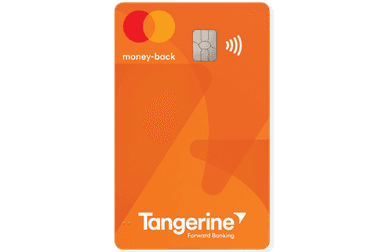
- Annual fee
- $0
- Our valuationMilesopedia first-year estimate First-year valueWelcome bonus$100Total$100Rewards on your spending are not included. The calculator that adds them from your own profile is on the card's page.
- $100
- Welcome offerAfter $1,000 in 2 months
- Up to $100 cash back
- Ends Nov 30, 2026
on Tangerine's website
The second profile is the one that leaves the most value on the table. Many people in this bracket stick with a basic card out of fear of refusal, even though their file comfortably clears the $60,000 threshold for the Visa Infinite tier.
The third profile, finally, is better off moving up in stages rather than applying directly for the highest tier. A World Elite Mastercard held responsibly for a year strengthens the file ahead of an application at the Privilege tier.
To go further, check out our ranking of the best credit cards in Canada.
Credit Card Eligibility Criteria – FAQ
Why don’t two cards from the same bank have the same criteria?
Because each card belongs to a different tier, with its own minimum credit limit and its own set of benefits. A Visa Infinite requires $60,000 in personal income, a Visa Infinite Privilege requires $150,000: the bank provisions for higher risk and funds costlier benefits in the second case.
Is the published income threshold an absolute rule?
The threshold is an entry criterion, not a guarantee of approval. Clearing it isn’t enough if your overall debt load is high or your file is too young. Conversely, some cards show no threshold at all and are evaluated case by case, based on financial situation and credit score.
Does a declined application hurt my credit score?
The refusal itself doesn’t appear on your file, but the hard inquiry tied to the application stays visible for 3 years at Equifax Canada and up to 6 years at TransUnion. A single inquiry has a minor, temporary effect; it’s the accumulation of closely spaced applications that becomes penalizing in lenders’ eyes.
How long should I wait between two applications?
We recommend at least 90 days between two applications, and longer before targeting a premium tier. This delay gives new accounts time to register on your file and avoids the velocity signal that alerts credit analysts.
Does pre-qualification guarantee approval?
No. A tool like Apply with Confidence at American Express relies on a soft check and indicates whether your profile would be accepted, without affecting your score. The formal application that follows still triggers a hard inquiry and a full file review.
Should I declare household income or personal income?
Issuers generally publish both thresholds, and household income serves as a fallback option when personal income isn’t enough. Only declare exact, justifiable amounts: inaccurate information on a credit application can lead to account cancellation.
Should I close unused cards before applying?
It depends on your goal. Closing an account reduces the total credit granted, which helps when overall debt load is blocking the application, but it also shortens your file’s average age. Lowering the limit on a card you keep is often a more balanced solution.
Is it risky to apply for two balance transfer cards on the same day?
Yes, especially with an average score and cards already close to their limit. Each application generates a separate hard inquiry, and the inquiry-bundling exception that exists for mortgages and auto loans doesn’t apply to credit cards. Bring down your utilization rate first, then target a single balance transfer card that fits your situation.
Before you even aim at an eligibility tier, it is worth knowing whether loyalty programs are right for you, and at what level of involvement.
Our featured card
- Annual feeNo annual fee the first year
- $0 $120
- Our valuationMilesopedia first-year estimate First-year valueWelcome bonus$469Annual fee rebated$120Total$589Rewards on your spending are not included. The calculator that adds them from your own profile is on the card's page.
- $589
- Welcome offerAfter $12,000 in 12 months
- Up to 70,000 points
on BMO's website
Our editorial integrity
Our reviews and rankings are based on an objective assessment. Advertisers do not influence our content. We may receive compensation through some links; our analysis and opinions remain independent.