Many students focus on their studies and put off managing their finances. However, building your student credit score now is a crucial step for your financial future. Your credit score directly impacts your ability to get a student loan, a credit card, a mortgage, or even to rent housing.
By starting early, you show financial institutions that you’re a responsible borrower. And, contrary to popular belief, you don’t need a high income to build a good credit score. Small, consistent actions are enough. This article explains how to create and maintain a strong credit score right from your student years.
Student Credit Score and Credit Report
The credit score is a numerical rating, usually between 300 and 900, that summarizes a person’s reliability as a borrower. The higher the number, the more responsible you are perceived to be by lenders.
This score is calculated from your student credit report, a detailed report produced by agencies such as Equifax and TransUnion. It combines your financial history, including:
Credit cards, student loans and lines of credit;
Payments (on time or late);
Use of available credit;
Recent credit applications;
Service invoices (telephone, internet, etc.).
Many people confuse the two, but it’s important to understand that the quality of your credit report directly affects your credit score.
For students, building their credit history is an essential step towards financial credibility. A good credit score facilitates access to credit cards, student loans, mortgages and even apartment rentals.
Factors That Influence Your Credit Score
Your credit score is calculated based on several specific elements of your student or personal credit file:
Payment history: pay your bills and credit cards on time;
Credit utilization rate: using too much of your limit (over 30%) can hurt your score;
Credit history: the longer you hold your credit accounts, the stronger your file;
Credit applications: each application requires a credit check, which can temporarily lower your score;
Types of credit: having a healthy mix (credit card, student loan, line of credit) shows your ability to manage different forms of credit.
Understanding these factors will enable you to better manage your credit file as a student and gradually improve your score.
Best Practices to Improve Your Student Credit Score
Building a student credit report is an essential step toward financial independence. Unlike your credit score, your credit report includes all your financial habits and repayment history. Here are the best practices to build a strong credit report right from your student years.
Regularly Check Your Credit Report as a Student
Your file may contain errors or inaccurate information. You have the right to request a free copy of your credit report once a year from Equifax and TransUnion. Make a habit of consulting it to correct any errors and monitor your progress.
What’s more, some financial institutions, such as Desjardins, Tangerine, CIBC and Scotiabank, allow you to check your credit score from their banking platform.
Pay Your Bills on Time to Protect Your Student Credit Score
The most important factor in your credit rating is the regularity of your payments. Even a single late payment can have a negative impact on your credit rating and stay on your record for several years. Always pay at least the minimum amount indicated on your student credit card or student loans.
Manage Your Student Loans and Service Accounts
Your student loans are part of your credit history. Make your payments on time and avoid defaults. In addition, some service bills, such as cell phone or internet, may also be reported to credit bureaus. Managing these accounts responsibly helps strengthen your student credit report.
Start Early with a Student Credit Card
It’s often easier to get a credit card designed for students, with a modest limit and sometimes no annual fee. These cards not only help you build your credit rating, but also earn rewards such as cash back or loyalty points.
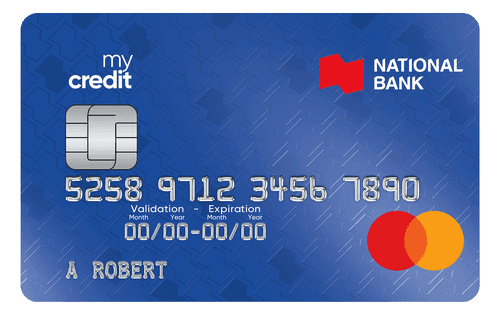
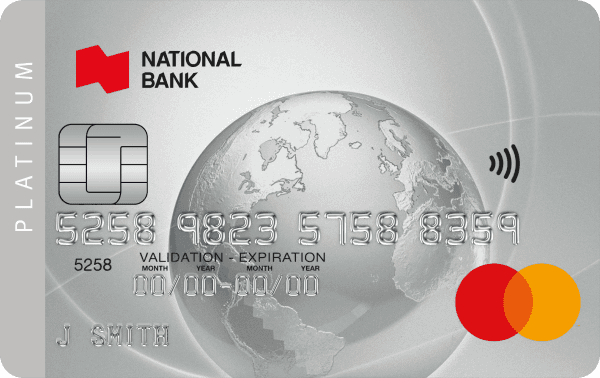
If you love to travel and want to collect points to save on future trips, National Bank offers the National Bank Platinum Mastercard®. If you prefer the simplicity of cash back, the NBC mycredit Mastercard is a no-annual-fee card for students. There are many others:
Earn $100 cashback if at least $2,500 in net purchases are charged to the Mastercard account over a 4-month period, following the account opening
Up to 1% cashback
Mobile protection: Get insured against theft or damage for up to 2 years following the purchase of your mobile device
Extended warranty
Purchase protection from loss, theft or damage for up to 90 days after the date of purchase
Legal
Cash back details
Card issued subject to National Bank credit approval. A 1% cash back is granted on restaurant purchases and recurring pre-authorized payments when settled by recurring automatic payments to your macrédit account. The 0.5% cash back applies to all other eligible purchases during a billing cycle. The account must be in good standing when the cash back is disbursed. Your account is in good standing when you meet the obligations of your credit card agreement (e.g., making the minimum payment by the due date). Eligible pre-authorized payments are defined as payments made regularly and automatically debited by a merchant from your credit card. Balance transfers, cash advances, and fees related to card usage are not included in the cash back calculation. To learn about the terms and restrictions applicable to cash back, consult the Cash Back Program [PDF].
Mobile device protection
Subject to purchase of device with card or telephony service subscription paid by recurring pre-authorized payments from your macro-credit account.
Credit terms
Grace period: No interest will be charged on purchases made during the month, provided the client pays the balance in full within twenty-one (21) days of the statement date. This grace period does not apply to cash advances or balance transfers.
Minimum payment: If your account balance is lower than $10, you must pay the entire balance.
If you reside in the province of Quebec, your minimum payment is the greater of 5% of your account balance, plus any overdue amounts, or $10.
If you live outside Quebec, your minimum payment is 2.5% of your credit card balance, plus any past-due amount or $10, whichever is greater.
Account statement: A statement is sent monthly.
Example of credit charges over a 30-day period
Annual interest rate
Average balance
$500
$3,000
22.49% (regular card)
$9.24
$55.45
20.99% (regular card)
$8.63
$51.76
13.2% (Syncro card)
$5.53
$33.16
9.2% (Syncro card)
$3.78
$22.68
*Variable interest rate in effect on September 1, 2021.
Balance transfer and cash advance are subject to credit approval by National Bank. Each balance transfer must be at least $250.
®MASTERCARD is a registered trademark, and the circles design is a trademark of Mastercard International Incorporated. National Bank is an authorized user.
®NATIONAL BANK and the NATIONAL BANK logo are registered trademarks of National Bank of Canada.
TM mycredit is a trademark of National Bank of Canada.
Legal notes
™ MYCREDIT is a trademark of National Bank of Canada.
® MASTERCARD AND TAP & GO are registered trademarks, and the circles design is a trademark of Mastercard International Incorporated. Authorized user: National Bank.
™ ID Check and Identity Check are trademarks of Mastercard International Inc. Authorized user: National Bank.
These protections apply if the purchases or expenses are charged to the National Bank mycredit Mastercard credit card. Extended warranties apply to most new items purchased with the card, in Canada or abroad, as long as the manufacturer’s warranty is in effect and valid in Canada. Certain conditions and restrictions apply. For more information and details concerning your insurance coverage, please consult the insurance certificate attached to your card.
Subject to credit approval by National Bank. Each balance transfer must be at least $250.
Certain conditions apply. Visit mastercard.ca for more information. Refer to the credit card terms and conditions.
With NBC mycredit Mastercard, you get:
1% cash back on restaurant purchases and recurring pre-authorized debits
0.5% cash back on all other purchases
And since it’s a Mastercard credit card, you can use it at Costco.
Cash back is automatically applied to your credit card account balance when each monthly statement is issued.
This is a credit card we recommend for those new to credit cards and want a no-fee credit card. What’s more, this credit card comes with a number of insurances for your purchases, including mobile device insurance (which is rare for a credit card with no annual fee).
$430ⓘMilesopedia first-year estimateFirst-year valueWelcome bonus$360Annual fee rebated$70Total$430Rewards on your spending are not included. The calculator that adds them from your own profile is on the card's page.
Milesopedia first-year estimateⓘFirst-year valueWelcome bonus$360Annual fee rebated$70Total$430Rewards on your spending are not included. The calculator that adds them from your own profile is on the card's page.
Length of the welcome promotion
From June 30, 2026 to November 4, 2026.
Eligibility conditions
Sign up for a National Bank® Platinum Mastercard® credit card as a primary cardholder during the promotion period.
Have not held any National Bank personal Mastercard credit card as a primary cardholder during the past 12 months.
Keep the credit card account open and in good standing, in compliance with the Credit Card Agreement, until the annual fee refund and reward points are credited. For example, all minimum payments must be made on time.
Not be employed by National Bank of Canada or an entity in its group.
Description of the promotion
Up to 40,000 reward points upon enrollment, and a refund of the annual fee for the first year for the primary cardholder of a National Bank® Platinum Mastercard®.
Annual fees
The $70 annual fee for the primary cardholder will be refunded for the first year.
We will charge the annual fee to your new card account and then refund it. You will receive this refund within five months of opening your account, provided that your account remains open and in good standing. The refund will appear on your statement as a credit.
Annual fees related to authorized users’ cards are not eligible for this promotion.
Reward points
Points offered
Conditions
When points are awarded
10,000
Enrollment in credit card payment insurance* for at least the first three months
Within two months following the minimum enrollment period
15,000
$2,500 in purchases within the first three months**
By the end of the 6th month following enrollment**
15,000
$10,000 in purchases within the first 12 months**
By the end of the 15th month following enrollment**
* To apply for payment insurance, you must complete the sections related to the Credit Card Payment Protection Plan (CCPPP) included in the credit card application form.
** The purchase calculation period starts on the date you sign up for the card. For example, if you sign up on July 15, 2026, you have until October 15, 2026 to make the required $2,500 in purchases, and the 15000 points will be credited to your account by the end of January 2027.
How total purchases are calculated
The calculation is based on the total amount of purchases made using all cards linked to the account. Transactions not included in the calculation are set out in article 1.5 of the À la carte Rewards Plan™.
Other conditions
This promotion may only be used once per person.
Issuance of the card is subject to National Bank of Canada’s credit approval. Other conditions apply to the issuance of the card.
Unless otherwise indicated, this promotion cannot be combined with any other National Bank credit card promotion and is not retroactive.
This promotion may be modified or withdrawn without notice.
Credit terms
Grace period: No interest will be charged on purchases made during the month, provided the client pays the balance in full within twenty-one (21) days of the statement date. This grace period does not apply to cash advances or balance transfers.
Minimum payment: If your account balance is lower than $10, you must pay the entire balance.
If you reside in the province of Quebec, your minimum payment is the greater of 5% of your account balance, plus any overdue amounts, or $10.
If you live outside Quebec, your minimum payment is 2.5% of your credit card balance, plus any past-due amount or $10, whichever is greater.
Account statement: A statement is sent monthly.
Example of credit charges over a 30-day period
Annual interest rate
Average balance
$500
$3,000
22.49% (regular card)
$9.24
$55.45
20.99% (regular card)
$8.63
$51.76
13.2% (Syncro card)
$5.53
$33.16
9.2% (Syncro card)
$3.78
$22.68
Balance transfer and cash advance are subject to credit approval by National Bank. Each balance transfer must be at least $250.
The National Bank Platinum Mastercard® lets you earn up to 40,000 reward points, plus a refund of the $70 annual fee for the first year for the primary cardholder:
10,000 points when you sign up for credit card payment insurance and keep it for at least the first 3 months
15,000 points after $2,500 in purchases within the first 3 months
15,000 points after $10,000 in purchases within the first 12 months
You have until November 4, 2026 to apply.
After that, you earn:
2 points per dollar on grocery and restaurant purchases
1.5 points per dollar on gas, EV charging, recurring bills and travel booked through the À la carte agency
Since it is a Mastercard, you can use it at Costco. Unlike the other two National Bank travel rewards cards, it does not require a minimum income.
The card includes mobile device insurance, an extended warranty on your purchases, and comprehensive travel insurance for trips of 10 days or less, with emergency medical coverage plus trip cancellation and interruption.
The annual fee is $70, plus $35 per additional card. The annual interest rate is 20.99% on purchases and 22.49% on cash advances.
Annual fee
Primary card$70
Additional card$35
Annual income required
Individual$0
Household$0
Conversion fees
2.5%
Earning rate
2xGroceries
2xRestaurants
1.5xBills & recurring payments
1.5xGas & EV
1.5xTravel
0.67xAll spending
Value
1st Year Value$749
2nd Year Value$209
Travel insurance
Travel medical (under 55)Up to $5,000,000 / 10 days
Travel medical (55-64)Up to $5,000,000 / 10 days
Travel medical (65+)Up to $5,000,000 / 10 days
Trip CancellationUp to $1,000
Trip InterruptionUp to $1,500
Delayed BaggageUp to $500
Lost BaggageUp to $1,000
Flight DelayUp to $500
Purchase protection
Purchase ProtectionIncluded
Extended Warranty+2 years
Mobile DeviceUp to $1,000 / 2 years
Auto Rental Collision (primary)Up to $65,000 / 48 days
$150ⓘMilesopedia first-year estimateFirst-year valueWelcome bonus$150Total$150Rewards on your spending are not included. The calculator that adds them from your own profile is on the card's page.
Milesopedia first-year estimateⓘFirst-year valueWelcome bonus$150Total$150Rewards on your spending are not included. The calculator that adds them from your own profile is on the card's page.
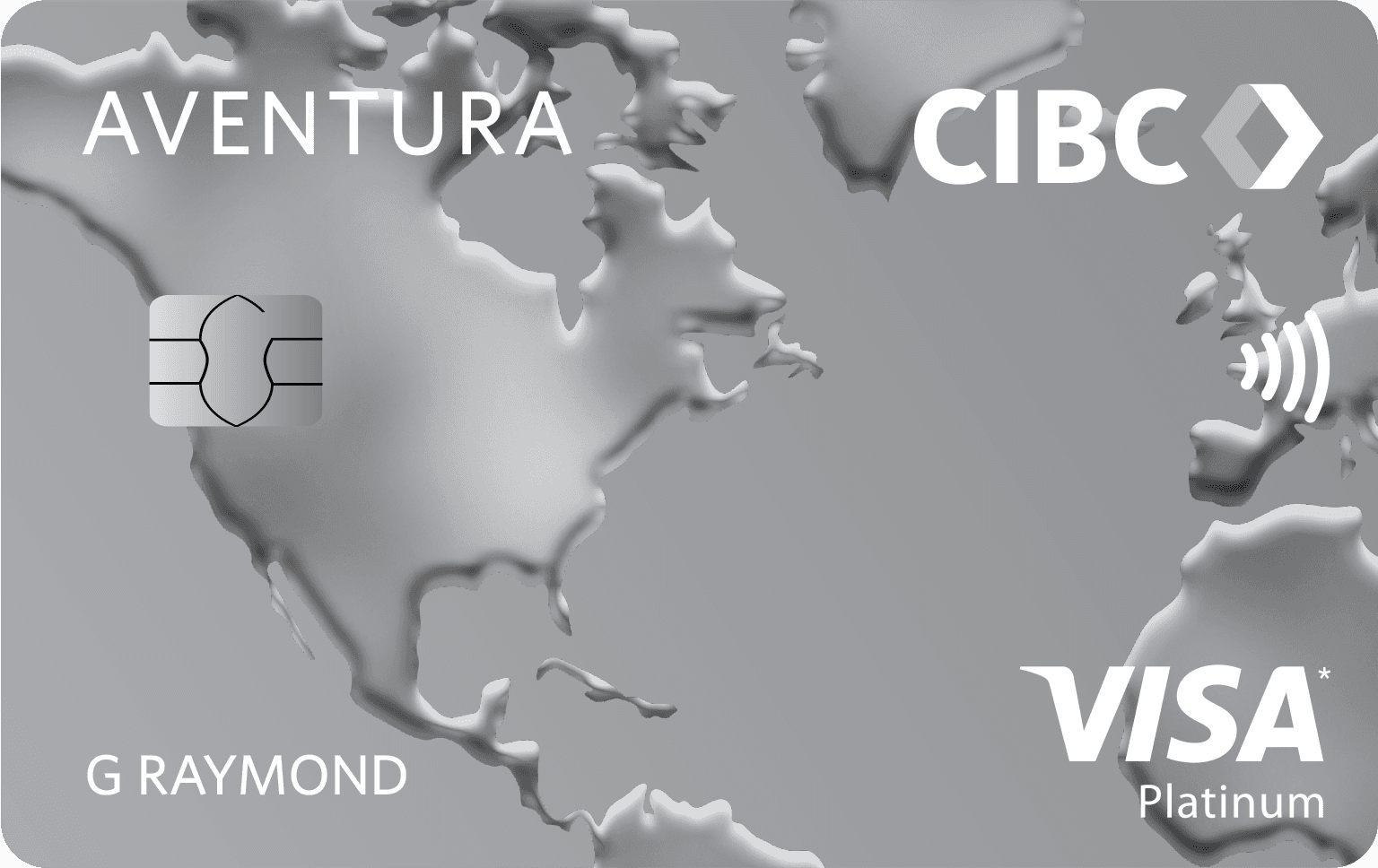
CIBC Aventura Visa* Card for Students is one of the best travel rewards Visa student credit cards in Canada.
With this offer, get up to $200 in value, with no annual fee:
Get up to 12,500 Aventura points (a value of up to $125 toward travel†):
2,500 Aventura Points when you complete all five activities within 60 days of your CIBC Aventura® Visa* account approval.†
10,000 Aventura points after making your first purchase during the period covered by your first 4 monthly statements†
A free Skip+ membership as an eligible CIBC cardholder (a $110 first-year value)†
With this CIBC Aventura Student Credit Card, you get:
1 point for every $1 spent on travel purchased through the CIBC Rewards Centre†
1 point for every dollar spent at gas stations, electric vehicle charging stations, and eligible grocery and drug stores†
1 point per $2 spent on all other purchases†
What’s more, with this CIBC Student Credit Card, you get a free SPC+ membership, plus over 450 deals on everyday purchases, bigger discounts, special experiences and exclusive giveaways†. And this CIBC Student Credit Card offers some insurance coverage:
$100,000 Common Carrier Accident Insurance
Purchase Security and Extended Protection Insurance
Legal
This is an exclusive digital offer†. To be eligible for this offer:
1) this offer must have been directly communicated to you from CIBC or from a partner or affiliate;
2) you must apply for the eligible card through the link provided in the CIBC or partner/affiliate communication to you†.
This offer is reserved for you. Please do not forward it to anyone else. CIBC may approve your application, but you are not eligible to receive this Offer if you have opened, transferred or cancelled another Aventura card within the last 12 months.†
† Conditions apply. To learn more, select the Apply Now option.
$125ⓘMilesopedia first-year estimateFirst-year valueWelcome bonus$125Total$125Rewards on your spending are not included. The calculator that adds them from your own profile is on the card's page.
Milesopedia first-year estimateⓘFirst-year valueWelcome bonus$125Total$125Rewards on your spending are not included. The calculator that adds them from your own profile is on the card's page.
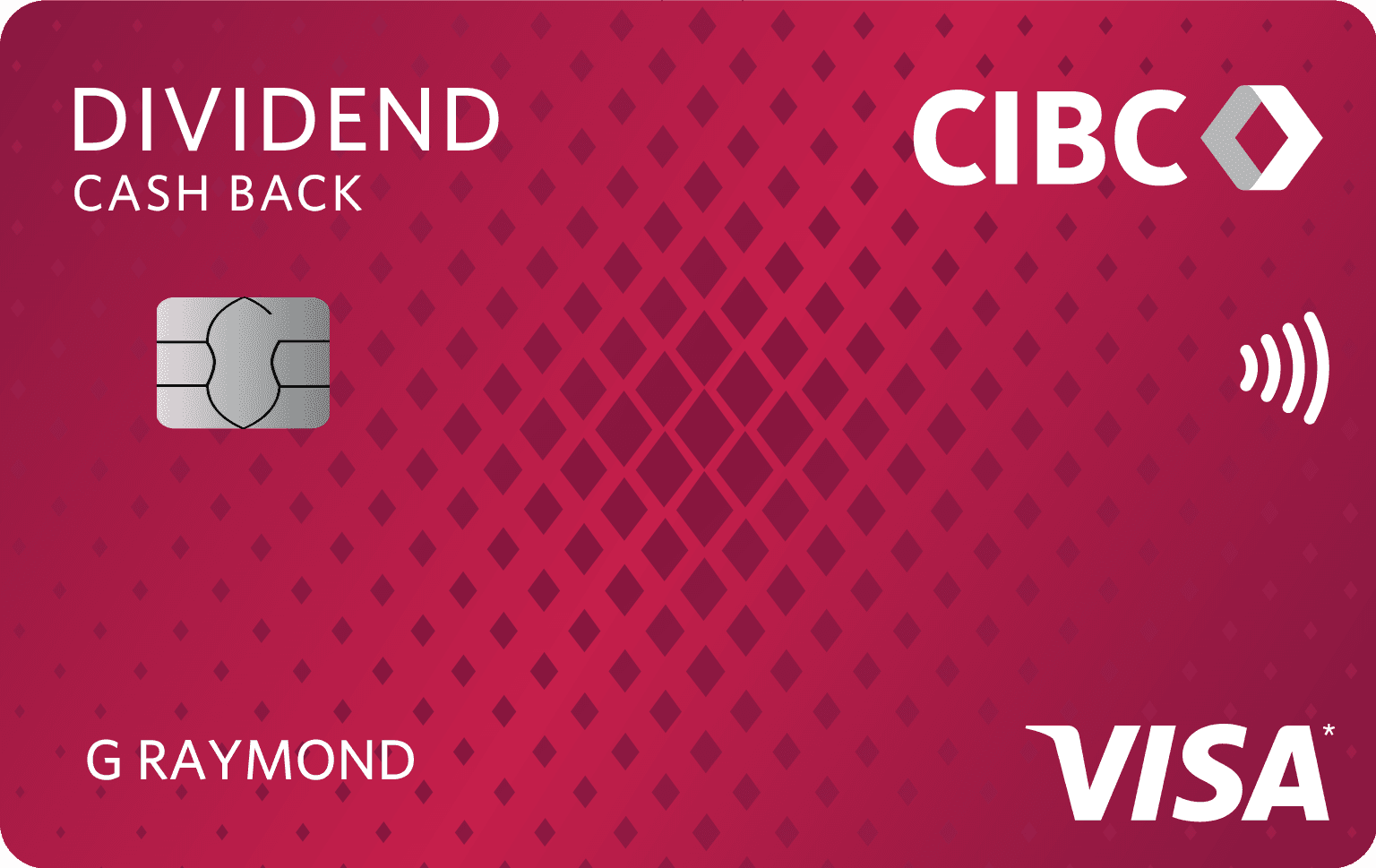
The CIBC Dividend® Visa* Card for Students is one of the best cash back Visa student credit cards in Canada. Apply for the card and get up to $125 in value:
$25 cash back after you make your first purchase within the first 4 monthly statements†
A 10% cash back welcome bonus for the first 4 monthly statements, up to $100†
With this CIBC Student Credit Card, you get:
2% cash back on eligible grocery purchases†
1% cash back on eligible gas, electric vehicle charging, transportation, and dining purchases and on eligible recurring payments†
0.5% cash back on all other purchases†
What’s more, with this CIBC Student Credit Card, you get a free SPC+ membership, plus over 450 deals on everyday purchases, bigger discounts, special experiences and exclusive giveaways†.
And this CIBC Student Credit Card offers some insurance coverages:
Purchase Security and Extended Protection Insurance
Legal
This is a digital-exclusive offer.† To be eligible for this offer: 1) this offer must have been directly communicated to you from CIBC or from a partner/affiliate; and 2) you must apply for the eligible card through the link provided in the CIBC or partner/affiliate communication to you. † This offer is reserved for you. Please do not forward it to anyone else.
This offer is reserved for you. Please do not forward it to anyone else. CIBC may approve your application, but you are not eligible to receive this Offer if you have opened, transferred or cancelled another Dividend card within the last 12 months.†
† Terms and conditions apply. Click on Apply Now to learn more.
$125ⓘMilesopedia first-year estimateFirst-year valueWelcome bonus$125Total$125Rewards on your spending are not included. The calculator that adds them from your own profile is on the card's page.
Milesopedia first-year estimateⓘFirst-year valueWelcome bonus$125Total$125Rewards on your spending are not included. The calculator that adds them from your own profile is on the card's page.
Get cash back every time you spend, plus start building a healthy credit history
Get a 1.99% introductory interest rate on Balance Transfers for 9 months, 1% fee applies to balance amounts transferred*
No Annual fee*
Receive a discount on car rentals*
BMO is not responsible for maintaining the content on this site. Please click on the Apply now link for the most up to date information*Terms and conditions apply
Legal
*Terms and conditions apply
BMO is not responsible for updating the content of this site. For the most up-to-date information, please click on the Online Application link.
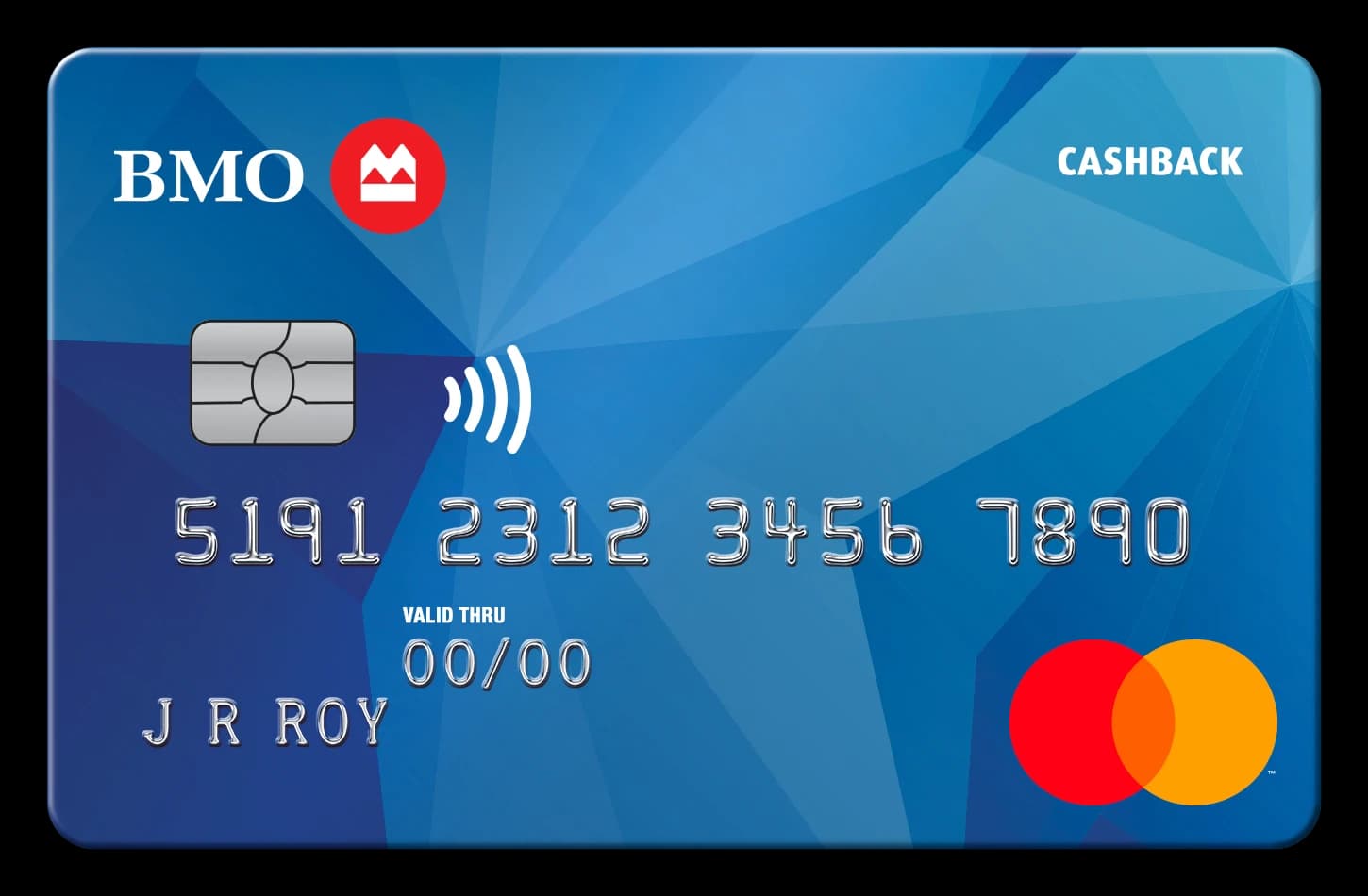
The BMO CashBack Mastercard for students is ideal for students. You can earn 5% cashback during the first three months.
Also, this card comes with 90 days of protection for your purchases and an extended warranty of one year!
Finally, enjoy three months of Instacart+ membership and a $5 monthly Instacart credit when you sign up with your eligible BMO credit card.
$200ⓘMilesopedia first-year estimateFirst-year valueWelcome bonus$200Total$200Rewards on your spending are not included. The calculator that adds them from your own profile is on the card's page.
Milesopedia first-year estimateⓘFirst-year valueWelcome bonus$200Total$200Rewards on your spending are not included. The calculator that adds them from your own profile is on the card's page.
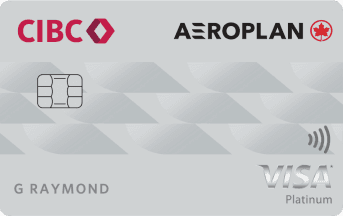
With the CIBC Aeroplan® Visa* Card for Students, get up to 10,000 Aeroplan points:
2,500 points on first purchase
2,500 Aeroplan points when you spend $1,500 or more during the first 4 monthly statements periods
5,000 anniversary bonus points after $10,000 in purchases over 12 months
With the CIBC Aeroplan® Visa* Card for Students, you earn 1 point per dollar on gas, electric vehicle charging, groceries, and Air Canada purchases. For all other purchases, you will earn 1 point per $1.50 spent.
Legal
† Conditions apply.
Annual fee
Primary card$0
Additional card$0
Annual income required
Individual$0
Household$0
Conversion fees
2.5%
Earning rate
1xGas & EV
1xGroceries
1xAir Canada flights
0.67xAll spending
Value
1st Year Value$677
2nd Year Value$338
Travel insurance
Travel AccidentUp to $100,000
Purchase protection
Purchase ProtectionIncluded
Extended Warranty+1 years
Auto Rental Collision (primary)Up to $65,000 / 48 days
Here’s more information on two of them:
Carte Dividendes CIBCMD Visa* pour étudiants
La Carte Dividendes CIBCMD Visa* pour étudiants est l’une des meilleures cartes de crédit Visa pour étudiants avec remise en argent au Canada. Souscrivez à la carte et recevez jusqu’à 125 $ de remise en argent.
Avec cette carte de crédit CIBC pour étudiants, vous obtenez :
2 % de remise en argent sur les achats d’épicerie admissibles†
1 % de remise en argent sur les achats d’essence, de recharge de véhicule électrique, de transport et de restauration admissibles et sur les paiements récurrents admissibles†
0,5 % de remise en argent sur tous les autres achats†
De plus, avec cette carte de crédit CIBC pour étudiants, vous bénéficiez d’une adhésion gratuite à SPC, pour économiser instantanément lorsque vous effectuez plus de 450 transactions en magasin et en ligne.
Et cette carte de crédit CIBC pour étudiants offre certaines couvertures d’assurance :
$125ⓘMilesopedia first-year estimateFirst-year valueWelcome bonus$125Total$125Rewards on your spending are not included. The calculator that adds them from your own profile is on the card's page.
Milesopedia first-year estimateⓘFirst-year valueWelcome bonus$125Total$125Rewards on your spending are not included. The calculator that adds them from your own profile is on the card's page.
The CIBC Dividend® Visa* Card for Students is one of the best cash back Visa student credit cards in Canada. Apply for the card and get up to $125 in value:
$25 cash back after you make your first purchase within the first 4 monthly statements†
A 10% cash back welcome bonus for the first 4 monthly statements, up to $100†
With this CIBC Student Credit Card, you get:
2% cash back on eligible grocery purchases†
1% cash back on eligible gas, electric vehicle charging, transportation, and dining purchases and on eligible recurring payments†
0.5% cash back on all other purchases†
What’s more, with this CIBC Student Credit Card, you get a free SPC+ membership, plus over 450 deals on everyday purchases, bigger discounts, special experiences and exclusive giveaways†.
And this CIBC Student Credit Card offers some insurance coverages:
Purchase Security and Extended Protection Insurance
Legal
This is a digital-exclusive offer.† To be eligible for this offer: 1) this offer must have been directly communicated to you from CIBC or from a partner/affiliate; and 2) you must apply for the eligible card through the link provided in the CIBC or partner/affiliate communication to you. † This offer is reserved for you. Please do not forward it to anyone else.
This offer is reserved for you. Please do not forward it to anyone else. CIBC may approve your application, but you are not eligible to receive this Offer if you have opened, transferred or cancelled another Dividend card within the last 12 months.†
† Terms and conditions apply. Click on Apply Now to learn more.
Annual fee
Primary card$0
Additional card$0
Annual income required
Individual$0
Household$0
Conversion fees
2.5%
Earning rate
2xGroceries
1xTransit
1xBills & recurring payments
1xGas & EV
1xRestaurants
0.5xAll spending
Value
1st Year Value$461
2nd Year Value$263
Purchase protection
Purchase ProtectionIncluded
Extended Warranty+1 years
Carte Mastercard Platine de la Banque Nationale
La carte MastercardMD Platine de la Banque NationaleMD permet d’obtenir jusqu’à 40 000 points récompenses grâce à une offre de bienvenue répartie en plusieurs volets, incluant une adhésion à l’assurance paiement, un premier seuil de dépenses de 2 500 $ dans les 3 premiers mois et un second seuil de 10 000 $ d’achats dans les 12 premiers mois.
En plus de l’offre de bienvenue, cette carte permet d’accumuler jusqu’à 2 points par dollar d’achat dans certaines catégories et inclut plusieurs protections d’assurance voyage, une assurance appareils mobiles ainsi que des protections sur les achats et la garantie prolongée.
Les frais annuels de 70 $ de la ou du titulaire principal sont également remboursés la première année.
$430ⓘMilesopedia first-year estimateFirst-year valueWelcome bonus$360Annual fee rebated$70Total$430Rewards on your spending are not included. The calculator that adds them from your own profile is on the card's page.
Milesopedia first-year estimateⓘFirst-year valueWelcome bonus$360Annual fee rebated$70Total$430Rewards on your spending are not included. The calculator that adds them from your own profile is on the card's page.
Length of the welcome promotion
From June 30, 2026 to November 4, 2026.
Eligibility conditions
Sign up for a National Bank® Platinum Mastercard® credit card as a primary cardholder during the promotion period.
Have not held any National Bank personal Mastercard credit card as a primary cardholder during the past 12 months.
Keep the credit card account open and in good standing, in compliance with the Credit Card Agreement, until the annual fee refund and reward points are credited. For example, all minimum payments must be made on time.
Not be employed by National Bank of Canada or an entity in its group.
Description of the promotion
Up to 40,000 reward points upon enrollment, and a refund of the annual fee for the first year for the primary cardholder of a National Bank® Platinum Mastercard®.
Annual fees
The $70 annual fee for the primary cardholder will be refunded for the first year.
We will charge the annual fee to your new card account and then refund it. You will receive this refund within five months of opening your account, provided that your account remains open and in good standing. The refund will appear on your statement as a credit.
Annual fees related to authorized users’ cards are not eligible for this promotion.
Reward points
Points offered
Conditions
When points are awarded
10,000
Enrollment in credit card payment insurance* for at least the first three months
Within two months following the minimum enrollment period
15,000
$2,500 in purchases within the first three months**
By the end of the 6th month following enrollment**
15,000
$10,000 in purchases within the first 12 months**
By the end of the 15th month following enrollment**
* To apply for payment insurance, you must complete the sections related to the Credit Card Payment Protection Plan (CCPPP) included in the credit card application form.
** The purchase calculation period starts on the date you sign up for the card. For example, if you sign up on July 15, 2026, you have until October 15, 2026 to make the required $2,500 in purchases, and the 15000 points will be credited to your account by the end of January 2027.
How total purchases are calculated
The calculation is based on the total amount of purchases made using all cards linked to the account. Transactions not included in the calculation are set out in article 1.5 of the À la carte Rewards Plan™.
Other conditions
This promotion may only be used once per person.
Issuance of the card is subject to National Bank of Canada’s credit approval. Other conditions apply to the issuance of the card.
Unless otherwise indicated, this promotion cannot be combined with any other National Bank credit card promotion and is not retroactive.
This promotion may be modified or withdrawn without notice.
Credit terms
Grace period: No interest will be charged on purchases made during the month, provided the client pays the balance in full within twenty-one (21) days of the statement date. This grace period does not apply to cash advances or balance transfers.
Minimum payment: If your account balance is lower than $10, you must pay the entire balance.
If you reside in the province of Quebec, your minimum payment is the greater of 5% of your account balance, plus any overdue amounts, or $10.
If you live outside Quebec, your minimum payment is 2.5% of your credit card balance, plus any past-due amount or $10, whichever is greater.
Account statement: A statement is sent monthly.
Example of credit charges over a 30-day period
Annual interest rate
Average balance
$500
$3,000
22.49% (regular card)
$9.24
$55.45
20.99% (regular card)
$8.63
$51.76
13.2% (Syncro card)
$5.53
$33.16
9.2% (Syncro card)
$3.78
$22.68
Balance transfer and cash advance are subject to credit approval by National Bank. Each balance transfer must be at least $250.
The National Bank Platinum Mastercard® lets you earn up to 40,000 reward points, plus a refund of the $70 annual fee for the first year for the primary cardholder:
10,000 points when you sign up for credit card payment insurance and keep it for at least the first 3 months
15,000 points after $2,500 in purchases within the first 3 months
15,000 points after $10,000 in purchases within the first 12 months
You have until November 4, 2026 to apply.
After that, you earn:
2 points per dollar on grocery and restaurant purchases
1.5 points per dollar on gas, EV charging, recurring bills and travel booked through the À la carte agency
Since it is a Mastercard, you can use it at Costco. Unlike the other two National Bank travel rewards cards, it does not require a minimum income.
The card includes mobile device insurance, an extended warranty on your purchases, and comprehensive travel insurance for trips of 10 days or less, with emergency medical coverage plus trip cancellation and interruption.
The annual fee is $70, plus $35 per additional card. The annual interest rate is 20.99% on purchases and 22.49% on cash advances.
Annual fee
Primary card$70
Additional card$35
Annual income required
Individual$0
Household$0
Conversion fees
2.5%
Earning rate
2xGroceries
2xRestaurants
1.5xBills & recurring payments
1.5xGas & EV
1.5xTravel
0.67xAll spending
Value
1st Year Value$749
2nd Year Value$209
Travel insurance
Travel medical (under 55)Up to $5,000,000 / 10 days
Travel medical (55-64)Up to $5,000,000 / 10 days
Travel medical (65+)Up to $5,000,000 / 10 days
Trip CancellationUp to $1,000
Trip InterruptionUp to $1,500
Delayed BaggageUp to $500
Lost BaggageUp to $1,000
Flight DelayUp to $500
Purchase protection
Purchase ProtectionIncluded
Extended Warranty+2 years
Mobile DeviceUp to $1,000 / 2 years
Auto Rental Collision (primary)Up to $65,000 / 48 days
Limit the Use of Your Student Credit Card
A high credit utilization rate can negatively affect your credit report. Ideally, keep your monthly usage below 30 percent of your limit. For example, if your limit is $1,000, try to stay under $300. This shows that you use credit responsibly and makes you look better to lenders.
Avoid Submitting Multiple Credit Applications
Each new application requires a credit check, which can temporarily lower your credit score. As a student, stick to credit cards that suit your needs, rather than accumulating several cards in a short space of time. A solid student credit report is based on stability and consistency, not on the number of accounts you open.
Key Takeaways: Building a Strong Student Credit Report
Always pay your bills on time, even the minimum;
Do not exceed 30% of your credit limit;
Limit the number of credit applications;
Check your credit report for free every year;
Manage your student loans and utility bills with discipline;
Start early with a student credit card.
By applying these best practices, you’ll build a solid student credit report that will make it easier for you to obtain loans, a mortgage or even a rental apartment once you’ve completed your studies.
Mistakes to Avoid With Your Student Credit Report
Building a student credit report takes discipline. Certain mistakes can hamper your efforts:
Late payments: even a few days late can damage your credit rating. Make sure you pay at least the minimum amount every month;
Excessive use of credit: using more than 30% of your limit can give the impression that you are dependent on credit;
Applying for too many credit cards: each application triggers a check that can affect your credit score;
Ignore your statement: errors can creep in. Check your transactions and balance regularly;
Neglecting to check your credit report: you can check your credit report with Equifax and TransUnion for free every year.
By avoiding these pitfalls, you’ll protect your credit rating as a student and build a solid foundation for your financial future.
Bottom Line
Your student credit report is the first step toward financial independence. By adopting responsible practices today, you give yourself more options and freedom for your future projects. Start small, stay disciplined and your credit history will become a real asset.
Earn $100 cashback if at least $2,500 in net purchases are charged to the Mastercard account over a 4-month period, following the account opening
Up to 1% cashback
Mobile protection: Get insured against theft or damage for up to 2 years following the purchase of your mobile device
Extended warranty
Purchase protection from loss, theft or damage for up to 90 days after the date of purchase
Legal
Cash back details
Card issued subject to National Bank credit approval. A 1% cash back is granted on restaurant purchases and recurring pre-authorized payments when settled by recurring automatic payments to your macrédit account. The 0.5% cash back applies to all other eligible purchases during a billing cycle. The account must be in good standing when the cash back is disbursed. Your account is in good standing when you meet the obligations of your credit card agreement (e.g., making the minimum payment by the due date). Eligible pre-authorized payments are defined as payments made regularly and automatically debited by a merchant from your credit card. Balance transfers, cash advances, and fees related to card usage are not included in the cash back calculation. To learn about the terms and restrictions applicable to cash back, consult the Cash Back Program [PDF].
Mobile device protection
Subject to purchase of device with card or telephony service subscription paid by recurring pre-authorized payments from your macro-credit account.
Credit terms
Grace period: No interest will be charged on purchases made during the month, provided the client pays the balance in full within twenty-one (21) days of the statement date. This grace period does not apply to cash advances or balance transfers.
Minimum payment: If your account balance is lower than $10, you must pay the entire balance.
If you reside in the province of Quebec, your minimum payment is the greater of 5% of your account balance, plus any overdue amounts, or $10.
If you live outside Quebec, your minimum payment is 2.5% of your credit card balance, plus any past-due amount or $10, whichever is greater.
Account statement: A statement is sent monthly.
Example of credit charges over a 30-day period
Annual interest rate
Average balance
$500
$3,000
22.49% (regular card)
$9.24
$55.45
20.99% (regular card)
$8.63
$51.76
13.2% (Syncro card)
$5.53
$33.16
9.2% (Syncro card)
$3.78
$22.68
*Variable interest rate in effect on September 1, 2021.
Balance transfer and cash advance are subject to credit approval by National Bank. Each balance transfer must be at least $250.
®MASTERCARD is a registered trademark, and the circles design is a trademark of Mastercard International Incorporated. National Bank is an authorized user.
®NATIONAL BANK and the NATIONAL BANK logo are registered trademarks of National Bank of Canada.
TM mycredit is a trademark of National Bank of Canada.
Legal notes
™ MYCREDIT is a trademark of National Bank of Canada.
® MASTERCARD AND TAP & GO are registered trademarks, and the circles design is a trademark of Mastercard International Incorporated. Authorized user: National Bank.
™ ID Check and Identity Check are trademarks of Mastercard International Inc. Authorized user: National Bank.
These protections apply if the purchases or expenses are charged to the National Bank mycredit Mastercard credit card. Extended warranties apply to most new items purchased with the card, in Canada or abroad, as long as the manufacturer’s warranty is in effect and valid in Canada. Certain conditions and restrictions apply. For more information and details concerning your insurance coverage, please consult the insurance certificate attached to your card.
Subject to credit approval by National Bank. Each balance transfer must be at least $250.
Certain conditions apply. Visit mastercard.ca for more information. Refer to the credit card terms and conditions.
With NBC mycredit Mastercard, you get:
1% cash back on restaurant purchases and recurring pre-authorized debits
0.5% cash back on all other purchases
And since it’s a Mastercard credit card, you can use it at Costco.
Cash back is automatically applied to your credit card account balance when each monthly statement is issued.
This is a credit card we recommend for those new to credit cards and want a no-fee credit card. What’s more, this credit card comes with a number of insurances for your purchases, including mobile device insurance (which is rare for a credit card with no annual fee).
Annual fee
Primary card$0
Additional card$0
Annual income required
Individual$0
Household$0
Conversion fees
2.5%
Earning rate
1xRestaurants
1xBills & recurring payments
1xTelecom
0.5xAll spending
Value
1st Year Value$216
2nd Year Value$148
Purchase protection
Purchase ProtectionIncluded
Extended Warranty+1 years
Mobile DeviceUp to $1,000 / 2 years
How do I build a student credit file without income?
Even without a job, you can start with a low-limit student credit card. The important thing is to pay your balances on time to demonstrate your reliability.
What’s the difference between a credit report and a credit score?
The credit score is a number that summarizes your credit risk. The student credit report contains all your credit history: payments, open accounts, loans, etc.
How can I quickly improve my student credit rating?
Always pay your bills on time, reduce your credit utilization to less than 30% and avoid unnecessary new credit applications. These actions will improve your credit rating in just a few months.
Do student loans affect my credit file?
Yes. Your student loans are part of your credit history. On-time payments strengthen your record, but late payments hurt your credit score.
How can I check my credit report as a student?
You can obtain a free copy of your file once a year from Equifax and TransUnion. This allows you to correct any errors and track your progress.
$990ⓘMilesopedia first-year estimateFirst-year valueWelcome bonus$990Total$990Rewards on your spending are not included. The calculator that adds them from your own profile is on the card's page.
Milesopedia first-year estimateⓘFirst-year valueWelcome bonus$990Total$990Rewards on your spending are not included. The calculator that adds them from your own profile is on the card's page.
Apply with confidence — no impact on your credit scoreⓘApply with confidenceCheck whether your application will be approved before you submit it, with no impact on your credit score*When you apply for a personal American Express Credit Card, we will tell you whether you are eligible without affecting your credit score. So you can apply with confidence.*Instant decisions are only available for consumer Card applications (also called “personal Cards”).
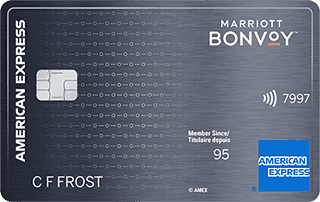
The Marriott Bonvoy® American Express®* Card is the best credit card in Canada for free hotel nights.
New Cardmembers can earn up to 110,000 Marriott Bonvoy® points with the current offer:
Earn 80,000 points after you spend $6,000 on your Card in your first 6 months of Cardmembership.
Plus, earn 30,000 points by making a purchase during your 15th month of Cardmembership.
This offer ends on September 22, 2026. The annual fee is $120, and there is no annual fee on Additional Cards, so you can add a partner or a family member at no extra cost.
Every year after your first Card anniversary, you receive an Annual Free Night Award good for a redemption of up to 35,000 points at eligible hotels and resorts worldwide. At a valuation of 0.9 cents per Marriott Bonvoy point, that certificate is worth roughly $315, which on its own more than covers the $120 annual fee. That is the main reason to keep this Card year after year instead of cancelling it.
To get the most out of the certificate, aim it at a night that would otherwise price close to the 35,000 point ceiling.
The Card also gives you 15 Elite Night Credits each calendar year and automatic Marriott Bonvoy Silver Elite status. Those credits count toward the next Elite tier, so you begin every year 15 nights ahead of where you would otherwise start.
You move up to Gold Elite status automatically when you reach $30,000 in purchases on the Card in a year, or when you combine 10 qualifying paid nights within one calendar year with the 15 Elite Night Credits from your Card.
Marriott Bonvoy points are generally valued at 0.9 cents each. On that basis, the 110,000 point welcome offer is worth about $990, and an Annual Free Night Award used at its full 35,000 point ceiling is worth about $315.
Marriott Bonvoy points pull their weight on free nights rather than on gift cards or merchandise, which is why this Card should be judged on the hotel stays it produces.
You earn 5 points per dollar on eligible purchases at participating Marriott Bonvoy hotels and 2 points per dollar on all other purchases. Points can be redeemed for free nights with no blackout dates at more than 7,000 hotels around the world.
The Card carries a solid package of coverages: $500,000 travel accident insurance, flight delay, baggage delay, lost or stolen baggage and hotel or motel burglary at $500 each, car rental theft and damage up to $85,000 for rentals of up to 48 days, Purchase Protection for 90 days and a one year Extended Warranty.
Two things to plan around: the 2.5% foreign transaction fee on purchases made in a foreign currency, and the 21.99% purchase interest rate, which makes this a Card to pay in full every month. Like all American Express Canada Cards, no minimum income is published for this Card, and you can see whether you would be approved before you apply, with no impact on your credit score.
Legal
American Express is not responsible for maintaining or monitoring the accuracy of information on this website. For full details and current product information, click the Apply Now link. If you apply and get approved for an American Express Card, we may receive compensation from American Express, which can be in the form of monetary payment.
Annual fee
Primary card$120
Additional card$0
Annual income required
Individual$0
Household$0
Conversion fees
2.5%
Earning rate
5xMarriott Bonvoy hotels
2xAll spending
Value
1st Year Value$1,437
2nd Year Value$312
Travel insurance
Delayed BaggageUp to $500
Lost BaggageUp to $500
Flight DelayUp to $500
Hotel BurglaryUp to $500
Travel AccidentUp to $500,000
Purchase protection
Purchase ProtectionIncluded
Extended Warranty+1 years
Auto Rental Collision (primary)Up to $85,000 / 48 days
Our editorial integrity
Our reviews and rankings are based on an objective assessment. Advertisers do not influence our content. We may receive compensation through some links; our analysis and opinions remain independent.