

Our Personal Finance Tips for Students

Managing personal finances as a student is a daily challenge. Between tuition, housing and unexpected expenses, every dollar counts. In this article, discover practical tips for managing your student budget, saving wisely, maximizing student discounts and taking advantage of the right methods to build financial stability today.
Personal finance for students
Making a budget
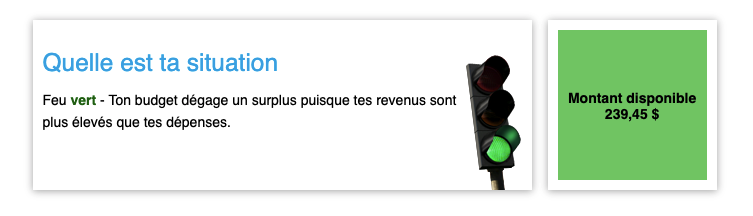
It may not be the most stimulating activity, but keeping a budget is an excellent way to keep track of where your money is going. In fact, the Autorité des marchés financiers offers a handy tool to help you see things more clearly.
This way, you can identify your financial priorities and reduce unpleasant surprises at the end of the month.
ACEF
Contact your local ACEF (Associations coopératives d’économies familiales) for a range of budgeting and financial education services. These non-profit organizations also provide information on consumer protection.
On its website, ACEF offers clear, objective information and personal finance tools for all age groups, including students. For example, in the personal finance section for students, you’ll find the « Student Budget » tool (in French only).
Taxes
As a student, you can take advantage of a number of tax credits and deductions. The income tax return is not only used to declare your earnings, but also to recover certain eligible expenses.
If you’ve paid tuition fees, moved for your studies or are paying off interest on your student loan, you may be able to get credits that increase your repayment and lighten your budget.
Here are some examples:
- Revenu Quebec: Student or new graduate
- Canada Revenue Agency: Common deductions and credits for students
Chequing Account
You can have a youth or student bank account with no monthly fees. Search for financial institutions that offer account opening bonuses.
You can enjoy free access throughout your studies and for a certain period after graduating.
Use our bank account comparator to check out our range of accounts for students. For example:
Many financial institutions also give you access to your credit score online. This is offered free of charge by your financial institution, in collaboration with the TransUnion and Equifax credit bureaus.
Often, students are not yet exposed to or informed about credit files and scores. If this is your case, consult the following guides:
Rent and tuition fees
To optimize your budget, use Chexy to pay your tuition and rent by credit card and maximize your reward points. This approach not only helps you manage your cash flow, it also offers you additional financial benefits. For more details, consult our guides :
Personal Finance Books and Resources
To make the best decisions for your financial situation, it’s important to know as much as you can. Personal finance for students is no exception.
Here are some of the best resources for personal finance:
- Facebook group « L’argent ne dort jamais » to ask your finance questions (over 150,000 members)
- Book La retraite à 40 ans by Jean-Sébastien Pilotte (known as « Le jeune retraité »)
- Books Les millionnaires ne sont pas ceux que vous croyez and From Zero to Millionaire by Nicolas Bérubé
- Book Ça coûte encore plus cher, être un adulte! by Béatrice Bernard-Poulin
- Books En as-tu vraiment besoin? and Liberté 45 by Pierre-Yves McSween
- Book Elle investit: Bâtir sa richesse grâce à la bourse by Karman Kong
- Book Rich Dad Poor Dad by Robert T Kiyosaki
- I’m taking care of business! from the Autorité des Marchés Financiers (AMF)
Finance Courses
There are also free courses on personal finance. As a student, now is the perfect time to take these online courses:
- McGill University’s free online Personal Finance Essentials course (available in both English and French)
- UQTR MOOC « La littératie financière et fiscale ouverte à tous » (available in French only)
Student discounts
Use the power of your student card for special offers and discounts at many stores!
ISIC Card
The ISIC (International Student Identity Card) is for students 12 years of age and older as well as for people 30 years of age and younger. For $20 a year, you get discounts at various businesses, museums, Via Rail, hotels, tourist attractions, transportation and ready-to-eat lunch boxes. It is accepted in 130 countries. For more information: isiccanada.ca
SPC Card
The SPC (Student Price Card) offers students significant discounts on a wide range of products and services, including travel, shopping and dining.
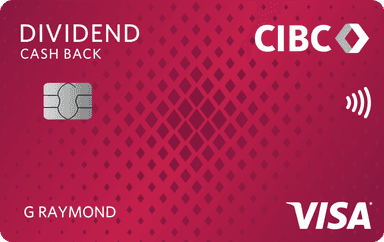
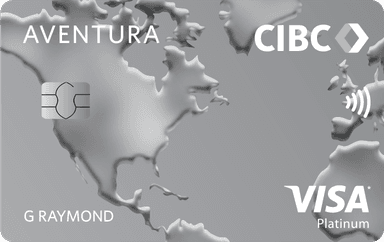
SPC Card membership costs $11.99 per year. However, you can obtain the SPC+ Card free of charge if you have one of these 3 CIBC financial products when you register for SPC :
- CIBC Dividend® Visa* Card for Students
- CIBC Aventura® Visa* Card for Students
- Bank account for youth and students : CIBC Smart for students
| Credit card | Annual fee | Welcome offer | |
|---|---|---|---|
| $0 | |||
| $0 |
To find out more, consult the following guide:
Student discount while shopping
Many stores offer student discounts. In particular:
- Telecommunications ;
- Electronics ;
- Grocery stores and restaurants (especially those near a college or university) ;
- Health and beauty ;
- Sports and Culture ;
- Transport ;
- Clothing ;
- Other shops.
For further information, please consult the following guide:
Other tips for students
Here are some other personal finance tips and tricks for students:
- Find a cheaper mobile package;
- Join loyalty programs to maximize your savings;
- Use online shopping portals such as AIRMILESSHOPS, Aeroplan eStore or Rakuten to make your purchases.
Student credit cards
In Canada, there are several credit cards for students. Getting your first credit card when you turn 18 helps you build up your credit file and gradually improve your credit score.
Indeed, the notion of credit history is very important in the calculation of the credit score. The best thing to do is to take out a no-annual-fee credit card that you’ll keep for as long as possible: it’ll be one of the cornerstones of your credit file (alongside other financing such as a student loan, a car loan, etc.).
To find out more, consult the following guide:
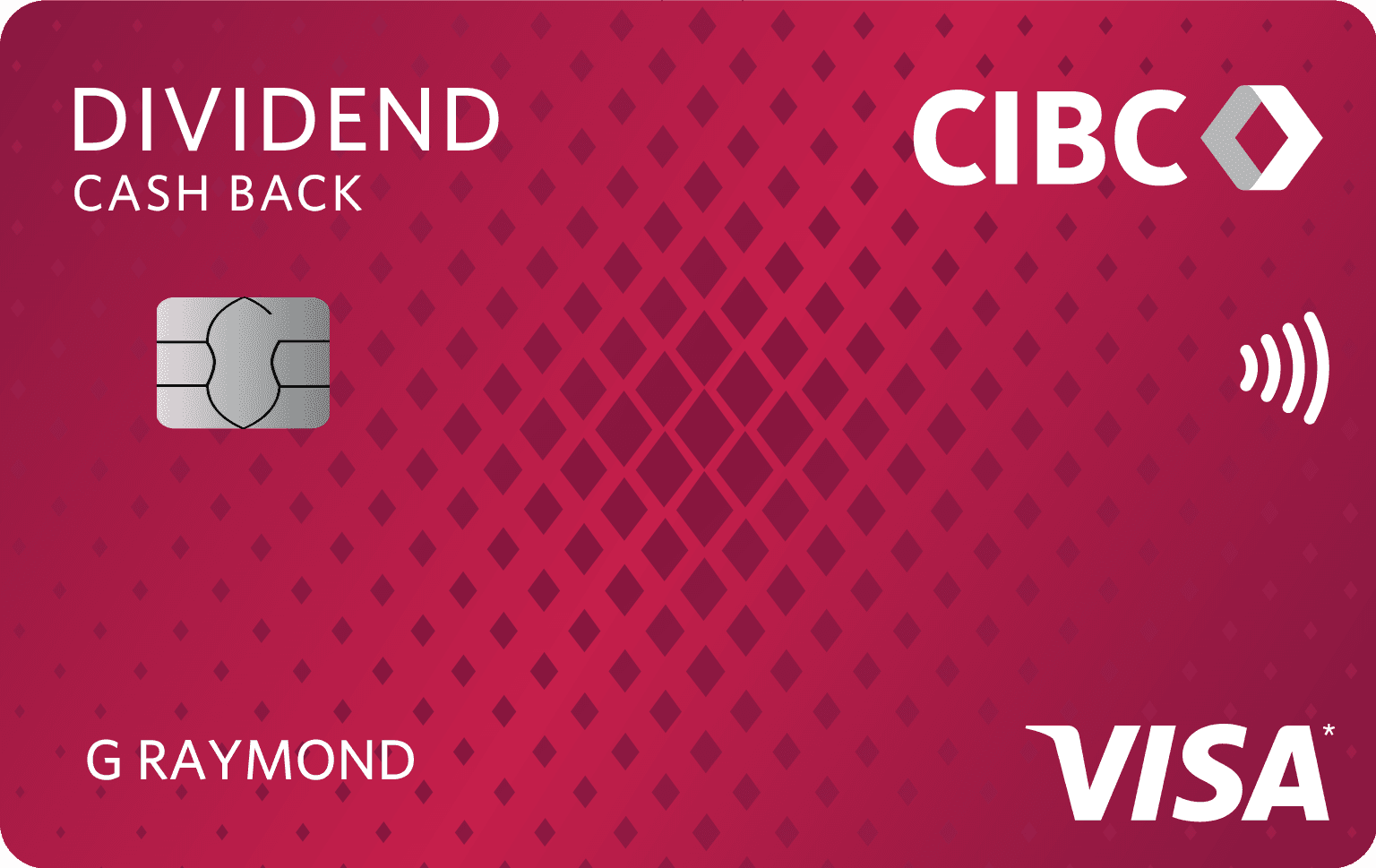
The CIBC Dividend?? Visa* Card for Students is the card we voted the best credit card for students in 2025.
Carte Dividendes CIBCMD Visa* pour étudiants
La Carte Dividendes CIBCMD Visa* pour étudiants est l’une des meilleures cartes de crédit Visa pour étudiants avec remise en argent au Canada. Souscrivez à la carte et recevez jusqu’à 125 $ de remise en argent.
Avec cette carte de crédit CIBC pour étudiants, vous obtenez :
- 2 % de remise en argent sur les achats d’épicerie admissibles†
- 1 % de remise en argent sur les achats d’essence, de recharge de véhicule électrique, de transport et de restauration admissibles et sur les paiements récurrents admissibles†
- 0,5 % de remise en argent sur tous les autres achats†
De plus, avec cette carte de crédit CIBC pour étudiants, vous bénéficiez d’une adhésion gratuite à SPC, pour économiser instantanément lorsque vous effectuez plus de 450 transactions en magasin et en ligne.
Et cette carte de crédit CIBC pour étudiants offre certaines couvertures d’assurance :
- Assurance pour les achats et garantie prolongée

- Annual fee
- $0
- Our valuation
- $125Milesopedia first-year estimate First-year valueWelcome bonus$125Total$125Rewards on your spending are not included. The calculator that adds them from your own profile is on the card's page.
- Milesopedia first-year estimateFirst-year valueWelcome bonus$125Total$125Rewards on your spending are not included. The calculator that adds them from your own profile is on the card's page.
- Welcome offer
- Up to $125
on CIBC's website
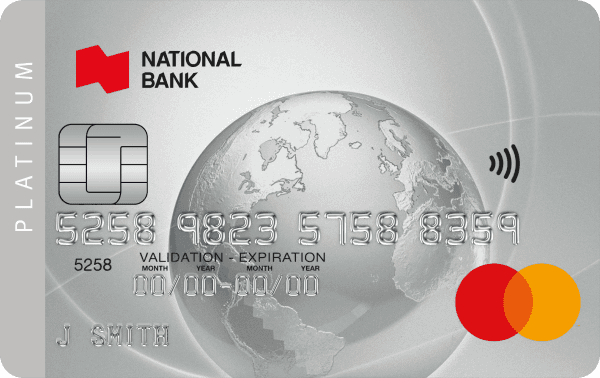
According to Milesopedia 2025, the National Bank Platinum Mastercard® has won the title of Best Credit Card for Young Professionals.
Carte Mastercard Platine de la Banque Nationale
La carte MastercardMD Platine de la Banque NationaleMD permet d’obtenir jusqu’à 40 000 points récompenses grâce à une offre de bienvenue répartie en plusieurs volets, incluant une adhésion à l’assurance paiement, un premier seuil de dépenses de 2 500 $ dans les 3 premiers mois et un second seuil de 10 000 $ d’achats dans les 12 premiers mois.
En plus de l’offre de bienvenue, cette carte permet d’accumuler jusqu’à 2 points par dollar d’achat dans certaines catégories et inclut plusieurs protections d’assurance voyage, une assurance appareils mobiles ainsi que des protections sur les achats et la garantie prolongée.
Les frais annuels de 70 $ de la ou du titulaire principal sont également remboursés la première année.

- Annual fee
- $0 $70No annual fee the first year
- No annual fee the first year
- Our valuation
- $430Milesopedia first-year estimate First-year valueWelcome bonus$360Annual fee rebated$70Total$430Rewards on your spending are not included. The calculator that adds them from your own profile is on the card's page.
- Milesopedia first-year estimateFirst-year valueWelcome bonus$360Annual fee rebated$70Total$430Rewards on your spending are not included. The calculator that adds them from your own profile is on the card's page.
- Welcome offer
- 40,000 points
- + First Year Annual Fee Rebate
- Ends Nov 4, 2026
on National Bank's website
Bottom Line
By taking a few simple, effective steps, you can strengthen your personal finances as a student, easing your financial stress. Whether it’s through a well-established budget, student discounts or a well-chosen credit card, every decision brings you closer to greater autonomy. Start applying these tips now to move towards a healthier financial life, even during your studies.
How can I save money as a student?
Set a simple budget, take advantage of student discounts and deposit your savings in a high-interest account to make them grow.
Which student credit card should I choose?
Choose a card with no annual fee, offering discounts or points on everyday purchases such as groceries, gas and subscriptions.
How to manage your student budget effectively?
Keep track of your income, fixed and variable expenses. Set aside a portion for savings and adjust your habits according to your priorities.
Why open a student bank account?
A student bank account allows you to avoid monthly fees, receive your loans or grants and better manage your day-to-day transactions.
Our featured card
- Annual fee
- $0
- Our valuation
- $125Milesopedia first-year estimate First-year valueWelcome bonus$125Total$125Rewards on your spending are not included. The calculator that adds them from your own profile is on the card's page.
- Milesopedia first-year estimateFirst-year valueWelcome bonus$125Total$125Rewards on your spending are not included. The calculator that adds them from your own profile is on the card's page.
- Welcome offer
- Up to $125
on CIBC's website
Our editorial integrity
Our reviews and rankings are based on an objective assessment. Advertisers do not influence our content. We may receive compensation through some links; our analysis and opinions remain independent.