

Young Professionals: Travel More Often and Better With the National Bank Platinum Mastercard

The National Bank Platinum Mastercard won the title of Best Credit Card for young professionals in our Milesopedia 2024 ranking.
Explorons les raisons qui font de cette carte un choix judicieux pour les jeunes qui aspirent à voyager plus, même avec un revenu modeste.
National Bank Platinum Mastercard – Welcome offer

Une carte de crédit voyage accessible aux jeunes professionnels
Avec des frais annuels abordables de 70 $, la National Bank Platinum Mastercard offre un ensemble d’avantages et d’assurances voyages généralement associés à des produits haut de gamme. Mieux encore, la promotion en cours rembourse les frais annuels de la première année !
Un autre atout notable de la National Bank Platinum Mastercard : elle n’exige aucun revenu minimum. Vous pouvez donc faire une demande même s’il s’agit de votre première carte de crédit ou que vous êtes à vos débuts dans le monde du travail.
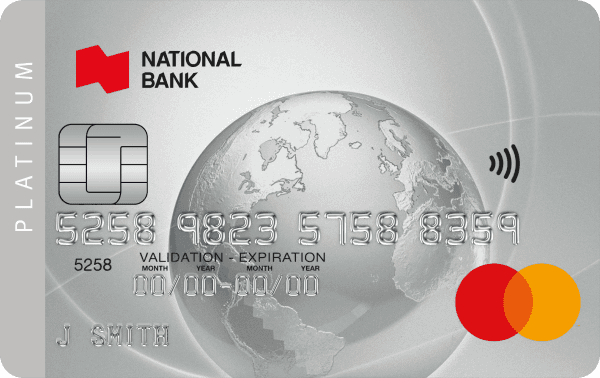

- Annual fee
- $0 $70No annual fee the first year
- No annual fee the first year
- Our valuation
- $430Milesopedia first-year estimate First-year valueWelcome bonus$360Annual fee rebated$70Total$430Rewards on your spending are not included. The calculator that adds them from your own profile is on the card's page.
- Milesopedia first-year estimateFirst-year valueWelcome bonus$360Annual fee rebated$70Total$430Rewards on your spending are not included. The calculator that adds them from your own profile is on the card's page.
- Welcome offer
- 40,000 points
- + First Year Annual Fee Rebate
- Ends Nov 4, 2026
on National Bank's website
Personnellement, cette carte a été mon point de départ dans le monde des récompenses voyage et des points. Elle était ma carte passe-partout pendant mes années universitaires pour toutes les dépenses possibles.
Sur une période de deux ans, j’ai réussi à accumuler environ 60 000 points BNC Récompenses. Par la suite, j’ai pu les échanger contre un rabais de 600 $ sur un billet d’avion vers Paris à bord d’Air Transat.
Voyons comment cette carte peut vous aider à transformer vos dépenses quotidiennes en opportunités de voyage !

Financer vos voyages en accumulant des points sur vos dépenses quotidiennes
Avec la National Bank Platinum Mastercard, chaque dollar dépensé rapporte des points associés au programme BNC Plan Récompenses À la carte.
De plus, certaines catégories d’achat sont assorties d’un multiplicateur qui permet d’accumuler encore plus de points par dollar dépensé.
Obtenez jusqu’à 2 points par dollar d’achat :
- À l’épicerie
- Au restaurant
- Sur les services de livraison de nourriture
- Les abonnements aux boîtes-repas prêtes à cuisiner (Hello Fresh, Cook It, Goodfood, etc.)
- Dans les bars et boîtes de nuit
Obtenez 1,5 point par dollar d’achat :
- Sur l’essence et les recharges électriques
- Sur les factures récurrentes (internet, cellulaire, gym, abonnements, etc.)
- Sur la plateforme Voyage À la carte
Finalement, obtenez 1 point par 1,50 $ dépensé dans toutes les autres catégories d’achat. Pour accumuler des points rapidement, pensez à mettre tous vos achats sur votre carte de crédit (et rembourser votre solde entier chaque mois).

Par exemple, en portant 1 000 $ de dépenses par mois sur votre Carte Platine Mastercard de la Banque Nationale selon ce budget, voici ce que vous pourriez accumuler en points :
| Catégorie de dépenses | Montant | Multiplicateur | Points accumulés |
| Épicerie | 300 $ | 2x | 600 |
| Restaurants, livraison de repas et bars | 200 $ | 2x | 400 |
| Essence ou recharges électriques | 100 $ | 1,5x | 150 |
| Internet et forfait cellulaire | 150 $ | 1,5x | 225 |
| Abonnements numériques (Netflix, Spotify, Amazon Prime, etc.) | 50 $ | 1,5x | 75 |
| Abonnement au gym | 50 $ | 1,5x | 75 |
| Autres achats | 150 $ | 0,75x | 100 |
| Total | 1 000 $ | 1 625 |
Un total de 1 625 points par mois, pour 19 500 points en une année. Cela représente près de 200 $ de rabais applicables sur votre prochain voyage, sans compter le bonus de bienvenue pouvant atteindre 25 000 points, offrant ainsi près de 450 $ en rabais voyage la première année !
BNC Plan Récompenses À la carte : un programme flexible
BNC Plan Récompenses À la carte est un bon programme pour débuter dans le monde des points et des récompenses voyages. Sa simplicité et sa flexibilité sont ses atouts principaux.
La meilleure utilisation que vous pouvez faire des points est dee réserver votre voyage auprès de l’agence en ligne Voyages à la carte propulsé par Transat. Ainsi, vous tirerez le maximum de valeur de vos points : vous obtiendrez un crédit de 100 $ pour 10 000 points échangés. Sur cette plateforme de réservation, vous trouverez :
- Des vols ;
- Des hôtels ;
- Des forfaits tout-inclus ;
- Des locations de voiture et ;
- Des croisières
Pour toutes autres réservations, il est aussi possible d’utiliser des points Récompenses BNC. Ces points peuvent être échangés contre un crédit au compte sur n’importe quelle dépense de voyage portée sur la carte de crédit. Assurez-vous de faire cet échange dans les 60 jours suivant la transaction.
Le taux d’échange pour ce type d’utilisation est de :
- 12 000 points pour un crédit de 100 $ ou ;
- 11 000 points pour un crédit de 100 $ lorsqu’on échange plus de 55 000 points lors de la même transaction.
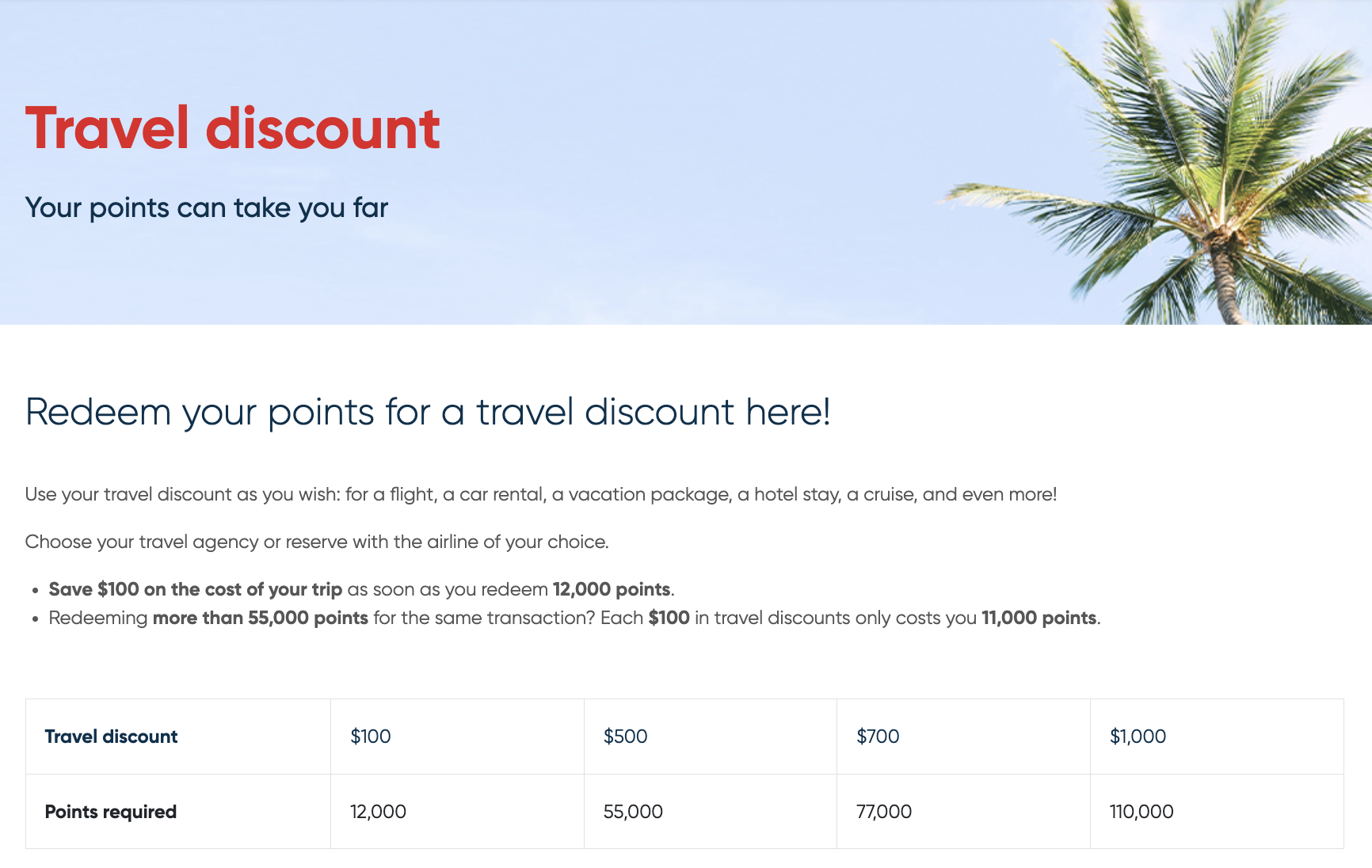
Les points BNC Plan Récompenses À la carte peuvent aussi être échangés contre des cartes-cadeaux, des items, des crédits au compte et autres. Retrouvez plus de détails sur les toutes les récompenses ici.
Des assurances voyages complètes pour vos aventures
En plus de ses avantages en matière de récompenses, la National Bank Platinum Mastercard propose des assurances voyages complètes pour vous assurer une tranquillité d’esprit lors de vos voyages. Les protections comprennent :
- Assurance médico-hospitalière hors de la province de résidence (pour des voyages d’au plus 10 jours)
- Assurance annulation ou interruption de voyage
- Assurance retard de vol et de bagages
- Assurance vol ou perte de bagages
- Assurance location de véhicules (locale et à l’étranger)
Avant de partir en voyage, assurez-vous de lire attentivement le contrat d’assurance et gardez à portée de main les coordonnées nécessaires pour faire une réclamation. Tous les détails de la police se trouvent ici.
Des protections supplémentaires viennent avec la National Bank Platinum Mastercard :
- Assurance en cas de bris accidentel, perte ou vol d’appareils mobiles
- Garantie du fabricant prolongée sur les achats
- Assurance achats (jusqu’à 180 jours)

Conclusion
La National Bank Platinum Mastercard est une option attrayante pour les jeunes professionnels à la recherche d’une carte de crédit voyage accessible. Pour voir comment elle se mesure à une autre carte Platine populaire, consultez notre comparatif entre la National Bank Platinum Mastercard et la Carte Visa TD Platine Voyages.
Avec des frais annuels abordables de 70 $ (ou sans frais avec l’offre en cours!), des multiplicateurs intéressants sur des catégories de dépenses quotidiennes, un programme de récompenses flexible et des assurances voyages complètes, cette carte offre une combinaison gagnante pour ceux qui souhaitent voyager plus pour moins.
- Annual fee
- $0 $70No annual fee the first year
- No annual fee the first year
- Our valuation
- $430Milesopedia first-year estimate First-year valueWelcome bonus$360Annual fee rebated$70Total$430Rewards on your spending are not included. The calculator that adds them from your own profile is on the card's page.
- Milesopedia first-year estimateFirst-year valueWelcome bonus$360Annual fee rebated$70Total$430Rewards on your spending are not included. The calculator that adds them from your own profile is on the card's page.
- Welcome offer
- 40,000 points
- + First Year Annual Fee Rebate
- Ends Nov 4, 2026
on National Bank's website
Questions Fréquentes sur la Carte Mastercard® Platine de la Banque Nationale pour jeunes professionnels
Voici des questions fréquemment posées dans la communauté milesopedia au sujet de cette carte.
Pourquoi la Carte Mastercard Platine BNC est-elle aussi populaire chez les jeunes professionnels?
Parce qu’elle combine aucune exigence de revenu minimum avec un programme d’assurances voyage solide habituellement réservé aux cartes premium. La Carte Mastercard® Platine de la Banque Nationale offre des frais annuels de 70 $ (souvent renversés la première année), un bonus de bienvenue allant jusqu’à 25 000 points BNC Récompenses, et des taux d’accumulation intéressants pour quelqu’un qui débute sa carrière et veut commencer à voyager intelligemment.
Quels sont les taux de récompense de la Carte Mastercard Platine BNC?
La Carte Mastercard® Platine de la Banque Nationale rapporte 2 points par dollar sur l’épicerie, les restaurants, la livraison de repas, les boîtes-repas et les bars (sur les premiers 1 000 $ par mois), 1,5 point par dollar sur l’essence, la recharge de véhicules électriques, les factures récurrentes et les voyages, et 1 point par tranche de 1,50 $ sur tous les autres achats. Ce sont des multiplicateurs compétitifs pour une carte sans exigence de revenu.
Quelles assurances voyage sont incluses avec la Carte Mastercard Platine BNC?
La Carte Mastercard® Platine de la Banque Nationale inclut une couverture frais médicaux d’urgence jusqu’à 10 jours de voyage, une assurance annulation et interruption de voyage, des assurances retard de vol et retard de bagages, une protection en cas de perte ou vol de bagages, ainsi qu’une assurance collision et dommages pour les voitures de location. Vous obtenez aussi une protection des achats de 180 jours et une extension de garantie du fabricant.
Comment puis-je échanger mes points BNC Récompenses?
Le programme BNC Plan Récompenses À la carte est l’un des plus flexibles au pays : vous payez d’abord votre achat de voyage avec votre Carte Mastercard® Platine de la Banque Nationale, puis vous demandez un crédit sur relevé en points dans les 90 jours qui suivent. Cela élimine les restrictions de partenaires : tout achat de billet d’avion, hôtel, location de voiture, croisière ou forfait vacances est admissible, peu importe la compagnie ou le site de réservation.
Our featured card
- Annual fee
- $0 $70No annual fee the first year
- No annual fee the first year
- Our valuation
- $430Milesopedia first-year estimate First-year valueWelcome bonus$360Annual fee rebated$70Total$430Rewards on your spending are not included. The calculator that adds them from your own profile is on the card's page.
- Milesopedia first-year estimateFirst-year valueWelcome bonus$360Annual fee rebated$70Total$430Rewards on your spending are not included. The calculator that adds them from your own profile is on the card's page.
- Welcome offer
- 40,000 points
- + First Year Annual Fee Rebate
- Ends Nov 4, 2026
on National Bank's website
Our editorial integrity
Our reviews and rankings are based on an objective assessment. Advertisers do not influence our content. We may receive compensation through some links; our analysis and opinions remain independent.