Carry-on Baggage: Tips for Traveling Light with a Carry-on

Loading article…
Traveling solely with carry-on luggage has become a popular strategy among experienced travelers, combining practicality and cost-effectiveness. By avoiding checked baggage, one saves time at the airport, reduces the risk of loss, and avoids additional fees, especially since several airlines have tightened their baggage policies depending on the chosen fare.
However, successfully packing everything into a limited space requires careful organization and wise choices. In this article, we reveal proven tips for optimizing your carry-on suitcase (and your personal item) so you can travel light without sacrificing comfort.
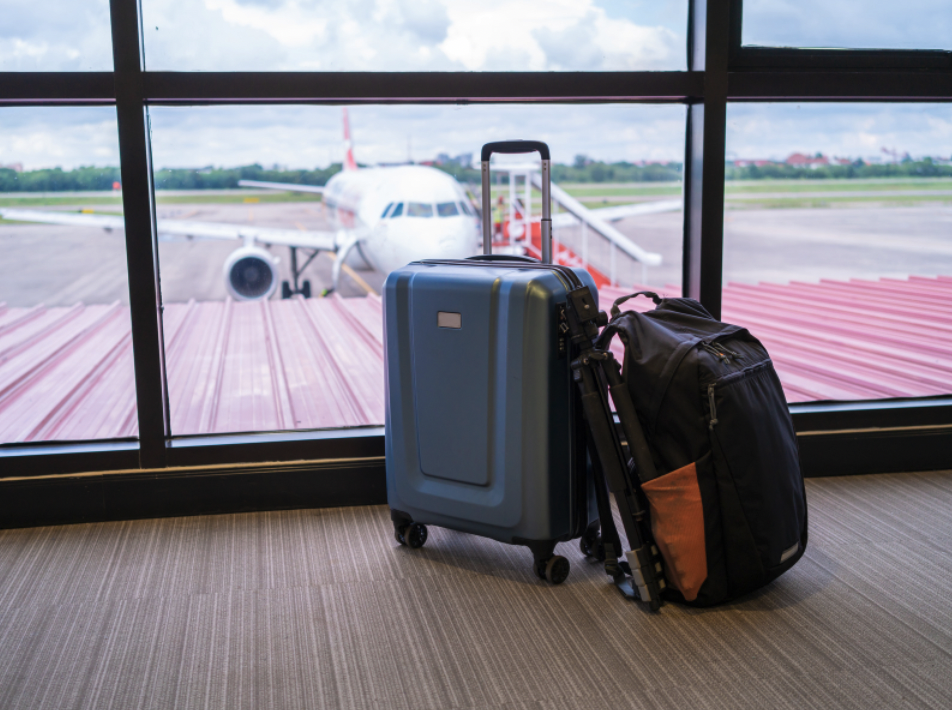
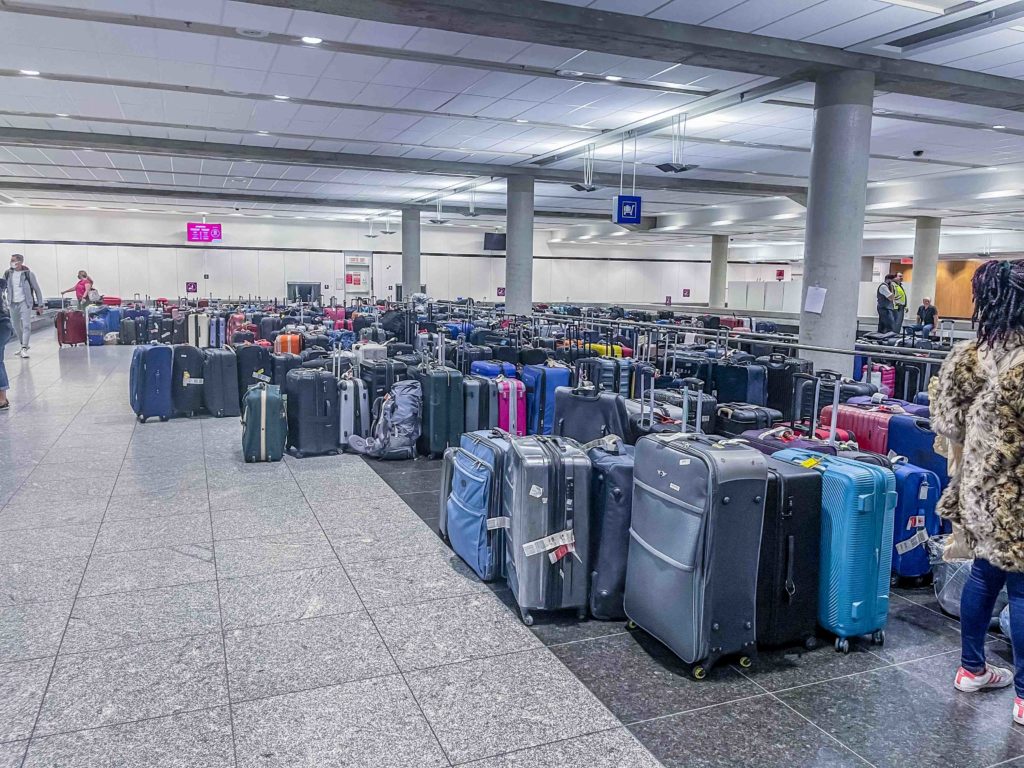
Checked baggage is more likely to be delayed (or, more rarely, lost). But why?
When an aircraft arrives at its destination, a team must unload incoming baggage and then reload the aircraft with baggage for the next flight. Between tight deadlines, short connections, delays (weather, congestion), and sometimes labor shortages, some suitcases may not be processed on time or in the right place.
Airlines face difficult decisions, for example:
So? To avoid a cascade of delays, and ultimately cancellations, some checked bags may not board the same flight as their owners, in order to allow the aircraft to depart on time.
Result: it is better to rely on yourself and keep essentials in your carry-on baggage (and personal item) as much as possible.
The main advantages of traveling with carry-on baggage are:
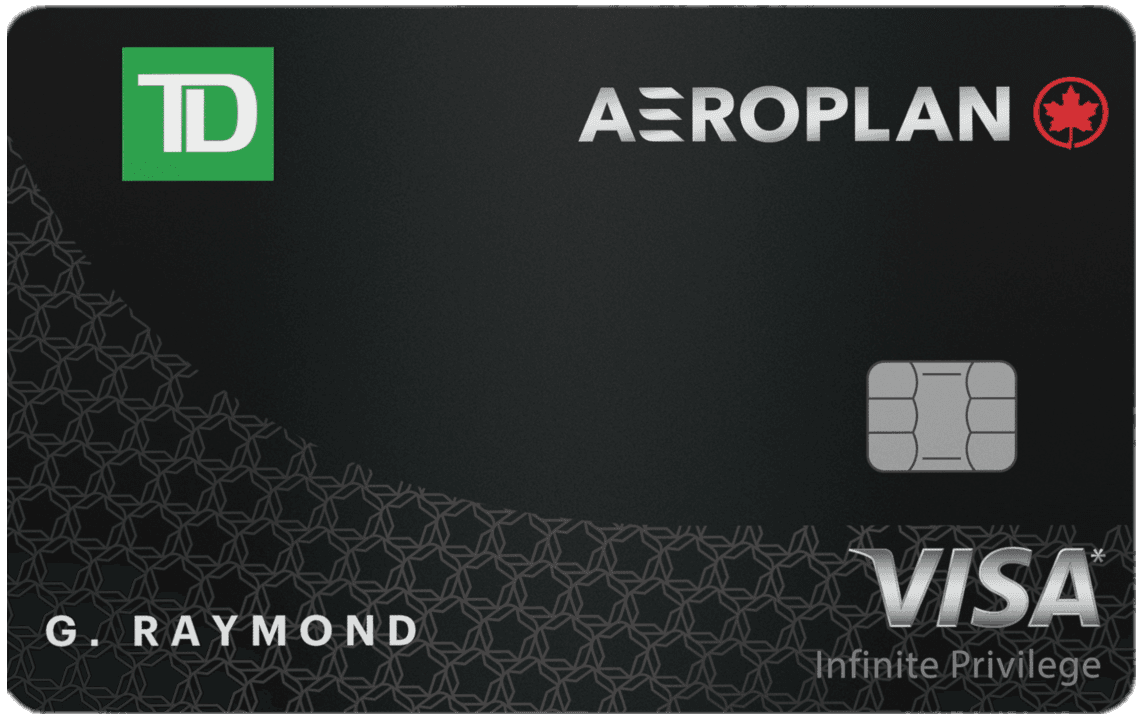
It is true that there are now a multitude of credit cards that offer a free checked bag such as the TD® Aeroplan® Visa Infinite* Card or a travel credit from the National Bank World Elite Mastercard® allowing for the reimbursement of baggage fees, but the advantages of carry-on baggage are significant.
By traveling only with a carry-on, you often save on fees and gain simplicity, which can allow you to reserve your budget (or travel credits) for other aspects, such as an upgrade or access to a lounge.
on National Bank's website
For some time now, several Canadian airlines have changed their carry-on baggage policies, particularly for Basic Economy fares. These changes may affect how you pack for light travel.
Air Canada: With a Basic Economy fare, you are entitled to one personal item only on several routes (including within Canada, to/from the United States, and certain sun destinations). Any additional baggage must be checked at the airport and is subject to fees. Exception: if you are connecting to an international destination on the same fare, you may bring one standard carry-on bag in addition to your personal item.
Air Transat: With the Eco Budget (or Promo) fare, standard carry-on baggage is not permitted on certain routes (notably to/from Florida, to/from the South, and on domestic flights within Canada): only the personal item is allowed in the cabin. In these cases, any other baggage must be checked (fees may apply). Additionally, if baggage exceeds the permitted limits, surplus fees are added: $100 CAD if it is overweight (over 23 kg, up to 32 kg) and $100 CAD if it is oversized (over 158 cm in linear dimensions, up to 292 cm), and both fees may apply if the baggage is both overweight and oversized.
Porter Airlines: The baggage allowance depends on the fare. All passengers are entitled to one personal item in the cabin, but with the Basic fare, standard carry-on baggage is not included: you must check all other items (fees may apply depending on the fare and when you add the baggage). Standard, Flexible, Freedom, Nav, and Ultimate fares generally include a personal item and a standard carry-on bag.
Sunwing: Customers who have booked a Sunwing Vacations package travel aboard WestJet and therefore follow the associated baggage rules. In 2026, eligible packages include one personal item, one carry-on bag, and one checked bag for free. For additional checked baggage, prices vary depending on the time of purchase: starting at $40 + taxes if purchased online in advance (up to 24 hours before), starting at $50 + taxes during online check-in (within 24 hours before departure), and starting at $60 + taxes at the airport; higher fees apply for 3rd/4th bags as well as for oversized or overweight baggage (starting at $160 + taxes).
WestJet: The cabin baggage allowance depends on the fare. Generally, WestJet allows one personal item (41 × 15 × 33 cm) and one carry-on bag (56 × 23 × 36 cm). Items that exceed the sizer or the permitted cabin limits are treated as checked baggage and are subject to applicable fees. Fees vary by fare, destination, and especially the time of purchase: as an indication, checking a bag can cost from $35–$42 if prepaid, and from $55–$65 if paid at the airport (fees increase for additional bags).
It is therefore essential to compare fare options before booking: a base fare may seem economical at first glance, but quickly become less advantageous once additional fees are taken into account.
First, you must respect the dimensions (and, if applicable, the weight) authorized for carry-on baggage by the carrier. These criteria vary from one airline to another, and just because all your flights are on the same ticket does not mean the rules will be identical, especially if a segment is operated by a partner.
For example, with Air Canada, the usual allowance is one standard carry-on bag as well as one personal item (e.g., handbag, laptop bag, small backpack). In other words: one carry-on plus one personal item, and not two carry-ons.
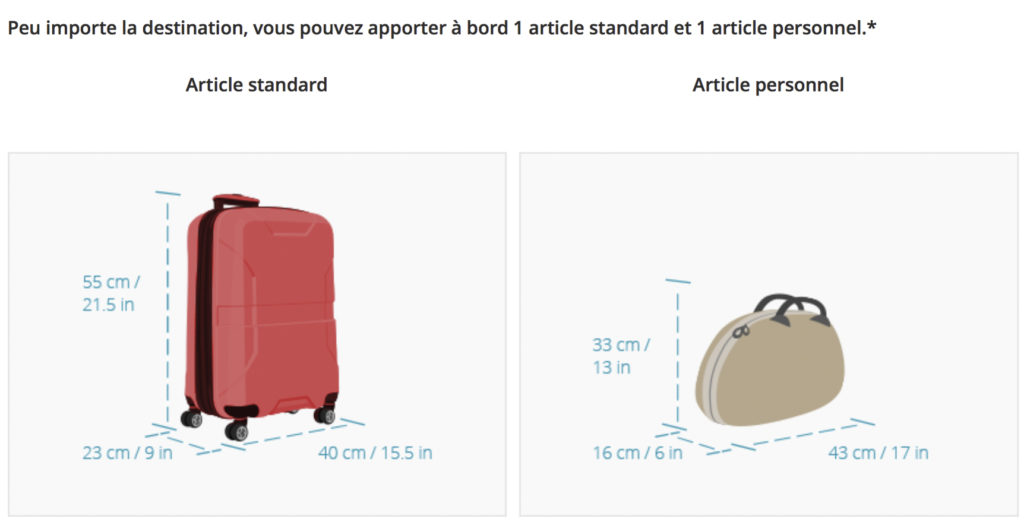
Wheels and handles are generally included in the calculation of carry-on baggage dimensions. Depending on the airline (and sometimes the type of aircraft), controls can be more or less strict: some regularly check the size, and in some cases, the weight, while others do so mainly when the flight is full or cabin space is limited. Dimensions and weight limits are therefore not “standard”: they vary from one carrier to another (for example, Air Canada allows 55 × 40 × 23 cm, while WestJet lists 56 × 23 × 36 cm for carry-on baggage).
Next, you need to choose a carry-on bag that you can easily take with you.
For example, when carriers apply stricter limits (or cabin space is restricted), a soft duffel bag can be very practical: it is often lighter and more compressible than a hard-shell suitcase, which helps in meeting permitted dimensions while maximizing space for your personal belongings.
However, I much prefer pulling a 10 kg wheeled suitcase or a backpack than having it on my shoulder for the entire journey to the hotel!
Leaning toward a backpack? We compared 5 carry-on backpacks sold on Amazon.ca against Air Canada, WestJet and Porter size limits.
Is it really possible to travel only with carry-on baggage? Even with a baby? Yes! Here are my tips for always traveling with a carry-on.
In my experience, I can fit all my clothes into three packing cubes and my spouse can do it with two cubes. Since our child arrived, they take one cube.
The clothing allowance is the same whether traveling for 1 week, 2 weeks, or 3 months. If a piece does not fit in a cube, it is simply left behind.
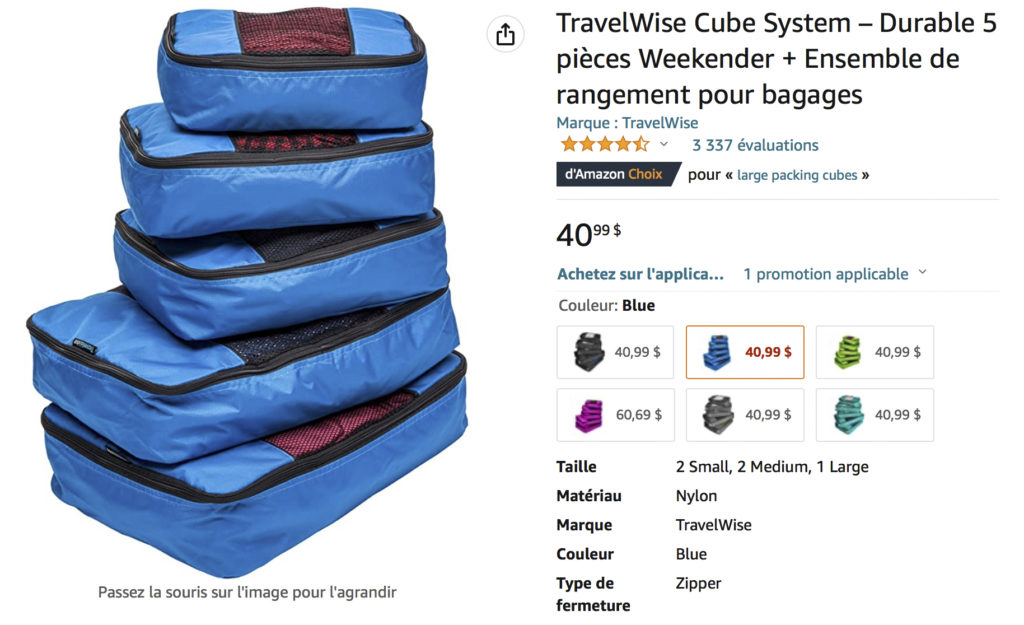
Next, we play Tetris to fit all the cubes into our two carry-ons. Each of us has our own cube color so we don’t waste time finding them in the carry-on baggage.
Roll or fold? Although many advocate rolling to increase available space, we have never had a problem folding our clothes. However, rolling them avoids wrinkles! Try it yourself with what you have chosen to bring!
Some pieces of clothing are very beautiful, but they are not necessarily practical for travel. To travel only with carry-on baggage, you should favor clothes:
For example, I have dresses made of different materials; some dresses will take up more space than others.
Space in a carry-on is limited, so choices must be made accordingly. Regarding shoes and sandals, you should also try to bring those that are the most versatile.
Long before the Instagram era, I always liked to dress well and have several looks on vacation. The trick to having many looks with only carry-on baggage is to choose pieces that ALL go together. I usually choose a palette of 2 to 4 colors that work well for mix & match.
Before leaving on a trip, I check the maximum number of looks I can create with the pieces I have selected. In the event that I have more looks than days, I remove items from my carry-on!
Laundromats are very common and in some countries, a load costs only a few dollars. Otherwise, the bathroom sink is always available; I generally bring a portion of powdered soap for a two-week trip, per person.
When you need to bring more specific items like hiking boots for a trip to Patagonia or a coat to go to Everest Base Camp, these can take up a huge amount of space in carry-on baggage.
Wear these items! Additionally, these items are often heavier, which can cause problems on some carriers.
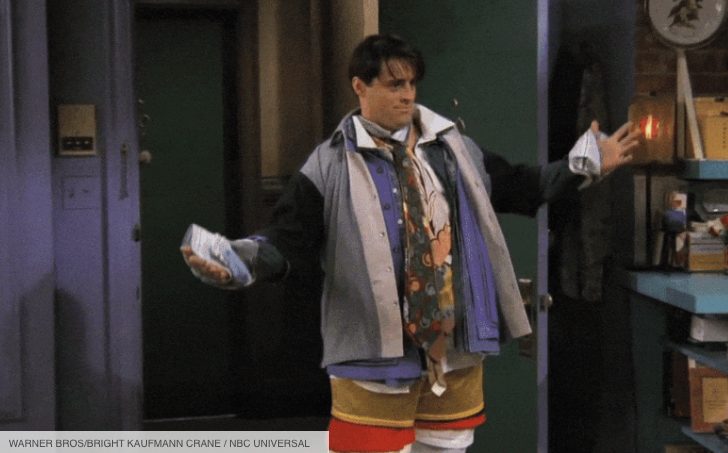
As a general rule, I always wear my jeans on the plane because they take up 3 times more space than my shorts. Similarly, I always have my jacket on; if it gets too hot on board, it’s easy to store a sweater between suitcases in the overhead compartment.
In the cabin, you are subject to security control rules regarding liquids (including gels, creams, and aerosols). Generally, you can carry containers of maximum 100 mL (or 100 g), grouped in a bag with a total capacity of approximately 1 L.
Choices must therefore be made, both to respect these restrictions… and to save space in your carry-on.
I particularly recommend Lush solid shampoos; this lightens my carry-on baggage significantly because I also use it as soap when it is not provided by the hotel or when we stay in youth hostels.
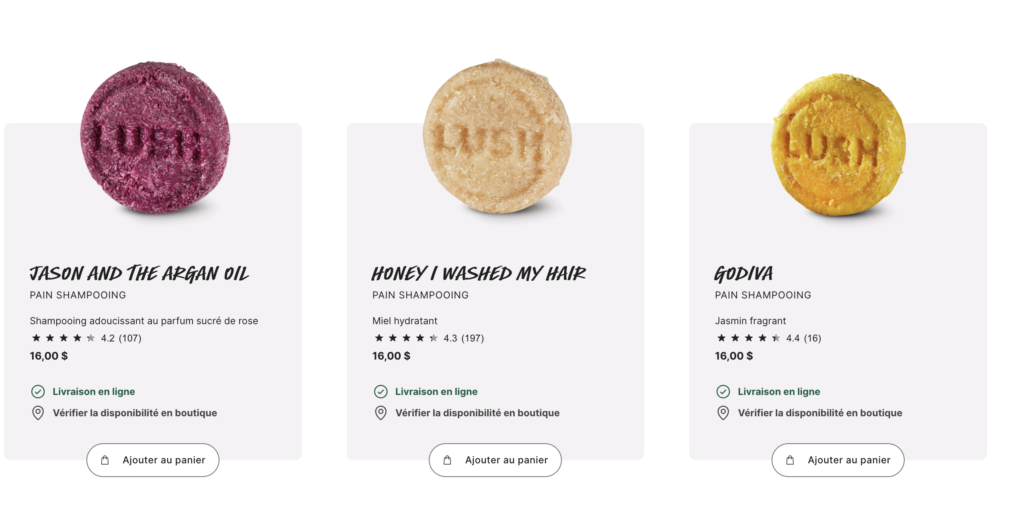
I know it’s hard to restrict yourself with beauty products, but they are often what take up the most space in carry-on baggage. A simple color palette, mascara, and foundation can be enough to survive… versus facing baggage delays. It’s up to you to decide.
Similarly, for the majority of people traveling for (at most) two weeks, is it really necessary to bring an electric razor? Shave before you leave and bring a simple blade or a disposable razor for touch-ups.
Most establishments provide a hair dryer, whether in the room or in the Airbnb.
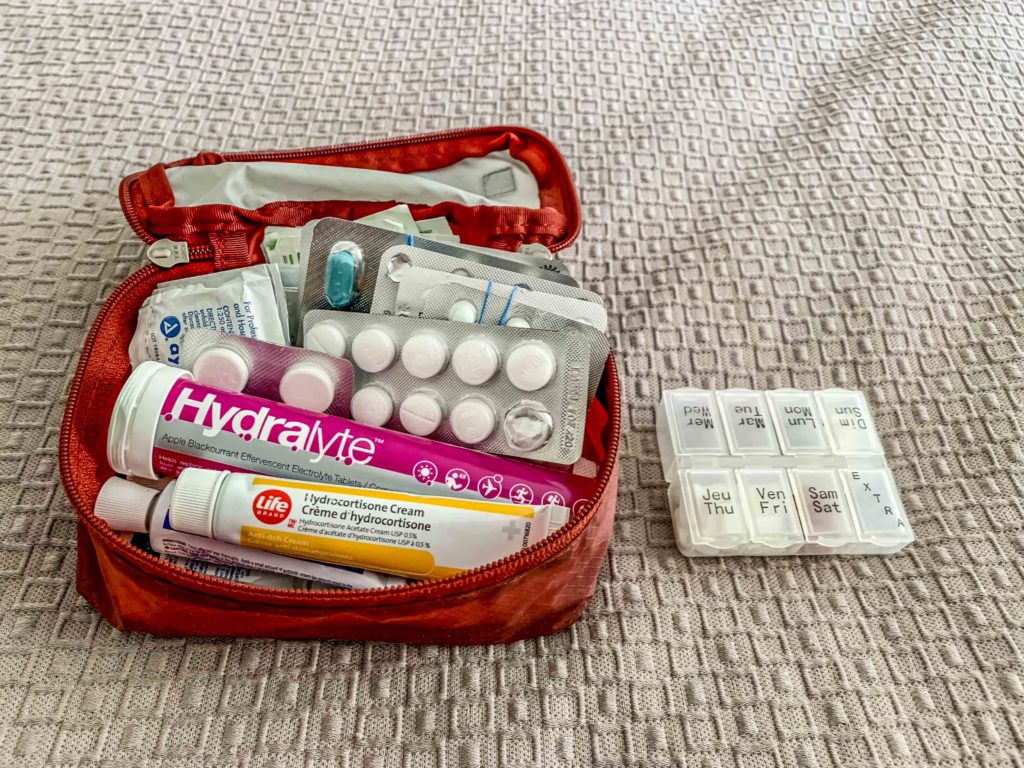
I advocate for prevention regarding travel health and I always carry a well-stocked first aid kit in my carry-on baggage, but it is not necessary to bring the whole bottle of Tylenol.
Indeed, the primary purpose of the emergency kit is to help out; if you are missing medication, it is possible to find it almost anywhere.
These small pillboxes are great for organizing the medications in your kit; I indicate the name of the medication under each compartment and keep the instructions (dosage) on my phone.
We mentioned earlier that there is a limit for liquids in carry-on baggage; for a family, it is often impossible to stay below 100 mL for sunscreens, for example.
Nothing stops you from buying them at your destination! Pharmacies, grocery stores, or the front desk of an all-inclusive are generally good places for these types of products. Indeed, most pharmacy products are available worldwide:
On most major carriers, you are entitled to bring a “personal item” in addition to a carry-on bag. This bag should be smaller and easily stored under the seat in front of you; if it feels uncomfortable, it’s because it’s too wide according to the rules.
In this bag, I usually put all my electronic devices as well as toys and snacks for my baby; so, everything that is fragile or everything I need during the flight.
Most of the time, when a stroller is checked at the gate, it is returned to the parents at the aircraft exit. However, it sometimes happens that it is sent to the carousel with the other baggage.
Therefore, it is advisable to have a stroller that folds into a carry-on baggage size. This way, you can bring it on board with you; my spouse usually takes care of the stroller and the baby boards the plane with me in the baby carrier.
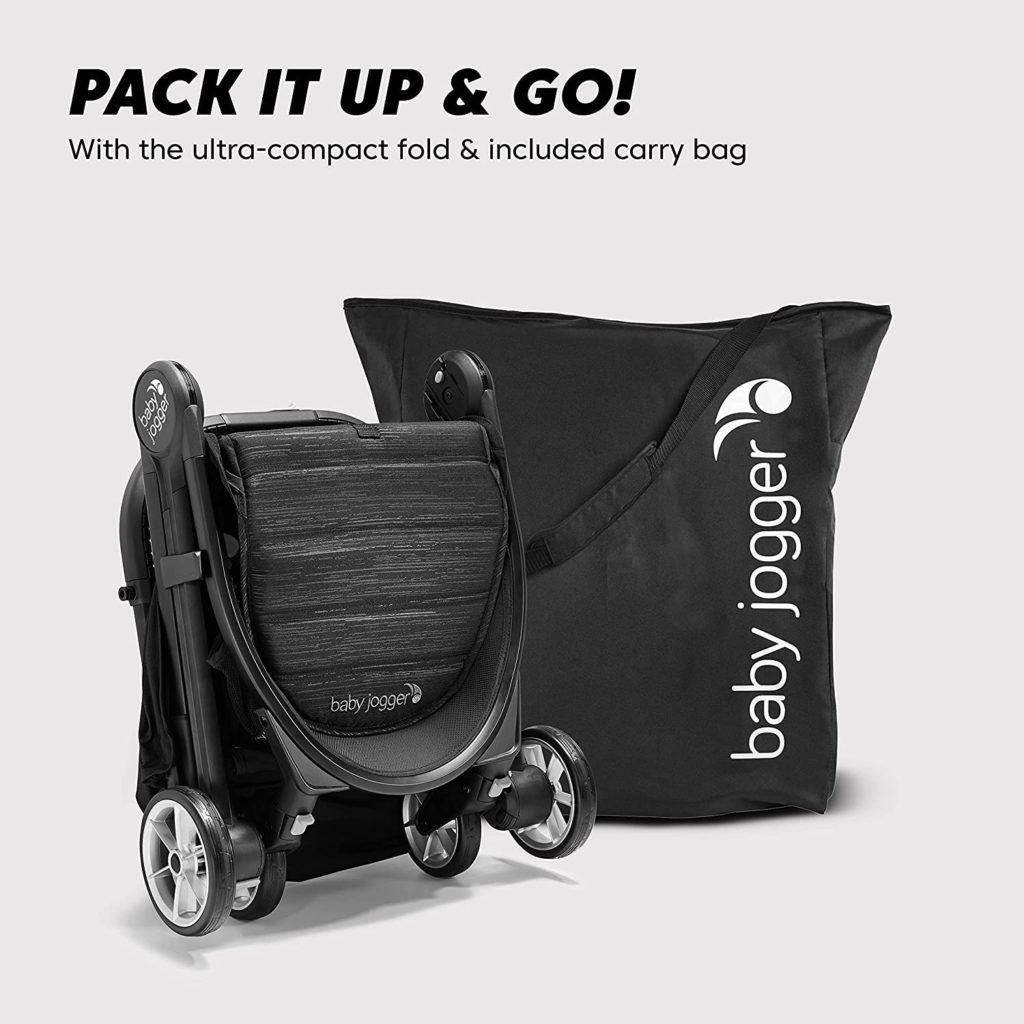
As for the car seat, you can also bring it on board and install it if your child has their own seat. Otherwise, public transportation is an excellent way to save money while traveling and allow us to travel with only carry-on baggage!
And what about sleeping? When traveling with a baby, it is easy to find accommodations with playpens or cribs; you just have to search accordingly.
Some aircraft do not have enough storage to accommodate everyone’s carry-on baggage, especially when the flight is full.
This is particularly common on certain regional aircraft (for example “CRJs” or some “Embraers”), where overhead bins are smaller and cannot always accommodate “standard size” carry-on suitcases. Even on larger aircraft, space may run out if many passengers are traveling with a carry-on, which sometimes leads to gate-checking some bags.
Admittedly, you are probably following the dimensions (and, if applicable, weight) indicated by the airline to the letter, but these rules remain general and there may be exceptions depending on the type of aircraft, cabin configuration, and available space.
Before getting upset, remember that not all planes are the same: on the same route, you might end up on a more spacious aircraft… or on a regional plane with more limited compartments.
Therefore, airlines cannot allocate different carry-on baggage sizes from one flight to another, especially since they are subject to change at any time. On a large aircraft, there will be more room, so you can choose your aircraft accordingly.
So, at the boarding gate, the agent may ask if there are volunteers to check their carry-on baggage for free, especially when space is limited. Depending on the procedure used, the baggage will either be sent to the final destination (to be picked up at the carousel) or returned at the gate upon arrival.
With the baggage delays and losses observed in recent years, it is normal to be reluctant to check a “carry-on.”
First, if you know in advance that your aircraft will be small (like the CRJ), it may be wise to opt for a soft duffel bag that is moldable compared to a hard-shell suitcase.
Next, try to board among the first! Did you know that holders of certain credit cards have access to priority boarding with Air Canada? For example, with the TD® Aeroplan® Visa Infinite Privilege* Card or the American Express® Aeroplan®* Reserve Card, you can board in priority (often in “zone 2”) even if you are travelling in Economy Class.
In addition, these cards offer generous welcome bonuses that can help you save on your next trip!
Then, you can politely refuse to check your carry-on baggage. However, if there are not enough volunteers and spaces, you will not have a choice between checking your carry-on (or not boarding the flight if you insist on not leaving your suitcase).
Finally, while waiting for your flight to board, stay away from the gate and the counter agent. The latter will circulate around the flight gate to find and tag carry-on baggage that must go in the hold. If the agent is satisfied with the number of carry-on bags checked, you stand a chance of not being intercepted during boarding.
| Credit card | Annual fee | Welcome offer | |
|---|---|---|---|
| $599 | |||
| $599 | |||
| $599 |
Traveling only with carry-on baggage has many advantages. Mastering the art of cabin travel means adopting a thoughtful and strategic approach when preparing your belongings. By selecting versatile clothing, using effective storage accessories, and respecting airline rules, you will make your travels simpler and more enjoyable. These tips will help you travel more freely, with peace of mind, and fully enjoy your adventures.
on TD's website
It’s just a matter of organizing and making choices about what you really need and what you can buy at your destination.
On carriers like Air Canada and Air Transat, you must be able to lift your carry-on baggage yourself to store it in the overhead compartment. At Air Canada, no weight restriction is indicated for carry-on baggage, but it must remain light enough to be stored without assistance.
Usually, you can bring 1 carry-on bag and 1 personal item, for example a handbag or a laptop bag.
Yes, no problem, but remember that spreadable foods (peanut butter, jams, Nutella, etc.) and liquid/semi-liquid foods like compotes count toward liquid restrictions.
Yes, but you must respect the permitted limit of 100 mL per container and a total of 1 L.
It depends on the airlines; you can usually bring a diaper bag for babies and each child over 2 years old is entitled to a bag. However, you should check with your carrier.
Yes, it is possible to bring a reasonable amount of liquid and food when traveling with a baby under 2 years old.
Holders of certain credit cards like the TD® Aeroplan® Visa Infinite Privilege* Card can board with priority, regardless of the flight ticket class!
Yes, if there is no more room in the compartments and you are unable to put your carry-on baggage at your feet.
Sometimes yes, sometimes no. If space is limited, they have the right to measure the carry-on baggage and have it checked if your bag is too big.
on BMO's website
Our reviews and rankings are based on an objective assessment. Advertisers do not influence our content. We may receive compensation through some links; our analysis and opinions remain independent.