Choosing your plane: an element to consider when travelling

Loading article…
What to do when choosing your plane
When you are researching to buy a plane ticket, do you pay particular attention to the type of aircraft? Should you take this into consideration in your decision?
Travelers often ask about selecting the best seats on the plane. For example, families often target rows with bassinets, and people try to avoid seats near the lavatories.
Indeed, with the possibility of obtaining travel credits for seat selection reimbursement with the National Bank World Elite Mastercard®, this aspect is often taken into account when planning.
Where does the aircraft fit in all this? Is it important to choose your plane?
Certainly, a flight is mainly to get you from point A to point B; a simple means of transport. So, why bother choosing your plane?
| Credit card | Annual fee | Welcome offer | |
|---|---|---|---|
| $0 | |||
| $150 |
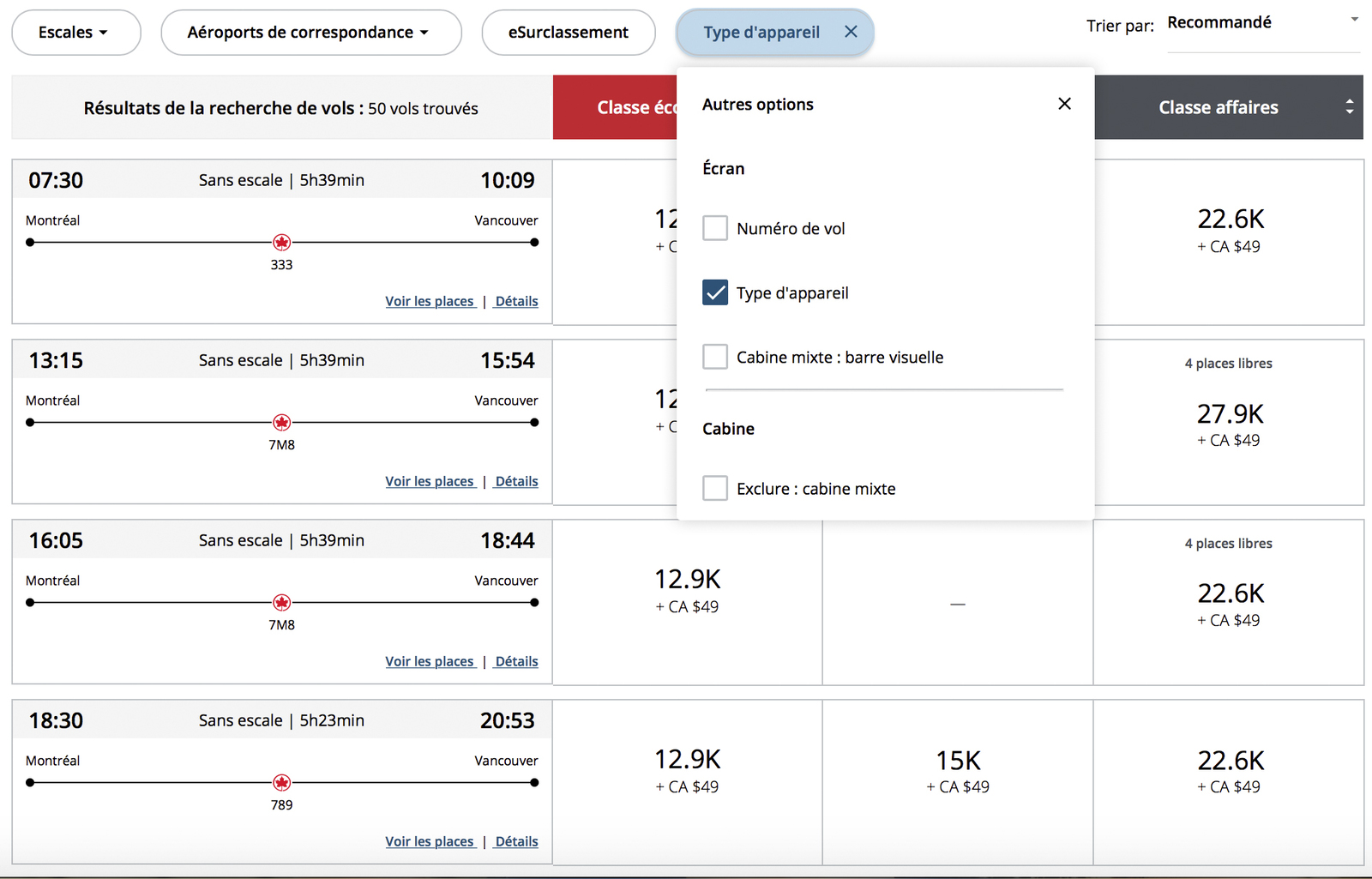
Flight prices are often similar for certain routes. In fact, the fare variation depends on the traffic, not the type of aircraft. Thus, on a flight between Montreal and Vancouver, Air Canada operates with several aircraft.
We can see here that the price is 22,600 Aeroplan points for business class on 3 of the 4 flights: 1 flight on the Boeing 737-MAX, 1 flight on the Airbus 330, and 1 flight on the Boeing 787.

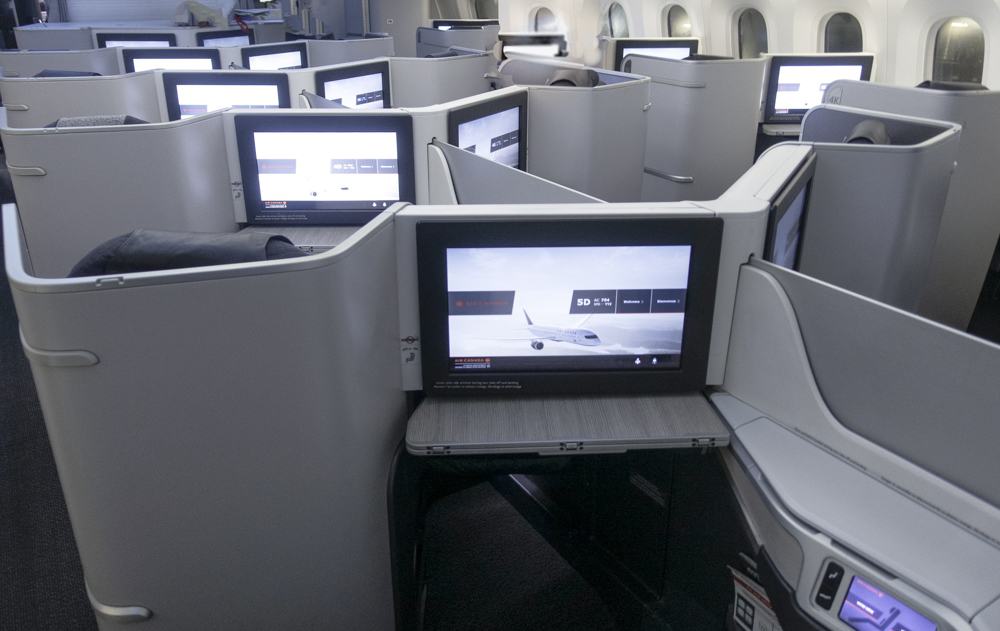
However, Business Class on the Airbus 330 or the Boeing 787 is clearly a better product than on the Boeing 737-MAX. Indeed, Business Class seats on wide-body aircraft recline 180 degrees.
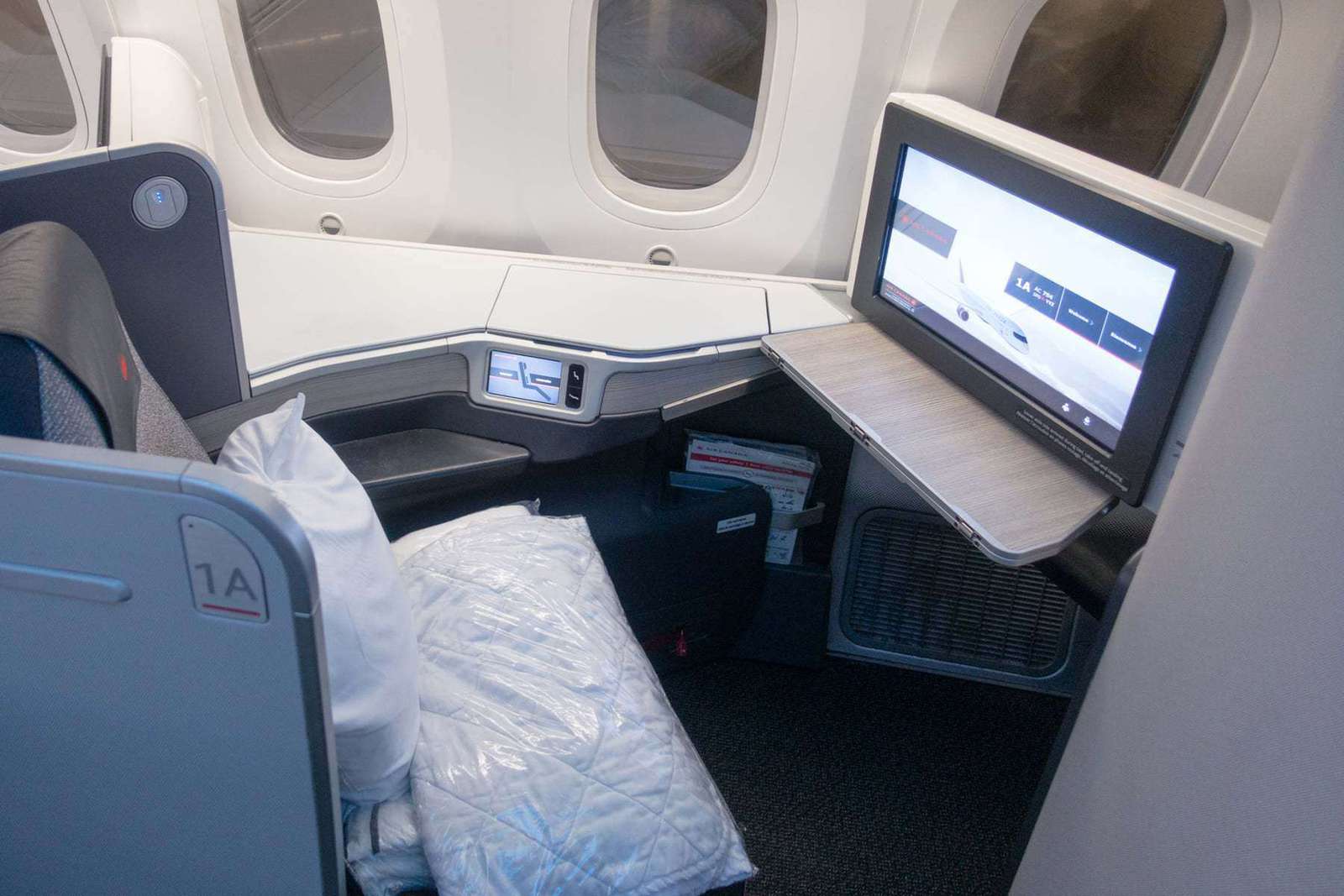
Whereas Business Class on the Boeing 737-MAX is a recliner-type seat. So for the same price, you can have a better product. A good reason to choose your plane if you are not limited by flight schedules!
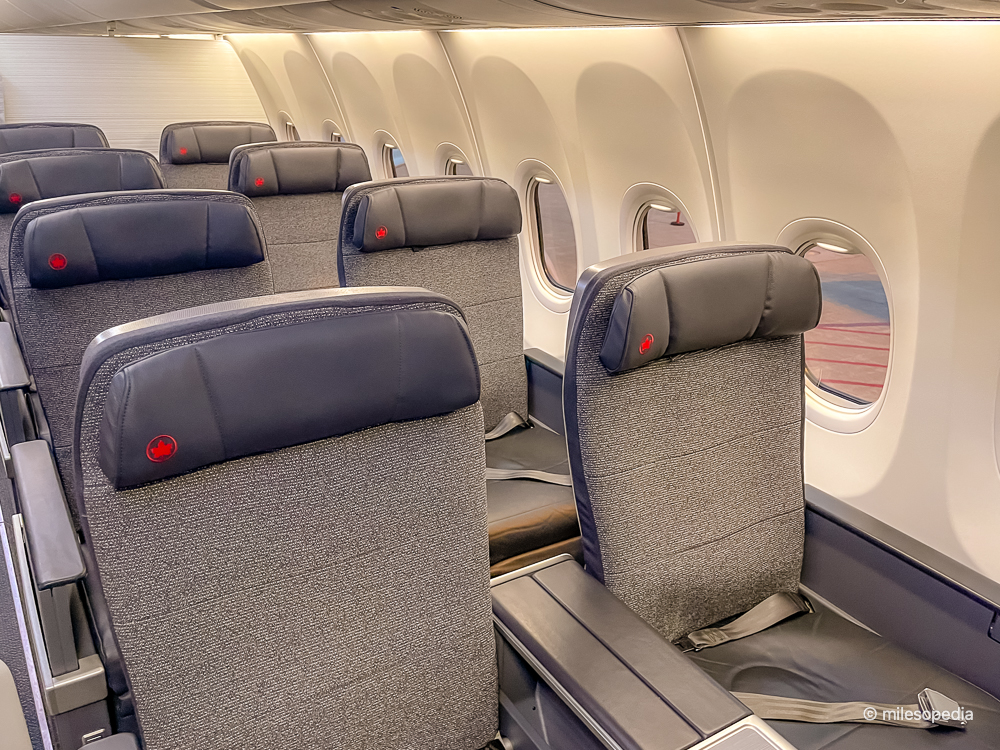
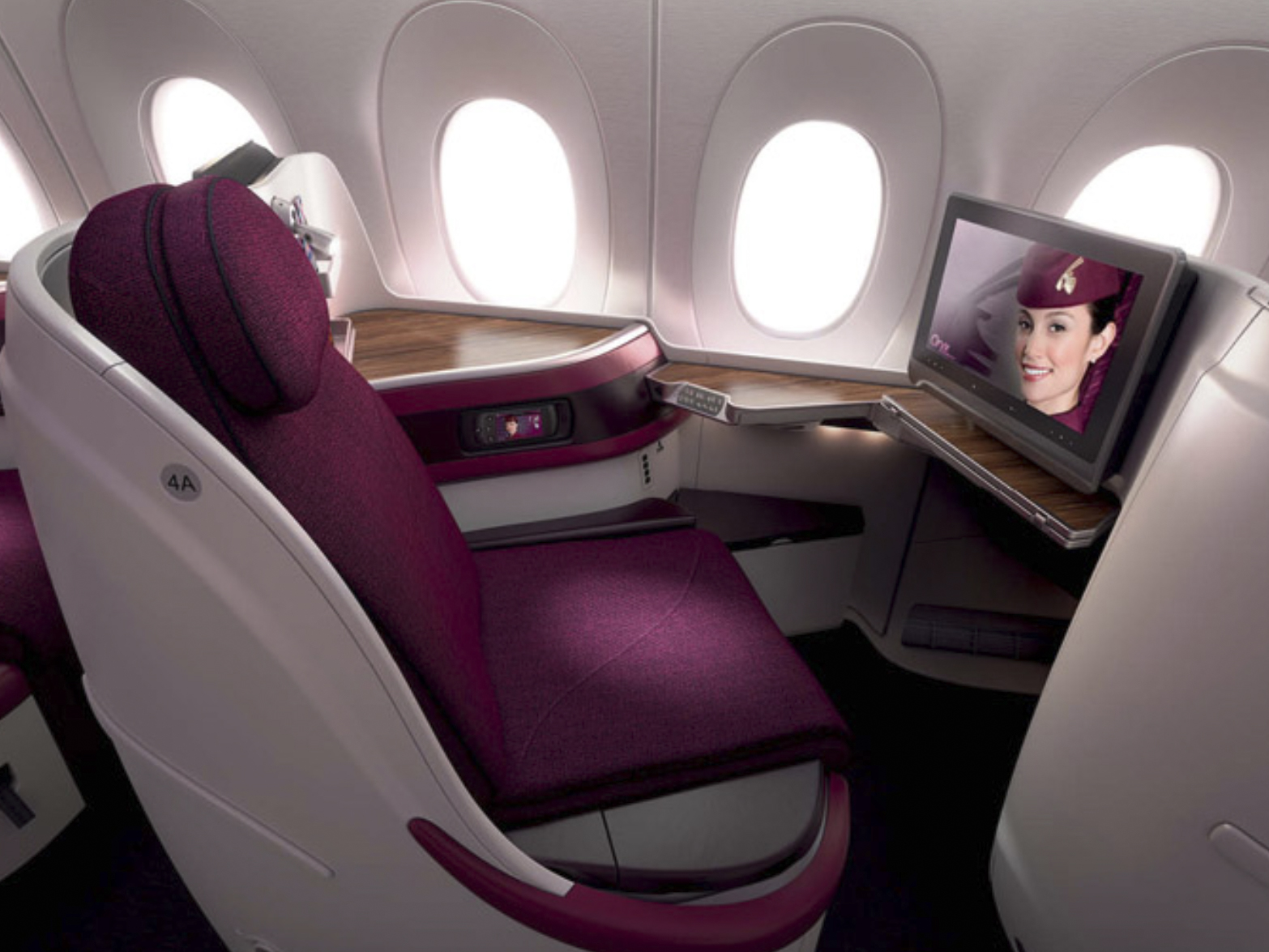
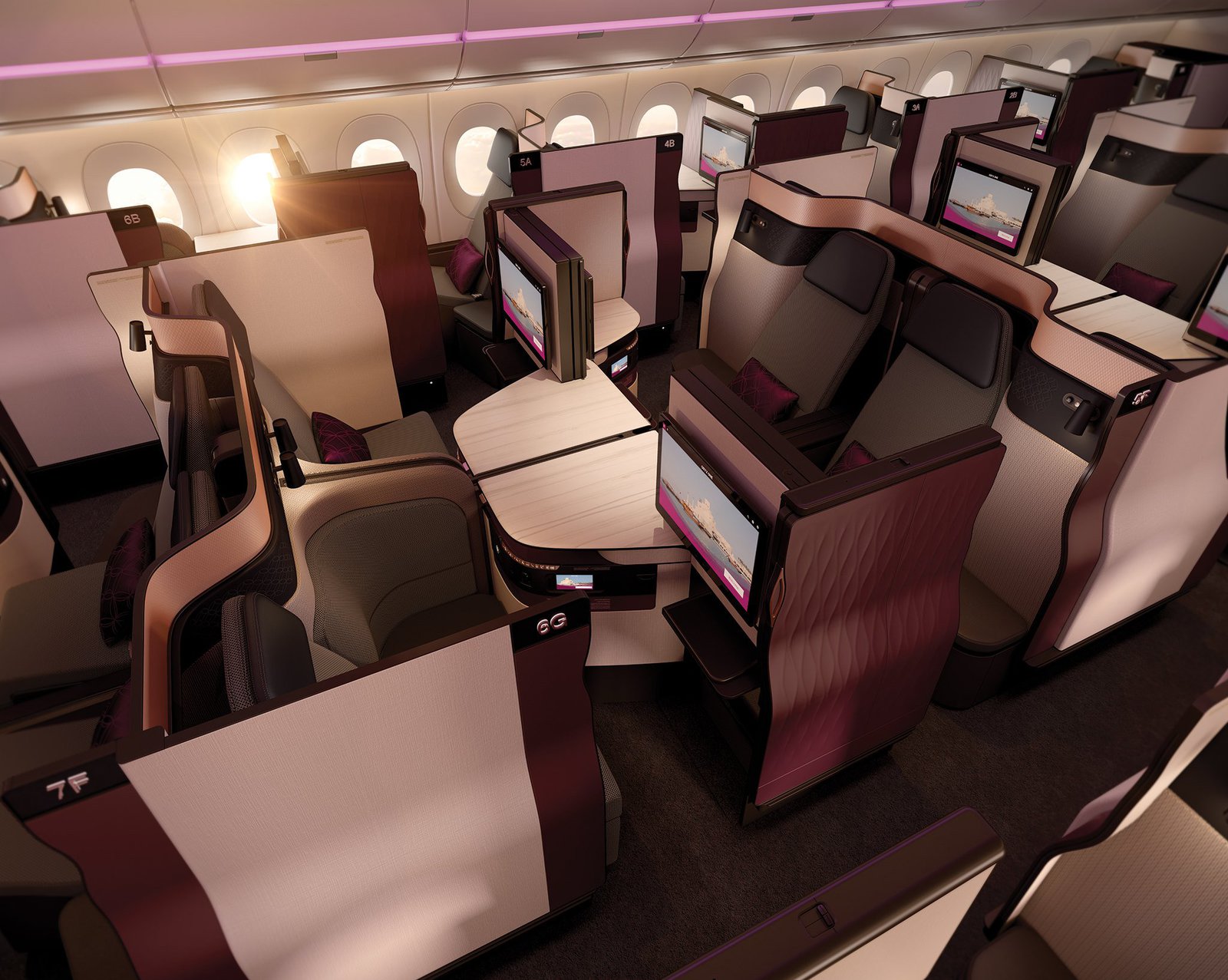
Another example of a blatant difference is in Qatar Airways Business Class. The following three products are in the same service class; you will have the same service since you are in Business Class, but the seat is not comparable. Choosing your plane therefore allows for a better product.
It is easy to see the difference in the “hard product” between these three Qatar Airways business class seats. The “hard product” is the fixed product such as the seat and its functionality.

Choosing your plane is not only relevant for business class!
Some aircraft are equipped with better technology that provides greater comfort.
For example, on the Boeing 787, the aircraft’s advanced pressurization system makes the air less dry than on an Airbus 330 or Boeing 777. In addition, the cabin is pressurized to 6,000 feet, 2,000 feet lower than older aircraft, which provides all the benefits of a higher concentration of oxygen in the air.

Then, when comparing the B-787 to the B-777, the B-787’s wing performs better. Thus, the plane can climb faster during a flight to settle above the clouds and thus avoid more turbulence under the same conditions. Consequently, the flight is more pleasant, and you arrive at your destination more rested.
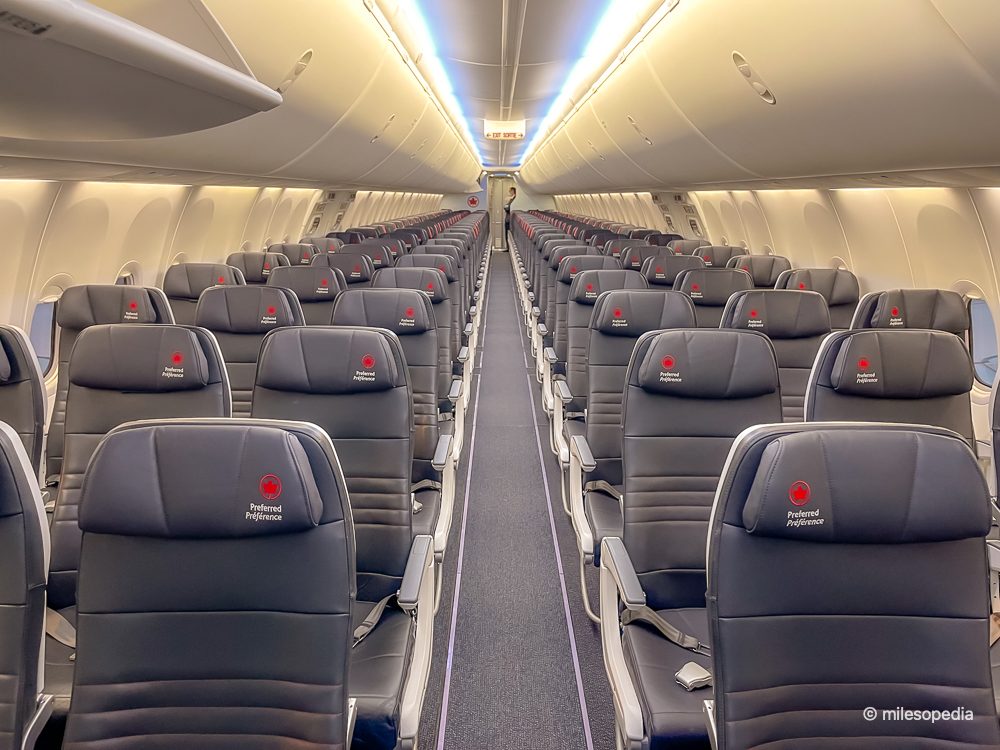
Similarly, just because you are crossing the Atlantic does not mean you will avoid single-aisle planes. Indeed, this flight between Montreal and London may be less expensive, but it involves not only a layover, but the transatlantic segment is on a small plane.
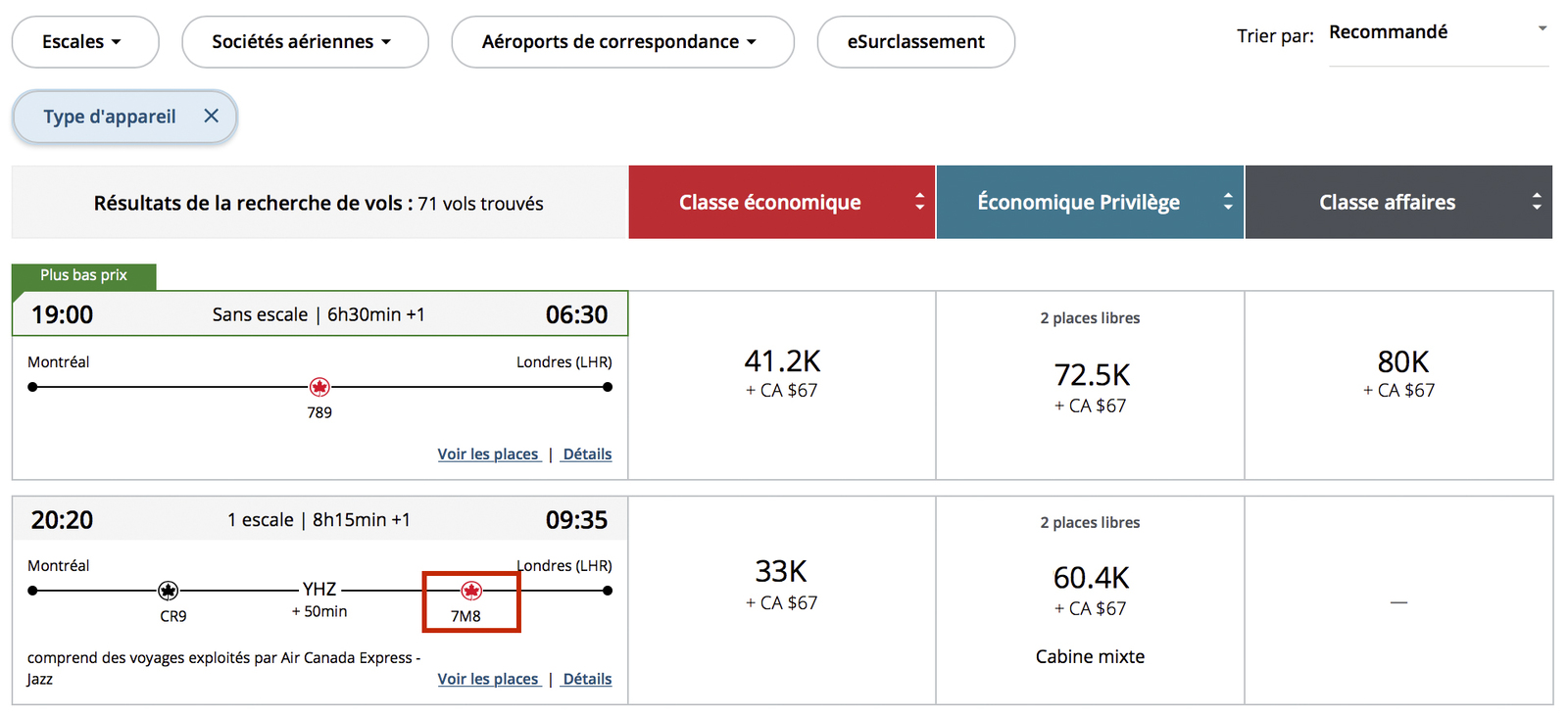
For some, a single-aisle aircraft is less comfortable than a large aircraft, as there can be congestion during service, and travel is more limited.
For some people, everything related to aeronautics is fascinating. You can recognize them because their eyes will light up if you mention the opportunity to fly on “the Queen of the Skies,” for example. Indeed, their bucket list is often filled with specific aircraft types such as the Boeing 747 or the Airbus 380.
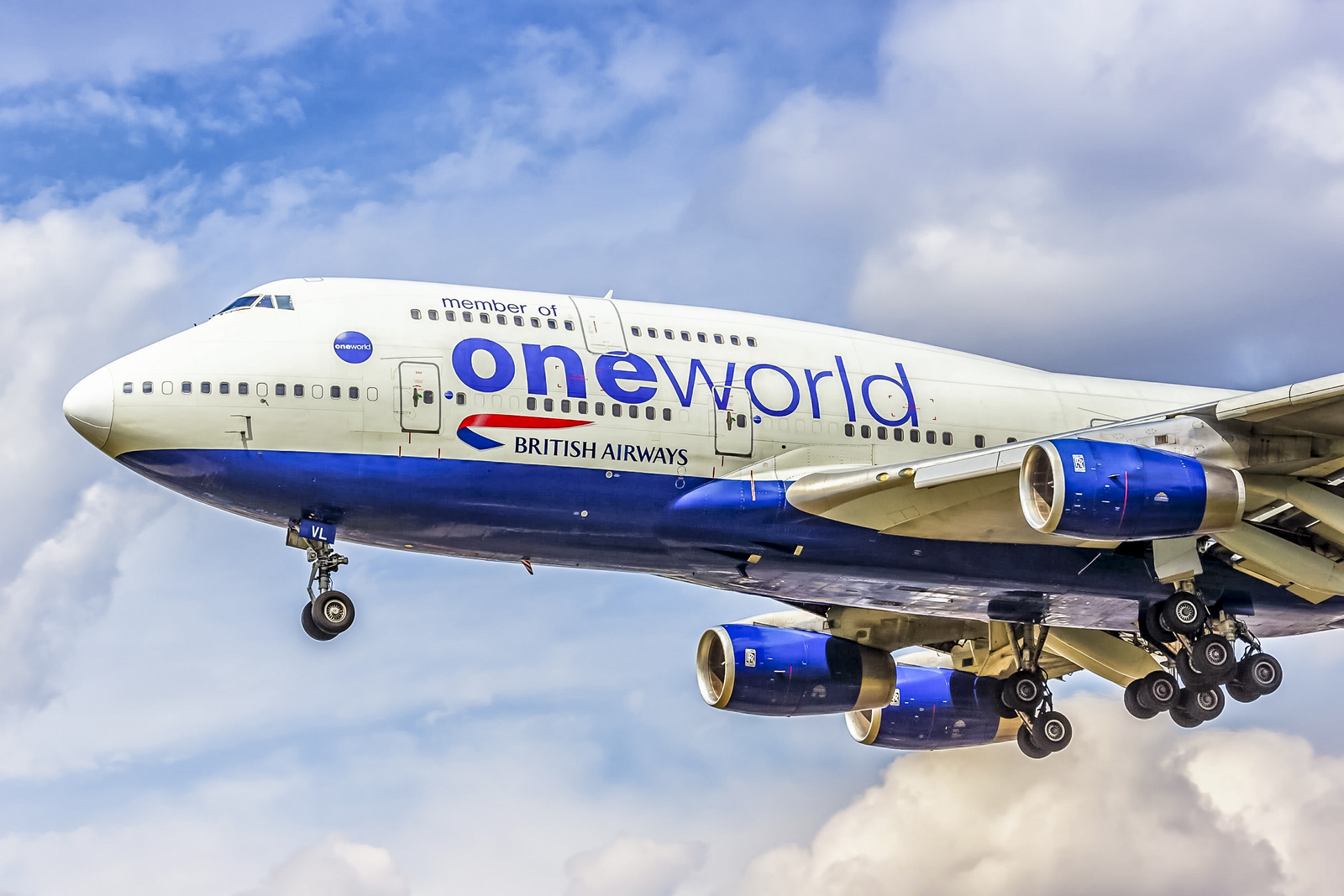
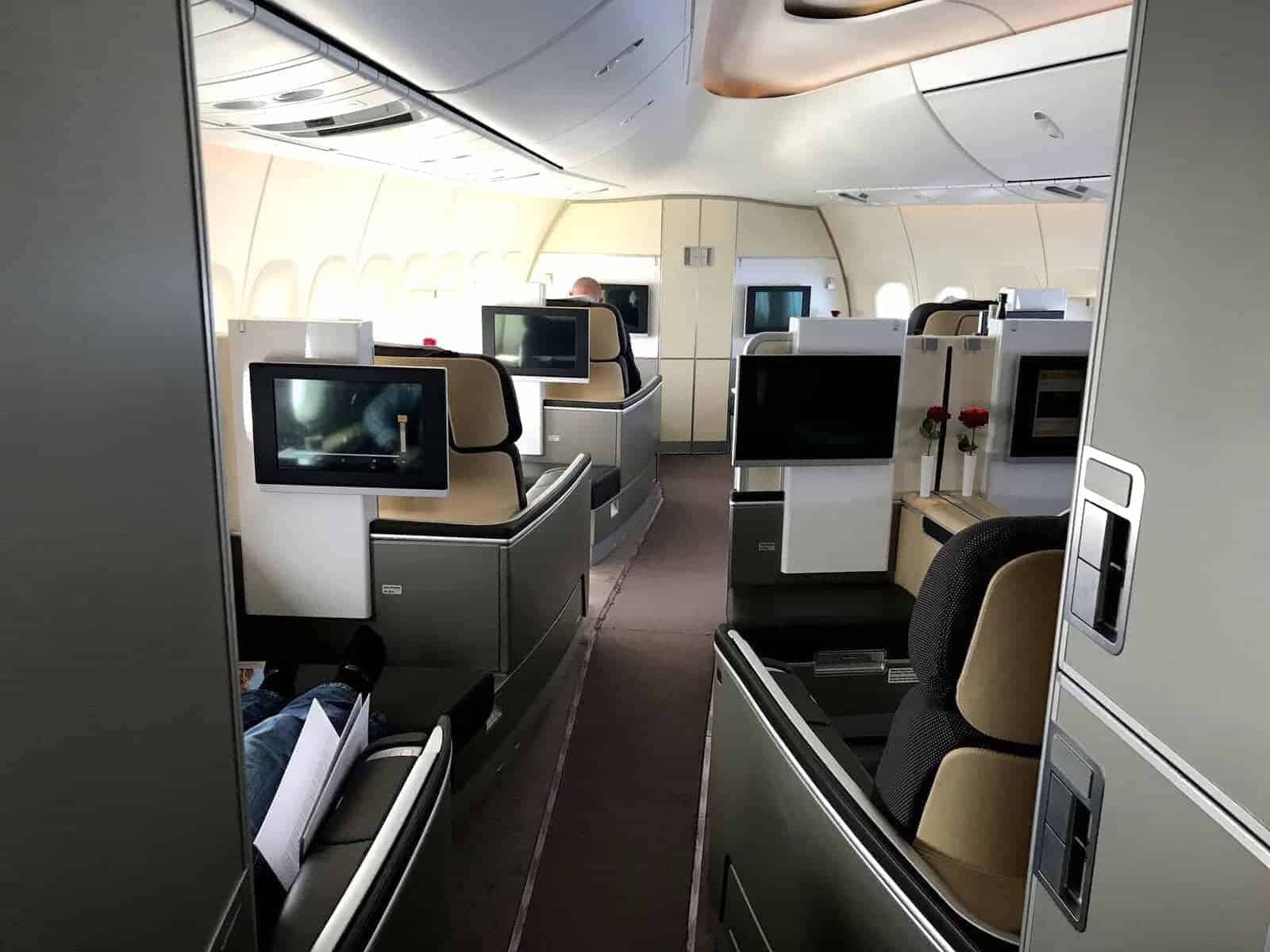
So, choosing your plane is even more important than the itinerary for an AvGeek. What to do when returning from a trip to Portugal when you absolutely want to fly in Singapore Airlines’ new suites? You opt for the Lisbon-Frankfurt-New York-Montreal route for a route that allows you to take the desired flight!
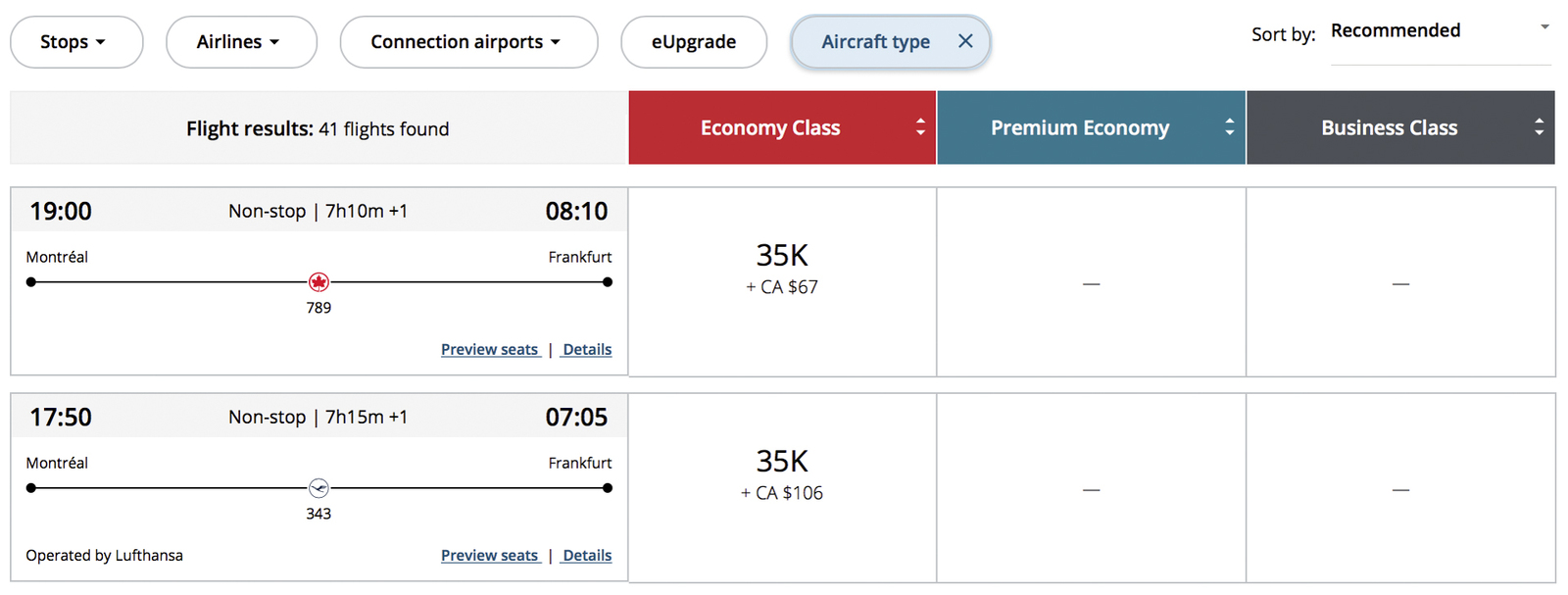
On the Air Canada search engine, you can select the option to have the aircraft type appear in your search results.
There are several types of seats within the same aircraft. To determine what kind of “hard product” you will receive, you can go to Expert Flyer and find your plane’s seat map. In general, it is the seat configuration that will allow you to know what the product in question is.
For example, on Qatar Airways, you can usually see the following three configurations in their Business Class. When you have direct aisle access, you are in Qatar Airways’ new Business Class. When the seats are not aligned, it is indeed the Qsuite!
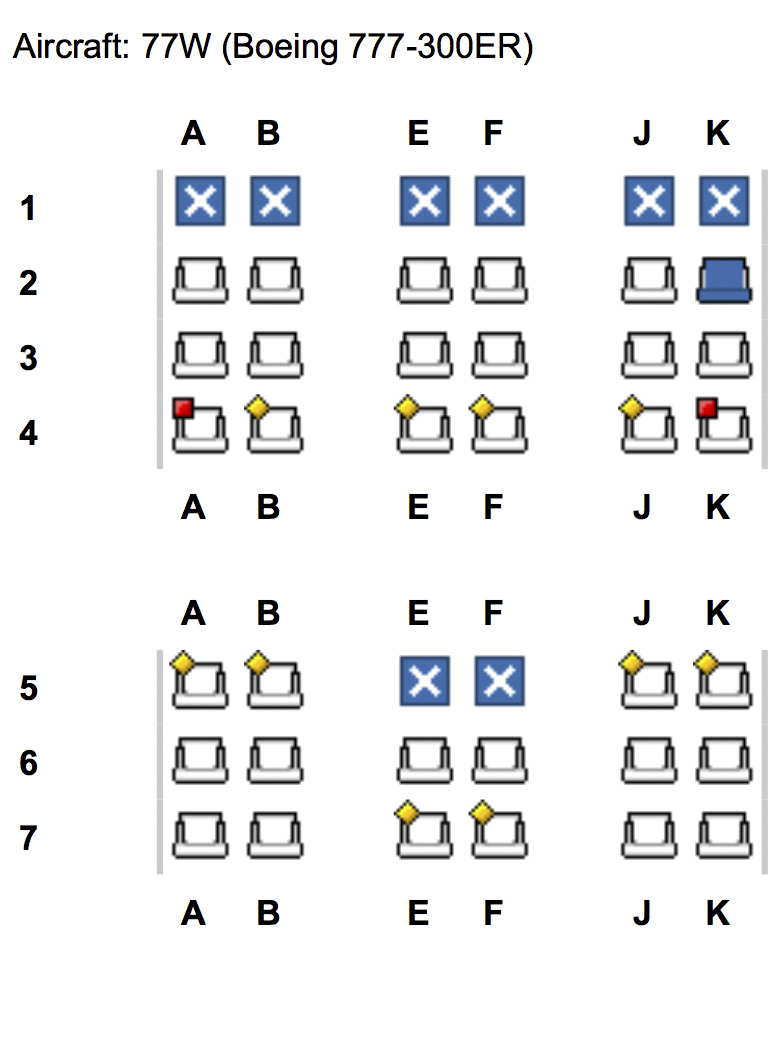
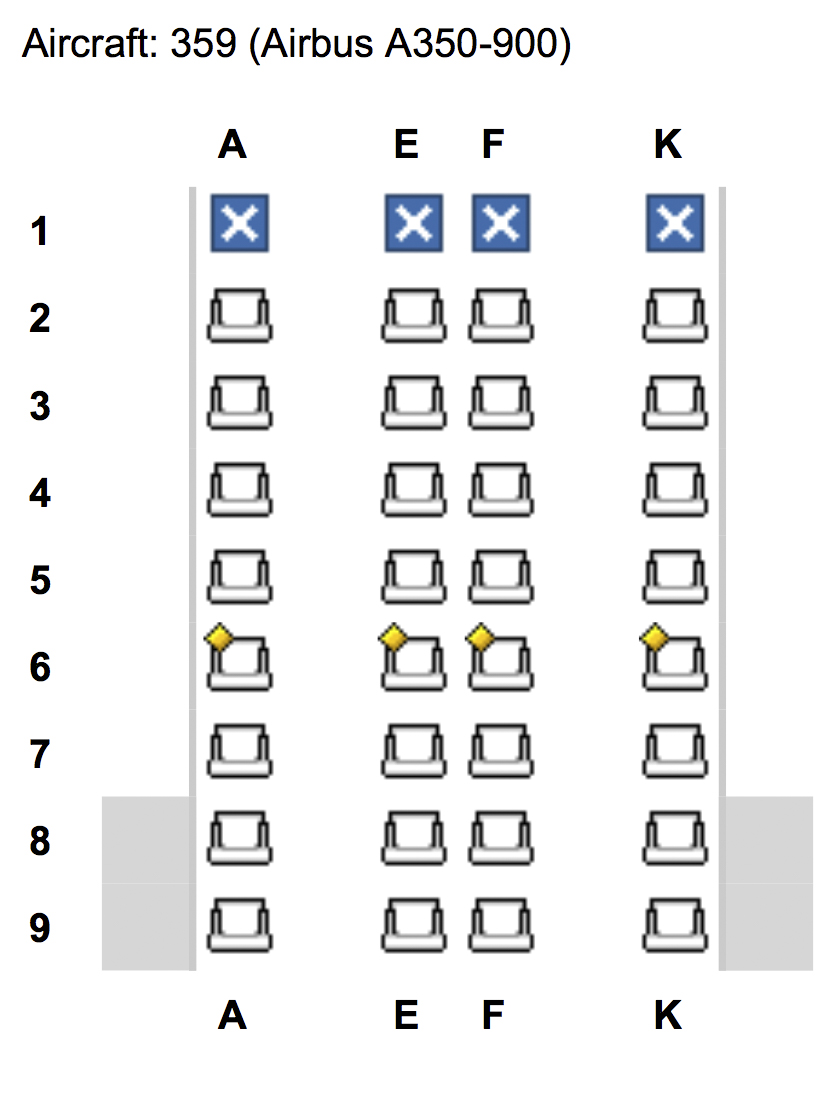
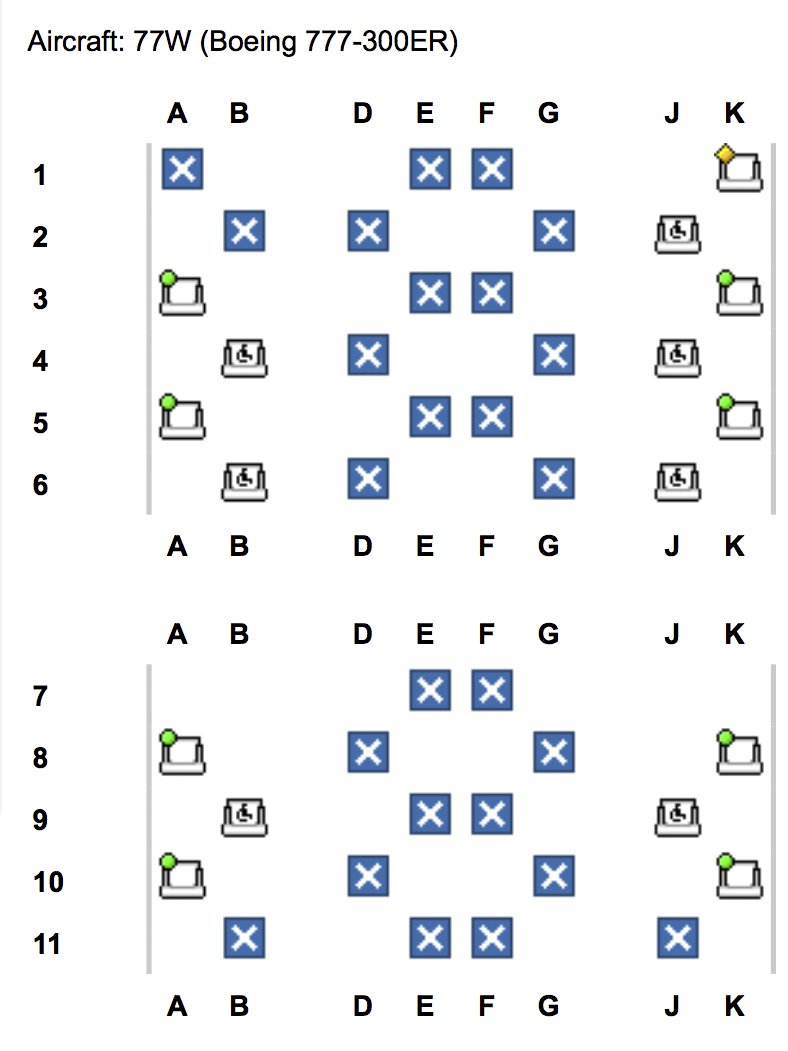
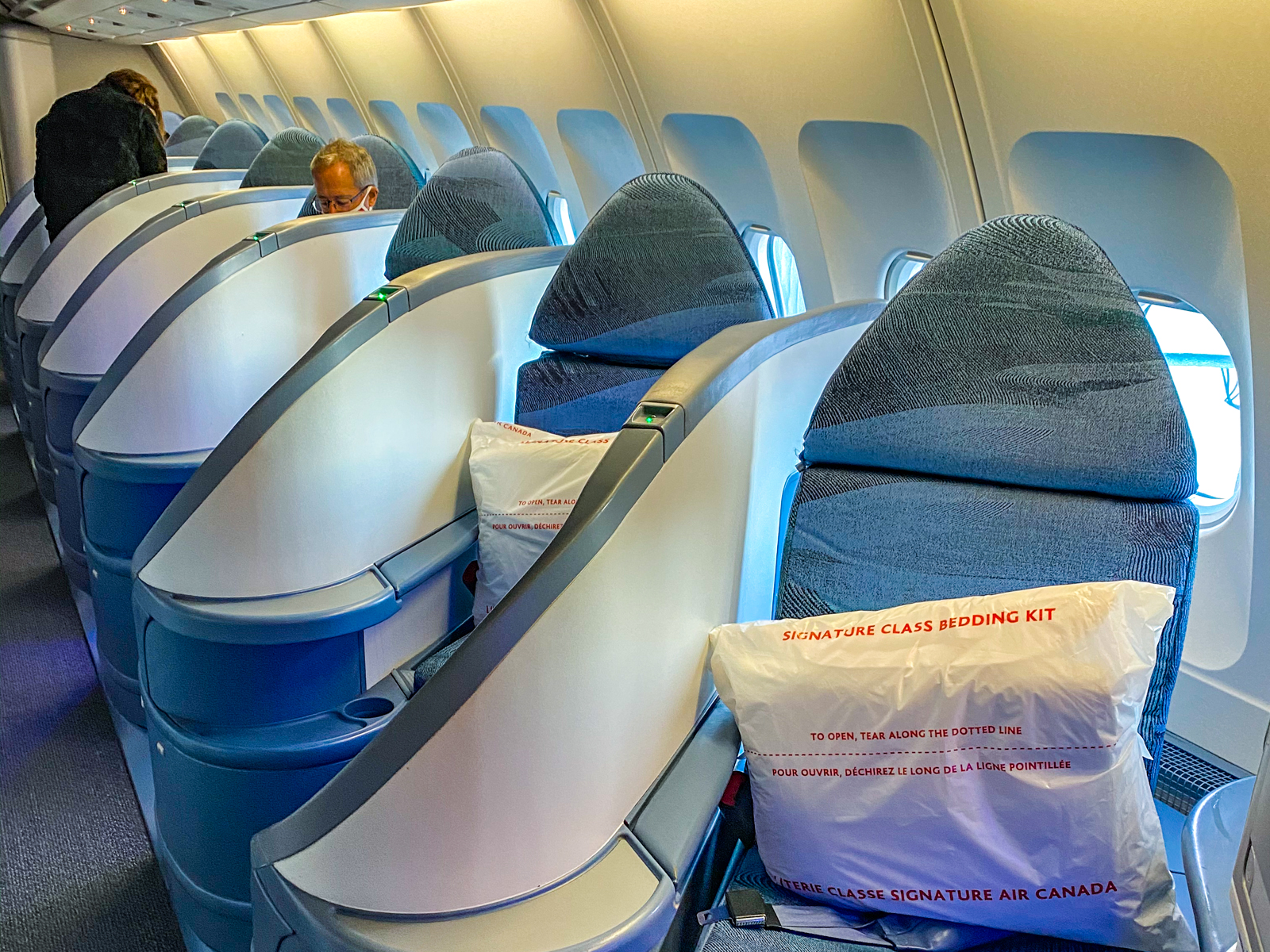
On Air Canada’s side, it’s the same: most wide-body aircraft have been retrofitted with the new “Signature Class” seats for their Business Class. However, some Airbus 330s are still equipped with the old Business Class. The old Business Class consists of 3 people per row, while the new Business Class seats 4 people with the new seats.
Air Canada is going further in 2026: the airline unveiled a complete overhaul of its cabins at the Aircraft Interiors Expo in Hamburg, with a brand-new Signature Class offered for the first time on a single-aisle aircraft in Canada, the Airbus A321XLR, starting in summer 2026. The new Boeing 787-10 will get its own exclusive Signature Plus suites, a first for the carrier. Air Canada has not yet announced the exact routes or in-service date for the 787-10.
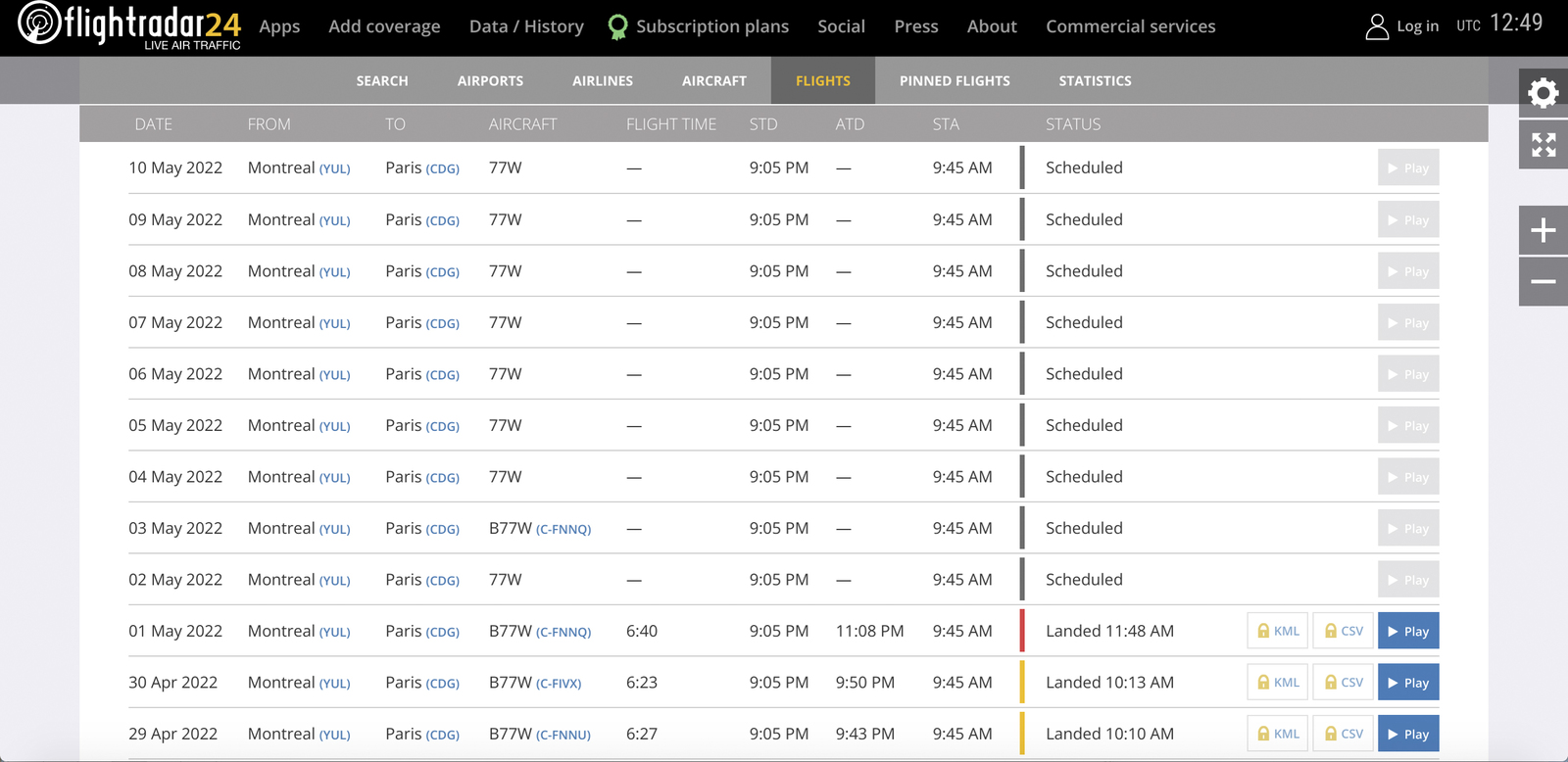
It should also be noted that routes are not permanently assigned to an aircraft. Indeed, it’s all about making their fleet profitable. An airline like Air Canada can decide to use its Boeing 787, its Boeing 777 or its Airbus 330 between Montreal and Paris. Schedules are planned, but they are subject to last-minute changes.
Changes often occur monthly; so, if you are keen to fly on the B-787 and are flexible with your dates, you can try searching for another month.
To ensure you are protected (as much as possible) from aircraft changes, you can consult trends on Flight Radar. For example, connections between Montreal and Tokyo and between Montreal and Shanghai will almost certainly be made on the B-787, while there is more alternation on the connection between Montreal and Paris.
What if the same route is served by two different airlines? It is always possible to choose your plane and/or airline.
Subsequently, the choice will be between the “hard product” and the “soft product.” Indeed, the service and attention given to the customer differ from one company to another, as does the type of seat.
On the “soft product” side, the distinction will be more at the level of meal quality, film selection, the work of flight attendants in general, etc.
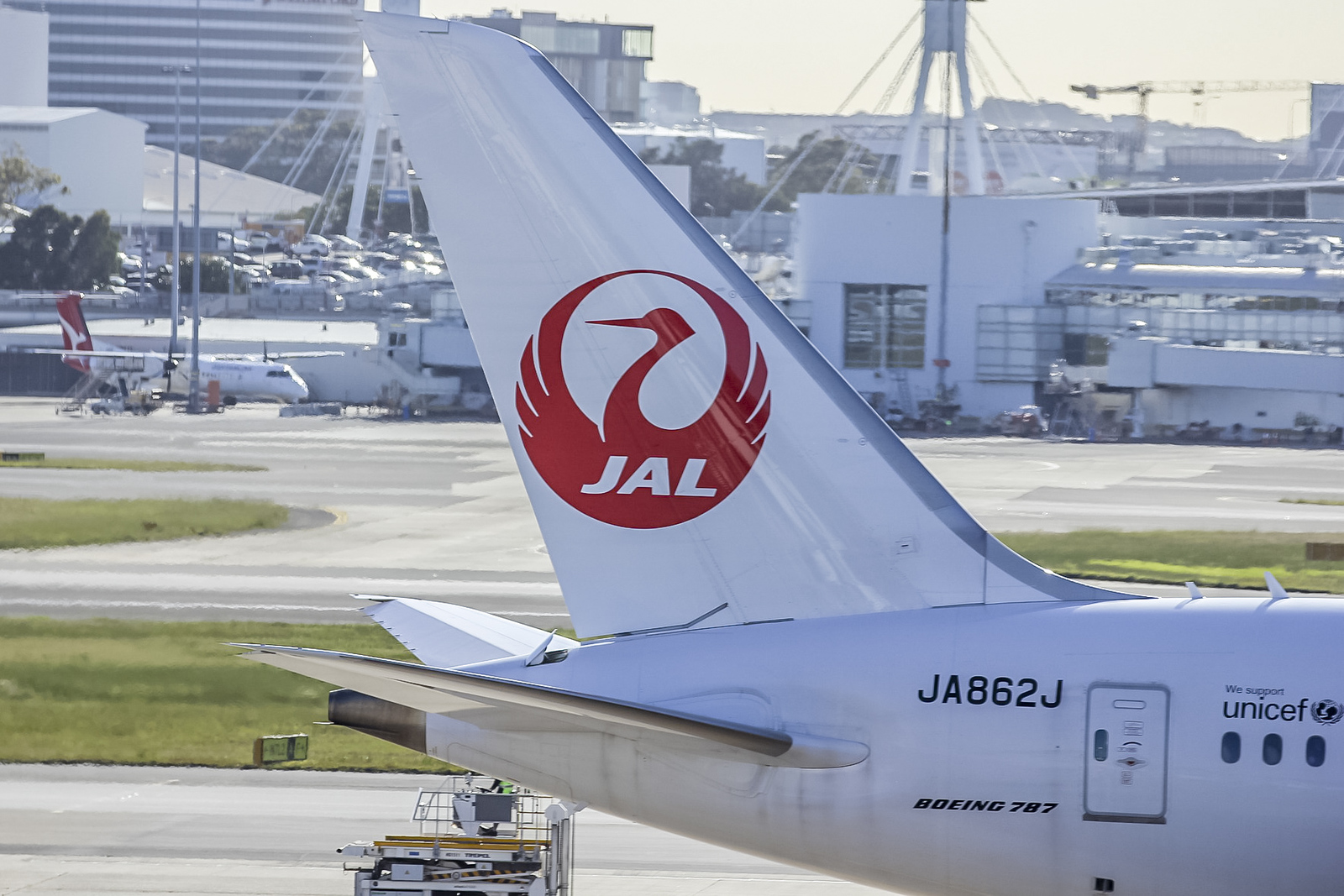
In this respect, cultural differences may give some companies an advantage. For example, I have a preference for the Japanese touch: meals, cushions, attention, etc.
Indeed, I often travelled on the route between Dallas/Forth Worth and Tokyo Narita where my choice was almost always Japan Airlines compared to American Airlines.
So, how to choose your plane? On Milesopedia, we have written a multitude of Review articles covering the “hard product” and “soft product” of several flights and several companies to help you choose according to your preferences. You will thus be able to make an informed decision and optimize your precious points to another level!
Here are a few:
On another topic, a question that often comes up in the Facebook community is about seat selection. Indeed, with the travel credits offered by certain credit cards like the National Bank World Elite Mastercard, it is relevant to use them to secure a preferential seat!
The SeatGuru website allows you to view the cabin map by indicating the airline and flight number.
The color code for the seats indicates whether the Review is positive, mixed, or negative. You can also find information about this seat, such as whether it is near the lavatories or not.

| Credit card | Annual fee | Welcome offer | |
|---|---|---|---|
| $150 | |||
| $0 |
Finally, travelers who wish to fly on a specific aircraft must remember that nothing is guaranteed. A company’s mandate is to get you to your destination in the service class you paid for; no compensation will be given if you no longer have your pod.
The airline always reserves the right to make changes to optimize their fleet; if there are only 50 people on your Boeing 787, it is possible that the company will assign another aircraft for your flight.
on National Bank's website
on RBC's website
Our reviews and rankings are based on an objective assessment. Advertisers do not influence our content. We may receive compensation through some links; our analysis and opinions remain independent.