Visa Infinite or Platinum: which CIBC Dividend card wins?

Loading article…
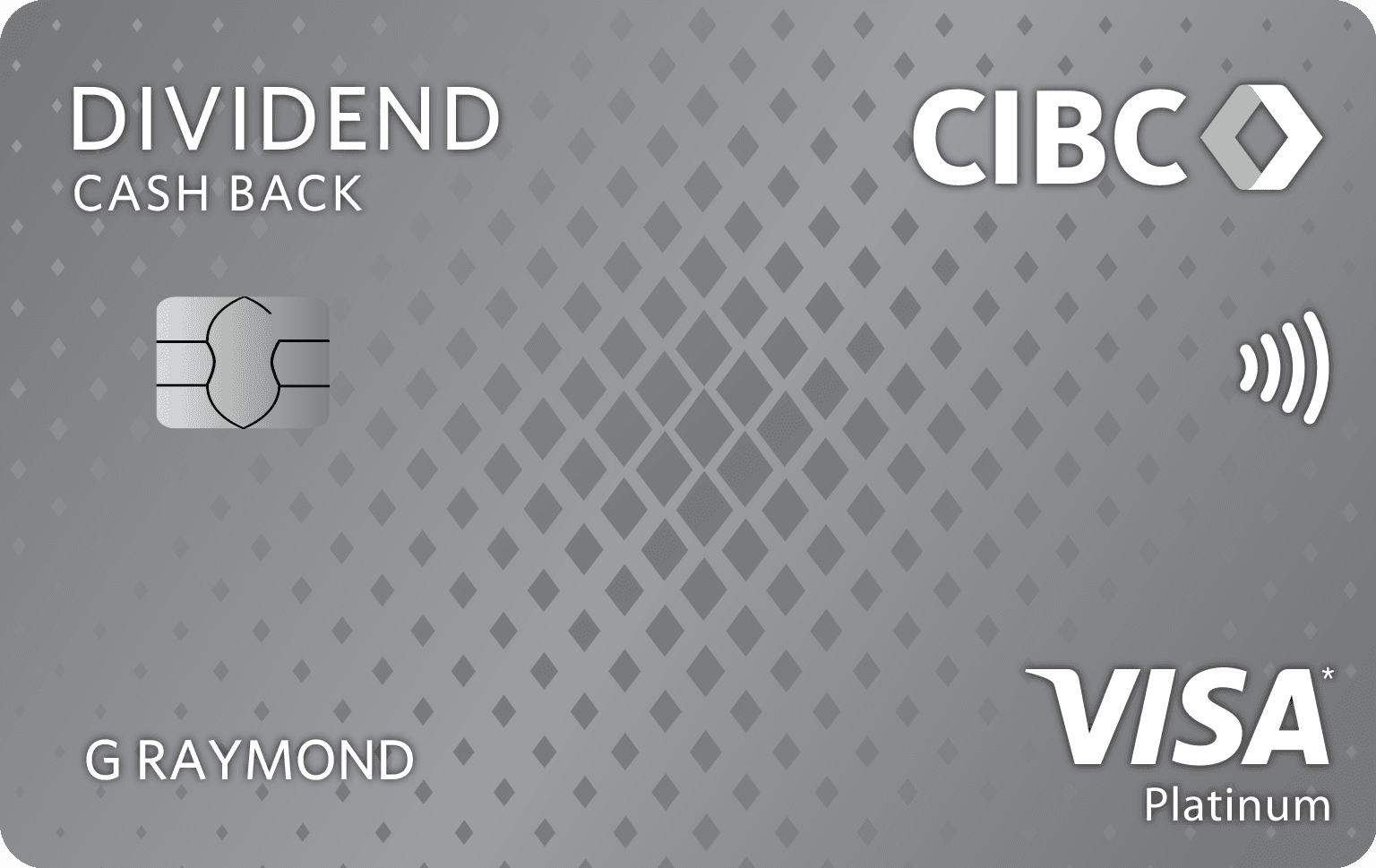
Two CIBC cash back cards, nearly the same name, the same category grid and the same welcome offer. Twenty-one dollars in annual fees separate them. Over a full year, though, the gap between the CIBC Dividend® Visa Infinite* Card and the CIBC Dividend Platinum® Visa Card easily reaches $90 to $130 for an average Canadian household.
The footnotes in both official grids change the ranking, and the math on three spending profiles shows it. Here is how to decide.
To place these two cards against the rest of the Canadian market, see our ranking of the best credit cards.
on CIBC's website
Both cards pay cash back, not points. The balance builds through the year and can be redeemed from $10, through CIBC Online Banking or the mobile app. Neither card caps the total amount you can cash out.
Three things separate them: one percentage point on groceries and gas, the spending ceiling at which the bonus rates stop, and the insurance package. Everything else, including the 2.5% foreign currency conversion fee, is identical.
This is where the decision usually gets made, and it is not because of the fee. The $21 gap is recovered quickly. The income threshold is not negotiable.
| Dividend Visa Infinite | Dividend Platinum | |
|---|---|---|
| Annual fee | $120 | $99 |
| First year | Rebated | Rebated |
| Additional card | $50 (up to 3) | $30 (up to 3) |
| Personal income required | $60,000 | No separate threshold |
| Household income required | $100,000 | $15,000 |
| Foreign currency conversion | 2.5% | 2.5% |
A household that does not clear $100,000 in combined income, or a single applicant under $60,000, simply cannot get the Visa Infinite. At $15,000 in household income, the Dividend Platinum is one of the most accessible cash back cards with an annual fee in Canada.
Note the gap on additional cards too: $50 against $30. A family adding two cards pays $220 a year on the Visa Infinite, against $159 on the Dividend Platinum. The real gap climbs to $61, not $21.
The two offers run the same mechanic: 10% cash back up to $200 on net purchases up to $2,000 over the first 4 statements, $50 for setting up a pre-authorized payment, and a first-year annual fee rebate. CIBC advertises up to $350 in value on the Visa Infinite and up to $300 on the Dividend Platinum, but the cash you actually receive is the same on both: $250. The headline gap comes from the fee rebate, $120 against $99.
A single rate gap separates the two cards, and it lands on the category where Canadian households spend the most: groceries and fuel. The 2% categories and the 1% base rate are identical.
| Category | Dividend Visa Infinite | Dividend Platinum |
|---|---|---|
| Groceries | 4% | 3% |
| Gas and electric vehicle charging | 4% | 3% |
| Commuter transportation | 2% | 2% |
| Restaurants, bars and coffee shops | 2% | 2% |
| Recurring payments and subscriptions | 2% | 2% |
| Travel booked through CIBC by Expedia | 2% | 2% |
| All other purchases | 1% | 1% |
One percentage point on groceries and gas is $1 per $100 spent. Recovering the $21 fee gap therefore takes $2,100 a year in those categories, or $175 a month on groceries and gas. That is the one number to remember from this comparison.
Put differently: a household filling a full grocery cart every week clears that threshold without trying. A single person who eats out often and takes transit, much less so.
Both cards also link to Journie Rewards, which takes up to 10 cents per litre off at Chevron, Ultramar and Pioneer. That perk is identical on both, and it stacks with the card’s cash back.
Both CIBC product pages state that there is no limit on the total cash back you can earn. That is accurate, and it is misleading. There is no cap on what you cash out, but there is a cap on how long the bonus rates apply, and it is not the same on the two cards.
According to the official footnotes, the bonus rates stop as soon as either of these thresholds is reached, whichever comes first:
| Ceiling | Dividend Visa Infinite | Dividend Platinum |
|---|---|---|
| Net annual purchases, all categories | $50,000 | $30,000 |
| Net annual purchases in bonus categories | $20,000 | $20,000 |
| Rate after the ceiling | 1% | 1% |
The counter resets after the December statement date. The $20,000 bonus-category ceiling is identical on both cards, so it changes nothing in the ranking. The overall ceiling changes everything: $30,000 against $50,000.
A household putting $2,500 a month on its card hits $30,000 exactly in twelve months. At $3,000 a month, it loses the bonus rates for the last two months of the year on the Dividend Platinum, while the Visa Infinite holds all the way through.
| Monthly spending | Of which groceries and gas | Visa Infinite (net) | Dividend Platinum (net) | Gap |
|---|---|---|---|---|
| $1,200 | $500 | $228 | $189 | $39 |
| $2,700 | $800 | $540 | $447 | $93 |
| $3,000 | $900 | $618 | $486 | $132 |
The third profile shows the ceiling at work. At $3,000 a month, the Dividend Platinum loses $45 purely because its bonus rates stop at $30,000. Without that ceiling, the gap between the two cards would be $87 instead of $132.
The Visa Infinite therefore wins on all three profiles, including the most modest one. That follows: from $175 a month on groceries and gas, the extra $21 is already recovered.
On paper, both cards share three identical protections. The Visa Infinite adds two the Dividend Platinum does not have at all: travel medical insurance and mobile device insurance.
| Coverage | Dividend Visa Infinite | Dividend Platinum |
|---|---|---|
| Out-of-province emergency travel medical | $5M, first 10 days of a trip, age 64 and under | None |
| Mobile device | Up to $1,000 per occurrence, up to 2 years after purchase | None |
| Common carrier accident | $500,000 | $500,000 |
| Car rental collision and loss damage | MSRP up to $85,000 | MSRP up to $85,000 |
| Purchase security | 90 days | 90 days |
| Extended protection | Doubles the manufacturer’s warranty, up to one extra year | Doubles the manufacturer’s warranty, up to one extra year |
Two details in the Visa Infinite’s medical coverage deserve a careful read. First, it applies to the first 10 days of a trip only, which rules out most extended stays. Second, you do not have to charge the trip to the card to be covered, which is more generous than the market average.
In both cases you must call the claims and assistance provider before receiving treatment, or the claim can be denied. Any medical condition that was not stable before departure is excluded.
The Visa Infinite’s travel medical insurance covers insured persons age 64 and under. At 65, it no longer applies at all. This is not a reduction in the number of days covered, as on several competing cards: it is a complete disappearance of the protection.
For a reader 65 and over, the insurance gap between the two Dividend cards collapses. Mobile device coverage, the concierge and the extra percentage point on groceries and gas are all that remain to justify the extra $21.
The Visa Infinite opens the Visa perks program reserved for that tier. The Dividend Platinum does not. These benefits are hard to put a number on, but they are real and free.
A cardholder who rents a car twice a year often recovers more than the $21 gap from the Avis or Budget discount alone, on top of the collision coverage included on both cards.
Both Dividend cards carry exactly the same interest rate, and that rate is the one you would expect on an ordinary rewards card. If you carry a balance from month to month, interest wipes out the cash back long before the choice between 4% and 3% has any effect at all.
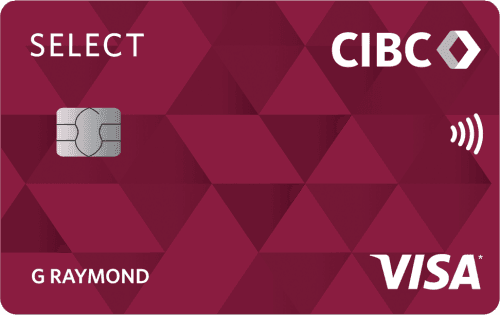
In that case, neither card in this comparison is the right tool. The CIBC Select Visa* Card, at $29 a year with no income requirement, exists precisely for that situation.
on CIBC's website
The split is simpler than it looks, because it rests mostly on eligibility.
The Dividend Platinum is the card most households can actually get. At $15,000 in household income required, it delivers 3% on groceries and gas to a profile most cash back cards with an annual fee turn away. That is its real purpose, and it is a solid one.
On the numbers alone, the Visa Infinite pays more on all three profiles, and the $21 annual fee gap is recovered from $175 a month on groceries and gas. That still means clearing $60,000 in personal income or $100,000 for the household, a bar that rules out a good share of Canadian families.
So the question is not really which one pays more. It is which one you can get. For most readers the answer is the Dividend Platinum, and it is a good answer: it remains one of the best cash back entry points in Canada.
To compare these two cards against the rest of the market, see our ranking of the best credit cards.
Available with an annual (household) income of as little as $15,000, the CIBC Dividend® Platinum Visa* Card stays below the income requirements of Visa Infinite or World Elite Mastercard cards.
With this offer, get a value of up to $300:
With the CIBC Dividend® Platinum Visa* Card, you get:
And this CIBC cash back credit card offers some insurance coverage:
on CIBC's website
The CIBC Dividend® Visa Infinite* Card, in almost every case. On a $2,700 monthly basket it pays $540 net per year after its annual fee, against $447 for the CIBC Dividend Platinum® Visa Card. The gap comes from 4% versus 3% on groceries and gas, plus the more generous spending ceiling.
From $175 a month on groceries, gas and electric vehicle charging, or $2,100 a year. The extra percentage point then returns $21, exactly the annual fee gap between the two cards. Below that threshold, the Dividend Platinum comes out ahead.
The Visa Infinite requires $60,000 in personal income or $100,000 for the household, with no exceptions. The Dividend Platinum asks for only $15,000 in household income and pays 3% on groceries and gas, which remains one of the best rates available at that income level in Canada.
There is no cap on the total you cash out, but there is a cap on the bonus rates. They stop after $50,000 in net annual purchases on the Visa Infinite, $30,000 on the Dividend Platinum, or $20,000 in the bonus categories on both cards, whichever comes first. Everything then drops to 1% until the December statement.
No travel medical insurance at all. It includes $500,000 in common carrier accident insurance, car rental collision and loss damage coverage and purchase security, but nothing for medical care abroad. Only the Visa Infinite carries that coverage.
No. The Visa Infinite’s travel medical insurance applies to insured persons age 64 and under and stops entirely at 65, and the Dividend Platinum never had any. A traveller 65 and over needs a separate policy, or a card that keeps its coverage past that age.
Fifty dollars per card on the Visa Infinite and $30 per card on the Dividend Platinum, up to three additional cards on both, rebated the first year. A family adding two therefore pays $220 a year on the Visa Infinite against $159 on the Dividend Platinum, which pushes the real gap to $61.
No. Both cards carry the same interest rate, that of a standard rewards card, and the interest quickly outweighs the cash back earned. For a carried balance, the CIBC Select Visa* Card at $29 a year with no income requirement is a far more coherent choice.
on CIBC's website
Our reviews and rankings are based on an objective assessment. Advertisers do not influence our content. We may receive compensation through some links; our analysis and opinions remain independent.