Kerama Islands Guide: Travel to Okinawa, Japan

Loading article…
The Kerama Islands reveal a Japan that few Canadian travelers know. Located about forty kilometers west of Okinawa, these small paradisiacal islands contrast radically with the main island. Indeed, the absolute calm, untouched nature, and crystalline waters nicknamed “Kerama Blue” create a unique atmosphere. This guide to the Kerama Islands brings together our experience and all the practical advice for planning your stay: access from Okinawa, accommodation, beaches, snorkeling, and immersion in local life.
If you extend your trip to Kyushu, read our review of the Nagasaki Marriott.
Classified as a national park since 2014, the Keramas are home to exceptional marine biodiversity: multicolored corals, tropical fish, and sea turtles thrive in a preserved environment. Beyond their natural beauty, these islands reflect the Japanese culture of respect for others: silence, cleanliness of beaches and trails, and discreet attention toward other visitors. To optimize your stay, also consult our complete guide to a trip to Japan between modernity and authenticity. Even while being in total immersion, one feels in an authentic Japan, where every gesture counts toward preserving the tranquility and harmony of the surroundings.
For more official information on the Kerama Islands, consult the japan.travel – The Kerama Islands page, which provides details on activities, flora and fauna, as well as practical tips for organizing your stay. And to learn more about the exceptional biodiversity of the Kerama Islands, read the Geo.fr article: The exceptional terrestrial and marine biodiversity of the Kerama Islands, Japan.
The entry point remains Naha International Airport on Okinawa. From Naha, you can easily reach the Keramas thanks to the Queen Flight #1 and #2 high-speed ferries. These vessels connect the main islands daily in about one hour. However, it is recommended to secure your tickets in advance and arrive 30 minutes before departure, especially during Japanese peak seasons (summer, Golden Week).
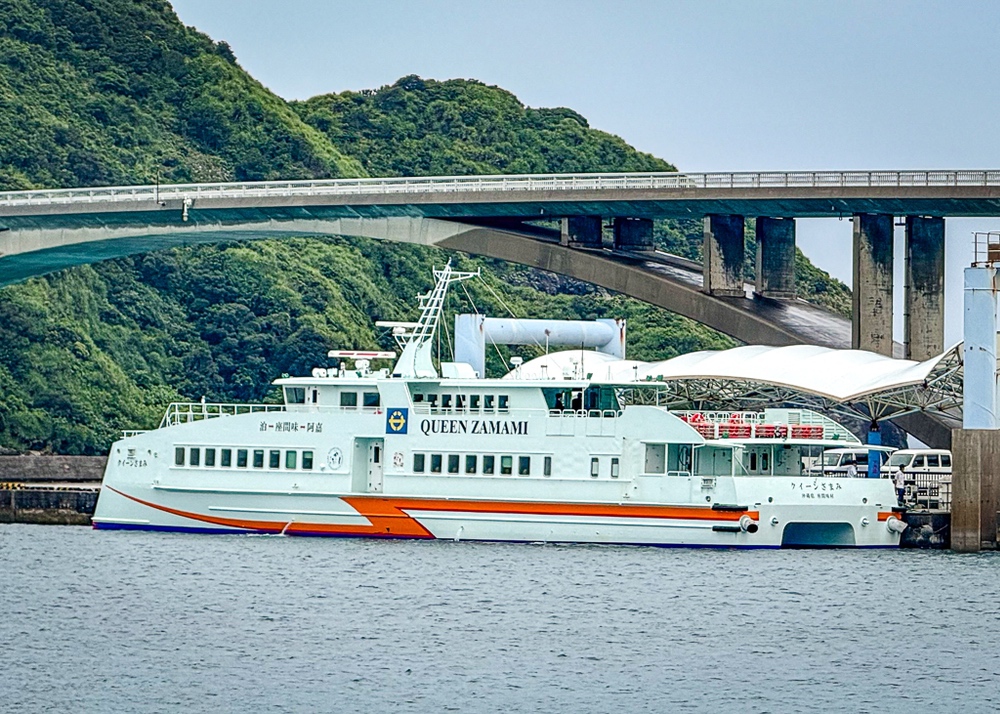
The ferry crossing from Okinawa to Aka costs approximately 6,000 yen (≈ $56 CAD) per person for a round trip. We booked our crossings in advance, but availability on-site remained sufficient outside of peak season. Conversely, during the Japanese high season (summer, Golden Week), secure your tickets in advance. To save on flights and travel, consult our guide on transportation in Japan.
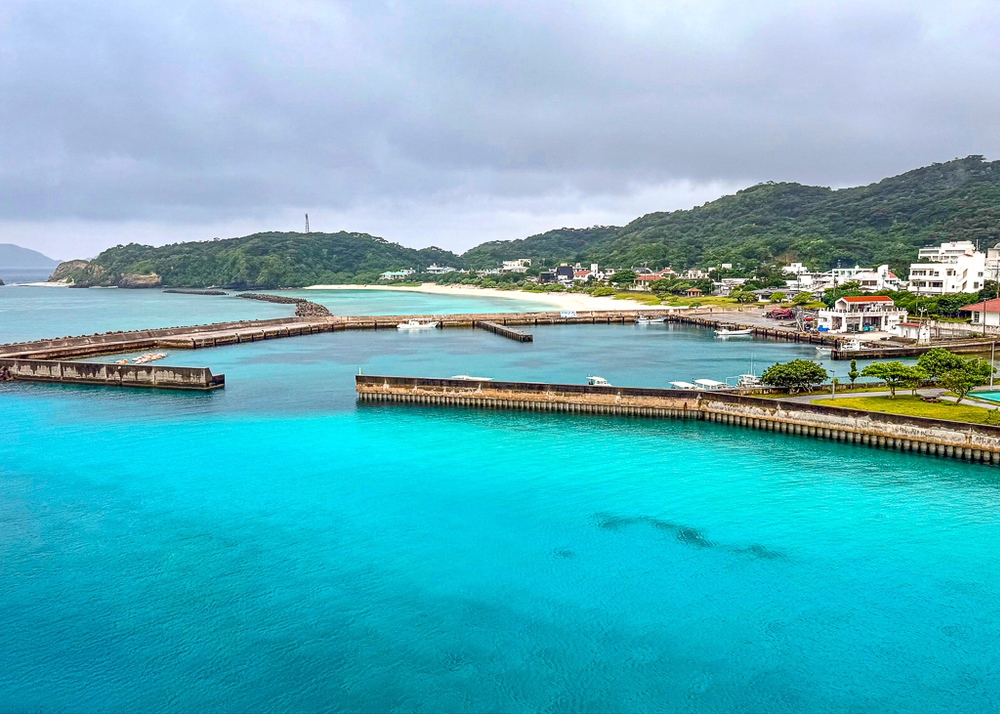
Our choice fell on Aka Island and the Blue Suites Hanamuro Hotel. This independent establishment stands out for its exclusivity and modern comfort. Indeed, the hotel consists of only three suites, all facing the sea. During our stay, we were the only guests, which made the experience particularly intimate and peaceful.
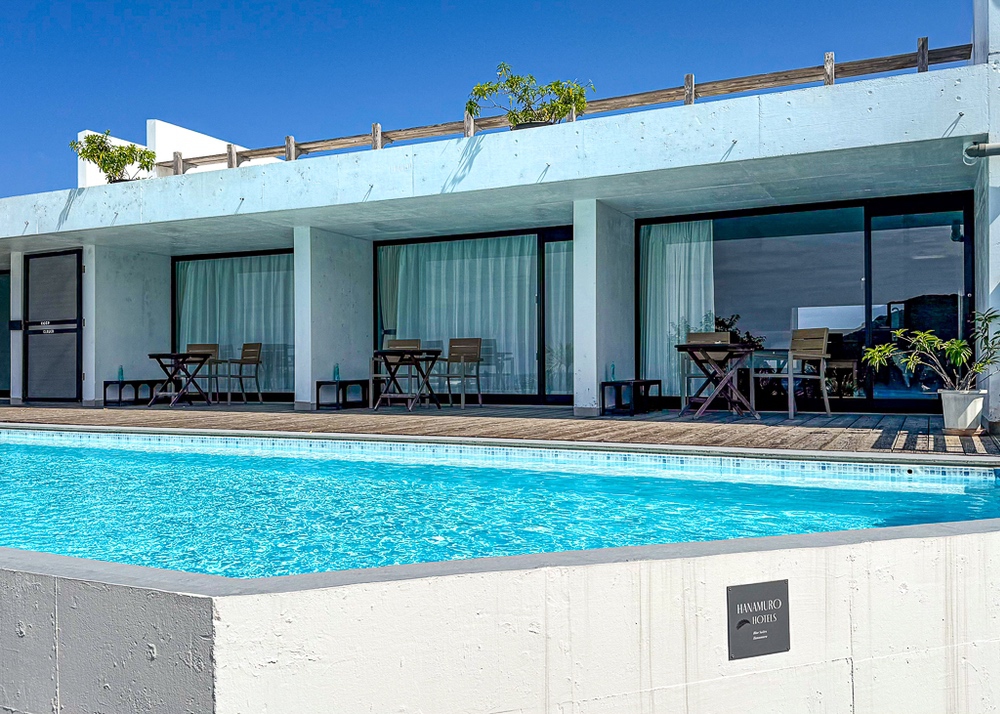
For all the details on the hotel and our complete experience, read my review of the Blue Suites Hanamuro Hotel.
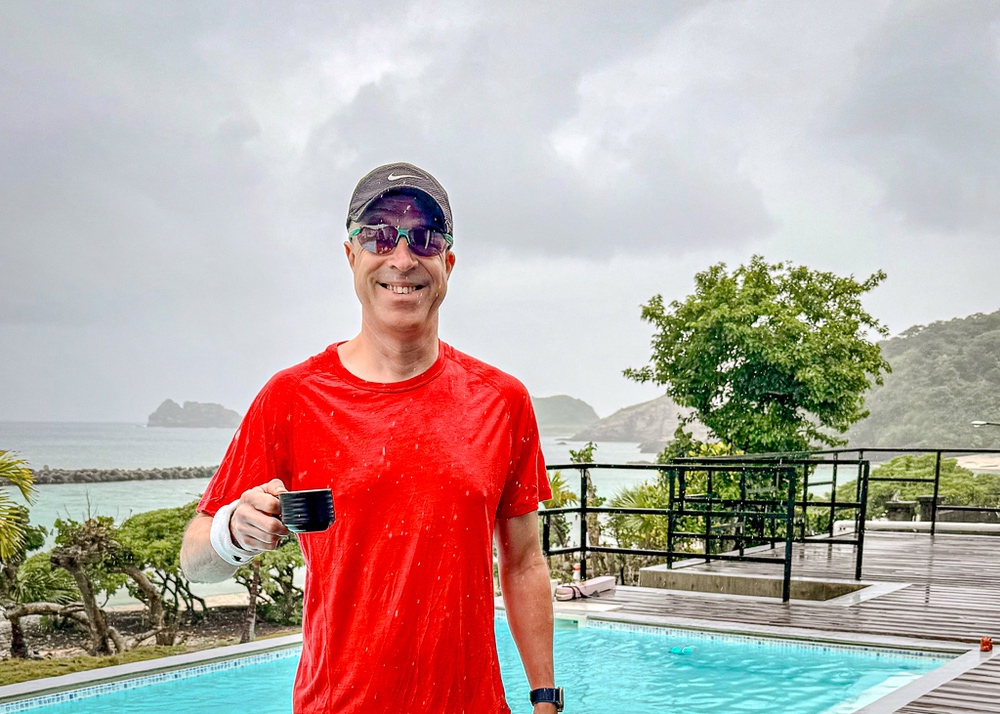
The dedicated customer service employee ensured our comfort throughout the stay. She prepared and served meals and responded to our daily needs. Furthermore, the hotel offers high-quality full board, an elegant swimming pool, and a rooftop terrace with private baths. Thus, the stay transforms into a true immersion in the calm of the Keramas.
To maximize the value of your stay, consider using your points and miles. Discover our guide to traveling to Japan using points and miles.
The Kerama Islands are hilly. Indeed, hills, trails, and paved roads blend with lush vegetation. Depending on the island chosen, several modes of transportation are available to you.
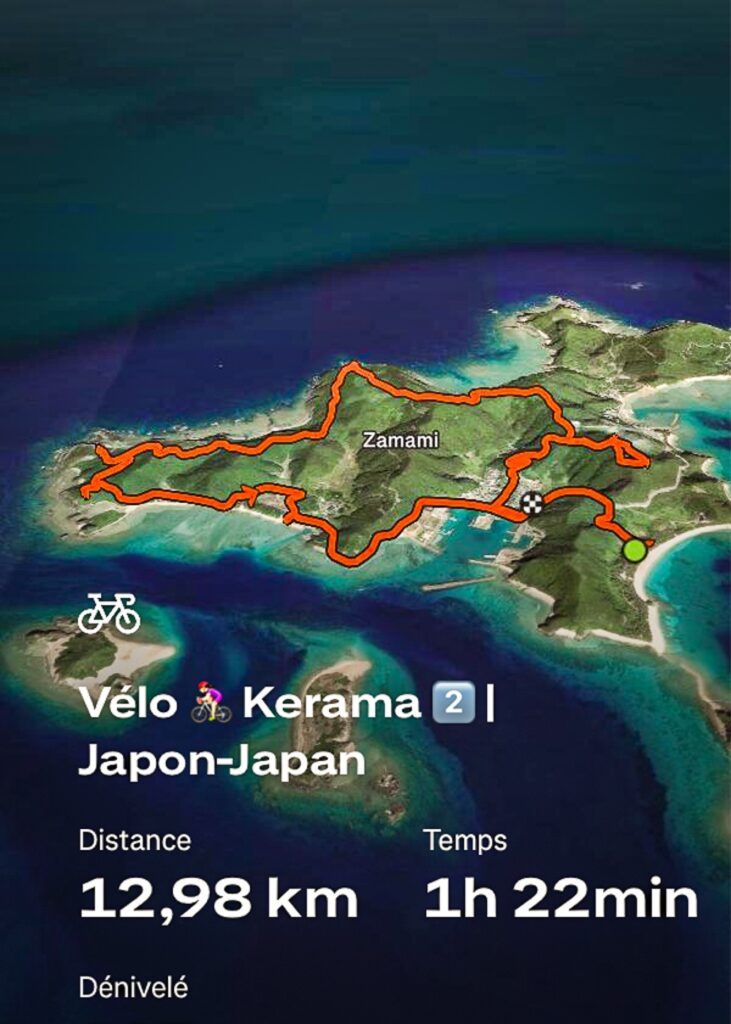
On Aka, walking, running, and cycling allow you to discover every corner. Thus, you can explore from the butterfly sanctuary (Fukaji Observation Deck) near the local airport to isolated beaches. The trails offer spectacular panoramas, and even short journeys reveal the richness of the local nature.
Recommended running and cycling routes on Aka Island.
To explore Zamami in one day, we rented electric bikes for about 6,200 yen (≈ $58 CAD) per day. Indeed, these bikes are ideal for visiting viewpoints and beaches in succession without getting tired in the hilly terrain.
Snorkeling remains undoubtedly the star activity. We did 2 to 3 outings per day, lasting about 45 minutes each. This allowed us to explore isolated beaches and less frequented areas. With your mask and snorkel, you swim among corals, tropical fish, and sea turtles. Sometimes, some surprising species also appear.
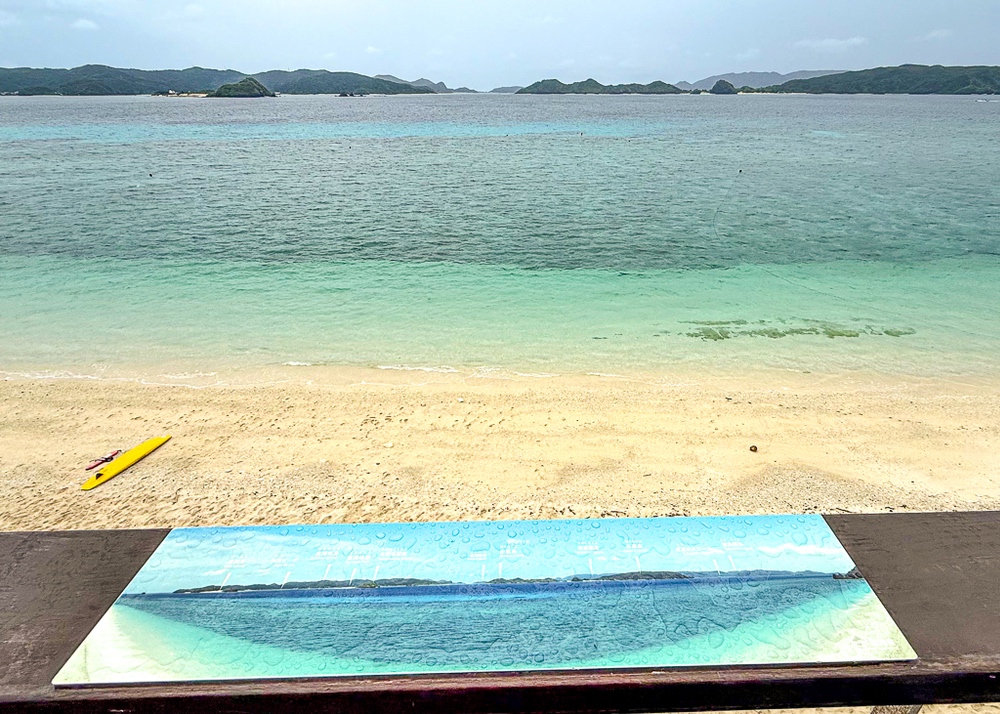
For a more intimate experience, favor isolated areas. However, always respect your limits and check the tides. Indeed, some areas become exposed when the tide goes out, making passage difficult.
Bringing your own equipment remains an undeniable plus. This is what we do during our travels: personal masks, snorkels, and fins. However, rentals are available in small local diving centers.
The Keramas offer remarkable biodiversity, both terrestrial and marine. The lush vegetation, combined with the humid climate, creates a true haven of tropical biodiversity.
On Aka, the butterfly sanctuary (Fukaji Observation Deck) near the airport is magical. Indeed, dozens of butterflies flutter amidst the vegetation.
The Fukaji butterfly sanctuary on Aka Island offers magical encounters with these colorful insects.
On the trails and beaches, you can also observe the Kerama Shika (Cervus keramae), a small endemic deer. Additionally, hermit crabs, other crustaceans, and local salamanders enrich every walk.
Endemic Kerama Shika deer, salamanders, and hermit crabs: the islands’ terrestrial fauna.
Explore the crystalline waters to discover multicolored corals, tropical fish, octopuses, and sea turtles. Sometimes, sea snakes even appear around a reef.
Sea turtles, sea snakes, and tropical fish: the exceptional biodiversity of the Keramas.
The lush vegetation, combined with the humid climate, creates a true haven of tropical biodiversity.
Subtropical flora of the Keramas: hibiscus, cycads, and palm trees compose an exceptional tropical landscape.
The lush vegetation, combined with the humid climate, creates a true haven of tropical biodiversity.
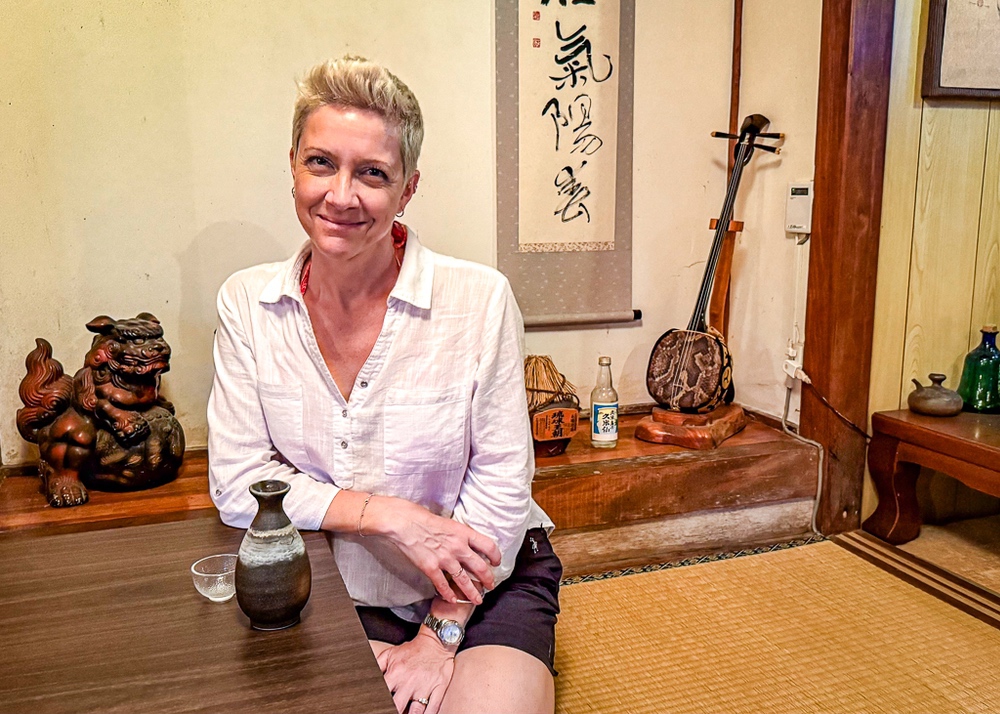
Dining options remain limited with specific hours, but the quality is excellent. Indeed, small local restaurants like Yonamine House offer tasty and authentic Okinawa cuisine dishes.
To maximize your savings during your purchases on-site, use a card with no foreign transaction fees. Consult our comparison of the best credit cards with no foreign transaction fees before departure.
Take the high-speed ferry from Naha to Aka (≈ 1 hour). Indicative schedules are a departure at 8:00 AM and an arrival at 9:00 AM (practical information and schedules: Naha ↔ Aka / Zamami).
Next, settle into the Blue Suites Hanamuro Hotel or your chosen accommodation. Enjoy a first swim in the calm water behind the pier. In the afternoon, take a walk on the beach with some light snorkeling near the shore. Finally, enjoy a full-board dinner on your private terrace.
In the morning, take the ferry to Zamami. Rent an electric bike (≈ 6,200 yen / $58 CAD) to easily explore the hilly island. Enjoy several snorkeling breaks on accessible beaches like Furuzamami and Ama. This way, you can observe tropical fish, multicolored corals, and sea turtles. Also discover the panoramic viewpoints and observatories. At the end of the day, return to Aka for a contemplative dinner facing the ocean, then relax on your private terrace.
Exceptional panoramas from the Zamami observatories: turquoise waters and verdant islands.
In the morning, walk or cycle to the butterfly sanctuary (Fukaji Observation Deck) near the small local airport. This route crosses the subtropical forest amidst dozens of fluttering butterflies. Then, enjoy a morning snorkel in an isolated cove to combine marine observation and absolute calm. In the afternoon, relax on the private beach or at the pool. Reading, contemplating the sea, or additional snorkeling depending on your energy.
Hiking trails and observatories of the Kerama Islands in the Keramashoto National Park.
In the morning, enjoy the sunrise from the outdoor terrace bath, followed by a contemplative breakfast. Finally, take the ferry to Naha to continue your journey in Japan.
Directional signs and the statue of Akamaru, an iconic figure of the Kerama Islands.
For travellers who value freedom and simplicity over a specific hotel program, flexible points are often a smart option. You can easily wipe out the cost of a stay with the flexible points of the National Bank World Elite Mastercard.
National Bank À la carte Rewards points can be used to cover an eligible travel expense after purchase or to book through the National Bank travel platform.
Points are generally worth about 1¢ each when applied to travel expenses:
The advantage is simple: no hotel categories, no chain restrictions and total flexibility. You book the hotel of your choice, then apply your points to reduce or cancel the bill.
on National Bank's website
The card also includes an annual $150 travel credit, which applies automatically to eligible expenses.
By combining this credit with the points you’ve earned, you can cover a large part, or even all, of a stay in the very first year.
Spending a few days on the Kerama Islands means finding yourself in a preserved and discreet Japan, far from the classic circuits. Indeed, the absolute calm, the absence of noise, and the immersion in untouched nature create an unforgettable experience. The almost deserted beaches, exceptional snorkeling, and sunrises from private baths on the terrace of the Blue Suites Hanamuro leave a lasting impression on travelers.
Furthermore, the welcome from the inhabitants, discreet and attentive, makes every interaction pleasant. The Keramas are a true sanctuary where one reconnects with oneself, the sea, and nature. Thus, you fully enjoy an authentic Japanese experience, far from mass tourism. To plan other adventures in Japan, consult our selection of the best travel credit cards that will help you accumulate points for your next stays.
You must first reach Naha International Airport in Okinawa, generally via Tokyo or Osaka. Then, board a high-speed ferry (Queen Flight #1 or #2) from Tomari Port in Naha. The crossing takes about one hour and costs approximately 6,000 yen (≈ $56 CAD) round trip per person.
Avoid the typhoon and rainy season, which is from August to October. Spring (April-June) and early autumn (November) offer a pleasant climate. However, outside of Japanese peak seasons (Golden Week, summer), the availability of accommodation and ferries remains more flexible.
Three to four days allow you to fully enjoy the archipelago. This way, you combine exploration of Aka, a day on Zamami, daily snorkeling, and moments of relaxation. For complete immersion, some travelers extend their stay up to a week.
In high season (summer, Golden Week, Japanese holidays), it is imperative to book in advance. In low and shoulder seasons, availability on-site is generally sufficient. However, arrive 30 minutes before departure to secure your boarding.
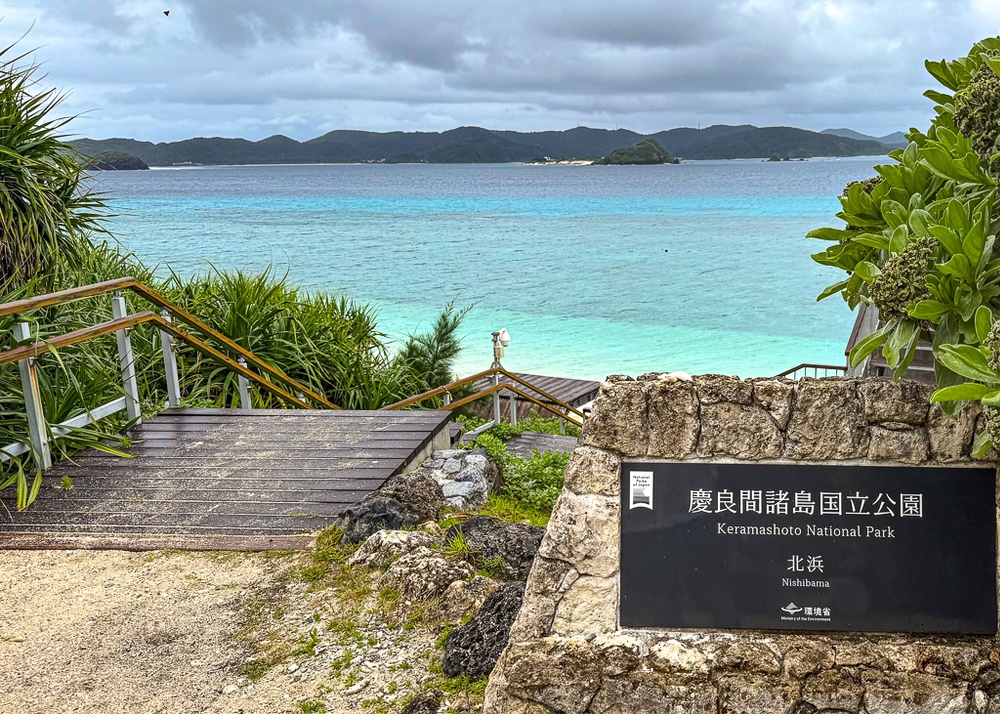
On Aka, Nishibama Beach offers exceptional crystalline waters. On Zamami, Furuzamami Beach and Ama Beach remain the most popular. For a more intimate experience, favor isolated coves accessible by foot or bike.
Favor a card with no foreign transaction fees to save on every purchase in yen. Additionally, a card with good travel insurance covers unforeseen events, particularly water activities. Consult our best credit cards to compare Canadian options.
Most hotels, restaurants, and convenience stores accept credit cards. However, some small businesses operate only in cash. Therefore, plan to have some yen in cash for small expenses, especially in isolated areas.
Regular ferries connect Aka and Zamami daily in about 15-20 minutes. This allows you to base your stay on one island and take day trips to the other. Check schedules in advance with the local port.
Bringing your own mask, snorkel, and fins offers more autonomy and comfort. However, local diving centers offer rentals at reasonable prices. For 2-3 outings per day, personal equipment quickly becomes more economical.
on BMO's website
Our reviews and rankings are based on an objective assessment. Advertisers do not influence our content. We may receive compensation through some links; our analysis and opinions remain independent.