

Summer 2026: Travel Budgets Hold Steady Despite Inflation

Summer 2026 is coming up, and one question keeps coming back in conversations with our community: is the travel budget about to shrink under inflation? To answer with numbers instead of guesswork, we surveyed 150 members of our travel community in late June 2026, and this article breaks down the full results: budget, top destinations, decision factors, and travel insurance habits. The trends that come out of it tell a different story than the inflation headlines. Most people still plan to travel, and for most households, the summer 2026 travel budget looks a lot like last year’s. There’s no wholesale belt-tightening, just fine adjustments made trip by trip.
What stands out is where the money goes. Europe remains the most sought-after destination for international trips, while a good share of travellers choose to stay closer to home instead. Either way, one thing hasn’t changed: to fund these plans, many travellers rely on the best travel credit cards to stretch every dollar spent.
Key survey findings:
- 81% of respondents plan to travel this summer.
- 64% say the economic climate hasn’t changed their plans.
- 44% are planning international travel outside Canada and the US; among them, 69% are headed to Europe.
- 46% never buy travel insurance, compared to 42% who always do.
- 63% consider emergency medical care the most important protection.

Travel budgets are holding steady
61% of respondents will keep the same spending level as last year
Contrary to what you might expect, most travellers (61% of respondents) are keeping a travel budget close to last year’s. Some households are actually spending more (20% of respondents), often for a specific reason: a milestone trip, a far-off destination, or a family reunion. On the other side, a minority are cutting back (18% of respondents), usually because another expense took priority this year.
| Response | Proportion |
|---|---|
| About the same | 61% |
| Much higher | 11% |
| Slightly higher | 9% |
| Slightly lower | 9% |
| Much lower | 9% |
| Didn’t travel last year | 2% |
Response to the question: What will your budget be compared to last year?
International trips draw nearly half of travellers
44% of respondents say they’ll travel beyond Canada and the United States, 32% will stay in Quebec
When it comes to planning their summer vacation, respondents show strong interest in international travel, especially outside Canada and the United States. Nearly half of travellers plan to head to an international destination outside North America (44%), confirming a real appetite for a change of scenery and experiences abroad. Among these international travellers, Europe stands out clearly as the top region, followed by Africa, Asia, and South America. This preference for far-off destinations reflects a desire to return to more ambitious travel experiences after several years of more limited travel.
| Response | Proportion |
|---|---|
| Internationally, outside Canada and the US | 44% |
| I’ll stay in Quebec | 32% |
| In another Canadian province | 15% |
| In the United States | 7% |
| I haven’t decided yet | 2% |
Legend: responses to the question: Where do you plan to travel this summer?
Despite this enthusiasm for international travel, domestic travel remains an important option for a significant share of respondents. Just under a third of respondents plan to stay in Quebec (32%), while 15% are choosing another Canadian province, positioning Canada as a preferred alternative for those seeking a balance between discovery, logistical simplicity, and cost control. The United States comes in last with only 7% of travel intentions, which could be explained by a combination of economic factors, notably the exchange rate, as well as a less favourable perception of the destination among some travellers.
Transportation costs, factor number one
Several factors compete for the top spot in travellers’ minds this year. None of them dominates completely, which shows how much the decision to travel depends on each household’s profile rather than a single overall trend.
Transportation costs come out on top of the factors mentioned, closely followed by geopolitical instability and each traveller’s personal financial situation. Weather conditions and accommodation costs round out the picture, without weighing as heavily as the plane ticket price itself.
| Factor | Proportion |
|---|---|
| Other / Various | 28% |
| Cost of transportation | 18% |
| Geopolitical instability | 16% |
| Personal financial situation | 16% |
| Weather conditions | 10% |
| Accommodation cost | 6% |
| General inflation | 4% |
| Safety at destination | 2% |
Question: What factors influence your vacation destination choice the most?
This mix of factors partly explains why Europe keeps its appeal despite everything: travellers are planning further ahead, booking direct flights when possible, and watching for promotions more closely than before.
The economy isn’t discouraging Quebecers from travelling
Despite the headlines about inflation and trade uncertainty, most travellers who answered our survey are keeping their summer vacation plans as originally set. When there’s an effect, it usually stays light: a different destination or hotel category, rather than an outright cancellation.
| Response | Proportion |
|---|---|
| No | 64% |
| Yes, slightly | 32% |
| Yes, significantly | 4% |
Responses to the question: Have economic conditions impacted your vacation plans?
This finding matches a trend we’ve observed for a few years among travellers who use loyalty points: they see vacations as a spending priority, not a luxury to cut at the first sign of an economic slowdown.
More than 4 in 10 never buy travel insurance
Buying travel insurance remains a very split behaviour among respondents. While 42% say they always buy it when travelling, an almost equal share (46%) say they never do. Habits appear strongly polarized: for some travellers, insurance is an essential protection, while for others it remains an expense they avoid or see as less necessary. Travellers who buy it regularly or occasionally make up a minority (12%), suggesting insurance isn’t yet a widespread reflex across all traveller profiles.
| Response | Proportion |
|---|---|
| Never | 46% |
| Always | 42% |
| Often | 6% |
| Sometimes | 6% |
Legend: responses to the question: Do you buy travel insurance when you travel?
This trend holds when we look at intentions for summer 2026. A majority of respondents (56%) don’t plan to buy travel insurance, while 33% say they definitely will and 6% are likely to. The conversion potential remains real, with nearly 4 in 10 travellers considering coverage, but the perceived value of insurance stays a central issue. Despite a climate marked by economic and geopolitical uncertainty, a large share of travellers still seem to favour going without coverage or judging the risk as acceptable, while more cautious travellers keep insurance as an essential part of their planning.
Travellers rely on their existing protections before buying dedicated travel insurance
Before choosing a coverage, respondents know what they want to protect first: 63% name emergency medical care as the most important protection while travelling.
When planning protection for their trips, respondents rely first on coverage they already have access to, rather than buying additional insurance. The credit card comes out on top among the sources of protection cited (40%), closely followed by employer group insurance (33%). These results show that many travellers seem to favour solutions already built into their daily life, likely seen as simpler, more practical, and more economical than insurance bought separately.
| Coverage | Proportion |
|---|---|
| Credit card | 40% |
| Employer group insurance | 33% |
| Insurance purchased separately | 15% |
| No coverage planned | 6% |
| Provincial plan (RAMQ) | 4% |
| Not sure yet | 2% |
Legend: responses to the question: What travel insurance coverage do you plan to use?
Individual travel insurance nonetheless remains an option chosen by a significant minority (15%), suggesting a segment of travellers is looking for more complete or tailored protection. Conversely, very few respondents plan to rely solely on their provincial plan (RAMQ) (4%) or to have no coverage at all (6%). Overall, the results point to some awareness of the importance of being protected while travelling, but also a strong tendency to maximize existing protections before taking on an additional expense.
The generational divide behind the numbers
Travel habits shift noticeably with age. Travellers between 35 and 54 mostly rely on their credit card or employer coverage, and many never buy a separate travel insurance policy. Travellers 55 and older, on the other hand, switch heavily toward buying insurance every time, regardless of destination.
The split makes sense: most credit card travel insurance policies come with age limits and exclude pre-existing medical conditions. Older travellers, often more aware of those limits, choose a separate policy rather than relying on their card alone.
Our guide on how much your credit card really covers breaks these limits down one by one, and options like soNomad travel insurance help close the gaps without paying for two overlapping policies.
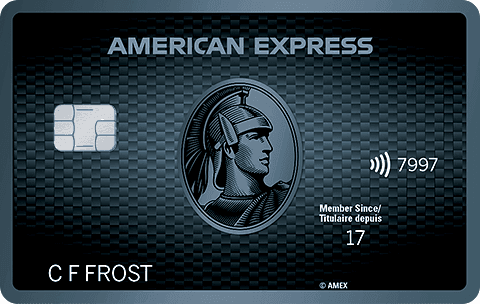

- Annual fee
- $191.88
- Our valuation
- $255Milesopedia first-year estimate First-year valueWelcome bonus$255Total$255Rewards on your spending are not included. The calculator that adds them from your own profile is on the card's page.
- Milesopedia first-year estimateFirst-year valueWelcome bonus$255Total$255Rewards on your spending are not included. The calculator that adds them from your own profile is on the card's page.
- Welcome offer
- Up to 15,000 points
on American Express's website
Apply with confidence — no impact on your credit scoreApply with confidenceCheck whether your application will be approved before you submit it, with no impact on your credit score*When you apply for a personal American Express Credit Card, we will tell you whether you are eligible without affecting your credit score. So you can apply with confidence.*Instant decisions are only available for consumer Card applications (also called “personal Cards”).
To compare every option based on your travel profile, check out our best travel credit cards page. And to keep up with the latest on vacations, points, and loyalty programs, subscribe to our newsletter.
Study methodology
Study objective
This study aims to better understand Quebecers’ travel intentions for the summer 2026 period, as well as the main factors influencing their decisions. The survey explores planned destinations, budget behaviour, the impact of economic conditions on travel plans, destination choice criteria, and travel insurance habits.
The goal is to draw a picture of emerging trends within a community of engaged travellers, highlighting the trade-offs consumers make between the desire to get away, economic constraints, and the search for protection.
Population studied and sample
The study is based on a sample of 150 respondents living in the province of Quebec from the Milesopedia community. This community brings together travellers and consumers interested in optimizing spending, rewards programs, credit cards, and strategies to maximize the value tied to travel.
Given the respondents’ profile, the results let us observe the behaviours and intentions of a public particularly attuned to travel, budget management, and the financial benefits tied to travel.
This sample is based on a voluntary basis and does not constitute a probabilistic sample representative of the general Quebec population. The results should therefore be read as an indicator of trends and perceptions within this specific community, rather than a comprehensive measure of all Quebec travellers’ behaviour.
Data collection
Responses were collected between June 15 and 30, 2026, through an online questionnaire sent to members of the Milesopedia community.
This collection period corresponds to a key phase of summer vacation planning, when many travellers have already set their plans or are in the decision-making process. The responses therefore reflect the stated intentions of participants heading into the summer 2026 season.
Questionnaire structure
The questionnaire covered several dimensions related to travel behaviour:
- Travel intentions: planned destinations, choice between international and domestic travel, regions considered;
- Financial considerations: change in travel budget compared to the previous year and the influence of economic conditions;
Summer 2026 Travel Budget – Frequently Asked Questions
Will the travel budget increase in 2026?
For most Quebec households, the summer 2026 travel budget stays close to last year’s. Some travellers are spending more for a specific trip, while a minority are cutting back.
What’s the most popular destination this summer?
International travel, outside Canada and the United States, tops the list of travel intentions, and Europe dominates every other region by a wide margin. Staying in one’s own province remains the second most common choice.
Is inflation changing Quebecers’ travel plans?
Most travellers say the current economic climate hasn’t changed their plans. When there’s an effect, it’s usually light, such as a cheaper hotel or a shorter trip.
What budget should you plan for a family vacation?
Families with kids generally plan a higher budget than childless households, due to the number of plane tickets, bigger rooms, and extra activities on-site. Using loyalty points helps lower that bill.
Should you book your trip to Europe earlier in 2026?
Yes. Transportation cost is among the top factors influencing travel decisions this year. Booking a direct flight several months ahead helps limit price increases during peak season.
Does my credit card cover travel insurance at any age?
No. Most credit card travel insurance comes with an age limit and excludes certain pre-existing medical conditions. That’s why travellers 55 and older more often choose a separate policy.
What factors most influence vacation decisions this year?
Transportation cost comes first, followed by geopolitical instability and each household’s personal financial situation. Weather conditions and accommodation cost follow closely.
Is it better to travel within Canada or abroad in 2026?
Both options remain popular. International travel, especially to Europe, attracts most travellers planning a trip outside Canada, while staying in one’s own province remains a common choice among more budget-conscious households.
Our featured card
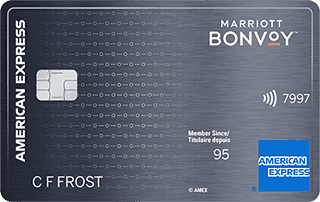
- Annual fee
- $120
- Our valuation
- $990Milesopedia first-year estimate First-year valueWelcome bonus$990Total$990Rewards on your spending are not included. The calculator that adds them from your own profile is on the card's page.
- Milesopedia first-year estimateFirst-year valueWelcome bonus$990Total$990Rewards on your spending are not included. The calculator that adds them from your own profile is on the card's page.
- Welcome offer
- Up to 110,000 points
- Ends Sep 22, 2026
on American Express's website
Apply with confidence — no impact on your credit scoreApply with confidenceCheck whether your application will be approved before you submit it, with no impact on your credit score*When you apply for a personal American Express Credit Card, we will tell you whether you are eligible without affecting your credit score. So you can apply with confidence.*Instant decisions are only available for consumer Card applications (also called “personal Cards”).
Our editorial integrity
Our reviews and rankings are based on an objective assessment. Advertisers do not influence our content. We may receive compensation through some links; our analysis and opinions remain independent.