

Your Guide to United Airlines’ Baggage Limits and Rules

Packing for a trip can be exciting, but also a little stressful, or even a bit overwhelming when you’re not sure what you can bring on board. Most of us would like to avoid feeling too much of these latter emotions.
To help limit unneeded headaches, unexpected extra fees or last-minute surprises at the airport, it’s important to take note of your airline’s rules around baggage quantity, size, and weight.
Given that, to make sure things go smoothly on your next trip, let’s take a look at the ins and outs of the baggage limits and rules for United Airlines so that you can pack with confidence.
United Airlines’ Baggage Limitations and Rules
When you book a flight with United Airlines or United Express, part of the process is choosing your fare type.
This fare type determines the number of bags you’re allowed to bring with you on your trip and its limitations in terms of size and weight.
It’s important to know the rules around your fare’s baggage requirements since you could be on the hook for extra fees if your bags are bigger or heavier than allowed or if you bring more bags than the set amount.
In the guide below, we help you decipher United Airlines’ baggage limits and restrictions so that you can be prepared and pack accordingly.
United Airlines Baggage Dimensions
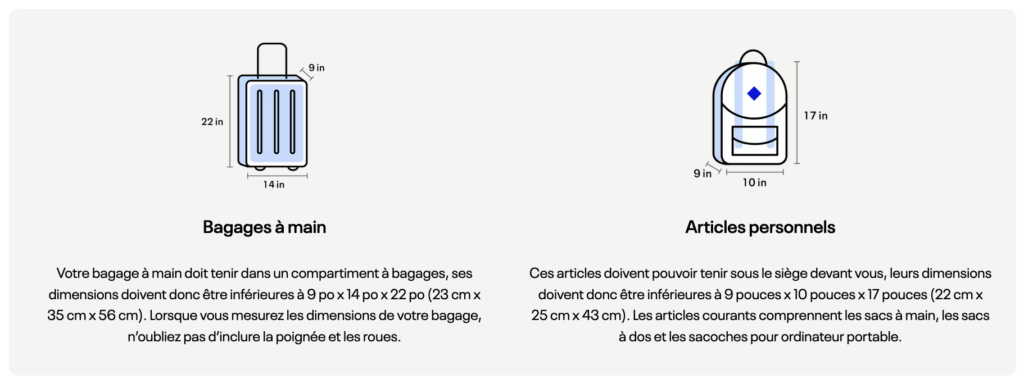
Carry-on baggage
When travelling on a United or United Express flight, you’re generally allowed one carry-on bag and one personal item, with the exception of Basic Economy fares (which we’ll clarify below).
Both your carry-on and your personal item need to be within United Airlines’ size limitations so that they can be stowed in the overhead compartments or under the seat in front of you.
Baggage that is larger than the set dimension requirements may need to be checked at the airport, and in these cases, you’ll probably end up paying an additional fee.
To make sure your carry-on and personal items stay within United Airlines’ baggage guidelines, let’s explore the sizing rules for personal items and carry-on luggage.
United Airlines’ carry-on baggage dimensions are:
- Height: 56 cm (22 in.)
- Width: 36 cm (14 in.)
- Depth: 23 cm (9 in.)
United Airlines’ personal item dimensions rules are:
- Height: 43 cm (17 in.)
- Width: 25 cm (10 in.)
- Depth: 22 cm (9 in.)
An important thing to note about these measurements is that they include your bag’s handle, wheels, and anything else that’s attached. United Airlines has baggage sizing devices at check-in and at the gate, and if your bags won’t fit (even if it’s just because the handle sticks out or the wheels are positioned strangely), you could end up paying a significant fee.
Also, typically, there are no official weight limitations for carry-ons and personal items. However, the general rule is that they must be light enough that you can put them in the overhead compartment without needing help.
Checked baggage
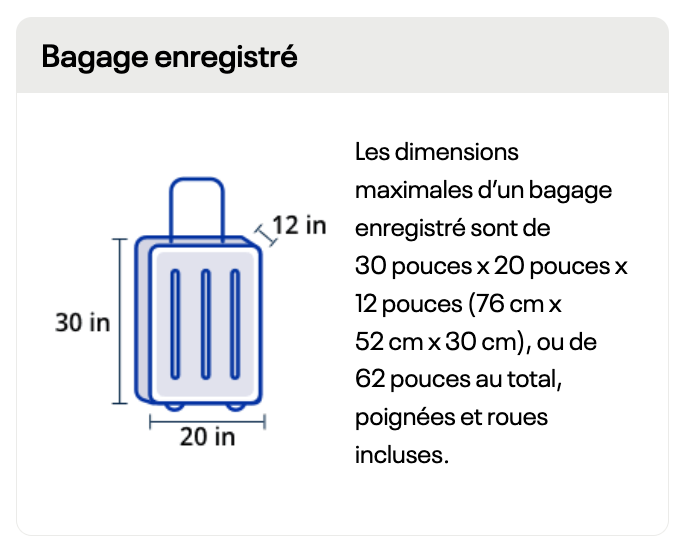
As you start filling your suitcase for your upcoming United Airlines flight, you’ll want to make sure that your bags aren’t larger than the following:
- Height: 76 cm (30 in.)
- Width: 52 cm (20 in.)
- Depth: 30 cm (12 in.)
Again, these size limitations include your bag’s handle and wheels.
Since checked bags need to be moved around by multiple airport and airline staff members, the weight restrictions are taken fairly seriously, and overweight bags will typically cost you an extra fee.
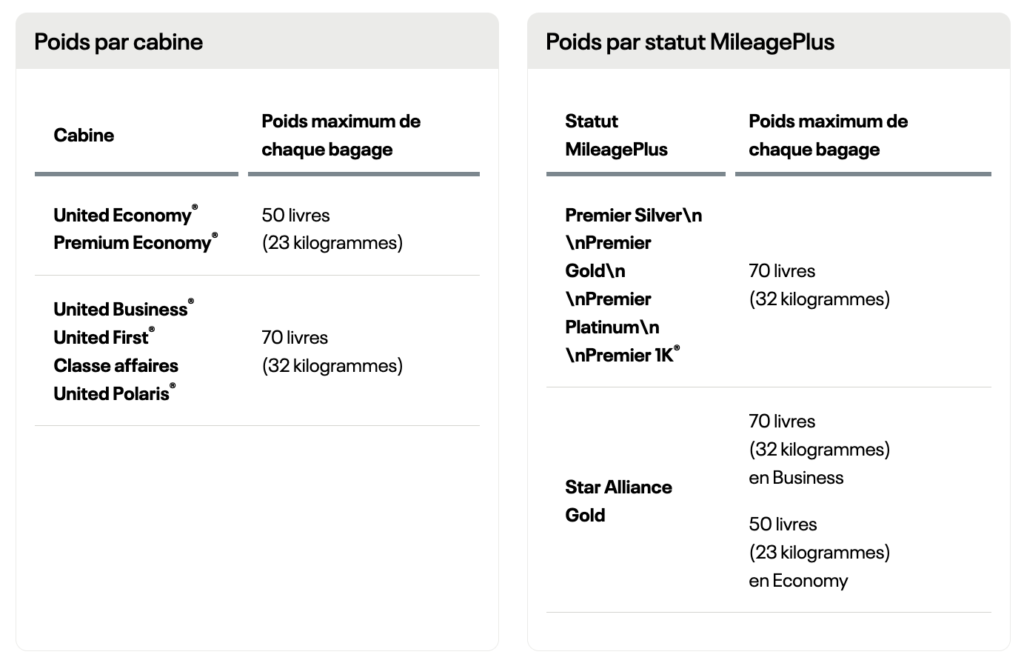
For United and United Express flights, the allowable weight of your checked bag varies depending on which fare you’ve purchased and if you have MileagePlus elite status.
- Economy or Premium Economy: These travellers are allowed a checked bag with a maximum weight of 23 kg or 50 lbs.
- United Business, United First, or United Polaris business class: passengers of these classes are allowed bags to weigh as much as 32 kg or 70 lbs each.
- MileagePlus Premier Silver, Gold, Platinum, or 1K status members: They are allowed to have bags that weigh 32 kg or 70 lbs each.
Basic Economy baggage rules
For travellers who have booked a Basic Economy fare with United Airlines, the baggage limitations and rules are quite restrictive.
With a Basic Economy fare, you may only bring 1 personal item, and you are only allowed to bring a carry-on bag if you’re flying to South America or across the Atlantic or Pacific Ocean. This means that all short-haul Basic Economy fares get no carry-on luggage.
All other bags must be checked, with baggage fees ranging from $48 to $103 depending on when you booked your ticket and whether you pay the fee when you book, when you check in at the airport, or at the gate.
That said, there are some exceptions. You still get at least one free checked bag with a Basic Economy fare if:
- You hold MileagePlus Premier status
- You are travelling with a Premier status member
- You hold Star Alliance Gold status
- You have an eligible US-issued MileagePlus credit card
How to Get Free or Discounted Checked Baggage with United Airlines
If you’d like to save your travel budget for something more enticing than baggage fees, read on to see how you can get free checked bags with United Airlines.
Choose the right fare
The first and most straightforward way to get a free checked bag with United Airlines is to purchase a fare type that includes it.
When travelling with United for a long-haul flight (such as to Europe, Asia or South America) you will typically get a free checked bag when you book any fare above Basic Economy. Additionally, premium fares like business class, first class, and Polaris business class generally come with two free checked bags.
Comparatively, shorter flights within North America (including the Caribbean) and Central America require an additional fee if you’re flying Economy or Economy Plus and want to check a bag. However, two free checked bags are still provided with the three premium cabin fare types.
United Premier elite status
United MileagePlus members who have Premier status can all enjoy free checked bags when flying Economy with United and United Express. The number of checked bags is based on your Premier elite status level as follows:
- Premier Silver: 1 free checked bag
- Premier Gold: 2 free checked bags
- Premier Platinum: 3 free checked bags
- Premier 1K: 3 free checked bags
You can also read through our guide to MileagePlus Premier elite status to learn about how to access each level and its related travel perks.
Have the right credit card
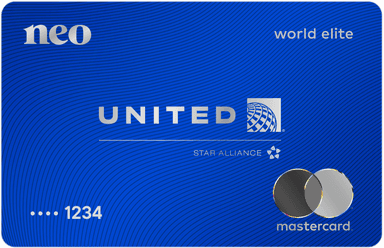
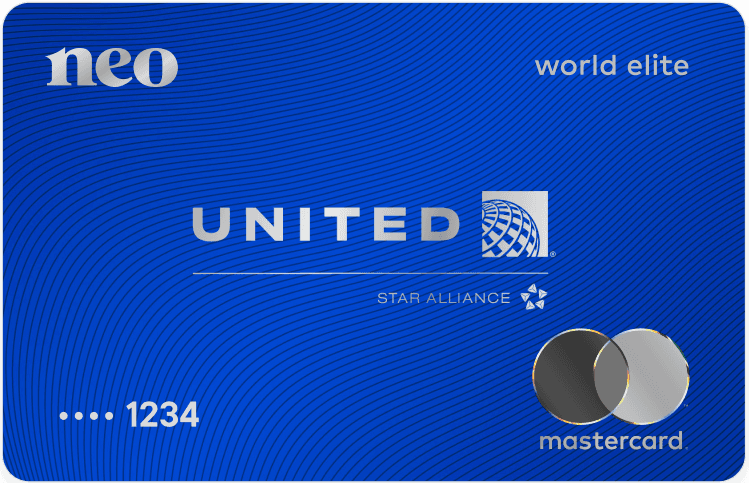
An easy and convenient way to get a free checked bag whenever you fly with United and United Express is to add the United® MileagePlus® Neo World Elite® Mastercard to your wallet. This card offers a complimentary checked bag when you fly with United, and you also get additional perks like priority boarding and a strong welcome offer.
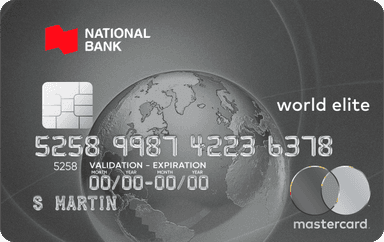
Another good alternative if you don’t have the United® MileagePlus® Neo World Elite® Mastercard, is to consider the National Bank World Elite Mastercard®. This excellent travel card gives you an annual $150 travel credit that you can use to cover travel expenses like checked bag fees.
| Credit card | Annual fee | Welcome offer | |
|---|---|---|---|
| $0 | |||
| $89 |
Bottom Line
As you get set to pack your bags for your upcoming United Airlines flight, double-check that you’re following United Airlines’ baggage rules, and confirm if you might qualify for free checked bags with a MileagePlus credit card or status.
To learn more about where United Airlines can take you, check out our articles on its destinations and airline partnerships.
FAQs
How much baggage is allowed on United Airlines?
The amount of baggage you’re allowed to bring on your United Airlines flight depends on your route, what fare type you’ve purchased, and if you have elite status or a premium MileagePlus credit card.
You can find detailed information in the checked bag section of this article, and the full breakdown of what you’re allowed to bring is available on the United Airlines website.
Can I check more than 2 bags with United Airlines?
If there’s room available on your United Airlines flight, you can usually check more than 2 bags. You can try to add the additional bags when booking your fare; just remember that fees will apply to the extra bags and possibly to all checked bags (depending on your route and fare class).
You can also contact the airline to confirm that there is space for additional luggage on your flight. Finally, if you have Premier Platinum or Platinum 1K status, you’re automatically allowed to have 3 checked bags.
How strict is United with checked baggage size?
It’s best to plan your packing strategy with the assumption that United Airlines is quite strict on the size of your checked baggage. You also want to be particularly cautious about going overweight, as all bags are weighed at check-in.
What are United Airlines’ carry-on baggage dimensions?
United Airlines’ carry-on baggage dimensions are:
- Height: 56 cm (22 in.)
- Width: 36 cm (14 in.)
- Depth: 23 cm (9 in.)
What are United Airlines’ checked baggage dimensions?
United Airlines’ checked baggage dimensions are as follows:
- Height: 76 cm (30 in.)
- Width: 52 cm (20 in.)
- Depth: 30 cm (12 in.)
What are United Airlines’ personal item dimensions?
United Airlines’ personal item dimensions rules are:
- Height: 43 cm (17 in.)
- Width: 25 cm (10 in.)
- Depth: 22 cm (9 in.)
What luggage am I allowed with United Airlines’ Basic Economy fare?
With United Airlines’ Basic Economy fare, you may only bring 1 personal item. You are only allowed to bring a carry-on if you’re flying to South America or across the Atlantic or Pacific Ocean. This means that all short-haul Basic Economy fares get no carry-on luggage.
Our featured card

- Annual fee
- $89
- Our valuation
- $400Milesopedia first-year estimate First-year valueWelcome bonus$400Total$400Rewards on your spending are not included. The calculator that adds them from your own profile is on the card's page.
- Milesopedia first-year estimateFirst-year valueWelcome bonus$400Total$400Rewards on your spending are not included. The calculator that adds them from your own profile is on the card's page.
- Welcome offer
- Up to 25,000 miles
on Neo Financial's website
Our editorial integrity
Our reviews and rankings are based on an objective assessment. Advertisers do not influence our content. We may receive compensation through some links; our analysis and opinions remain independent.