

Pay Rent by Credit Card in Canada: 4 Platforms Compared

Paying rent with a credit card in Canada always goes through an intermediary platform, never through the landlord directly. Four services make it possible: Chexy, Casa, Neobanc and TenantPay. Fees range from 0% to 2.75% depending on the card and the platform. That percentage alone decides whether your rent earns you money or costs you money.
Everywhere in Canada, Quebec included, Chexy remains the simplest way to pay rent with a credit card. The fee is 1.75%, every Canadian card is accepted, and the landlord has nothing to set up. This guide compares the four platforms and calculates the break-even point on a real rent. It then tells you which credit card deserves that payment.
Pay rent with a credit card: is it worth it?
Rent paid by card pays off as soon as the card’s return beats the platform’s fee. On a $2,000 monthly rent, or $24,000 a year, a 1.75% fee adds up to $420. That is the number to beat.
The table below runs that math for three rents and five ways to pay. The real return of each card, and the condition attached to it, comes in the sections that follow.
| Way to pay | $1,500 rent | $2,000 rent | $2,500 rent |
|---|---|---|---|
| Chexy at 1.75% with a 1% cash back card | -$135 a year | -$180 a year | -$225 a year |
| Chexy at 1.75% with a card earning 2% on recurring payments | +$45 a year | +$60 a year | +$75 a year |
| Chexy at 1.75% with the TD Cash Back Visa Infinite* Card at 3%, $139 annual fee deducted | +$86 a year | +$161 a year | +$236 a year |
| TenantPay at 1.75% with a 1% card, plus its own points estimated at 0.5% to 1% | -$45 to +$45 | -$60 to +$60 | -$75 to +$75 |
Two conclusions come out of this table. First, a card that returns 1% on rent loses money against a 1.75% fee, without exception. Second, the 3% of the TD Cash Back Visa Infinite* Card only applies if the issuer classifies the charge as a recurring bill payment. TD defines that category by the code transmitted through the Visa network.
4 platforms to pay rent by credit card
Each platform charges your card, then sends the rent to your landlord by Interac e-Transfer or pre-authorized debit. Three of them work with any landlord. The fourth requires your property manager to already be a client.
| Criterion | Chexy | Casa | Neobanc | TenantPay |
|---|---|---|---|---|
| Visa fee | 1.75% | 1.75%, or 0% with the ScotiaGold Passport Visa | 1.50% to 2.25% | 1.75% |
| Mastercard fee | 1.75% | 1.75% | 1.50% to 2.25% | 2.75% |
| American Express | Accepted, 1.75% | Not accepted | Accepted | Announced, not yet offered |
| International cards | 2.5% | 2.4% | Not specified | Not specified |
| Landlord must sign up | No | No | No | Yes, account number provided by the property manager |
| Payment to the landlord | Interac, pre-authorized debit or bill pay | Interac, pre-authorized debit announced | Interac | Through the property manager |
| Available in Quebec | Yes | No, everywhere in Canada except Quebec | Yes | Yes |
| Rent reported to your credit file | Equifax, included in Chexy Plus | Mentioned, no details | On request, bureau not specified | Equifax, with autopay |
| Other payments | Taxes, bills, tuition; mortgage by debit only | Condo fees | Bills, mortgage | Rent only |
Two platforms actually compete for the market. Chexy has processed more than $2 billion in payments since 2023 for more than 200,000 users, according to Radio-Canada. Casa, launched with Scotiabank in March 2026, charges the same 1.75% and adds condo fees. Neobanc and TenantPay complete the picture without a decisive edge on fees.
Zenbase, often cited in the same searches, does not play in this category: it refuses credit cards for rent. Its service splits the payment in two instalments, for $9.90 a month plus 0.75% of the rent, and reports rent to Equifax for $3 a month. It suits the tenant who wants to build credit, not the one who wants points.
Outside Quebec: Casa, an alternative to Chexy
Casa works like Chexy: a 1.75% fee on Canadian Visa and Mastercard cards, 1% on debit cards and 2.4% on international cards. The landlord is paid by Interac e-Transfer, within 2 to 5 business days. Casa drops its fee to 0% for a single card, the ScotiaGold Passport Visa Card; with any other card, the math is the same as with Chexy.
The Casa and Scotiabank launch release states that the platform is available across Canada, excluding Quebec. Quebec tenants go through Chexy. The details of the partnership are in Casa and Scotiabank: Scene+ points on rent.
Everywhere in Canada, Quebec included: Chexy
Chexy works with every landlord, in every province and territory. You enter the amount, the date and how your landlord receives the money. Chexy charges your card four business days before the agreed date. The rent then goes out by Interac e-Transfer, pre-authorized debit or bill pay.
The fee is 1.75% on any Visa, Mastercard or American Express card issued in Canada, and 2.5% on an international card. Two ways to bring it down:
- Referrals: 3 referred people bring the fee to 1.5%, 5 people to 1%, 10 people to 0.5%. Each referred person who makes a first payment also adds $15 to your Chexy balance.
- Chexy Plus on the annual plan: $200 a year for a 1.5% fee, free Rush payments and the credit builder. On a $2,000 rent, the fee saving reaches $60 a year, which does not cover the subscription. The plan is justified by the other perks, not by the fee.
The two discounts do not stack: Chexy applies the better of the two. The step-by-step setup, the screenshots and our own experience using it are in the full Chexy review for paying rent by credit card.

Which credit card to use with Chexy
The right card for rent is the one whose return beats 1.75%, and the central question is the recurring bill payments category. Several issuers pay 2% or 3% on it, but each one decides what goes in. Chexy’s monthly charge is set up as an automatic payment. The code transmitted by the card network determines the rate applied on your statement.
The benchmark to know: the Scotia Momentum® Visa Infinite +* Card paid 4% on recurring bill payments, rent included. As of October 22, 2026, Scotiabank moves rent and taxes back to the regular 1% rate. We detail the end of the Scotia Momentum 4% on rent and taxes. Here is what remains on the market.
TD Cash Back Visa Infinite* Card: 3% on recurring bills
The TD Cash Back Visa Infinite* Card offers the best remaining rate: 3% cash back on recurring bill payments. The rate applies to the first $15,000 in annual purchases in the category, then drops to 1%. On a $2,000 rent, that 3% is worth $720 a year, against $420 in Chexy fees and a $139 annual fee: a net gain of $161. The income requirement is $60,000 personal or $100,000 household.
TD defines a recurring bill payment as a transaction the Visa network classifies as such, pre-authorized with a merchant. A Chexy charge may receive that code, or the code of a regular purchase at 1%. Run a first trial month and read the category on your statement before relying on the 3%.
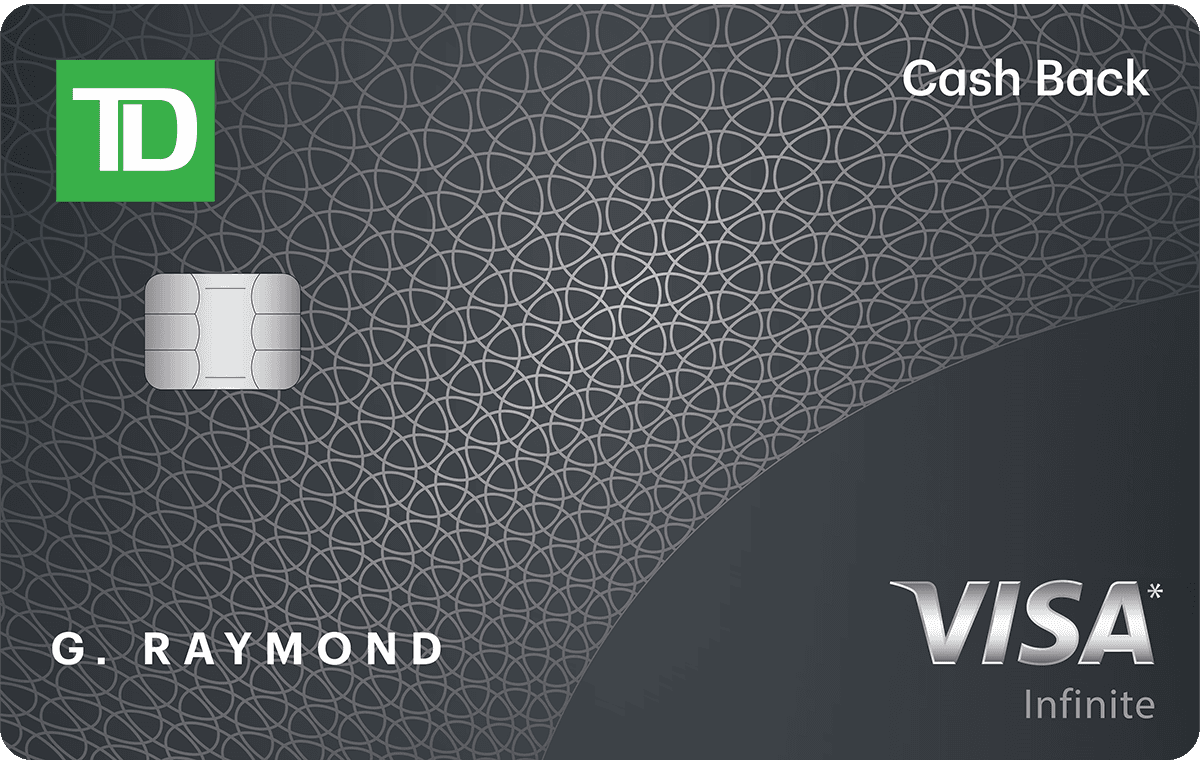

- Annual fee
- $0 $139No annual fee the first year
- No annual fee the first year
- Our valuation
- $489Milesopedia first-year estimate First-year valueWelcome bonus$350Annual fee rebated$139Total$489Rewards on your spending are not included. The calculator that adds them from your own profile is on the card's page.
- Milesopedia first-year estimateFirst-year valueWelcome bonus$350Annual fee rebated$139Total$489Rewards on your spending are not included. The calculator that adds them from your own profile is on the card's page.
- Welcome offer
- Up to $350
- + First Year Annual Fee Rebate
on TD's website
Tangerine Money-Back World Mastercard: 2% with no annual fee
The Tangerine Money-Back World Mastercard® lets you choose two categories at 2% cash back, three if you deposit the cash back into a Tangerine savings account. Recurring bill payments are on the list. With no annual fee, the net gain on a $2,000 rent is $60 a year, provided Tangerine classifies the Chexy charge in that category. The income requirement is $50,000.
It is the easiest of the three cards to get, and the only one that costs nothing to test the strategy. If the rent posts at the 0.5% base rate, you lose $300 a year. The first-month test matters as much as with TD.
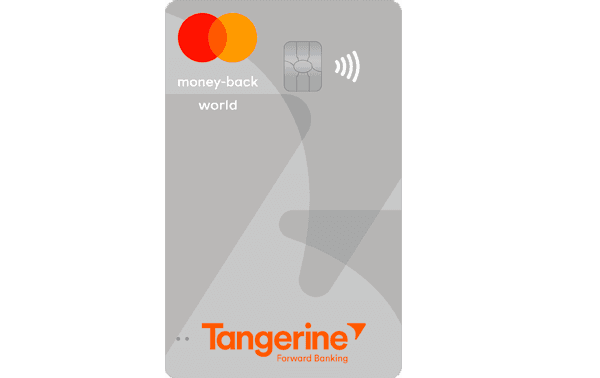

- Annual fee
- $0
- Our valuation
- $100Milesopedia first-year estimate First-year valueWelcome bonus$100Total$100Rewards on your spending are not included. The calculator that adds them from your own profile is on the card's page.
- Milesopedia first-year estimateFirst-year valueWelcome bonus$100Total$100Rewards on your spending are not included. The calculator that adds them from your own profile is on the card's page.
- Welcome offer
- Up to $100
- Ends Sep 30, 2026
on Tangerine's website
Two strategies that always pay off
Chexy’s fee becomes negligible as soon as the rent serves to unlock a bonus. Two mechanisms make that possible, and the two stack.
Rent to reach a welcome offer
A welcome offer often requires $3,000 to $6,000 in purchases within three months. A $2,000 rent paid through Chexy meets that threshold in two or three months. The fee: $35 a month. Welcome offers apply to all purchases, with no category distinction: rent counts the same as groceries.
The American Express Cobalt® Card illustrates that math. On the rent itself, it earns 1 point per dollar, a return below the fee. Its value comes from the welcome offer and from the 5 points per dollar on groceries and restaurants, which the rent helps you unlock. It has no minimum income requirement.
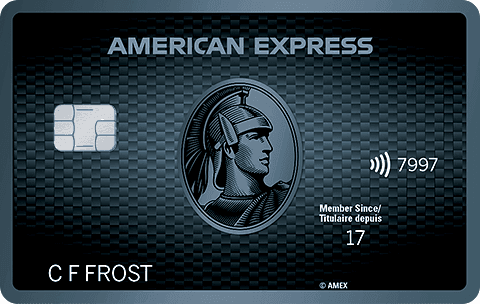

- Annual fee
- $191.88
- Our valuation
- $255Milesopedia first-year estimate First-year valueWelcome bonus$255Total$255Rewards on your spending are not included. The calculator that adds them from your own profile is on the card's page.
- Milesopedia first-year estimateFirst-year valueWelcome bonus$255Total$255Rewards on your spending are not included. The calculator that adds them from your own profile is on the card's page.
- Welcome offer
- Up to 15,000 points
on American Express's website
Apply with confidence — no impact on your credit scoreApply with confidenceCheck whether your application will be approved before you submit it, with no impact on your credit score*When you apply for a personal American Express Credit Card, we will tell you whether you are eligible without affecting your credit score. So you can apply with confidence.*Instant decisions are only available for consumer Card applications (also called “personal Cards”).
Chexy’s partner promotions
Chexy regularly adds points on top of the card’s own. The current offer with American Express pays 500 points per payment of at least $1,000, twice a month. The cap is 6,000 points a year, and the offer runs until October 31, 2026. Eligible cards are The Platinum Card, the Gold Rewards Card, the Aeroplan Reserve Card and the Air Canada Card from American Express, according to the terms published by Chexy.
On a $2,000 rent paid in a single instalment with an Aeroplan card, that is 500 extra points a month. At our valuation of 2 cents per Aeroplan point, that is worth $10. Added to the card’s point per dollar, they tip the rent into positive territory. These offers change through the year: the current Aeroplan promotions and the complete Chexy guide to paying bills by credit card track the current ones.
Rent and your credit file: what each platform reports
Rent paid on time can strengthen your credit file, provided a platform reports it to a credit bureau. It is a benefit distinct from points, useful to newcomers, students and anyone preparing a mortgage application.
- Chexy: reporting to Equifax through the credit builder, now included in Chexy Plus, at $20 a month or $200 a year. Users who had activated it before June 19, 2026 keep it at no charge.
- Neobanc: reporting on request, visible on your file 30 to 45 days after the payment, with no bureau specified.
- TenantPay: reporting to Equifax included with autopay.
- Zenbase: reporting to Equifax for $3 a month, and to both bureaus in partner buildings, with no credit card.
If your credit score is the main goal, choose on that criterion and not on points. To understand the real effect of reported rent, read how to improve your credit score.
The limits to know before you start
Paying by card works for the vast majority of tenants. Four situations call for a check before the first payment.
- The landlord must accept Interac e-Transfer or pre-authorized debit. A landlord who requires a cheque cannot receive a Chexy, Casa or Neobanc payment.
- Processing takes 2 to 5 business days. Schedule the charge a week before the rent date, especially the first month.
- Your credit limit must absorb the rent on top of your usual spending, without going past 30% utilization if you care about your score.
- The fee is added to the amount charged to the card. On a $2,000 rent, Chexy charges $2,035: plan for that margin in your credit limit and in your budget.
Claire Célérier holds the Canada Research Chair in Household Finance at the University of Toronto. She sums up the risk in Radio-Canada’s report: these platforms reward those who already have the money and put those who do not into debt. The math in this article only holds for a balance paid in full, every month.
Conclusion
Paying rent with a credit card pays off in two specific cases. First: reaching a welcome offer. Second: a card that earns at least 2% on recurring bill payments. In every other case, the 1.75% fee eats the cash back.
Outside Quebec, Casa is an alternative for rent, and Chexy keeps the edge for taxes, bills and partner promotions. In Quebec, Chexy is the platform to pick, with referrals to bring the fee down. To choose the card that goes with that strategy, see our page of the best credit cards in Canada.
To receive our analyses every week, subscribe to our newsletter.
Pay rent with a credit card – Frequently asked questions
Here are questions frequently asked in the milesopedia community about paying rent with a credit card.
Can you pay rent with a credit card in Canada?
Yes, through a platform such as Chexy, Casa or Neobanc. You pay the platform by card, and it sends the rent to your landlord by Interac e-Transfer or pre-authorized debit. The landlord has nothing to set up and pays no fee.
How much does it cost to pay rent with a credit card?
Chexy charges 1.75% on Canadian cards, Casa 1.75% as well, Neobanc 1.50% to 2.25% and TenantPay 1.75% on Visa or 2.75% on Mastercard. On a $2,000 rent, 1.75% comes to $35 a month.
Which credit card earns the most on rent?
The TD Cash Back Visa Infinite* Card offers 3% on recurring bill payments, if the issuer classifies the charge in that category. The Tangerine Money-Back World Mastercard gives 2% with no annual fee in the same category. A 1% card loses money against a 1.75% fee.
Does rent paid through Chexy count as a recurring bill payment?
It depends on your issuer. Chexy sets up the charge as an automatic monthly payment, but the code transmitted by the Visa, Mastercard or American Express network sets the category on your statement. Run a first trial month and read the category shown before building your strategy on it.
Is Casa available in Quebec?
No. The Casa and Scotiabank launch release states that the platform is available across Canada, excluding Quebec. Quebec tenants use Chexy or Neobanc, both offered everywhere in Canada. Our article Casa and Scotiabank on rent follows any change to that restriction.
Does paying rent with a credit card improve your credit score?
Can you pay your mortgage with a credit card?
Neobanc accepts it by credit card, at the same fee as rent. Chexy allows it too, but by debit card or bank withdrawal, at 1.75%, with 1 Aeroplan point per dollar of principal repaid. Casa and TenantPay are limited to rent and condo fees. The break-even math is the same: the card’s return must beat the fee. Partner promotions often exclude mortgage payments.
What if my landlord refuses Interac e-Transfer and pre-authorized debit?
Chexy offers a third option, bill pay, which works if your landlord is a property manager registered as a payee with the banks. Otherwise, no platform can issue a cheque on your behalf, and paying by card is not possible for that unit.
Our featured card
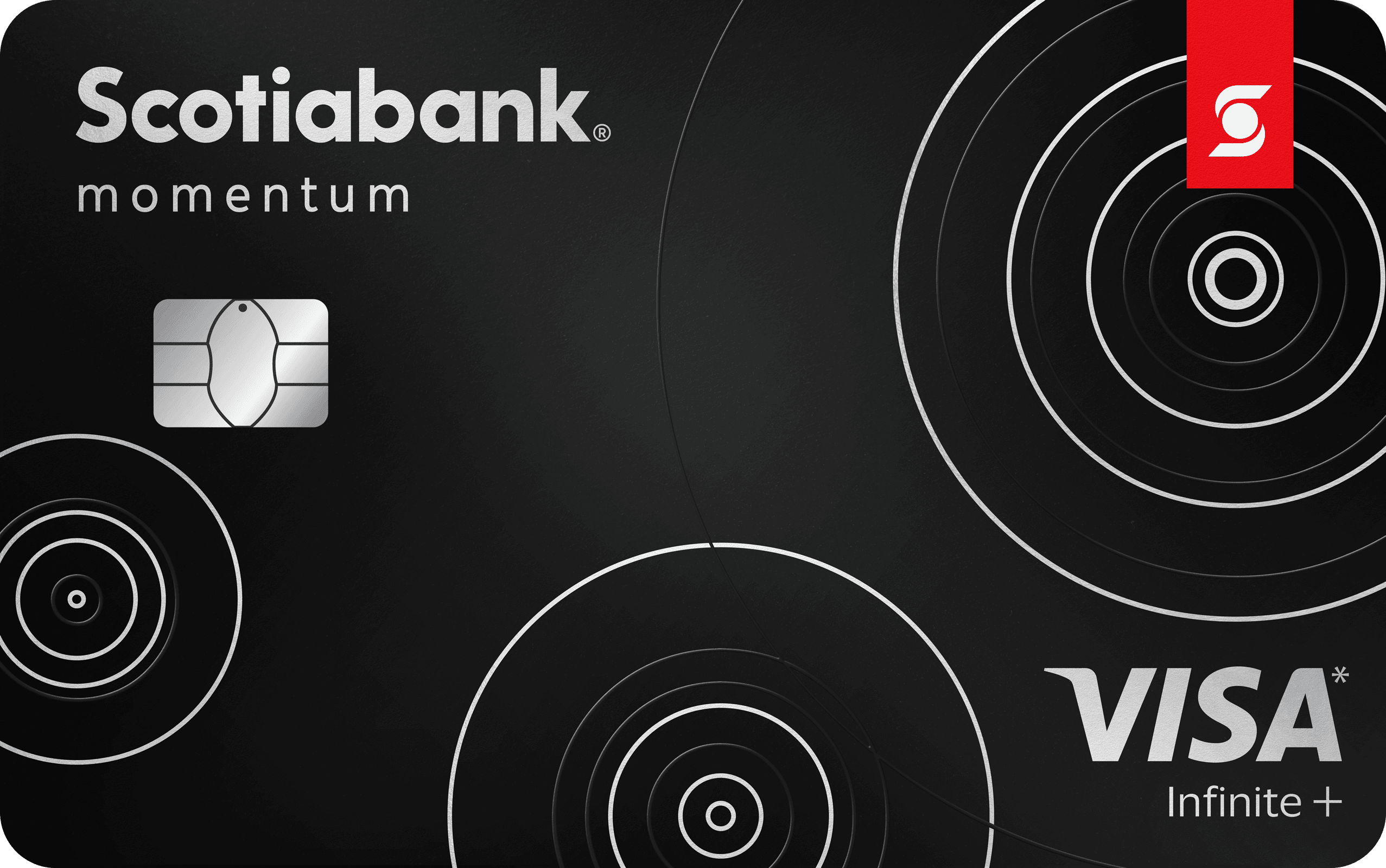
- Annual fee
- $0 $120No annual fee the first year
- No annual fee the first year
- Our valuation
- $420Milesopedia first-year estimate First-year valueWelcome bonus$300Annual fee rebated$120Total$420Rewards on your spending are not included. The calculator that adds them from your own profile is on the card's page.
- Milesopedia first-year estimateFirst-year valueWelcome bonus$300Annual fee rebated$120Total$420Rewards on your spending are not included. The calculator that adds them from your own profile is on the card's page.
- Welcome offer
- Up to $300
- + First Year Annual Fee Rebate
- Ends Nov 1, 2026
on Scotiabank's website
Our editorial integrity
Our reviews and rankings are based on an objective assessment. Advertisers do not influence our content. We may receive compensation through some links; our analysis and opinions remain independent.