In 2026, 55% of Canadians plan at least one leisure trip this spring, according to a Léger survey published in May 2026. It is the highest intention rate since 2024. But where they go, why they go and what they are looking for there: all of it has changed. For our in-depth analysis of 2026 trends, we tracked ten signals. Here are the five that are truly reshaping travel this year.
1. Escaping the heat, not the beach
The southern beach stays popular, but it is losing ground. More and more travellers deliberately seek out cooler destinations: northern regions, mountain national parks, wind-swept coastlines. This is not a niche whim. Several travel agencies report a marked rise in requests for Iceland, Norway, northern Canada and the Alps for summer 2026, at the expense of peak-season Mediterranean beach stays.
The reason is simple: summers are becoming less predictable. A week in Barcelona or Phoenix in July can turn stifling. Travellers who lived through a 40°C heat wave on vacation have no desire to repeat the experience. The result: coolness has become a selection criterion in its own right, on par with price or flight length.
2. Authenticity over the classics
Rome, Paris, Amsterdam: millions still visit each year. But a growing share of travellers deliberately branch off. The Balkans, rural central Europe, the quieter islands of the Azores or the Aegean draw people looking for something the saturated destinations can no longer offer: space, real human contact, a local economy that has not been entirely turned into a tourist service.
This movement answers an overtourism fatigue that even occasional travellers are starting to feel. Waiting 45 minutes to enter a museum, sharing a medieval alley with 300 other visitors, sleeping in a neighbourhood entirely given over to short-term rentals: the experience loses its meaning. Less-crowded destinations become a competitive advantage again. See also our affordable destinations with the Canadian dollar to combine savings and authenticity.
3. Set-jetting is gaining ground
The phenomenon is not new, but it is accelerating. Set-jetting means choosing a destination because a series or film was shot there. Season 2 of The White Lotus in Sicily, Emily in Paris in the Marais, Succession in Dubrovnik: the examples pile up, and tourism boards have started weaving this angle into their promotion.
What changes in 2026 is the scale. With 49% of Canadian travellers now using artificial intelligence to plan their itineraries, according to Léger, personalized recommendations based on cultural preferences become a travel trigger in their own right. People ask the AI « where to travel if I loved this show » and end up booking tickets to a destination they would never have considered otherwise. Travel becomes an extension of the narrative universe we consume.
4. Multigenerational travel resurfaces
Grandparents, parents and adult children travelling together: this format is seeing a notable revival. Several factors converge. The successive pandemics reminded many families that chances to gather are not infinite. The baby-boomer generation has the time and often the means to fund a structured family trip. Rental platforms offer large-capacity properties more easily than before.
This kind of trip takes more preparation: it needs accommodations that suit very different profiles (reduced mobility, young children, diverging dietary preferences), flexible activities and a fair shared budget. But the goal is clear: to create shared memories at a time when families are geographically scattered. For everything logistics-related, our tips for family travel cover the essentials.
5. Wellness as a reason to travel
The restorative trip is no longer reserved for yoga circles or luxury stays. It has gone mainstream. In 2026, a growing number of travellers choose their destination based on its ability to slow their pace: extended stays in a single place, local experiences rather than circuits, nature retreats, spa towns, long-distance walking.
This movement intersects directly with the slow travel trend: staying three weeks in a village rather than spending three nights in seven capitals. The idea is to reconnect with a place, not to tick it off. Our guide on slow travel details this approach and its concrete benefits. For women who practise solo travel as a form of restoration, our guide to solo travel as a woman is a reference.
What these trends have in common
The thread running through 2026 is a search for meaning. Fewer trips, but more intentional ones. Experiences chosen for what they bring, not for what they let you post. The 2026 traveller wants to feel something real, not check off a list.
This underlying trend has a concrete effect on planning: stays get longer, itineraries get simpler, destinations move off the beaten path. A good travel card remains useful to fund these longer stays and earn points on every booking.
Our valuationMilesopedia first-year estimateFirst-year valueAnnual fee rebated$150Total$150Rewards on your spending are not included. The calculator that adds them from your own profile is on the card's page.
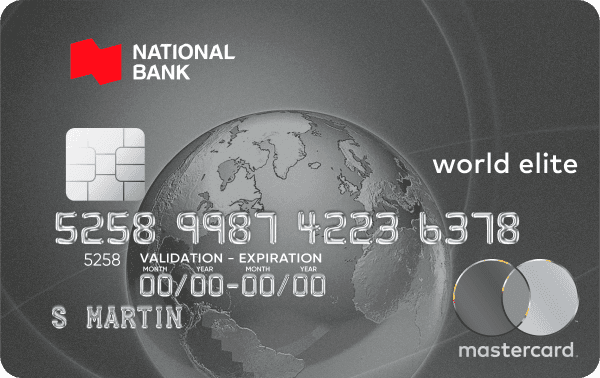
With Milesopedia, take advantage of an exclusive offer: your first-year annual fees are refunded with the National Bank World Elite Mastercard. This offer is exclusively available on the Milesopedia network, from June 30 to November 4, 2026.
Refund of the first-year annual fee (a $150 value) for the primary cardholder. This fee is charged to your new card account, then refunded as a credit on your statement within five months of opening your account, provided it remains open and in good standing.
The National Bank World Elite Mastercard is the best Mastercard credit card offered by NBC.
With this card, you earn up to 5 points per dollar on your purchases:
5 points per dollar for groceries and restaurants
2 points per dollar on gas and electric recharge purchases
2 points per dollar on recurring bills
2 points per dollar on À la carte Travel
1 point per dollar for all other purchases
And since it’s a Mastercard, you can use it at Costco.
With this card, you have access to a $150 annual travel credit that you can use in any of these categories:
Airport parking
Baggage fees
Seat selection
Access to airport lounges
Airline ticket upgrades
What’s more, you can enjoy access to DragonPass airport lounges and unlimited access to the National Bank Lounge at Montreal-Trudeau.
Finally, Milesopedia has named the National Bank World Elite Mastercard as the Best Travel Credit Card in 2023, 2024, 2025, and 2026.
Legal
® Mastercard and World Elite are registered trademarks, and the circles design is a trademark of Mastercard International Incorporated. National Bank is an authorized user.
® The À LA CARTE REWARDS logo is a registered trademark of National Bank of Canada.
® NATIONAL BANK OF CANADA LOUNGE is a registered trademark of National Bank of Canada.
® À LA CARTE REWARDS PLAN is a registered trademark of National Bank of Canada.
® Apple Pay is a registered trademark of Apple Inc., registered in the U.S. and other countries. Apple Inc. is not a sponsor of or participant in National Bank Mobile Banking Solutions.
® Google Pay is a registered trademark of Google LLC. Use of this trademark is subject to Google Inc. Permissions.
TM À LA CARTE TRAVEL is a trademark of National Bank of Canada. The À la carte Travel agency is owned by Transat Distribution Canada Inc. and holds a Quebec permit (No. 753141).
TM À LA CARTE REWARDS is a trademark of National Bank of Canada.
® THE TOTAL, THE CONNECTED and NATIONAL BANK are registered trademarks of National Bank of Canada.
* Mastercard® World Elite®
The National Bank® World Elite® Mastercard® credit card was voted best Mastercard credit card by Milesopedia in 2026, 2025 and 2024.
The National Bank® World Elite® Mastercard® credit card was voted best travel credit card by Milesopedia in 2026, 2025 and 2024.
Every year, Milesopedia reviews credit card offers from major financial institutions and establishes its Ranking based on over 150 criteria such as fees, welcome offer, minimum income required, number of points per category, account credits, insurance, airport lounge access, etc.
Certain restrictions apply. For more information, see the Rewards Plan section or the Plan Rules applicable to point accumulation.
Grace period: No interest is charged on purchases made during the month if the cardholder pays the full balance of their account within twenty-one (21) days of the statement date. This grace period does not apply to cash advances and balance transfers. Minimum payment: if your account balance is less than $10, you must pay the balance in full. If you reside in the province of Quebec, your minimum payment is 5% of your account balance plus any overdue amount, or $10, whichever is greater. If you reside outside Quebec, your minimum payment is 2.5% of the credit card account balance plus any overdue amount, or $10, whichever is greater. Account statement: an account statement is sent monthly.
Table of examples of credit fees calculated over a 30-day period
Annual interest rate
$500
$3,000
22.49%
$9.24
$55.45
20.99%
$8.63
$51.76
13.2%
$5.53
$33.16
9.2%
$3.78
$22.68
*Variable interest rate in effect as of September 1, 2021.
Balance transfers and cash advances are subject to National Bank credit approval. Each amount transferred cannot be less than $250.
Exclusive to World Elite Mastercard cardholders. Presentation of the physical credit card and boarding pass is required to access the lounge. The National Bank® Lounge is accessible to customers traveling on international flights only (excluding flights to Canada and the United States). You benefit from free and unlimited access with one guest and two children aged 12 and under. Until October 4, 2026 (date subject to change), customers can enter the National Bank Lounge three hours before their flight departure time. From October 5, 2026 (date subject to change), access will be authorized for a maximum duration of 2 hours (3 hours for customers who hold a Private Banking 1859® World Elite® Mastercard® credit card). National Bank customers who are not World Elite ® Mastercard ® cardholders can also access the current lounge based on current rates and benefit from a 25 % discount on these rates : 63,24 $ taxes included for adults (excluding discount) $40.24 taxes included for children aged 2 to 12 (excluding discount) free for children under 2 (excluding discount) The entry fee is subject to change without notice and is the responsibility of the lounge operator.
Subject to providing the required supporting documents in the manner and within the prescribed timeframe. Certain conditions may apply. Only the primary cardholder of a National Bank World Elite Mastercard (Cardholder) whose account is in good standing can request a « Travel Fee Reimbursement ». « Account in good standing » means an account linked to the credit card that does not violate the Credit Card Agreement in any way and on which no restrictions apply. For example, and without limitation, the associated annual fees must have been paid in full. The maximum reimbursement of $150 can be requested from January 1 to December 31 of each year. Eligible expenses are: airport parking baggage fees seat selection airport lounge access worldwide airline ticket upgrades A reimbursement request must be made within 60 days of the purchase date. Travel expenses must be charged to the National Bank World Elite Mastercard credit card account. The maximum reimbursement of $150 is applicable per account. Please allow up to 7 business days for the reimbursement to be processed from the date your request is submitted. National Bank reserves the right to request additional supporting documents for validation purposes (e.g., invoices). You must keep all receipts and supporting documents for a period of 12 months from the date you made your reimbursement request. An unused reimbursement in one year cannot be carried over to the next year. You can make your request online at rewards.nbc.ca or by calling 1-800-341-8083 (toll-free) for an agent to assist you with your travel fee reimbursement request.
Point accumulation on grocery and restaurant spending depends on the total gross monthly amount charged to the credit card account, across all categories. Earn 5 points per dollar spent on eligible grocery and restaurant purchases. The 5 points per dollar accumulation is valid for the first $2,500 of gross monthly purchases charged to the account. Beyond this amount, eligible grocery and restaurant spending will earn 2 points per dollar. The calculation of the gross monthly purchase amount is based on monthly billing. A grocery purchase means a purchase made at a merchant whose primary business is selling food, such as a grocery store, delicatessen, supermarket, fruit store, or specialty food store. Meal kit subscriptions and meal delivery services are eligible. Therefore, this definition excludes, among others, retail stores and big-box stores whose primary business is selling non-food items. Some merchants may sell products or services identical or similar to those of eligible merchants, or are separate merchants located on the same premises as eligible merchants, but are classified by Mastercard in different categories. Purchases made from other merchants only earn base reward points. A restaurant purchase means a purchase made at a restaurant, including quick-service restaurants, bars, discotheques, nightclubs, and taverns. To view the full list of Mastercard codes associated with eligible merchants, download the À la carte Rewards Plan® terms and conditions document.
These protections apply if the purchases or rental are paid for in part with the card before departure, except, if applicable, for out-of-province medical-hospital insurance for which it is not necessary to charge the purchase of an à la carte trip and for baggage delay protection where the full cost of transport must have been charged to the card. All these protections apply to the primary cardholder, their spouse and/or their dependent children when they (spouse and dependent children) travel with the cardholder. Extended warranties apply to most new items purchased with the card, in Canada or abroad, provided the manufacturer’s warranty exists and is valid in Canada. Certain conditions, limitations and restrictions apply. For more information and details regarding your insurance coverage, please consult the insurance certificate linked to your card.
Subject to credit approval by National Bank.
Certain conditions apply. Visit mastercard.ca for more information. See all credit card terms and conditions.
To earn 2 points per dollar spent, you must pay for your gas or electric charging purchases at a gas station or certain big-box stores. Some merchants may sell products or services identical or similar to those of eligible merchants, or are separate merchants located on the same premises as eligible merchants, but are classified by Mastercard in different categories. Purchases made from other merchants only earn base reward points. To view the full list of Mastercard codes associated with eligible merchants, download the À la carte Rewards Plan® terms and conditions document.
Recurring bill payments are defined as payments made monthly or regularly that are automatically charged by the merchant to your National Bank World Elite Mastercard. Not all merchants offer recurring payments, and not all recurring payments are considered recurring bill payments. Therefore, some payments may not qualify for accelerated reward points.
To earn 2 points per dollar spent, you must pay for your eligible purchases through the À la carte TravelTM agency section of our À la carte RewardsTM site.
For example, if you spend $400 monthly on groceries, $200 on gas, $100 on recurring bills and $150 on other purchases, the $850 spent will generate 2,750 points, broken down as follows: 2,000 points for grocery spending (since the total gross monthly amount is $850, which is less than $2,500), 400 points for gas spending, 200 points for recurring bills and 150 points for other purchases.
Insurance up to $1,000 in case of breakage, loss or theft of mobile devices for a maximum period of 2 years following the date of purchase. Subject to purchasing the device with the National Bank World Elite Mastercard or a phone service subscription paid by recurring payments from your National Bank Platinum Mastercard starting September 1, 2022. For all conditions, please consult the insurance certificate linked to your card.
Annual fee
Primary card$150
Additional card$50
Annual income required
Individual$80,000
Household$150,000
Conversion fees
2.5%
Earning rate
5xRestaurants
5xGroceries
2xGas
2xBills & recurring payments
2xTravel
1xAll spending
Value
1st Year Value$778
2nd Year Value$923
Card benefits
Airport lounge access$400
Travel creditsIncluded
Travel insurance
Travel medical (under 55)Up to $5,000,000 / 60 days
Travel medical (55-64)Up to $5,000,000 / 31 days
Travel medical (65+)Up to $5,000,000 / 15 days
Trip CancellationUp to $2,500
Trip InterruptionUp to $5,000
Delayed BaggageUp to $500
Lost BaggageUp to $1,000
Flight DelayUp to $500
Travel AccidentIncluded
Purchase protection
Purchase ProtectionIncluded
Extended Warranty+2 years
Mobile DeviceUp to $1,000 / 2 years
Auto Rental CollisionUp to $65,000 / 48 days
Travel insurance: the preparation we put off
Of all the parts of a well-prepared trip, insurance is the one most often bought at the last minute, or not at all. Yet in a context where trips get longer, destinations move away from cities, and outdoor activities take centre stage again, the risks not covered by provincial plans or credit card insurance deserve a closer look. Even a big road trip at home has coverage gaps: see our guide to staying properly insured while travelling across Canada.
soNomad offers travel insurance built to be transparent and accessible: you set up your coverage in minutes, you understand what is included before you pay, and the price matches what you actually need. It is an approach that aligns well with the 2026 trend: more clarity, less needless complexity.
Survey: how do you insure yourself?
Take two minutes to answer our travel insurance survey. Your answers help us produce more useful comparisons for Canadian travellers.
Frequently asked questions
What is the number 1 travel trend in 2026?
The most measurable shift is the return of domestic travel. According to a Léger survey from May 2026, 67% of Canadian travellers plan to stay in Canada this spring, up from 49% last year. That number reflects both a geopolitical context and a deeper preference for authenticity and proximity.
What exactly is set-jetting?
Set-jetting means choosing a destination because a TV series or film was shot there. Sicily after The White Lotus, Dubrovnik after Game of Thrones: the examples are many. The phenomenon is accelerating in 2026 with the growing use of AI to personalize travel recommendations based on cultural tastes.
What is multigenerational travel concretely?
It is a trip bringing together at least three generations of one family: grandparents, parents and children, sometimes even sandwich-generation adults with their own kids. Planning is more complex than a couple’s trip, because mobility, activity and budget needs vary widely from one member to another. But the motivation is strong: creating shared memories.
Why do lesser-known destinations attract more in 2026?
The saturation of the big classic destinations pushes travellers toward places where the experience stays authentic. The Balkans, the Azores and certain rural areas of central Europe offer scenery comparable to the marquee destinations, but without the lineups or the prices inflated by overtourism. The quality-to-authenticity ratio is often better there.
Is wellness travel reserved for high budgets?
No. The democratization of restorative travel is precisely one of the shifts of 2026. A hiking retreat in Canada’s national parks, an extended stay in a secondary European city, a week in a rural cottage: these formats fit varied budgets. What defines them is the intention to slow down, not the price of the stay.
Do you need travel insurance even for a trip within Canada?
Yes. Provincial plans reimburse emergency care received elsewhere in Canada, but at their own rates, not the treating facility’s. Ground ambulances, air evacuations and medical repatriation are generally not covered. For a stay in the Rockies, the Maritimes or the northern territories, complementary coverage is strongly recommended.
Does soNomad suit all these types of travel?
soNomad offers coverage configurable by destination, duration and planned activity type. Whether for a multigenerational trip in Canada, a wellness stay in Europe or a getaway to a less-crowded destination, the platform lets you get a price in minutes with a clear read of the protections included.
Our valuationMilesopedia first-year estimateFirst-year valueWelcome bonus$469Annual fee rebated$120Total$589Rewards on your spending are not included. The calculator that adds them from your own profile is on the card's page.
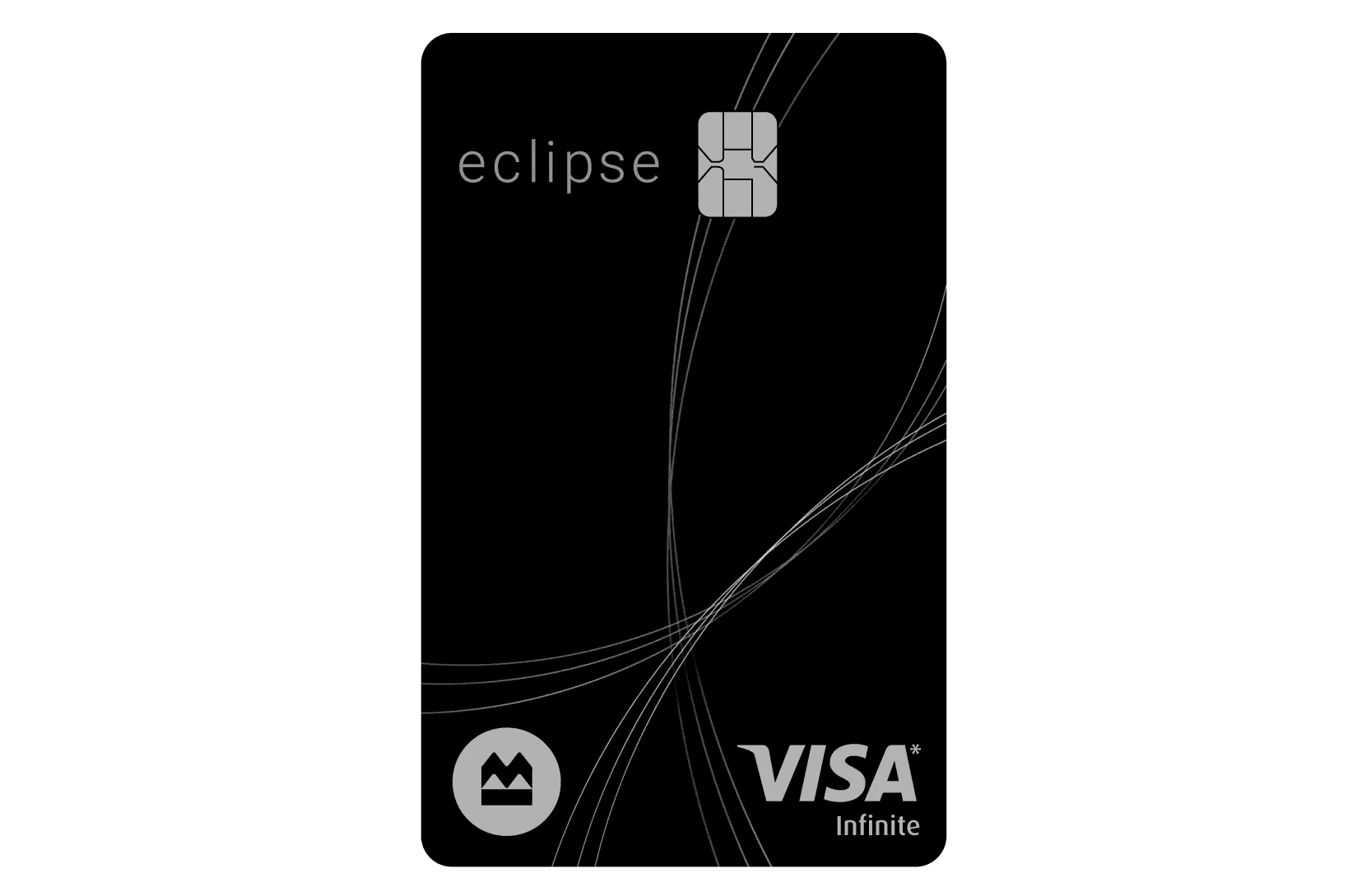
The BMO eclipse Visa Infinite* Card is one of the best Visa Infinite rewards credit cards in Canada. Its welcome offer lets you earn up to 70,000 BMO Rewards points, for a total value of up to $1,150*.
It also includes a monthly statement credit for streaming services, an annual $50 lifestyle credit, and no annual fee for the first year (a $120 value)*.
With the BMO eclipse Visa Infinite* Card, you also get:
5x BMO Rewards points for every dollar spent on groceries, meal delivery or takeout, rideshare, public transit, and gas*
1 BMO Rewards point for every dollar spent on all other purchases*
10% more points when you add an authorized user to your account*
Mobile device insurance offering coverage up to $1,000*
The Pay with Points feature, which allows you to redeem your points on recent purchases starting at $1*
Six months of Instacart+ membership plus a monthly $10 Instacart credit with an eligible card*
Legal
*Terms and conditions apply
BMO is not responsible for updating the content of this site. For the most up-to-date information, please click on the Online Application link.
Annual fee
Primary card$120
Additional card$50
Annual income required
Individual$60,000
Household$100,000
Conversion fees
2.5%
Earning rate
5xTransit
5xGas
5xRestaurants
5xGroceries
1xAll spending
Value
1st Year Value$1,128
2nd Year Value$365
Travel insurance
Travel medical (under 55)Up to $5,000,000 / 21 days
Travel medical (55-64)Up to $5,000,000 / 21 days
Travel AccidentUp to $500,000
Purchase protection
Purchase ProtectionIncluded
Extended Warranty+1 years
Mobile DeviceUp to $1,000 / 1 years
Auto Rental CollisionUp to $65,000 / 48 days
Our editorial integrity
Our reviews and rankings are based on an objective assessment. Advertisers do not influence our content. We may receive compensation through some links; our analysis and opinions remain independent.