The best hotel booking sites in 2026

Loading article…
Choosing a hotel booking site almost always comes down to one question: do you book direct with the chain, or go through a third-party site? The answer depends on whether you collect points, hold elite status, or simply want the lowest price on an independent property.
We book hotel nights all year, with points and with cash. Here is how we decide between Booking.com, Hotels.com, Expedia, Agoda, Airbnb and the chain's own site, and what each option really costs you.
| Where to book | Loyalty program | Strength | Limitation |
|---|---|---|---|
| Chain website | Marriott Bonvoy, Hilton Honors, IHG One Rewards… | Points on the stay, status benefits, best rate guarantee, better room assignments | Sometimes pricier than a third party, depending on the market |
| Booking.com | Genius, 3 levels | Largest catalogue of independent properties, discount from the free account, often pay at the property | No hotel points or status, prices sometimes shown before tax depending on the country |
| Hotels.com | Hotels.com Rewards in Canada | 10 nights stayed earn 1 reward night, paid in Hotels.comCash and worth 10% of the rate of those nights | Same price or higher than the chain for the big hotel groups |
| Expedia | One Key in the United States | BMO Rewards points can be applied to payment, flight and hotel packages | Prices very close to Hotels.com and Booking.com |
| Agoda | PointsMAX (46 partners), AgodaVIP and cash back | Best value in Asia and Oceania | Less competitive in North America and Europe |
| Airbnb | None | Entire homes, often cheaper for families or groups | No hotel points or status |
| Homes & Villas by Marriott Bonvoy | Marriott Bonvoy | Home rentals that earn Bonvoy points, unlike Airbnb | Much smaller catalogue than Airbnb or Vrbo |
| Vrbo | None | Entire homes only, never a room in the host's home | No points or status, less urban inventory |
| Hopper | None for now | Price prediction and price freeze, a Montreal company | Flexibility products cost extra |
| Trivago and TripAdvisor | None | Comparison engines: they scan several sites at once to find the lowest price | They sell nothing; you book somewhere else |
| Hotwire | None | Opaque rates, sometimes very low | You only learn the hotel's name after paying, no cancellation |
If you collect points, the order of preference does not follow the order of prices. Here is our ranking, from most to least rewarding for a traveller playing the long game.
In industry jargon, these platforms are called OTAs, short for online travel agency. They are online travel agencies that resell services provided by third parties. There are hundreds of them, but a few groups share most of the market: Hotels.com, Expedia and Vrbo belong to the Expedia group, while Booking.com, Agoda, Priceline and Kayak are part of Booking Holdings.
In practice, this means rates look very similar from one site to the next within the same group. The real difference lies elsewhere: in the loyalty program, in cancellation flexibility, and in what happens when something goes wrong at the property.
When you book on the chain's website, your stay counts. You earn points, you benefit from current promotions, and your nights move you toward the next status tier. A booking made through a third party, on the other hand, generally earns neither points nor qualifying nights. Hotels keep their perks for guests who book direct, which saves them the commission they would pay the platform.
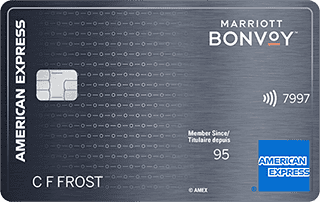
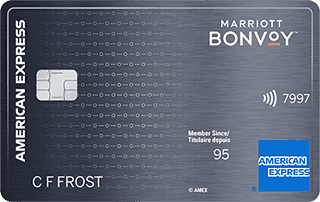
In Canada, only one hotel program still offers co-branded credit cards: Marriott Bonvoy. The Marriott Bonvoy American Express Card and its business version, the Marriott Bonvoy Business American Express Card, each earn 5 points per dollar spent at participating Marriott Bonvoy properties.
| Credit card | Annual fee | Welcome offer | |
|---|---|---|---|
| $120 |
This is where the price gap becomes secondary. At Marriott Bonvoy, a Platinum member gets free breakfast at most properties. Over a stay of a few nights with family, that perk is worth tens, sometimes hundreds of dollars.
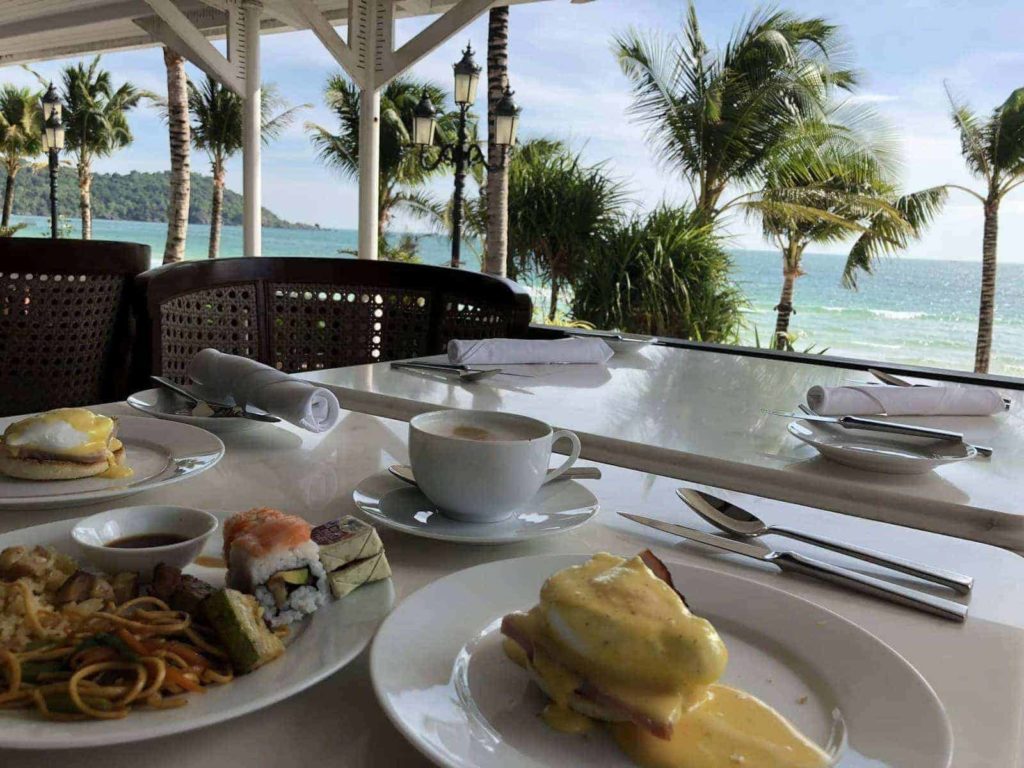
Add to that upgrades when availability allows, late checkout and lounge access at some brands. You will find the full details of each tier in our complete guide to Marriott Bonvoy.
A clarification is needed here, because you often read that award stays are easier to cancel. That is not quite accurate. At Marriott, the cancellation policy depends on the rate booked and on the property, exactly as with a cash booking. The deadline is the same.
What really changes comes down to three things, and they matter more than the deadline:
Most major hotel groups have a best rate guarantee policy. If you find the same room cheaper elsewhere within the allowed window, the chain makes up the difference. At Marriott, the Look No Further guarantee gives you the lowest rate minus 25%, or 5,000 Marriott Bonvoy points, your choice. We cover each group's policy in our article on the best rate guarantee.
A reader, Caroline, told us in the Facebook group how she takes advantage of it:
With Marriott Bonvoy, you get the Look No Further guarantee: 25% off the same price. It happened to me twice recently: I booked with cash at Marriott, filed 2 claims because I had seen the same room cheaper on the sites above, and both were accepted. So it costs you even less! For example, a $141 room on Marriott, seen at $139 on Hotels.com, that Marriott gave me for $104!
This is the costliest misunderstanding in hotel booking. Yes, the Marriott, Hilton or IHG website often shows a few dollars more than Booking.com or Hotels.com for the same room. No, that does not mean the third party is the right choice. The gain from a direct booking does not show up on the bill; it shows up in what you earn.
Take a night listed at $250 at Marriott and $230 on a third-party site, or 8% cheaper.
| What you get | Third-party site at $230 | Marriott direct at $250 |
|---|---|---|
| Price paid | $230 | $250 |
| Program points on the stay | None | Yes |
| Qualifying night toward status | No | Yes |
| Co-branded card points | Base points only | 5 points per dollar with the Marriott Bonvoy American Express Card |
| Breakfast if you are Platinum | No | Complimentary at most properties |
| Best rate guarantee | No | Yes, the lowest rate minus 25%, or 5,000 points |
| Better room assignments | Rarely | Frequently |
You saved $20 on one side. On the other, you gave up the points for the stay, 1,250 card points, a qualifying night and breakfast. For two people, that breakfast alone almost always exceeds the $20 difference. And a qualifying night is priceless when you are three short of the next tier.
Better still: the best rate guarantee lets you claim that $230 rate from Marriott, minus 25%. You then pay less than on the third-party site, while keeping the points and the status.
The reverse is also true, and it matters just as much. At an independent hotel, or at a chain where you have no status and no intention of earning, there is nothing left to protect. The lowest price wins, and that is where Booking.com, Hotels.com and Agoda regain the upper hand.
It is the best known, and the domain name has a lot to do with it. Hotels.com belongs to the Expedia group, which also owns Expedia, Vrbo and Trivago. Rates are therefore usually identical across these platforms.
What sets Hotels.com apart in Canada is Hotels.com Rewards: after 10 nights stayed, you get a reward night, paid in Hotels.comCash and worth 10% of the rate of those 10 nights, excluding taxes and fees. Each dollar of Hotels.comCash gives you $1 off, to use all at once or in several bookings, with no date restrictions. It still works out to about 10% back on your nights.
Alongside the program, Hotels.com also offers prices reserved for signed-in members, at least 10% below the public rate at more than 350,000 hotels (excluding taxes and fees), and more at the Silver, Gold and Platinum tiers. Michel, another reader, summed up the appeal well:
I use Hotels.com a lot because of its rewards program, which ultimately gives a 10% discount (11th night free). They also match prices, but I have never used that. Worth noting: when you are signed in, they show “secret prices” that are lower than the ones shown to everyone.
Booking.com remains the platform with the largest catalogue. From palace hotels to bed and breakfasts, hostels and private rentals, it also covers remote regions very well, where other sites fall short.
Contrary to what you often read, Booking.com does have a loyalty program: Genius, free and organized into three levels that you keep for life once unlocked.
| Genius level | Requirement | Discount on stays | Additional benefits |
|---|---|---|---|
| Level 1 | Create a free account | 10% | 10% on some car rentals, price alerts for flights |
| Level 2 | 5 bookings in 2 years | 10% to 15% | Free breakfasts and upgrades at some properties |
| Level 3 | 15 bookings in 2 years | 10% to 20% | Breakfast, upgrades and priority support |
These discounts apply before taxes and fees, and only at participating properties. What did disappear is the referral program from Booking.com, ended on October 15, 2019. The two are often confused.
Another strength of the platform is its payment terms. Julie pointed it out in the Facebook group:
The advantage is that you pay once you are there (so no deposit or full payment at booking like Expedia, for example), and you can cancel free of charge up to 1 to 7 days before arrival, which gives you flexibility (…) I don't like staying in big hotels; I prefer smaller places, closer to the local people.
Expedia stands out mostly for what you can plug into it. Several Canadian bank booking portals, including BMO Rewards, rely on its inventory. You then apply your points directly to payment, at the same price shown elsewhere. It is also the most convenient platform for a flight and hotel package.
On the other hand, don't expect a bargain: rates stay very close to those on Hotels.com and Booking.com for the same property.
Two Canadian bank portals rely on this inventory, and each has its own redemption rules. We break them down here.
Agoda belongs to the same group as Booking.com, but mainly targets travellers heading to Asia and Oceania. Its bargaining power with local hotels, especially in Thailand, Japan, Vietnam and Indonesia, often means lower prices than on Booking.com or Expedia for the same property.
Agoda runs three loyalty mechanisms side by side, and the first is the one that should interest you most: PointsMAX. Instead of earning in-house credits, you choose one of its 46 partner loyalty programs, airline or hotel, and your stay credits points directly to that program. Agoda advertises more than 500,000 eligible hotels and up to 6,000 points per completed stay.
The partner list leans clearly toward Asia. It includes Korean Air SKYPASS, Singapore Airlines KrisFlyer, Air China, Citi Miles and UOB PRVI Miles, among others. So check that your program is on it before building a strategy around PointsMAX.
AgodaVIP is the platform's status program. You are enrolled automatically as soon as you meet the requirements. Status lasts 6 months and renews on its own if you make the required number of bookings again during that period.
| Tier | Maximum discount on VIP deals | What you get on top |
|---|---|---|
| VIP Bronze | None | Best price guarantee and access to exclusive deals |
| VIP Silver | Up to 12% | Nothing more than the Bronze tier |
| VIP Gold | Up to 18% | Nothing more than the Silver tier |
| VIP Platinum | Up to 25% | Free breakfast and other perks at selected properties |
| VIP Diamond | Up to 25% | Priority customer support and limited-edition perks |
At participating properties, Agoda pays real cash back to the credit or debit card of your choice. Don't confuse it with Agoda Vouchers, which are used on the site to reduce your next booking: cash back, by contrast, leaves the platform.
The timeline is tight, and that is where value gets lost. Cash back becomes claimable within a maximum of 60 days after your checkout date, then expires 120 days after it becomes available. After that, it is gone. Agoda also states that it has no legal obligation to make the payment, so don't build a travel budget on it.
When points can't be used for a hotel, Airbnb often takes over. With children, an entire home brings the comforts of home: separate bedrooms, a kitchen and laundry. Over a week-long stay, the price gap with two hotel rooms quickly becomes significant.
Renting an apartment doesn't take you out of rewards programs, though. Several credit cards let you apply points to travel purchases, Airbnb included. We have gathered the options on our page of the best credit cards for Airbnb and other accommodations.
To give you a benchmark: with American Express Membership Rewards points applied to a travel purchase, 1,000 points are worth $10. A $450 Airbnb bill therefore takes 45,000 points. It is up to you to decide whether those points would be worth more transferred to an airline partner.
We also compare the two options in detail in our article Booking with Airbnb or a hotel?
Vrbo belongs to the Expedia group and only rents entire homes, never a room in the host's home. That is more reassuring for families, but its urban inventory remains thinner than Airbnb's. We explain how it works in our overview of Vrbo.
The most interesting option for a points traveller is called Homes & Villas by Marriott Bonvoy. These are home rentals, but booked within the Marriott ecosystem: the stay earns Bonvoy points, and the program regularly adds promotions reserved for Elite members. It is the only way to rent an entire house without leaving a hotel program. The catalogue, however, remains much smaller than Airbnb or Vrbo.
Hopper is a Montreal company founded in 2007, whose app has passed 100 million downloads. Its specialty is not the catalogue, it is forecasting: its algorithms predict whether the price of a flight or hotel will go up or down, and offer to freeze a price for an extra fee.
What makes it relevant to Canadian points collectors is its B2B division. It already powers Capital One Travel in the United States, and RBC has announced an Avion portal built on this technology. Members could pay for their bookings with Avion points there.
Trivago and TripAdvisor sell nothing. They are metasearch engines: they query several sites at once and display the lowest rate found for the same hotel. Trivago belongs to the Expedia group, which explains why its results often lean toward that group's platforms.
Their proper use is specific, and many travellers get it wrong. Use them as radar, at step 2 of the method below, to spot the market's lowest price. Then go back and claim that price from the chain under the best rate guarantee. Booking directly from the comparison engine costs you both the points and your recourse if something goes wrong.
TripAdvisor has a second use: its reviews remain the richest database for checking the real condition of a property, something an OTA's photos never show.
Hotwire works blind: you see the neighbourhood, the star rating and the price, but not the hotel's name until you have paid. Discounts can reach several tens of percent on unsold last-minute rooms.
The price of that saving is steep: no cancellation, no points, no status, and no recourse if the property doesn't suit you. We explain how it works in our article on Hotwire. Keep it for one-night stays where only price matters, never for a trip you care about.
It is the criterion people forget when comparing prices, and the one that costs the most when things go wrong. Going through a third-party site adds an intermediary between you and the hotel. In case of overbooking, a room that doesn't match, or a last-minute cancellation, the front desk often sends you back to the platform, which then has to contact the property.
When you book direct, you deal with a single contact, and a loyalty program member also has a dedicated service line. Sylvain put it well in the Facebook group:
You should also know that you will always get the best rooms by booking directly with the hotel, especially if you make specific requests. It is well known in the hotel industry that “Expedia” guests are given the most ordinary rooms. Booking comes second (because you usually pay at checkout). Hoteliers always favour their good customers, and that is perfectly fair!
Status also changes how you are treated, and that appears in no brochure. A member recognized in the system is not an anonymous file: the front desk sees your history, your tier and the fact that you will come back. That translates into better room assignments, a dedicated service line at the higher tiers, and above all much more goodwill when something goes wrong. A goodwill gesture is much easier to get when the hotel has a reason to keep you.
It is an argument that carries a lot of weight on a long trip, and it explains why aiming for status is often better than chasing the lowest rate. Our guides on the subject explain how to get there without spending a hundred nights.
Three habits limit the risk, wherever you book:
Rather than a price survey that goes stale within weeks, here is the method we use for every booking. It takes four minutes.
A benchmark to help you decide: Hotels.com Rewards returns about 10% as a reward night, and Genius level 1 gives a 10% discount. In other words, a gap of less than 10% in favour of the third-party site is often wiped out by the points, breakfast and upgrade of a direct booking. Beyond 10%, the third party becomes hard to ignore.
Some bank programs let you apply your points to a booking made on any of these sites. That is the case with Scene+ and American Express Membership Rewards, just like an Airbnb purchase. It is an indirect way to use points even when you are not booking an award night.
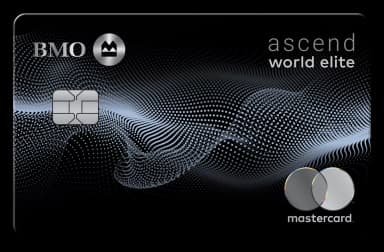
Other programs, such as BMO Rewards, go through their own booking portal, powered by the big players in the market. The price shown will be the same as elsewhere, and your points apply directly to payment. The BMO Ascend World Elite Mastercard remains the most common entry point to this portal.
At Scotiabank, the Scotiabank Passport Visa Infinite+* Card earns Scene+ points, which you can use on your travel purchases. Note that the program used to be called Scotia Rewards: the two names refer to the same mechanism, before and after the change.
Booking on Booking.com, Hotels.com, Agoda or Airbnb has a hidden cost: you often lose the cancellation flexibility that hotel status would give you when booking direct. That is where trip cancellation and interruption insurance included with a credit card really makes sense.
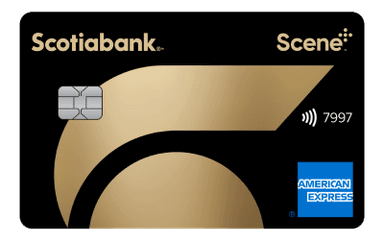
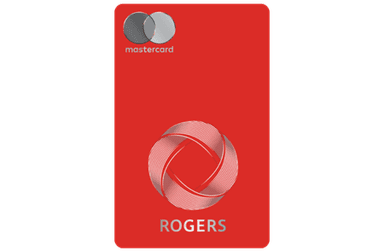
The Scotiabank Gold American Express Card covers trip cancellation and interruption. If you want a no-annual-fee option, the Rogers Red World Elite Mastercard offers more modest coverage, but at no cost.
| Credit card | Annual fee | Welcome offer | |
|---|---|---|---|
| $120 | |||
| $0 |
Prices look alike from one site to another, because a few groups share the market. Your decision therefore comes down to four other criteria:
Hyacinthe, a reader in the Facebook group, sums up the right reflex well:
Whenever possible, I always book directly with the hotel. Then I look at prices elsewhere to see whether I can beat the price the hotel offers directly. Most offer a best rate guarantee, so if you find a better price elsewhere, the hotel can give you a discount.
These four cards cover the three uses discussed in this article: earning with a chain, applying points to a booking made with a third party, and protecting the stay. You will find a complete picture of the market on our page of the best credit cards.
| Credit card | Annual fee | Welcome offer | |
|---|---|---|---|
| $191.88 | |||
| $799 | |||
| $0 | |||
| $120 |
There isn't just one. For a big-chain hotel where you have status, the chain's website almost always wins thanks to points, breakfast and the best rate guarantee. For an independent property, Booking.com offers the widest choice and a Genius discount from the free account, while Hotels.com returns about 10% as a reward night in Canada.
Yes. The Genius program is free and has three levels: 10% off as soon as you create an account, 10% to 15% after 5 bookings in 2 years with breakfast and upgrades at some properties, then 10% to 20% after 15 bookings in 2 years with priority support. What ended in October 2019 was the referral program, not Genius.
Booking.com offers a wider catalogue of independent properties and pay-at-the-property on many rates. Expedia stands out when you want to apply BMO Rewards points directly to payment or book a flight and hotel package. Always compare both for the same property, taxes and fees included.
Yes. In Canada, 10 nights stayed still earn 1 reward night, but it is now paid in Hotels.comCash, worth 10% of the rate of those 10 nights, excluding taxes and fees. The United States has moved to One Key. Since the structure depends on your country of residence, check the current terms in your Hotels.com account before booking.
Yes, and it's free. The Genius discount on Booking.com, member prices on Hotels.com and hotel chains' member rates don't appear unless you are signed in to your account. Create the account before comparing; otherwise you are comparing prices that are not the ones you will pay.
Contact the platform first, since it is the seller under your contract, and keep the hotel's booking number handy along with the platform's. If the dispute drags on, a chargeback with your credit card issuer remains the most effective tool, and some cards add trip cancellation and interruption insurance.
Rarely as a first choice. Agoda is most competitive in Asia and Oceania, where its bargaining power with local hotels shows in the price. In North America and Europe, Booking.com, Expedia or the hotel's own website generally give a better result.
PointsMAX lets you choose one of Agoda's 46 partner loyalty programs, then credits points to that program after your stay, up to 6,000 points at more than 500,000 eligible hotels. Careful: the PointsMAX rate can differ from the regular rate, only rewards points are credited, not status points, and Agoda's price guarantee does not cover these bookings. So compare the PointsMAX rate with the regular rate before deciding.
on American Express's website
Apply with confidenceCheck whether your application will be approved before you submit it, with no impact on your credit score*When you apply for a personal American Express Credit Card, we will tell you whether you are eligible without affecting your credit score. So you can apply with confidence.*Instant decisions are only available for consumer Card applications (also called “personal Cards”).
Our reviews and rankings are based on an objective assessment. Advertisers do not influence our content. We may receive compensation through some links; our analysis and opinions remain independent.