

Financial efficiency and flexibility are crucial for a business’s success. Moreover, using business credit cards can be an important strategic lever. Indeed, business cards offer numerous benefits, including the ability to accumulate loyalty points and rewards. These can then be converted into free travel, cash back, or even office supply purchases for your business.
Whatever the size of your business (small, medium or large) and whatever your market (local, national or international), the importance of managing your expenses optimally through credit cards is undeniable. Therefore, it’s essential to choose your business card according to your needs and objectives. The same applies to bank accounts.
In this context, we’ve compiled our best articles and tips dedicated to entrepreneurs to take advantage of business credit cards and business bank accounts.
Starting a Business in Quebec and Canada
Before discussing business credit cards, we’ve written several articles to help entrepreneurs start their business in Quebec or elsewhere in Canada.
It’s a process that involves many financial and legal considerations. In fact, one of the first steps is to choose the legal structure of your business, each of which has its own tax and administrative implications:
- Sole proprietorship
- Joint stock company
- General partnership
Furthermore, Quebec offers several financial assistance programs for businesses. Notably, grants, loans, and tax credits. It’s a good idea to find out about these options to optimize the financing of your business.
Finally, if you’re considering opening a business in Quebec or Canada, it’s crucial to familiarize yourself with the local laws and regulations governing businesses. This includes laws on business permits, sales taxes, employment, and consumer protection.
Business credit cards are a valuable tool, as we’ll see later. Several financial institutions offer cards tailored to the diverse needs of businesses. So, comparing offers and choosing the best credit card for your business is essential.
Understanding Business Credit Cards in Canada
Business credit cards are invaluable tools for:
- Managing cash flow
- Managing business expenses
- Earning rewards
They can be used for a wide range of expenses, from travel costs to office supply purchases. However, not all offer the same benefits: some allow you to accumulate loyalty points or air miles, others cash back. Some have annual fees, while others are fee-free. In some cases, combined card and line of credit offers may be useful for your business. This is preferable to cash advances.
In short, the best credit card depends on your business and your specific needs.
Things to Consider
Consider the following before choosing and purchasing a credit card for your business:
- Business expenses: Some cards offer higher reward rates for common spending categories such as office supplies or travel expenses. Check your net purchase level by expense category.
- Reward programs: Points, airline miles or cash back can be interesting, but make sure you understand how the rewards system works before signing up for a credit card. For example, if you take out a credit card with travel points, such as an Aeroplan business credit card, the points accumulated cannot be transferred to a partner and must be redeemed for travel.
- Annual fee: If your company spends enough to justify the annual fee for a card, it could be worthwhile. Alternatively, a no-fee card may be a better option.
- Interest rate: If you plan to carry a balance from month to month, the card’s interest rate will be a key factor to consider.
- Cash advances: If you think you’ll need cash advances, look at the interest rates. But also, combined card and line of credit offers.
Benefits of Business Credit Cards
Business credit cards offer a number of specific advantages that can make financial management easier and help your business grow.
- Expense control: Business credit cards make it easy to distinguish between business and personal expenses, facilitating accounting and expense management.
- Financial flexibility: They provide an immediate source of cash to cover current or unforeseen expenses.
- Rewards and benefits: Many business credit cards offer rewards programs that allow you to accumulate points, air miles, or cash back on net purchases charged to the account.
- Improved cash flow: They often offer extended payment terms, which can help improve cash management.
- Included insurance: Some business credit cards also offer travel insurance protections and other guarantees at no additional cost.
These benefits may vary depending on the card and the financial institution you choose. So it’s essential to assess your needs before making your choice.
Apply for a Business Credit Card Online
You can usually fill out an online card application on the website of your chosen financial institution. The application should include information about you and your company.
Once the application has been submitted, the financial institution will review it. If you meet the eligibility criteria, your application will be approved and you will receive your credit card. For example, if you are a sole proprietorship, your credit rating will be taken into consideration.
Understanding Reward Programs
Once you’ve assessed the criteria for selecting a business credit card, it’s essential to look at the points programs offered by the different cards. These programs can vary according to card issuer and type of card.
- Travel: Travel-related points programs, such as Aeroplan points or RBC Avion points, can be used to reduce the cost of business travel.
- Cash back: Cash back-related points programs, such as BMO Rewards, allow you to get a percentage of your net purchases (e.g., gas expenses, office supplies, phone and Internet bill payments, etc.).
- Flexible points: Flexible points programs allow you to use your points as you wish, whether for travel, hotel nights, AIR MILES, cash back, or even office supply purchases.
How to Choose the Best Credit Card for Your Business
Business Credit Card Selection Criteria
When selecting a business credit card, consider the previously mentioned points (types of rewards, annual fees, interest rates, and insurance program), bank offers, and evaluate compatibility with your business needs.
The « best » credit card will depend on the specific needs of your business. For instance, a business with high travel expenses may benefit from a card like the American Express® Aeroplan®* Business Reserve Card, which offers travel points or access to airport lounges.
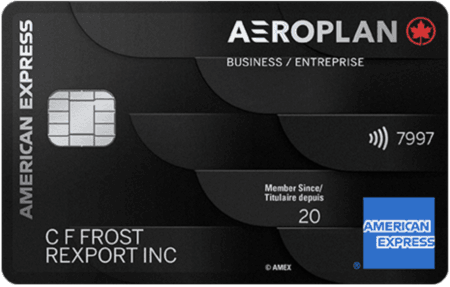

- Annual fee
- $599
- Our valuationMilesopedia first-year estimate First-year valueWelcome bonus$1,600Total$1,600Plus $800 of bonus paid after the first year, not counted in this total.Rewards on your spending are not included. The calculator that adds them from your own profile is on the card's page.
- $1,600
- Welcome offerAfter $10,500 in 3 months
- Up to 120,000 points
on American Express's website
Apply with confidenceCheck whether your application will be approved before you submit it, with no impact on your credit score*When you apply for a personal American Express Credit Card, we will tell you whether you are eligible without affecting your credit score. So you can apply with confidence.*Instant decisions are only available for consumer Card applications (also called “personal Cards”).
Business Credit Card Protection
Credit card issuers offer a variety of protections against fraud and loss, including:
- Protection against lost or stolen card fraud: in case of card loss or theft, the card issuer is responsible for fraudulent transactions made with the card.
- Online fraud protection: card issuers generally offer online fraud protection, which covers fraudulent transactions made on the Internet.
- Protection against counterfeiting: credit cards are equipped with advanced security technologies that make counterfeiting difficult.
Tips to Reduce Fraud Risk
However, there is always a risk of fraud associated with using a credit card. Here are a few tips to reduce the risk:
- Keep your card safe: don’t leave it unattended or share it with anyone.
- Be vigilant when making online transactions: make sure that the website on which you are making the transaction is secure. You’ll know if a padlock icon appears.
- Monitor your credit card statements: regularly check your credit card statements to detect any fraudulent transactions. If you think your credit card has been used fraudulently, contact the card issuer immediately.
- Enable two-factor authentication (2FA): 2FA adds an extra layer of security to your account by requiring you to enter an additional code in addition to your password.
- Use a password manager: a password manager, such as 1Password, will help you generate and store strong, unique passwords for all your accounts.
- Update your software: keep your software, including your web browser, up to date with the latest security updates.
By following these tips, you can help protect your credit card and your finances.
Compare Offers From Different Banks
To facilitate your search for business credit card(s), Milesopedia offers among other things detailed comparisons of the best credit card offers in Canada.
But also, a credit card comparison tool where you can select the « SME » search field to see only the selection of cards dedicated to entrepreneurs and self-employed workers. Additionally, you can quickly see cards with the best welcome offers, including those with no annual fee for the first year.
The Best Credit Cards for Businesses
Here are the best credit cards for businesses. Some have welcome offers and offer the first year with no annual fee.
American Express Credit Cards
For business credit cards, American Express offers the following cards for businesses and self-employed workers:
American Express Offers
Earn American Express Membership Rewards Points
Use of American Express Membership Rewards Points
BMO Credit Cards for Business
For business credit cards, BMO offers the following Mastercard credit cards to entrepreneurs:
BMO Offers for Business
BMO Rewards Point Accumulation
BMO Rewards Point Redemption
RBC Royal Bank Visa Business Credit Cards
For business credit cards, RBC Business offers the following options to meet the needs of businesses of all sizes:
RBC also offers useful tools and resources for businesses such as:
- Business loan calculator
- Cash flow calculation tool
- Business planning tool
Offers from RBC Royal Bank
RBC Avion Rewards Point Accumulation
RBC Avion Rewards Point Redemption
Scotiabank Credit Cards for Business
For business credit cards, Scotiabank offers the following cards to entrepreneurs. Some of them are part of the Scene+ program, while others offer cash back.
Scotia Offers for Companies
Earning Scene+ Points
Use of Scene+ Points
Desjardins Credit Cards for Businesses
When it comes to business credit cards, Desjardins offers several choices for entrepreneurs:
- Desjardins Visa Business Card
- Desjardins Visa Business US Card
- Desjardins Visa Business Card Advantages
- Desjardins Visa Corporate Card
- Desjardins Visa Purchasing Card
- Desjardins Visa Business Freedom Solutions Card
Desjardins generally does not offer welcome bonuses for its credit cards and accumulation rates are lower compared to other credit cards on the Canadian market. However, some Desjardins cards offer attractive travel insurance protections.
National Bank Business Credit Cards
For business credit cards, National Bank offers the following credit cards to entrepreneurs:
- Business Mastercard
- Business Line Mastercard
- Platinum Business Mastercard
- Corporate Mastercard
Some of them offer reduced rates or travel insurance protections.
Tips and Tricks
Reward Points Management Tools
There are several ways to effectively manage your points and rewards:
- Points tracking: Many banks offer online platforms or mobile apps that make it easy to track the accumulation of points and rewards.
- Point redemption: These tools also allow you to redeem your points for a variety of rewards, including travel, merchandise, gift cards, or even cash back.
- Point transfer: Some credit cards allow you to transfer points between different cards or share them with other people.
It’s essential to understand how your card’s points program works. This includes the details of how to earn points, as well as the various options for redeeming them.
Earn Reward Points
For optimal management of your business credit card, keep these tips and tricks in mind:
- Use your card regularly: The more you use your card for everyday expenses, the more points you’ll earn.
- Pay your bills on time : Avoid unnecessary interest charges by paying your balance on time.
- Check your statements regularly: Prevent errors and fraud by checking your transactions regularly.
- Take advantage of promotional offers: Many cards offer special deals for new customers, such as bonus points or discounts on first-year annual fees.
- Manage your points carefully: keep track of your points and plan in advance how you want to use them to maximize their value.
- Choose a card that’s right for your business : Make sure the card you choose is right for you and your business.
- Consider additional cards: Depending on promotions, they can sometimes be reimbursed. Once in hand, they allow you to:
- Simplify management of employee expenses
- Accumulate more points in the same place and faster
- Reach spending thresholds faster to earn welcome bonuses
- Doubling some of the card’s benefits
Use Your Reward Points
Once you’ve accumulated enough points, it’s time to look at how to use them. Take a look at our various articles, our guides to online booking tools and our » Travelling with family » feature to help you plan your trips.
Bank Accounts for Businesses
Business bank accounts are accounts dedicated to a company’s commercial activities. Whether it’s a large company or a self-employed worker, there are bank accounts for various clienteles and various needs. Therefore, when comparing business bank accounts, check the transaction volume, digital or physical deposits, and much more.
Bottom Line
In summary, the use of business credit cards can offer significant benefits if properly managed. They can help build a solid credit history for your business, proving your reliability as a borrower. They also offer a convenient way to manage business expenses, and can even offer rewards such as cash back or reward points.
Beyond these advantages, business credit cards can also offer interest-free grace periods, allowing greater control over cash flow. However, the use of these cards requires careful management to avoid high interest charges and the risk of over-indebtedness.
Finally, it’s essential to fully understand the terms of your business credit card, including interest rates and annual fees. But also, the restrictions of the rewards program. This will allow you to maximize benefits while minimizing risks.
To choose your business credit card, use our credit card comparison tool. Select the « SME » search field to see only the selection of cards dedicated to entrepreneurs and self-employed workers.
Frequently Asked Questions
What is a business credit card?
A business credit card is a payment tool dedicated to professional expenses. It offers various benefits such as expense management, reward point accumulation, and insurance protections.
Who can apply for a business credit card?
Any business owner, whether small, medium or large, can apply for a business credit card. This includes self-employed workers and contractors.
How do I choose the best credit card for my business?
The best credit card for your business depends on your specific needs. Compare offers from different banks as well as the following features: type of rewards, annual fees, interest rates, and included insurance.
How can I effectively manage my business credit card points and rewards?
Effective management of points and rewards depends on understanding your card’s rewards program. It’s essential to exploit the company’s day-to-day expenses to maximize point accumulation.
Who offers business credit cards in Canada?
Several Canadian banks offer business credit cards. On our credit card comparison tool, you’ll find among others: American Express Canada, Scotiabank, BMO, and RBC.
What type of credit is available for companies?
In addition to business credit cards and lines of credit, there are also financial assistance programs for businesses. Often, these are offered in the form of grants or business loans.