No-fx fee credit cards allow you to save on purchases made in foreign currencies, especially when traveling outside Canada. They generally eliminate the 2.5% conversion fee applied by many Canadian cards.
As such, these cards can be advantageous for frequent travelers, people who shop online with foreign merchants, or those who regularly pay in U.S. dollars. Discover the best no-fx fee credit cards available in Canada and compare their benefits.
Why choose a no-fx fee credit card?
When you use a Canadian credit card abroad, a foreign currency transaction is generally converted to Canadian dollars. Many issuers then add conversion fees, often around 2.5%, to the purchase amount.
For example, a purchase equivalent to $1,000 CAD in foreign currency could result in approximately $25 in additional fees. These fees are added directly to the cost of your transaction, without offering any additional reward.
A no-fx fee credit card therefore allows you to keep more money on your international purchases. It can be particularly attractive for:
Travelers who regularly visit abroad;
People who shop on American or international websites;
Snowbirds who spend several months outside Canada;
Consumers who often pay in U.S. dollars.
However, the absence of conversion fees should not be your only criterion. Some cards also offer points, cash back, travel insurance, or other benefits that can increase their overall value.
Before choosing a card, it is therefore important to compare all the features.
How do conversion fees work?
Foreign currency conversion fees correspond to the amount added by a card issuer when a transaction is made in a currency other than the Canadian dollar.
When a purchase is made in the United States, Europe, or elsewhere in the world, the payment network, such as Visa or Mastercard, first converts the transaction according to its applicable exchange rate.
Then, the card issuer may add conversion fees. In Canada, these fees are often 2.5% of the converted amount, which can represent a significant sum for travelers or frequent foreign shoppers.
For example:
Purchase abroad: $450 CAD equivalent;
2.5% conversion fee: $12.50;
Total amount charged: $512.50.
With a no-fx fee credit card, these additional fees are generally not applied. You then pay only the converted amount according to the exchange rate used by the payment network.
To get the best possible exchange rate, however, it remains useful to compare different strategies before a trip. Consult our guide on the best exchange rate when traveling to learn about available options.
Best No Foreign Transaction Fee Credit Cards
The best no-fx fee credit cards generally combine several benefits: no surcharge on foreign transactions, attractive rewards, and protections suited to travelers.
However, the ideal card depends on your habits. Someone who travels several times a year might prioritize travel insurance and rewards. Someone else who mostly shops online might be looking for a simple card with low fees.
Here are the no-fx fee credit cards to consider in Canada:
Our valuationMilesopedia first-year estimateFirst-year valueWelcome bonus$350Total$350Rewards on your spending are not included. The calculator that adds them from your own profile is on the card's page.
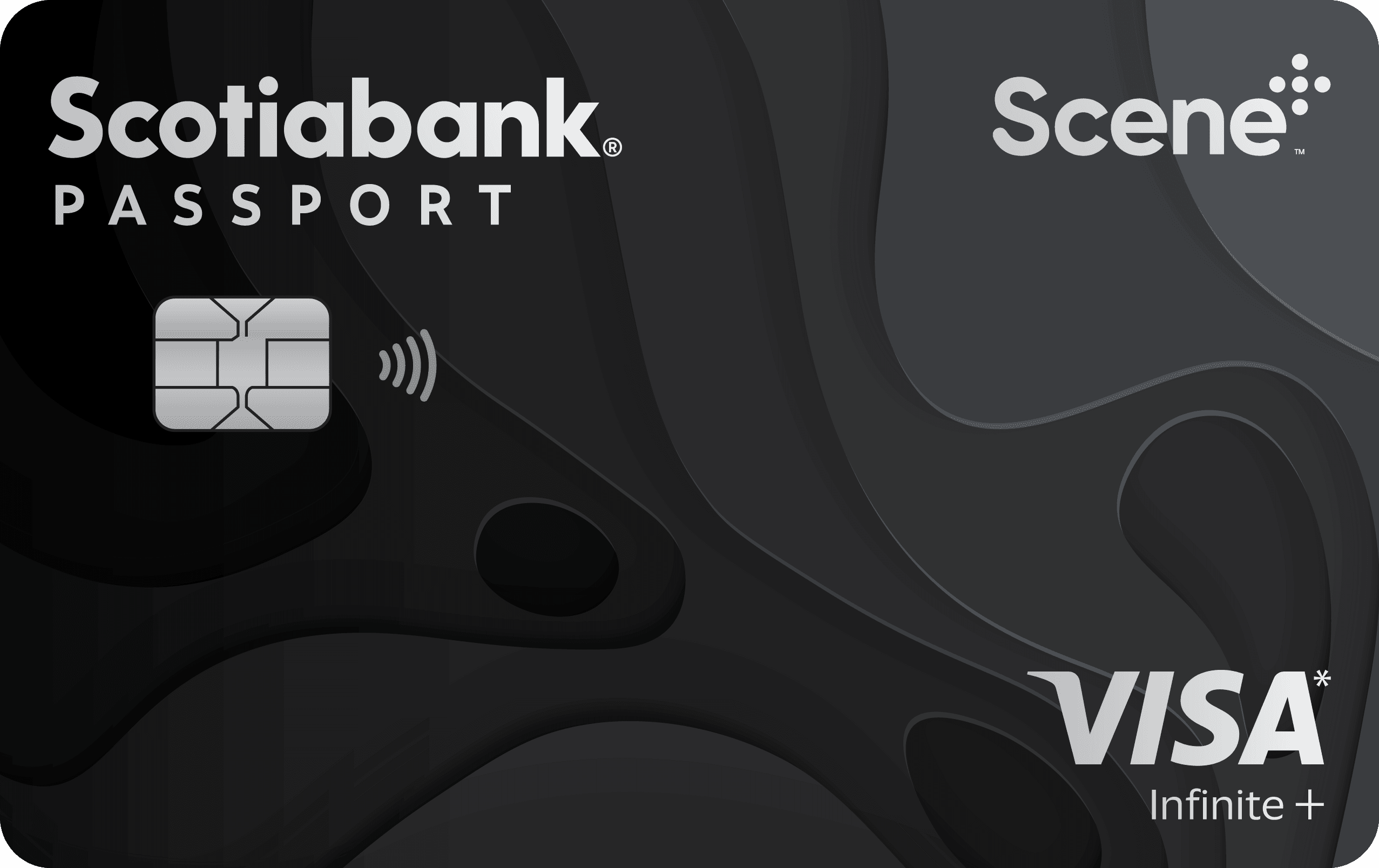
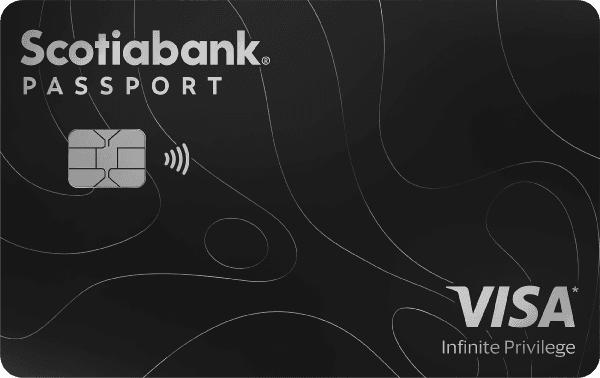
With this welcome offer for the Scotiabank Passport Visa Infinite +* Card +* CardMC, you’ll earn 25,000 welcome bonus Scene+ points after charging $2,000 in purchases to your account within the first three months.
Plus, every year, earn an annual bonus of at least 10,000 Scene+ points when you charge at least $40,000 in purchases to your account. In total, the offer represents up to 35,000 Scene+ points and a value of up to $1,250 in the first year, including rewards, savings on foreign transaction fees and airport lounge access.
With the Scotiabank Passport Visa Infinite +* Card, you earn 3 points per $1 spent at Sobeys, IGA, Safeway, Foodland and participating Co-ops, and 2 points per $1 spent at other grocery stores, restaurants, eligible entertainment and eligible daily transit. You earn 1 point per $1 on all your other everyday purchases.
These points can be redeemed against any travel purchase at a rate of 1,000 points = $10 (flights, hotels, all-inclusives and even Airbnb), or as cash back with Scene+ at the same rate.
The Scotiabank Passport Visa Infinite +* Card also offers:
No fees for foreign currency transactions
6 complimentary airport VIP lounge passes
Excellent insurance for your travels and purchases
Visa Infinite* Concierge Services
We have named this credit card the Best Credit Card with No Foreign Transaction Fees in 2024, 2025, and 2026.
Legal
* The potential value of savings and rewards during the first 12 months includes the value of the welcome offer, the potential value of points earned in the first year, the value of savings on foreign currency transaction fees and the cost of airport lounge access as of May 22, 2026:
$250 in travel rewards (25,000 bonus Scene+ points) for new Scotiabank Passport® Visa Infinite +* Cardholders who charge $2,000 in purchases to their account within the first three (3) months;
$100 in travel rewards (10,000 bonus Scene+ points) for cardholders who charge $40,000 in purchases to their account;
$50 in savings from the annual fee waiver on the first additional card for new Scotiabank Passport Visa Infinite +* Card credit card account holders;
$132 in savings on foreign currency transaction fees based on the average amount of foreign currency purchases made per active account over the past 24 months (by saving on the 2.5% foreign currency transaction fees typically charged by other credit card issuers);
$364 representing the potential value of points earned in the first year (36,400 Scene+ points) based on the average amount of purchases made per active account over the past 24 months, assuming an average spend of 21% of purchases in categories eligible for accelerated earn rates of 2X and 3X points;
$358 representing the value of complimentary membership in the Visa Airport Companion program which includes 6 airport lounge passes (based on « Preferred » membership valued at approximately $357 CAD/$259 USD). Based on the exchange rate in effect on May 22, 2026.
Maximum potential value after the first year = $1,254 (rounded to $1,250)
The actual value of offers, savings realized and points earned will vary depending on card usage and eligibility for applicable offers. Conditions apply.
1 Offer description and conditions: The 25,000 Scene+ points offer (the « offer ») applies only to new Scotiabank Passport Visa Infinite +* Card credit card accounts (the « accounts ») opened between August 4, 2026 and November 1, 2026 (regardless of the date you apply for the account) subject to the conditions below. The offer may be modified, cancelled or extended at any time without notice, and it cannot be combined with any other offer.
In addition, as a Scotiabank Passport Visa Infinite +* Cardholder, you are eligible for an annual bonus of 10,000 Scene+ points if you charge at least $40,000 in eligible everyday purchases to your Scotiabank Passport Visa Infinite +* Card account over the course of one year. Conditions apply; see below for more details.
Description and conditions of the 25,000 bonus Scene+ points offer: To be eligible for the 25,000 bonus Scene+ points offer (« 25,000 bonus points »), you must charge at least $2,000 in total eligible purchases to your account within the first three months following the account opening date.
Conditions for the annual 10,000 Scene+ points bonus: As a Scotiabank Passport Visa Infinite +* Card credit cardholder, you can earn an annual bonus of at least 10,000 Scene+ points (the « annual points bonus ») if you charge at least $40,000 in eligible purchases to your account over the course of one year (12-month period). The annual period begins on the account opening date; a new period starts again every twelve months thereafter. If you replace another Scene+-eligible credit card with the Scotiabank Passport Visa Infinite +* Card (i.e., it is not a new card or an additional card), the opening date of your original account will be carried over to your new Scotiabank Passport Visa Infinite +* Card account and your annual period under this offer will begin on the next anniversary date of your original account opening. For example, if you originally opened a Scotiabank Gold American Express® Card account on January 15, 2022 and you switch to the Scotiabank Passport Visa Infinite +* Card on July 15, 2025, your annual period under the 10,000 Scene+ points annual bonus offer will begin on January 15, 2026 (your next anniversary date) and a new period will start again on January 15 each year thereafter. You will earn 2,000 bonus Scene+ points for each additional $10,000 in purchases made during the same year once you have reached the $40,000 annual purchase threshold.
Eligible purchases means purchases, less refunds, returns and any other similar credits, and excludes payments, cash advances (including balance transfers and quasi-cash transactions), interest charges, as well as card fees and other fees.
Fulfillment of the annual points bonus: Bonus points will be credited within approximately eight weeks after you become eligible for a bonus, provided the account is open and in good standing. In the case of a joint account with a primary borrower and a co-borrower, bonus points will be credited as follows: (i) the 25,000 bonus points and the annual points bonus will be credited to the Scene+ account linked to the account of the borrower who made the transaction that reached the eligible purchase threshold ($2,000, or $40,000) within the appropriate timeframe (the first three months, or the first 12 months). If an additional cardholder makes the transaction that reaches the eligible purchase threshold for the 25,000 bonus points, or the annual points bonus, the bonus points will be credited to the Scene+ account linked to the primary borrower’s account. It is possible to transfer points between the Scene+ accounts of a primary borrower, a co-borrower or an additional cardholder by contacting Scene+. An account is in good standing if it is not past due, there is no over-limit, and the cardholder(s) have complied with the terms of the Revolving Credit Agreement that applies to the account. All other program conditions continue to apply during the offer period.
Offer eligibility and exclusions: You cannot take advantage of the offer if you are currently a primary or secondary cardholder of a Scotiabank personal credit card or have been one in the past two years, including if you transfer your balance from an existing Scotiabank personal credit card account, and if you are a Scotiabank employee. Subject to the exclusions mentioned above, small business credit cardholders are eligible for this offer.
Rates and fees: The annual fees are $150 for the primary card, $0 for the first additional card and $50 for each additional card thereafter (including those issued to joint account holders and additional cardholders). The preferred annual interest rates applicable to the account are as follows: 20.99% on purchases and 22.99% on cash advances (including balance transfers and quasi-cash transactions). The rates, fees, and features and benefits, which are described in the disclosure statement accompanying the application, may be changed.
Savings at Shell
Get up to 7 cents per litre in instant fuel discounts for a limited time and earn up to 3 cents per litre in Scene+ points value with an eligible Scotiabank Passport Visa Infinite + card linked to a Shell Go+ Account:
Instant 3 cents per Litre Discount on Fuel Purchases (All Grades): Receive an instant 3 cents per litre discount on purchases of fuel (all grades) (“Fuel Purchases (All Grades)”) at participating Shell locations in Canada when you use any eligible Scotiabank debit card or credit card linked to a Shell Go+ Account, up to a maximum of 1,000 litres per month per Scotiabank debit card and per Scotiabank credit card account. This total limit resets at the start of each new month per payment card account. This discount is subject to the Scotiabank Fuel Benefit Terms and Conditions.
Instant 4 cents per Litre Discount on Premium Fuel: Between May 26, 2026 and June 1, 2027 (“Promotional Period”), receive an instant 4 cents per litre discount on purchases of V-Power® gasoline, or V-Power® diesel (“Premium Fuel Purchases”) at participating Shell locations in Canada when you use any eligible Scotiabank credit card that earns Scene+ points linked to a Shell Go+ Account, up to a maximum of 1,000 litres per month per credit card account. This total limit resets at the start of each new month per credit card account. This promotional offer, including the Promotional Period, may be changed, extended, or withdrawn at any time without notice. These promotional offer terms are in addition to the Scotiabank Fuel Benefit Terms and Conditions.
Earn up to 3 cents per Litre in Scene+ points Value (Equivalent) on Fuel Purchases: Each time you use your linked Scotiabank credit card that earns Scene+ points on Fuel Purchases (All Grades) at participating Shell locations in Canada, you will earn at least 1 Scene+ point per $1 spent. Plus, as a Scene+ Member you will also automatically earn 1 Scene+ point for each litre in Fuel Purchases (All Grades), and as a Shell Go+ member, automatically earn 1 additional Scene+ point for each litre in Premium Fuel Purchases, made with your linked Scotiabank credit card. This means that for every litre in fuel purchased with your linked credit card, you can earn the equivalent of up to 3 cents of redeemable Scene+ points value based on a redemption value of $10 for every 1,000 Scene+ points redeemed for fuel purchases at participating Shell locations. Actual value may be lower depending on how you choose to redeem your Scene+ points. Earn and redemption limits may apply. See the Scene+ Program Terms and Conditions available at sceneplus.ca/terms-and-conditions for full details including redemption options and additional terms.
Note: Highest value of 10 cents per litre assumes a Premium Fuel Purchase made with a Scotiabank Passport Visa Infinite + Card linked to a Shell Go+ Account. Actual value will vary depending on payment card used and whether or not the card is linked, fuel grade purchased, and how you choose to redeem your Scene+ points.
Annual fee
Primary card$150
Additional card$0
Annual income required
Individual$60,000
Household$100,000
Conversion fees
0%
Earning rate
2xGroceries
2xRestaurants
2xTransit
2xEntertainment
1xAll spending
Value
1st Year Value$650
2nd Year Value$397
Card benefits
Concierge service24/7
Airport lounge access$240
Travel insurance
Travel medical (under 55)Up to $1,000,000 / 25 days
Our valuationMilesopedia first-year estimateFirst-year valueWelcome bonus$500Total$500Rewards on your spending are not included. The calculator that adds them from your own profile is on the card's page.
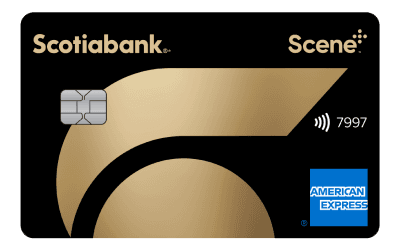
The Scotiabank Gold American Express Card offers an excellent welcome bonus.
Until November 1, 2026, you can earn up to 50,000 bonus Scene+ points, broken down as follows:
30,000 Scene+ points by charging $2,000 in purchases to the card within the first 3 months
20,000 Scene+ points by making $7,500 in purchases on the card in the first year
This represents a value of up to $500 for travel (including Airbnb).
With the Scotiabank Gold American Express Card, you earn 6 points per dollar spent at Sobeys, IGA, Safeway, Foodland, FreshCo, Voilà by Sobeys, Voilà par IGA, Voilà by Safeway, Chalo! grocery stores. FreshCo, Thrifty Foods, IGA West, Les Marchés Tradition, Rachelle Béry and Co-Op.
Also, you earn 5 points per dollar for:
Grocery stores
Restaurants
Entertainment centers
And 3 points per dollar on gas, transit and streaming services purchases.
You can redeem your points on travel purchases (flights, hotels, all-inclusive and even Airbnb). You can also use your points as cash back rewards with Scene+.
The Scotiabank Gold American Express Card also offers no foreign transaction fees, excellent insurance for your travel or purchases, concierge service, exclusive American Express benefits like the Front of the Line program.
Legal
* The potential value of savings and rewards during the first 12 months includes the value of the welcome offer, the potential value of points earned in the first year and the value of foreign transaction fee savings as of May 22, 2026:
$300 in travel rewards (30,000 bonus Scene+ points) for new Scotiabank Gold American Express Cardholders who make purchases totaling $2,000 in the first 3 months
$200 in travel rewards (20,000 bonus Scene+ points) for making purchases totaling $7,500 in the first 12 months
$59 in foreign transaction fee savings based on the average annual amount of foreign currency purchases made per account over the last 24 months (saving on the 2.5% foreign transaction fee typically charged by other credit card issuers);
$398 corresponding to the potential value of points earned in the first year (38,500 Scene+ points) based on the average amount of purchases made, per account, over the last 24 months, assuming an average spend of 28% of purchases in categories eligible for accelerated earn rates of 6X, 5X and 3X points.
Maximum potential value after the first year = $957 (rounded to $950)
The actual value of offers, savings realized and rewards earned will vary depending on card usage and eligibility for offers. Conditions apply.
1 Offer Description and Conditions: The 50,000 Scene+ points offer (the « Offer ») applies only to new Scotiabank Gold American Express credit card accounts (the « Accounts ») opened between July 2, 2026, and November 1, 2026 (regardless of the date you apply for the account), subject to the conditions below. All other program terms and conditions continue to apply during the Offer period. The Offer may be changed, cancelled or extended at any time without notice and cannot be combined with any other offer.
To qualify for the 30,000 bonus Scene+ points (the « 30,000 Bonus Points Offer »), you must make eligible purchases totaling at least $2,000 within three months of the account opening date. To qualify for the 20,000 additional bonus Scene+ points (the « 20,000 Additional Bonus Points Offer »), you must make $7,500 in eligible purchases on your new account during the first year (twelve months). Eligible purchases mean purchases, less refunds, returns and any other similar credits, and exclude payments, cash advances (including balance transfers and quasi-cash transactions), interest charges, card fees and other fees.
Fulfillment of the Annual Bonus: Bonus points will be credited to the Scene+ account within approximately eight weeks after you qualify for a bonus, provided the account is open and in good standing. In the case of a joint account with a primary borrower and a co-borrower, bonus points will be credited as follows: (i) the 30,000 bonus points and the 20,000 additional bonus points will be credited to the Scene+ account linked to the account of the borrower who made the transaction that reached the eligible purchase threshold ($2,000 or $7,500) within the appropriate timeframe (the first three months or the first 12 months). If a supplementary cardholder makes the transaction that reaches the eligible purchase threshold for the 30,000 bonus points or the 20,000 additional bonus points, the bonus points will be credited to the Scene+ account linked to the primary borrower’s account. Points can be transferred between the Scene+ accounts of a primary borrower, co-borrower or supplementary cardholder by contacting Scene+. An account is in good standing if it is not delinquent, the credit limit is not exceeded, and the holder(s) have complied with the terms of the Revolving Credit Agreement applicable to the account. All other program terms and conditions continue to apply during the Offer period. The Offer may be changed, cancelled or extended at any time without notice and cannot be combined with any other offer.
Eligibility and exclusions: You are not eligible for the Offer if you are currently a primary or secondary cardholder of a Scotiabank personal credit card or if you have been within the past two years, including if you transfer your balance from an existing Scotiabank personal credit card account, and if you are a Scotiabank employee. Subject to the exclusions mentioned above, Scotiabank small business credit cardholders are eligible for this Offer.
Rates and Fees: The current annual fee is $120 for the primary card and $29 for each additional card (including those issued to joint account holders and additional cardholders). The preferred annual interest rates currently applicable to the account are: 21.99% on purchases and 22.99% on cash advances (including balance transfers and quasi-cash transactions). Rates, fees, features and benefits, which are described in the application statement, are subject to change.
Savings at Shell
Get up to 7 cents per litre in instant fuel discounts for a limited time and earn up to 5 cents per litre in Scene+ points value with a Scotiabank Gold American Express Card linked to a Shell Go+ Account:
Instant 3 cents per Litre Discount on Fuel Purchases (All Grades): Receive an instant 3 cents per litre discount on purchases of fuel (all grades) (“Fuel Purchases (All Grades)”) at participating Shell locations in Canada when you use any eligible Scotiabank debit card or credit card linked to a Shell Go+ Account, up to a maximum of 1,000 litres per month per Scotiabank debit card and per Scotiabank credit card account. This total limit resets at the start of each new month per payment card account. This discount is subject to the Scotiabank Fuel Benefit Terms and Conditions.
Instant 4 cents per Litre Discount on Premium Fuel: Between May 26, 2026 and June 1, 2027 (“Promotional Period”), receive an instant 4 cents per litre discount on purchases of V-Power® gasoline, or V-Power® diesel (“Premium Fuel Purchases”) at participating Shell locations in Canada when you use any eligible Scotiabank credit card that earns Scene+ points linked to a Shell Go+ Account, up to a maximum of 1,000 litres per month per credit card account. This total limit resets at the start of each new month per credit card account. This promotional offer, including the Promotional Period, may be changed, extended, or withdrawn at any time without notice. These promotional offer terms are in addition to the Scotiabank Fuel Benefit Terms and Conditions.
Earn up to 5 cents per Litre in Scene+ points Value (Equivalent) on Fuel Purchases: Each time you use your linked Scotiabank credit card that earns Scene+ points on Fuel Purchases (All Grades) at participating Shell locations in Canada, you will earn at least 3 Scene+ points per $1 spent. Plus, as a Scene+ Member you will also automatically earn 1 Scene+ point for each litre in Fuel Purchases (All Grades), and as a Shell Go+ member, automatically earn 1 additional Scene+ point for each litre in Premium Fuel Purchases, made with your linked Scotiabank credit card. This means that for every litre in fuel purchased with your linked credit card, you can earn the equivalent of up to 5 cents of redeemable Scene+ points value based on a redemption value of $10 for every 1,000 Scene+ points redeemed for fuel purchases at participating Shell locations. Actual value may be lower depending on how you choose to redeem your Scene+ points. Earn and redemption limits may apply. See the Scene+ Program Terms and Conditions available at sceneplus.ca/terms-and-conditions for full details including redemption options and additional terms.
Note: Highest value of 12 cents per litre assumes a Premium Fuel Purchase made with a Scotiabank Gold American Express Card linked to a Shell Go+ Account. Actual value will vary depending on payment card used and whether or not the card is linked, fuel grade purchased, and how you choose to redeem your Scene+ points.
Annual fee
Primary card$120
Additional card$29
Annual income required
Individual$12,000
Household$12,000
Conversion fees
0%
Earning rate
6xWith the partner brand
5xGroceries
5xEntertainment
5xRestaurants
3xGas & EV
3xStreaming
3xTransit
1xAll spending
Value
1st Year Value$1,460
2nd Year Value$461
Card benefits
Concierge service24/7
Travel insurance
Travel medical (under 55)Up to $1,000,000 / 25 days
Travel medical (55-64)Up to $1,000,000 / 25 days
Travel medical (65+)Up to $1,000,000 / 3 days
Trip CancellationUp to $1,500
Trip InterruptionUp to $1,500
Delayed BaggageUp to $1,000
Lost BaggageUp to $1,000
Flight DelayUp to $500
Hotel BurglaryUp to $1,000
Travel AccidentUp to $500,000
Purchase protection
Purchase ProtectionIncluded
Extended Warranty+1 years
Mobile DeviceUp to $1,000 / 1 years
Auto Rental Collision (primary)Up to $65,000 / 48 days
Our valuationMilesopedia first-year estimateFirst-year valueWelcome bonus$800Total$800Plus $200 of bonus paid after the first year, not counted in this total.Rewards on your spending are not included. The calculator that adds them from your own profile is on the card's page.
For a limited time, by signing up for the Scotiabank Platinum American Express® Card, you can earn up to 100,000 Scene+ points, worth up to $3,000 in value over the first 14 months (including about $1,000 in travel rewards from the bonus points).
With the Scotiabank Platinum American Express® Card, you earn 2 points per dollar spent on all purchases. These points can be used against any travel purchase (plane tickets, hotels, all-inclusives, and even Airbnb), and you can also use them for other rewards in the Scene+ program, like cash back.
Plus, with this card, you pay no foreign transaction fees, and you get 10 free accesses to VIP airport lounges (Priority Pass).
And you benefit from excellent insurance for your trips and purchases, premium concierge service, and exclusive American Express Invitations offers.
Legal
* The potential value of savings and rewards during the first 14 months includes the value of the welcome offer, potential savings, the potential value of points earned in the first year, and the value of savings on foreign transaction fees and airport lounge access as of May 22, 2026:
$600 in travel rewards (60,000 bonus Scene+ points) for new Scotiabank Platinum American Express cardholders who make purchases totalling $5,000 in the first 3 months
$200 in travel rewards (20,000 bonus Scene+ points) who make purchases totalling $10,000 in the first 6 months
$200 in travel rewards (20,000 bonus Scene+ points) when you post at least one (1) eligible purchase to your new account in the 14th month following the month the account was opened
$241 in savings on foreign transaction fees based on the average amount of foreign currency purchases made per account in the first year (by saving the 2.5% foreign transaction fee generally charged by credit card issuers);
$1,023 potential first-year points earnings (102,297 Scene+ points) on everyday purchases, based on the average amount of purchases made per account over the past 24 months;
$784 representing the value of Priority Pass membership and airport lounge passes for the primary cardholder (annual membership fee for a 10-visit plan, $454 CAD or $329 USD) and for one additional cardholder (annual membership fee of $137 CAD or $99 USD, plus 4 passes valued at $48 CAD or $35 USD each). Based on the exchange rate in effect on May 22, 2026.
Maximum potential value after 14 months = $3,048 (rounded to $3,000)
The actual value of offers, savings realized and rewards earned will vary depending on card usage and eligibility for offers. Conditions apply.
1 Offer description and terms and conditions: The offer of 100,000 bonus Scene+ points (the “Offer”) applies only to new Scotiabank Platinum American Express credit card accounts (the “Account”) opened between July 2, 2026 and November 1, 2026 (regardless of the date you apply for the Account), subject to the conditions below.
To be eligible for the 60,000 bonus Scene+ points (the “60,000 bonus points offer”), you must charge eligible purchases totalling at least $5,000 within three months of the Account opening date. To be eligible for the 20,000 bonus Scene+ points (the “additional 20,000 bonus points”), you must charge $10,000 in eligible purchases to your new Account during the first six months following the Account opening date. To be eligible for the additional 20,000 bonus Scene+ points (the “additional 20,000 bonus points”), you must make at least one (1) eligible purchase on your new Account during the 14th month following the month in which the Account was opened. Eligible purchases means purchases, less refunds, returns and any other similar credits, and excludes payments, cash advances (including balance transfers and quasi-cash transactions), interest charges, card fees and other fees.
Annual bonus fulfillment: Bonus points will be deposited into the Scene+ account within approximately eight weeks after you become eligible for a bonus, provided the Account is open and in good standing. In the case of a joint Account with a primary borrower and a co-borrower, bonus points will be deposited as follows: (i) the 60,000 bonus points and the 20,000 bonus points will be deposited into the Scene+ account linked to the Account of the borrower who made the transaction that reached the eligible purchase threshold ($5,000 or $10,000) within the applicable timeframe (the first three months or the first six months), and (ii) the additional 20,000 bonus points will be deposited into the Scene+ account linked to the Account of the borrower who made the first transaction considered an eligible purchase in the 14th month following the month the Account was opened. If an additional cardholder makes the transaction that reaches the eligible purchase threshold for the 60,000 bonus points or the 20,000 bonus points, or makes the first transaction to earn the additional 20,000 bonus points, the bonus points will be deposited into the Scene+ account linked to the primary borrower’s Account. Points can be transferred between the Scene+ accounts of a primary borrower, a co-borrower, or an additional cardholder by contacting Scene+. An Account is in good standing if it is not delinquent, there is no over-limit on the credit limit, and the cardholder(s) have complied with the terms of the Revolving Credit Agreement that applies to the Account. All other program terms continue to apply during the Offer period. The Offer may be changed, cancelled, or extended at any time without notice, and cannot be combined with any other offer.
Eligibility and exclusions: You are not eligible for the Offer if you are currently a primary or secondary cardholder of a Scotiabank personal credit card or if you have been within the past two years, including if you transfer your balance from an existing Scotiabank personal credit card account, and if you are a Scotiabank employee. Subject to the exclusions mentioned above, Scotiabank small business credit cardholders are eligible for this Offer.
Rates and fees: The current annual fee is $399 for the primary card and $99 for each additional card (including those issued to co-account holders and additional cardholders). The preferred annual interest rates currently applicable to the Account are as follows: 9.99% on purchases and 9.99% on cash advances (including balance transfers and quasi-cash transactions). All rates, fees, features and benefits described in the application disclosure statement are subject to change.
Savings at Shell
Get up to 7 cents per litre in instant fuel discounts for a limited time and earn up to 4 cents per litre in Scene+ points value with a Scotiabank Platinum American Express Card linked to a Shell Go+ Account:
Instant 3 cents per Litre Discount on Fuel Purchases (All Grades): Receive an instant 3 cents per litre discount on purchases of fuel (all grades) (“Fuel Purchases (All Grades)”) at participating Shell locations in Canada when you use any eligible Scotiabank debit card or credit card linked to a Shell Go+ Account, up to a maximum of 1,000 litres per month per Scotiabank debit card and per Scotiabank credit card account. This total limit resets at the start of each new month per payment card account. This discount is subject to the Scotiabank Fuel Benefit Terms and Conditions.
Instant 4 cents per Litre Discount on Premium Fuel: Between May 26, 2026 and June 1, 2027 (“Promotional Period”), receive an instant 4 cents per litre discount on purchases of V-Power® gasoline, or V-Power® diesel (“Premium Fuel Purchases”) at participating Shell locations in Canada when you use any eligible Scotiabank credit card that earns Scene+ points linked to a Shell Go+ Account, up to a maximum of 1,000 litres per month per credit card account. This total limit resets at the start of each new month per credit card account. This promotional offer, including the Promotional Period, may be changed, extended, or withdrawn at any time without notice. These promotional offer terms are in addition to the Scotiabank Fuel Benefit Terms and Conditions.
Earn up to 4 cents per Litre in Scene+ points Value (Equivalent) on Fuel Purchases: Each time you use your linked Scotiabank credit card that earns Scene+ points on Fuel Purchases (All Grades) at participating Shell locations in Canada, you will earn at least 2 Scene+ points per $1 spent. Plus, as a Scene+ Member you will also automatically earn 1 Scene+ point for each litre in Fuel Purchases (All Grades), and as a Shell Go+ member, automatically earn 1 additional Scene+ point for each litre in Premium Fuel Purchases, made with your linked Scotiabank credit card. This means that for every litre in fuel purchased with your linked credit card, you can earn the equivalent of up to 4 cents of redeemable Scene+ points value based on a redemption value of $10 for every 1,000 Scene+ points redeemed for fuel purchases at participating Shell locations. Actual value may be lower depending on how you choose to redeem your Scene+ points. Earn and redemption limits may apply. See the Scene+ Program Terms and Conditions available at sceneplus.ca/terms-and-conditions for full details including redemption options and additional terms.
Note: Highest value of 11 cents per litre assumes a Premium Fuel Purchase made with a Scotiabank Platinum American Express® Card linked to a Shell Go+ Account. Actual value will vary depending on payment card used and whether or not the card is linked, fuel grade purchased, and how you choose to redeem your Scene+ points.
Annual fee
Primary card$399
Additional card$99
Annual income required
Individual$12,000
Household$12,000
Conversion fees
0%
Earning rate
2xAll spending
Value
1st Year Value$1,141
2nd Year Value$481
Card benefits
Concierge service24/7
Airport lounge access$400
Travel insurance
Travel medical (under 55)Up to $2,000,000 / 31 days
Our valuationMilesopedia first-year estimateFirst-year valueWelcome bonus$600Total$600Plus $200 of bonus paid after the first year, not counted in this total.Rewards on your spending are not included. The calculator that adds them from your own profile is on the card's page.
With this welcome offer for the Scotiabank Passport® Visa Infinite Privilege* Card, you get up to 80,000 bonus Scene+ points as a welcome bonus (worth $800):
30,000 points by making at least $3,000 in everyday eligible purchases in your first 3 months.
30,000 points after $20,000 in purchases within the first six months
20,000 points by making an eligible purchase during the 14th month following account opening
With the Scotiabank Passport® Visa Infinite Privilege* Card, you earn:
3X Scene+ points for every $1 in eligible travel purchases
2X Scene+ points for every $1 in eligible purchases at dining and entertainment establishments
1X Scene+ points for every dollar spent on all other eligible purchases
Including on foreign purchases, with no foreign transaction fees.
The Scotiabank Passport® Visa Infinite Privilege* Card is an excellent Visa credit card for this type of purchase.
These points can be used against any travel purchase at the rate of 1,000 points = $10 (flights, hotels, all-inclusives and even Airbnb). You can also redeem your points for cash back at Scene+, for example, at your local grocery store checkout at the same rate of 1,000 points = $10.
The Scotiabank Passport® Visa Infinite Privilege* Card also offers:
No fees for foreign currency transactions
10 complimentary airport lounge visits per year
$250 annual travel credit
Excellent insurance for your travels and purchases
Concierge service
Legal
1 Offer description and conditions: The 80,000 bonus Scene+ points offer (the « offer ») applies only to new Scotiabank Passport® Visa Infinite Privilege* Card credit card accounts (the « accounts ») opened between May 1, 2026 and November 1, 2026 (regardless of the date you apply for the account), subject to the conditions below. To be eligible for the 30,000 bonus Scene+ points (the « 30,000 bonus points »), you must charge eligible purchases totaling at least $3,000 to your new account during the first three months following the account opening date. To be eligible for the additional 30,000 bonus Scene+ points (the « additional 30,000 bonus points »), you must charge $20,000 in eligible purchases to your new account during the first six months following the account opening date. To be eligible for the additional 20,000 bonus Scene+ points (the « additional 20,000 bonus points »), you must charge at least one (1) eligible purchase to your new account during the 14th month following the month the account was opened. Eligible purchases mean purchases, less refunds, returns, and any other similar credits, and exclude payments, cash advances (including balance transfers and quasi-cash transactions), interest charges, and card fees and other charges.
Fulfillment of the annual bonus reward: Bonus points will be credited to the Scene+ account within approximately eight weeks after you become eligible for a bonus, provided the account is open and in good standing. In the case of a joint account with a primary borrower and a co-borrower, bonus points will be credited as follows: (i) the 30,000 bonus points and the additional 30,000 bonus points will be credited to the Scene+ account linked to the account of the borrower who made the transaction that reached the eligible purchase threshold ($3,000 or $20,000) within the appropriate timeframe (the first three months or the first six months), and (ii) the additional 20,000 bonus points will be credited to the Scene+ account linked to the account of the borrower who made the first transaction considered an eligible purchase during the 14th month following the month the account was opened. If an additional cardholder makes the transaction that reaches the eligible purchase threshold for the 30,000 bonus points or the additional 30,000 bonus points, or makes the first transaction to earn the additional 20,000 bonus points, the bonus points will be credited to the Scene+ account linked to the primary borrower’s account. Points can be transferred between the Scene+ accounts of a primary borrower, co-borrower, or additional cardholder by contacting Scene+. An account is in good standing if it is not past due, there is no credit limit overage, and the cardholder(s) have complied with the terms of the Revolving Credit Agreement that applies to the account. All other program conditions continue to apply during the offer period. The offer may be modified, cancelled, or extended at any time without notice, and cannot be combined with any other offer.
Eligibility and exclusions: You are not eligible for the Offer if you are currently a primary or secondary cardholder of a Scotiabank personal credit card or if you have been within the past two years, including if you transfer your balance from an existing Scotiabank personal credit card account, and if you are a Scotiabank employee. Subject to the exclusions mentioned above, Scotiabank small business credit cardholders are eligible for this Offer.
Rates and fees: The current annual fees are $599 for the primary card and $199 for each additional card (including those issued to joint account holders and additional cardholders). The preferred annual interest rates currently applicable to the account are as follows: 20.99% on purchases and 22.99% on cash advances (including balance transfers and quasi-cash transactions). All rates, fees, features, and benefits described in the application disclosure may be changed.
Savings at Shell
Get up to 7 cents per litre in instant fuel discounts for a limited time and earn up to 3 cents per litre in Scene+ points value with an eligible Scotiabank Passport Visa infinite Privilege card linked to a Shell Go+ Account:
Instant 3 cents per Litre Discount on Fuel Purchases (All Grades): Receive an instant 3 cents per litre discount on purchases of fuel (all grades) (“Fuel Purchases (All Grades)”) at participating Shell locations in Canada when you use any eligible Scotiabank debit card or credit card linked to a Shell Go+ Account, up to a maximum of 1,000 litres per month per Scotiabank debit card and per Scotiabank credit card account. This total limit resets at the start of each new month per payment card account. This discount is subject to the Scotiabank Fuel Benefit Terms and Conditions.
Instant 4 cents per Litre Discount on Premium Fuel: Between May 26, 2026 and June 1, 2027 (“Promotional Period”), receive an instant 4 cents per litre discount on purchases of V-Power® gasoline, or V-Power® diesel (“Premium Fuel Purchases”) at participating Shell locations in Canada when you use any eligible Scotiabank credit card that earns Scene+ points linked to a Shell Go+ Account, up to a maximum of 1,000 litres per month per credit card account. This total limit resets at the start of each new month per credit card account. This promotional offer, including the Promotional Period, may be changed, extended, or withdrawn at any time without notice. These promotional offer terms are in addition to the Scotiabank Fuel Benefit Terms and Conditions.
Earn up to 3 cents per Litre in Scene+ points Value (Equivalent) on Fuel Purchases: Each time you use your linked Scotiabank credit card that earns Scene+ points on Fuel Purchases (All Grades) at participating Shell locations in Canada, you will earn at least 1 Scene+ point per $1 spent. Plus, as a Scene+ Member you will also automatically earn 1 Scene+ point for each litre in Fuel Purchases (All Grades), and as a Shell Go+ member, automatically earn 1 additional Scene+ point for each litre in Premium Fuel Purchases, made with your linked Scotiabank credit card. This means that for every litre in fuel purchased with your linked credit card, you can earn the equivalent of up to 3 cents of redeemable Scene+ points value based on a redemption value of $10 for every 1,000 Scene+ points redeemed for fuel purchases at participating Shell locations. Actual value may be lower depending on how you choose to redeem your Scene+ points. Earn and redemption limits may apply. See the Scene+ Program Terms and Conditions available at sceneplus.ca/terms-and-conditions for full details including redemption options and additional terms.
Note: Highest value of 10 cents per litre assumes a Premium Fuel Purchase made with a Scotiabank Passport® Visa Infinite Privilege* Card linked to a Shell Go+ Account. Actual value will vary depending on payment card used and whether or not the card is linked, fuel grade purchased, and how you choose to redeem your Scene+ points.
Annual fee
Primary card$599
Additional card$199
Annual income required
Individual$150,000
Household$200,000
Conversion fees
0%
Earning rate
3xTravel
2xRestaurants
2xEntertainment
1xAll spending
Value
1st Year Value$585
2nd Year Value$232
Card benefits
Concierge service24/7
Airport lounge access$400
Travel insurance
Travel medical (under 55)Up to $5,000,000 / 31 days
Our valuationMilesopedia first-year estimateFirst-year valueWelcome bonus$500Total$500Rewards on your spending are not included. The calculator that adds them from your own profile is on the card's page.
Exclusive welcome offer: earn up to $500 cash back on your first $10,000 in purchases during the 35 days after approval, for 5% cash back (2% base + 3% boost).
Purchases in the first 35 days
Base cash back (2%)
Boost (3%)
Total cash back (5%)
$2,500
$50
$75
$125
$5,000
$100
$150
$250
$10,000
$200
$300
$500
The 3% boost only applies to the first $10,000 in net purchases during the 35 days after approval; beyond that, purchases earn the standard 2%. The card must stay open for 180 days after the boosted period.
With the Wealthsimple Visa Infinite + Card, earn 2% cash back on all your purchases, with no categories to track and no cap.
In addition, there are no foreign exchange fees on any purchase made in a currency other than the Canadian dollar, and no annual fee if you hold more than $100,000 in assets with Wealthsimple, or if you transfer the direct deposit of an eligible payroll to Wealthsimple.
To be eligible for this card, you must meet one of the following: a personal income of at least $80,000, a household income of at least $150,000, a minimum annual spend of $25,000, or at least $300,000 in assets with Wealthsimple.
Some travel insurance is not currently offered to Quebec residents.
Legal
Annual Fee Waiver
The Annual Fee (“Fee”) for the Wealthsimple Visa Infinite* or Wealthsimple Visa Infinite Privilege* credit card (“Card”) is $240 and is charged monthly at $20. The monthly fee is charged when the Card is issued (regardless of activation) and is billed to the first statement and once a month thereafter, unless this Fee is waived. Waiving the Fee is a promotional offer (“Fee Waiver Offer”) and requires clients to meet specific criteria to qualify and continue having the Fee waived. The Card Fee is automatically waived for any client with a Premium or Generation status, and the Fee will continue to be waived so long as that status is maintained. The Fee Waiver Offer is also available to Core clients who direct deposit at least $4,000 per month into their Wealthsimple Chequing Account (“Chequing Account”) within the preceding 30-days. Only direct deposits classified by Payments Canada as pre-authorized transactions with transaction codes ranging from 200 to 207, 310, 311, and 318 would be considered eligible. (“Qualifying Deposit”). If a Core client doesn’t make a Qualifying Deposit, or if a Premium or Generation client cannot maintain their status and becomes a Core client without a Qualifying Deposit, the monthly fee of $20 will be added to their next statement and continue to be charged until a Qualifying Deposit is confirmed.
For residents of Quebec: The Quebec Annual Fee (“Annual Fee”) for the Wealthsimple Visa Infinite* or Wealthsimple Visa Infinite Privilege* credit card is $240 and is charged when the Card is issued (regardless of activation) and is billed to the first statement and once a year thereafter. Waiving the Fee is a promotional offer (“Quebec Fee Waiver Offer”) and requires clients to meet specific criteria to qualify. The Annual Fee is automatically waived for any client with Premium or Generation status at the time the Card is issued. If a Core client obtains Premium or Generation status after the Annual Fee has been applied, a prorated refund will be issued for the number of months remaining in the current twelve (12) month period, which starts on the anniversary of the Card issuance date (“Card Year”) from the month eligibility is obtained ($20 per month). The Quebec Fee Waiver Offer is also available to Core clients who direct deposit at least $4,000 per month into their Chequing Account within the 30-days preceding the time the Card is issued. Only direct deposits classified by Payments Canada as pre-authorized transactions with transaction codes ranging from 200 to 207, 310, 311, and 318 would be considered eligible. (“Qualifying Deposit”). If a Core client starts making Qualifying Deposits after the Annual Fee has been applied, a prorated refund will be issued for the number of months remaining in the current Card Year from the month eligibility is obtained ($20 per month).
Credit Card Rewards (Cashback Offer)
The cash back promotional offer (“Cashback Offer”) is valid for new and existing users of the Card. The 2% earn rate, which may be subject to change, applies to purchases, excluding cash-like transactions, refunds, any applicable fees and adjustments (“Qualified Spend”). Cash back credits are earned on Qualified Spend only. You may redeem your cash back as soon as the Qualified Spend transaction is settled or up to 10 years after the Qualified Spend transaction is settled. Cash back can be redeemed directly in the app. Cash back can only be deposited into your Wealthsimple chequing, TFSA, RRSP, or non-registered accounts. There is no minimum amount needed to redeem. If a refund is processed after the Cash back credit is redeemed, the amount will be deducted from your rewards balance.
General Terms and Conditions
Wealthsimple Payments Inc. (“Wealthsimple”) reserves the right to amend, withdraw or restrict the Fee Waiver Offer or the Cashback Offer at any time without notice. Wealthsimple is the sole arbiter of these rules, the eligibility criteria, and any other issue arising in connection with the Fee Waiver Offer or the Cashback Offer. If Wealthsimple suspects fraud or abuse, system manipulation, or a violation of these terms, Wealthsimple reserves the right to remove all promotions from the Wealthsimple account in question and take any other action it deems appropriate, including the termination of the card in question. An invitation to participate in the Fee Waiver Offer or the Cashback Offer does not constitute a guarantee that the recommended person will be accepted as a Wealthsimple client. The Fee Waiver Offer and the Cashback Offer are only available to individuals residing in Canada who meet Wealthsimple’s eligibility criteria. The Wealthsimple Visa Infinite +* Credit Card is issued under license by Wealthsimple Payments Inc. * Trademark of Visa Int., used under license.
Wealthsimple is not responsible for maintaining the accuracy of information on this website. Refer to Wealthsimple’s page for more details.
Terms and conditions apply. For the latest product details, please visit Wealthsimple.com.
Annual fee
Primary card$240
Additional card$0
Annual income required
Individual$80,000
Household$150,000
Conversion fees
0%
Earning rate
2xAll spending
Value
1st Year Value$800
2nd Year Value$240
Travel insurance
Travel medical (under 55)Up to $1,000,000 / 14 days
Our valuationMilesopedia first-year estimateFirst-year valueWelcome bonus$500Total$500Rewards on your spending are not included. The calculator that adds them from your own profile is on the card's page.
Exclusive welcome offer: earn up to $500 cash back on your first $10,000 in purchases during the 35 days after approval, for 5% cash back (2% base + 3% boost).
Purchases in the first 35 days
Base cash back (2%)
Boost (3%)
Total cash back (5%)
$2,500
$50
$75
$125
$5,000
$100
$150
$250
$10,000
$200
$300
$500
The 3% boost only applies to the first $10,000 in net purchases during the 35 days after approval; beyond that, purchases earn the standard 2%. The card must stay open for 180 days after the boosted period.
With the Wealthsimple Visa Infinite Privilege Card, get 2% cash back on all your purchases, with no annual limit.
In addition, there are no foreign exchange fees for any purchase made in a currency other than the Canadian dollar and no annual fees if you hold more than $100,000 in assets with Wealthsimple, or if you transfer direct deposit of an eligible payroll to Wealthsimple.
Some travel insurance is not currently offered to Quebec residents.
Legal
Annual Fee Waiver
The Annual Fee (“Fee”) for the Wealthsimple Visa Infinite* or Wealthsimple Visa Infinite Privilege* credit card (“Card”) is $240 and is charged monthly at $20. The monthly fee is charged when the Card is issued (regardless of activation) and is billed to the first statement and once a month thereafter, unless this Fee is waived. Waiving the Fee is a promotional offer (“Fee Waiver Offer”) and requires clients to meet specific criteria to qualify and continue having the Fee waived. The Card Fee is automatically waived for any client with a Premium or Generation status, and the Fee will continue to be waived so long as that status is maintained. The Fee Waiver Offer is also available to Core clients who direct deposit at least $4,000 per month into their Wealthsimple Chequing Account (“Chequing Account”) within the preceding 30-days. Only direct deposits classified by Payments Canada as pre-authorized transactions with transaction codes ranging from 200 to 207, 310, 311, and 318 would be considered eligible. (“Qualifying Deposit”). If a Core client doesn’t make a Qualifying Deposit, or if a Premium or Generation client cannot maintain their status and becomes a Core client without a Qualifying Deposit, the monthly fee of $20 will be added to their next statement and continue to be charged until a Qualifying Deposit is confirmed.
For residents of Quebec: The Quebec Annual Fee (“Annual Fee”) for the Wealthsimple Visa Infinite* or Wealthsimple Visa Infinite Privilege* credit card is $240 and is charged when the Card is issued (regardless of activation) and is billed to the first statement and once a year thereafter. Waiving the Fee is a promotional offer (“Quebec Fee Waiver Offer”) and requires clients to meet specific criteria to qualify. The Annual Fee is automatically waived for any client with Premium or Generation status at the time the Card is issued. If a Core client obtains Premium or Generation status after the Annual Fee has been applied, a prorated refund will be issued for the number of months remaining in the current twelve (12) month period, which starts on the anniversary of the Card issuance date (“Card Year”) from the month eligibility is obtained ($20 per month). The Quebec Fee Waiver Offer is also available to Core clients who direct deposit at least $4,000 per month into their Chequing Account within the 30-days preceding the time the Card is issued. Only direct deposits classified by Payments Canada as pre-authorized transactions with transaction codes ranging from 200 to 207, 310, 311, and 318 would be considered eligible. (“Qualifying Deposit”). If a Core client starts making Qualifying Deposits after the Annual Fee has been applied, a prorated refund will be issued for the number of months remaining in the current Card Year from the month eligibility is obtained ($20 per month).
Credit Card Rewards (Cashback Offer)
The cash back promotional offer (“Cashback Offer”) is valid for new and existing users of the Card. The 2% earn rate, which may be subject to change, applies to purchases, excluding cash-like transactions, refunds, any applicable fees and adjustments (“Qualified Spend”). Cash back credits are earned on Qualified Spend only. You may redeem your cash back as soon as the Qualified Spend transaction is settled or up to 10 years after the Qualified Spend transaction is settled. Cash back can be redeemed directly in the app. Cash back can only be deposited into your Wealthsimple chequing, TFSA, RRSP, or non-registered accounts. There is no minimum amount needed to redeem. If a refund is processed after the Cash back credit is redeemed, the amount will be deducted from your rewards balance.
General Terms and Conditions
Wealthsimple Payments Inc. (“Wealthsimple”) reserves the right to amend, withdraw or restrict the Fee Waiver Offer or the Cashback Offer at any time without notice. Wealthsimple is the sole arbiter of these rules, the eligibility criteria, and any other issue arising in connection with the Fee Waiver Offer or the Cashback Offer. If Wealthsimple suspects fraudulent or abusive behaviour, gaming of the system or a violation of these terms, Wealthsimple reserves the right to remove all promotions from the applicable Wealthsimple account and take any other action it deems appropriate including, but not limited to, canceling the applicable Card. An invitation to participate in the Fee Waiver Offer or the Cashback Offer does not provide assurance that the referred customer will be accepted as a customer of Wealthsimple. Both the Fee Waiver Offer and the Cashback Offer are only valid for individuals in Canada that otherwise meet Wealthsimple’s eligibility requirements. The Wealthsimple Visa Infinite Privilege* Credit Card is issued under license by Wealthsimple Payments Inc. * Trademark of Visa Int., used under license.
Wealthsimple is not responsible for maintaining the accuracy of information on this website. Refer to Wealthsimple’s page for more details.
Terms and conditions apply. For the latest product details, please visit Wealthsimple.com.
Annual fee
Primary card$240
Additional card$0
Annual income required
Individual$150,000
Household$200,000
Conversion fees
0%
Earning rate
2xAll spending
Value
1st Year Value$800
2nd Year Value$480
Card benefits
Airport lounge access$240
Travel insurance
Travel medical (under 55)Up to $2,000,000 / 14 days
Travel medical (55-64)Up to $2,000,000 / 14 days
Trip CancellationUp to $1,500
Trip InterruptionUp to $1,500
Delayed BaggageUp to $1,000
Lost BaggageUp to $1,000
Purchase protection
Purchase ProtectionIncluded
Extended Warranty+1 years
Mobile DeviceUp to $1,000
Auto Rental Collision (primary)Included
Scotiabank Passport™ Visa Infinite+* Card
With this welcome offer for the Scotiabank Passport Visa Infinite+* Card™, you earn 25,000 bonus Scene+ points after you spend $2,000 on the card in the first three months.
Plus, every year you get an annual bonus of at least 10,000 Scene+ points when you spend at least $40,000 on the card. In total, the offer is worth up to 35,000 Scene+ points and a value of up to $1,250 in the first year, including rewards, savings on foreign transaction fees and airport lounge access.
With the Scotiabank Passport Visa Infinite+* Card, you earn 3 points per dollar spent at Sobeys, IGA, Safeway, Foodland and participating Co-op grocery stores, and 2 points per dollar spent at other grocery stores, at restaurants, and on eligible entertainment and eligible daily transit. You earn 1 point per dollar on all other everyday purchases.
These points can be redeemed for any travel purchase at a rate of 1,000 points = $10 (flights, hotels, all-inclusive packages and even Airbnb), or as cash back through Scene+ at the same rate.
Our valuationMilesopedia first-year estimateFirst-year valueWelcome bonus$350Total$350Rewards on your spending are not included. The calculator that adds them from your own profile is on the card's page.
With this welcome offer for the Scotiabank Passport Visa Infinite +* Card +* CardMC, you’ll earn 25,000 welcome bonus Scene+ points after charging $2,000 in purchases to your account within the first three months.
Plus, every year, earn an annual bonus of at least 10,000 Scene+ points when you charge at least $40,000 in purchases to your account. In total, the offer represents up to 35,000 Scene+ points and a value of up to $1,250 in the first year, including rewards, savings on foreign transaction fees and airport lounge access.
With the Scotiabank Passport Visa Infinite +* Card, you earn 3 points per $1 spent at Sobeys, IGA, Safeway, Foodland and participating Co-ops, and 2 points per $1 spent at other grocery stores, restaurants, eligible entertainment and eligible daily transit. You earn 1 point per $1 on all your other everyday purchases.
These points can be redeemed against any travel purchase at a rate of 1,000 points = $10 (flights, hotels, all-inclusives and even Airbnb), or as cash back with Scene+ at the same rate.
The Scotiabank Passport Visa Infinite +* Card also offers:
No fees for foreign currency transactions
6 complimentary airport VIP lounge passes
Excellent insurance for your travels and purchases
Visa Infinite* Concierge Services
We have named this credit card the Best Credit Card with No Foreign Transaction Fees in 2024, 2025, and 2026.
Legal
* The potential value of savings and rewards during the first 12 months includes the value of the welcome offer, the potential value of points earned in the first year, the value of savings on foreign currency transaction fees and the cost of airport lounge access as of May 22, 2026:
$250 in travel rewards (25,000 bonus Scene+ points) for new Scotiabank Passport® Visa Infinite +* Cardholders who charge $2,000 in purchases to their account within the first three (3) months;
$100 in travel rewards (10,000 bonus Scene+ points) for cardholders who charge $40,000 in purchases to their account;
$50 in savings from the annual fee waiver on the first additional card for new Scotiabank Passport Visa Infinite +* Card credit card account holders;
$132 in savings on foreign currency transaction fees based on the average amount of foreign currency purchases made per active account over the past 24 months (by saving on the 2.5% foreign currency transaction fees typically charged by other credit card issuers);
$364 representing the potential value of points earned in the first year (36,400 Scene+ points) based on the average amount of purchases made per active account over the past 24 months, assuming an average spend of 21% of purchases in categories eligible for accelerated earn rates of 2X and 3X points;
$358 representing the value of complimentary membership in the Visa Airport Companion program which includes 6 airport lounge passes (based on « Preferred » membership valued at approximately $357 CAD/$259 USD). Based on the exchange rate in effect on May 22, 2026.
Maximum potential value after the first year = $1,254 (rounded to $1,250)
The actual value of offers, savings realized and points earned will vary depending on card usage and eligibility for applicable offers. Conditions apply.
1 Offer description and conditions: The 25,000 Scene+ points offer (the « offer ») applies only to new Scotiabank Passport Visa Infinite +* Card credit card accounts (the « accounts ») opened between August 4, 2026 and November 1, 2026 (regardless of the date you apply for the account) subject to the conditions below. The offer may be modified, cancelled or extended at any time without notice, and it cannot be combined with any other offer.
In addition, as a Scotiabank Passport Visa Infinite +* Cardholder, you are eligible for an annual bonus of 10,000 Scene+ points if you charge at least $40,000 in eligible everyday purchases to your Scotiabank Passport Visa Infinite +* Card account over the course of one year. Conditions apply; see below for more details.
Description and conditions of the 25,000 bonus Scene+ points offer: To be eligible for the 25,000 bonus Scene+ points offer (« 25,000 bonus points »), you must charge at least $2,000 in total eligible purchases to your account within the first three months following the account opening date.
Conditions for the annual 10,000 Scene+ points bonus: As a Scotiabank Passport Visa Infinite +* Card credit cardholder, you can earn an annual bonus of at least 10,000 Scene+ points (the « annual points bonus ») if you charge at least $40,000 in eligible purchases to your account over the course of one year (12-month period). The annual period begins on the account opening date; a new period starts again every twelve months thereafter. If you replace another Scene+-eligible credit card with the Scotiabank Passport Visa Infinite +* Card (i.e., it is not a new card or an additional card), the opening date of your original account will be carried over to your new Scotiabank Passport Visa Infinite +* Card account and your annual period under this offer will begin on the next anniversary date of your original account opening. For example, if you originally opened a Scotiabank Gold American Express® Card account on January 15, 2022 and you switch to the Scotiabank Passport Visa Infinite +* Card on July 15, 2025, your annual period under the 10,000 Scene+ points annual bonus offer will begin on January 15, 2026 (your next anniversary date) and a new period will start again on January 15 each year thereafter. You will earn 2,000 bonus Scene+ points for each additional $10,000 in purchases made during the same year once you have reached the $40,000 annual purchase threshold.
Eligible purchases means purchases, less refunds, returns and any other similar credits, and excludes payments, cash advances (including balance transfers and quasi-cash transactions), interest charges, as well as card fees and other fees.
Fulfillment of the annual points bonus: Bonus points will be credited within approximately eight weeks after you become eligible for a bonus, provided the account is open and in good standing. In the case of a joint account with a primary borrower and a co-borrower, bonus points will be credited as follows: (i) the 25,000 bonus points and the annual points bonus will be credited to the Scene+ account linked to the account of the borrower who made the transaction that reached the eligible purchase threshold ($2,000, or $40,000) within the appropriate timeframe (the first three months, or the first 12 months). If an additional cardholder makes the transaction that reaches the eligible purchase threshold for the 25,000 bonus points, or the annual points bonus, the bonus points will be credited to the Scene+ account linked to the primary borrower’s account. It is possible to transfer points between the Scene+ accounts of a primary borrower, a co-borrower or an additional cardholder by contacting Scene+. An account is in good standing if it is not past due, there is no over-limit, and the cardholder(s) have complied with the terms of the Revolving Credit Agreement that applies to the account. All other program conditions continue to apply during the offer period.
Offer eligibility and exclusions: You cannot take advantage of the offer if you are currently a primary or secondary cardholder of a Scotiabank personal credit card or have been one in the past two years, including if you transfer your balance from an existing Scotiabank personal credit card account, and if you are a Scotiabank employee. Subject to the exclusions mentioned above, small business credit cardholders are eligible for this offer.
Rates and fees: The annual fees are $150 for the primary card, $0 for the first additional card and $50 for each additional card thereafter (including those issued to joint account holders and additional cardholders). The preferred annual interest rates applicable to the account are as follows: 20.99% on purchases and 22.99% on cash advances (including balance transfers and quasi-cash transactions). The rates, fees, and features and benefits, which are described in the disclosure statement accompanying the application, may be changed.
Savings at Shell
Get up to 7 cents per litre in instant fuel discounts for a limited time and earn up to 3 cents per litre in Scene+ points value with an eligible Scotiabank Passport Visa Infinite + card linked to a Shell Go+ Account:
Instant 3 cents per Litre Discount on Fuel Purchases (All Grades): Receive an instant 3 cents per litre discount on purchases of fuel (all grades) (“Fuel Purchases (All Grades)”) at participating Shell locations in Canada when you use any eligible Scotiabank debit card or credit card linked to a Shell Go+ Account, up to a maximum of 1,000 litres per month per Scotiabank debit card and per Scotiabank credit card account. This total limit resets at the start of each new month per payment card account. This discount is subject to the Scotiabank Fuel Benefit Terms and Conditions.
Instant 4 cents per Litre Discount on Premium Fuel: Between May 26, 2026 and June 1, 2027 (“Promotional Period”), receive an instant 4 cents per litre discount on purchases of V-Power® gasoline, or V-Power® diesel (“Premium Fuel Purchases”) at participating Shell locations in Canada when you use any eligible Scotiabank credit card that earns Scene+ points linked to a Shell Go+ Account, up to a maximum of 1,000 litres per month per credit card account. This total limit resets at the start of each new month per credit card account. This promotional offer, including the Promotional Period, may be changed, extended, or withdrawn at any time without notice. These promotional offer terms are in addition to the Scotiabank Fuel Benefit Terms and Conditions.
Earn up to 3 cents per Litre in Scene+ points Value (Equivalent) on Fuel Purchases: Each time you use your linked Scotiabank credit card that earns Scene+ points on Fuel Purchases (All Grades) at participating Shell locations in Canada, you will earn at least 1 Scene+ point per $1 spent. Plus, as a Scene+ Member you will also automatically earn 1 Scene+ point for each litre in Fuel Purchases (All Grades), and as a Shell Go+ member, automatically earn 1 additional Scene+ point for each litre in Premium Fuel Purchases, made with your linked Scotiabank credit card. This means that for every litre in fuel purchased with your linked credit card, you can earn the equivalent of up to 3 cents of redeemable Scene+ points value based on a redemption value of $10 for every 1,000 Scene+ points redeemed for fuel purchases at participating Shell locations. Actual value may be lower depending on how you choose to redeem your Scene+ points. Earn and redemption limits may apply. See the Scene+ Program Terms and Conditions available at sceneplus.ca/terms-and-conditions for full details including redemption options and additional terms.
Note: Highest value of 10 cents per litre assumes a Premium Fuel Purchase made with a Scotiabank Passport Visa Infinite + Card linked to a Shell Go+ Account. Actual value will vary depending on payment card used and whether or not the card is linked, fuel grade purchased, and how you choose to redeem your Scene+ points.
Annual fee
Primary card$150
Additional card$0
Annual income required
Individual$60,000
Household$100,000
Conversion fees
0%
Earning rate
2xGroceries
2xRestaurants
2xTransit
2xEntertainment
1xAll spending
Value
1st Year Value$650
2nd Year Value$397
Card benefits
Concierge service24/7
Airport lounge access$240
Travel insurance
Travel medical (under 55)Up to $1,000,000 / 25 days
Until November 1, 2026, you can earn up to 50,000 Scene+ points in bonus points, broken down as follows:
30,000 Scene+ points when you spend $2,000 on the card in the first 3 months
20,000 Scene+ points when you spend $7,500 on the card in the first year
That represents a value of up to $500 in travel (including Airbnb).
With the Scotiabank Gold American Express Card, you earn 6 points per dollar spent at Sobeys, IGA, Safeway, Foodland, FreshCo, Voilà by Sobeys, Voilà par IGA, Voilà by Safeway, Chalo! FreshCo, Thrifty Foods, IGA West, Les Marchés Tradition, Rachelle Béry and Co-Op grocery stores.
You also earn 5 points per dollar spent at:
Grocery stores
Restaurants
Entertainment venues
And 3 points per dollar spent on gas, public transit and streaming services.
These points can be redeemed for any travel purchase (flights, hotels, all-inclusive packages and even Airbnb). You can also use your points as cash back through Scene+.
The Scotiabank Gold American Express Card also offers no foreign transaction fees, excellent travel and purchase insurance, a concierge service and exclusive American Express benefits such as Front Of The Line.
Our valuationMilesopedia first-year estimateFirst-year valueWelcome bonus$500Total$500Rewards on your spending are not included. The calculator that adds them from your own profile is on the card's page.
The Scotiabank Gold American Express Card offers an excellent welcome bonus.
Until November 1, 2026, you can earn up to 50,000 bonus Scene+ points, broken down as follows:
30,000 Scene+ points by charging $2,000 in purchases to the card within the first 3 months
20,000 Scene+ points by making $7,500 in purchases on the card in the first year
This represents a value of up to $500 for travel (including Airbnb).
With the Scotiabank Gold American Express Card, you earn 6 points per dollar spent at Sobeys, IGA, Safeway, Foodland, FreshCo, Voilà by Sobeys, Voilà par IGA, Voilà by Safeway, Chalo! grocery stores. FreshCo, Thrifty Foods, IGA West, Les Marchés Tradition, Rachelle Béry and Co-Op.
Also, you earn 5 points per dollar for:
Grocery stores
Restaurants
Entertainment centers
And 3 points per dollar on gas, transit and streaming services purchases.
You can redeem your points on travel purchases (flights, hotels, all-inclusive and even Airbnb). You can also use your points as cash back rewards with Scene+.
The Scotiabank Gold American Express Card also offers no foreign transaction fees, excellent insurance for your travel or purchases, concierge service, exclusive American Express benefits like the Front of the Line program.
Legal
* The potential value of savings and rewards during the first 12 months includes the value of the welcome offer, the potential value of points earned in the first year and the value of foreign transaction fee savings as of May 22, 2026:
$300 in travel rewards (30,000 bonus Scene+ points) for new Scotiabank Gold American Express Cardholders who make purchases totaling $2,000 in the first 3 months
$200 in travel rewards (20,000 bonus Scene+ points) for making purchases totaling $7,500 in the first 12 months
$59 in foreign transaction fee savings based on the average annual amount of foreign currency purchases made per account over the last 24 months (saving on the 2.5% foreign transaction fee typically charged by other credit card issuers);
$398 corresponding to the potential value of points earned in the first year (38,500 Scene+ points) based on the average amount of purchases made, per account, over the last 24 months, assuming an average spend of 28% of purchases in categories eligible for accelerated earn rates of 6X, 5X and 3X points.
Maximum potential value after the first year = $957 (rounded to $950)
The actual value of offers, savings realized and rewards earned will vary depending on card usage and eligibility for offers. Conditions apply.
1 Offer Description and Conditions: The 50,000 Scene+ points offer (the « Offer ») applies only to new Scotiabank Gold American Express credit card accounts (the « Accounts ») opened between July 2, 2026, and November 1, 2026 (regardless of the date you apply for the account), subject to the conditions below. All other program terms and conditions continue to apply during the Offer period. The Offer may be changed, cancelled or extended at any time without notice and cannot be combined with any other offer.
To qualify for the 30,000 bonus Scene+ points (the « 30,000 Bonus Points Offer »), you must make eligible purchases totaling at least $2,000 within three months of the account opening date. To qualify for the 20,000 additional bonus Scene+ points (the « 20,000 Additional Bonus Points Offer »), you must make $7,500 in eligible purchases on your new account during the first year (twelve months). Eligible purchases mean purchases, less refunds, returns and any other similar credits, and exclude payments, cash advances (including balance transfers and quasi-cash transactions), interest charges, card fees and other fees.
Fulfillment of the Annual Bonus: Bonus points will be credited to the Scene+ account within approximately eight weeks after you qualify for a bonus, provided the account is open and in good standing. In the case of a joint account with a primary borrower and a co-borrower, bonus points will be credited as follows: (i) the 30,000 bonus points and the 20,000 additional bonus points will be credited to the Scene+ account linked to the account of the borrower who made the transaction that reached the eligible purchase threshold ($2,000 or $7,500) within the appropriate timeframe (the first three months or the first 12 months). If a supplementary cardholder makes the transaction that reaches the eligible purchase threshold for the 30,000 bonus points or the 20,000 additional bonus points, the bonus points will be credited to the Scene+ account linked to the primary borrower’s account. Points can be transferred between the Scene+ accounts of a primary borrower, co-borrower or supplementary cardholder by contacting Scene+. An account is in good standing if it is not delinquent, the credit limit is not exceeded, and the holder(s) have complied with the terms of the Revolving Credit Agreement applicable to the account. All other program terms and conditions continue to apply during the Offer period. The Offer may be changed, cancelled or extended at any time without notice and cannot be combined with any other offer.
Eligibility and exclusions: You are not eligible for the Offer if you are currently a primary or secondary cardholder of a Scotiabank personal credit card or if you have been within the past two years, including if you transfer your balance from an existing Scotiabank personal credit card account, and if you are a Scotiabank employee. Subject to the exclusions mentioned above, Scotiabank small business credit cardholders are eligible for this Offer.
Rates and Fees: The current annual fee is $120 for the primary card and $29 for each additional card (including those issued to joint account holders and additional cardholders). The preferred annual interest rates currently applicable to the account are: 21.99% on purchases and 22.99% on cash advances (including balance transfers and quasi-cash transactions). Rates, fees, features and benefits, which are described in the application statement, are subject to change.
Savings at Shell
Get up to 7 cents per litre in instant fuel discounts for a limited time and earn up to 5 cents per litre in Scene+ points value with a Scotiabank Gold American Express Card linked to a Shell Go+ Account:
Instant 3 cents per Litre Discount on Fuel Purchases (All Grades): Receive an instant 3 cents per litre discount on purchases of fuel (all grades) (“Fuel Purchases (All Grades)”) at participating Shell locations in Canada when you use any eligible Scotiabank debit card or credit card linked to a Shell Go+ Account, up to a maximum of 1,000 litres per month per Scotiabank debit card and per Scotiabank credit card account. This total limit resets at the start of each new month per payment card account. This discount is subject to the Scotiabank Fuel Benefit Terms and Conditions.
Instant 4 cents per Litre Discount on Premium Fuel: Between May 26, 2026 and June 1, 2027 (“Promotional Period”), receive an instant 4 cents per litre discount on purchases of V-Power® gasoline, or V-Power® diesel (“Premium Fuel Purchases”) at participating Shell locations in Canada when you use any eligible Scotiabank credit card that earns Scene+ points linked to a Shell Go+ Account, up to a maximum of 1,000 litres per month per credit card account. This total limit resets at the start of each new month per credit card account. This promotional offer, including the Promotional Period, may be changed, extended, or withdrawn at any time without notice. These promotional offer terms are in addition to the Scotiabank Fuel Benefit Terms and Conditions.
Earn up to 5 cents per Litre in Scene+ points Value (Equivalent) on Fuel Purchases: Each time you use your linked Scotiabank credit card that earns Scene+ points on Fuel Purchases (All Grades) at participating Shell locations in Canada, you will earn at least 3 Scene+ points per $1 spent. Plus, as a Scene+ Member you will also automatically earn 1 Scene+ point for each litre in Fuel Purchases (All Grades), and as a Shell Go+ member, automatically earn 1 additional Scene+ point for each litre in Premium Fuel Purchases, made with your linked Scotiabank credit card. This means that for every litre in fuel purchased with your linked credit card, you can earn the equivalent of up to 5 cents of redeemable Scene+ points value based on a redemption value of $10 for every 1,000 Scene+ points redeemed for fuel purchases at participating Shell locations. Actual value may be lower depending on how you choose to redeem your Scene+ points. Earn and redemption limits may apply. See the Scene+ Program Terms and Conditions available at sceneplus.ca/terms-and-conditions for full details including redemption options and additional terms.
Note: Highest value of 12 cents per litre assumes a Premium Fuel Purchase made with a Scotiabank Gold American Express Card linked to a Shell Go+ Account. Actual value will vary depending on payment card used and whether or not the card is linked, fuel grade purchased, and how you choose to redeem your Scene+ points.
Annual fee
Primary card$120
Additional card$29
Annual income required
Individual$12,000
Household$12,000
Conversion fees
0%
Earning rate
6xWith the partner brand
5xGroceries
5xEntertainment
5xRestaurants
3xGas & EV
3xStreaming
3xTransit
1xAll spending
Value
1st Year Value$1,460
2nd Year Value$461
Card benefits
Concierge service24/7
Travel insurance
Travel medical (under 55)Up to $1,000,000 / 25 days
Travel medical (55-64)Up to $1,000,000 / 25 days
Travel medical (65+)Up to $1,000,000 / 3 days
Trip CancellationUp to $1,500
Trip InterruptionUp to $1,500
Delayed BaggageUp to $1,000
Lost BaggageUp to $1,000
Flight DelayUp to $500
Hotel BurglaryUp to $1,000
Travel AccidentUp to $500,000
Purchase protection
Purchase ProtectionIncluded
Extended Warranty+1 years
Mobile DeviceUp to $1,000 / 1 years
Auto Rental Collision (primary)Up to $65,000 / 48 days
Scotiabank Platinum American Express® Card
For a limited time, when you apply for the Scotiabank Platinum American Express Card, you can earn up to 100,000 Scene+ points, or up to $3,000 in value in the first 14 months (including about $1,000 in travel rewards from the bonus points).
With the Scotiabank Platinum American Express Card, you earn 2 points per dollar on all your purchases. These points can be redeemed for any travel purchase (flights, hotels, all-inclusive packages and even Airbnb), and you can also use them for other Scene+ rewards such as cash back.
Plus, with this card you pay no foreign transaction fees, and you get 10 free airport lounge visits (Priority Pass).
You also get excellent travel and purchase insurance, a premium concierge service and exclusive American Express Invites offers.
Our valuationMilesopedia first-year estimateFirst-year valueWelcome bonus$800Total$800Plus $200 of bonus paid after the first year, not counted in this total.Rewards on your spending are not included. The calculator that adds them from your own profile is on the card's page.
For a limited time, by signing up for the Scotiabank Platinum American Express® Card, you can earn up to 100,000 Scene+ points, worth up to $3,000 in value over the first 14 months (including about $1,000 in travel rewards from the bonus points).
With the Scotiabank Platinum American Express® Card, you earn 2 points per dollar spent on all purchases. These points can be used against any travel purchase (plane tickets, hotels, all-inclusives, and even Airbnb), and you can also use them for other rewards in the Scene+ program, like cash back.
Plus, with this card, you pay no foreign transaction fees, and you get 10 free accesses to VIP airport lounges (Priority Pass).
And you benefit from excellent insurance for your trips and purchases, premium concierge service, and exclusive American Express Invitations offers.
Legal
* The potential value of savings and rewards during the first 14 months includes the value of the welcome offer, potential savings, the potential value of points earned in the first year, and the value of savings on foreign transaction fees and airport lounge access as of May 22, 2026:
$600 in travel rewards (60,000 bonus Scene+ points) for new Scotiabank Platinum American Express cardholders who make purchases totalling $5,000 in the first 3 months
$200 in travel rewards (20,000 bonus Scene+ points) who make purchases totalling $10,000 in the first 6 months
$200 in travel rewards (20,000 bonus Scene+ points) when you post at least one (1) eligible purchase to your new account in the 14th month following the month the account was opened
$241 in savings on foreign transaction fees based on the average amount of foreign currency purchases made per account in the first year (by saving the 2.5% foreign transaction fee generally charged by credit card issuers);
$1,023 potential first-year points earnings (102,297 Scene+ points) on everyday purchases, based on the average amount of purchases made per account over the past 24 months;
$784 representing the value of Priority Pass membership and airport lounge passes for the primary cardholder (annual membership fee for a 10-visit plan, $454 CAD or $329 USD) and for one additional cardholder (annual membership fee of $137 CAD or $99 USD, plus 4 passes valued at $48 CAD or $35 USD each). Based on the exchange rate in effect on May 22, 2026.
Maximum potential value after 14 months = $3,048 (rounded to $3,000)
The actual value of offers, savings realized and rewards earned will vary depending on card usage and eligibility for offers. Conditions apply.
1 Offer description and terms and conditions: The offer of 100,000 bonus Scene+ points (the “Offer”) applies only to new Scotiabank Platinum American Express credit card accounts (the “Account”) opened between July 2, 2026 and November 1, 2026 (regardless of the date you apply for the Account), subject to the conditions below.
To be eligible for the 60,000 bonus Scene+ points (the “60,000 bonus points offer”), you must charge eligible purchases totalling at least $5,000 within three months of the Account opening date. To be eligible for the 20,000 bonus Scene+ points (the “additional 20,000 bonus points”), you must charge $10,000 in eligible purchases to your new Account during the first six months following the Account opening date. To be eligible for the additional 20,000 bonus Scene+ points (the “additional 20,000 bonus points”), you must make at least one (1) eligible purchase on your new Account during the 14th month following the month in which the Account was opened. Eligible purchases means purchases, less refunds, returns and any other similar credits, and excludes payments, cash advances (including balance transfers and quasi-cash transactions), interest charges, card fees and other fees.
Annual bonus fulfillment: Bonus points will be deposited into the Scene+ account within approximately eight weeks after you become eligible for a bonus, provided the Account is open and in good standing. In the case of a joint Account with a primary borrower and a co-borrower, bonus points will be deposited as follows: (i) the 60,000 bonus points and the 20,000 bonus points will be deposited into the Scene+ account linked to the Account of the borrower who made the transaction that reached the eligible purchase threshold ($5,000 or $10,000) within the applicable timeframe (the first three months or the first six months), and (ii) the additional 20,000 bonus points will be deposited into the Scene+ account linked to the Account of the borrower who made the first transaction considered an eligible purchase in the 14th month following the month the Account was opened. If an additional cardholder makes the transaction that reaches the eligible purchase threshold for the 60,000 bonus points or the 20,000 bonus points, or makes the first transaction to earn the additional 20,000 bonus points, the bonus points will be deposited into the Scene+ account linked to the primary borrower’s Account. Points can be transferred between the Scene+ accounts of a primary borrower, a co-borrower, or an additional cardholder by contacting Scene+. An Account is in good standing if it is not delinquent, there is no over-limit on the credit limit, and the cardholder(s) have complied with the terms of the Revolving Credit Agreement that applies to the Account. All other program terms continue to apply during the Offer period. The Offer may be changed, cancelled, or extended at any time without notice, and cannot be combined with any other offer.
Eligibility and exclusions: You are not eligible for the Offer if you are currently a primary or secondary cardholder of a Scotiabank personal credit card or if you have been within the past two years, including if you transfer your balance from an existing Scotiabank personal credit card account, and if you are a Scotiabank employee. Subject to the exclusions mentioned above, Scotiabank small business credit cardholders are eligible for this Offer.
Rates and fees: The current annual fee is $399 for the primary card and $99 for each additional card (including those issued to co-account holders and additional cardholders). The preferred annual interest rates currently applicable to the Account are as follows: 9.99% on purchases and 9.99% on cash advances (including balance transfers and quasi-cash transactions). All rates, fees, features and benefits described in the application disclosure statement are subject to change.
Savings at Shell
Get up to 7 cents per litre in instant fuel discounts for a limited time and earn up to 4 cents per litre in Scene+ points value with a Scotiabank Platinum American Express Card linked to a Shell Go+ Account:
Instant 3 cents per Litre Discount on Fuel Purchases (All Grades): Receive an instant 3 cents per litre discount on purchases of fuel (all grades) (“Fuel Purchases (All Grades)”) at participating Shell locations in Canada when you use any eligible Scotiabank debit card or credit card linked to a Shell Go+ Account, up to a maximum of 1,000 litres per month per Scotiabank debit card and per Scotiabank credit card account. This total limit resets at the start of each new month per payment card account. This discount is subject to the Scotiabank Fuel Benefit Terms and Conditions.
Instant 4 cents per Litre Discount on Premium Fuel: Between May 26, 2026 and June 1, 2027 (“Promotional Period”), receive an instant 4 cents per litre discount on purchases of V-Power® gasoline, or V-Power® diesel (“Premium Fuel Purchases”) at participating Shell locations in Canada when you use any eligible Scotiabank credit card that earns Scene+ points linked to a Shell Go+ Account, up to a maximum of 1,000 litres per month per credit card account. This total limit resets at the start of each new month per credit card account. This promotional offer, including the Promotional Period, may be changed, extended, or withdrawn at any time without notice. These promotional offer terms are in addition to the Scotiabank Fuel Benefit Terms and Conditions.
Earn up to 4 cents per Litre in Scene+ points Value (Equivalent) on Fuel Purchases: Each time you use your linked Scotiabank credit card that earns Scene+ points on Fuel Purchases (All Grades) at participating Shell locations in Canada, you will earn at least 2 Scene+ points per $1 spent. Plus, as a Scene+ Member you will also automatically earn 1 Scene+ point for each litre in Fuel Purchases (All Grades), and as a Shell Go+ member, automatically earn 1 additional Scene+ point for each litre in Premium Fuel Purchases, made with your linked Scotiabank credit card. This means that for every litre in fuel purchased with your linked credit card, you can earn the equivalent of up to 4 cents of redeemable Scene+ points value based on a redemption value of $10 for every 1,000 Scene+ points redeemed for fuel purchases at participating Shell locations. Actual value may be lower depending on how you choose to redeem your Scene+ points. Earn and redemption limits may apply. See the Scene+ Program Terms and Conditions available at sceneplus.ca/terms-and-conditions for full details including redemption options and additional terms.
Note: Highest value of 11 cents per litre assumes a Premium Fuel Purchase made with a Scotiabank Platinum American Express® Card linked to a Shell Go+ Account. Actual value will vary depending on payment card used and whether or not the card is linked, fuel grade purchased, and how you choose to redeem your Scene+ points.
Annual fee
Primary card$399
Additional card$99
Annual income required
Individual$12,000
Household$12,000
Conversion fees
0%
Earning rate
2xAll spending
Value
1st Year Value$1,141
2nd Year Value$481
Card benefits
Concierge service24/7
Airport lounge access$400
Travel insurance
Travel medical (under 55)Up to $2,000,000 / 31 days
Travel medical (55-64)Up to $2,000,000 / 31 days
Travel medical (65+)Up to $2,000,000 / 10 days
Trip CancellationUp to $2,500
Trip InterruptionUp to $2,500
Delayed BaggageUp to $1,000
Lost BaggageUp to $1,000
Flight DelayUp to $1,000
Hotel BurglaryUp to $1,000
Travel AccidentUp to $500,000
Purchase protection
Purchase ProtectionIncluded
Extended Warranty+1 years
Mobile DeviceUp to $1,000 / 1 years
Auto Rental CollisionUp to $65,000 / 48 days
Scotiabank Passport® Visa Infinite Privilege* Card
These points can be redeemed for any travel purchase at a rate of 1,000 points = $10 (flights, hotels, all-inclusive packages and even Airbnb). You can also use your points as cash back through Scene+, for example at the grocery store checkout, at the same rate of 1,000 points = $10.
Our valuationMilesopedia first-year estimateFirst-year valueWelcome bonus$600Total$600Plus $200 of bonus paid after the first year, not counted in this total.Rewards on your spending are not included. The calculator that adds them from your own profile is on the card's page.
With this welcome offer for the Scotiabank Passport® Visa Infinite Privilege* Card, you get up to 80,000 bonus Scene+ points as a welcome bonus (worth $800):
30,000 points by making at least $3,000 in everyday eligible purchases in your first 3 months.
30,000 points after $20,000 in purchases within the first six months
20,000 points by making an eligible purchase during the 14th month following account opening
With the Scotiabank Passport® Visa Infinite Privilege* Card, you earn:
3X Scene+ points for every $1 in eligible travel purchases
2X Scene+ points for every $1 in eligible purchases at dining and entertainment establishments
1X Scene+ points for every dollar spent on all other eligible purchases
Including on foreign purchases, with no foreign transaction fees.
The Scotiabank Passport® Visa Infinite Privilege* Card is an excellent Visa credit card for this type of purchase.
These points can be used against any travel purchase at the rate of 1,000 points = $10 (flights, hotels, all-inclusives and even Airbnb). You can also redeem your points for cash back at Scene+, for example, at your local grocery store checkout at the same rate of 1,000 points = $10.
The Scotiabank Passport® Visa Infinite Privilege* Card also offers:
No fees for foreign currency transactions
10 complimentary airport lounge visits per year
$250 annual travel credit
Excellent insurance for your travels and purchases
Concierge service
Legal
1 Offer description and conditions: The 80,000 bonus Scene+ points offer (the « offer ») applies only to new Scotiabank Passport® Visa Infinite Privilege* Card credit card accounts (the « accounts ») opened between May 1, 2026 and November 1, 2026 (regardless of the date you apply for the account), subject to the conditions below. To be eligible for the 30,000 bonus Scene+ points (the « 30,000 bonus points »), you must charge eligible purchases totaling at least $3,000 to your new account during the first three months following the account opening date. To be eligible for the additional 30,000 bonus Scene+ points (the « additional 30,000 bonus points »), you must charge $20,000 in eligible purchases to your new account during the first six months following the account opening date. To be eligible for the additional 20,000 bonus Scene+ points (the « additional 20,000 bonus points »), you must charge at least one (1) eligible purchase to your new account during the 14th month following the month the account was opened. Eligible purchases mean purchases, less refunds, returns, and any other similar credits, and exclude payments, cash advances (including balance transfers and quasi-cash transactions), interest charges, and card fees and other charges.
Fulfillment of the annual bonus reward: Bonus points will be credited to the Scene+ account within approximately eight weeks after you become eligible for a bonus, provided the account is open and in good standing. In the case of a joint account with a primary borrower and a co-borrower, bonus points will be credited as follows: (i) the 30,000 bonus points and the additional 30,000 bonus points will be credited to the Scene+ account linked to the account of the borrower who made the transaction that reached the eligible purchase threshold ($3,000 or $20,000) within the appropriate timeframe (the first three months or the first six months), and (ii) the additional 20,000 bonus points will be credited to the Scene+ account linked to the account of the borrower who made the first transaction considered an eligible purchase during the 14th month following the month the account was opened. If an additional cardholder makes the transaction that reaches the eligible purchase threshold for the 30,000 bonus points or the additional 30,000 bonus points, or makes the first transaction to earn the additional 20,000 bonus points, the bonus points will be credited to the Scene+ account linked to the primary borrower’s account. Points can be transferred between the Scene+ accounts of a primary borrower, co-borrower, or additional cardholder by contacting Scene+. An account is in good standing if it is not past due, there is no credit limit overage, and the cardholder(s) have complied with the terms of the Revolving Credit Agreement that applies to the account. All other program conditions continue to apply during the offer period. The offer may be modified, cancelled, or extended at any time without notice, and cannot be combined with any other offer.
Eligibility and exclusions: You are not eligible for the Offer if you are currently a primary or secondary cardholder of a Scotiabank personal credit card or if you have been within the past two years, including if you transfer your balance from an existing Scotiabank personal credit card account, and if you are a Scotiabank employee. Subject to the exclusions mentioned above, Scotiabank small business credit cardholders are eligible for this Offer.
Rates and fees: The current annual fees are $599 for the primary card and $199 for each additional card (including those issued to joint account holders and additional cardholders). The preferred annual interest rates currently applicable to the account are as follows: 20.99% on purchases and 22.99% on cash advances (including balance transfers and quasi-cash transactions). All rates, fees, features, and benefits described in the application disclosure may be changed.
Savings at Shell
Get up to 7 cents per litre in instant fuel discounts for a limited time and earn up to 3 cents per litre in Scene+ points value with an eligible Scotiabank Passport Visa infinite Privilege card linked to a Shell Go+ Account:
Instant 3 cents per Litre Discount on Fuel Purchases (All Grades): Receive an instant 3 cents per litre discount on purchases of fuel (all grades) (“Fuel Purchases (All Grades)”) at participating Shell locations in Canada when you use any eligible Scotiabank debit card or credit card linked to a Shell Go+ Account, up to a maximum of 1,000 litres per month per Scotiabank debit card and per Scotiabank credit card account. This total limit resets at the start of each new month per payment card account. This discount is subject to the Scotiabank Fuel Benefit Terms and Conditions.
Instant 4 cents per Litre Discount on Premium Fuel: Between May 26, 2026 and June 1, 2027 (“Promotional Period”), receive an instant 4 cents per litre discount on purchases of V-Power® gasoline, or V-Power® diesel (“Premium Fuel Purchases”) at participating Shell locations in Canada when you use any eligible Scotiabank credit card that earns Scene+ points linked to a Shell Go+ Account, up to a maximum of 1,000 litres per month per credit card account. This total limit resets at the start of each new month per credit card account. This promotional offer, including the Promotional Period, may be changed, extended, or withdrawn at any time without notice. These promotional offer terms are in addition to the Scotiabank Fuel Benefit Terms and Conditions.
Earn up to 3 cents per Litre in Scene+ points Value (Equivalent) on Fuel Purchases: Each time you use your linked Scotiabank credit card that earns Scene+ points on Fuel Purchases (All Grades) at participating Shell locations in Canada, you will earn at least 1 Scene+ point per $1 spent. Plus, as a Scene+ Member you will also automatically earn 1 Scene+ point for each litre in Fuel Purchases (All Grades), and as a Shell Go+ member, automatically earn 1 additional Scene+ point for each litre in Premium Fuel Purchases, made with your linked Scotiabank credit card. This means that for every litre in fuel purchased with your linked credit card, you can earn the equivalent of up to 3 cents of redeemable Scene+ points value based on a redemption value of $10 for every 1,000 Scene+ points redeemed for fuel purchases at participating Shell locations. Actual value may be lower depending on how you choose to redeem your Scene+ points. Earn and redemption limits may apply. See the Scene+ Program Terms and Conditions available at sceneplus.ca/terms-and-conditions for full details including redemption options and additional terms.
Note: Highest value of 10 cents per litre assumes a Premium Fuel Purchase made with a Scotiabank Passport® Visa Infinite Privilege* Card linked to a Shell Go+ Account. Actual value will vary depending on payment card used and whether or not the card is linked, fuel grade purchased, and how you choose to redeem your Scene+ points.
Annual fee
Primary card$599
Additional card$199
Annual income required
Individual$150,000
Household$200,000
Conversion fees
0%
Earning rate
3xTravel
2xRestaurants
2xEntertainment
1xAll spending
Value
1st Year Value$585
2nd Year Value$232
Card benefits
Concierge service24/7
Airport lounge access$400
Travel insurance
Travel medical (under 55)Up to $5,000,000 / 31 days
Travel medical (55-64)Up to $5,000,000 / 31 days
Travel medical (65+)Up to $5,000,000 / 10 days
Trip CancellationUp to $2,500
Trip InterruptionUp to $5,000
Delayed BaggageUp to $1,000
Lost BaggageUp to $2,500
Flight DelayUp to $1,000
Hotel BurglaryUp to $2,500
Travel AccidentUp to $500,000
Purchase protection
Purchase ProtectionIncluded
Extended Warranty+2 years
Mobile DeviceUp to $1,000 / 1 years
Auto Rental CollisionUp to $85,000 / 48 days
Wealthsimple Visa Infinite+ Card
With the Visa Infinite+ Card from Wealthsimple, get 2% cash back on all your purchases, with no annual cap.
Plus, there are no foreign exchange fees on purchases made in a currency other than the Canadian dollar, and no annual fee if you hold more than $100,000 in assets with Wealthsimple, or if you switch the direct deposit of an eligible paycheque to Wealthsimple.
To qualify for this card, you must meet one of the following conditions: personal income of at least $80,000, household income of at least $150,000, annual spending of at least $25,000, or at least $300,000 in assets with Wealthsimple.
Some travel insurance coverage is not currently available to Quebec residents.
Our valuationMilesopedia first-year estimateFirst-year valueWelcome bonus$500Total$500Rewards on your spending are not included. The calculator that adds them from your own profile is on the card's page.
Exclusive welcome offer: earn up to $500 cash back on your first $10,000 in purchases during the 35 days after approval, for 5% cash back (2% base + 3% boost).
Purchases in the first 35 days
Base cash back (2%)
Boost (3%)
Total cash back (5%)
$2,500
$50
$75
$125
$5,000
$100
$150
$250
$10,000
$200
$300
$500
The 3% boost only applies to the first $10,000 in net purchases during the 35 days after approval; beyond that, purchases earn the standard 2%. The card must stay open for 180 days after the boosted period.
With the Wealthsimple Visa Infinite + Card, earn 2% cash back on all your purchases, with no categories to track and no cap.
In addition, there are no foreign exchange fees on any purchase made in a currency other than the Canadian dollar, and no annual fee if you hold more than $100,000 in assets with Wealthsimple, or if you transfer the direct deposit of an eligible payroll to Wealthsimple.
To be eligible for this card, you must meet one of the following: a personal income of at least $80,000, a household income of at least $150,000, a minimum annual spend of $25,000, or at least $300,000 in assets with Wealthsimple.
Some travel insurance is not currently offered to Quebec residents.
Legal
Annual Fee Waiver
The Annual Fee (“Fee”) for the Wealthsimple Visa Infinite* or Wealthsimple Visa Infinite Privilege* credit card (“Card”) is $240 and is charged monthly at $20. The monthly fee is charged when the Card is issued (regardless of activation) and is billed to the first statement and once a month thereafter, unless this Fee is waived. Waiving the Fee is a promotional offer (“Fee Waiver Offer”) and requires clients to meet specific criteria to qualify and continue having the Fee waived. The Card Fee is automatically waived for any client with a Premium or Generation status, and the Fee will continue to be waived so long as that status is maintained. The Fee Waiver Offer is also available to Core clients who direct deposit at least $4,000 per month into their Wealthsimple Chequing Account (“Chequing Account”) within the preceding 30-days. Only direct deposits classified by Payments Canada as pre-authorized transactions with transaction codes ranging from 200 to 207, 310, 311, and 318 would be considered eligible. (“Qualifying Deposit”). If a Core client doesn’t make a Qualifying Deposit, or if a Premium or Generation client cannot maintain their status and becomes a Core client without a Qualifying Deposit, the monthly fee of $20 will be added to their next statement and continue to be charged until a Qualifying Deposit is confirmed.
For residents of Quebec: The Quebec Annual Fee (“Annual Fee”) for the Wealthsimple Visa Infinite* or Wealthsimple Visa Infinite Privilege* credit card is $240 and is charged when the Card is issued (regardless of activation) and is billed to the first statement and once a year thereafter. Waiving the Fee is a promotional offer (“Quebec Fee Waiver Offer”) and requires clients to meet specific criteria to qualify. The Annual Fee is automatically waived for any client with Premium or Generation status at the time the Card is issued. If a Core client obtains Premium or Generation status after the Annual Fee has been applied, a prorated refund will be issued for the number of months remaining in the current twelve (12) month period, which starts on the anniversary of the Card issuance date (“Card Year”) from the month eligibility is obtained ($20 per month). The Quebec Fee Waiver Offer is also available to Core clients who direct deposit at least $4,000 per month into their Chequing Account within the 30-days preceding the time the Card is issued. Only direct deposits classified by Payments Canada as pre-authorized transactions with transaction codes ranging from 200 to 207, 310, 311, and 318 would be considered eligible. (“Qualifying Deposit”). If a Core client starts making Qualifying Deposits after the Annual Fee has been applied, a prorated refund will be issued for the number of months remaining in the current Card Year from the month eligibility is obtained ($20 per month).
Credit Card Rewards (Cashback Offer)
The cash back promotional offer (“Cashback Offer”) is valid for new and existing users of the Card. The 2% earn rate, which may be subject to change, applies to purchases, excluding cash-like transactions, refunds, any applicable fees and adjustments (“Qualified Spend”). Cash back credits are earned on Qualified Spend only. You may redeem your cash back as soon as the Qualified Spend transaction is settled or up to 10 years after the Qualified Spend transaction is settled. Cash back can be redeemed directly in the app. Cash back can only be deposited into your Wealthsimple chequing, TFSA, RRSP, or non-registered accounts. There is no minimum amount needed to redeem. If a refund is processed after the Cash back credit is redeemed, the amount will be deducted from your rewards balance.
General Terms and Conditions
Wealthsimple Payments Inc. (“Wealthsimple”) reserves the right to amend, withdraw or restrict the Fee Waiver Offer or the Cashback Offer at any time without notice. Wealthsimple is the sole arbiter of these rules, the eligibility criteria, and any other issue arising in connection with the Fee Waiver Offer or the Cashback Offer. If Wealthsimple suspects fraud or abuse, system manipulation, or a violation of these terms, Wealthsimple reserves the right to remove all promotions from the Wealthsimple account in question and take any other action it deems appropriate, including the termination of the card in question. An invitation to participate in the Fee Waiver Offer or the Cashback Offer does not constitute a guarantee that the recommended person will be accepted as a Wealthsimple client. The Fee Waiver Offer and the Cashback Offer are only available to individuals residing in Canada who meet Wealthsimple’s eligibility criteria. The Wealthsimple Visa Infinite +* Credit Card is issued under license by Wealthsimple Payments Inc. * Trademark of Visa Int., used under license.
Wealthsimple is not responsible for maintaining the accuracy of information on this website. Refer to Wealthsimple’s page for more details.
Terms and conditions apply. For the latest product details, please visit Wealthsimple.com.
Annual fee
Primary card$240
Additional card$0
Annual income required
Individual$80,000
Household$150,000
Conversion fees
0%
Earning rate
2xAll spending
Value
1st Year Value$800
2nd Year Value$240
Travel insurance
Travel medical (under 55)Up to $1,000,000 / 14 days
Travel medical (55-64)Up to $1,000,000 / 14 days
Trip CancellationUp to $1,000
Trip InterruptionUp to $1,000
Delayed BaggageUp to $500
Lost BaggageUp to $749
Purchase protection
Purchase ProtectionIncluded
Extended Warranty+1 years
Mobile DeviceUp to $1,000
Wealthsimple Visa Infinite Privilege Card
With the Visa Infinite Privilege Card from Wealthsimple, get 2% cash back on all your purchases, with no annual cap.
Plus, there are no foreign exchange fees on purchases made in a currency other than the Canadian dollar, and no annual fee if you hold more than $100,000 in assets with Wealthsimple, or if you switch the direct deposit of an eligible paycheque to Wealthsimple.
Some travel insurance coverage is not currently available to Quebec residents.
Our valuationMilesopedia first-year estimateFirst-year valueWelcome bonus$500Total$500Rewards on your spending are not included. The calculator that adds them from your own profile is on the card's page.
Exclusive welcome offer: earn up to $500 cash back on your first $10,000 in purchases during the 35 days after approval, for 5% cash back (2% base + 3% boost).
Purchases in the first 35 days
Base cash back (2%)
Boost (3%)
Total cash back (5%)
$2,500
$50
$75
$125
$5,000
$100
$150
$250
$10,000
$200
$300
$500
The 3% boost only applies to the first $10,000 in net purchases during the 35 days after approval; beyond that, purchases earn the standard 2%. The card must stay open for 180 days after the boosted period.
With the Wealthsimple Visa Infinite Privilege Card, get 2% cash back on all your purchases, with no annual limit.
In addition, there are no foreign exchange fees for any purchase made in a currency other than the Canadian dollar and no annual fees if you hold more than $100,000 in assets with Wealthsimple, or if you transfer direct deposit of an eligible payroll to Wealthsimple.
Some travel insurance is not currently offered to Quebec residents.
Legal
Annual Fee Waiver
The Annual Fee (“Fee”) for the Wealthsimple Visa Infinite* or Wealthsimple Visa Infinite Privilege* credit card (“Card”) is $240 and is charged monthly at $20. The monthly fee is charged when the Card is issued (regardless of activation) and is billed to the first statement and once a month thereafter, unless this Fee is waived. Waiving the Fee is a promotional offer (“Fee Waiver Offer”) and requires clients to meet specific criteria to qualify and continue having the Fee waived. The Card Fee is automatically waived for any client with a Premium or Generation status, and the Fee will continue to be waived so long as that status is maintained. The Fee Waiver Offer is also available to Core clients who direct deposit at least $4,000 per month into their Wealthsimple Chequing Account (“Chequing Account”) within the preceding 30-days. Only direct deposits classified by Payments Canada as pre-authorized transactions with transaction codes ranging from 200 to 207, 310, 311, and 318 would be considered eligible. (“Qualifying Deposit”). If a Core client doesn’t make a Qualifying Deposit, or if a Premium or Generation client cannot maintain their status and becomes a Core client without a Qualifying Deposit, the monthly fee of $20 will be added to their next statement and continue to be charged until a Qualifying Deposit is confirmed.
For residents of Quebec: The Quebec Annual Fee (“Annual Fee”) for the Wealthsimple Visa Infinite* or Wealthsimple Visa Infinite Privilege* credit card is $240 and is charged when the Card is issued (regardless of activation) and is billed to the first statement and once a year thereafter. Waiving the Fee is a promotional offer (“Quebec Fee Waiver Offer”) and requires clients to meet specific criteria to qualify. The Annual Fee is automatically waived for any client with Premium or Generation status at the time the Card is issued. If a Core client obtains Premium or Generation status after the Annual Fee has been applied, a prorated refund will be issued for the number of months remaining in the current twelve (12) month period, which starts on the anniversary of the Card issuance date (“Card Year”) from the month eligibility is obtained ($20 per month). The Quebec Fee Waiver Offer is also available to Core clients who direct deposit at least $4,000 per month into their Chequing Account within the 30-days preceding the time the Card is issued. Only direct deposits classified by Payments Canada as pre-authorized transactions with transaction codes ranging from 200 to 207, 310, 311, and 318 would be considered eligible. (“Qualifying Deposit”). If a Core client starts making Qualifying Deposits after the Annual Fee has been applied, a prorated refund will be issued for the number of months remaining in the current Card Year from the month eligibility is obtained ($20 per month).
Credit Card Rewards (Cashback Offer)
The cash back promotional offer (“Cashback Offer”) is valid for new and existing users of the Card. The 2% earn rate, which may be subject to change, applies to purchases, excluding cash-like transactions, refunds, any applicable fees and adjustments (“Qualified Spend”). Cash back credits are earned on Qualified Spend only. You may redeem your cash back as soon as the Qualified Spend transaction is settled or up to 10 years after the Qualified Spend transaction is settled. Cash back can be redeemed directly in the app. Cash back can only be deposited into your Wealthsimple chequing, TFSA, RRSP, or non-registered accounts. There is no minimum amount needed to redeem. If a refund is processed after the Cash back credit is redeemed, the amount will be deducted from your rewards balance.
General Terms and Conditions
Wealthsimple Payments Inc. (“Wealthsimple”) reserves the right to amend, withdraw or restrict the Fee Waiver Offer or the Cashback Offer at any time without notice. Wealthsimple is the sole arbiter of these rules, the eligibility criteria, and any other issue arising in connection with the Fee Waiver Offer or the Cashback Offer. If Wealthsimple suspects fraudulent or abusive behaviour, gaming of the system or a violation of these terms, Wealthsimple reserves the right to remove all promotions from the applicable Wealthsimple account and take any other action it deems appropriate including, but not limited to, canceling the applicable Card. An invitation to participate in the Fee Waiver Offer or the Cashback Offer does not provide assurance that the referred customer will be accepted as a customer of Wealthsimple. Both the Fee Waiver Offer and the Cashback Offer are only valid for individuals in Canada that otherwise meet Wealthsimple’s eligibility requirements. The Wealthsimple Visa Infinite Privilege* Credit Card is issued under license by Wealthsimple Payments Inc. * Trademark of Visa Int., used under license.
Wealthsimple is not responsible for maintaining the accuracy of information on this website. Refer to Wealthsimple’s page for more details.
Terms and conditions apply. For the latest product details, please visit Wealthsimple.com.
Annual fee
Primary card$240
Additional card$0
Annual income required
Individual$150,000
Household$200,000
Conversion fees
0%
Earning rate
2xAll spending
Value
1st Year Value$800
2nd Year Value$480
Card benefits
Airport lounge access$240
Travel insurance
Travel medical (under 55)Up to $2,000,000 / 14 days
Travel medical (55-64)Up to $2,000,000 / 14 days
Trip CancellationUp to $1,500
Trip InterruptionUp to $1,500
Delayed BaggageUp to $1,000
Lost BaggageUp to $1,000
Purchase protection
Purchase ProtectionIncluded
Extended Warranty+1 years
Mobile DeviceUp to $1,000
Auto Rental Collision (primary)Included
How to choose a no-fx fee credit card?
Choosing a no-fx fee credit card depends primarily on your spending habits, your travel, and the benefits you’re looking for. A card offering savings on foreign currencies can be attractive, but other features can influence its total value.
First, check the card’s annual fees. A card with higher annual fees can be advantageous if the rewards and protections offered offset this cost.
Next, analyze the rewards. Some cards allow you to accumulate travel points, while others offer cash back or benefits linked to a loyalty program.
Travel insurance also represents an important element. Good coverage can include emergency medical insurance, trip cancellation or interruption, as well as baggage protection.
Before choosing your card, therefore compare the:
Annual fees;
Rewards offered;
Travel insurance included;
Additional benefits;
Eligibility requirements.
A no-fx fee credit card can be an excellent tool for traveling, but it must also match your needs.
Prepaid Cards with No Conversion Fees
Credit cards are not the only options for reducing costs related to foreign currency purchases. Some prepaid cards with no conversion fees can also be attractive, particularly for travelers who want to better control their spending.
Unlike a traditional credit card, a prepaid card generally uses an amount loaded in advance. This feature can help you stick to a specific budget during a trip.
However, prepaid cards may offer fewer benefits than some credit cards, particularly in terms of travel insurance or rewards.
Before choosing this option, compare the fees, exchange rates applied, and features offered.
Saving on Foreign Currency Purchases
Even with a no-fx fee credit card, a few strategies can help you further reduce your costs on international transactions.
First, generally avoid dynamic currency conversion offered by some merchants or ATMs. This option may seem convenient, but it sometimes uses a less favorable exchange rate.
Additionally, prioritize payments in the local currency when you travel. For example, during a stay in the United States, it is often preferable to pay in U.S. dollars rather than choosing an immediate conversion to Canadian dollars.
Finally, monitor your transactions after a trip to quickly detect any errors or unusual transactions.
No-fx fee credit cards can represent an excellent solution for reducing your costs when traveling or making purchases in foreign currencies. By generally eliminating the additional 2.5% fee, they allow you to keep more money on each international transaction.
However, the best card depends on your profile and your habits. Before choosing a card, compare the rewards, travel insurance, annual fees, and additional benefits.
As such, a card suited to your needs can help you save while offering you a better experience during your travels. Whether you travel regularly or simply make a few international purchases per year, a no-fx fee credit card deserves to be considered.
No-Fx Fee Credit Cards – FAQ
Which credit card has no conversion fees?
Several Canadian credit cards do not charge any conversion fees on foreign currency transactions, including four from Scotiabank. The best options depend on the rewards, insurance, and benefits you’re looking for.
How much do credit card conversion fees cost?
Most Canadian credit cards add approximately 2.5% in conversion fees on purchases made in a foreign currency.
Is a no-fx fee credit card useful when traveling?
Yes. It can be particularly advantageous for frequent travelers, purchases in the United States, or transactions made with international merchants.
What is the best no-fx fee credit card in Canada?
The best card depends on your profile. Compare rewards, travel insurance, annual fees, and benefits before choosing. Some cards stand out, such as the Scotiabank Passport™ Visa Infinite +* Card, which was named the best no-fx fee credit card in 2026.
Are prepaid cards with no conversion fees a good option?
Yes, they can be suitable for travelers who want to control their spending. However, they generally offer fewer benefits than a traditional credit card.
Can you avoid foreign transaction fees with a debit card?
Most Canadian debit cards also apply conversion fees abroad. However, some institutions offer multi-currency accounts or cards with no fees, which can complement a credit card with no foreign transaction fees.
Is there a no-annual-fee credit card with no foreign transaction fees?
Yes. If you cannot set up the direct deposit or hold the assets that waive the Wealthsimple card's annual fee, the Home Trust Preferred Visa is an option. It has no annual fee and no foreign exchange fees: Visa converts your purchases at its own rate, with no surcharge. It is a true credit card, not a prepaid card, and it requires an annual income of at least $15,000. As of September 2026, two limits apply. First, the card is not available to Quebec residents. Second, its 1% cash back does not apply to foreign currency transactions, including online purchases in another currency. Abroad, you avoid the usual 2.5% fee, but you earn no rewards. Details are on the Home Trust website.
Since October 2026, the Capital One Quicksilver cards also tick both boxes: no annual fee, no foreign transaction fees, and uncapped 3% cash back on groceries and gas.
Can you withdraw cash abroad with a no-fx fee credit card?
Yes, but an ATM withdrawal with a credit card is a cash advance. According to the Financial Consumer Agency of Canada, there is no interest-free grace period: you pay interest from the day you take out the money until you repay it in full. A cash advance fee may also apply. Having no foreign transaction fees does not remove these costs. To get cash while travelling, first compare the withdrawal fees on your debit card or on a prepaid card.
Our valuationMilesopedia first-year estimateFirst-year valueWelcome bonus$350Total$350Rewards on your spending are not included. The calculator that adds them from your own profile is on the card's page.
With this welcome offer for the Scotiabank Passport Visa Infinite +* Card +* CardMC, you’ll earn 25,000 welcome bonus Scene+ points after charging $2,000 in purchases to your account within the first three months.
Plus, every year, earn an annual bonus of at least 10,000 Scene+ points when you charge at least $40,000 in purchases to your account. In total, the offer represents up to 35,000 Scene+ points and a value of up to $1,250 in the first year, including rewards, savings on foreign transaction fees and airport lounge access.
With the Scotiabank Passport Visa Infinite +* Card, you earn 3 points per $1 spent at Sobeys, IGA, Safeway, Foodland and participating Co-ops, and 2 points per $1 spent at other grocery stores, restaurants, eligible entertainment and eligible daily transit. You earn 1 point per $1 on all your other everyday purchases.
These points can be redeemed against any travel purchase at a rate of 1,000 points = $10 (flights, hotels, all-inclusives and even Airbnb), or as cash back with Scene+ at the same rate.
The Scotiabank Passport Visa Infinite +* Card also offers:
No fees for foreign currency transactions
6 complimentary airport VIP lounge passes
Excellent insurance for your travels and purchases
Visa Infinite* Concierge Services
We have named this credit card the Best Credit Card with No Foreign Transaction Fees in 2024, 2025, and 2026.
Legal
* The potential value of savings and rewards during the first 12 months includes the value of the welcome offer, the potential value of points earned in the first year, the value of savings on foreign currency transaction fees and the cost of airport lounge access as of May 22, 2026:
$250 in travel rewards (25,000 bonus Scene+ points) for new Scotiabank Passport® Visa Infinite +* Cardholders who charge $2,000 in purchases to their account within the first three (3) months;
$100 in travel rewards (10,000 bonus Scene+ points) for cardholders who charge $40,000 in purchases to their account;
$50 in savings from the annual fee waiver on the first additional card for new Scotiabank Passport Visa Infinite +* Card credit card account holders;
$132 in savings on foreign currency transaction fees based on the average amount of foreign currency purchases made per active account over the past 24 months (by saving on the 2.5% foreign currency transaction fees typically charged by other credit card issuers);
$364 representing the potential value of points earned in the first year (36,400 Scene+ points) based on the average amount of purchases made per active account over the past 24 months, assuming an average spend of 21% of purchases in categories eligible for accelerated earn rates of 2X and 3X points;
$358 representing the value of complimentary membership in the Visa Airport Companion program which includes 6 airport lounge passes (based on « Preferred » membership valued at approximately $357 CAD/$259 USD). Based on the exchange rate in effect on May 22, 2026.
Maximum potential value after the first year = $1,254 (rounded to $1,250)
The actual value of offers, savings realized and points earned will vary depending on card usage and eligibility for applicable offers. Conditions apply.
1 Offer description and conditions: The 25,000 Scene+ points offer (the « offer ») applies only to new Scotiabank Passport Visa Infinite +* Card credit card accounts (the « accounts ») opened between August 4, 2026 and November 1, 2026 (regardless of the date you apply for the account) subject to the conditions below. The offer may be modified, cancelled or extended at any time without notice, and it cannot be combined with any other offer.
In addition, as a Scotiabank Passport Visa Infinite +* Cardholder, you are eligible for an annual bonus of 10,000 Scene+ points if you charge at least $40,000 in eligible everyday purchases to your Scotiabank Passport Visa Infinite +* Card account over the course of one year. Conditions apply; see below for more details.
Description and conditions of the 25,000 bonus Scene+ points offer: To be eligible for the 25,000 bonus Scene+ points offer (« 25,000 bonus points »), you must charge at least $2,000 in total eligible purchases to your account within the first three months following the account opening date.
Conditions for the annual 10,000 Scene+ points bonus: As a Scotiabank Passport Visa Infinite +* Card credit cardholder, you can earn an annual bonus of at least 10,000 Scene+ points (the « annual points bonus ») if you charge at least $40,000 in eligible purchases to your account over the course of one year (12-month period). The annual period begins on the account opening date; a new period starts again every twelve months thereafter. If you replace another Scene+-eligible credit card with the Scotiabank Passport Visa Infinite +* Card (i.e., it is not a new card or an additional card), the opening date of your original account will be carried over to your new Scotiabank Passport Visa Infinite +* Card account and your annual period under this offer will begin on the next anniversary date of your original account opening. For example, if you originally opened a Scotiabank Gold American Express® Card account on January 15, 2022 and you switch to the Scotiabank Passport Visa Infinite +* Card on July 15, 2025, your annual period under the 10,000 Scene+ points annual bonus offer will begin on January 15, 2026 (your next anniversary date) and a new period will start again on January 15 each year thereafter. You will earn 2,000 bonus Scene+ points for each additional $10,000 in purchases made during the same year once you have reached the $40,000 annual purchase threshold.
Eligible purchases means purchases, less refunds, returns and any other similar credits, and excludes payments, cash advances (including balance transfers and quasi-cash transactions), interest charges, as well as card fees and other fees.
Fulfillment of the annual points bonus: Bonus points will be credited within approximately eight weeks after you become eligible for a bonus, provided the account is open and in good standing. In the case of a joint account with a primary borrower and a co-borrower, bonus points will be credited as follows: (i) the 25,000 bonus points and the annual points bonus will be credited to the Scene+ account linked to the account of the borrower who made the transaction that reached the eligible purchase threshold ($2,000, or $40,000) within the appropriate timeframe (the first three months, or the first 12 months). If an additional cardholder makes the transaction that reaches the eligible purchase threshold for the 25,000 bonus points, or the annual points bonus, the bonus points will be credited to the Scene+ account linked to the primary borrower’s account. It is possible to transfer points between the Scene+ accounts of a primary borrower, a co-borrower or an additional cardholder by contacting Scene+. An account is in good standing if it is not past due, there is no over-limit, and the cardholder(s) have complied with the terms of the Revolving Credit Agreement that applies to the account. All other program conditions continue to apply during the offer period.
Offer eligibility and exclusions: You cannot take advantage of the offer if you are currently a primary or secondary cardholder of a Scotiabank personal credit card or have been one in the past two years, including if you transfer your balance from an existing Scotiabank personal credit card account, and if you are a Scotiabank employee. Subject to the exclusions mentioned above, small business credit cardholders are eligible for this offer.
Rates and fees: The annual fees are $150 for the primary card, $0 for the first additional card and $50 for each additional card thereafter (including those issued to joint account holders and additional cardholders). The preferred annual interest rates applicable to the account are as follows: 20.99% on purchases and 22.99% on cash advances (including balance transfers and quasi-cash transactions). The rates, fees, and features and benefits, which are described in the disclosure statement accompanying the application, may be changed.
Savings at Shell
Get up to 7 cents per litre in instant fuel discounts for a limited time and earn up to 3 cents per litre in Scene+ points value with an eligible Scotiabank Passport Visa Infinite + card linked to a Shell Go+ Account:
Instant 3 cents per Litre Discount on Fuel Purchases (All Grades): Receive an instant 3 cents per litre discount on purchases of fuel (all grades) (“Fuel Purchases (All Grades)”) at participating Shell locations in Canada when you use any eligible Scotiabank debit card or credit card linked to a Shell Go+ Account, up to a maximum of 1,000 litres per month per Scotiabank debit card and per Scotiabank credit card account. This total limit resets at the start of each new month per payment card account. This discount is subject to the Scotiabank Fuel Benefit Terms and Conditions.
Instant 4 cents per Litre Discount on Premium Fuel: Between May 26, 2026 and June 1, 2027 (“Promotional Period”), receive an instant 4 cents per litre discount on purchases of V-Power® gasoline, or V-Power® diesel (“Premium Fuel Purchases”) at participating Shell locations in Canada when you use any eligible Scotiabank credit card that earns Scene+ points linked to a Shell Go+ Account, up to a maximum of 1,000 litres per month per credit card account. This total limit resets at the start of each new month per credit card account. This promotional offer, including the Promotional Period, may be changed, extended, or withdrawn at any time without notice. These promotional offer terms are in addition to the Scotiabank Fuel Benefit Terms and Conditions.
Earn up to 3 cents per Litre in Scene+ points Value (Equivalent) on Fuel Purchases: Each time you use your linked Scotiabank credit card that earns Scene+ points on Fuel Purchases (All Grades) at participating Shell locations in Canada, you will earn at least 1 Scene+ point per $1 spent. Plus, as a Scene+ Member you will also automatically earn 1 Scene+ point for each litre in Fuel Purchases (All Grades), and as a Shell Go+ member, automatically earn 1 additional Scene+ point for each litre in Premium Fuel Purchases, made with your linked Scotiabank credit card. This means that for every litre in fuel purchased with your linked credit card, you can earn the equivalent of up to 3 cents of redeemable Scene+ points value based on a redemption value of $10 for every 1,000 Scene+ points redeemed for fuel purchases at participating Shell locations. Actual value may be lower depending on how you choose to redeem your Scene+ points. Earn and redemption limits may apply. See the Scene+ Program Terms and Conditions available at sceneplus.ca/terms-and-conditions for full details including redemption options and additional terms.
Note: Highest value of 10 cents per litre assumes a Premium Fuel Purchase made with a Scotiabank Passport Visa Infinite + Card linked to a Shell Go+ Account. Actual value will vary depending on payment card used and whether or not the card is linked, fuel grade purchased, and how you choose to redeem your Scene+ points.
Annual fee
Primary card$150
Additional card$0
Annual income required
Individual$60,000
Household$100,000
Conversion fees
0%
Earning rate
2xGroceries
2xRestaurants
2xTransit
2xEntertainment
1xAll spending
Value
1st Year Value$650
2nd Year Value$397
Card benefits
Concierge service24/7
Airport lounge access$240
Travel insurance
Travel medical (under 55)Up to $1,000,000 / 25 days
Travel medical (55-64)Up to $1,000,000 / 25 days
Travel medical (65+)Up to $1,000,000 / 3 days
Trip CancellationUp to $1,500
Trip InterruptionUp to $2,500
Delayed BaggageUp to $1,000
Lost BaggageUp to $1,000
Flight DelayUp to $500
Hotel BurglaryUp to $1,000
Travel AccidentUp to $500,000
Purchase protection
Purchase ProtectionIncluded
Extended Warranty+1 years
Auto Rental CollisionUp to $65,000 / 48 days
Our editorial integrity
Our reviews and rankings are based on an objective assessment. Advertisers do not influence our content. We may receive compensation through some links; our analysis and opinions remain independent.