
Where to Credit Air Canada Flights: Aeroplan or Another Program?
On an Air Canada flight, Aeroplan gives you 1 point per dollar, United a percentage of the distance. Our worked example shows which program to choose based on the ticket price and your status.

On an Air Canada flight, you can credit your points to Aeroplan or to another Star Alliance program, such as United MileagePlus. Since 2026, Aeroplan rewards the fare you pay, while United counts the distance you fly. On an affordable economy ticket over a long route, United often gives you more value. Aeroplan takes the lead as soon as you are working toward Elite status.
You make this choice when you book, by entering the right member number. Here we show you how each program calculates its points on an Air Canada flight, with a worked example, and when Aeroplan remains the best choice.
Crediting a flight: how alliances work
You can credit a flight to any partner program of the airline that operates it. In practice, that almost always means a program in the same alliance:
- Star Alliance: Air Canada (Aeroplan), United (MileagePlus), Lufthansa (Miles & More), Turkish Airlines (Miles&Smiles), Avianca (LifeMiles).
- oneworld: British Airways (The British Airways Club), American Airlines (AAdvantage), Alaska and Hawaiian (Atmos Rewards).
- SkyTeam: Air France and KLM (Flying Blue), Delta (SkyMiles).
Keep in mind that an Air Canada flight earns you neither Avios nor Flying Blue miles. Air Canada belongs to Star Alliance, while British Airways is in oneworld and Air France-KLM in SkyTeam.
Aeroplan: points based on the fare you pay
Since January 1, 2026, you earn 1 Aeroplan point per dollar on Air Canada flights. The calculation covers the base fare and carrier surcharges, excluding taxes and third-party fees. According to Air Canada's official page, distance no longer counts.
Your Elite status multiplies that rate:
- Member without status: 1 point per dollar.
- 25K: 2 points per dollar.
- 35K: 3 points per dollar.
- 50K: 4 points per dollar.
- 75K: 5 points per dollar.
- Super Elite: 6 points per dollar.
At the same time, you earn Status Qualifying Credits (SQC), which count toward your Elite tier:
- Basic fare: no SQC.
- Standard fare: 2 SQC per dollar.
- Flex, Comfort, Latitude, Premium Economy and Business Class: 4 SQC per dollar.
To reach 25K status, you need 25,000 SQC in the calendar year. The threshold rises to 35,000, 50,000 and 75,000 SQC for the next tiers, then to 125,000 SQC for Super Elite.
Other Star Alliance programs on Air Canada
The other Star Alliance programs still calculate by distance flown, using a percentage that depends on your fare class. We used the published rates for a ticket bought from Air Canada:
- United MileagePlus: 50% of the distance on a Standard fare (25% on flights within Canada), 25% on a Basic fare, 125% in full-fare economy (Y and B classes), 200% in Business Class (J and C).
- Turkish Airlines Miles&Smiles: 50% on a Standard fare, on international flights only, 100% on Flex, Comfort and Latitude fares internationally, 150% in Business Class.
- Avianca LifeMiles: 25% to 150% depending on the class, with a minimum of 500 miles per flight. The Basic fare earns nothing on a flight within Canada.
- Lufthansa Miles & More: calculated by distance and booking class. The program does not publish a fixed chart for Air Canada; its online calculator gives the result flight by flight.
These programs have one thing in common: they give you no SQC. A flight credited to United does not bring you any closer to Aeroplan status.
Worked example: a Montreal–Frankfurt round trip
Take a Montreal–Frankfurt round trip in economy, on a Standard fare. The distance is 3,649 miles each way, or 7,298 miles in total. Let's assume the base fare and surcharges add up to $900 CAD.
| Program credited | Calculation | Points or miles | Estimated value | Aeroplan SQC |
|---|---|---|---|---|
| Aeroplan, no status | $900 × 1 | 900 points | $18 CAD | 1,800 |
| Aeroplan, 25K | $900 × 2 | 1,800 points | $36 CAD | 1,800 |
| Aeroplan, 50K | $900 × 4 | 3,600 points | $72 CAD | 1,800 |
| Aeroplan, Super Elite | $900 × 6 | 5,400 points | $108 CAD | 1,800 |
| United MileagePlus | 7,298 miles × 50% | 3,649 miles | $58.38 CAD | 0 |
| Turkish Airlines Miles&Smiles | 7,298 miles × 50% | 3,649 miles | Not valued | 0 |
Without Elite status, United gives you about 3 times more value than Aeroplan on this ticket. With 50K status, Aeroplan moves back ahead. On the other hand, this flight earns you 1,800 SQC with Aeroplan and none with United.
The break-even point depends on the ticket price. On this route, on a Standard fare, Aeroplan matches United in value from roughly (base fare and surcharges):
- $2,919 CAD for a member without status;
- $1,460 CAD with 25K status;
- $730 CAD with 50K status.
On a flight within Canada, the gap narrows. United gives you only 25% of the distance on a Standard fare, and Turkish Airlines does not credit that fare on a domestic flight.
When Aeroplan keeps the edge
Aeroplan remains your best choice in four situations:
- You are earning or keeping Elite status: only flights credited to Aeroplan give you SQC.
- You already have status: the multiplier of 2 to 6 points per dollar often flips the calculation.
- You are paying for an expensive ticket: Business Class, a Latitude fare or a last-minute booking.
- You want to pool your points: your Aeroplan points add to those from your credit cards and everyday purchases.
That last point matters. We advise against spreading your points across too many programs: 3,649 United miles hold little value if they sit alone in an account. Credit elsewhere only if you already use that program or plan to.
Between flights, a credit card such as the TD® Aeroplan® Visa Infinite* Card lets you earn Aeroplan points on your everyday purchases.
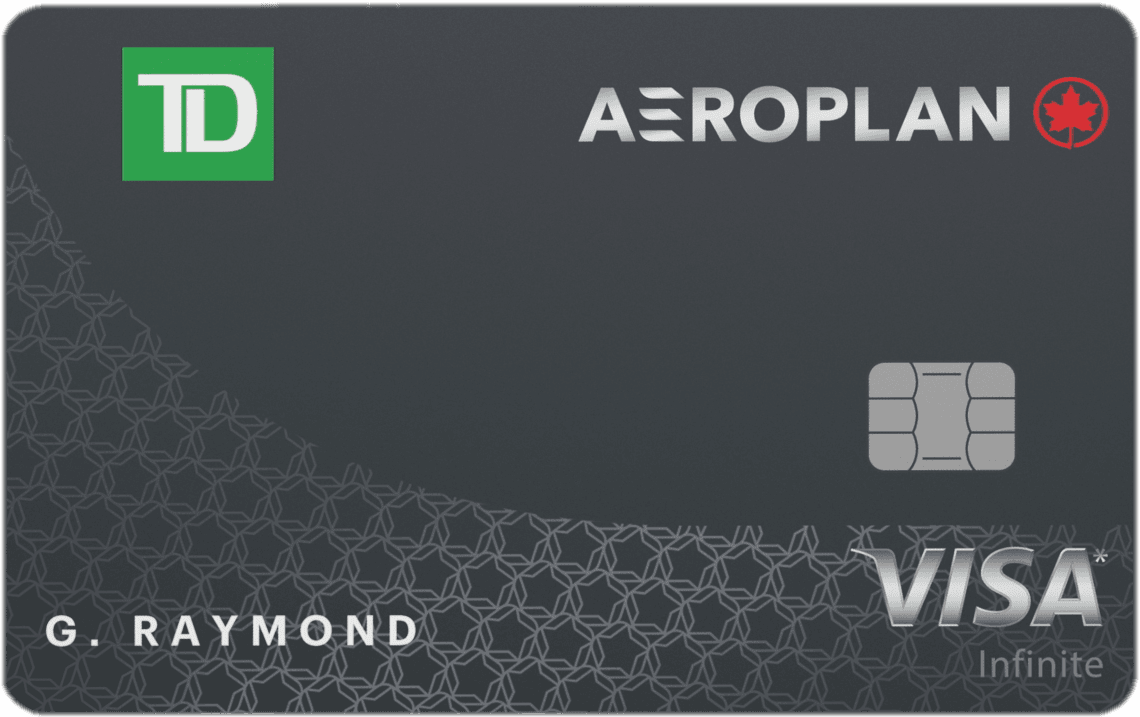

- Annual feeNo annual fee the first year
- $0 $139
- Our valuationMilesopedia first-year estimate First-year valueWelcome bonus$1,000Annual fee rebated$139Total$1,139Rewards on your spending are not included. The calculator that adds them from your own profile is on the card's page.
- $1,139
- Welcome offerAfter $12,000 in 12 months
- Up to 50,000 points
on TD's website
How to credit your flight to the right program
You choose the program when you book, or later when you manage your booking:
- When you enter passenger details, find the frequent flyer program field.
- Select the program you want (Aeroplan, United MileagePlus or another) and enter your member number.
- Check your account a few days after the flight. If the points do not appear, submit a missing points request to the program.
You can enter only one program per flight, so make your choice before departure.
WestJet and Flying Blue: a lesser-known option
If you fly WestJet, you can credit your flights to Flying Blue, the Air France and KLM program. Only flights sold and operated by WestJet count, according to Flying Blue's partner page.
Flying Blue calculates by distance, with a minimum of 500 miles:
- T, K and L classes: 20% of the distance.
- N, S and X classes: 50%.
- H and Q classes: 75%.
- Full-fare economy and Premium Economy: 100%.
- Business Class: 150% to 175%.
These flights earn you no XP, Flying Blue's status currency. We recommend this option if you already have Flying Blue miles to top up.
A tool to compare before you book
Doing these calculations by hand takes time. The Travel Smarter tool does them for you: you enter the route, fare class and price, and it compares what each program would earn you. Aeroplan, United, Miles & More, Turkish Airlines and Flying Blue are among its programs.
Its free plan covers one program. The Premium plan costs $187 CAD per year, and the code MILESOPEDIA10 gives you 10% off your first payment (20% for Milesopedia members, who get their code in their member area). We cover it alongside other tools in our comparison of flight search tools.
Key takeaways
On an Air Canada flight, Aeroplan rewards the fare and United the distance. We suggest this simple rule:
- Affordable economy ticket, long route, no status goal: compare with United.
- Elite status to earn or keep: credit to Aeroplan.
- Expensive ticket or status already earned: Aeroplan almost always wins.
For member-only offers, create your free Milesopedia member account.