

How to Achieve Aeroplan Elite Status in 2026

Achieving Aeroplan Elite Status in 2026 will be different as Air Canada adopts a new Elite Status qualification system: Status Qualifying Credits, or SQC, replace the old qualifying miles, segments, and dollars.
This change makes earning status simpler: no matter how far you travel, only the amount you spend will now count toward your progress.
The good news is that you can accumulate SQC not only with your Air Canada flights, but also with your credit card purchases and partner bookings.
In this article, we explain how to earn SQCs, outline the status thresholds with examples for each tier, from 25K all the way to Super Elite.
The New SQC System
Aeroplan Elite Status – Air Canada Qualification Chart
As of 2026, SQC will replace qualifying miles and segments to achieve Aeroplan Elite Status. Specifically, accumulation is based solely on the amount paid and the fare type.
The core of your accumulation comes from your Air Canada flights:
| FARE TYPE | SQC EARNED |
| Flex fares and higher (including Premium Economy and Business Class) | 4 SQC/$1 CAD |
| Standard fares | 2 SQC/$1 CAD |
| eUpgrades Add-ons | 2 SQC/$1 CAD |
| Air Canada Vacation Packages | 1 SQC/$1 CAD |
| Basic Economy fares | 0 SQC/$1 CAD |
- A round-trip flight from Montreal to New York in Standard class ($250) earns 500 SQCs.
- A round-trip flight from Montreal to Tokyo in Premium Economy ($3,000) earns 12,000 SQCs.
Even though the Standard fare earns fewer SQCs, it remains a valuable option for budget-conscious travellers, especially when combined with other sources of SQCs.
Aeroplan Elite Status – Partner Qualification Chart
With various partners including travel, hotel, and the eStore, there is an annual cap of 25,000 SQCs, and you will earn:
- 1 SQC for every 5 Aeroplan points earned with Starbucks, Uber, Journie, LCBO, etc.
- 1 SQC for every 5 Aeroplan points earned on Star Alliance flights (excluding tickets issued by Air Canada)
Aeroplan Elite Status – Credit Card Qualification Chart
Some Aeroplan credit cards offer major leverage:
- High-end cards: 1,000 SQC per $5,000 spent
- Mid-range cards: 1,000 SQC per $20,000 spent
So, with $60,000 in annual spending, you’ll earn 12,000 SQC with a premium card like the TD® Aeroplan® Visa Infinite Privilege* Credit Card. Whereas, to achieve the same result with a mid-range card like the TD® Aeroplan® Visa Infinite* Card, you’d have to spend $240,000. The accumulation limit is 25,000 SQC for Aeroplan credit cards.
How to Achieve Aeroplan Elite Status?
The following examples show how different profiles, from occasional leisure travellers to frequent business travellers, can reach each tier.
These scenarios include cases with Standard and Flex fares or higher, as well as strategies that combine flights, credit cards, and partners.
Aeroplan Elite Status – 25K
25K status is the first level of the Aeroplan Elite program. It is earned by accumulating 25,000 SQCs in a calendar year.
The most direct way remains booking flights: 25K status can be achieved after spending a minimum of $6,250 on Flex or premium fares, or $12,500 on standard fares. Depending on your profile, there are several strategies for reaching this tier by combining travel and daily spending.
Travel and Credit Card Spending
A traveller who flies for leisure two to three times per year and books Standard fare tickets will earn few SQCs from flights, and will therefore need to compensate with significant spending on their credit card. For example:
- 1 round-trip flight from Montreal to Tokyo in Standard fare at $2,000 earns 4,000 SQCs.
- 1 round-trip flight from Montreal to Paris in Standard fare at $1,500 earns 3,000 SQCs.
- 1 round-trip flight from Montreal to São Paulo in Standard fare at $2,000 earns 4,000 SQCs.
- $70,000 in spending on a premium Aeroplan credit card to earn an additional 14,000 SQCs.
This traveller will be able to reach 25K status, but in terms of spending, they still had to spend a significant amount to achieve it. So unless you have a lot of expenses to put on a premium credit card, you’ll need to travel much more frequently to meet the $12,500 spent on Standard fares, or choose to travel in more comfort with Flex fares.
Business Traveller
For a business traveller, reaching elite status can be achieved very quickly, especially with business class tickets on long-haul destinations. And if your employer covers the cost of the tickets, earning status becomes even more accessible. For example:
- 1 Montreal-Frankfurt round trip in business class at $6,250 generates 25,000 SQC directly, thanks to the 4X multiplier on the business fare applied to the value of the ticket.
The 25K threshold is thus crossed in a single trip: a high amount, but the quickest and « cheapest » way to obtain status.
| Credit card | Annual fee | Welcome offer | |
|---|---|---|---|
| $599 |
Aeroplan Elite Status – 25K Without Flying
It is possible to obtain Aeroplan Elite Status 25K without flying, thanks to the daily qualification option. The principle is simple: accumulate 100,000 base Aeroplan points within a calendar year.
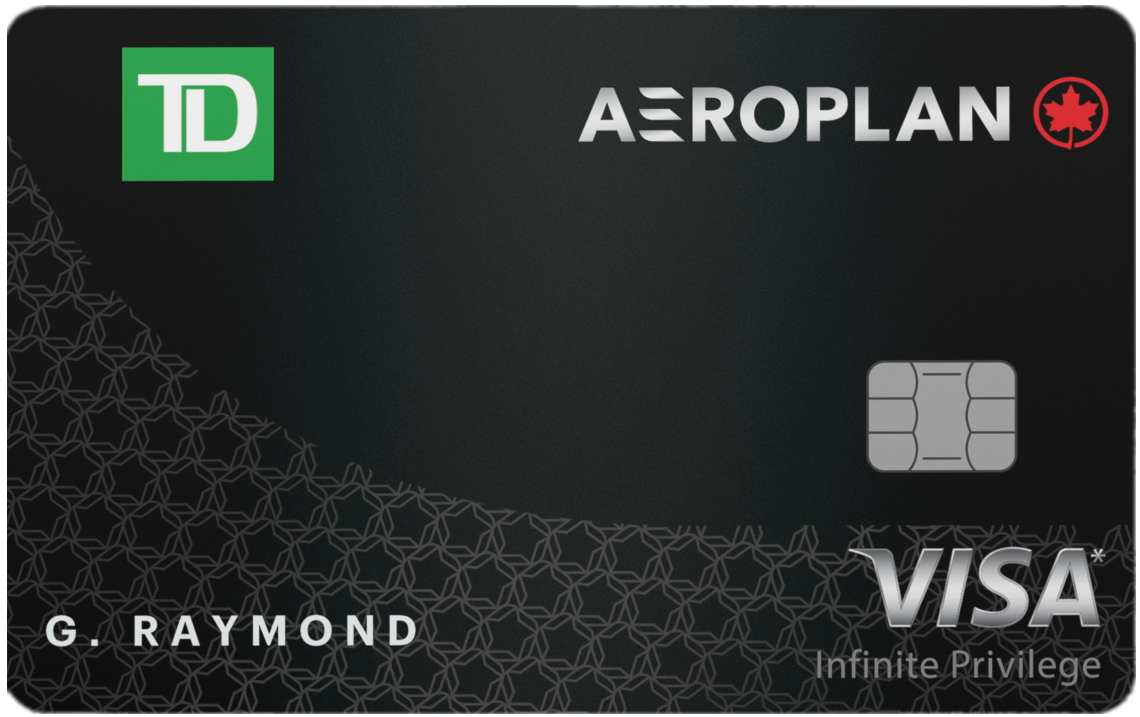
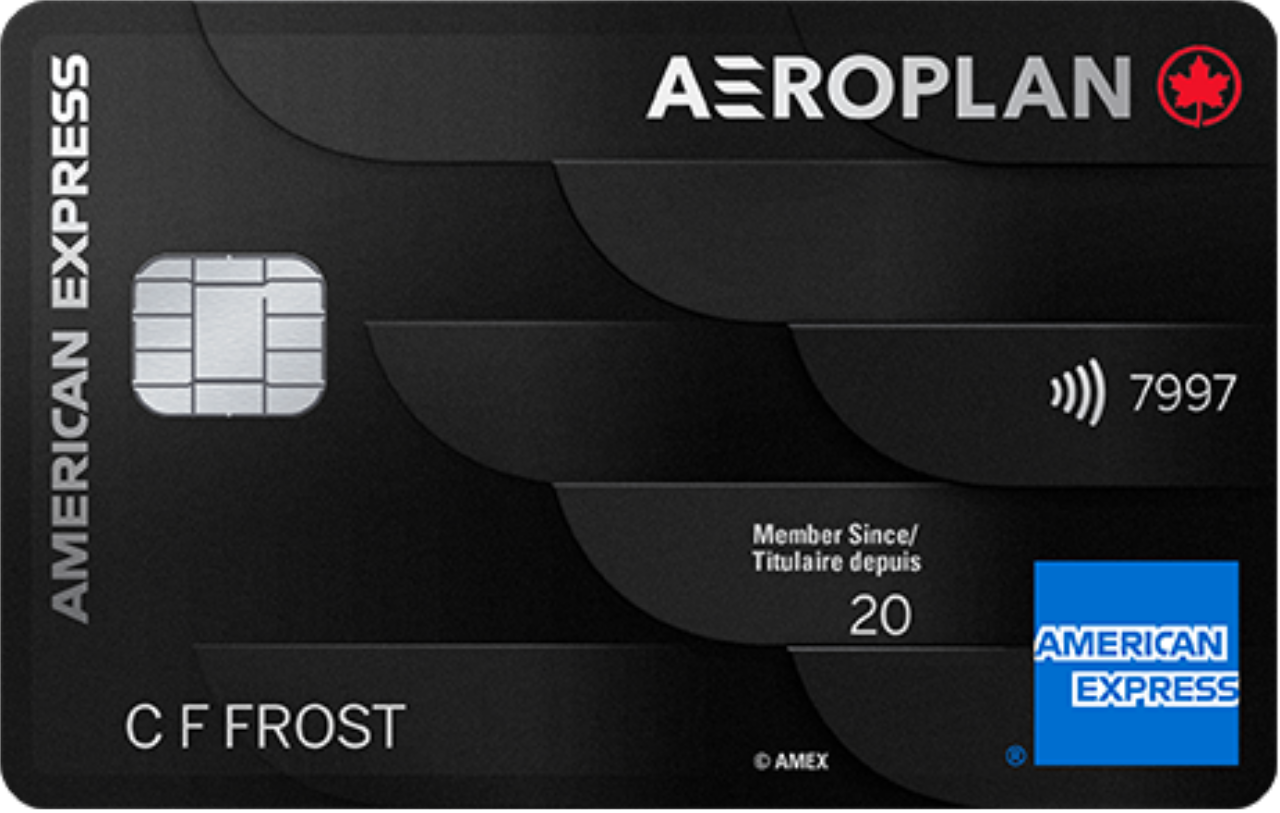
These points can come from flight tickets, your credit cards, or Aeroplan partners. With a premium co-branded Aeroplan card, such as the TD® Aeroplan® Visa Infinite Privilege* Card or the American Express® Aeroplan®* Reserve Card, you earn 1.25 points per dollar spent.
So an annual spend of $80,000 on one of these cards is enough to reach 100,000 base points, and thus 25K status… without ever setting foot on a plane. You also receive 1,000 SQCs for every $5,000 spent, i.e. 16,000 SQCs for $80,000 spent.
It’s possible for big spenders, but more expensive than aiming for a $6,250 Flex ticket.
Welcome bonuses and point transfers do not count towards the 100,000 points.
Finally, if you hold Titanium or Ambassador status with Marriott Bonvoy, you can benefit from a status match with Aeroplan and automatically receive 25K status.
Aeroplan Elite Status – 35K
To obtain the 35,000 SQCs required for 35K status, you need to spend a minimum of $8,750 on Flex or higher fares, or $17,500 on Standard fares.
Traveller and Consumer
As with 25K, it is difficult to reach 35,000 SQC solely with standard flights and without significant spending.
For example:
- 1 round-trip flight from Montreal to London in business class at approximately $7,500 earns 30,000 SQCs.
- Purchases earning 55,000 Aeroplan points add 11,000 SQC
Result: 35,000 SQC achieved with a long-haul flight and partner spending.
Aeroplan Elite Status – 35K Without Flying
Earning Aeroplan 35K status without setting foot on a plane is possible if you leverage two sources of points accumulation:
- Premium Aeroplan credit cards, such as the TD® Aeroplan® Visa Infinite Privilege* Card or the American Express® Aeroplan®* Reserve Card
- Aeroplan partners
An annual premium card spend of $125,000 already earns you 25,000 SQCs. All that’s left to do is earn an additional 10,000 SQC through partners, which equals 50,000 Aeroplan points.
Ideas for reaching those remaining 10,000 SQCs:
- Booking hotel stays through Marriott Bonvoy, where a premium extended weekend can earn you several thousand points
- Earn points on your daily expenses (coffee, gas, transportation) with Starbucks, Journie or Uber
With this approach, you reach 35K without flying.
| Credit card | Annual fee | Welcome offer | |
|---|---|---|---|
| $599 |
Aeroplan Elite Status – 50K
Once at this level, the shortest and least expensive route is to spend $12,500 on Flex or higher rates, or $25,000 on standard rates.
Occasional traveller
For occasional travellers, to make up for limited spending, it’s better to choose Flex fares or higher.
Given that it’s possible to find business class flights to Europe between $5,000 and $8,000, depending on the season, then you could reach 50K status with two flights in the luxury of Air Canada business class. For example:
- 1 round-trip Montreal-Lisbon in business class at around $6,000 earns 24,000 SQC.
- 1 round-trip Montreal-Rome in business class at around $7,000 earns 28,000 SQC.
Another solution is to opt for Latitude Economy fares. Indeed, these flights are eligible for upgrades with eUpgrade credits. Additionally, you could also use an Air Canada Worldwide Companion Pass to travel with your companion and earn SQC at an accelerated rate. This will be more cost-effective, considering that you get (almost) two tickets for the price of one and it will provide a significant advantage.
As explained above, you can combine different SQC sources.
Aeroplan Elite Status – 50K Without Flying
Aeroplan 50K status can be earned without travelling by following the same strategy as for 35K status, but you need to fully maximize both annual earning caps.
- Aeroplan premium cards: up to 25,000 SQC via your purchases
- Aeroplan Partners: up to SQC 25,000
Specifically, you need to:
- Spend $125,000 on a premium card to reach the first ceiling
- Plan your purchases with partners to obtain 125,000 Aeroplan points, or an additional 25,000 SQC
If you reach both ceilings (25,000 SQC card + 25,000 SQC partner), you’ll earn 50K status without ever having to fly.
Aeroplan Elite Status – 75K
Aeroplan Elite Status 75K requires 75,000 SQC in a calendar year. By applying the maximum multiplier (Flex and higher fares), this represents $18,750 in Flex or Business tickets to reach this threshold. With standard fares, it would require $37,500 in airfare spending.
At this level, it’s not possible to achieve status without travelling. However, you can still combine different sources of SQC if you don’t want all your spending to go towards flights.
If I go back to the examples given in the previous section, two flights in business class can earn you more than 50,000 SQCs. To find the missing 25,000 SQCs, you can maximize the SQC earning cap through Aeroplan partners, take advantage of the SQC cap available with a credit card, or use a combination of both methods. For example:
- 1 round-trip Montreal-Lisbon in business class at around $6,000 earns 24,000 SQC.
- 1 round-trip Montreal-Rome in business class at around $7,000 earns 28,000 SQC.
- Aeroplan partner purchases totaling 50,000 Aeroplan points, which translates to 10,000 SQC
- Spend $65,000 on a premium credit card for 13,000 SQCs
Super Elite
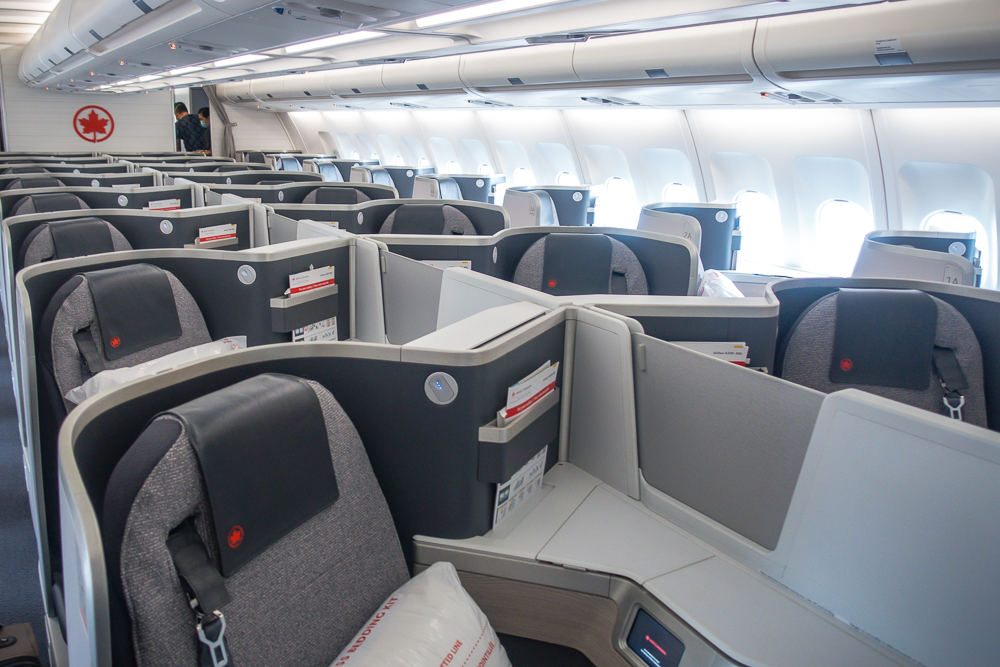
The Holy Grail of the Aeroplan program, Super Elite status, is reserved for the most frequent travellers… or the most ingenious (spending) strategists.
To earn it, you need to accumulate 125,000 SQCs in a calendar year.
- At Flex fare (or higher), this corresponds to approximately $31,250 spent on flights.
- The standard rate is $62,500.
As with other status levels, SQC can be combined from flights, credit cards, and partner activity. However, just like Aeroplan 75K Elite Status, it’s not possible to qualify for Super Elite status through non-flight spending alone.
Until now, Super Elite members could carry over up to 200,000 excess SQMs to the following year. Starting in 2026, the rollover will be on the basis of 5 SQM = 1 SQC. In concrete terms, you could start the year with 40,000 SQC if you have a premium credit card, depending on your travel profile in 2025.
Here is an example of a strategy in 2026:
- Annual spending of $20,000 on Flex fares (or higher) earns approximately 80,000 SQC.
- Add to that the 40,000 SQC carried over, for a total of 120,000 SQC.
- By paying for these same tickets with your premium card, you earn an additional 4,000 SQC, for a total of 124,000 SQC.
- The few missing SQCs can easily be made up by an additional flight, purchases from partners or additional spending on your credit card.
For members who were already driving 200,000 SQMs a year, the transition won’t be too difficult. But from 2027 onwards, things get tougher: turnover will be limited to 10% of accumulated SQCs. So a Super Elite who reaches 125,000 SQCs in 2026 will start the following year with only 12,500 SQCs.
There are no shortcuts and no free passes: achieving this status will remain expensive. Frequent business travellers will have the advantage, as their habits involve regular flights, which are often flexible… and therefore more expensive.
Aeroplan Elite Status – Qualification Strategies
- Maximize high-yield flights: prioritize long-haul trips in business class or premium economy; three or four long-distance journeys can cover more than half of your annual SQC requirement.
- Leverage non-flight earning caps: earn up to 25,000 SQC/year with a premium Aeroplan credit card (1,000 SQC/$5,000 spent) and up to 25,000 SQC/year with partners (1 SQC/5 points earned).
- Combine sources strategically: aim for 50,000-60,000 SQC with two long-haul Business trips, add 25,000 SQC via premium card and 25,000 SQC via partners to reach 100,000-110,000 SQC, then complete with an additional trip.
Bottom Line
The move to the SQC system simplifies qualification, but is now based on a single principle: every dollar counts. Yes, it is possible to achieve high status without travelling every week, by combining Air Canada flights, partner purchases and credit card spending… but this often involves very high amounts.
This is where you need to reflect: is it really worth it? If the only goal is to achieve Aeroplan Elite Status, but you don’t travel much afterwards, you may not be able to take full advantage of your hard-earned (and expensive) benefits. Aeroplan status levels are most rewarding for those who fly frequently enough to take advantage of upgrades, lounge access, and other benefits.
For many, another strategy may be more effective: directly earn Aeroplan points via an Aeroplan co-branded credit card or Membership Rewards points, such as the American Express Cobalt® Card with its transferable points to Aeroplan. These points can then be used to book directly in business class or enjoy many premium benefits, without engaging in the status chase, and often for a lower overall cost. Furthermore, consider whether the benefits you seek with a status could be obtained simply by holding a credit card.
Ultimately, it all comes down to your travel habits and spending patterns. I encourage you to run your own simulations: estimate your potential SQC based on your planned trips, annual spending, and earning opportunities. The purpose of this guide was to give you some concrete examples and food for thought… now it’s up to you to see if it’s worth the effort.

- Annual fee
- $191.88
- Our valuation
- $255Milesopedia first-year estimate First-year valueWelcome bonus$255Total$255Rewards on your spending are not included. The calculator that adds them from your own profile is on the card's page.
- Welcome offer
- Up to 15,000 points
Milesopedia first-year estimateFirst-year valueWelcome bonus$255Total$255Rewards on your spending are not included. The calculator that adds them from your own profile is on the card's page.
on American Express's website
Apply with confidence — no impact on your credit scoreApply with confidenceCheck whether your application will be approved before you submit it, with no impact on your credit score*When you apply for a personal American Express Credit Card, we will tell you whether you are eligible without affecting your credit score. So you can apply with confidence.*Instant decisions are only available for consumer Card applications (also called “personal Cards”).
Which credit card should you choose for travel?
If you travel regularly, the credit card you carry makes a real difference – travel insurance, points earning, airport lounge access and no foreign exchange fees. Use our credit card comparator to filter through 200+ Canadian cards based on your needs, or browse the best credit cards in Canada, ranked monthly by the Milesopedia team. To boost your Aeroplan earning via Membership Rewards transfers, the American Express Cobalt Card earns up to 5x points on dining and groceries.
What will change in Aeroplan elite status qualification in 2026?
In 2026, Aeroplan is replacing qualifying miles, segments, and dollars with Status Qualifying Credits (SQC). From now on, your progress toward elite status will be determined primarily by the amount you spend on airfare and related expenses.
How can I earn SQC to achieve Aeroplan Elite Status?
You can accumulate SQC by spending on Air Canada flights, making purchases through Aeroplan partners, and using an Aeroplan co-branded credit card. Air Canada flights on Flex or higher fares offer more SQC per dollar spent.
Is it possible to achieve Aeroplan status without travelling?
Yes, it is possible to reach statuses like 25K by earning enough Aeroplan points through everyday spending with specific credit cards and Aeroplan partner programs. For example, earning 100,000 base Aeroplan points through various purchases can qualify you for 25K status.
What are the benefits of Aeroplan Elite Status?
Aeroplan Elite Status offers various privileges, such as upgrade credits, lounge access, priority check-in and boarding, and free baggage. The higher the status, the more generous the benefits.
Can I combine different methods to earn SQCs faster?
Absolutely! You can maximize your SQC accumulation by combining spending on flights, purchases with Aeroplan partners, and using premium credit cards. This hybrid approach is ideal for boosting your SQC while matching your spending habits.
Our editorial integrity
Our reviews and rankings are based on an objective assessment. Advertisers do not influence our content. We may receive compensation through some links; our analysis and opinions remain independent.