Are loyalty programs right for you?

Loading article…
You probably know someone who talks about flying to Europe « on points. » You are probably wondering whether that is for real, or whether you will collect for three years only to watch the program rewrite its rules overnight. That caution is healthy, and we are going to answer it plainly.
The short answer: loyalty programs are worth it for almost everyone, but not at the same level of involvement. Only one situation justifies waiting, and that is carrying a balance from one month to the next. For everyone else, there is a tier that fits, from a plain no-annual-fee card all the way to actively managing several programs.
This guide is for you if you are starting from zero. First, we explain what a point actually is. Then, what can make you lose points. Finally, where to start, with our selection of the best credit cards in Canada.
To understand where your points come from, look at what happens when you pay. Every time a credit card is used, the merchant pays a fee to its bank. These are called interchange fees, and they range from 0.5% to 5% of the amount depending on the merchant and the card used.
Merchants build those fees into their prices. In other words, you are already paying for this system, whether you hold a rewards card or not. The posted price is the same in cash, by debit card or by credit card.
That is where your points come from. Your bank collects part of those fees, then hands a piece back to you so you keep using its card. It is not a gift: it is money you already paid coming back to you. Or not coming back, if your card offers nothing.
The question that matters is therefore never « how many points do I have, » but what a point is worth at the moment you redeem it. The same Aeroplan point is worth roughly 0.7 cent on a store purchase, and can reach 3 cents on a well-chosen flight. What you do with your points matters more than how many you have collected.
We also maintain our own valuation of rewards points in Canada, program by program. It is our own assessment work, not an average borrowed from elsewhere.
Let us be direct: yes, in part. Four things can happen to your points.
This fourth risk is rare, but it is not theoretical. Canadian retailer programs have already been suspended during financial trouble, leaving members with an unusable balance.
The lesson is not to avoid programs. It is to look at who owns the program before putting effort into it. A single store’s program depends on the health of that store. The large programs run by Air Canada, Marriott or a major bank, on the other hand, rest on far more solid ground. They are worth billions: Aeroplan was valued at 10 billion dollars when Air Canada sold 25% of it to Blackstone.
If you do not pay your balance in full every month, stop right here. The purchase interest rate on an ordinary card sits around 21%, while a good rewards card gives you back less than 2% of your purchases.
Here is a concrete example. A 3,000 dollar balance carried for a year costs roughly 630 dollars in interest. That same 3,000 dollars in spending would have earned you around 55 dollars in rewards. Interest swallows more than ten times what the card gives back, and no welcome bonus reverses that ratio.
This is not a rejection, only an order to respect. In this situation, a low-interest card does more for your finances than any points offer. The three cards below are built for exactly that, with no minimum income required.
| Credit card | Annual fee | Welcome offer | |
|---|---|---|---|
| $0 | |||
| $0 | |||
| $0 |
The CIBC Select Visa* Card and the BMO Preferred Rate Mastercard®* cost 29 dollars a year for a 13.99% rate. The MBNA True Line® Mastercard® credit card goes down to 12.99% with no annual fee at all. Compare all three against your own situation: a lower rate quickly makes up for a 29 dollar fee if your balance is large.
Once the balance is at zero, come back to this page. Everything that follows applies again.
This is the starting point we recommend to just about everyone. A cash back card with no annual fee, no deadline to watch and no math to do. Your usual spending simply goes through the right card.
How much does it actually earn? Take a common budget of 800 dollars a month, or 9,600 dollars a year, including 400 dollars of groceries and 100 dollars of gas.
In other words, the amount depends mostly on the card, not on your spending habits. The same grocery basket earns three times more on one card than on another. On top of that, the risk at this tier is nil: with no annual fee, the worst case is a smaller rebate than expected, never a loss.

These four cards cover most needs, with modest income requirements or none at all. They are good first choices for building your credit history without paying anything.
| Credit card | Annual fee | Welcome offer | |
|---|---|---|---|
| $0 | |||
| $0 | |||
| $0 | |||
| $0 |
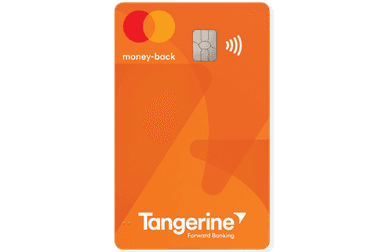
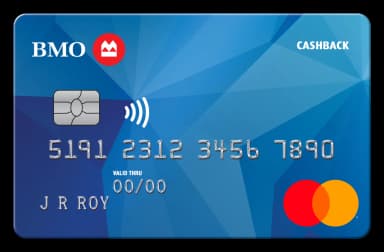
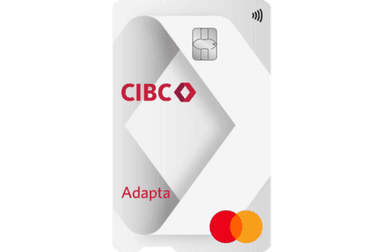
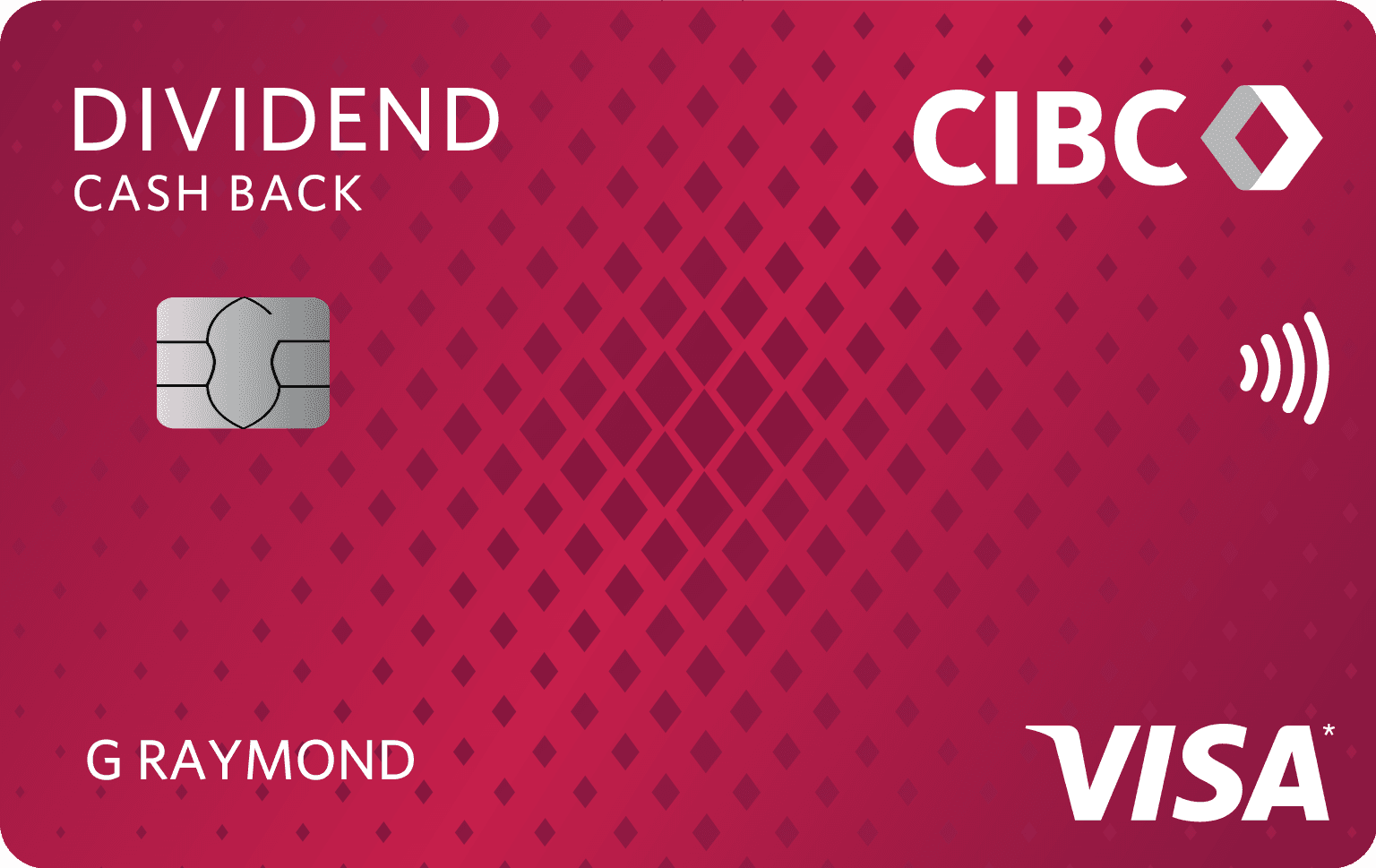
The CIBC Dividend® Visa* Card pays up to 100 dollars back after 2,000 dollars of spending and asks for 15,000 dollars of personal income. The Tangerine Money-Back Credit Card lets you pick your bonus categories, starting at 12,000 dollars of income. The BMO CashBack® Mastercard®* goes up to 125 dollars back after 1,000 dollars of spending. Finally, the CIBC Adapta™ Mastercard® adjusts its categories to your actual habits.
Our page on the best no-annual-fee credit cards keeps the full list up to date every month.
This is a question we get often, and the answer is reassuring: you are under no obligation to travel for this to be worth it. With cash back, there is no award chart to decode and no right moment to redeem. The amount comes back on your statement, and it is worth exactly what it says. No devaluation is possible, because there is no conversion.
It is also the most honest choice if you have no desire to learn how an airline program works. You cash in, full stop.
| Credit card | Annual fee | Welcome offer | |
|---|---|---|---|
| $0 | |||
| $0 | |||
| $100 |
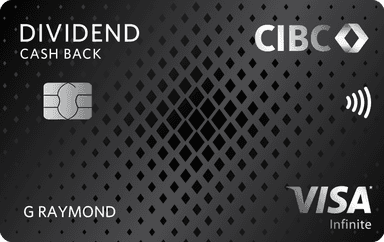
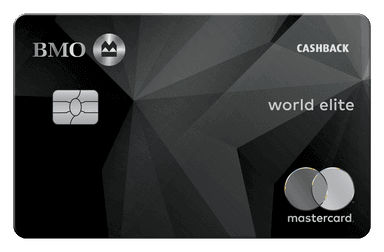
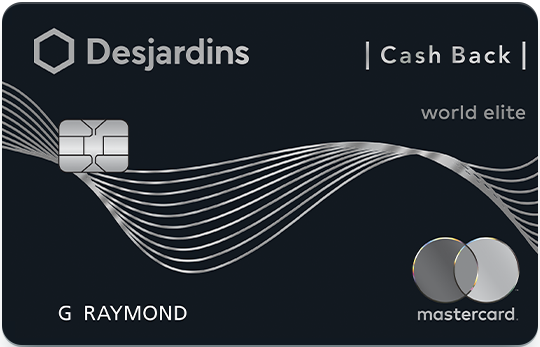
The CIBC Dividend® Visa Infinite* Card costs 120 dollars and pays up to 300 dollars back after 2,500 dollars of spending, a threshold you can reach in a few months of groceries. The BMO CashBack® World Elite®* Mastercard®*, at 139 dollars, illustrates the warning above: its 5% on groceries stops at 500 dollars per statement, and its 650 dollar bonus requires 24,000 dollars of spending. The Desjardins Cash Back World Elite Mastercard, at 100 dollars, rounds out the picture on the Quebec side.
A single flight a year is enough to justify a points card, because a welcome bonus often covers most of a ticket. There is no need to juggle five cards for that: one application a year, in a single program, then normal use until the next one.
The real deciding factor is not the size of the bonus, it is the spending threshold you have to reach to get it. Reaching 1,500 dollars in three months has nothing to do with reaching 7,500 dollars. A magnificent bonus your budget cannot unlock is worth nothing.
| Credit card | Annual fee | Welcome offer | |
|---|---|---|---|
| $0 | |||
| $0 | |||
| $0 |
Past a certain point, you will come across cards at 150 dollars, sometimes far more, and the natural reflex is to run. The reality is more nuanced. These cards often pay their own fee back through annual credits, travel insurance and airport lounge access. A 150 dollar card that hands you a 100 dollar automatic travel credit really costs 50 dollars.
The real trap lies elsewhere, and it hits beginners in particular. Some bonuses unlock in tiers, spread across a full year of spending. That is not the case for every annual-fee card, far from it: many pay their entire bonus as soon as a single threshold is met. The BMO Ascend™ World Elite®* Mastercard®*, for instance, advertises up to 100,000 points, but it takes 20,000 dollars of spending to collect all of them.
These premium cards are excellent, provided you have the budget to match. A family that puts groceries, gas, insurance and bills on the same card reaches the thresholds without thinking about it. They then unlock bonuses no fee-free card will ever match.
On top of that, every benefit starts on day one, with no tier to wait for: travel and car rental insurance, annual credits, airport lounge access, free checked baggage, purchase protection. Often, those benefits are already worth more than the fee.
So run the numbers with your own figures. At 800 dollars of spending a month, you will not reach a tier set at 20,000 dollars over the year, and the advertised bonus is not the one you will collect. At 2,000 dollars a month, the same card becomes one of the best financial decisions of your year.
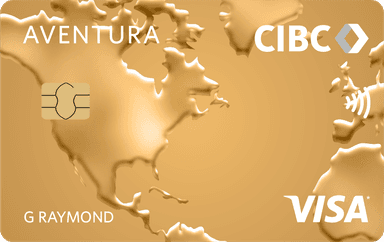
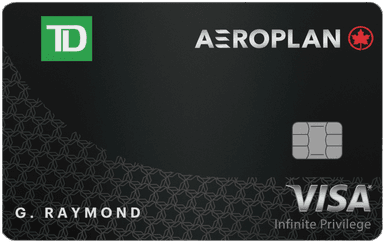
Let us run the same exercise, because it is instructive. On our 800 dollar monthly budget, the TD® Aeroplan® Visa Infinite Privilege* Credit Card earns roughly 13,000 Aeroplan points a year, at 1.25 to 1.5 points per dollar. At 2 cents a point, that is close to 260 dollars of value against a 599 dollar annual fee. The American Express Platinum Card® gives 2 points per dollar on dining and travel, and 1 point per dollar on everything else, for 799 dollars.
| Credit card | Annual fee | Welcome offer | |
|---|---|---|---|
| $599 | |||
| $799 |
The conclusion is clear: at that level of spending, earning alone never covers the fee. These cards do not pay for themselves through points, but through what comes with them, and what lands on day one.
The calculation to run is therefore a different one. Add up, in dollars, only the benefits you will genuinely use this year. If the total exceeds the fee, the card is worth it for you. If not, it is not, whatever its prestige.
Three objections come up constantly, and none of them holds up.
We took these beliefs apart in detail in our analysis of the 7 myths about credit cards.
Answer them honestly, in order.
Here is how to read your answers.
We track more than 200 active credit cards in Canada. Nobody can read all of that, and that is exactly why our credit card comparison tool exists.
It works the opposite way to the usual rankings. Instead of handing you a ready-made list, it asks for your real constraints and removes everything that does not suit you.
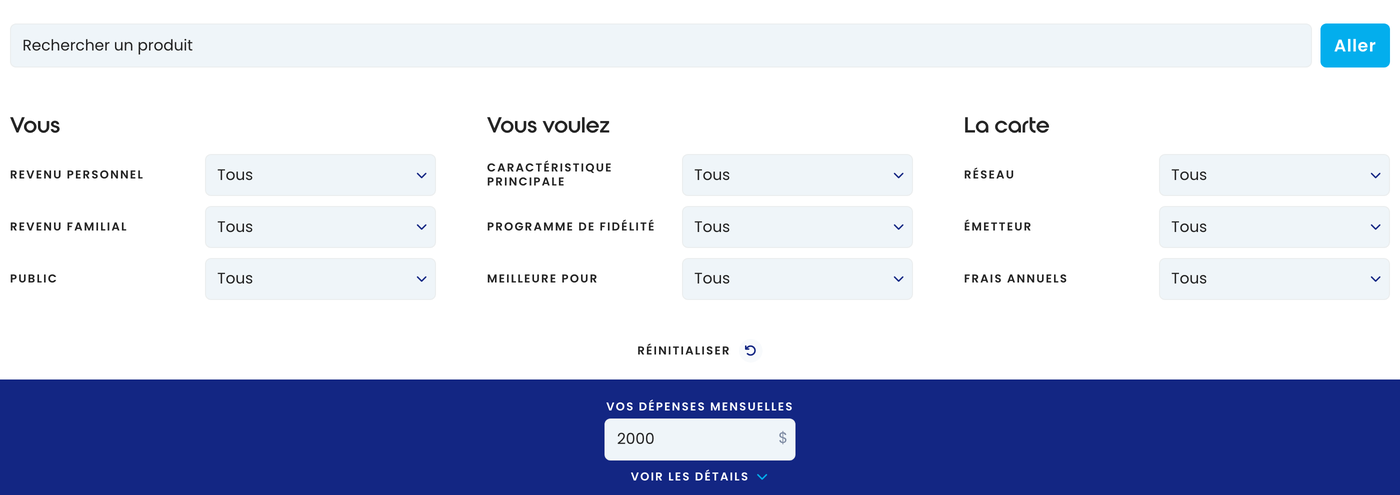
Even after filtering, the list stays long and runs over several pages. That is not a flaw: focus on the first ones, the ones the sort brings up for your profile, and leave the rest.
Then comes the most useful step. Tick « Compare » on the cards that interest you, then run the comparison. You get a side-by-side table: first-year value, second-year value once the bonus is gone, the size of the bonus, the minimum spending and the time you have to reach it.
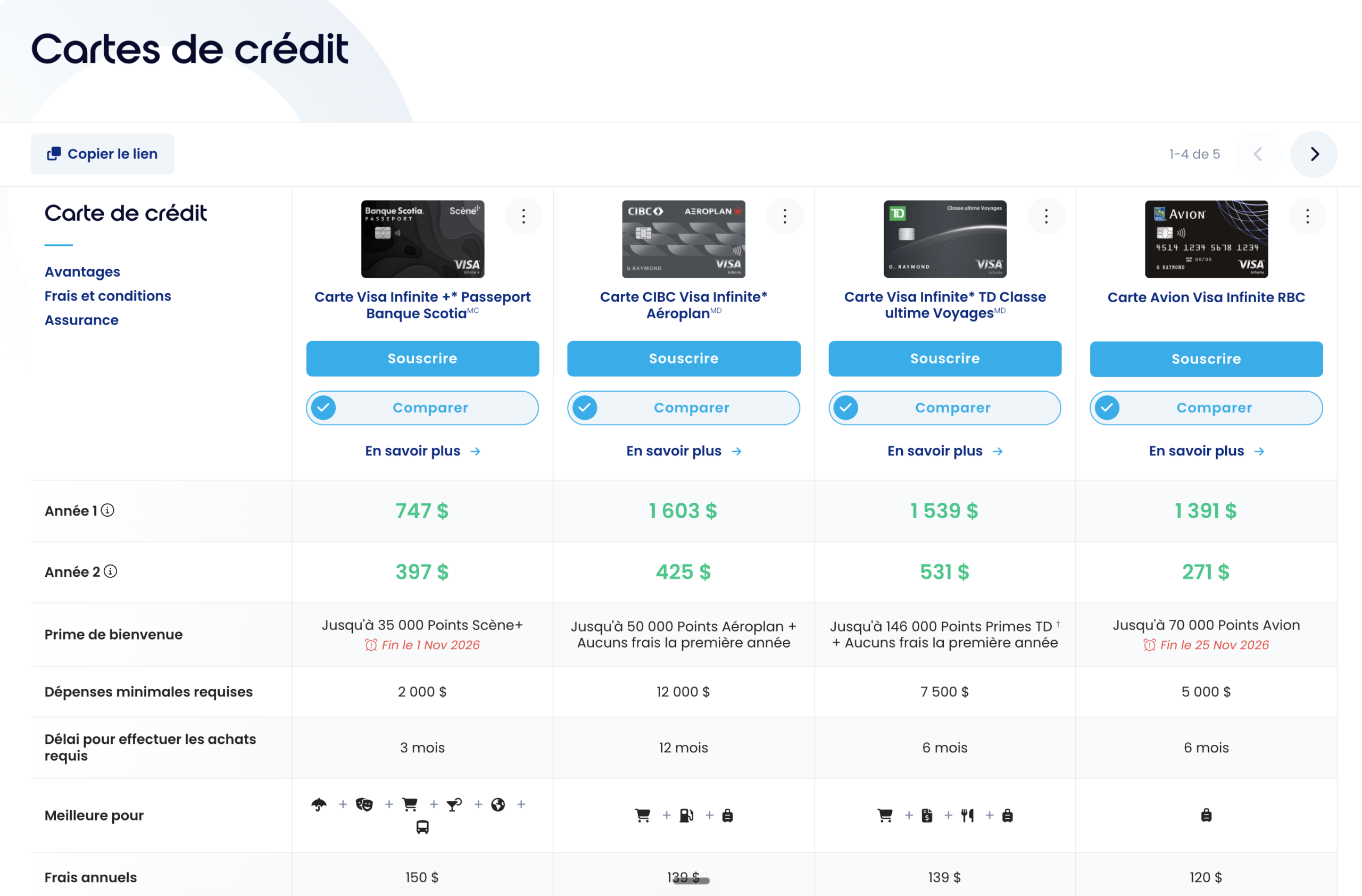
That is where good decisions get made. A card can show 1,603 dollars of value in the first year thanks to its bonus, then fall back to 425 dollars afterwards, while another stays steadier. Always look at the second-year column: that is the one that tells you what the card will really earn you over time.
There is no good card in the absolute, only a good card for your situation right now. And that situation moves: the perfect card at 25 is no longer perfect at 40.
Hence one simple habit to adopt: review your wallet once a year, when the annual fees are charged. Ask yourself the five questions above again, compare them with what you are paying, then switch if your life has changed. This is not complicated optimization, it is a half-hour appointment once a year.
In short, start small with a no-fee card, set yourself a two-year project, and let your choice evolve as your situation evolves. That is all you need to remember.
on CIBC's website
Offers change every month, and the best bonuses rarely last long. Subscribe to our newsletter to receive the changes that matter, without having to watch anything yourself.
Here are questions frequently asked in the milesopedia community about loyalty programs.
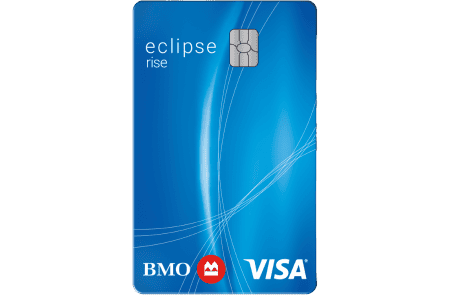
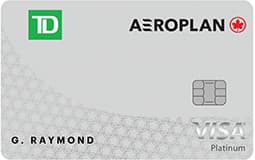
No. The Tangerine Money-Back Credit Card asks for 12,000 dollars of personal income, while the CIBC Dividend® Visa* Card and the CIBC Adapta™ Mastercard® ask for 15,000 dollars. The BMO eclipse rise Visa* Card and the TD® Aeroplan® Visa Platinum* Credit Card require no minimum income at all. High thresholds, such as the 80,000 dollars for the BMO Ascend™ World Elite®* Mastercard®*, apply only at the premium end.
It depends on the program. Most reset the clock as soon as there is activity on the account, even a purchase of a few dollars. Cash back never expires, since it is credited to your statement. The real protection is still to redeem your points within the year rather than collecting them indefinitely. See our guide on the expiry of points and miles in Canada for the rules program by program.
Most of the time, a program changes hands or names without you losing your balance. When AIR MILES became Blue Rewards, members kept their miles at an announced conversion rate. That said, a program really can be suspended if the company runs into serious financial trouble. It all depends on who is behind it: a major airline or bank program is worth billions, while a single store’s program follows the fate of that store.
Yes, and it is even recommended at the start. A cash back card with no annual fee earns about 170 dollars a year on 800 dollars of monthly spending, and close to 290 dollars in the first year with the welcome bonus, with no tracking at all. A second card is only justified by a specific goal, never on principle.
A card application leaves a temporary mark. However, two factors weigh far more in a credit score: paying on time and keeping your utilization rate low. One more card actually raises your total limit, which brings that rate down. The real risk is stacking applications over a few weeks.
It varies by a factor of four depending on the program and above all on how you use it. An Aeroplan point redeemed for a gift card or a store purchase is worth about 0.7 cent, while the same point on a well-chosen flight can reach 3 cents. We maintain our own valuation of rewards points in Canada, worth consulting before you pick a program.
Often yes, provided you use the benefits included. A 150 dollar card that pays a 100 dollar annual travel credit and covers your car rental insurance costs little in practice. Run the numbers with your own habits, not with the theoretical profile in the brochure. Also check how the bonus is paid out: some cards split it into tiers spread over the year, which assumes a large budget, while others give it at a single threshold.
Cash back is made for you. The amount comes back on your statement, with no conversion and no award chart to decode, so no devaluation risk. A card with no annual fee pays up to 100 or 125 dollars in welcome bonus after 1,000 dollars of spending depending on the card, and no plane ticket enters the equation. See our guide on how to choose a cash back credit card.
on BMO's website
Our reviews and rankings are based on an objective assessment. Advertisers do not influence our content. We may receive compensation through some links; our analysis and opinions remain independent.