
Points and credit cards for couples: how to progress together
In a couple, there’s often a points pilot and a learning passenger. Here’s my four-principle method for managing your credit cards together and progressing as a team.

When I received my first new credit card, my partner was the one who put a small sticker on it so I’d know where to use it. Groceries on this one, gas on that one, shopping on another. He also installed the rewards program apps on my phone and activated offers for me, at first. I watched it all from a distance, happy that someone else was taking care of it. In our couple, he’s the points pilot.
Managing reward points as a couple isn’t primarily a technical problem. It’s a matter of involvement and pace. In almost every couple I know, one person loves to optimize every dollar, and the other just wants it to work without thinking about it. The good news is that the person who’s learning eventually takes over. Today, I’m the one who makes sure to use the right card in the right place, without even thinking. Here’s the method that allowed us to progress together.

The Pilot and the Passenger
In a couple, there’s often a points pilot and a passenger. The pilot reads card details at night, applies for new cards, monitors spending limits, and spots a sweet spot from miles away. The passenger just wants to pay for groceries without thinking and get a plane ticket once in a while. In our household, my partner is the pilot, and I was the passenger. Neither role is wrong: the pilot brings expertise, the passenger brings a sense of proportion.
The classic trap is wanting to turn the passenger into a co-pilot overnight. The result: the house becomes an operations center, the person learning gives up, and the system collapses at the first oversight. In my case, it worked because my partner let me progress at my own pace, without imposing everything at once. The goal isn’t for both people to become experts simultaneously. The goal is to build a system that both genuinely follow. A system followed 80% of the time always yields more than a perfect system followed 0% of the time.
Start Small with Your Partner
The first principle is simple: integrate gradually, don’t impose everything at once. Opening three cards for your partner in the same week and detailing every multiplier is the best way to turn them off. This is exactly how I started, and the rule consists of three steps:
- Start with a single card that rewards everyday spending.
- A clear and unique instruction, not a list of multipliers to memorize.
- A second card only when interest is shown, never before.
Specifically, start, for the person who is learning, with a card that rewards strongly on groceries and restaurants, two categories where a couple spends anyway. The American Express Cobalt® Card earns up to 5 points per dollar depending on the category, with a welcome bonus of up to 15,000 Membership Rewards points over 12 months. Its fees amount to $191.88 per year, charged at $15.99 per month. The instruction is simple: “Groceries and restaurants go on this one, period.”
Here’s how to optimize your spending with this card:
| Category | Points per dollar |
|---|---|
| Grocery | 5 |
| Restaurants and Bars | 5 |
| Meal delivery | 5 |
| Convenience stores | 5 |
| Gas | 2 |
| Transportation | 2 |
| Travel | 1 |
| Entertainment | 1 |
| Recurring payments | 1 |
| Other purchases | 1 |
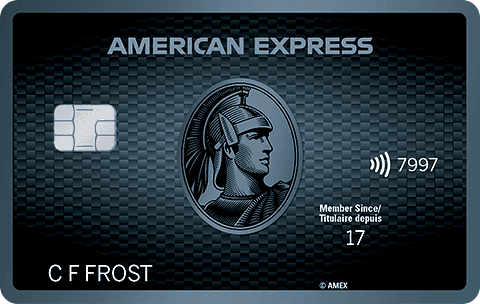
- Annual fee
- $191.88
- Our valuationMilesopedia first-year estimate First-year valueWelcome offer$255Total$255Rewards on your spending are not included. The calculator that adds them from your own profile is on the card's page.
- $255
- Welcome offerGet 1,250 points after $750 in purchases per month for 12 months
- Up to 15,000 points
on American Express's website
Apply with confidenceCheck whether your application will be approved before you submit it, with no impact on your credit score*When you apply for a personal American Express Credit Card, we will tell you whether you are eligible without affecting your credit score. So you can apply with confidence.*Instant decisions are only available for consumer Card applications (also called “personal Cards”).
Keep a reasonable number
The second principle follows from the first: the person learning does not need a six-card wallet overnight. My progression consists of three steps:
- Start with one main card for most purchases.
- Add a second card for a specific category, such as gas or transportation.
- Over time, you can increase to about three cards, no more: this is my own balance today.
The watchword remains: one card, one mission. We remember “groceries and restaurants here, the rest there,” and nothing more.
For this all-purpose everyday card, a clear and uncomplicated rewards card does the job. The SimplyCash® Preferred Card from American Express gives you 4% cash back on gas and on groceries in Canada (up to $1,200 cash back per year on groceries) and 2% on all your other purchases, with no cap. It costs $119.88 a year ($9.99 a month), or $119 a year in Quebec, and American Express lets you check whether you’ll be approved before you apply, with no impact on your credit score.
Cash back makes sense right away, with no conversion or point valuation to work out, which is reassuring when you’re starting out and don’t want a complicated system. The couple’s pilot, meanwhile, keeps a fully optimized wallet. A couple has no obligation to hold the same cards.

- Annual fee
- $119.88
- Our valuationMilesopedia first-year estimate First-year valueWelcome offer$200Total$200$50 deferred bonus, excluded from the first-year estimate and not counted in this total.Rewards on your spending are not included. The calculator that adds them from your own profile is on the card's page.
- $200
- Welcome offerAfter $2,000 in 3 months
- Up to $250 cash back
on American Express's website
Apply with confidenceCheck whether your application will be approved before you submit it, with no impact on your credit score*When you apply for a personal American Express Credit Card, we will tell you whether you are eligible without affecting your credit score. So you can apply with confidence.*Instant decisions are only available for consumer Card applications (also called “personal Cards”).
My third card is used exclusively for travel. A card without foreign currency conversion fees avoids the 2.5% added to each purchase abroad, which quickly adds up on a two-week trip. The Scotia Passport® Visa Infinite* Card has no conversion fees and provides access to airport lounges, a real plus when traveling as a couple.

- Annual fee
- $150
- Our valuationMilesopedia first-year estimate First-year valueWelcome offer$350Total$350Rewards on your spending are not included. The calculator that adds them from your own profile is on the card's page.
- $350
- Welcome offer15,000 points after $3,000 in 3 months and 20,000 more after $10,000 total in 6 months. Eligible accounts must be opened by January 3, 2027.
- Up to 35,000 points
- Ends Jan 3, 2027
on Scotiabank's website
For couples who travel more often, the American Express Platinum Card takes travel benefits even further: unlimited access to Priority Pass lounges for both of you, an annual travel credit of $400, and Membership Rewards points transferable to several airline and hotel programs. Its annual fee of $799 ($0 for the first year) makes it a card for frequent travelers, rather than a first choice.
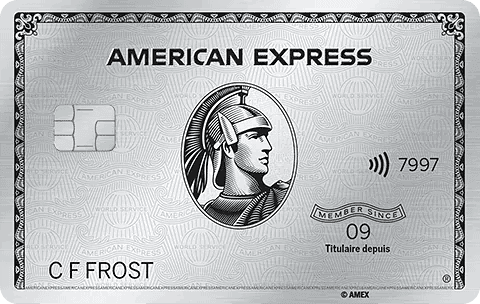
- Annual fee
- $799
- Our valuationMilesopedia first-year estimate First-year valueWelcome offer$1,190Total$1,190$510 deferred bonus, excluded from the first-year estimate and not counted in this total.Rewards on your spending are not included. The calculator that adds them from your own profile is on the card's page.
- $1,190
- Welcome offerAfter $10,000 in 3 months
- Up to 100,000 points
on American Express's website
Apply with confidenceCheck whether your application will be approved before you submit it, with no impact on your credit score*When you apply for a personal American Express Credit Card, we will tell you whether you are eligible without affecting your credit score. So you can apply with confidence.*Instant decisions are only available for consumer Card applications (also called “personal Cards”).
Organize and Label Cards
The third principle is physical, and it’s the one that helped me the most. When I received a new card, my partner did three things for me:
- He put a small sticker on it to indicate where to use it (groceries, gas, stores).
- He installed the rewards program apps on my phone.
- He activated the offers for me, at the beginning.
Result: I never had to think when paying. You can replicate these actions for the person learning, then place the everyday cards at the front of the wallet, and set aside those that are in the midst of meeting a minimum spending requirement for a welcome bonus.
My favorite tip: a shared note on the fridge or in your phone, titled “which card for what” this month. When a card is in the middle of a welcome bonus, with a minimum spend to reach in three or four months, it’s used for everything, temporarily. By putting it in writing, no one has to wonder which card to use. Once the threshold is met, we return to the normal distribution. These small cues are exactly what allowed me to become autonomous: today, I use the right card without even thinking.
Shared and Personal Spending
When a couple pools their income, the question is no longer just “which card for groceries,” but also “who pays for what.” The simplest setup comes down to one rule: the credit cards earn the points, and the bank accounts pay the balances.
- A joint chequing account: it receives both paycheques and pays the full balance of the shared-spending cards every month.
- One or two points cards for shared spending: groceries, gas, recurring bills. Each partner can hold their own as a primary cardholder.
- One personal account per partner: it receives each person’s allowance and pays a personal card used for hobbies and personal purchases.
To track the budget, read the statements rather than the cards: the shared card’s statement shows household spending, and the personal card’s statement shows each person’s allowance. A supplementary card, on the other hand, keeps nothing separate. According to the Financial Consumer Agency of Canada, purchases by an additional cardholder appear on the primary cardholder’s statement, and the primary cardholder is responsible for paying the entire balance.
Two Cardholders, Two Bonuses
Here’s the technical aspect that changes everything for couples. Each partner can apply for their own card as a primary cardholder, which yields two welcome bonuses instead of one. Adding a simple supplementary card to the other’s account generally does not provide a second distinct bonus. For a card with a bonus of 15,000 points, two primary cardholders are therefore, in practice, worth double what a single application yields.
This is exactly the logic behind Marriott Bonvoy American Express cards: each spouse can apply for their own card, personal or business, and earn two separate welcome bonuses instead of just one.
If one of you runs a business, our business and personal credit card combinations show how to split 2 to 5 cards across the couple.
Be careful not to overwhelm the beginner, however. Stagger applications by one or two months between partners, rather than submitting three applications in the same month. This protects each person’s credit file and allows time to meet each minimum spend without stress. In our early days, when a financial institution had questions, we would call together to answer them: a good way to understand the processes as a team. Our guide on card opening and closing strategies explains how to pace these rounds over time.
Aim for a Common Goal
Nothing motivates a passenger like a concrete goal. Instead of talking about multipliers, talk about a trip together. Several programs allow points to be pooled or transferred between partners to reach a travel reward faster. Aeroplan, Marriott Bonvoy, and AIR MILES offer, each according to their own rules, mechanisms to combine balances from the same household. Terms vary from program to program, so always check the current conditions before relying on them.
A telling example: if each person accumulates points separately and neither balance reaches the threshold for a flight reward, pooling points can turn two average stashes into a single stash sufficient for a ticket. The person learning then understands that their contribution, however modest, directly contributes to travel. This click is what made me want to get more involved. For specific steps, our tutorial on transferring points to another person and the one on transfers between accounts cover each program.
Accept Imperfection
The last principle is the most liberating: accept imperfection. A $120 grocery transaction made with the “wrong” card represents a few lost points, not a ruined year. The participation of both people and harmony at home are worth far more than the last 3% of optimization. My partner, who loves to optimize, also learned to let go so that I could get on board at my own pace, without pressure.
I’ve made my share of mistakes along the way. Withdrawing cash abroad with a credit card, for example: fees and interest apply as soon as you leave the ATM, with no points earned. Or neglecting bonus gift cards, which multiply points on purchases you were planning to make anyway. But the real reward comes at the end: seeing what those points ultimately provided.

The key takeaway is this: the best system is the one that both people actually follow, not the most profitable on paper. A couple that applies a simple method 90% of the time accumulates far more than a couple where only one person exhausts themselves trying to optimize everything while the other loses interest. Start small, keep it simple, and let the value accumulate on its own.
Create your free Milesopedia account to unlock member-only card offers, save your favourite cards and pick the newsletters you want: join Milesopedia.
Frequently Asked Questions
Should couples open the same cards?
No. A couple has no interest in holding identical cards. The more involved person can maintain a fully optimized portfolio, while the person learning starts with a few simple cards. What matters is that everyone uses their cards correctly, not that they are the same.
Is a supplementary card or a second primary card better?
In the vast majority of cases, a second card as a primary cardholder is more rewarding, as it entitles you to its own welcome bonus. A supplementary card on a partner’s account generally does not offer a distinct bonus, but remains useful for accumulating spending towards a threshold or sharing a benefit.
Can we pool our points for a trip?
Yes, in several programs. Aeroplan, Marriott Bonvoy, and AIR MILES offer ways to combine or transfer points from the same household, each according to its own conditions. Always check the current rules of the program concerned before building your plan.
How many cards for the beginner?
One initially, then a second for a specific category like gas. With practice, moving up to about three cards remains very manageable; in fact, that’s my own balance. The important thing is to add cards one by one, otherwise the risk of abandonment increases and the system eventually stops being followed.
How should spending categories be distributed?
Assign frequent and easy categories (groceries, restaurants) to the beginner’s card, and keep categories with varied multipliers for the person who enjoys tracking. One card, one mission: that’s the rule that avoids hesitation at the checkout.
Should we apply at the same time?
No, it is better to space them out by one or two months. This protects each person’s credit file and allows time to meet each minimum welcome bonus spending requirement without pressure. Submitting multiple applications in the same month unnecessarily complicates tracking.
Do we each need a shared card and a personal card?
Not necessarily. Two cards per person are often enough: one for shared spending, paid from the joint account, and one for your personal allowance, paid from your own account. If you use a supplementary card for shared spending instead, remember that the primary cardholder remains responsible for the entire balance, including the partner’s purchases.