Flying with Sports Equipment in Canada: Fees by Airline
- Sport
Loading article…
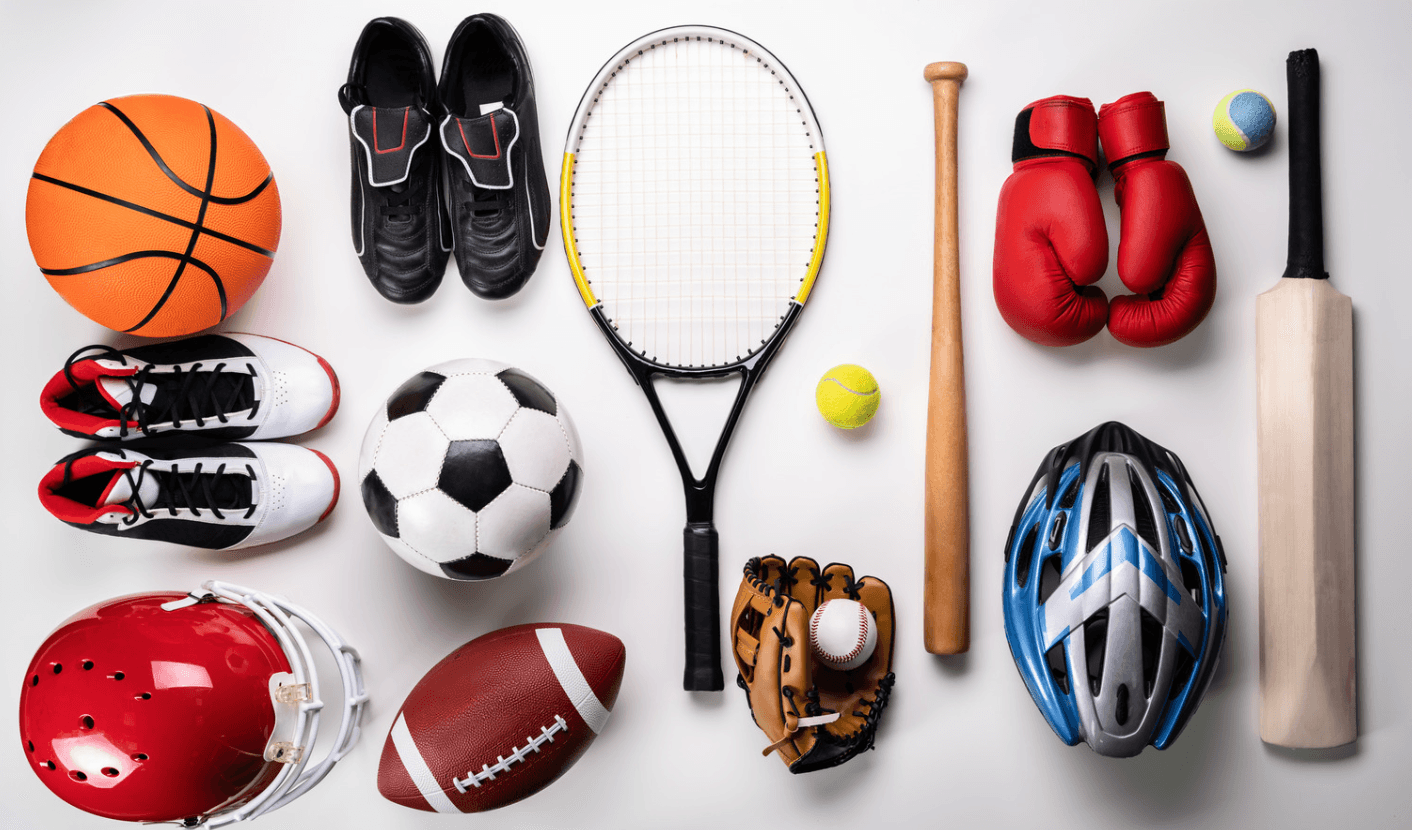
Planning for a flight with a larger piece of sports equipment? If so, you likely have some questions about what you're allowed to bring, how it should be packed, and whether it's going to cost a small fortune to get it to your destination.
Whether you're packing your golf clubs for a few rounds in New Zealand, your bicycle for a cycle tour across the Tuscan countryside, or your surfboard to catch waves in Costa Rica, travelling with sports equipment is both exciting and a bit of a chore.
On Air Canada, WestJet, and Porter, golf clubs, skis, snowboards, and hockey bags count as a regular checked bag with no oversize fee, while bicycles and surfboards cost an extra $50 to $120 each way. Flair charges a sports equipment fee on every item, starting at $69 per segment.
To help make your sports-focused trip planning easier, in this article, we’ll go over everything you need to know about how to fly with sports equipment, including costs, packing, insurance, and ways to save.
When coordinating the logistics for travelling on a plane with sports equipment, there are a few questions to consider and confirm:
Conveniently, on most airlines a lot of sports equipment can be checked in the same way you would check a regular suitcase. This means that if you want to check in one piece of regular luggage and a set of golf clubs, you'll need to have an allowance of 2 checked bags, whether that's through fees, a premium fare that includes baggage, or the other methods we'll go over below.
Additionally, despite the awkward shape, size, and weight of many sports items, a number of these items won't incur the usual fees that can be charged for more standard overweight/oversized luggage.
Now, to better understand how Canada's main airlines, Air Canada, WestJet, Porter Airlines, and Flair handle sports equipment on their flights, let's take a closer look at each of their policies and fees for popular items.
Air Canada, WestJet, Porter Airlines, and Flair all accept 1 properly packed bicycle per guest (more on proper packing in a section below) as a checked bag but for an additional fee as follows:
| Airline | Policy |
|---|---|
| Air Canada | $50–60 each way, taxes included (in CAD or USD, depending on your itinerary). The bicycle also counts as one of your checked bags. No overweight or oversize fee will be charged as long as it is at or below the maximum weight of 32 kg/70 lb and maximum linear dimensions of 292 cm/115 in. Pre-registration required. |
| WestJet | $50–59 CAD each way. No overweight or oversize fee will be charged as long as it is at or below the maximum weight of 45 kg/100 lb and maximum linear dimensions of 292 cm/115 in. |
| Porter Airlines | $50 plus taxes ($50–56.50) each way, on top of any checked baggage fee. An overweight fee may apply over 23 kg/50 lb, and bicycles over 32 kg/70 lb or 203 cm/80 in are not accepted. |
| Flair | $79–104 per segment when booked online, $99–139 per segment at the airport, taxes included (in CAD, or USD on trips starting in the U.S.). Maximum accepted linear dimension is 292 cm (115 in), and an overweight fee applies over 30 kg/66 lb. |
With all 4 airlines, it's recommended that you preregister your item by contacting customer service. This makes it less likely that your bicycle will be refused at the airport or moved to a later flight for capacity reasons.

For travellers looking to hit the links on their next trip, here are the policies for bringing your golf clubs on your flight.
| Airline | Policy |
|---|---|
| Air Canada | Counts as one piece of checked baggage. Oversized baggage fee is waived, but overweight fees may apply. Allowed 1 set of about 14 clubs, 12 golf balls, and 1 pair of shoes per guest, packed into a rigid container designed for shipping. |
| WestJet | Counts as one piece of checked baggage. Oversized baggage fee is waived, but overweight and extra piece fees may apply. Allowed 1 set of clubs and balls and 1 pair of shoes per guest, packed into a rigid or hard shell container or a bag with an attached hood. |
| Porter Airlines | Counts as one piece of checked baggage. Oversized baggage fee is waived, but an overweight fee applies over 23 kg/50 lb. Allowed up to 14 clubs, 12 golf balls, and 1 pair of shoes per guest, packed into a rigid or hard shell container designed for shipping. |
| Flair | $69–94 per segment when booked online, $99–139 per segment at the airport, taxes included (in CAD, or USD on trips starting in the U.S.). Allowed 1 set of clubs, balls, and shoes per guest, packed into a hard shell container or a special golf bag. Maximum accepted linear dimension is 292 cm (115 in), and an overweight fee applies over 30 kg/66 lb. |

Winter weather lovers are welcome to travel to snowy slopes around the world. Here are the airline policies you'll need to follow:
| Airline | Policy |
|---|---|
| Air Canada | One or more sets of skis in a single container or one or more snowboards in a single bag count as 1 checked bag. No oversize fee will apply, but overweight fees may apply. One boot bag is also allowed and does not count as a separate bag if it's accompanying a snowboard or skis and doesn't contain any other items. Ski poles, if packed separately, will count as another checked bag. Between Canada and Europe, the Middle East or Africa, your skis or snowboard and a boot bag travel free on top of your allowance on all fares except Economy Basic. |
| WestJet | One set per guest (helmet, skis, boots and poles; or a snowboard and boots) counts as 1 checked bag. No oversize fee will apply, but overweight and extra piece fees may apply. Any ski wax you pack must be non-flammable. |
| Porter Airlines | One pair of skis, ski poles and ski boots, or one snowboard and boots, count as 1 checked bag. No oversize fee applies as long as the bag carries equipment only, but checked baggage and overweight fees apply. A boot bag holding only boots and a helmet doesn't count as a separate bag when checked with skis or a snowboard. Porter doesn't accept any item over 203 cm/80 in (length + width + height) or 32 kg/70 lb. |
| Flair | $69–94 per segment when booked online, $99–139 per segment at the airport, taxes included (in CAD, or USD on trips starting in the U.S.). Each passenger is allowed one set of skis, poles, and boots or one snowboard and boots. Maximum accepted linear dimension is 292 cm (115 in), and an overweight fee applies over 30 kg/66 lb. |

For many Canadians, a familiar and frequent travel companion is a large hockey bag as players head to and from training, try-outs, and tournaments. Here are the airline baggage policies you need to know:
| Airline | Policy |
|---|---|
| Air Canada | One equipment bag, up to 2 sticks (taped together), and one set of goalie pads count as 1 checked bag. No oversize charge. |
| WestJet | Each guest can bring one helmet, a puck/ring/football/stick, a set of pads, and a pair of cleats, shoes, or skates in a designated equipment bag. This will count as 1 checked bag, and no oversize or overweight (up to 100 lbs) fees will apply. |
| Porter Airlines | One equipment bag and two hockey or lacrosse sticks count as 1 checked bag. The bag can hold one helmet, a puck/ring/football/stick, a set of pads, and a pair of cleats, shoes, or skates. No oversize fee applies, but an overweight fee may apply. |
| Flair | $69–94 per segment when booked online, $99–139 per segment at the airport, taxes included (in CAD, or USD on trips starting in the U.S.). For this fee, you can bring one bag containing a helmet, pucks, sticks, pads, skates, and shoes. Hockey goalie pads are also accepted at no additional charge if they are strapped together. Maximum accepted linear dimension is 292 cm (115 in), and an overweight fee applies over 30 kg/66 lb. |

If you're heading abroad in search of the best breaks and wind, take note of the following airline policies for your boards:
| Airline | Policy |
|---|---|
| Air Canada | $100–120 each way, taxes included (in CAD or USD, depending on your itinerary). One board and one set of paddles (for paddleboards) count as one checked bag. Maximum length of 292 cm/115 in (203 cm/80 in on CRJ900 and Dash 8-400 aircraft), maximum width of 60 cm/24 in and maximum weight of 32 kg/70 lb. No oversize fee applies. Two fees apply if two boards are packed in the same container. |
| WestJet | $50–59 CAD each way. Fee covers one set per guest including a paddleboard and one paddle/oar; or a surfboard and sail; or a surfboard and kite. Boards must be less than 9.8 feet (3 metres). Oversize fee applies on boards longer than 62 in/157 cm. Overweight fees may also apply. |
| Porter Airlines | Surfboards and kiteboards up to 203 cm/80 in are allowed as checked luggage, but no additional policy is listed. Contact Porter Airlines customer service for more information. |
| Flair | No policy listed. Contact Flair Airlines to learn about options. |
For a board that isn't covered above, we recommend checking with the airline before you book: you can reach Porter's customer service or Flair's customer care team directly.

As mentioned in the sections above, airlines generally categorize sports equipment as a regular checked bag, adding a handling fee to a couple larger items. For the most part, as long as you've paid for a checked bag (or two) and your item follows the airline's size, weight, and packing guidance, you should have no problem travelling with your favourite sports accoutrements.
To show these costs clearly, the table below summarizes the fees for Air Canada, WestJet, Porter Airlines, and Flair Airlines.
| Sports item | Air Canada | WestJet | Porter Airlines | Flair Airlines |
|---|---|---|---|---|
| Bicycles | $50–60 | $50–59 | $50–56.50 | $79–104 online / $99–139 at the airport |
| Golf clubs | $0 | $0 | $0 | $69–94 online / $99–139 at the airport |
| Skis/snowboards | $0 | $0 | $0 | $69–94 online / $99–139 at the airport |
| Hockey equipment | $0 | $0 | $0 | $69–94 online / $99–139 at the airport |
| Surfboards/paddleboards | $100–120 | $50–59 | Not listed | Not listed |
To see the full list of rules and restrictions, take a look at each airline's dedicated webpage for travelling with sports equipment:
Also note that the following items are not allowed on your flight: e-bikes, e-scooters, lithium batteries above 100 Wh (without special permission), camping fuel, compressed gas cylinders, motorised boards/sports equipment, flammable ski wax, and more.
Make sure to confirm the list of restricted items before you fly to avoid awkward, annoying, or expensive issues at the airport.
For travellers planning a flight with sports equipment (or other luggage) in tow, there are a few ways to potentially save on baggage fees.
If you're flying with Air Canada, standard sports equipment fees are waived if:
Alternatively, by holding a premium Aeroplan credit card, you can get a free checked bag for you and up to 8 companions travelling with you. Qualifying Aeroplan cards include:
You can learn more about Air Canada's luggage rules in our comprehensive guides to how their fees are calculated and the policies around baggage dimensions.
| Credit card | Annual fee | Welcome offer | |
|---|---|---|---|
| $599 | |||
| $0 | |||
| $599 | |||
| $0 | |||
| $599 |
For travellers taking their sports equipment on a WestJet flight, there are a few ways to save.
First, you're entitled to 1 free checked bag when you book an EconoFlex fare and 2 free checked bags with Premium, PremiumFlex, Business, and BusinessFlex fares. While this doesn't waive the fees associated with a bicycle or surfboard, it does save you the initial checked bag expense.
Second, WestJet Rewards tier status members get 2–3 free checked bags with their status (2 for Silver and Gold, 3 for Platinum), equally saving the initial fee but not the sports equipment fee.
Finally, with the co-branded WestJet RBC® World Elite Mastercard‡, you get a complimentary first checked bag for yourself and up to 8 companions travelling on the same reservation when you pay for the flight with the card. Since WestJet charges between $45 and $124 for a first checked bag depending on your fare, destination, and whether you prepay, all of these options have the chance to be quite valuable.
Learn more about WestJet's baggage policies and dimension requirements in our related guide.
| Credit card | Annual fee | Welcome offer | |
|---|---|---|---|
| $139 | |||
| $175 |
If you're travelling on Porter Airlines, you can enjoy your first checked bag for free with the following fares: PorterClassic Flexible and PorterClassic Freedom, plus with a PorterClassic Standard fare when flying to or from Europe and Africa.
Additionally, if you have VIPorter Venture status, you get your first checked bag for free. If you have VIPorter Ascent or First status, you'll get two free checked bags.
Also, similarly to Air Canada's Aeroplan and WestJet Rewards, Porter's loyalty program has a couple co-branded credit cards. With the more premium of the two, the BMO VIPorter World Elite®* Mastercard®*, you automatically get VIPorter Venture status and one complimentary checked bag, a benefit that extends to up to 8 companions on the same booking, alongside many other valuable travel perks.
| Credit card | Annual fee | Welcome offer | |
|---|---|---|---|
| $0 |
If you're flying with Flair Airlines, your best way to save is to add your sports equipment online when you book: the fee is $69–104 per segment online, compared with $99–139 at the airport. The airline doesn't have a co-branded credit card or a loyalty program, so those options are out.
Flair also doesn't offer free checked bags with any of its fares. Instead, they sell "bundles" that include a checked bag, with fees ranging from $69 to $234 per segment. However, since Flair also charges a fee for all checked sports equipment, the traditional ways to save on baggage fees are essentially moot anyways.
If you don't have a relevant co-branded card for the airline you're travelling with, your options to save on baggage fees include either purchasing a fare that comes with a checked bag or paying for your flight and fees using a credit card that can help offset the cost.
For example, the National Bank World Elite® Mastercard® comes with a $150 travel reimbursement that is perfect for covering baggage fees, seat selection fees, and other airline expenses.
You could also use a flexible rewards currency like Scene+ to cover baggage fees. Scene+ points can be redeemed against eligible travel purchases made on the card at a rate of 1 Scene+ point = 1 cent.
A card like the Scotiabank Passport® Visa Infinite+* Card gives you the chance to earn points and then redeem them to cover travel expenses. Plus it's one of only a few credit cards in Canada that don't charge the 2.5% FX fee when you make purchases in foreign currencies, making it an ideal travel credit card.
| Credit card | Annual fee | Welcome offer | |
|---|---|---|---|
| $0 | |||
| $150 |
In general, when packing sports equipment, the bags, boxes, and cases being used cannot contain clothing or other personal items – they must be used to carry sports equipment only. Additionally, some key instructions for popular items include:
Of course, before you head to the airport, be sure to check the airline rules (for all airlines for the entire trip) to make sure you’re fully complying.
Also, don't forget to consider the fact that you’ll need to get your item to and from the airport. Depending on what you've packed, this can become a fun adventure as you try to find a taxi that's willing to tie your bicycle box to their roof!
On international flights, lost and delayed luggage is covered under the Montreal Convention which outlines a comprehensive and unified framework that covers airline liability for both luggage and passengers.
Under the Convention's guidance, airlines are liable for up to 1,519 Special Drawing Rights (roughly $2,900 CAD, depending on exchange rates) per passenger if your luggage/item is lost or damaged and the airline is found to be at fault. However, do note that this only applies if you are flying between two countries that have signed and ratified the Convention.
For travel within Canada, your baggage rights are listed within Canada's Air Passenger Protection Regulations, which provide similar guidance to the Montreal Convention.
If your equipment is worth more than about $2,900, you may want to add separate private travel insurance to cover value over and above this amount. In fact, it's always a good idea to sign up for travel insurance as it can potentially fill in where airline compensation doesn't.
Finally, it's important to be aware that the lost and delayed baggage insurance that comes with many credit cards will not necessarily cover specialty items, though many private travel insurance policies will. We've written a complete guide to what's covered by credit card insurance, so we recommend you look through that to understand what is and isn't covered.
Take note that your bags are generally not considered officially lost until they have been missing for 21 days. If your luggage/sports item does not arrive at your destinations with you, you'll want to inform the airline staff immediately to start the liability process and to allow you to potentially replace some necessary items in the interim.
Flying with sports equipment can sometimes feel a bit overwhelming, but really there's no need to get stressed. Airline policies around sports items are relatively straightforward, and the costs are surprisingly low (when they're not zero).
To make sure you keep your costs under control and to ensure that your equipment arrives intact at your destinations, consider these suggestions:
We hope our article has helped you feel more confident about travelling with your sports equipment, and that you have many fun and sporty adventures on the horizon!
To continue your reading, we recommend you check out our article on 9 ways to save on baggage fees, and our guide to the best credit cards in Canada to learn all the ways you can save money and enjoy bonus perks on your travels.
To get our travel tips and access member-only offers, create your free Milesopedia account.
on TD's website
Our reviews and rankings are based on an objective assessment. Advertisers do not influence our content. We may receive compensation through some links; our analysis and opinions remain independent.