

Air Canada sells 25% of Aeroplan to Blackstone for $2.5 billion: what changes (and what doesn’t) for you

Air Canada is selling 25% of its stake in Aeroplan to a consortium led by Blackstone and the Caisse de dépôt et placement du Quebec, for $2.5 billion. The transaction values the overall program at $10 billion, but Air Canada retains 75% of the shares and full day-to-day control of the program.
No changes have been announced to the points structure, earn rates, or member benefits. Here is what this transaction actually changes, why Air Canada is doing it now, and what it reveals about the real value of your points.
In brief
- $2.5 billion for 25% of Aeroplan, valuing the program at $10 billion in total
- Investors: Blackstone and the Caisse de dépôt et placement du Quebec (co-leads), alongside PSP Investments and the British Columbia Investment Management Corporation (BCI)
- Air Canada retains 75% and full operational, strategic, and day-to-day control of the program
- The proceeds will first be used to repay about US$1.2 billion of bond debt coming due soon, then to accelerate a share buyback of up to $800 million (launch planned for September 2026)
- Investor returns are structured to deliver an internal rate of return (IRR) of 6.5% if Air Canada exercises its buyback right, net of all distributions
- Air Canada holds a buyback right on the stake sold, exercisable between the 5th and 8th year following closing
- Closing expected on August 17, 2026
- Aeroplan has more than 10 million active members worldwide, bringing the $10 billion valuation to roughly $1,000 per member
Main source: Air Canada’s official press release dated August 11, 2026, corroborated by Blackstone’s release and reported by TravelPress.
What changes for members
The short answer: nothing, for now. Air Canada retains 75% of the shares and full control over operational decisions, including the points structure, earn rates, fees, and member benefits. No program changes were announced with this transaction.
Craig Landry, Air Canada’s Executive Vice President and Chief Innovation Officer, and also Aeroplan’s President, emphasized this point in the official press release: under this new partnership, Air Canada retains full control of the program, ensuring complete continuity for partners, members, and employees, as is the case today. He was even more direct with analysts on Wednesday, stating that there will be no change to how members earn or redeem their points, nor to any other element of the program as a result of this transaction, according to BNN Bloomberg.
For holders of Aeroplan co-branded credit cards (TD, CIBC, American Express), nothing changes in the short term either. The commercial agreements between Air Canada and the issuers are not affected by this minority equity transaction.
The program is also continuing to operate normally during the transaction: Aeroplan launched a bonus promotion on Air Canada flights in the very week of the announcement.
Why Air Canada is acting now
Three financial reasons explain the timing. First, deleveraging: Air Canada is still carrying some of the debt taken on during the pandemic, including a bond maturity of about US$1.2 billion coming due soon. This transaction allows it to be repaid without affecting the airline’s operating balance sheet.
Second, capital to buy back shares. Once the debt is repaid, the remainder of the $2.5 billion will fund a share repurchase program of up to $800 million, via a modified Dutch auction, with a launch planned for September 2026. It is a direct way to return value to Air Canada shareholders without drawing on cash generated by air transport operations.
Finally, it monetizes a valuable asset without giving up control. A $10 billion valuation for Aeroplan exceeds Air Canada’s own total market capitalization by about $2.4 billion, illustrating how the loyalty program has, over time, become more profitable and more predictable than passenger transport. Selling 25% extracts capital immediately, while keeping the remaining 75% and full control.
The context of Q2 2026 also helps explain the decision. Air Canada reported record operating revenues of $6.266 billion, but a net loss of $178 million, weighed down by a fuel bill up 49% year over year. The airline even lowered its adjusted EBITDA guidance to $2.9–$3.2 billion for the year and revised expected free cash flow to $200–$500 million, down from $400–800 million previously. With $12.794 billion in long-term debt and lease liabilities at the end of June, selling a slice of Aeroplan becomes a markedly more affordable source of capital than new borrowing, according to Canadian Travel News and The Globe and Mail.
The market reacted very positively: Air Canada’s stock jumped 15% at Wednesday’s open before settling around +10%, at about $30 per share, its highest level since early 2020, according to BNN Bloomberg.
A move already seen in 2005
What makes this transaction particularly ironic is that a nearly identical move already exists in Aeroplan’s history, 21 years ago—and it ended badly. The nuance: the decision at the time belonged to ACE Aviation Holdings, the holding company created from Air Canada’s 2004 restructuring, not Air Canada itself.
| Year | Event |
|---|---|
| 2005 | ACE Aviation Holdings, Air Canada’s parent company, spins off Aeroplan and sells an initial minority tranche of 12.5% on the stock market for $250 million ($287.5 million after the over-allotment option was exercised, for 14.4%), valuing the program at $2 billion at the time |
| 2008 | ACE Aviation Holdings fully divests the remainder of its stake, with Air Canada losing all control of the program |
| 2011 | The Aeroplan Group rebrands as Aimia Inc. and continues its international expansion (Nectar, Carlson Marketing) |
| 2018–2019 | After years of strained relations over fees, Air Canada buys back Aeroplan from Aimia, with support from TD, CIBC, and Visa, for a stated price of $450 million in cash |
| 2026 | Air Canada sells 25% of Aeroplan to Blackstone and the Caisse for $2.5 billion, valuing the program at $10 billion |
The first act of this story looks strikingly like the last. In 2005, ACE Aviation Holdings already sold a minority slice of Aeroplan to external investors while keeping the rest—a mechanism similar to today’s. The difference is that, back then, that first minority sale ultimately led to a full exit three years later, when ACE sold its remaining stake. The program then slipped out of Air Canada’s hands for more than a decade, once it was under Aimia’s control.
The 2019 buyback price illustrates the cost of that hard-learned lesson. Air Canada announced the acquisition in November 2018 for $450 million in cash, on a cash- and debt-free basis, plus the assumption of about $1.9 billion in liabilities related to outstanding miles, $50 million in negative working capital, and about $45 million in pension obligations, according to the « agreement in principle filed at the time. The total value of the acquisition, including liabilities, therefore reached about $2.4 billion. At the closing on January 10, 2019, the gross proceeds paid amounted to about $497 million after initial working-capital adjustments; the final price, after all post-closing adjustments, was set at $516 million.
Seven years later, a 25% slice of the same asset sells on its own for $2.5 billion—five times the cash amount paid in 2019. The multiple narrows when set against the true economic cost of that acquisition, about $2.4 billion including liabilities, but the gap remains real: Air Canada acquired an asset it had significantly undervalued, and this time it structured the sale so as never to relive the 2008 scenario.
A 6.5% IRR: disguised debt?
The most telling detail of the financial structure lies in the buyback formula. It is designed to provide the investor group, led by Blackstone, with an internal rate of return of 6.5% net of all distributions, if Air Canada exercises its buyback right between the 5th and the 8th year. In practical terms, that cap only materializes if Air Canada actually buys back the stake; no matter how well Aeroplan performs until then, gains beyond that threshold accrue to Air Canada, not the investors.
It is a structure that caught financial analysts’ attention. Daryl Young of Stifel notes that Air Canada made few, if any, major concessions to the investor group, according to Fortune. In our view, this structure looks more like disguised debt than a true equity stake: Blackstone and the pension funds are not acting as shareholders betting on Aeroplan’s growth; they are lending $2.5 billion at a largely assured return, with the program’s value as collateral rather than a building or an aircraft.
Cameron Doerksen of National Bank neatly summarizes why Air Canada structured the deal this way: the transaction’s implied valuation far exceeds market expectations. He quantified it on the analyst call: the deal values Aeroplan at roughly 21 times trailing twelve-month EBITDA, a multiple that underscores how the market views the program as a higher-quality asset than air transport. In other words, Air Canada gets the benefits of borrowing (fast capital, without meaningful dilution of control) while accounting for it as equity rather than debt on the balance sheet—a non-trivial advantage for accounting treatment and credit ratings.
How this compares elsewhere in the industry
Using a loyalty program as a financial lever is nothing new. During the pandemic, several major U.S. carriers pledged their program as collateral to raise emergency liquidity, but in the form of pure debt rather than capped equity.
| Carrier | Amount | Type | Year |
|---|---|---|---|
| United Airlines (MileagePlus) | US$6.8 billion | Bonds and term loans secured by the program | 2020 |
| Delta Air Lines (SkyMiles) | US$9 billion | Bonds and a term loan secured by the program | 2020 |
| Air Canada (Aeroplan) | CA$2.5 billion | Minority stake (target IRR of 6.5% in the event of a buyback) | 2026 |
United’s financing, structured by Kirkland & Ellis, combined $3.8 billion in bonds and $3 billion in term loans secured by future revenues from MileagePlus. Delta, for its part, announced in an official press release an increase in its SkyMiles financing to $9 billion, split between bonds and a term loan.
The difference with Air Canada is structural. United and Delta borrowed against their program without ever selling any portion of it, which remains classic debt recorded as such on the balance sheet. Air Canada, by contrast, is selling an equity slice to external investors, with a return cap that makes it resemble financing, without carrying the label. Two different ways of reaching the same conclusion: on paper, the loyalty program is worth more than the airline that created it.
What we recommend
- Change nothing: no program changes come with this transaction, so it may be best to keep your Aeroplan points earning or redemption strategy as-is for now
- Keep your co-branded cards: the agreements with TD, CIBC, and American Express are not affected by this minority equity sale
- Watch the 5-to-8-year horizon: this is the window in which pressure on program revenues, if it were to emerge, would be most likely
- Do not panic at the big numbers: nothing changes in your experience today, but it may be worthwhile to keep an eye on redemption charts and fees in the years ahead, as the caution above reminds us
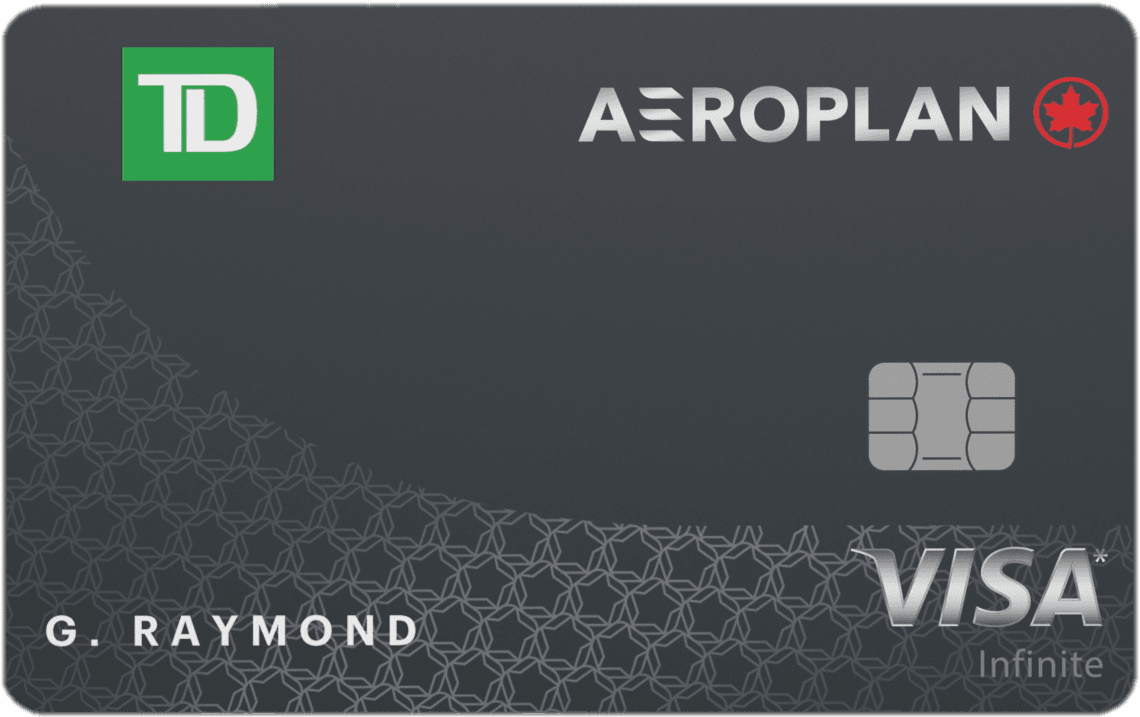

- Annual feeNo annual fee the first year
- $0 $139
- Our valuationMilesopedia first-year estimate First-year valueWelcome bonus$1,000Annual fee rebated$139Total$1,139Rewards on your spending are not included. The calculator that adds them from your own profile is on the card's page.
- $1,139
- Welcome offerAfter $12,000 in 12 months
- Up to 50,000 points
on TD's website
Further Information
- Aeroplan guide: everything you need to know about the program in 2026
- Best credit cards, to compare all options beyond Aeroplan
- Subscribe to our newsletter so you do not miss any follow-up to this story
Compare Aeroplan cards
While the program goes through this ownership transition, here are three Aeroplan co-branded cards to compare based on your spending profile.
| Credit card | Annual fee | Welcome offer | |
|---|---|---|---|
| $0 | |||
| $0 | |||
| $599 |
Aeroplan Blackstone – Frequently asked questions
Will my Aeroplan points lose value because of this transaction?
Nothing suggests that for now. No devaluation or chart change was announced with this transaction, and Air Canada retains full control over program-related decisions.
Who controls Aeroplan now?
Air Canada, at 75%. Blackstone, the Caisse de dépôt et placement du Quebec, PSP Investments, and BCI share the remaining 25% as financial investors, with the usual rights of a minority investor (access to financial information, protections in the event of a sale), but no management rights over the program’s day-to-day operations.
Can Air Canada buy back the stake that was sold?
Yes. Air Canada holds a buyback right exercisable between the 5th and the 8th year following the closing of the transaction, expected on August 17, 2026.
Is my Aeroplan co-branded credit card affected?
No. The commercial agreements between Air Canada and card issuers such as TD, CIBC, or American Express are not part of this minority equity transaction.
Is Blackstone’s return really capped?
It is structured to be: the buyback formula targets an internal rate of return of 6.5%, net of all distributions, but only if Air Canada exercises its buyback right between the 5th and the 8th year. In practical terms, Blackstone and the pension funds are aiming for a lender-like return rather than betting on Aeroplan’s future growth as true shareholders.
Does this signal a full sale of Aeroplan, like in 2005?
Nothing suggests it. Unlike the 2005 minority sale, decided by ACE Aviation Holdings (Air Canada’s parent company at the time) and which led to a full exit in 2008, Air Canada itself retains 75% and full control here, with a buyback right on the sold tranche between the 5th and the 8th year.
Our featured card
- Annual feeNo annual fee the first year
- $0 $139
- Our valuationMilesopedia first-year estimate First-year valueWelcome bonus$1,000Annual fee rebated$139Total$1,139Rewards on your spending are not included. The calculator that adds them from your own profile is on the card's page.
- $1,139
- Welcome offerAfter $12,000 in 12 months
- Up to 50,000 points
on TD's website
Our editorial integrity
Our reviews and rankings are based on an objective assessment. Advertisers do not influence our content. We may receive compensation through some links; our analysis and opinions remain independent.