Credit Card Trip Cancellation Insurance: 5 Cards and Their Conditions

Loading article…
Your credit card's trip cancellation and interruption insurance reimburses the prepaid, non-refundable costs of a trip you cancel before departure or cut short along the way, for a covered reason such as illness or death. On the 5 cards in this guide, limits range from $1,500 to $5,000 per person.
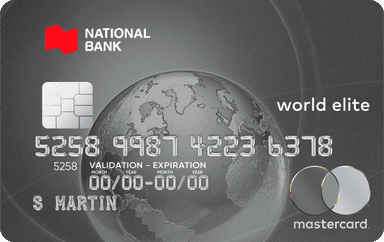
If you pay for trips partly with points, the National Bank World Elite Mastercard is the most flexible card in this guide: it covers you as soon as part of the trip is charged to the account, up to $2,500 per person for cancellation.
Our take: before you pay for separate travel insurance, check what your card already covers. Look above all at how you pay for the trip: some cards protect you with a partial payment, others require the full amount.
These 5 cards reimburse you up to $2,500 per person if you cancel before departure, and up to $5,000 if you have to cut your trip short. What sets them apart is how you need to pay for the trip to be covered. Click a card's name to open its full profile.
| Credit card | Annual fee | Welcome offer | |
|---|---|---|---|
| $0 | |||
| $0 | |||
| $150 | |||
| $120 | |||
| $0 |
Here is what each card reimburses and how you need to pay for the trip to be covered:
| Card | Cancellation (per person) | Interruption (per person) | Payment required |
|---|---|---|---|
| National Bank World Elite Mastercard | $2,500 | $5,000 | Part of the trip charged to the account |
| BMO Ascend World Elite Mastercard | $1,500 | $2,000 | Partial or full payment |
| Scotiabank Passport Visa Infinite | $1,500 | $2,500 | At least 75% (card or Scene+) |
| RBC Avion Visa Infinite | $1,500 | $5,000 | In full (card or Avion points) |
| TD First Class Travel Visa Infinite | $1,500 | $5,000 | In full (card or TD Rewards points) |
Your card gives you back travel costs that nobody else will reimburse, as long as the reason is covered. We distinguish two protections, often bundled in the same certificate: trip cancellation insurance and trip interruption insurance.
In practice, the protection kicks in at two moments:

Your card protects you, and usually your family with you:
In most cases, you are covered along with your spouse and your dependent children.
To be covered, you generally have to pay for the full trip with your credit card, or with the points from its rewards program. A few cards are more flexible: the National Bank World Elite Mastercard covers you as soon as part of the trip is charged to the account, and the Scotiabank Passport Visa Infinite Card requires at least 75% of the trip cost.

The list of covered reasons is broad. Depending on your certificate, you are reimbursed in cases such as these:

Knowing the exclusions saves you from a denied claim. As a general rule, your card does not reimburse you in these situations:
Your card follows you almost everywhere in the world, but some certificates exclude a specific country, or a single region of a country.
To check your destination, we suggest two habits:

Your card gives you back the prepaid costs that the airline, hotel or tour operator refuses to refund, up to a limit per person and per trip. On the cards in this guide, that limit ranges from $1,500 to $5,000 per person:
Take a couple who must cancel, for a covered illness, a $4,000 trip ($2,000 per person) that is fully non-refundable and paid according to their card's conditions. With a $2,500 limit per person, you get everything back; with $1,500 per person, you still pay $1,000.
| Card | Cancellation limit | Reimbursed on $4,000 | Left for you to pay |
|---|---|---|---|
| National Bank World Elite Mastercard | $2,500 per person | $4,000 | $0 |
| Desjardins Odyssey Gold Visa | $2,500 per person | $4,000 | $0 |
| BMO Ascend World Elite Mastercard | $1,500 per person | $3,000 | $1,000 |
| Scotiabank Passport Visa Infinite | $1,500 per person | $3,000 | $1,000 |
| RBC Avion Visa Infinite | $1,500 per person | $3,000 | $1,000 |
| TD First Class Travel Visa Infinite | $1,500 per person | $3,000 | $1,000 |

Do you need to cancel or cut short your trip? Call your card's insurer as soon as possible: the number is in your certificate of insurance, and a quick call keeps you from paying costs the insurer would have refused to reimburse.
Before you claim, recover everything you can without the insurance: a hotel or car rental you can cancel free of charge, the taxes on an airline ticket. The insurance then covers the non-refundable part, up to your card's limit.
The earlier you cancel, the more you recover directly, and the more likely your limit covers the rest, which is often the airfare.
Then gather these supporting documents:
For a medical claim, a simple clinic note may not be enough. For example, the TD Insurance Trip Cancellation & Interruption Plan, administered by Global Excel, requires:
Also read how your certificate handles the unused portion of a ticket. The same plan, for example, does not reimburse prepaid, unused transportation home when it pays for your early return. In addition, according to the Financial Consumer Agency of Canada (FCAC), deadlines to submit a claim usually range from 90 days to 12 months.
The FCAC recommends these steps:
You can also contact your provincial insurance regulator at any point. Note that in Quebec, the complaint process does not interrupt the deadline to take legal action.

You will find good protection on several cards, but their limits and conditions vary a lot from one card to the next.
To compare them, look at 3 aspects:
Here are 5 credit cards with trip cancellation insurance that we recommend, sorted by how you pay for your trips: partly with points, or in full with the card.
The National Bank World Elite Mastercard covers you as soon as only part of the trip is charged to the account: you can pay the rest with points without losing the protection. You get up to $2,500 per person for trip cancellation and up to $5,000 for trip interruption.
Its value lies mainly in its insurance. For $150 a year, you get the highest cancellation limit in this guide, and travel medical insurance that still covers you for 15 days per trip after age 65, where the RBC, Scotiabank and TD cards drop to 3 or 4 days.
We pick this card for its insurance first, not for its welcome bonus: the bonus changes from one period to the next, and the card's profile shows the current offer.
| Coverage | What you get |
|---|---|
| Trip cancellation | Up to $2,500 per insured person |
| Trip interruption | Up to $5,000 per insured person |
| Payment required | At least part of the trip cost charged to the account |
| Annual fee | $150 |
| Income required | $80,000 personal or $150,000 household |
on National Bank's website
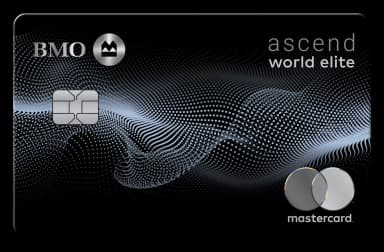
The BMO Ascend World Elite Mastercard covers you even if you pay for only part of the trip with the card, which is handy if you pay the rest with points. You get up to $2,000 per person for trip interruption, and up to $10,000 for all travellers combined.
First-year net gain: $400, and up to $767. You earn 60,000 BMO Rewards points after $5,000 in purchases within 110 days, worth $400 in travel at 150 points per dollar, and BMO waives the $150 annual fee in the first year. With $20,000 in purchases within 12 months, the bonus grows to 115,000 points. The card requires a personal income of $80,000 or a household income of $150,000.
| Coverage | What you get |
|---|---|
| Trip cancellation | Up to $1,500 per insured person, $5,000 per trip |
| Trip interruption | Up to $2,000 per insured person, $10,000 per trip |
| Payment required | Partial or full trip cost paid with the card |
| Annual fee | $150, waived in the first year |
| Income required | $80,000 personal or $150,000 household |
on BMO's website
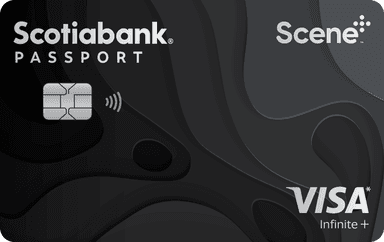
The Scotiabank Passport Visa Infinite Card charges no conversion fees on foreign currency purchases: you avoid the 2.5% most cards charge on your flights and hotels abroad. To be covered, you must charge at least 75% of the trip cost to your account or pay it with Scene+ points.
First-year net gain: $100, plus the foreign exchange fees you avoid. You earn 25,000 Scene+ points after $2,000 in purchases within 3 months (accounts opened before November 1, 2026), worth $250, minus the $150 annual fee. On $1,500 of foreign currency spending, you also avoid $37.50 in conversion fees.
| Coverage | What you get |
|---|---|
| Trip cancellation | Up to $1,500 per insured person, $10,000 per trip |
| Trip interruption | Up to $2,500 per insured person, $10,000 per trip |
| Payment required | At least 75% of the cost charged to the account and/or paid with Scene+ points |
| Annual fee | $150 |
| Income required | $60,000 personal or $100,000 household |
on Scotiabank's website
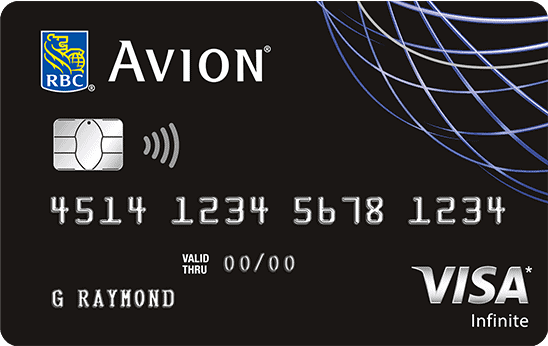
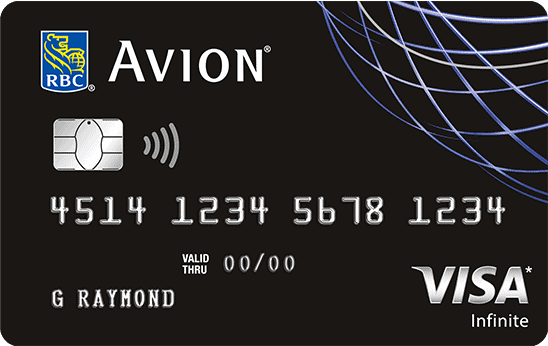
The RBC Avion Visa Infinite Card reimburses up to $5,000 per person if your trip is interrupted. Pay for the trip in full with the card, with your Avion points, or with both: if you use only some of your points, the rest must be charged to your Avion card to be covered.
First-year net gain: about $815. You earn 55,000 Avion points in the first year (35,000 on approval and 20,000 after $5,000 in purchases within 6 months, for applications before November 25, 2026), worth about $935 at our valuation of 1.7¢ per point, minus the $120 annual fee.
| Coverage | What you get |
|---|---|
| Trip cancellation | Up to $1,500 per insured person, $5,000 total |
| Trip interruption | Up to $5,000 per insured person, $25,000 total |
| Payment required | Full trip cost paid with the card and/or Avion points |
| Annual fee | $120 |
| Income required | $60,000 personal or $100,000 household |
on RBC's website
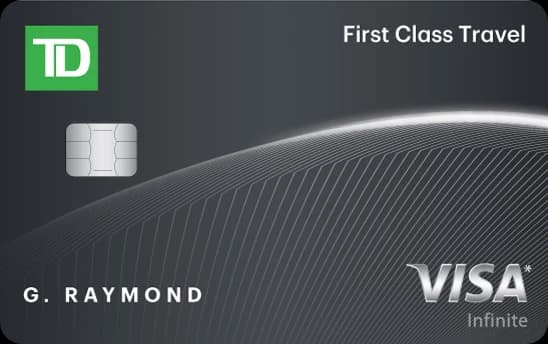
The TD First Class Travel Visa Infinite Card gives you up to $5,000 per person for trip interruption, like the RBC Avion card. To be covered, you must pay for the full trip with the card, with your TD Rewards points, or with a mix of both.
First-year net gain: about $800. You earn up to 160,000 TD Rewards points (20,000 on your first purchase and 140,000 after $7,500 in purchases within 180 days), worth about $800 at our valuation of 0.5¢ per point, and the $139 annual fee is rebated in the first year.
| Coverage | What you get |
|---|---|
| Trip cancellation | Up to $1,500 per insured person, $5,000 total |
| Trip interruption | Up to $5,000 per insured person, $25,000 total |
| Payment required | Full trip cost paid with the card and/or TD Rewards points |
| Annual fee | $139, rebated in the first year |
| Income required | $60,000 personal or $100,000 household |
on TD's website
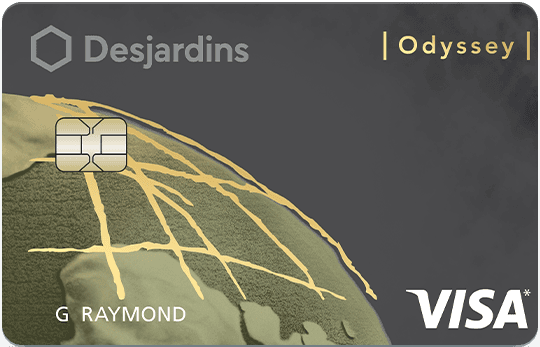
The Desjardins Odyssey Gold Visa Card reimburses up to $2,500 per person if you cancel before departure, with no limit if you have to interrupt your trip, as long as you paid for your ticket with the card. For $110 a year, it also keeps your travel medical insurance at 15 days per trip from age 65, up to age 75.
If you often pay for trips partly with points, the National Bank World Elite Mastercard remains our first choice: it covers you as soon as part of the trip is charged to the account, with the highest cancellation limit in this guide. If you pay for everything with your card, the RBC Avion Visa Infinite Card and the TD First Class Travel Visa Infinite Card give you $5,000 per person for interruption and a much stronger welcome bonus.
Before you book, reread your card's certificate of insurance: limits and exclusions change when a card is redesigned. To keep your favourite cards at hand and receive member-only offers, create your free member account.
If the above credit cards don’t suit you, there is another option. soNomad offers affordable cancellation and interruption insurance.
on National Bank's website
Our reviews and rankings are based on an objective assessment. Advertisers do not influence our content. We may receive compensation through some links; our analysis and opinions remain independent.