58% of travelers who leave without insurance are under 35

Loading article…
It’s easy to want to overlook coverage when traveling, especially when you’re young. Having experienced a skiing accident in the Hautes-Alpes, in Montgenèvre, it reminded me just how much insurance can make a difference.
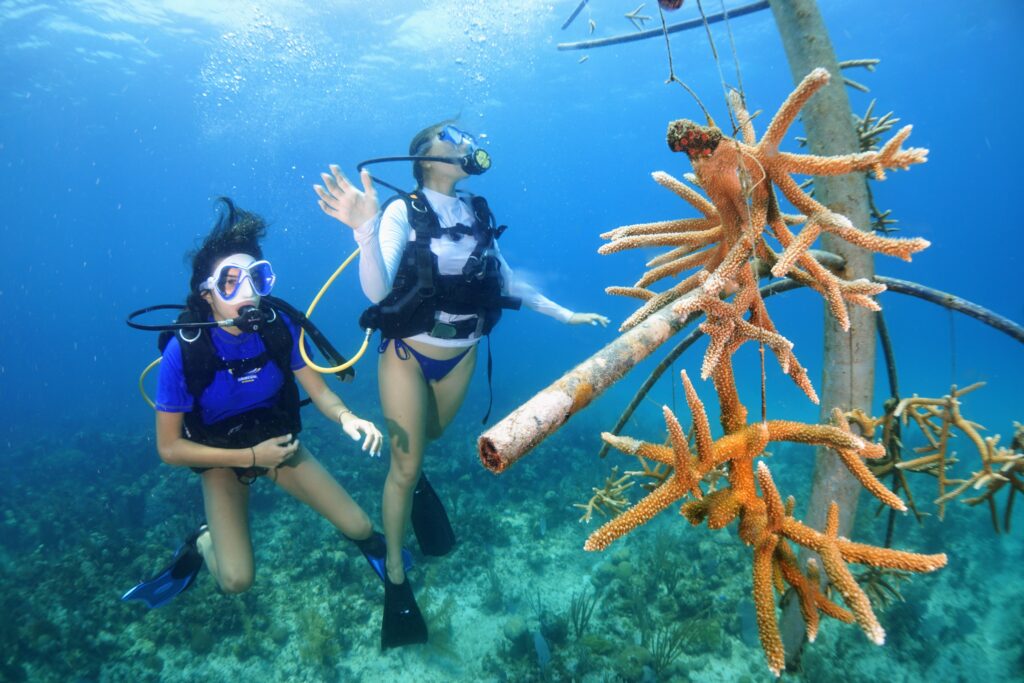
Riding a scooter for the first time while traveling? Trying an introductory scuba dive, jet skiing, or go-karting? These are exactly the types of improvised activities that fall outside basic coverage, yet we tried them ourselves in our early days.
For example, a fall a few years ago resulted in a torn ACL and mandatory surgery upon my return home (fortunately a 6-hour drive and not a flight). I hadn’t taken out supplemental insurance for that trip, but my credit card insurance still covered part of the unexpected costs: the stretcher and the rescuers to get me down the mountain, the on-site X-ray, and the medication. These are details you never think about until they happen.
I believe it’s important to open the discussion on insurance, especially for young people aged 18-34, as they are the ones most tempted by risky experiences.
The travelers most at risk are also those who insure themselves the least. The 18-34 age group engages in more physical activities, budget destinations, and improvised stays—exactly the profile most exposed to accidents. Yet they are the ones who most often leave without protection, a central issue for any youth travel insurance.
The latest travel insurance industry data confirms this gap. The Canadian market is expected to generate approximately $2.7 billion in 2026, for nearly 9.2 million policies—a lower volume than in 2019 (9.5 million), but a higher value due to rising premiums. In this market, one reality remains constant from year to year: the younger you are, the less insured you are.
According to industry data, 71% of Canadian travelers aged 18 to 34 leave with travel insurance, compared to 84% of those aged 55 and over. A 13-point gap between the two ends of the traveling clientele.
| Age group | Travel insurance rate |
|---|---|
| 18-34 years old | 71 % |
| 55 and over | 84 % |
Insurance rates also vary significantly from one Canadian region to another. British Columbia has the highest rate in the country, while Quebec brings up the rear.
| Province / region | Travel insurance rate |
|---|---|
| British Columbia | 84 % |
| Alberta | 80 % |
| Ontario | 80 % |
| Atlantic Provinces | 77 % |
| Saskatchewan / Manitoba | 75 % |
| Quebec | 73 % |
An 11-point gap separates British Columbia from Quebec, the least insured province in the country. Combined with the generational gap, this figure paints a precise profile: a young Quebec traveler aged 18 to 34 is statistically among the least likely to have travel insurance in Canada.
The consequence of this gap is directly visible in the composition of the uninsured group: 58% of travelers who leave without any coverage are under 35. More than one in two uninsured travelers belongs to a generation that travels more frequently, for longer periods, and often in more exposed conditions (hostels, local transport, outdoor sports).
The purchasing behavior of 18-34 year olds also differs from that of older generations. This group seeks more online convenience (38% vs. 27% on average) and even seeks an agent’s advice slightly more often than 35-54 year olds (35% vs. 34%). Conversely, a recent change in health status rarely motivates their purchase decision: only 10% of 18-34 year olds cite this reason, compared to 27% of those aged 55 and over.
These figures come from an exclusive Signal49 Research report shared with us by soNomad. Among uninsured travelers, three reasons come up most often, according to industry data:
These three reasons share a common point: they are based on an assessment of risk, not its actual absence. A three-day stay can include a fall, food poisoning, or a scooter accident just as easily as a three-week stay.
The most striking contradiction concerns the destination. 41% of uninsured travelers head to the United States, a market where medical costs are among the highest in the world. An uncomplicated appendicitis already costs tens of thousands of dollars without insurance. Leaving without coverage for this type of destination is like betting big that nothing will happen.
Unintentional injuries are among the leading causes of travel-related death for Canadians, and 15-44 year olds represent the highest proportion of this injury-related mortality, according to the Institut national de santé publique du Québec. Travel medicine research highlights the same top causes:
Who hasn’t wanted to try a new activity while traveling? Diving, surfing, ATVing, and skiing! Yet these activities are frequently excluded from a basic travel insurance contract. To be covered, they almost always require the addition of a sport or adventure option, purchased before departure. Did you know?
This is precisely where many young travelers get caught. About 3 out of 10 students on exchange try to add this coverage AFTER an accident, once injured or already in the hospital. At that stage, it’s too late: a risky activity option must be activated before departure, not after the claim. No insurer accepts retroactively adding coverage for the activity that caused the accident.
The reflex to adopt is simple: if your itinerary includes a physical activity a bit more intense than a quiet hike, check your contract’s list of exclusions before booking the flight, not once you’re there.
Most of these mistakes share a common point: they can be fixed in a few minutes before departure, but become impossible to correct once the accident has occurred.
Many young travelers leave thinking their credit card takes care of the insurance issue. This is partly true, but rarely to the extent they imagine.
Travel insurance linked to credit cards has specific limits: a maximum length of stay beyond which coverage ceases, a list of excluded sports activities that largely overlaps with classic contracts, an exclusion for alcohol consumption at the time of the accident, and a requirement to declare pre-existing medical conditions. A young traveler relying on their card for a three-week surfing trip, without having checked the maximum covered duration or sports exclusions, can find themselves in exactly the same situation as a traveler without any insurance.
Our article Covered by Your Credit Card? What You Need to Know Before You Leave details these conditions card by card: maximum duration, age limit, excluded activities, and steps to take before an accident, not after. To compare travel protections between cards, also consult our comparison of the best credit cards for travel insurance.
For a complete picture of interprovincial travel, consult our article Traveling in Canada from one province to another: are you well insured? Digital nomads and long-term stays abroad have their own blind spots, detailed in our article on digital nomad travel insurance. And if you are receiving visitors from abroad, our guide on travel insurance in Canada for foreign visitors explains what the provincial health system does not cover for your guests.
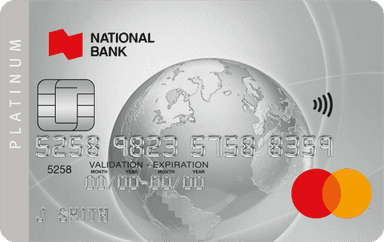
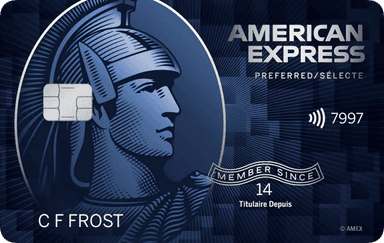
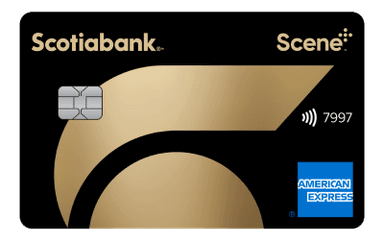
Not all cards are equal in this regard. Here are four cards accessible to young travelers (no or low minimum income required) that include solid travel insurance, verified in our credit card comparison tool.
| Card | Annual Fee | Minimum income | Medical Insurance | Cancellation/Interruption | Baggage | Flight delay |
|---|---|---|---|---|---|---|
| National Bank Platinum Mastercard® | $70 | None | $5,000,000 / 10 days | Yes | Yes | Yes |
| SimplyCash® Preferred Card from American Express | $119.88 | None | $5,000,000 / 15 days | No | Yes | Yes |
| Scotiabank Gold American Express® Card | $120 | $12,000 | $1,000,000 / 25 days | Yes | Yes | Yes |
| CIBC Aventura Gold Visa Card | $139 | $15,000 | $5,000,000 / 15 days | No | Yes | Yes |
The National Bank Platinum Mastercard stands out due to its complete lack of a minimum income requirement, a criterion that immediately eliminates most premium cards on the market for a young person without an established credit history. It also covers all five protections analyzed, on par with the Scotiabank Gold American Express® Card, which requires a personal income of $12,000, one of the lowest thresholds on the market for this level of protection.
| Credit card | Annual fee | Welcome offer | |
|---|---|---|---|
| $0 | |||
| $119.88 | |||
| $120 | |||
| $0 |
soNomad allows you to get travel insurance in minutes, without an intermediary, with sport and adventure options activatable upon enrollment. You enter your destination, dates, and planned activities, and you get a price immediately, before you leave rather than after an accident.
Our full review of soNomad and its travel insurance plans details the available options and exclusions to know. soNomad customer service: 1-855-360-7225, Monday to Friday from 8:30 AM to 5:00 PM.

An accident can ruin a trip in seconds, as I experienced with my ski fall. Insurance, whether supplemental or linked to your card, remains the only safety net that prevents you from adding a hefty bill to an already painful injury. And in case you were wondering, my knee is as good as new now.
Only 71% of 18-34 year olds leave with travel insurance, compared to 84% of those aged 55 and over. Young travelers often judge their stays too short to justify insurance, or consider it unnecessary. This reasoning fails to account for the fact that accidents happen just as easily during a three-day stay as a three-week stay.
Road and scooter accidents, falls, drowning, adventure sports accidents (diving, surfing, skiing, ATVing), and balcony falls appear most often in travel medicine research. Alcohol is a recurring aggravating factor in several of these categories.
No. Guarantees for risky activities (diving, surfing, backcountry skiing, ATVing) must be activated before departure. About 3 out of 10 exchange students try to add this protection after an accident, but no insurer accepts a retroactive request once the claim has occurred.
Not always. Credit card insurance imposes a maximum length of stay, often excludes the same risky sports as classic contracts, and refuses coverage if alcohol was involved at the time of the accident. Our article Covered by Your Credit Card? What You Need to Know Before You Leave details these conditions.
In the majority of contracts, an accident occurring while the traveler was under the influence of alcohol may be excluded from coverage, in whole or in part. Alcohol consumption is also a direct risk factor: it reportedly multiplies the risk of drowning by 16 according to medical research, and is associated with more than 63% of accidental fall-related deaths among 18-24 year olds in the United States.
It depends entirely on the country. An appendectomy without insurance costs about $15,000 USD to $35,000 USD in the United States (and can exceed $50,000 USD with complications), compared to about €1,500 to €4,000 in France and $1,800 USD to $5,000 USD in Thailand in a private hospital. These amounts are orders of magnitude: the actual cost varies by facility, severity, and length of hospitalization.
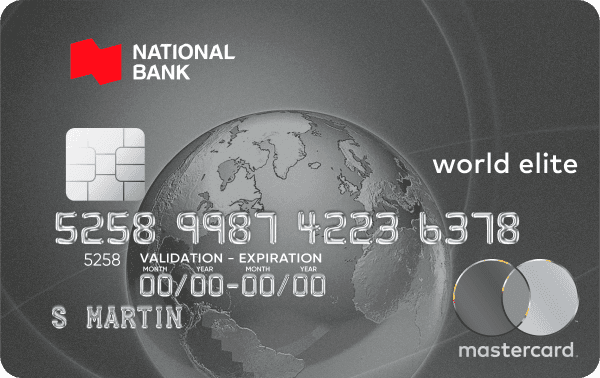
on National Bank's website
Our reviews and rankings are based on an objective assessment. Advertisers do not influence our content. We may receive compensation through some links; our analysis and opinions remain independent.