

Star Alliance: The Network and Its 25 Member Airlines

Are you familiar with Star Alliance? It is the largest airline alliance in the world.
If, like the majority of Milesopedia’s thousands of members, you are enrolled in Air Canada’s Aeroplan loyalty program, you have de facto access, when available, to seats on flights from the 25 partner airlines of Star Alliance.
And that’s not counting the other privileges and benefits offered by the consortium.
What is the Star Alliance Network and how does it work?
Star Alliance was the first major airline alliance to be formed in 1997. It was followed by two others, Skyteam and One World, but remains to this day the most important one, of which Air Canada is a member. Its head office is located at Frankfurt Airport in Germany, and a second office opened in Singapore in 2021.
Some facts:
- The Star Alliance network reaches 98% of the world’s countries, exactly 195 countries and 1,300 destinations. It is therefore possible to travel around the world with Aeroplan points.
- The combined fleet of the member partners is over 5,000 aircraft, which in non-pandemic times make approximately 19,000 daily departures.
- Star Alliance has won several aviation awards (e.g. Air Transport World Market Leadership Award).
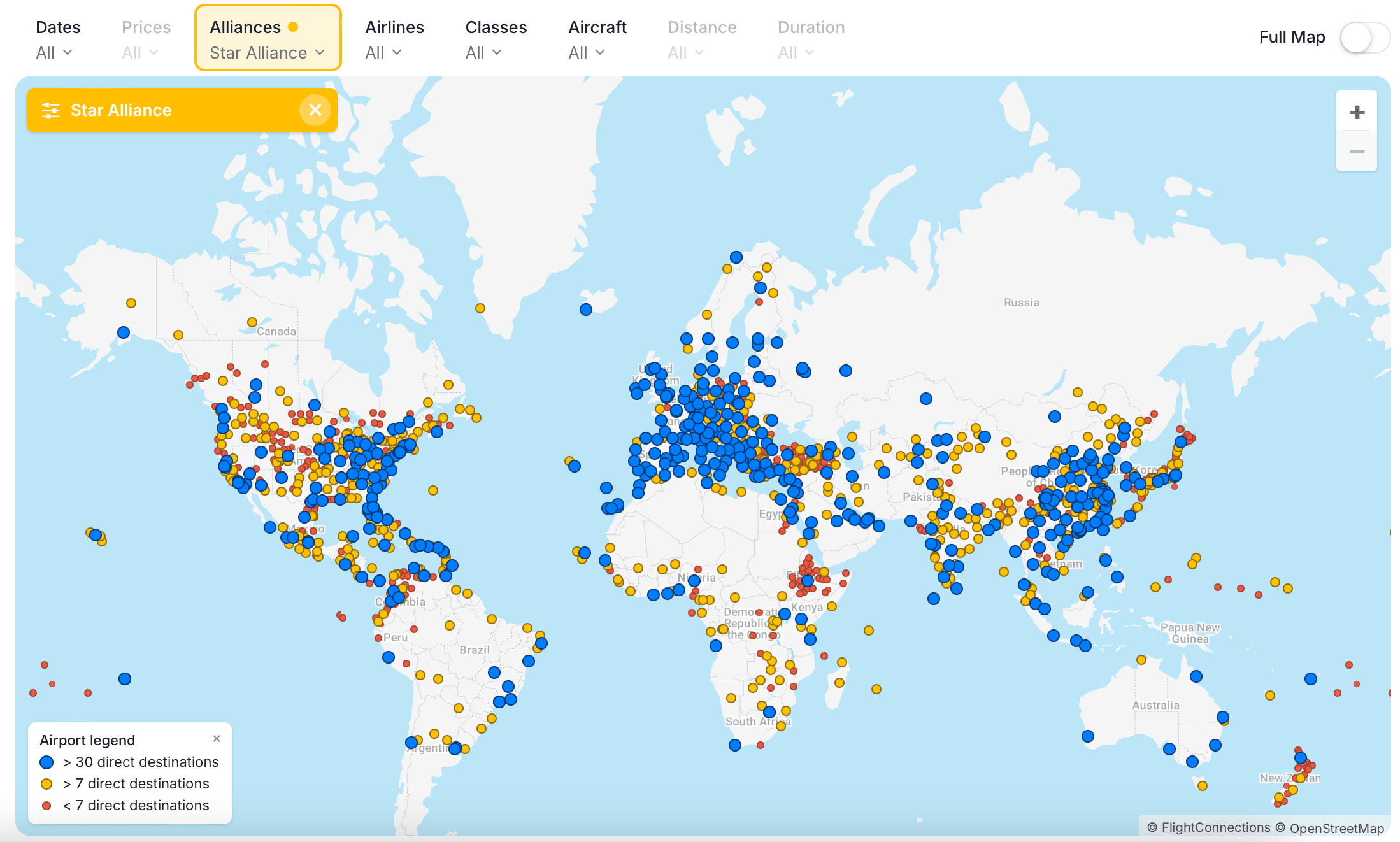
The goal of this grouping is to:
- facilitating customer transfers within this global transport network
- Recognize and reward frequent flyers of these airlines
Star Alliance is proud to report that its 50 employees come from 15 different countries.
What Are the Three Major Airline Alliances?
The three main airline alliances in the world are:
- Star Alliance, the largest, with 25 members.
- SkyTeam, which includes airlines such as Air France-KLM and Delta Airlines.
- Oneworld, which includes carriers such as American Airlines, British Airways and Qatar Airways.
These alliances allow passengers to benefit from a vast global network and loyalty benefits across several partner airlines.
Which Airlines Are Part of the Star Alliance?
Air Canada and United Airlines: Two Star Alliance Pillars
Together, United Airlines and Air Canada form a solid base for the Star Alliance North American network, facilitating connections between hundreds of local and international destinations. These carriers offer global connectivity from the United States and Canada.
Air Canada and Its Affiliates
As Canada’s leading carrier, Air Canada is an indispensable pillar for Canadian and international travelers within Star Alliance. Here’s why:
- Aeroplan: A program where it is very easy to accumulate points daily in Canada with credit cards like the American Express Cobalt® Card. Passengers can use points on Air Canada flights, but also on those operated by other Star Alliance members, increasing reward opportunities.
- Regional Affiliates: Regional partners like Air Canada Jazz or Air Canada Express provide unparalleled national coverage, efficiently connecting small and large Canadian cities to the global Star Alliance network.
- Access to Star Alliance privileges: Travellers earning points via Aeroplan can enjoy extended benefits such as access to VIP lounges, greater flexibility for connecting flights, and rewards on all member airlines.
United Airlines: A Key Player in North America and Abroad
With one of the most extensive networks in North America, United Airlines plays an essential role within Star Alliance. Its integration into the alliance allows it to serve hundreds of destinations worldwide, facilitating connections with other Star Alliance member airlines. With major hubs like Chicago, Denver, and Newark, United serves as a key gateway between North American and international destinations, strengthening Star Alliance’s global connectivity.
List of Star Alliance Member Airlines (Star Alliance Carriers)
Here is the complete list of the 25 Star Alliance member airlines:
- Aegean Airlines
- Air Canada
- Air China
- Air India
- Air New Zealand
- ANA
- Asiana Airlines (leaving the alliance on December 16, 2026)
- Austrian
- Avianca
- Brussels Airlines
- Copa Airlines
- Croatia Airlines
- Egyptair
- Ethiopian Airlines
- EVA Air
- Polish Airlines LOT
- Lufthansa
- Shenzhen Airlines
- Singapore Airlines
- South African Airways
- SWISS
- THAI
- TAP Air Portugal
- Turkish Airlines
- United

Each member has its own rewards program, and it is not necessary to register for more than one to benefit from access to other airlines’ flights unless availability is limited. Indeed, it is possible that United flights may not appear on Aeroplan, but only on their in-house program, United MileagePlus. Consequently, it can be interesting to have an account if you wish to buy points to travel at lower costs on specific flights or to transfer points there via transferable points like Marriott Bonvoy.
Otherwise, it is indeed better to primarily accumulate Aeroplan points to travel on Star Alliance flights; points are managed separately from one airline to another and cannot be transferred or combined into a single rewards program.
In addition, miles flown, segments used and dollars invested in the same loyalty program will lead to elite status that will open up benefits.
For us Canadians, Aeroplan is the priority program. Its currency allows us to collect and redeem points to fly on Star Alliance network airlines.

Earn and Redeem Points on Star Alliance Member Partners
I refer you to the Ultimate Aeroplan Guide to understand how to accumulate this currency, which can then be used to fly on Star Alliance member airlines.
But remember that earning points involves:
- Bonuses from credit cards affiliated with Aeroplan,
- Credit card bonuses in points transferable to Aeroplan,
- Make purchases charged to these credit cards,
- purchases made on the Aeroplan eStore,
- Flights purchased on Air Canada and Star Alliance partners,
- and more.
To use points to book flights, all you need to do is register with the Aeroplan program and simulate journeys paid for with points or cash, whichever suits you best.
Partner airlines appear as choices when Air Canada does not offer these flights and they have award seats available.
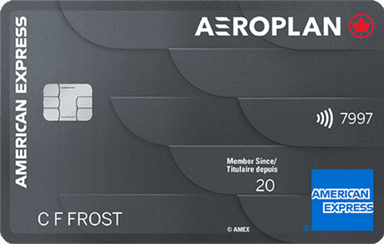
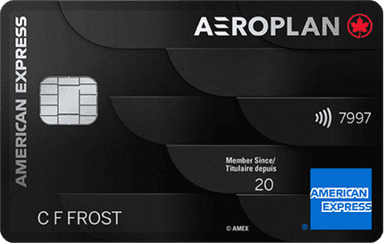
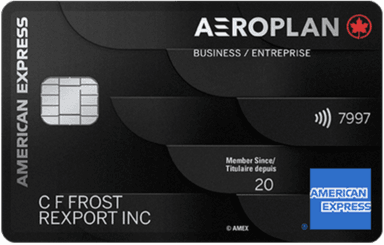
| Credit card | Annual fee | Welcome offer | |
|---|---|---|---|
| $0 | |||
| $120 | |||
| $599 | |||
| $0 | |||
| $599 | |||
| $599 |



Etihad Airways and Emirates With Star Alliance
Although Etihad Airways and Emirates are not members of Star Alliance, they maintain partnerships with Air Canada’s Aeroplan program. These collaborations offer Aeroplan members opportunities to accumulate and use points when traveling with these prestigious airlines. Indeed, their products, especially those in premium class, are truly appreciated by travelers.
Aeroplan members can use their points to book flights with these two airlines:
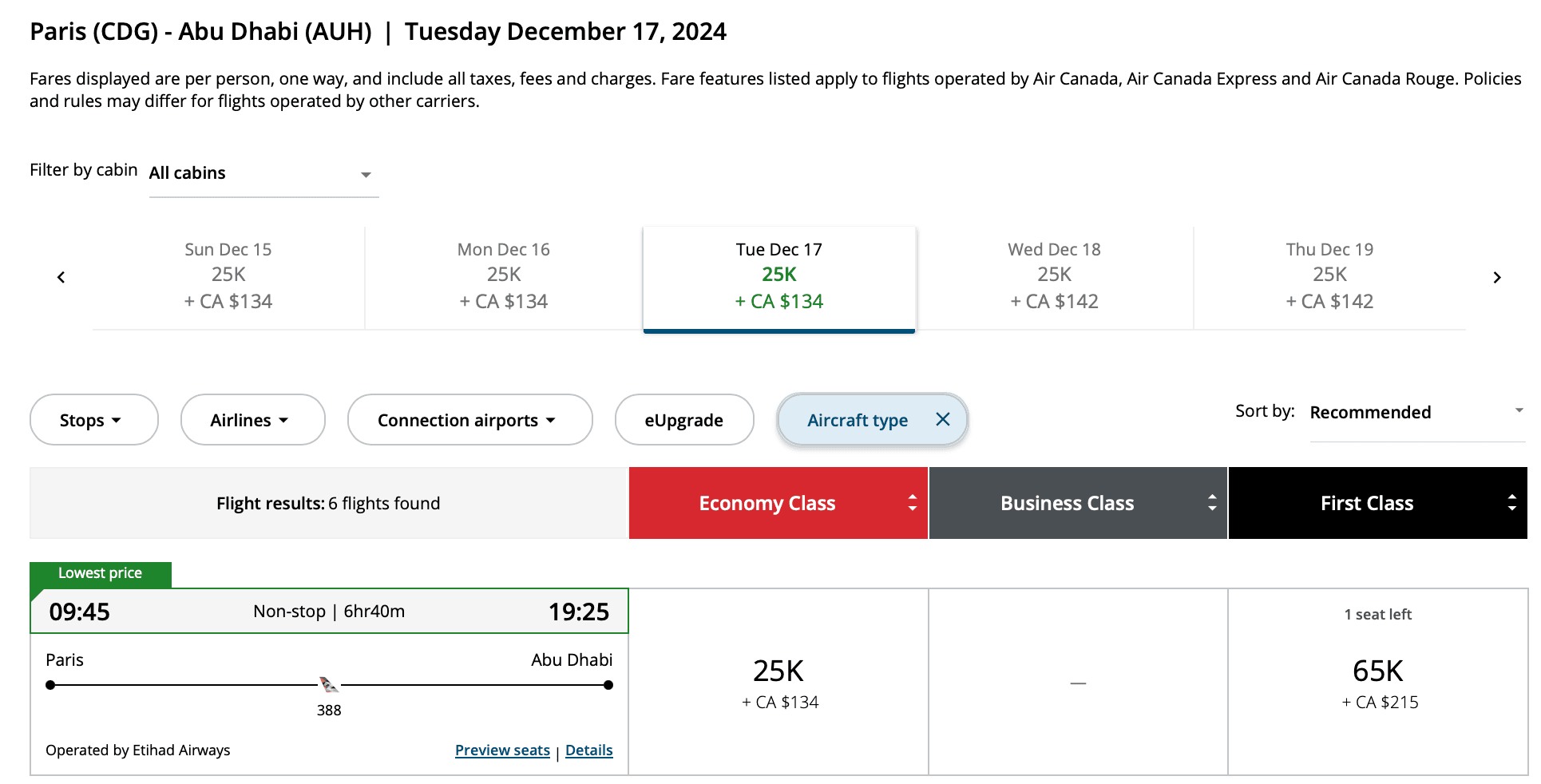
- Etihad Airways: Flights can be booked using Aeroplan points, offering options to over 76 destinations served by Etihad. For example, a first-class flight between the United Arab Emirates and Europe can be booked for 65,000 Aeroplan points, representing an attractive opportunity for comfort-seeking travellers.
- Emirates: Members can redeem their points for Emirates flights, with a dedicated fare structure. For example, an economy class flight from 2,001 to 5,000 miles can cost between 21,000 and 65,000 points, depending on availability and demand. Emirates first class is also available on Aeroplan!
Star Alliance: Network Benefits
The Customer Experience
Among the advantages of travelling with airlines that are members of an alliance like Star Alliance, one can think of a synergy that enhances the customer experience:
- A common ticketing system,
- Easy-to-book tickets to many destinations around the around the world,
- Check-in and baggage services that are one-stop shopping,
- optimized connections – notably through the presence of dedicated teams in major airports -,
- Customized services for large corporate clients travelling in business class. An example is Corporate Plus for multinational corporations.

Elite Status
Regardless of which loyalty program you belong to among the 25 Star Alliance member airlines, all allow you to achieve elite status levels according to their own criteria.
These can then be aligned with the Star Alliance consortium’s elite statuses. This provides recognition for frequent travelers across the partner networks.
The two Star Alliance Status levels are:
- Star Alliance Silver
- Star Alliance Gold
They are associated with benefits and privileges.
For example, Aeroplan:
- 25,000 Status Qualifying Miles (SQM), or 25 Status Qualifying Segments (SQS), or $3,000 Status Qualifying Dollars (SQD) grant Air Canada 25K status, which is equivalent to Star Alliance Silver.
- 50,000 Status Qualifying Miles (SQM), or 50 Status Qualifying Segments (SQS), or $6,000 Status Qualifying Dollars (SQD) grant Air Canada 50K status, equivalent to the highest status in Star Alliance, which is Star Alliance Gold.

Star Alliance Silver Status
Star Alliance Silver status gives you:
- Priority on the waiting list when there are no more seats available on the desired flight
- Priority on the list of passengers waiting for a flight
Star Alliance Gold Status
Star Alliance Gold status provides these same two benefits in addition to:
- A free upgrade to business class on the Heathrow Express at no extra charge,
- Priority check-in at the airport when Star Alliance Gold sign is present,
- Priority baggage delivery,
- Priority boarding with business and first class passengers,
- An additional baggage allowance,
- Fast passage through the security zones when the « Gold track security » has been implemented,
- Access to over 1,000 partner airline airport lounges, with one guest

Tools
Star Alliance offers customers of the airlines it serves two tools to support the planning of major trips:
They are available in French, English, Japanese, German, Spanish, Portuguese and Chinese.
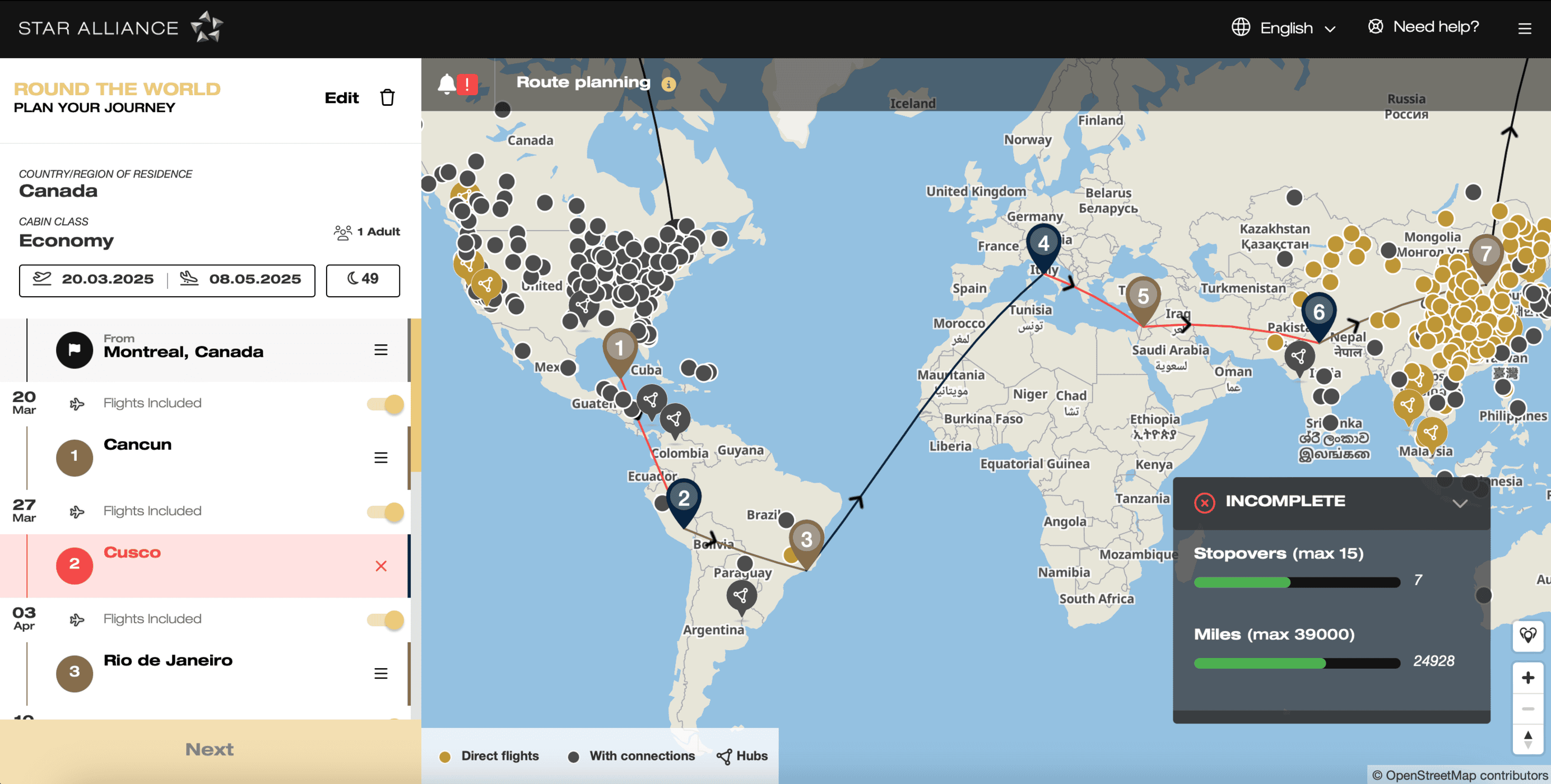
In both cases, the number of people who will travel, the classes and the targeted dates are indicated first. Finally, the targeted route.
The latter will be validated or not by the tool. If necessary, it will point out what needs to be corrected. For example, your next stop must be on the other side of the Pacific.
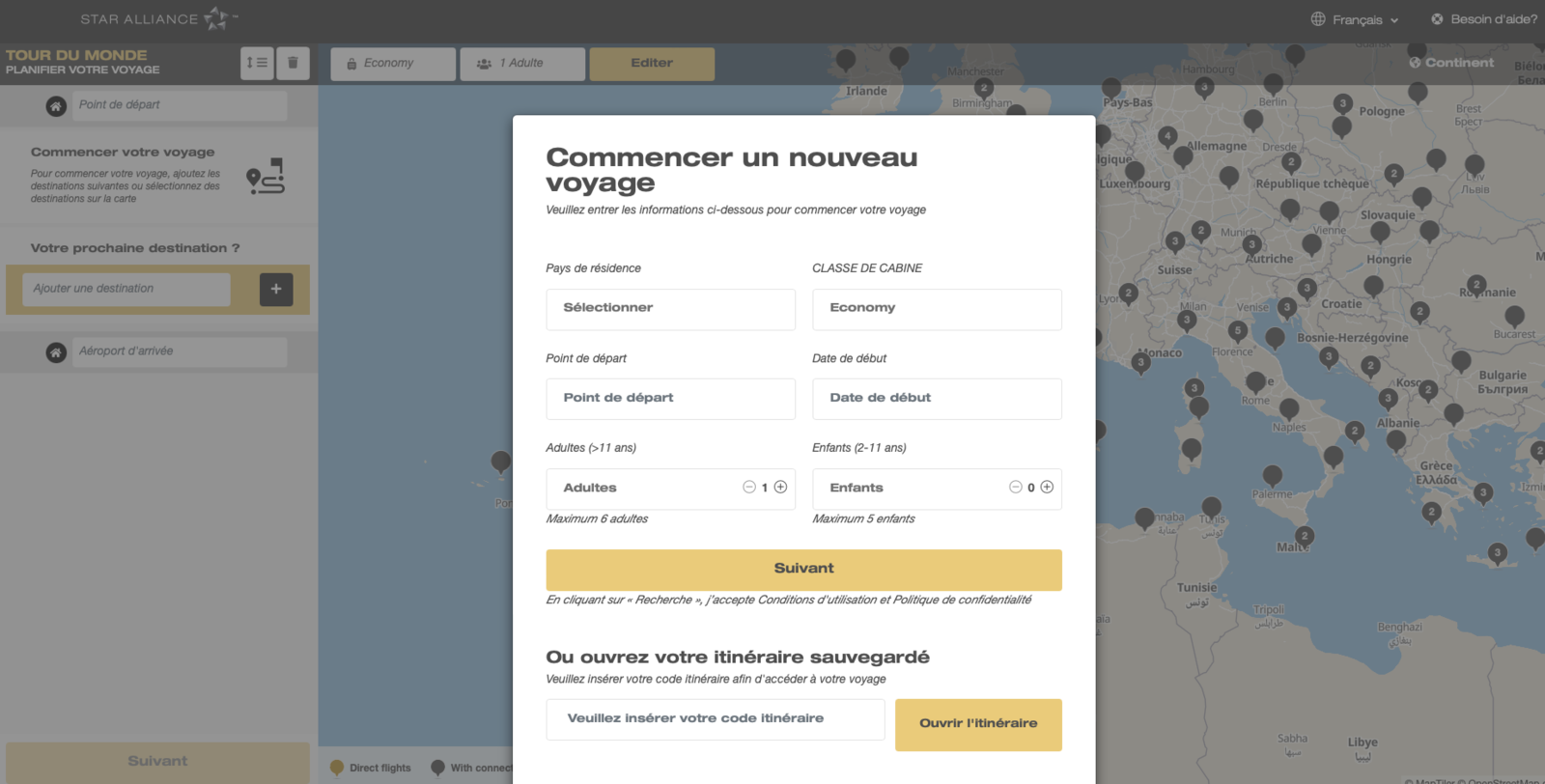
Using Star Alliance tools is child’s play. They highlight flight schedules, the airlines operating the routes, as well as applicable fares. It’s interesting to know the availability of popular airlines and the type of aircraft planned for the journey.
Then, it’s easy to go back to the Aeroplan website with this information in hand to estimate how much it would cost in points. And if the cash rate is better for you, it’s this way: Book and Fly.
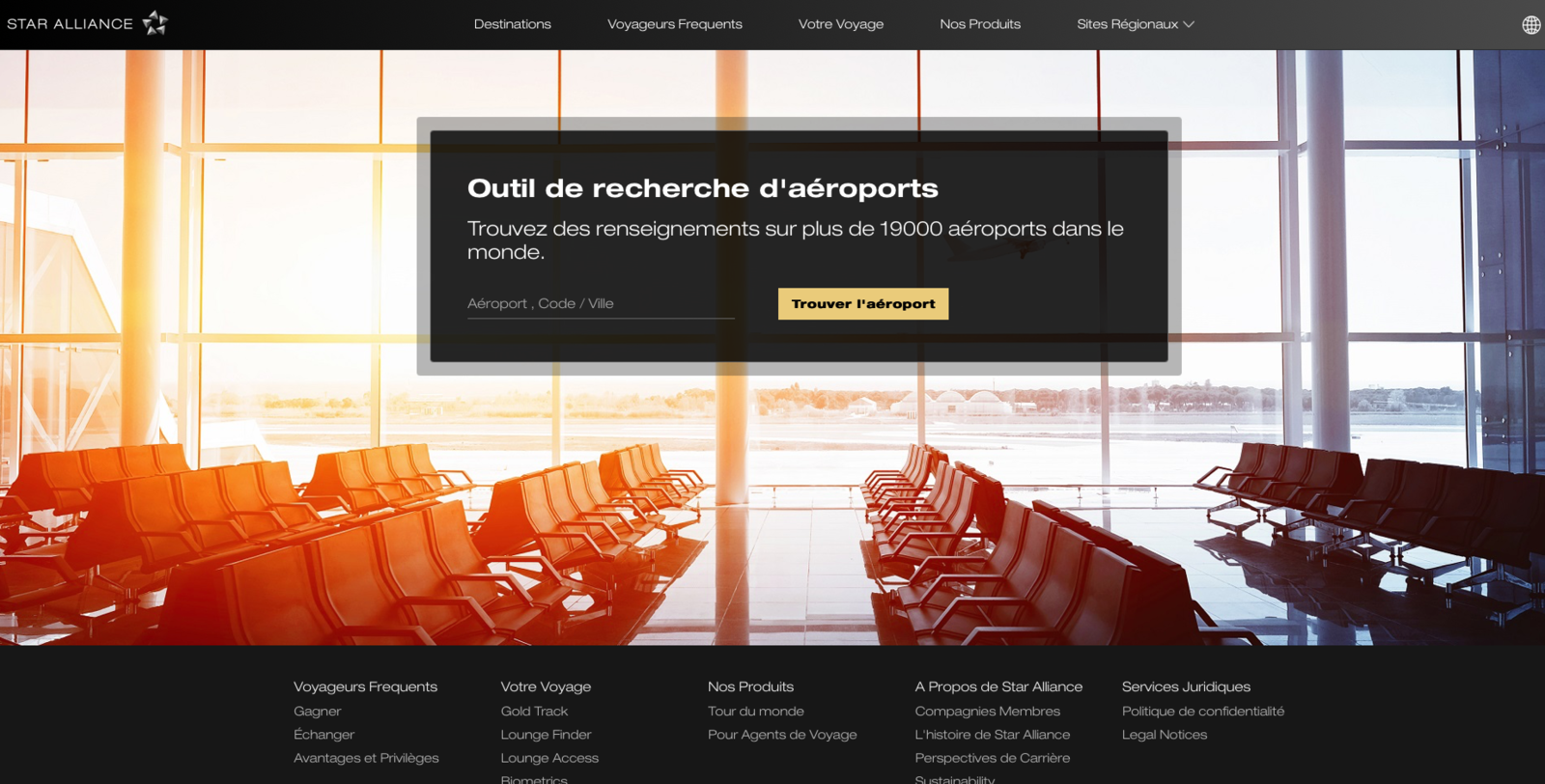
Last but not least, Star Alliance’s airport search tool enables you to see at a glance which lounges are present, their schedule and location. In addition, it shows the airlines that serve this airport.
Routes by Theme
If you need some inspiration, Star Alliance has several itineraries on its website based on the destinations covered by member airlines. The themes are really appealing.
For example, there are:
- Around the rooftops of the world for students
- Animals on land, for families
- Romantic Journey for honeymooners
- and several other themes.

There is even an itinerary skeleton ready to be refined to build a world tour to visit all the Wonders of the World!
Network Commitments
Star Alliance and its member airlines are actively pursuing their commitments to environmental, social, and corporate sustainability. As the first and largest global airline alliance, Star Alliance plays a crucial role in the transition to more sustainable aviation, collaborating with partners both inside and outside the aviation industry.
Member airlines have accelerated research and development, implementing significant changes to ensure a sustainable future for the aviation sector. For example, Air Canada recently installed air quality sensors on one of its Airbus A330s, in partnership with IAGOS, to collect essential data for climate change and air quality research.
Additionally, United Airlines now uses a sustainable aviation fuel (SAF) blend for its flights departing from San Francisco, joining its operations in Los Angeles and Amsterdam, with London planned for later this year.
These initiatives illustrate the ongoing commitment of Star Alliance and its members to promoting greener aviation and contributing to a sustainable future for the industry.
Conclusion
The Star Alliance Network ranks as a leader with its many member airlines covering 98% of the world’s countries. Its experience, based on 25 years of service, has proven that connectivity is ideal when aiming for a better customer experience.
Rewards granted to frequent flyers loyal to their member airline further enhance the value of travel. Star Alliance tools facilitate their planning.
We congratulate the initiative that recently allowed more travelers to benefit from access to the six Star Alliance airport lounges by paying for entry.
Finally, we hope that the network’s commitments to the planet, which is in great need, can continue to be part of many actions that truly bear fruit. As travelers, we want to continue to fly; however, we now know that it is not without consequence. Let’s find the right balance together.

Continue reading with the latest news, such as the launch of Air India’s daily non-stop Toronto-Delhi flights on its new 787-9s, bookable with your Aeroplan points:
Which credit card should you choose for your travels?
If you travel regularly, the choice of credit card makes all the difference in terms of travel insurance, point accumulation, airport lounge access, or conversion fees. Use our credit card comparison tool to filter through 200+ Canadian offers according to your needs, or consult our top travel credit cards directly, updated every month. Our favorite for Star Alliance travelers: the National Bank World Elite Mastercard® with its $150 annual credit and DragonPass access.
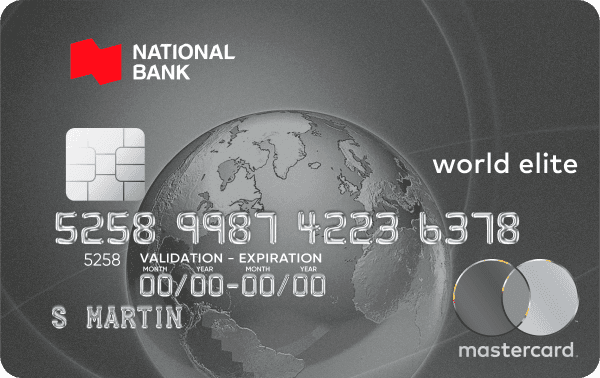

- Annual fee
- $0 $150No annual fee the first year
- No annual fee the first year
- Our valuation
- $150Milesopedia first-year estimate First-year valueAnnual fee rebated$150Total$150Rewards on your spending are not included. The calculator that adds them from your own profile is on the card's page.
- Milesopedia first-year estimateFirst-year valueAnnual fee rebated$150Total$150Rewards on your spending are not included. The calculator that adds them from your own profile is on the card's page.
- Welcome offer
- First Year Annual Fee Rebate
- $150 annual fee rebated
- Ends Nov 4, 2026
on National Bank's website
Also read: Star Alliance member Air India is launching daily non-stop flights between Toronto and Delhi on its new 787-9s, bookable with your Aeroplan points.
Our featured card
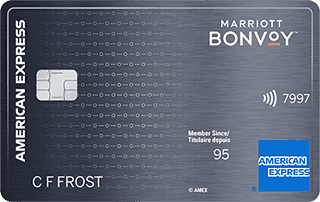

- Annual fee
- $120
- Our valuation
- $990Milesopedia first-year estimate First-year valueWelcome bonus$990Total$990Rewards on your spending are not included. The calculator that adds them from your own profile is on the card's page.
- Milesopedia first-year estimateFirst-year valueWelcome bonus$990Total$990Rewards on your spending are not included. The calculator that adds them from your own profile is on the card's page.
- Welcome offer
- Up to 110,000 points
- Ends Sep 22, 2026
on American Express's website
Apply with confidence — no impact on your credit scoreApply with confidenceCheck whether your application will be approved before you submit it, with no impact on your credit score*When you apply for a personal American Express Credit Card, we will tell you whether you are eligible without affecting your credit score. So you can apply with confidence.*Instant decisions are only available for consumer Card applications (also called “personal Cards”).
Our editorial integrity
Our reviews and rankings are based on an objective assessment. Advertisers do not influence our content. We may receive compensation through some links; our analysis and opinions remain independent.