

Buying Points and Miles: The Complete Guide by Program
Buying points or miles can save you hundreds of dollars on a business class ticket, or cost you money on a trip you could have paid for in cash for less. It all depends on the real price you pay per point, the taxes, the currency and the reward you have in mind. Each program sells its points on its own platform, such as the official Aeroplan buy points page, and promotions change almost every month.
This guide brings together the base prices and the best recent promotions of the main programs available to Canadians, as of September 29, 2026. It also shows how to calculate whether a purchase pays off, and which options cost less, such as the welcome offers on the best credit cards.
Buying points: the short answer
Outside of a promotion, buying points almost always costs more than the value you get from them. For example, Aeroplan sells points at a base price of 3.75¢ CAD, while Milesopedia values the Aeroplan point at 2¢ CAD in our valuation of rewards points. During a promotion, however, the price can drop below the value of the point, and buying makes sense for a specific reward.
The rule comes down to three conditions. First, you have found the reward and confirmed availability. Next, the cost per point, including taxes and foreign exchange fees, stays below the value you will get. Finally, you only buy the points you are missing.
- Reward already found: you are a few thousand points short of a business class flight or a high-season night.
- Promotion below the point's value: the cost per point, taxes included, falls below the program's reference value.
- Buying at the time of booking: Aeroplan offers the missing points while you book a flight.
- No specific trip: points bought “just in case” lose value with every devaluation.
- Base price: without a promotion, a point often costs close to twice its value.
- Cheap cash fare: for a low-priced economy ticket, pay cash instead.
How much a purchased point costs
The table below compares each program's base price, the best price seen in recent promotions and Milesopedia's reference value. Prices in US dollars exclude your card's foreign exchange fees, and most exclude Canadian sales taxes.
| Program | Base price per point | Best recent promotional price | Milesopedia value |
|---|---|---|---|
| Aeroplan | 3.75¢ CAD | 1.79¢ CAD (110% bonus, August 2026) | 2¢ CAD |
| Flying Blue | about 3¢ USD | about 1.65¢ USD (45% off, September 2026) | 1.84¢ CAD |
| British Airways Club (Avios) | varies, in US dollars | 1.65¢ USD (40% bonus, July 2026) | 1.77¢ CAD |
| Qatar Airways Privilege Club (Avios) | 2.80¢ USD, fees included | 1.53¢ USD (50% bonus, August 2026) | 2¢ CAD |
| Avianca LifeMiles | 3.30¢ USD | about 1.35¢ USD (145% bonus, September 2026) | 2.2¢ CAD |
| Atmos Rewards | 3.76¢ USD, excise tax included | 1.88¢ USD (100% bonus, August 2026) | 1.8¢ CAD |
| WestJet | 2¢ CAD | 1.2 to 1.25¢ CAD (under way until October 9, 2026) | 1¢ CAD |
| Marriott Bonvoy | 1.25¢ USD | about 0.81¢ USD (55% bonus, under way until November 23, 2026) | 1¢ CAD |
| Hilton Honors | 1¢ USD | 0.5¢ USD (100% bonus, September 2026) | 0.71¢ CAD |
| World of Hyatt | 2.6¢ USD | 2.08¢ USD (20% off, under way until October 5, 2026) | 2.5¢ CAD |
| IHG One Rewards | 1.35¢ USD | 0.50¢ USD (100% bonus, under way until October 5, 2026) | 0.7¢ CAD |
| Choice Privileges | 1.03 to 1.28¢ USD depending on quantity | 0.62¢ USD (40% off, under way until October 22, 2026) | 1.13¢ CAD |
| Wyndham Rewards | 1.3¢ USD | 0.65¢ USD (100% bonus for select accounts, under way until October 21, 2026) | 1¢ CAD |
Two things stand out. On the one hand, hotel programs sell cheaper points, but each point is also worth less. On the other hand, the gap between the base price and the promotional price often reaches 40% to 60%. Buying without a promotion almost always means paying full price.
How to tell if buying pays off
The method is the same for every program. It takes 10 minutes and prevents most bad purchases.
- Find the reward before you buy. Check award availability for the flight or night, and note the number of points required as well as the taxes and fees.
- Calculate the value of the reward. Subtract the reward's taxes from the cash price of the same flight or night, then divide by the number of points.
- Calculate the real cost of a purchased point. Add up the price, sales taxes and foreign exchange fees, then divide by the number of points received, bonus included.
- Compare the two. If the value of the reward clearly exceeds the cost per point, the purchase pays off.
Take a fictional example, a business class ticket for which you are 30,000 Aeroplan points short:
- Cash price of the ticket: $3,500 CAD
- Price in points: 70,000 Aeroplan points, plus $150 CAD in taxes
- Value of the reward: $3,350 CAD divided by 70,000 points, or about 4.8¢ CAD per point
- Cost of the 30,000 missing points: $840 CAD, if a purchased point costs you 2.8¢ CAD all in
- Result: you pay $840 CAD for points worth more than $1,400 CAD on this ticket
Conversely, for an economy flight listed at $450 CAD in cash, or 25,000 points plus $100 CAD in taxes, the reward is worth 1.4¢ CAD per point. At that price, buying points at 2.8¢ CAD makes no sense: pay cash for the ticket.
Taxes, currency and how the purchase codes
Most programs sell their points through Points.com, a Canadian company. The platform charges GST or HST, plus QST for Quebec residents. This is the case for Flying Blue, Marriott Bonvoy, IHG One Rewards, WestJet and Atmos Rewards, among others. In Quebec, taxes therefore add close to 15% to the listed price.
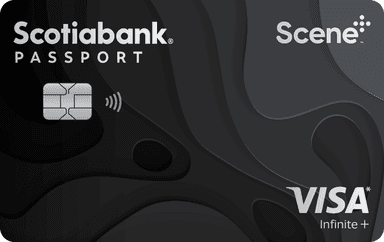
Several programs also bill in US dollars or euros. A regular credit card then adds foreign transaction fees, usually 2.5%. A card with no foreign transaction fees, such as the Scotiabank Passport® Visa Infinite +* Card, removes that cost.
Finally, a purchase processed by Points.com does not count as a purchase from the airline or hotel. Your card will not give you its travel multiplier, only its base rate. The notable exception is buying Aeroplan points while booking a flight, which Air Canada bills directly.
Tips to lower the cost
Buy at the time of booking
With Aeroplan, if you are short on points when booking a flight, the Air Canada website offers to sell you the difference. You generally need at least 60% of the required points. In our example, 44,000 missing points cost $867.10 CAD taxes included, or about 1.97¢ CAD per point, without waiting for a promotion.
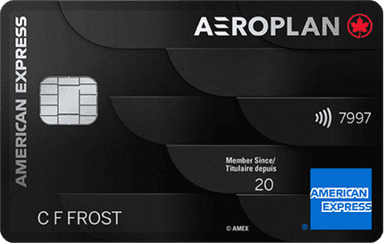
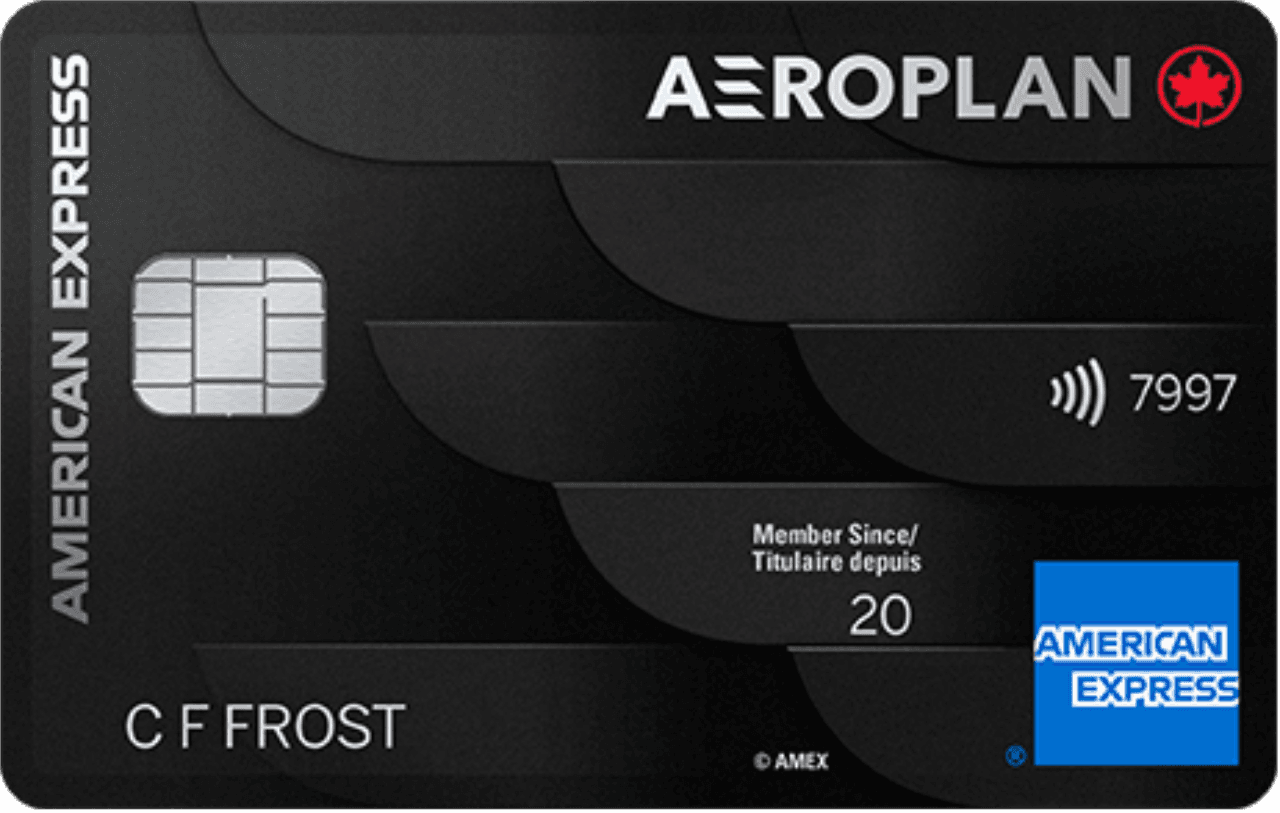
In addition, Air Canada bills this purchase directly. With the American Express® Aeroplan®* Reserve Card, it therefore earns 3 points per dollar, which brings the net cost down to about 1.86¢ CAD per point. We walk through this calculation in our article on buying Aeroplan points with the Aeroplan Reserve Card.
Target the right promotion tier
Most promotions increase the bonus or discount with the quantity purchased. At IHG One Rewards, for example, the current 100% bonus brings the point down to 0.50¢ USD only from 26,000 points per transaction. At Aeroplan, the maximum 30% discount applies from 100,000 points. Check the tier threshold before choosing a quantity, without going beyond what you actually need.
Transfer instead of buying
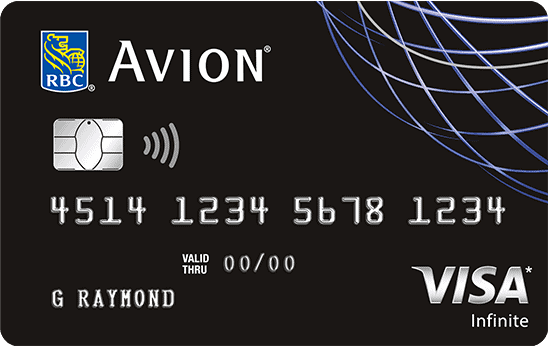
Points from transferable programs, such as American Express Membership Rewards or RBC Avion points, convert to several airline and hotel programs. A transfer often costs less than a purchase, especially during a transfer bonus. See our list of major points transfer programs in Canada and the Membership Rewards transfer partners.
Watch for targeted offers
Flying Blue, Atmos Rewards and Aeroplan sometimes reserve their best bonuses for certain accounts. Sign in before comparing: the price shown when logged out is not always the one offered to you. Flying Blue also offers a monthly subscription to buy Miles, whose prices you should check in your account.
Our buying guides by program
Each program has its own tiers, caps and promotion calendar. Our detailed guides are updated with current offers:
Airline programs
Hotel programs
The Milesopedia angle: families, students and tight budgets
For families
A family of four multiplies every reward by four. Points run short more often, and the temptation to buy is stronger. Before buying, pool your balances: Aeroplan Family Sharing combines the points of up to eight members for free, while a transfer between Aeroplan accounts costs 2¢ CAD per point, plus fees.
In addition, Flying Blue offers 25% off award tickets for children aged 2 to 11, which reduces the number of points to buy. During school holidays, when cash prices are high, topping up with purchased points pays off more easily. Our guides to family travel during school breaks and booking award tickets for big families share the best strategies.
For students and small budgets
On a small budget, buying points ties up money for a trip that is not booked yet. A first credit card with a welcome offer generally earns more points without paying upfront. See our selection of the best credit cards for students.
Welcome offers, the cheapest option
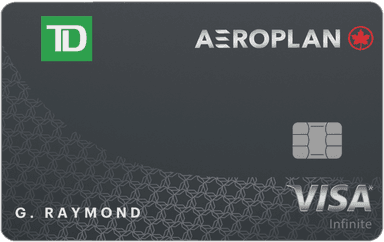
A welcome offer of 40,000 to 60,000 points is often worth hundreds of dollars, for a much lower annual fee. For a traveller who plans a few months ahead, it is almost always more profitable than buying. The following cards give access to Aeroplan, transferable Membership Rewards or RBC Avion points. The last one, with no foreign transaction fees, suits points purchases billed in US dollars.
| Credit card | Annual fee | Welcome offer | |
|---|---|---|---|
| $599 | |||
| $0 | |||
| $191.88 | |||
| $120 | |||
| $150 |

Mistakes to avoid
- Buying before finding the reward: without confirmed availability, you may end up holding points you do not need.
- Forgetting taxes and foreign exchange fees: in Quebec, taxes add close to 15%, and a regular card adds 2.5% on a purchase in US dollars.
- Buying at the base price: without a promotion, a point often costs 40% to 60% more than during a promotion.
- Buying more than you need to reach a tier: a higher bonus is useless if the extra points sit in your account.
- Counting on your card's travel multiplier: most purchases go through Points.com and only earn the base rate.
- Keeping purchased points in reserve: a program devaluation can cut their value before you use them.
Conclusion
Buying points remains a stopgap: it tops up a balance for a specific reward, especially during a promotion or at the time of booking. Always calculate the real cost per point, including taxes and foreign exchange fees, and compare it with the value of the reward. To build a balance over time, welcome offers, transfers and everyday spending cost much less.
To get new points purchase promotions as soon as they launch, subscribe to the Milesopedia newsletter.
Frequently asked questions about buying points
Is it a good idea to buy Aeroplan points?
Yes, but only for a specific reward and during a promotion, or at the time of booking. At the base price of 3.75¢ CAD, a point costs almost twice its 2¢ CAD value according to Milesopedia. During a promotion, it dropped to 1.79¢ CAD in August 2026. See our article on the current Aeroplan points purchase promotion for the current tiers.
When is the best time to buy points?
Buy during a promotion, once you have found your reward. Most programs run 2 to 4 promotions a year, and the maximum bonus often returns at the same levels, for example 100% at Hilton Honors and IHG One Rewards. Outside a promotion, wait for the next round, unless the reward is likely to disappear. Our current offers page lists the promotions under way.
Are points purchases taxed in Canada?
Yes, in most cases. Points.com, which sells points for many programs, charges GST or HST, plus QST for Quebec residents. Some US programs also add their own tax, such as the 7.5% excise tax at Atmos Rewards. Always include these taxes, along with foreign exchange fees, in your cost-per-point calculation.
Which credit card should I use to buy points?
For a purchase in US dollars or euros, a card with no foreign transaction fees saves you 2.5%. For Aeroplan points bought while booking, the American Express® Aeroplan®* Reserve Card earns 3 points per dollar, since Air Canada bills the purchase. Other purchases generally go through Points.com and only earn your card's base rate.
Can I buy points for someone else?
Yes, most programs let you gift points to another member, often at the same price and during the same promotions. At Aeroplan, the annual cap for gifted points is 500,000. For a family, Aeroplan Family Sharing remains the free way to pool balances.
Should I buy points to keep in reserve?
No. Programs change their award charts regularly, and a point bought today may be worth less next year. In addition, the money sits idle without earning a return. Only buy once you have found the reward, and build your reserve with credit cards and points transfers.
Our featured card

- Annual fee
- $599
- Our valuationMilesopedia first-year estimate First-year valueWelcome bonus$1,700Total$1,700Rewards on your spending are not included. The calculator that adds them from your own profile is on the card's page.
- $1,700
- Welcome offerAfter $7,500 in 3 months
- Up to 85,000 points
on American Express's website
Apply with confidence — no impact on your credit scoreApply with confidenceCheck whether your application will be approved before you submit it, with no impact on your credit score*When you apply for a personal American Express Credit Card, we will tell you whether you are eligible without affecting your credit score. So you can apply with confidence.*Instant decisions are only available for consumer Card applications (also called “personal Cards”).
Our editorial integrity
Our reviews and rankings are based on an objective assessment. Advertisers do not influence our content. We may receive compensation through some links; our analysis and opinions remain independent.