Scotia Momentum: the End of 4% on Rent and Taxes

Loading article…
Scotiabank has confirmed a major change for Momentum cardholders. As of October 22, 2026, rent and tax payments will no longer qualify for the accelerated recurring payments rate. They will move to the card’s regular purchase rate. The Scotia Momentum and Chexy pairing, long the best cash back combination in the country, therefore loses its main appeal.
Official communications to cardholders begin on August 17, 2026. Here are the new rates in detail, the exact math on your net return, and the cards that take over. To compare the whole market, see our page on the best credit cards.
The change is targeted. The recurring payments category is not disappearing, but two transaction types are leaving it: rent and tax payments. These transactions will move to your card’s regular purchase rate, the one that applies to non-category purchases.
Note that the measure targets the payment type, not a particular platform. In other words, it applies regardless of the channel you use, whether you go through Chexy, Casa or any other service.
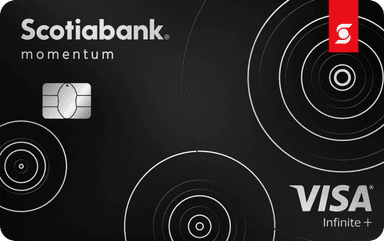
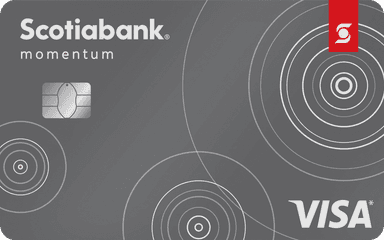
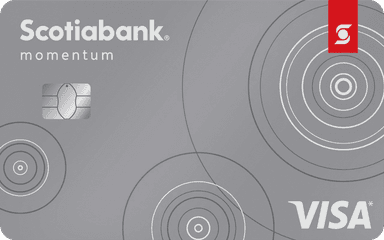
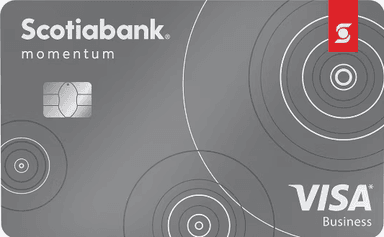
The entire Momentum line-up is affected, including the business card. Here is the regular purchase rate that will apply to rent and taxes as of October 22.
| Card | New rate on rent and taxes |
|---|---|
| Scotia Momentum® Visa Infinite +* Card | 1% |
| Scotia Momentum® Visa* Card | 1% |
| Scotia Momentum® No-Fee Visa* Card | 0.5% |
| Scotia Momentum® for business Visa* Card | 1% |
| Credit card | Annual fee | Welcome offer | |
|---|---|---|---|
| $0 | |||
| $49 | |||
| $0 | |||
| $79 |
Your other recurring payments do not change. Your subscriptions, phone bill, insurance and utilities therefore continue to earn the accelerated rate on the Scotia Momentum® Visa Infinite +* Card. Groceries also stay at 4%.
In short, the card remains relevant for everyday spending. On the other hand, if you applied for it solely for your rent, the equation changes completely. Our guide to the best cards for recurring payments remains useful for merchant-billed transactions.
One piece of context sheds light on this decision. Scotiabank backs Casa, a platform that lets you pay rent by credit card, and promotes one of its own cards in that partnership. Removing the accelerated rate on rent therefore naturally pushes cardholders toward a channel the bank controls.
The bank has not publicly explained its decision, and this reading is our own. It is worth raising nonetheless. Casa charges no transaction fee, which looks advantageous at first glance. However, the associated card earns only one point per dollar and requires a minimum of monthly purchases elsewhere to qualify for points on rent.
| Criterion | Casa | Chexy |
|---|---|---|
| Transaction fee | 0% | 1.75% |
| Rewards on rent | 1 point per dollar on the promoted card | Depends on the card you choose |
| Net return | About 1% | From -1.24% to 2.32% depending on the card |
| Card choice | Limited | Open |
| Additional condition | Minimum monthly purchases outside Casa | None |
Once the change takes effect, Casa therefore becomes the default option for rent, but with a low return ceiling and no freedom of choice. Our analysis of Casa and Scotiabank details how it works and its conditions.
Almost everyone calculates this return incorrectly, including the platforms themselves. The usual subtraction gives « 4% minus 1.75% equals 2.25%. » That shortcut slightly understates your actual gain.
Chexy charges your card the amount of the bill plus its fee, in a single transaction. For $2,000 in rent, your card is charged $2,035. You therefore earn your cash back on $2,035, not on $2,000. The correct formula becomes: (card rate × 1.0175) – 1.75%.

| Card rate | Simplified math often quoted | Actual net return | Result on $25,000 |
|---|---|---|---|
| 4% | 2.25% | 2.32% | $580 |
| 3% | 1.25% | 1.3025% | $326 |
| 2% | 0.25% | 0.285% | $71 |
| 1% | -0.75% | -0.7325% | -$183 |
| 0.5% | -1.25% | -1.2413% | -$310 |
No card reproduces exactly the 2.32% net that the Momentum allowed. However, several options limit the damage. Here is the picture, from the best return to the most modest.
| Card | Applicable rate | Net return via Chexy | Main constraint |
|---|---|---|---|
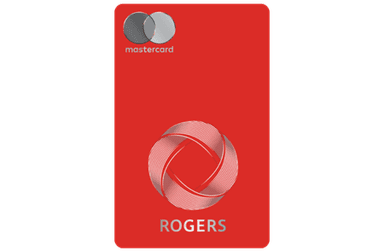
| Rogers Red World Elite® Mastercard | 2% | 0.285% | You must be a Rogers or Fido customer |
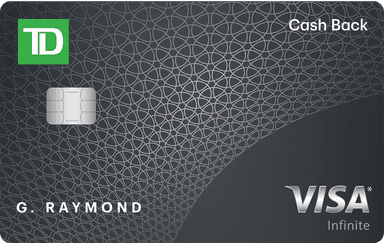
| TD Cash Back Visa Infinite* Card | 3% on recurring payments | 1.3025% | Category cap and annual fee |
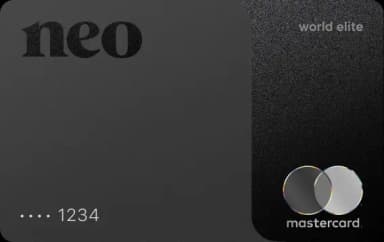
| Neo World Elite® Mastercard | 4% on recurring payments | 2.32% | $500 monthly cap on the category |
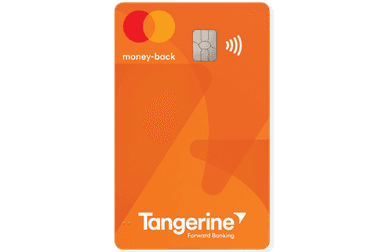
| Tangerine Money-Back Credit Card | 2% on a category of your choice | 0.285% | Limited number of categories |
| Wealthsimple Visa Infinite + Card | 2% on everything | 0.285% | Eligibility tied to assets |
| Credit card | Annual fee | Welcome offer | |
|---|---|---|---|
| $0 | |||
| $0 | |||
| $0 | |||
| $0 | |||
| $240 |
The TD Cash Back Visa Infinite* Card offers 3% on recurring payments, or 1.3025% net. Its category cap and annual fee reduce the appeal if you use it solely for your rent. That said, it also applies 3% to groceries and gas, which helps offset the fee.
The Neo World Elite® Mastercard shows 4% on recurring payments, so 2.32% net. However, Neo’s calculator indicates a $500 monthly cap in that category. Beyond it, the rate drops to 1%. Also confirm that your payment type appears among the eligible merchant codes, as rent does not always show up there.
The Tangerine Money-Back Credit Card and the Wealthsimple Visa Infinite + Card earn 2%, or 0.285% net. The gain becomes symbolic: roughly $5 a month on $2,000 in rent. Note as well that Tangerine belongs to Scotiabank, which invites caution as to how long that advantage will last.
Finally, points collectors keep an interesting avenue. A card earning 1.25 Aeroplan points per dollar generates roughly 2.5% in value, so close to 0.79% net. That calculation depends entirely on how you value points. See our best cash back credit cards to weigh the two approaches.
Since the net return is shrinking, the question becomes legitimate: is it still worth paying a 1.75% fee? For some bills, the answer is no.
Rent and taxes lose their appeal with a Momentum card. That does not make the platform useless. Three use cases keep their full value, and two of them pay far more than the old 2.32%.
This is by far the most profitable use. A welcome bonus is often worth several hundred dollars, and the required spending threshold is the main obstacle. Rent or a bill paid through Chexy reaches that threshold in a few weeks. The 1.75% fee then becomes marginal against the value of the bonus.
American Express business cards lend themselves particularly well to this approach, as their thresholds are among the highest on the market.
| Credit card | Annual fee | Welcome offer | |
|---|---|---|---|
| $799 | |||
| $199 | |||
| $150 |
Two current offers illustrate the math well. The values below use the Milesopedia valuation, namely 1.7 cents per Membership Rewards point and 0.9 cents per Marriott Bonvoy point.
| Card | Threshold to reach | Chexy fee on that threshold | Points unlocked | Milesopedia value |
|---|---|---|---|---|
| The Business Platinum Card® from American Express | $15,000 in 3 months | $262.50 | 80,000 Membership Rewards points | $1,360 |
| Marriott Bonvoy® Business American Express®* Card | $5,000 in 3 months | $87.50 | 70,000 Bonvoy points | $630 |
Take The Business Platinum Card® from American Express. The first tier requires $15,000 in net purchases within three months, a threshold few households reach with everyday spending. By running that amount through Chexy, you pay $262.50 in fees and unlock 80,000 Membership Rewards points, or $1,360 in value. The operation therefore nets close to $1,100, before even counting the additional 40,000 points awarded in the second year. You do need to subtract the $799 annual fee from your overall calculation.
The Marriott Bonvoy® Business American Express®* Card, for its part, requires $5,000 in three months. Those $5,000 run through Chexy cost $87.50 and earn 70,000 Bonvoy points, or $630. With a $150 annual fee, the first year remains solidly positive.
Paying by credit card pushes the cash outflow back by three to seven weeks, depending on where the transaction falls in your billing cycle. For an individual, that delay helps get through a tight month. For a small business, it becomes a genuine working capital tool, often cheaper than a line of credit.
Chexy for business lets you pay suppliers, payroll and commercial rent by card. The amounts involved are far higher, so points add up quickly and the cash flow delay weighs more heavily in the decision. Our article on Chexy for businesses details the fees and payout methods.
First, do not cancel anything hastily. If you have just been approved for the card, complete your welcome offer before anything else: it is often worth far more than the annual cash back.
The question is worth asking. Rent and taxes are large, predictable amounts that earn an accelerated rate while generating little interchange for the issuer. If that volume starts to weigh on the profitability of a card portfolio, other banks could well make the same call and reclassify these payments.
This is not purely hypothetical, because it already happens. Some issuers award nothing at all on these transactions: certain cards in the BMO Rewards program, for example, earn neither points nor cash back on Chexy or Plastiq. Others could go further still and treat such payments as cash advances, which would trigger interest from day one and a separate fee, on top of earning nothing.
The opposite scenario is just as plausible. An issuer looking to win market share may instead see an opening: keeping an accelerated rate on rent, at a time when the market leader is stepping back, is a cheap way to attract cardholders who are actively looking for somewhere to go.
Neither outcome has been announced. We are simply flagging that the cards recommended above could see their own terms change, which is one more reason to verify your conditions before building a strategy around a single card.
RBC also overhauled its two cash back cards on October 1, 2026, with an uncapped 3% across nine categories on the Preferred World Elite card and a lower base rate on the no-fee card. Our full breakdown of the new RBC cash back rates runs the numbers on six spending profiles.
The golden age of paying rent by credit card is ending in Canada. The best net return drops from 2.32% to 1.3025%, with the TD Cash Back Visa Infinite* Card and its category cap. Beyond that, Chexy becomes above all a tool for reaching a welcome offer threshold.
We are following this file closely. To receive our analysis every week, sign up for our newsletter.
on Scotiabank's website
On October 22, 2026. Scotiabank begins notifying its cardholders on August 17, 2026. Until the switch date, your rent and tax payments continue to earn the accelerated recurring payments rate.
Your card’s regular purchase rate. It is 1% on the Scotia Momentum® Visa Infinite +* Card, the Scotia Momentum® Visa* Card and the Scotia Momentum® for business Visa* Card. It drops to 0.5% on the Scotia Momentum® No-Fee Visa* Card.
The exact formula is (card rate × 1.0175) – 1.75%. Chexy charges your card the bill plus its fee, so you also earn rewards on that fee. A 4% card returns 2.32% net, a 3% card returns 1.3025% and a 2% card returns 0.285%. At 1%, you lose 0.73%.
The TD Cash Back Visa Infinite* Card comes out on top for your rent, at 1.3025% net, but it imposes a category cap and an annual fee.
Yes. The change targets only rent and tax payments. Your subscriptions, phone service, insurance and utilities billed directly by the merchant continue to earn the accelerated recurring payments rate.
No. The measure applies to the payment type, namely rent and taxes, not to a specific platform. It therefore applies regardless of the channel used, including Casa and other payment services. Our analysis of Casa and Scotiabank covers that other option.
Yes. When an issuer changes a material condition, you generally have 30 days following the effective date to close your account with no fee or penalty. Complete your welcome offer before making that decision, though.
It depends on your goal. For pure return, a 2% card earns only 0.285% net, which rarely justifies tracking the payments. On the other hand, Chexy remains useful for reaching the spending threshold of a welcome offer. See our complete Chexy guide to assess your situation.
on Scotiabank's website
Our reviews and rankings are based on an objective assessment. Advertisers do not influence our content. We may receive compensation through some links; our analysis and opinions remain independent.