

Applying for a new card: from « declined » to « approved »!

At Milesopedia, I’ve seen hundreds of credit card applications go from declined to approved after a single phone call. I’ve personally received that frustrating « insufficient credit history » message for a card I knew I qualified for. Here’s what really happens after you click « confirm application, » why applications get declined, and how to turn that decision around.
Status of a credit card application

There are two commonly known statuses for applying for a new credit card: approved or declined.
However, two other intermediate statuses exist: « soft declined » and « soft approved » (the closest being « declined under conditions » and « approved under conditions »).
Approved credit card application
This is the ideal scenario. You fill out the application and less than 30 seconds later, the financial institution approves you immediately. In this case, you don’t have to do anything except wait for your new credit card to arrive.
Conditionally approved credit card application
Generally, you are on the right track: your file is missing some information so that the financial institution can definitively approve your application. For example, a missing apartment number or telephone number.
Credit card application declined
This is a little more delicate. Your application was immediately declined by the financial institution. The computer algorithm made the decision after checking your credit report with Equifax or TransUnion.
Either you have made too many applications in the last few months, or you have not met your obligations (minimum payments, late payments)… Sometimes a missing apartment number, a recent move, a symbol or an accent in the form can make a big difference.
Credit card application conditionally declined
In this case, it is no longer a question of computer algorithms. The decision will be made by a person on the phone. You will need to call the financial institution with your application number.
You may be required to provide additional information: Social Insurance Number (SIN), last known address history, employer, salary…
And this is where a « declined » application can turn into an « approved » one!
Why a credit card application is declined
Before you call your financial institution, understand what’s working against you. According to Equifax Canada, here are the factors that weigh the most in the decision:
- Payment history: a recent late payment or a collections account weighs heavily, even a single one.
- Credit utilization too high: Equifax Canada recommends staying under 30% of your total limit, across all your cards.
- Too many recent applications: every application leaves a credit inquiry visible to lenders, kept on file for 3 years with Equifax and 6 years with TransUnion.
- Credit history too short: a file open for less than a year inspires less confidence than one established over several years.
- Administrative error: an address change that wasn’t updated, a typo, a missing apartment number (see Audrey’s example below).
Good news: most of these factors can be fixed before you reapply.
What to do before submitting a new application
Check your credit report
Before any new application, get your free report from Equifax Canada and TransUnion Canada. An error (wrong address, an account that isn’t yours, a payment recorded incorrectly) can be enough on its own to explain a decline.
To understand how your score is calculated, check out our article on how the credit score is calculated in Canada.
Space out your applications
Every card application leaves a trace visible to lenders. Piling up applications over a short period drives up the number of inquiries on your file, a factor financial institutions watch closely.
My advice: let a few months pass between two applications instead of trying again right after a decline, giving your file time to settle.
Let your partner apply if their file is stronger
If your credit file is fragile (short history, high utilization, recent applications), your spouse or partner can submit their own application. That’s how Matthieu got approved for a card I had myself received a conditional decline on. Two separate credit files, two separate chances.
Examples of applications that have gone from « declined » to « approved »
As points & miles hoarders, we have a good knowledge of how most financial institutions operate when it comes to approving credit card applications. Here are some examples.
American Express
Unlike all other institutions, American Express does not have a physical branch and does not offer the usual banking products (checking accounts, savings, mortgage products…). This means that American Express relies entirely on the credit bureaus to grant or deny you a card.
A problem can arise when you change your address, and that’s what happened to Audrey recently when she tried to apply for the American Express Gold Rewards Card.
We were surprised it was not approved immediately and to see the following message:
Your application is currently under review and will be processed within 10 days.
I told her to call immediately rather than wait for a response from American Express. And we were right: our change of address several months earlier had not been taken into account by the organization consulted by American Express (TransUnion). So there was a difference between our current address and the old one. After verification, the application was accepted.
The advisor explained to her that without a call from her, the application would have been declined.


- Annual fee
- $250
- Our valuation
- $1,020Milesopedia first-year estimate First-year valueWelcome bonus$1,020Total$1,020Rewards on your spending are not included. The calculator that adds them from your own profile is on the card's page.
- Milesopedia first-year estimateFirst-year valueWelcome bonus$1,020Total$1,020Rewards on your spending are not included. The calculator that adds them from your own profile is on the card's page.
- Welcome offer
- Up to 60,000 points
on American Express's website
Apply with confidence — no impact on your credit scoreApply with confidenceCheck whether your application will be approved before you submit it, with no impact on your credit score*When you apply for a personal American Express Credit Card, we will tell you whether you are eligible without affecting your credit score. So you can apply with confidence.*Instant decisions are only available for consumer Card applications (also called “personal Cards”).
Traditional banks: the example of Scotiabank
Scotiabank will check your credit report (and your relationship with the bank if you are an existing customer, as all banks do).
Except that the query system is not the most efficient: if you make a mistake or enter your address « wrong » according to Scotia’s pre-established criteria (e.g. 123 Saint-Denis street #301 instead of 301-123 Saint-Denis street), your application will be declined under the pretext of « insufficient credit history« .
In fact, this is a conditional decline or « soft declined ». Just call, and there is a good chance your Scotia credit card will be approved.
That’s what happened to me when I applied for the Scotiabank Gold American Express® Card. The message « insufficient credit history » caught my attention…! Matthieu told me he had the same problem with the Scotia Momentum Visa Infinite + credit card.
The advisor then explained to me that for some reason… applications made from certain computers were systematically « conditionally declined ». Indeed, if you make your application from work (IP address of a work network) or a cell phone, your application may be automatically declined! In fact, according to the advisor:
A person who is declined must call the bank with the application number within 60 days of the decline to get a chance to have the status of their application changed from « declined » to « approved ».
In my case, my application was finally accepted after the traditional questions from the credit bureau.
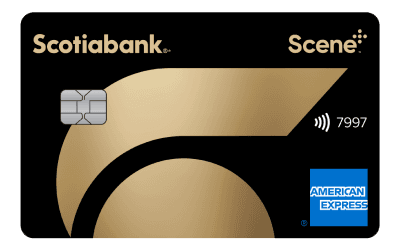
- Annual fee
- $120
- Our valuation
- $500Milesopedia first-year estimate First-year valueWelcome bonus$500Total$500Rewards on your spending are not included. The calculator that adds them from your own profile is on the card's page.
- Milesopedia first-year estimateFirst-year valueWelcome bonus$500Total$500Rewards on your spending are not included. The calculator that adds them from your own profile is on the card's page.
- Welcome offer
- Up to 50,000 points
- Ends Nov 1, 2026
on Scotiabank's website
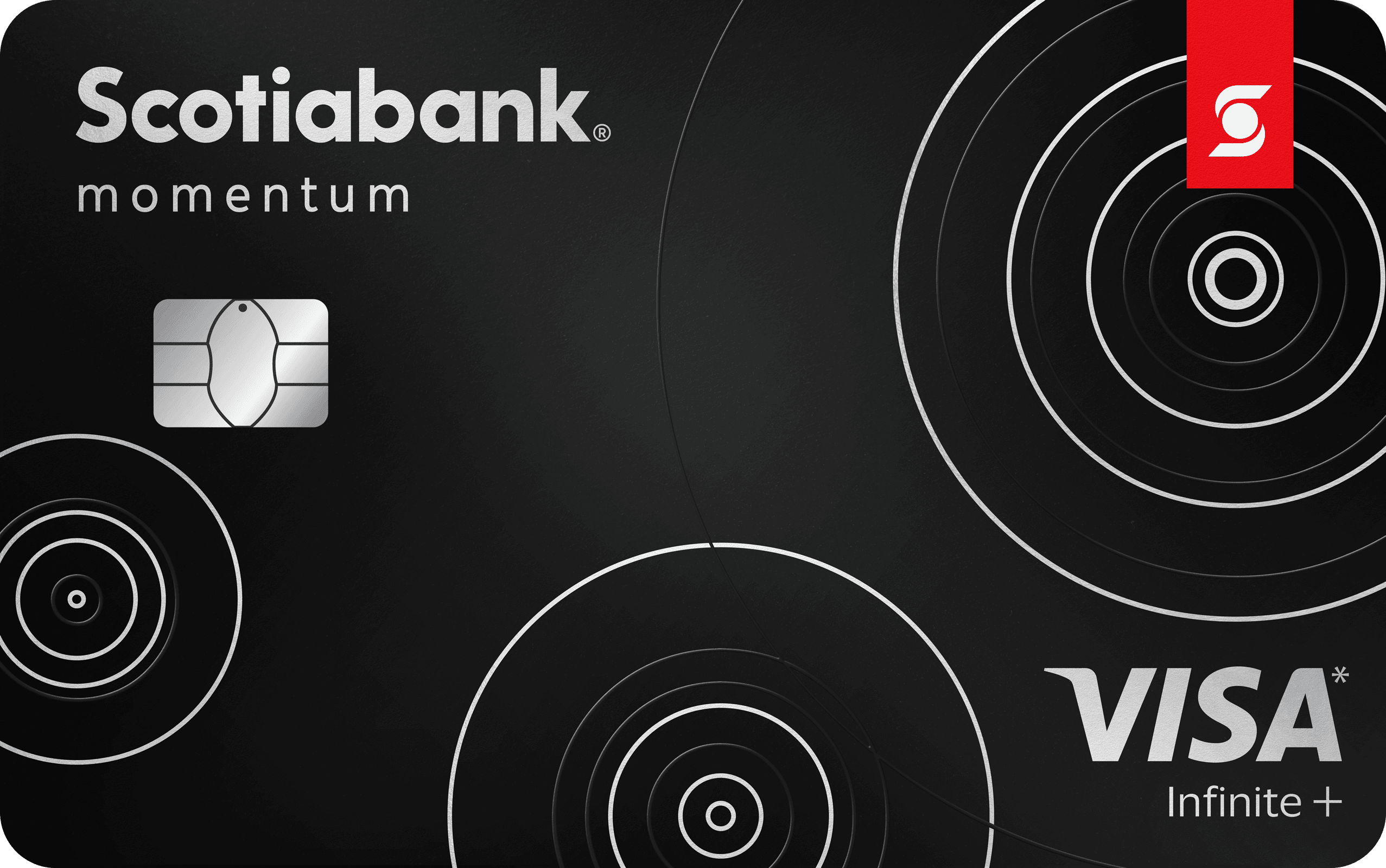

- Annual fee
- $0 $120No annual fee the first year
- No annual fee the first year
- Our valuation
- $420Milesopedia first-year estimate First-year valueWelcome bonus$300Annual fee rebated$120Total$420Rewards on your spending are not included. The calculator that adds them from your own profile is on the card's page.
- Milesopedia first-year estimateFirst-year valueWelcome bonus$300Annual fee rebated$120Total$420Rewards on your spending are not included. The calculator that adds them from your own profile is on the card's page.
- Welcome offer
- Up to $300
- + First Year Annual Fee Rebate
- Ends Nov 1, 2026
on Scotiabank's website
Conclusion
Therefore, we recommend that you always call as soon as you know that your application for a new credit card has been declined. The inquiry will have already been made to the credit bureaus, so you have nothing to lose! There is a good chance that your application will go from « declined »… to « approved »!
To compare the best credit cards currently available in Canada, check out our comparison tool.
Want to get our alerts on the best card offers before everyone else? Subscribe to our newsletter.
Credit card declined – Frequently asked questions
Why was my credit card application declined?
The most common causes are a recent late payment, credit utilization that’s too high (above the 30% recommended by Equifax Canada), too many applications in the last few months, a credit history that’s too short, or a simple administrative error like an outdated address.
What is a “conditional decline” (soft declined)?
It’s an intermediate status between approved and declined. The automated decision was negative, but an agent can reverse the decline after reviewing your file over the phone, using your application number.
Can I get a credit card decline reversed?
Yes, in several cases. Call the financial institution with your application number as soon as possible. An address error, an incomplete file, or an additional manual review are often enough to turn your application from declined to approved.
How long should I wait before reapplying?
There’s no universal official waiting period in Canada. It’s best to let a few months pass rather than reapplying immediately, giving recent credit inquiries time to carry less weight on your file.
Does a declined application affect my credit score?
The application itself leaves a credit inquiry on your file, visible for 3 years with Equifax and 6 years with TransUnion. The decline itself isn’t recorded, but an accumulation of inquiries close together can lower your score.
What if my credit file is weaker than my spouse’s or partner’s?
Your spouse or partner can submit their own application with their own credit file. Both files are assessed independently, giving you a real second chance without depending on your own history.
How do I check my credit report before a new application?
Request your free report directly from the Equifax Canada and TransUnion Canada websites. Check that your addresses, accounts and payments are accurate before submitting a new card application.
Our featured card
- Annual fee
- $120
- Our valuation
- $990Milesopedia first-year estimate First-year valueWelcome bonus$990Total$990Rewards on your spending are not included. The calculator that adds them from your own profile is on the card's page.
- Milesopedia first-year estimateFirst-year valueWelcome bonus$990Total$990Rewards on your spending are not included. The calculator that adds them from your own profile is on the card's page.
- Welcome offer
- Up to 110,000 points
- Ends Sep 22, 2026
on American Express's website
Apply with confidence — no impact on your credit scoreApply with confidenceCheck whether your application will be approved before you submit it, with no impact on your credit score*When you apply for a personal American Express Credit Card, we will tell you whether you are eligible without affecting your credit score. So you can apply with confidence.*Instant decisions are only available for consumer Card applications (also called “personal Cards”).
Our editorial integrity
Our reviews and rankings are based on an objective assessment. Advertisers do not influence our content. We may receive compensation through some links; our analysis and opinions remain independent.