Folks HR Review: HR and Payroll Software for Canadian SMBs

Loading article…
Folks HR is HR and payroll software built in Quebec for Canadian small and mid-sized businesses. It brings employee records, time off, onboarding, performance and payroll into a single interface. More than 1,200 Canadian companies use it.
Two modules matter most here: HR management and payroll. The first replaces Excel files and leave-request emails. The second runs payroll, issues pay stubs and handles government remittances.
In this guide, you will find how each module works, the real prices, what we observed after several months of use, and the type of business it suits. You will also see how to pay your subscription with a card that earns points along the way.
Folks is human resources management software, also called an HRIS, developed in Quebec. The company targets SMBs with 15 to 500 employees, not multinationals with a full HR department. Below 10 employees, Folks first suggests a conversation to check whether the timing is right.

The platform is fully bilingual, in English and French. It applies each province's tax rates, which matters as soon as you hire outside Quebec. On security, Folks holds SOC 2 Type 2 certification and hosts more than 125,000 employee records.
Four products make up the offer. You can take them separately or combine them.
| Product | What it covers | Starting price |
|---|---|---|
| Folks HRIS (HR management) | Records, time off, onboarding, documents, org chart | $6 per employee per month |
| Folks Payroll | Calculations, pay stubs, direct deposit, remittances | $3.50 per employee per pay cycle |
| Folks ATS (Recruitment) | Job postings, applications, interviews | $99 per month |
| Folks Performance | Performance reviews | Included depending on the plan |
This is the foundation of the platform, and everything else plugs into it. Here is what it does, feature by feature.
Each employee has a single profile with their contact details, position, salary and documents. Employees update their own personal information through self-service, so you stop receiving emails about a change of address.
Access is set by role. A manager sees their own team, not the salaries of the rest of the company.
This is the feature we use the most. The employee submits a request in the platform, the manager gets an email, then approves or declines in one click. Leave balances update automatically.
If the employee then changes the request, a new notification goes out, so nothing gets lost in an inbox. The module also handles timesheets and overtime requests.

You share a contract, a policy or a form, and the employee signs it electronically in their profile. The signed document stays attached to their file. No more filing cabinets or scanning.
You build an onboarding plan with tasks and deadlines, then assign it to each new hire. The same approach applies to departures, with a checklist so nothing is forgotten.
The module tracks training hours and budget per employee. It also records certifications and their expiry dates. For a construction company or a manufacturer, this feature is often what justifies the purchase.
Dashboards show turnover, absenteeism and headcount distribution. You can customize and export the reports. A mobile app gives your employees access to time off, profiles and the company directory.
Folks Payroll came after the HR module, and you can see it in how well the two work together. Employee data flows from the HRIS to payroll with no double entry. That is the module's main selling point.
Salaries, hours worked and tax information sync from employee records. The module then calculates deductions, source withholdings and benefits, using the tax rates of the province concerned.
For a business with employees in several provinces, this matters a lot. The rules differ between Quebec and Ontario, notably for provincial contributions.

Pay stubs go out automatically by email, password-protected. They are also added to the employee's profile, which they can check anytime from the mobile app. Direct deposit is supported.
You can also change the bank account used for payroll directly in the platform, without contacting support. We did it, and it takes a few minutes.
If nobody on your team wants to touch payroll, Folks offers a fully outsourced version. The service runs through a partnership with Komplice, a payroll and HRIS consulting firm that manages more than 100 active mandates.
In that case, the experts handle calculations, tax filings and government remittances. You receive reports and follow-up meetings. It is the option to consider if you have no in-house accounting resource.
Folks publishes its starting prices, which few competitors do. As of August 2026, the HR module starts at $6 per employee per month. The payroll module is added from $3.50 per employee per pay cycle.
Keep in mind that these amounts are starting points. The final price depends on the number of employees, the modules chosen and the plan selected, so you will need to request a quote.
In our case, the actual monthly bill ranged from $138 to $160 for the HR and payroll modules combined. The amount moves from month to month depending on the number of active employees and the pay cycles in the month.
Our team runs its payroll and leave requests in Folks. Here is what works well day to day, then what needs your attention.
Several solutions compete for the Canadian SMB market. Here is how they position themselves against each other.
| Solution | Origin | Payroll in Canada | Target clients |
|---|---|---|---|
| Folks | Quebec | Yes, as an add-on to the HRIS | SMBs with 15 to 500 employees |
| Nethris | Quebec | Yes | SMBs and large companies |
| Employeur D (Desjardins) | Quebec | Yes | Very small businesses and SMBs |
| Payworks | Manitoba | Yes | SMBs |
| ADP Canada | International | Yes | All sizes |
Folks' strength lies in how its modules connect and in how close the team is to its clients. Its weakness is the entry cost for very small teams. Below 10 employees, the math gets tight.
It depends on where you start. If you still track time off in a spreadsheet and contracts in a filing cabinet, the gain is immediate. If you already have an HRIS that works, switching deserves some thought.
Your HR subscription is a recurring, predictable expense. That makes it exactly the kind of bill to put on a business credit card that earns points or cash back.
Here is an example. At $150 per month, you pay $1,800 per year. With a card that earns 2% cash back, you get $36 back annually, with no extra effort. With a points card, the math depends on your program.
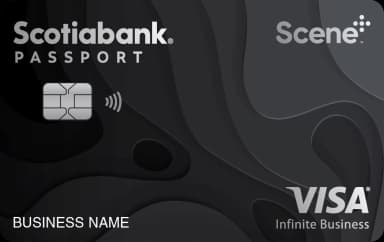
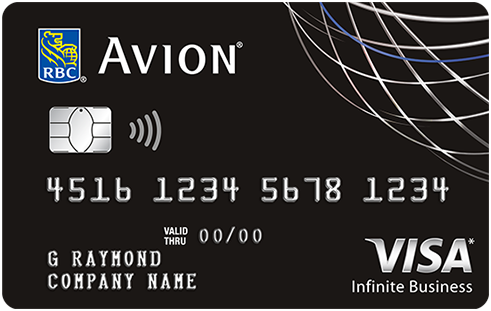
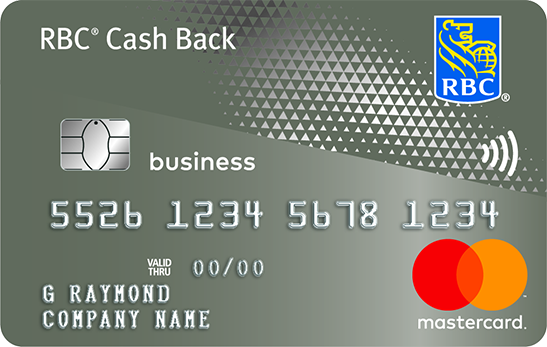
Add your other recurring costs, such as accounting software and cloud services, and the total becomes worthwhile. See our comparison of the best business credit cards to find the one that matches your spending.
| Credit card | Annual fee | Welcome offer | |
|---|---|---|---|
| $0 | |||
| $199 | |||
| $0 | |||
| $0 |
Folks solves a specific problem: HR data scattered across spreadsheets, emails and filing cabinets. The HR module centralizes, the payroll module calculates, and the two talk to each other with no double entry. For a mid-sized Canadian SMB, the combination holds up well.
The real test is yours. Request a quote with your actual number of employees, include implementation fees in your math, then compare with at least one other solution. Then pay the bill with a card that earns you something.
To get our analyses of business tools and cards, create your free Milesopedia account.
Our reviews and rankings are based on an objective assessment. Advertisers do not influence our content. We may receive compensation through some links; our analysis and opinions remain independent.