Employee Cards: How Much Do 19 Canadian Business Credit Cards Charge?
An employee card costs between $0 and $250 a year on Canadian business credit cards. 18 cards compared: fees, first-year refunds, spending limits and protection against misuse.

On a Canadian business credit card, an employee card costs between $0 and $250 a year depending on the issuer. Five cards refund that amount in the first year. Every purchase your employees make feeds your points account, under a limit you set yourself. Protection can reach $100,000 in case of misuse.
Our view is simple: the employee card is the least used advantage of business credit cards. It turns a team's everyday spending into points. Those points then pay for a flight, a hotel or a statement credit, often at no cost in the first year.
How much does an employee card cost?
The reference price is $50 per employee card. That is what American Express, BMO, RBC, CIBC and National Bank charge on their mid-range cards. TD goes down to $49 and Scotiabank to $29 on its Momentum for business. Three no-fee cards offer the employee card for $0. The premium tier follows another logic: $75 at RBC on its Infinite and World Elite cards, $199 and $250 at American Express.
| Card | Annual fee | Per employee card | Maximum | First year |
|---|---|---|---|---|
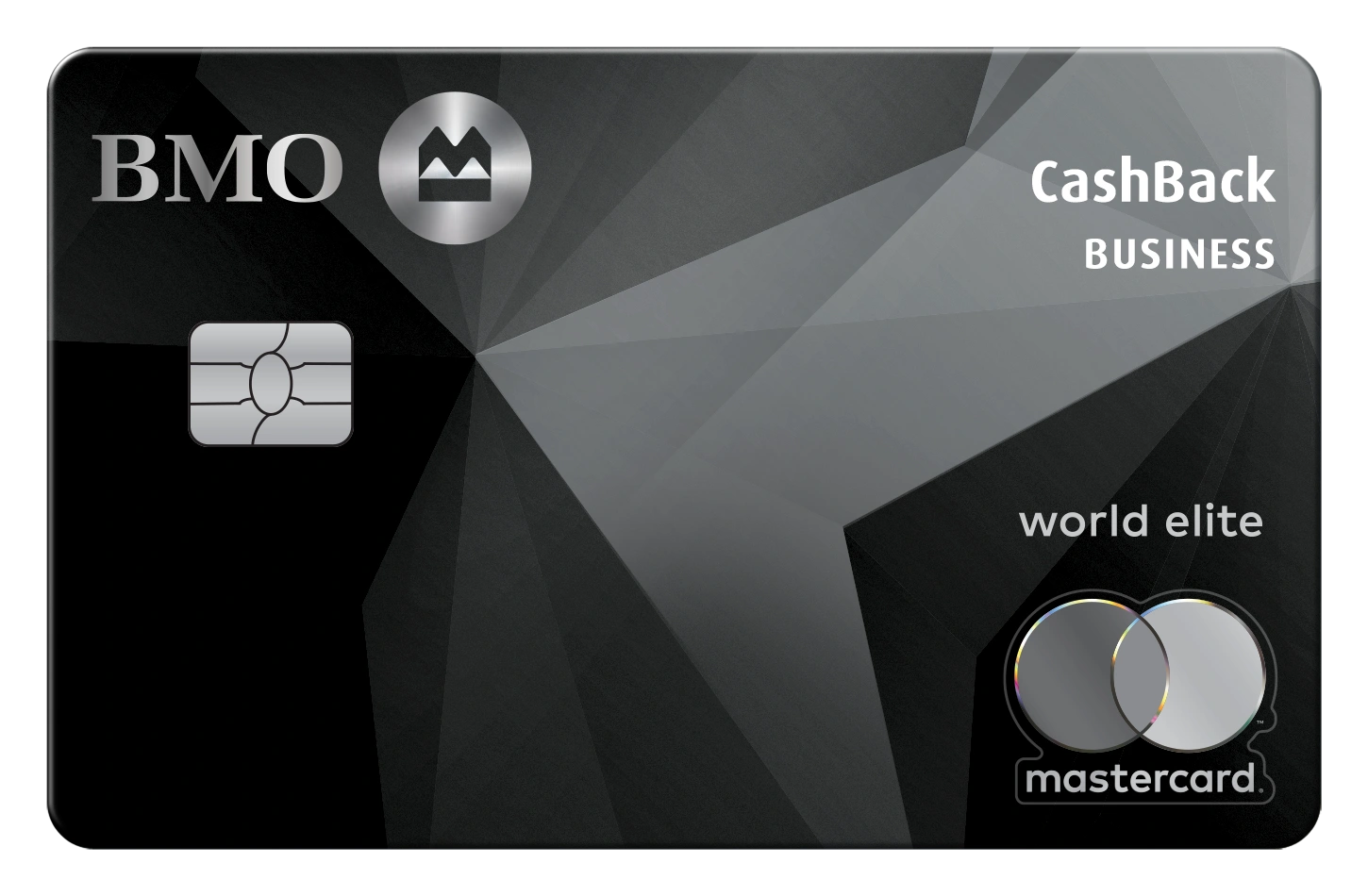
| BMO CashBack World Elite Business Mastercard | $175 | $75 | 22 | Primary card fee waived. Employee cards cost $75 each. |
| Business Platinum Card® from American Express | $799 | $250 (Platinum) or $0 (Gold) | 99 | No refund |
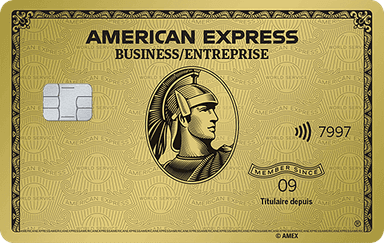
| American Express® Business Gold Rewards Card® | $199 | $50 | 99 | No refund |
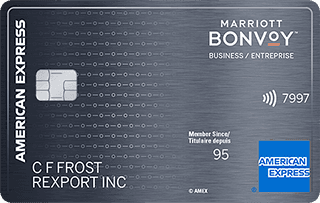
| Marriott Bonvoy® Business American Express®* Card | $150 | $50 | 99 | No refund |
| American Express® Aeroplan®* Business Reserve Card | $599 | $199 (Reserve) or $0 (No Fee) | 99 | No refund |
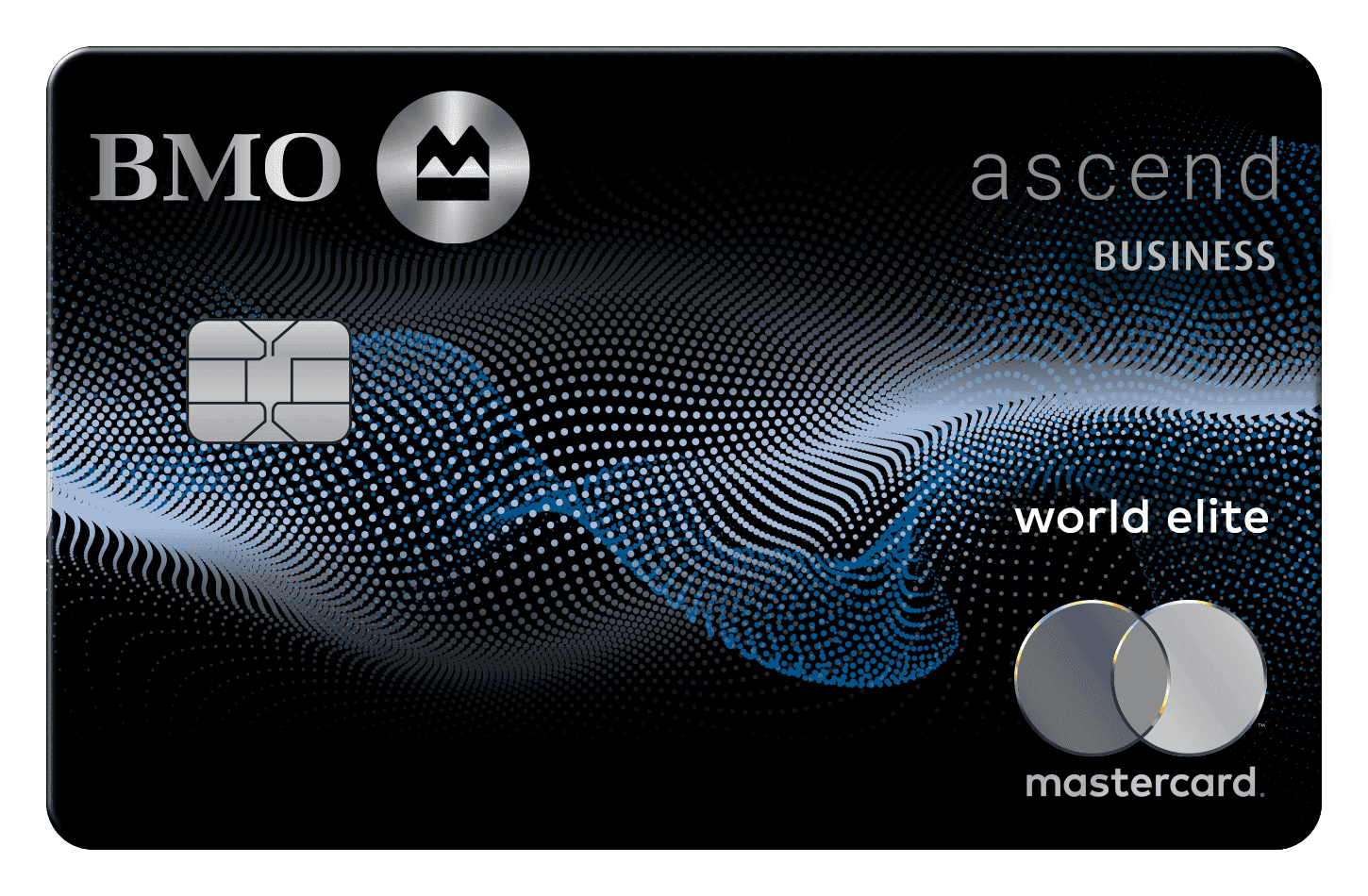
| BMO® Ascend World Elite®* Business Mastercard®* | $175 | $50 | 22 | Primary card and 2 employee cards refunded |
| RBC Avion Visa Infinite Business Card | $175 | $75 | 9 | Primary card refunded (offer until November 30, 2026) |
| RBC Avion Visa Business Card | $120 | $50 | 9 | No refund |
| WestJet RBC® World Elite Mastercard for Business‡ | $175 | $75 | 9 | No refund |
| RBC Business Cash Back Mastercard Card | $0 | $0 | n/a | Not applicable |
| RBC Visa Business Card | $12 | $12 | n/a | No refund |
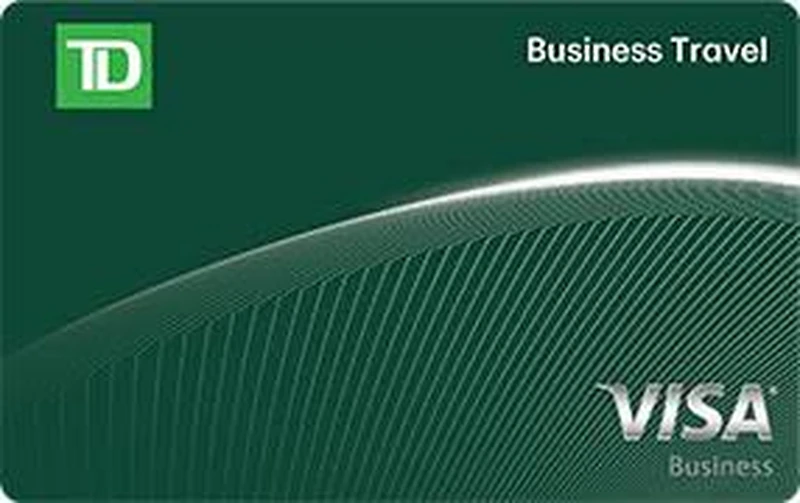
| TD Business Travel Visa* Card | $149 | $49 | n/a | Primary card and up to 4 employee cards refunded |
| TD® Aeroplan® Visa* Business Card | $149 | $49 | n/a | Primary card and up to 2 employee cards refunded |
| TD Cash Back Visa* Card Business | $0 | $0 | n/a | Not applicable |
| Scotiabank Passport® Visa Infinite Business* Card | $199 | $0 for the first, then $50 | n/a | Primary card refunded for eligible professionals |
| Scotia Momentum® for business Visa* Card | $79 | $29 | n/a | No refund |
| Scotia Momentum® for business No Fee Visa* Card | $0 | $0 | n/a | Not applicable |
| CIBC Aventura® Visa* Card for Business | $180 | $50 | 9 | Primary card and up to 3 authorized users refunded, two years in a row |
| National Bank Business Platinum Mastercard | $125 | $50 | n/a | Primary card and first authorized user refunded |
Each issuer names this product its own way. American Express and Scotiabank say supplementary card, BMO says employee card, RBC says additional card. TD says additional cardholder, CIBC and National Bank authorized user. The product stays the same: a physical card in the employee's name, attached to the business account. The business remains responsible for it.
What do you control on an employee card?
You set a spending limit specific to each employee card, and you see every transaction as it goes through. That is the main difference from the supplementary card on a personal account, where the limit is shared and the control is coarser.
- Cap per billing period: American Express lets you set the maximum amount a supplementary cardholder can charge to their card in each cycle. The counter resets at the next statement.
- Limits by amount, by period and by merchant category: RBC and Scotiabank give access to Visa Spend Clarity for Business. The tool blocks, for example, purchases outside office supplies, or above $500 a week on a given card.
- Consolidated statement: every employee card appears on the primary account's statement. The cardholder's name sits next to each purchase. The cards that connect to QuickBooks import those lines straight into the books.
- Receipt photo: the employee photographs their invoice from the app, which ends the end-of-month receipt hunt.
These tools do not replace a written spending policy, but they make it enforceable. Set $300 per cycle on a delivery driver's card and $5,000 on a buyer's. Expense reports disappear for most everyday purchases. Our guide to expense management with a business credit card walks through the setup.

Control works both ways. The employee sees their own limit in the app, with no access to the account balance or to the other cards.
The points go into the business's account
Every dollar an employee spends earns points at the same rate as the primary card, and those points land in the primary cardholder's account. RBC states it plainly for its WestJet business card. All the points accumulated by every cardholder are credited to the primary cardholder, whether owner, authorized signatory or employee.
The rule also applies to welcome offer thresholds. On the WestJet RBC World Elite Mastercard for Business, purchases on all the cards of the account add up. The $5,000 in 3 months and $15,000 in 6 months tiers are therefore reached as a group. A team of four gets there effortlessly, where a sole proprietor has to plan purchases.
Two nuances protect the business. First, the employee has no access to the points balance: they can neither redeem nor transfer it. Second, the tax value of those points depends on who pays for the card and how the rewards are used. The subject is covered in our tax guide on business points.
The math for a team of four
For a small business with four employee cards, the annual bill runs from $0 to $799, and the first year drops to $0 on three cards that carry a fee. Here is the real cost, primary card included, for one owner and four employees.
Cost says nothing without the gain. Take the BMO Ascend World Elite Business Mastercard and four employees who each spend $1,000 a month. Of that amount, $300 goes to gas, office supplies and phone bills. Those $14,400 a year at 4 points per dollar yield 57,600 points. The remaining $33,600 at 1.5 points per dollar yield 50,400. Total: 108,000 points, or about $720 in travel at the value BMO displays (150,000 points for $1,000). Against that, the four employee cards cost $200.
The break-even point is low. On this card, a $50 employee card pays for itself from $5,000 in annual purchases at the base rate of 1.5 points. In the 4-point categories, $1,875 is enough. Below that level, a no-fee card provides the same tracking for $0. Four other cards that refund the first-year fee are compared below.
| Credit card | Annual fee | Welcome offer | |
|---|---|---|---|
Protection against misuse by an employee
American Express business cards cover up to $100,000 per primary cardholder for unauthorized purchases by an employee. BMO offers a liability waiver program of the same kind. This protection comes on top of the Zero Liability guarantee, which covers ordinary fraud on every card.
The condition is precise at American Express. The business must cancel the supplementary card within two business days of the end of employment. Past that deadline, the former employee's purchases remain the business's responsibility. Put the card cancellation on your offboarding list, alongside returning keys and revoking IT access.
Which card for your team
The right choice depends on two numbers: how many employee cards you need and what share of spending falls into the bonus categories. Click a card's name to see its full profile, its insurance and its current offer.
A team that travels: BMO Ascend World Elite Business
Up to 22 employee cards and 4 points per dollar on gas, office supplies and phone bills. The first year is free for the primary card and two employee cards. The points pay for any travel purchase, with no airline imposed. The $80,000 minimum personal income can be replaced by $250,000 in business revenue.
- Annual feeNo annual fee the first year
- $0 $175
- First year free
- Our valuationMilesopedia first-year estimate First-year valueWelcome offer$1,005Annual fee rebated$175Total$1,180Rewards on your spending are not included. The calculator that adds them from your own profile is on the card's page.
- $1,180
- Welcome offerAfter $30,000 in 12 months
- Up to 150,000 points
- Ends Jun 2, 2027
on BMO's website
For a team that prefers cash back, the BMO CashBack World Elite Business Mastercard supports up to 22 employee cards. Each costs $75 starting in year one. The welcome offer waives the primary cardholder’s annual fee in year one. Read our coverage of the card launch.
Four employees or more: the TD Business Travel Visa
The only first-year refund that covers up to four employee cards on top of the primary card. The 6 TD Rewards points per dollar on restaurants, subscriptions and recurring bills apply to the whole team's purchases. No minimum personal income is required: approval is based on the business.
- Annual feeNo annual fee the first year
- $0 $149
- First year free
- Our valuationMilesopedia first-year estimate First-year valueWelcome offer$900Annual fee rebated$149Total$1,049$100 deferred bonus, excluded from the first-year estimate and not counted in this total.Rewards on your spending are not included. The calculator that adds them from your own profile is on the card's page.
- $1,049
- Welcome offerAfter $25,000 in 12 months
- Up to 200,000 points
on TD's website
Hotel nights to fund: the Marriott Bonvoy Business
For $150 a year and $50 per employee card, the team's purchases feed a Marriott Bonvoy balance. That balance pays for hotels on business trips or for the owner's vacations. The $100,000 protection against misuse per primary cardholder is included. American Express applies its own eligibility criteria: an established Canadian credit file with no recent late payments remains necessary before applying.
- Annual fee
- $150
- Our valuationMilesopedia first-year estimate First-year valueWelcome offer$700Total$700$100 deferred bonus, excluded from the first-year estimate and not counted in this total.Rewards on your spending are not included. The calculator that adds them from your own profile is on the card's page.
- $700
- Welcome offerAfter $5,000 in 3 months
- Up to 80,000 points
on American Express's website
Apply with confidenceCheck whether your application will be approved before you submit it, with no impact on your credit score*When you apply for a personal American Express Credit Card, we will tell you whether you are eligible without affecting your credit score. So you can apply with confidence.*Instant decisions are only available for consumer Card applications (also called “personal Cards”).
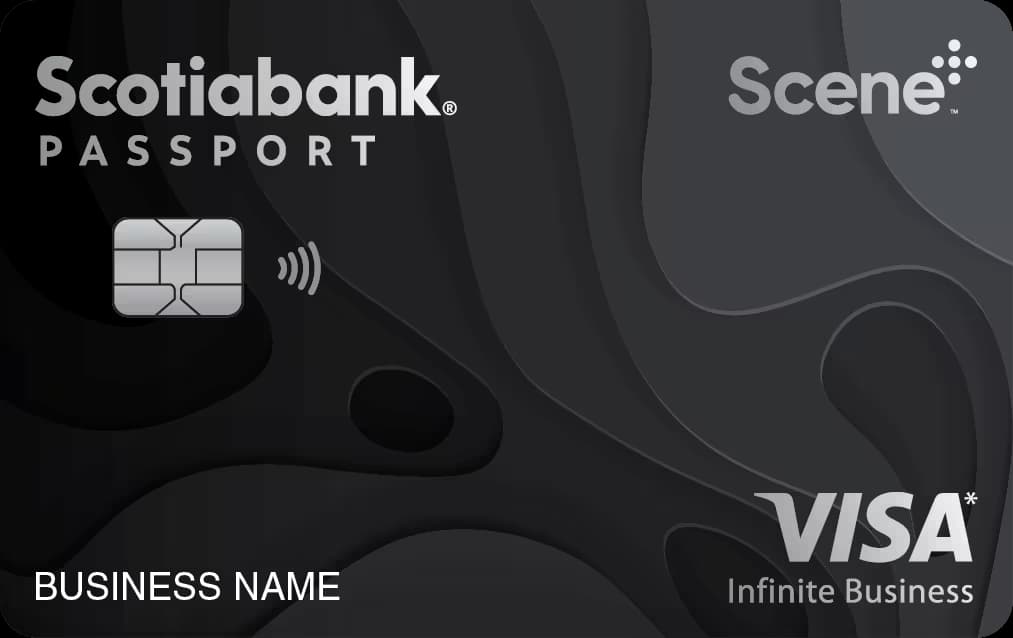
Foreign currency purchases: Scotiabank Passport Visa Infinite Business
The only business card in Canada with no foreign transaction fee on purchases in foreign currencies. The first employee card is free, then $50 for each additional one. A team that buys software billed in US dollars saves 2.5% on every invoice. Scotiabank requires a personal income of $60,000 or business revenue of $500,000. If approval is in doubt, the TD Business Travel Visa above remains the most accessible option.
- Annual fee
- $199
- Our valuationMilesopedia first-year estimate First-year valueWelcome offer$400Total$400Rewards on your spending are not included. The calculator that adds them from your own profile is on the card's page.
- $400
- Welcome offerAfter $60,000 in 12 months
- Up to 40,000 points
- Ends Feb 28, 2027
on Scotiabank's website
A $0 budget: three no-fee cards
Three cards offer the employee card at no cost at all, for a team whose spending stays modest or whose first goal is tracking rather than points.
- TD Cash Back Visa Card Business: 2% cash back on gas, office supplies and recurring bills, up to $15,000 per category per year.
- Scotia Momentum for business No Fee Visa Card: 1% on all purchases, with no annual cap.
- RBC Business Cash Back Mastercard Card: additional cards at no cost, on an account with no annual fee.
Conclusion
An employee card earns more than it costs as soon as the employee spends a few thousand dollars a year for the business. At $50 a card, it is a better deal than cash advances and expense reports. You set the limit, and the points stay in your account.
A small team that is just starting out has two options that are free in the first year: the TD Business Travel Visa and the BMO Ascend World Elite Business. For a team already in place, compare the year 2 cost with the points actually earned in your spending categories. Then check our page of the best credit cards for the personal card that complements the business one.
Before you hand out the cards, look at where your team's money flows too. Our comparison of the best business bank accounts helps you choose the account that absorbs your payments, and our list of 17 suppliers that accept Amex payments tells you whether an American Express card will work with your usual suppliers.
To follow business card offers every week, subscribe to our newsletter.