RBC Avion vs WestJet RBC World Elite: Which One (or Both)?

Loading article…
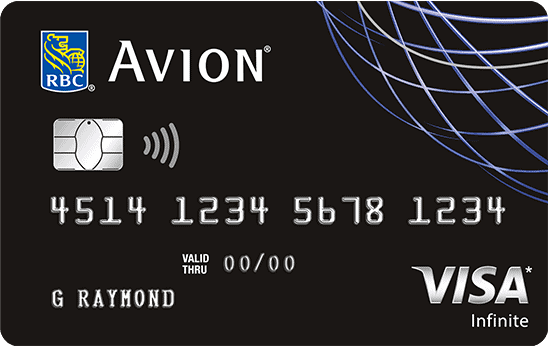
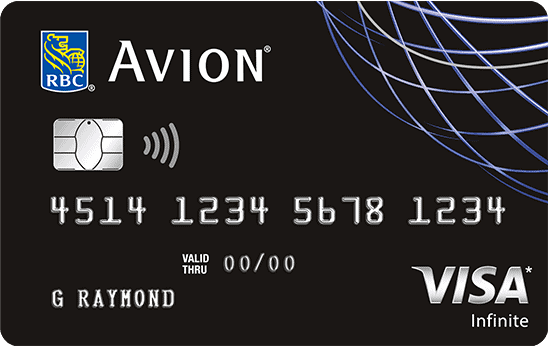
Two RBC cards chase the same Canadian traveller, but they do not play the same game. RBC Avion vs WestJet RBC World Elite comes down to one thing: how loyal you are to WestJet, plus a bridge almost nobody uses, the transfer of Avion points into WestJet Rewards.
This comparison picks a side. You will find the side by side table, the transfer ratio as RBC publishes it, three worked scenarios and the case for holding both cards. To widen the field, see our page of best credit cards.
First, the facts. The table below uses RBC’s published figures for the RBC Avion Visa Infinite and the WestJet RBC® World Elite Mastercard‡.
| Feature | RBC Avion Visa Infinite | WestJet RBC® World Elite Mastercard‡ |
|---|---|---|
| Annual fee | $120 | $139 |
| Additional card | $50 | $59 |
| Income requirement | $60,000 personal or $100,000 household | $80,000 personal or $150,000 household |
| Earn rate | 1.25 Avion points per dollar on travel; 1 point elsewhere | 2 WestJet points per dollar on WestJet and on WestJet Vacations and Sunwing packages; 2 points on gas, groceries, public transit, rideshare and electric vehicle charging; 1.5 points elsewhere |
| Welcome offer | Up to 70,000 Avion points: 35,000 on approval; 20,000 after $5,000 in 6 months; 15,000 on first anniversary | Up to 70,000 WestJet points: 30,000 on first purchase; 30,000 after $5,000 in 3 months; 10,000 on first anniversary |
| Offer deadline | November 25, 2026 | November 4, 2026 |
| Checked bag | None | First checked bag free for the cardholder and up to 8 guests on the same booking |
| Companion voucher | None | Annual voucher from $119 in economy (Canada and continental U.S.) or $219 in Premium; $399 or $499 for the rest of the network |
| Airport lounges | No access | Mastercard Travel Pass by DragonPass membership; visits not included |
| Travel insurance | Accident $500,000; trip cancellation $1,500; trip interruption $5,000; medical 15 days (3 days at 65 and over); lost baggage $500; rental collision $65,000 over 48 days | Accident $500,000; trip cancellation $1,500 (max $5,000); trip interruption $5,000; medical 15 days (3 days at 65 and over); baggage delay $500; rental collision $65,000 over 48 days |
| Other perks | Concierge; Petro-Canada; Rexall; DashPass; Hertz; 2.5% foreign exchange | Costco; up to 50 WestJet status boosts per year; Petro-Canada; Rexall; DashPass |
Two 70,000 point offers, then, but in two different currencies. An Avion point and a WestJet point are not worth the same thing, and that gap decides the comparison.
RBC converts 100 Avion points into 1 WestJet dollar, which is worth roughly $1 against the base fare. The transfer minimum is 1,000 Avion points. That sentence is the only wording the official Avion Rewards terms support.
WestJet, for its part, states that 100 WestJet points are worth about $1 off the base fare, surcharges, bags and seats. On taxes and fees, expect 105 to 115 points per dollar instead. For the full picture, see our WestJet Rewards program page.
Here is the wrinkle nobody explains. RBC still labels the conversion in “WestJet dollars”, a currency WestJet has since replaced with “WestJet points”. Both documents describe the same mechanic, but the two vocabularies no longer line up.
Avion Rewards has two membership tiers. Avion Elite members, meaning holders of Avion branded cards such as the RBC Avion Visa Infinite, can reach all four airline partners. Avion Distinction members, meaning holders of the RBC Ion and Ion+ cards, have exactly one exit: WestJet.
Our Avion points transfer guide covers the mechanics.
Two situations make the transfer pay. First, if you are an Avion Distinction member. In the booking portal, that tier redeems 172 points per dollar, or 0.58 cents per point. Take 10,000 points: the portal returns roughly $58, while the WestJet transfer returns $100.
Second, if you are short of WestJet points on a booking already in progress. The 1,000 point minimum stays low, so you can close a small gap without waiting. However, never transfer speculatively, because the conversion runs one way only.
If you are an Avion Elite member, the transfer burns value. RBC’s air travel redemption chart returns between 2.00 and 2.33 cents per point. For example, 15,000 points cover a round trip to an adjacent province, territory or U.S. state with a base fare of up to $350, which works out to 2.33 cents per point. The WestJet transfer caps out at 1 cent.
In other words, you cut your value in half at best. Moreover, an Avion Elite member already gets 100 points per dollar in the booking portal, the same rate as the transfer. Our Avion Rewards program page lists the full chart.
You fly WestJet four or five times a year. The WestJet RBC® World Elite Mastercard‡ pays 60,000 points in year one, then 10,000 more on your first anniversary. At the Milesopedia valuation of 1.0 cent per WestJet point, those 70,000 points represent $700 against a $139 annual fee.
Now assume $20,000 of annual spending, with $8,000 on gas and groceries: 16,000 points at 2 points per dollar, plus 18,000 points on the remaining $12,000 at 1.5. Total: 34,000 points, or $340 a year.
You compare fares before picking a carrier. The RBC Avion Visa Infinite pays 55,000 points in year one, then 15,000 on your first anniversary. On the fixed chart, 55,000 points already cover a round trip with a base fare of up to $1,100. At 65,000 points, Europe opens up with a base fare capped at $1,300.
Take the same $20,000 of spending, with $6,000 on travel. At 1.25 points per dollar, travel returns 7,500 points; the remaining $14,000 at 1 point per dollar adds 14,000 points. Total: 21,500 points. Fewer raw points, yet each is worth 1.5 to 2.33 cents. Annual value therefore lands between $322 and more than $500.
Here the WestJet card pulls ahead on something points cannot measure. The first checked bag is free for the cardholder and for up to 8 guests on the same booking. Four people, round trip, means eight bags covered by one benefit. We do not put a dollar figure on that saving, since WestJet does not publish a baggage rate in our reference data.
The annual companion voucher starts at $119 in economy across Canada and the continental U.S. Alternatively, you can exchange it for 30% off a solo flight, a $200 credit on a package, or 2 lounge passes. Our ranking of the best WestJet credit cards puts that perk in context.
Start with the WestJet card, for two reasons. First, its offer expires on November 4, 2026, three weeks ahead of the Avion offer set for November 25, 2026. Second, its $5,000 threshold must be hit within 3 months, against 6 months on the Avion card. So attack the tighter clock first.
The income requirement confirms that order. The WestJet card asks for $80,000 personal, against $60,000 on the Avion card. Clear the first filter and you clear the second.
Two applications mean two credit checks. Space them a few weeks apart. However, do not assume anything about RBC’s internal rules, because our sources contain no published limit on how many cards you may hold with the issuer. Confirm that point with your advisor.
On cost, budget $259 in combined annual fees, meaning $120 plus $139. Add $50 and $59 if you want an additional card on each. That recurring bill belongs in the maths, not just the first year bonuses.
The two bonuses do not overlap, since they live in separate programs. In total, you are chasing 70,000 Avion points and 70,000 WestJet points. At Milesopedia valuations, that is $1,050 on one side and $700 on the other, so $1,750 against $259 in fees.
On spending, you need $5,000 in 3 months, then $5,000 in 6 months. By staggering the applications, you therefore spread $10,000 of purchases across roughly nine months. Finally, the Avion to WestJet transfer becomes a safety net, though at 1 cent per Avion point.
The question is not which card is better, but which currency serves you best. WestJet rewards loyalty and family travel; Avion rewards flexibility and long haul. The bridge between them exists, yet it runs one way.
If you are still torn, pull up your flight history from the past two years. A majority of WestJet segments settles the debate. Finally, to catch the next bonus, sign up for our newsletter.
| Credit card | Annual fee | Welcome offer | |
|---|---|---|---|
| $120 | |||
| $139 |
Here are the questions readers ask most often about moving Avion points into WestJet Rewards, and about choosing between RBC’s two travel cards.
Yes. WestJet Rewards is an official Avion Rewards transfer partner. You request the transfer from your Avion account after linking your WestJet member number. The conversion runs one way only: once the points land at WestJet, you cannot move them back. Our Avion points transfer guide covers every step.
RBC converts 100 Avion points into 1 WestJet dollar, which is worth roughly $1 against the base fare. Watch the terminology: RBC still says “WestJet dollars”, while WestJet now talks about “WestJet points”. Neither company publishes the equivalence “100 Avion points equal 100 WestJet points”, so we do not repeat it.
The minimum is 1,000 Avion points, the lowest threshold among the Avion Rewards transfer partners. By comparison, British Airways Executive Club and Cathay Pacific Asia Miles require 10,000 points. That low floor makes the transfer handy right before a booking.
Yes, and it is their only transfer option. Avion Distinction members, meaning holders of the RBC Ion and Ion+ cards, can convert points to WestJet and nowhere else. The other three airline programs stay reserved for Avion Elite members. For this tier the transfer makes sense, since the Distinction portal redeems at 172 points per dollar.
It depends on your membership tier. For an Avion Distinction member, yes: 10,000 points are worth roughly $58 in the portal, against $100 after the transfer. For an Avion Elite member, no: RBC’s air travel redemption chart returns 2.00 to 2.33 cents per point, while the transfer caps at 1 cent. See our Avion Rewards program page.
Besides WestJet, Avion Elite members convert to British Airways Executive Club at 1 point for 1 Avios, to American Airlines AAdvantage at 10 points for 7 miles, and to Cathay Pacific Asia Miles at 1 point for 1 mile. Hudson’s Bay Rewards accepts 500 Avion points for 1,000 of its own points.
If most of your flights carry the WestJet logo, take the WestJet RBC® World Elite Mastercard‡ for its 2 points per dollar, its free checked bag and its companion voucher. If you compare carriers before every purchase, take the RBC Avion Visa Infinite instead, since its fixed chart returns up to 2.33 cents per point.
Nothing in the published terms stops you, but two applications trigger two credit checks. Space them a few weeks apart and confirm with RBC. Start with the WestJet card, whose offer ends on November 4, 2026.
on RBC's website
Our reviews and rankings are based on an objective assessment. Advertisers do not influence our content. We may receive compensation through some links; our analysis and opinions remain independent.