Head to Head: Scotiabank Gold American Express Card vs National Bank World Elite Mastercard

Loading article…
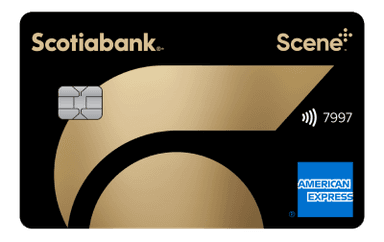
Here are two very popular credit cards in Quebec that play completely different roles in a wallet:
On one side, the Scotiabank card earns Scene+ points fast on groceries and dining, with no foreign transaction fees. On the other, the National Bank card is built around travel: an annual travel credit, a lounge at Montreal-Trudeau and very strong insurance. This Scotiabank Gold Amex vs National Bank World Elite matchup therefore comes down to one simple question: do you want an everyday card or a travel card? To see where both cards sit in the wider market, check our best credit cards page.
We base our analysis on the major differences between these two credit cards, as of October 20, 2026:
Here are both cards side by side. We then break down each line.
| Criteria | Scotiabank Gold American Express Card | National Bank World Elite Mastercard |
|---|---|---|
| Annual fee | $120 | $150, refunded in year one (Milesopedia exclusive offer) |
| Additional card | $29 | $50 |
| Income required | $12,000 personal | $80,000 personal or $150,000 household |
| Welcome offer | Up to 50,000 Scene+ points, accounts opened by November 1, 2026 | First year annual fee refunded, until November 4, 2026 |
| Groceries and restaurants | 5 pts/$ (6 pts/$ at IGA and Sobeys) | 5 pts/$ on the first $2,500 of monthly purchases, then 2 pts/$ |
| Other purchases | 1 pt/$ | 1 pt/$ |
| Foreign transaction fee | None | 2.5% |
| Annual travel credit | None | $150 |
| Airport lounges | Discount on a Priority Pass membership | Unlimited National Bank Lounge (YUL) and DragonPass membership |
| Emergency medical | $1,000,000, 25 days (3 days at 65 and over) | $5,000,000, 60 days (15 days from 65 to 75) |
| Milesopedia valuation | 1 cent per point | 0.9 cent per point |
The two current offers have nothing in common. Scotiabank pays out points, while National Bank refunds the first year annual fee.
The Scotiabank Gold American Express® Card offers up to 50,000 Scene+ points for accounts opened by November 1, 2026:
At our valuation of 1 cent per Scene+ point, the full offer is worth about $500 in travel.
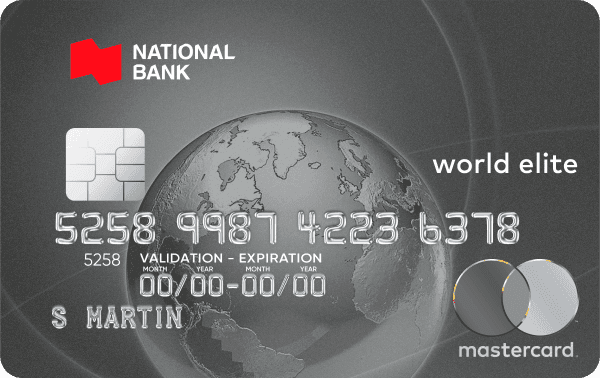
The National Bank World Elite® Mastercard®, meanwhile, offers a Milesopedia network exclusive: a refund of the first year annual fee, a $150 value. The fee is charged to the account, then credited back on your statement within five months of opening, as long as the account stays open and in good standing. You must not have held a National Bank personal Mastercard as primary cardholder in the past 24 months.
On the bonus alone, the Scotiabank card wins clearly. It does, however, require $7,500 in purchases in year one to unlock all of it.
This is the heart of the duel. Both cards boost groceries and dining, but with very different mechanics.
The Scotiabank Gold American Express® Card earns:
Two limits apply under Scotiabank's terms. First, the accelerated rates cover the first $50,000 in eligible purchases per calendar year. Second, only purchases in Canadian dollars qualify for the 6, 5 and 3 point rates. A purchase in a foreign currency earns 1 point per dollar.
The National Bank World Elite® Mastercard® earns:
The detail that changes everything: the 5 point rate only applies to the first $2,500 in gross monthly purchases charged to the account, across all categories. Past that threshold, groceries and restaurants earn 2 points per dollar. In other words, a household that puts $4,000 a month on the card will see part of its grocery spending drop to 2 points.
An earn rate means nothing without the point value. Milesopedia values the Scene+ point at 1 cent and the National Bank À la carte Rewards point at 0.9 cent. Here is the return in cents per dollar spent.
| Type of spending | Scotiabank Gold American Express Card | National Bank World Elite Mastercard |
|---|---|---|
| Sobeys family grocers (IGA, Sobeys, etc.) | 6 pts/$, or 6.0 cents/$ | 5 pts/$, or 4.5 cents/$ (under the $2,500 monthly threshold) |
| Other grocery stores | 5 pts/$, or 5.0 cents/$ | 5 pts/$, or 4.5 cents/$, then 2 pts/$ (1.8 cents/$) past the threshold |
| Restaurants and food delivery | 5 pts/$, or 5.0 cents/$ | 5 pts/$, or 4.5 cents/$, then 2 pts/$ (1.8 cents/$) past the threshold |
| Entertainment | 5 pts/$, or 5.0 cents/$ | 1 pt/$, or 0.9 cent/$ |
| Gas | 3 pts/$, or 3.0 cents/$ | 2 pts/$, or 1.8 cents/$ |
| Daily transit | 3 pts/$, or 3.0 cents/$ | 1 pt/$, or 0.9 cent/$ |
| Recurring bills | 1 pt/$, or 1.0 cent/$ (3 pts/$ on select streaming services) | 2 pts/$, or 1.8 cents/$ |
| Foreign currency purchases | 1 pt/$, or 1.0 cent/$, no foreign transaction fee | 1 pt/$, or 0.9 cent/$, minus a 2.5% foreign transaction fee |
| All other purchases | 1 pt/$, or 1.0 cent/$ | 1 pt/$, or 0.9 cent/$ |
Take a household that puts $2,000 a month on its card, below the National Bank threshold:
Here is the result over one year:
If you shop at IGA or Sobeys, the Scotiabank card adds 600 points a month thanks to the 6 point rate. If you travel often and use the full travel credit, though, the National Bank card pulls back ahead.
Both programs let you trade points for travel, but their flexibility differs.
Scene+ points can cover any travel purchase charged to the card, Airbnb stays included, or bookings made on Scene+ Travel, powered by Expedia. They also work for groceries at partner merchants. The Scene+ program page covers the redemption options.
National Bank points can be redeemed through À la carte Travel, through the travel agency of your choice, against your card balance or for financial products. The À la carte Rewards program page explains the redemption rules.
The Scotiabank Gold American Express® Card costs $120 a year, plus $29 per additional card. It charges no foreign transaction fees on purchases in foreign currencies.
The National Bank World Elite® Mastercard® costs $150 a year, plus $50 for a second card. With the Milesopedia exclusive offer, year one costs nothing. Its foreign transaction fee, on the other hand, sits at 2.5%.
For a traveller who spends $3,000 a year in foreign currencies, that gap means about $75 in conversion fees saved with the Scotiabank card. Our list of the best no foreign transaction fee cards covers the other options.
The gap here is huge:
The purchase interest rate barely differs: 21.99% at Scotiabank and 20.99% at National Bank.
This is where the National Bank card wins most clearly.
Its emergency medical coverage reaches $5,000,000, for trips of up to 60 days to age 54, 31 days from 55 to 64, and 15 days from 65 to 75. The Scotiabank card covers $1,000,000 for 25 days under age 65, but only 3 days from age 65.
National Bank also covers several other risks better:
The Scotiabank card still has a few edges:
Both cards cover rental cars up to $65,000 for 48 days, flight delay up to $500 and mobile devices up to $1,000.
The National Bank card offers a $150 travel credit every year. It refunds airport parking, baggage fees, seat selection, lounge access or an upgrade. Our guide to the National Bank annual travel credit explains how to claim it.
It also gives free, unlimited access to the National Bank Lounge at Montreal-Trudeau airport, for the cardholder, one guest and two children aged 12 and under. On top of that comes a Mastercard Travel Pass membership provided by DragonPass, where visits are paid.
The Scotiabank card has no travel credit. It offers a discount on a Priority Pass membership, with no free visits. In return, it brings the American Express perks: Amex Offers, Front Of The Line presales, concierge service and discounts at Avis and Budget.
One answer does not fit everyone. Here are three distinct profiles.
You mostly put groceries, restaurants and outings on your card, and you shop at IGA or Sobeys. In that case, the Scotiabank Gold American Express® Card takes it. It returns 5 to 6 cents per dollar with no monthly threshold, and its welcome bonus is worth about $500.
You travel several times a year, you often leave from YUL and you want strong medical coverage. In that case, the National Bank World Elite® Mastercard® is the better pick. The $150 credit covers its annual fee, the lounge is unlimited and medical coverage runs up to 60 days.
If you want a single card for everything, the National Bank Mastercard works everywhere, Costco included. With the Scotiabank card, plan on a second Visa or Mastercard for merchants that do not take American Express.
So which card wins this duel? For everyday spending, the Scotiabank Gold American Express® Card wins: a better return on groceries and dining, no foreign transaction fees, a very low income requirement and a richer welcome bonus.
The National Bank World Elite® Mastercard®, however, remains the more complete card for travel. Its travel credit, lounge and insurance are worth more than the earning gap for an active traveller. Year one also costs nothing with our exclusive offer.
Finally, nothing forces you to choose. Plenty of readers hold both: the Scotiabank card for groceries and purchases abroad, the National Bank card for travel and insurance. For other matchups, see our comparisons of American Express Cobalt vs National Bank World Elite and Scotiabank Gold Amex vs American Express Cobalt.
To never miss an offer, subscribe to our newsletter.
on National Bank's website
The Scotiabank Gold American Express® Card leads with up to 50,000 Scene+ points for accounts opened by November 1, 2026, or about $500 at our valuation. The National Bank World Elite® Mastercard® offers, as a Milesopedia exclusive until November 4, 2026, a refund of the first year annual fee, a $150 value.
The Scotiabank card, in most cases. It earns 6 points per dollar at IGA, Sobeys and the grocers in the same family, and 5 points elsewhere, or 5 to 6 cents per dollar. The National Bank card earns 5 points per dollar, or 4.5 cents, but only on the first $2,500 of monthly purchases charged to the account.
The 5 point rate applies to groceries and restaurants as long as your total purchases for the month, across all categories, stay under $2,500. Past that, the same purchases earn 2 points per dollar until the end of the cycle. Our full National Bank World Elite review explains how it works.
The Scotiabank card. It charges no foreign transaction fees, while the National Bank card charges 2.5%. Keep in mind that the Scotiabank card earns 1 point per dollar on foreign currency purchases, since its accelerated rates only apply to purchases in Canadian dollars.
The National Bank card, without question. Its medical coverage reaches $5,000,000 for 60 days up to age 54, against $1,000,000 for 25 days under 65 at Scotiabank. It also covers trip cancellation and interruption better. The Scotiabank card covers only 3 days from age 65.
The National Bank card gives free, unlimited access to the National Bank Lounge at Montreal-Trudeau, with one guest, plus a DragonPass membership where visits are paid. The Scotiabank card only offers a discount on a Priority Pass membership.
Yes, since the two cards come from different issuers. A common setup: groceries, restaurants and foreign currency purchases on the Scotiabank card, then travel spending on the National Bank card to benefit from its insurance. Check the income requirement first: $12,000 at Scotiabank, $80,000 personal at National Bank.
on National Bank's website
Our reviews and rankings are based on an objective assessment. Advertisers do not influence our content. We may receive compensation through some links; our analysis and opinions remain independent.