

Paris 2024: how to get around France during the OG?
- Sport
- Paris 2024 Olympic Games

The Paris Olympic Games won’t be limited to the capital and its immediate surroundings, but will span all of France as well as its overseas territories. In addition to Paris, several cities will host different competitions.
Football matches will be held notably in Bordeaux, Nantes, Lyon, Saint-Étienne, Nice and Marseille. The final rounds of the men’s and women’s handball tournaments, along with the basketball qualifiers, will take place in Lille, at the Pierre Mauroy stadium. Sailing, meanwhile, will set up in Marseille, on the Mediterranean. So how do you get around France during the Paris Olympics without emptying your wallet? Because it’s safe to assume that plane, train, bus and TGV tickets are likely to be sky-high across France. Milesopedia helps you make sense of it all.
What are the best ways to get around France?
There are many ways to get around France, with rail transport often the most popular. For longer distances, it’s possible to board a TGV or even a plane, although some air routes lasting less than 2h30 minutes have recently been banned by the European Commission for environmental reasons. For shorter distances in France, we recommend taking a bus or regional train. In all cases, we strongly recommend booking in advance.
The car is also an option, although France imposes fairly high tolls on the country’s freeways. The bill can therefore be particularly high, and journey times longer than by train.

Trains and TGVs
The SNCF, France’s rail transport company, offers two options for travellers looking to cover long distances by train across the country: TGV InOui and TGV Ouigo. InOui is the new name for the traditional TGVs, offering premium comfort with upgrades such as power outlets, free wifi, continuous cleaning service, and an on-board manager dedicated to travellers’ well-being. Ouigo, on the other hand, is the low-cost version of the TGV. Fares are more attractive, but on-board services are more limited. In particular, you have to pay to carry luggage on OUIGO.
If you travel frequently in France, it can be worthwhile to look at the SNCF loyalty program, Grand Voyageur. It rewards you for your loyalty by earning points on each of your train trips, later giving you access to reward tickets and discounts.
For shorter distances, notably between Paris and Saint-Denis, you need to buy a train ticket to board a regional or local service. In Île-de-France, local trains carry the Transilien brand, while across the rest of France they’re called TER, for Train Express Régional. Both brands nonetheless belong to the SNCF.
Buses and coaches
In France, buses are much more affordable than trains and TGVs. The main bus companies include Flixbus, Ouibus and BlaBlaCarBus. But with more than 150 cities served across France, Flixbus remains the company offering the most bus routes to travellers. Of course, the trips are longer than by plane or train. To reach Bordeaux from Paris, count on about 7 hours by bus, versus a little over 2 hours by TGV. They are nonetheless much cheaper.
From Paris, you can take the bus to Lille for just 8 euros, or to Bordeaux for 16 euros. If you’re patient, you can also travel directly to Marseille for less than 20 euros, although the journey takes an average of 11 hours.

Plane
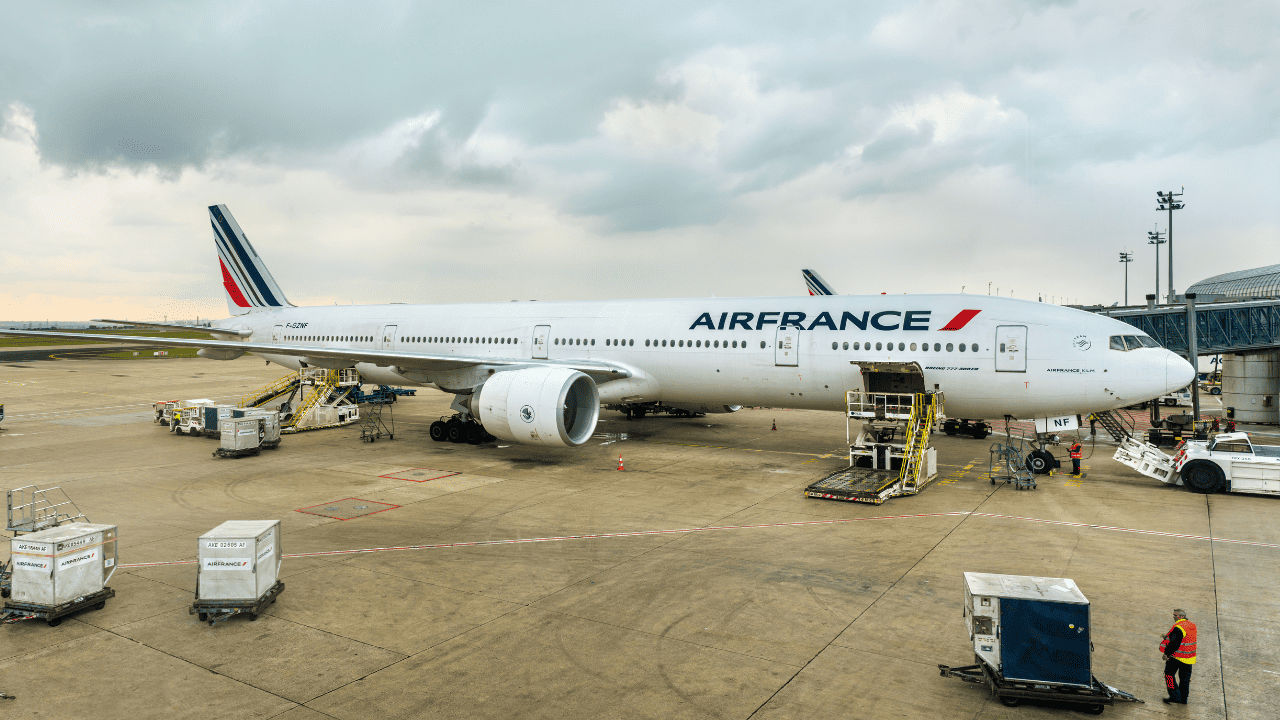
France recently decided to ban all domestic flights lasting less than 2h30 and for which there is a rail equivalent. Flights between Paris and Nantes, Lyon and Bordeaux have been cancelled, with the exception of connecting flights. To reach Nantes, Lyon and Bordeaux from France’s capital, you’ll need to take the TGV. However, you can board a domestic flight between Paris and Marseille or Paris and Nice with Air France, Easyjet or Ryanair. It’s not impossible to find flights for just over 30 euros, although you’ll usually have to pay around 100 euros. During the Olympic Games, these fares are likely to triple.
TGV, plane, bus, car… What are the best ways to get around France?
With so many different ways of getting around France, it can sometimes be hard to decide which is the best and quickest way to get around. Here’s a quick overview of the average rate and duration. It should be noted that the following calculations were found for trips taking place two months before the departure date, with a departure date scheduled for the end of August 2023.
Paris-Bordeaux
When booked in advance, TGV Ouigo tickets are especially good value for getting to Bordeaux from Paris.
| Average price | Average duration | Tickets | |
| TGV InOui | 54 € | 2 h | Book |
| TGV Ouigo | 10 € | 3 h | Book |
| Plane | – | – | – |
| Bus | 16 € | 7 h | Book |
| Car | 125 € (tolls and gas) | 5 h 37 | Book |
Paris-Lille
To reach Lille, it’s best to board a TGV InOui and enjoy the many services on offer, such as wifi, since ticket prices aren’t exorbitant. It can be complicated to get to Paris-Charles de Gaulle from the heart of the capital.
| Average price | Average duration | Tickets | |
| TGV InOui | 35 € | 1 h 19 | Book |
| TGV Ouigo | 10 € | 1 h (departs from CDG) | Book |
| Plane | – | – | – |
| Bus | 8 € | 3 h | Book |
| Car | 45 € (tolls and gas) | 2 h 21 | Book |
Paris-Lyon
To reach Lyon from Paris, TGV tickets are sometimes a bit higher because there are many passengers. Those looking to save will prefer the regular train or the TGV Ouigo, if they book well in advance to still get affordable fares.
| Average price | Average duration | Tickets | |
| TGV InOui | 52 € | 1 h 56 | Book |
| TGV Ouigo | 10 € | 1 h 47 (departs from Marne-la-Vallée) | Book |
| Plane | – | – | – |
| Bus | 12.99 € | 5 h 45 | Book |
| Car | 90 € (tolls and gas) | 4 h 40 | Book |
Paris-Marseille
There are also many passengers travelling by TGV between Paris and Marseille. Here, the TGV InOui and the plane are good alternatives. The plane isn’t the most eco-friendly option, though, so if you choose to fly rather than take the train, don’t forget to offset your carbon footprint! Some airlines, such as Air France, offer passengers the option to pay a surcharge to reduce the carbon footprint of the flight they’re on.
| Average price | Average duration | Tickets | |
| TGV InOui | 45 € | 3 h 07 | Book |
| TGV Ouigo | 35 € | 3 h 27 | Book |
| Plane | 18 € | 1 h 30 | Book |
| Bus | 19.99 € | 10 h 20 | Book |
| Car | 150 € (tolls and gas) | 7 h 39 | Book |
Paris-Nice
Getting to Nice from Paris isn’t the most advantageous option. Prices are sometimes high and the trips very long. To reach the Nissa Bella, it’s better to depart from Marseille. From the Phocaean city, in the south of France, TGVs and buses are plentiful. Even though the car is a pricier option, it can be worthwhile here. How could you turn down a road trip on the French Riviera?
You could rent a car from one of the Sixt agencies in Marseille with your Scotiabank Passport Visa Infinite + Card and travel with peace of mind, knowing you’re covered by the car rental theft and damage insurance on your credit card. No need to pay for extra coverage!
| Average price | Average duration | Tickets | |
| TGV InOui | 95 € | 5 h 36 | Book |
| TGV Ouigo | 75 € | 5 h 40 | Book |
| Plane | 28 € | 1 h 35 | Book |
| Bus | 30.98 € | 17 h 15 | Book |
| Car | 190 € (tolls and gas) | 9 h 16 | Book |
Bottom line
There are hundreds of ways to get around France. Unlike Canada, where the options are more limited (and above all more expensive), our friends across the Atlantic offer various affordable and fast alternatives. But since several million passengers are expected across France during the Olympic Games, it’s strongly recommended to book your train, TGV, plane or bus tickets months in advance, or even the moment sales open. Because of the particularly high demand, tickets are likely to sell at exorbitant prices.
Not the type to plan months ahead? You could pay for your trip with your points. Grab your credit cards!


- Annual fee
- $150
- Our valuation
- $350Milesopedia first-year estimate First-year valueWelcome bonus$350Total$350Rewards on your spending are not included. The calculator that adds them from your own profile is on the card's page.
- Milesopedia first-year estimateFirst-year valueWelcome bonus$350Total$350Rewards on your spending are not included. The calculator that adds them from your own profile is on the card's page.
- Welcome offer
- Up to 35,000 points
- Ends Nov 1, 2026
on Scotiabank's website
Find all our guides to prepare your trip to the Paris 2024 Olympic Games :
Frequently asked questions about buses, trains and TGVs in France
What is the average price of an SNCF train ticket in France?
In France, train ticket prices fluctuate constantly, notably depending on the season and demand. A ticket to board a Paris-Lyon TGV can sometimes sell for 10 euros, while during busier periods it can sell for 200 euros.
Which cities are served by TGV in France?
In France, the cities served by the TGV InOui are Annecy, Biarritz, Bordeaux, Brest, La Rochelle, Le Havre, Lille, Lyon, Marseille, Nantes, Nice, Poitiers (near Futuroscope), Rennes and Strasbourg.
Are we allowed to eat on French trains?
Yes, it’s entirely possible to eat and drink on the TGVs criss-crossing France.
What's the difference between TGV Ouigo and TGV InOui?
InOui is the new name for the traditional TGVs, offering premium comfort with upgrades such as power outlets, free wifi, continuous cleaning service, and an on-board manager dedicated to travellers’ well-being. Ouigo, on the other hand, is the low-cost version of the TGV. Fares are more attractive, but on-board services are more limited.
Our featured card
- Annual fee
- $150
- Our valuation
- $350Milesopedia first-year estimate First-year valueWelcome bonus$350Total$350Rewards on your spending are not included. The calculator that adds them from your own profile is on the card's page.
- Milesopedia first-year estimateFirst-year valueWelcome bonus$350Total$350Rewards on your spending are not included. The calculator that adds them from your own profile is on the card's page.
- Welcome offer
- Up to 35,000 points
- Ends Nov 1, 2026
on Scotiabank's website
Our editorial integrity
Our reviews and rankings are based on an objective assessment. Advertisers do not influence our content. We may receive compensation through some links; our analysis and opinions remain independent.