

Credit Card Balance Transfer in Canada: How It Works in 2026

A credit card balance transfer allows you to move debt from one card to another card offering a lower promotional interest rate. In Canada, this strategy can reduce your interest, simplify your payments, and speed up your repayment. However, it works best if you have a clear plan and pay off the balance before the promotional period ends.
In 2026, several Canadian cards still offer competitive deals. However, transfer fees and the regular rate after the promotion remain essential factors to check.
If you have a high-rate balance, this guide explains how to complete a balance transfer, which cards to consider, and how to avoid common mistakes.
What is a balance transfer?
A balance transfer consists of transferring the amount owed on a credit card to another card. The new card then often offers a reduced promotional interest rate for a limited period.
For example, you could transfer debt charged at 22.99% to a card offering 0.99% for a period of ten months or more.
This way, a larger portion of your payments goes toward paying down the principal rather than interest.
A balance transfer can also be used to consolidate multiple debts onto a single card. This sometimes makes monthly budget management easier.
How does a balance transfer work?
To get started, you need to apply for a credit card that is eligible for balance transfers. Once approved, you submit the transfer request based on the credit limit granted.
The issuer then pays off all or part of your old debt. You will then need to repay that amount on the new card.
Steps to follow
- Compare cards offering a promotional rate.
- Check the balance transfer fees.
- Submit your application.
- Wait for approval.
- Request the transfer.
- Continue paying the old card until the transfer is confirmed.
- Start your repayment plan.
Expected timelines
Generally, the transfer can take anywhere from a few days to two weeks depending on the financial institution.
During this period, always continue to make your minimum payments on the old card.
What fees apply?
However, even with an attractive promotional rate, a balance transfer is not free.
Balance transfer fee
Most cards charge between 1% and 5% of the transferred amount.
For example, an $8,000 transfer costs $80 with a 1% fee, versus $240 with a 3% fee.
Promotional rate
The promotional interest rate often lasts from six to twelve months, sometimes longer.
Some cards display a 0% rate, others 0.99% or a low temporary rate.
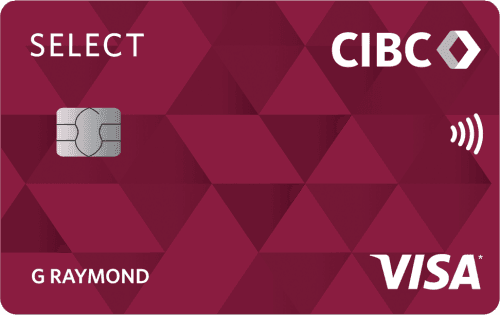
For example, the CIBC Visa* Select Card offers a 0% rate for ten months on balance transfers, with a 1% transfer fee (not applicable to Quebec residents). This offer is available only at the time of the online application.

- Annual fee
- $0 $29No annual fee the first year
- No annual fee the first year
- Our valuation
- $29Milesopedia first-year estimate First-year valueAnnual fee rebated$29Total$29Rewards on your spending are not included. The calculator that adds them from your own profile is on the card's page.
- Milesopedia first-year estimateFirst-year valueAnnual fee rebated$29Total$29Rewards on your spending are not included. The calculator that adds them from your own profile is on the card's page.
- Welcome offer
- First Year Annual Fee Rebate
- $29 annual fee rebated
on CIBC's website
Another example: the Scotia Visa minima Card offers an interest rate of 0.99% on balance transfers for the first nine months, with a 2% transfer fee.

- Annual fee
- $0 $29No annual fee the first year
- No annual fee the first year
- Our valuation
- $29Milesopedia first-year estimate First-year valueAnnual fee rebated$29Total$29Rewards on your spending are not included. The calculator that adds them from your own profile is on the card's page.
- Milesopedia first-year estimateFirst-year valueAnnual fee rebated$29Total$29Rewards on your spending are not included. The calculator that adds them from your own profile is on the card's page.
- Welcome offer
- First Year Annual Fee Rebate
- $29 annual fee rebated
- Ends Jan 3, 2027
on Scotiabank's website
For the longest promotional period, the MBNA True Line® Mastercard® offers a 0% rate on balance transfers for 12 months, with a 3% transfer fee. This card has no annual fee and its regular purchase rate is 12.99%. Note that this transfer offer is not available to Quebec residents.
Once the promotional period ends, the regular rate drops to 13.99% for both cards, well below the 19.99% to 29.99% charged by the majority of Canadian cards.
Regular rate after promo
Once the promotional rate period ends, the regular rate can exceed 19%.
You should therefore aim for full repayment before this date.
Benefits of a balance transfer
First, the main benefit is reduced interest.
Next, you could:
- Pay off your debt faster.
- Simplify multiple payments into one.
- Improve your budget discipline.
For many households, this can also serve as a temporary step before a broader debt consolidation strategy.
Risks and mistakes to avoid
However, a balance transfer is only useful if you change your financial habits.
Common mistakes:
- Continuing to spend on the old card
- Ignoring transfer fees
- Missing a minimum payment
- Not paying off before the promotion ends
- Applying for too many cards in a short time
A missed payment can cancel certain promotional terms.
Additionally, a new credit application can temporarily affect your credit score.
Best credit cards for balance transfers in Canada
| Credit card | Annual fee | Welcome offer | |
|---|---|---|---|
| $0 | |||
| $35 | |||
| $0 | |||
| $0 | |||
| $0 | |||
| $0 |
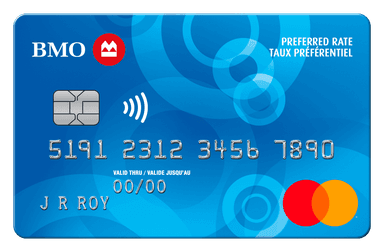
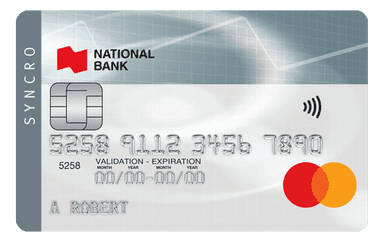



To compare current offers:
For other low-rate cards:
Balance transfer or debt consolidation?
A balance transfer often suits moderate debts that you can pay off quickly.
Debt consolidation may be better suited if:
- You have multiple loans
- Your payments are difficult to manage
- The debt is high
- You need a longer term
In some cases, a lower-rate personal loan will be preferable.
Find out more:
Should you do a balance transfer in 2026?
Yes, especially if you have high-rate debt and a realistic repayment plan.
No, if you’re only looking to postpone the problem without changing your habits.
In 2026, with interest rates still high, reducing the cost of your debt can make a real difference.
The important thing is to choose the right card, understand the fees well, and pay it off quickly.
Conclusion
In summary, credit card balance transfers can be one of the simplest ways to pay less interest in Canada. When used wisely, it helps you regain control of your finances and pay off your debt faster.
However, it’s not a miracle solution. Without a budget, without discipline, and without a clear timeline, debt can return quickly.
Before applying, compare offers, check the fees, and make sure the promotional period is enough to reach your goal.
Credit card balance transfer – FAQ
What is a credit card balance transfer?
It’s the movement of debt to another card often offering a lower promotional rate.
How much are balance transfer fees in Canada?
They often range between 1% and 5% of the transferred amount.
Does a balance transfer affect my credit score?
Yes, temporarily possible when applying. Good management can then help your file.
How long does the promotional period last?
Often between six and twelve months, sometimes longer.
What is the best balance transfer credit card in Canada?
It depends on your profile, the fees charged, and the time needed to repay.
Can you transfer a balance between two cards at the same bank?
Sometimes not. Several institutions exclude internal transfers. Check the terms.
Which card offers the longest 0% balance transfer period?
The MBNA True Line® Mastercard® offers 0% for 12 months on balance transfers, with a 3% fee and no annual fee. The CIBC Select Visa* Card offers 0% for 10 months with a 1% fee. These offers are not available to Quebec residents.
Our featured card
- Annual fee
- $0 $29No annual fee the first year
- No annual fee the first year
- Our valuation
- $29Milesopedia first-year estimate First-year valueAnnual fee rebated$29Total$29Rewards on your spending are not included. The calculator that adds them from your own profile is on the card's page.
- Milesopedia first-year estimateFirst-year valueAnnual fee rebated$29Total$29Rewards on your spending are not included. The calculator that adds them from your own profile is on the card's page.
- Welcome offer
- First Year Annual Fee Rebate
- $29 annual fee rebated
on CIBC's website
Our editorial integrity
Our reviews and rankings are based on an objective assessment. Advertisers do not influence our content. We may receive compensation through some links; our analysis and opinions remain independent.