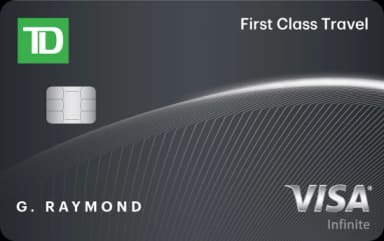
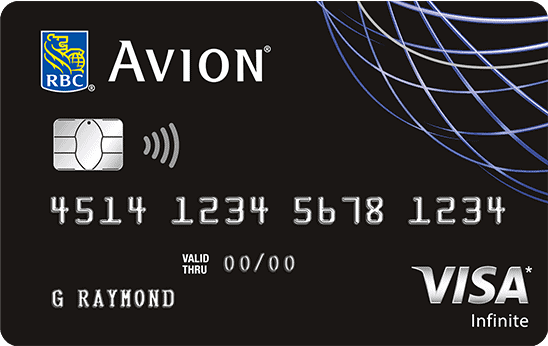
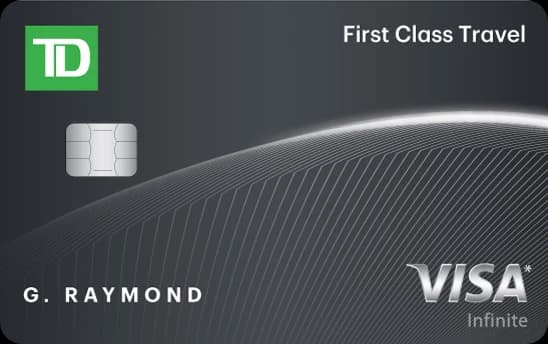
Head to Head: TD First Class Travel Visa Infinite vs RBC Avion Visa Infinite

Loading article…
Here are two travel Visa Infinite credit cards our readers ask about all the time:
On paper, they look alike: the same income requirement, similar annual fees and full travel insurance packages. Yet they work very differently. TD relies on fixed-value points redeemed through its Expedia® For TD portal. RBC relies on Avion Rewards, its fixed-points flight chart and transfers to airline partners. The TD First Class Travel vs RBC Avion matchup therefore comes down to how you book your trips. If you are weighing other cards instead, our RBC Avion vs TD Aeroplan and TD First Class Travel vs Scotiabank Passport comparisons round out the picture.
We base our analysis on the main differences between these two credit cards:
Here are both cards side by side, as of October 20, 2026. We then go through each point in detail.
| Criterion | TD First Class Travel® Visa Infinite* Card | RBC Avion Visa Infinite Card |
|---|---|---|
| Annual fee | $139, rebated in year 1 | $120 |
| Additional card | $50 (the first), $0 after that | $50 |
| Income requirement | $60,000 personal or $100,000 household | $60,000 personal or $100,000 household |
| Welcome offer | Up to 160,000 TD Rewards Points | Up to 70,000 Avion points, by November 25, 2026 |
| Earn rates | 8 pts/$ Expedia For TD, 6 pts/$ groceries and restaurants, 4 pts/$ bills, 2 pts/$ elsewhere | 1.25 pts/$ travel, 1 pt/$ elsewhere |
| Milesopedia valuation | 0.5¢ per point | 1.7¢ per point |
| Transfers to airline programs | No | Avios, Asia Miles, AAdvantage, WestJet Rewards |
| Airport lounges | 4 visits a year (Visa Airport Companion) | No access |
| Medical insurance | $2,000,000, 21 days | No maximum according to RBC, 15 days |
| Annual credit | $100 TD Travel Credit | None |
Both offers are generous, but they are structured differently. TD pays almost everything after a spending threshold; RBC pays a large chunk on approval and holds the last part until your first anniversary.
The TD First Class Travel® Visa Infinite* Card offers up to 160,000 TD Rewards Points, plus a first-year annual fee rebate:
At 0.5¢ per point, those 160,000 points are worth about $800 on Expedia For TD. The $139 fee rebate comes on top.
For its part, the RBC Avion Visa Infinite Card offers up to 70,000 Avion points on applications submitted by November 25, 2026:
At 1.7¢ per point, the Milesopedia valuation, those 70,000 points are worth about $1,190. The $120 annual fee, however, is not waived.
This is where the gap opens up. TD boosts several everyday categories; RBC keeps an almost flat earn structure.
The TD First Class Travel® Visa Infinite* Card earns TD Rewards Points:
The RBC Avion Visa Infinite Card earns Avion points:
At TD, each bonus category is capped at $25,000 in purchases per year. Beyond that, the rate drops to 2 points per dollar. RBC has no such cap, since it has no everyday bonus category.
The two currencies are not worth the same: 0.5¢ per TD Rewards Point versus 1.7¢ per Avion point, based on our valuations. Here is the return in cents per dollar.
| Spending type | TD First Class Travel® Visa Infinite* Card | RBC Avion Visa Infinite Card |
|---|---|---|
| Groceries and restaurants | 6 pts/$, or 3.0¢/$ | 1 pt/$, or 1.7¢/$ |
| Public transit | 6 pts/$, or 3.0¢/$ | 1 pt/$, or 1.7¢/$ |
| Recurring bills and streaming | 4 pts/$, or 2.0¢/$ | 1 pt/$, or 1.7¢/$ |
| Travel booked on Expedia For TD | 8 pts/$, or 4.0¢/$ | 1.25 pts/$, or 2.1¢/$ |
| Travel booked elsewhere | 2 pts/$, or 1.0¢/$ | 1.25 pts/$, or 2.1¢/$ |
| All other purchases | 2 pts/$, or 1.0¢/$ | 1 pt/$, or 1.7¢/$ |
The TD card wins on groceries, restaurants, bills and Expedia For TD bookings. The RBC card takes the lead on every purchase that falls outside a bonus category.
This is the heart of the matchup. TD offers a simple, steady value; RBC offers a higher value that takes a bit of method.
On the Expedia For TD portal, 200 TD Rewards Points are worth $1 toward a flight, hotel, car rental or package, with no blackout dates or seat restrictions. That is the basis of our 0.5¢ valuation. You know what your points are worth before you even search for a trip.
Outside the portal, the value drops:
Our Expedia For TD guide explains how to book at the best rate.
The RBC Avion Visa Infinite Card gives you Avion Elite status, which opens three options. The first is the flexible chart: 100 points are worth $1 toward any travel purchase, or 1¢ per point.
The second is the fixed-points Air Travel Redemption Schedule. RBC sets the number of points by zone, with a maximum ticket price before taxes, for a round trip:
When the ticket costs close to the cap, each point is worth 2¢ to 2.33¢. When it costs less, the value drops. Our analysis of Avion point value covers each tier.
The third option is transferring to airline programs: British Airways (Avios), Cathay Pacific (Asia Miles), American Airlines (AAdvantage) and WestJet Rewards. Our Avion points transfer tutorial covers the ratios and steps.
If you want to book a trip without thinking about what your points are worth, TD Rewards is more predictable: 200 points equal $1, anywhere on the portal. Avion rewards effort instead. A reader who targets the fixed chart or transfers gets far more per point; a reader who uses the flexible chart gets 1¢.
Take a household that spends $24,000 a year on a single card:
| Item | TD First Class Travel® Visa Infinite* Card | RBC Avion Visa Infinite Card |
|---|---|---|
| Points earned on purchases | 100,800 TD Rewards Points | 24,750 Avion points |
| Value of the points | $504 | $420.75 |
| Birthday bonus | 10,000 points (cap), or $50 | None |
| Annual travel credit | $100 (eligible Expedia For TD booking) | None |
| Annual fee (from year 2) | $139 | $120 |
| Net value (from year 2) | $515 | $300.75 |
| Welcome bonus (year 1) | $800, fee rebated | $1,190, fee charged |
For this profile, the TD card comes out ahead every year after the first, even with Avion points valued at 1.7¢. The reason is simple: most of the spending lands in its 6- and 4-points-per-dollar categories.
In the first year, the gap flips slightly. The Avion welcome bonus, valued at 1.7¢, is larger than TD's and covers its annual fee. For this profile, the two cards end the first year nearly even.
The result changes if most of your spending falls outside the bonus categories. On $24,000 of miscellaneous purchases, with no groceries or bills, the second-year net value becomes:
The TD First Class Travel® Visa Infinite* Card costs $139 a year, rebated in the first year for the primary cardholder. The first additional card costs $50 and the following ones are free.
The RBC Avion Visa Infinite Card costs $120 a year, with no rebate. Each additional card costs $50.
From the second year on, the annual TD travel credit brings the real cost of the TD card down to $39. You do, however, need to book an eligible trip of $500 or more on Expedia For TD each calendar year.
Both cards require the same income: $60,000 personal or $100,000 household. The purchase interest rate differs slightly, at 21.99% for TD and 20.99% for RBC. Both cards also charge a 2.5% foreign transaction fee.
Both cards offer a full package, with a few differences. The TD card's emergency medical coverage lasts 21 days, or 4 days from age 65, up to $2,000,000. At RBC, it lasts 15 days, or 3 days from age 65, and RBC states it has no maximum benefit.
| Coverage | TD First Class Travel® Visa Infinite* Card | RBC Avion Visa Infinite Card |
|---|---|---|
| Emergency medical | $2,000,000, 21 days (4 days age 65 and over) | No maximum according to RBC, 15 days (3 days age 65 and over) |
| Trip cancellation | $1,500 | $1,500 |
| Trip interruption | $5,000 | $5,000 |
| Flight delay | $500 | $500 |
| Baggage delay | $1,000 | $500 |
| Lost or stolen baggage | $1,000 | $500 |
| Travel accident | $500,000 | $500,000 |
| Rental car | Up to $65,000, 48 days | Up to $65,000, 48 days |
| Hotel burglary | $2,500 | $2,500 |
| Mobile devices | $1,000 | $1,500 |
| Purchase protection and extended warranty | 90 days and 1 year | 90 days and 1 year |
For baggage, the TD card covers more: $1,000 for a delay and $1,000 for a loss, versus $500 each at RBC. On the other hand, RBC covers mobile devices better. Everything else is identical, from trip cancellation to car rental. Exact terms are in the TD and RBC certificates of insurance.
The TD card includes 4 complimentary visits a year to more than 1,200 airport lounges through the Visa Airport Companion Program. The RBC Avion Visa Infinite Card offers no lounge access.
The TD card also adds a birthday bonus equal to 10% of the points earned over the previous 12 months, up to 10,000 TD Rewards Points. Its $100 travel credit applies to the first eligible booking of $500 or more made on Expedia For TD in a calendar year.
RBC makes up for it with everyday partnerships: 3¢ per litre in savings at Petro-Canada with 20% more points, bonus Be Well points at Rexall, a 12-month DashPass subscription and Hertz discounts.
No single answer suits everyone. Here are four distinct profiles.
You already do your banking with TD or RBC. In that case, your own bank's card makes account management and payments simpler. That practical point should not outweigh the others, though, if your spending clearly leans one way.
You enjoy hunting for the best award flights and transferring your points to Avios or Asia Miles. In that case, the RBC Avion Visa Infinite Card serves you better. Its points transfer, and its fixed chart can top 2¢ per point. TD Rewards Points, on the other hand, do not transfer to any airline program.
You want to book a flight or a hotel like on any other site, with no math. The TD First Class Travel® Visa Infinite* Card is the clear pick: its 6 points per dollar on groceries and restaurants, its fixed value on Expedia For TD, its 4 lounge visits and its 21-day medical coverage make it the easiest card to get value from.
Nothing stops you from keeping both. Put groceries, restaurants and bills on the TD card, then everything outside those categories on the RBC card. You build TD Rewards Points for simple trips and Avion points for high-value tickets.
So which card wins the TD First Class Travel vs RBC Avion matchup? For most households, the TD First Class Travel® Visa Infinite* Card earns more day to day. Its bonus categories more than make up for the lower value of its points, and it adds lounge access, longer medical coverage and a first-year fee rebate.
That said, the RBC Avion Visa Infinite Card remains the best option for anyone who transfers points or targets the fixed chart. Its welcome offer, valid until November 25, 2026, is also more generous at Milesopedia valuations.
To compare with the rest of the market, see our best credit cards page, our best travel credit cards or our full review of the RBC Avion Visa Infinite Card.
| Credit card | Annual fee | Welcome offer | |
|---|---|---|---|
| $0 | |||
| $120 |
To never miss a new card offer, subscribe to our newsletter.
Here are the questions we get most often about these two cards.
At Milesopedia valuations, the RBC Avion Visa Infinite Card leads slightly. Its 70,000 Avion points are worth about $1,190 at 1.7¢, versus about $800 for the 160,000 TD Rewards Points. The TD card, however, adds a first-year fee rebate. The RBC offer applies to applications submitted by November 25, 2026.
Milesopedia values a TD Rewards Point at 0.5¢ and an Avion point at 1.7¢. An Avion point is therefore worth about three times more. The TD card makes up for it by earning up to 6 points per dollar in its bonus categories, while the RBC card earns 1 or 1.25 points per dollar.
No. TD Rewards Points are mainly redeemed on the Expedia For TD portal, at 200 points for $1. Avion points, on the other hand, transfer to Avios, Asia Miles, AAdvantage and WestJet Rewards. That is the RBC card's main advantage for travellers who optimize their points.
Only the TD First Class Travel® Visa Infinite* Card gives lounge access. It includes 4 complimentary visits a year to more than 1,200 lounges through the Visa Airport Companion Program. The RBC Avion Visa Infinite Card offers none.
The TD card covers emergency medical care for longer: 21 days, or 4 days from age 65. At RBC, coverage lasts 15 days, or 3 days from age 65, with no maximum benefit according to RBC. TD also covers baggage better, while RBC covers mobile devices better.
The TD card, by a wide margin. It earns 6 TD Rewards Points per dollar on groceries and restaurants, or about 3¢ in value per dollar. The RBC Avion Visa Infinite Card earns 1 Avion point per dollar in those categories, or about 1.7¢.
Yes, since the two cards come from different issuers. Many readers put groceries, restaurants and bills on the TD card, then everything outside those categories on the RBC card. Both welcome bonuses can add up, as long as you meet each card's spending requirements.
on TD's website
Our reviews and rankings are based on an objective assessment. Advertisers do not influence our content. We may receive compensation through some links; our analysis and opinions remain independent.