

Flight Delays: What can you do to avoid them?

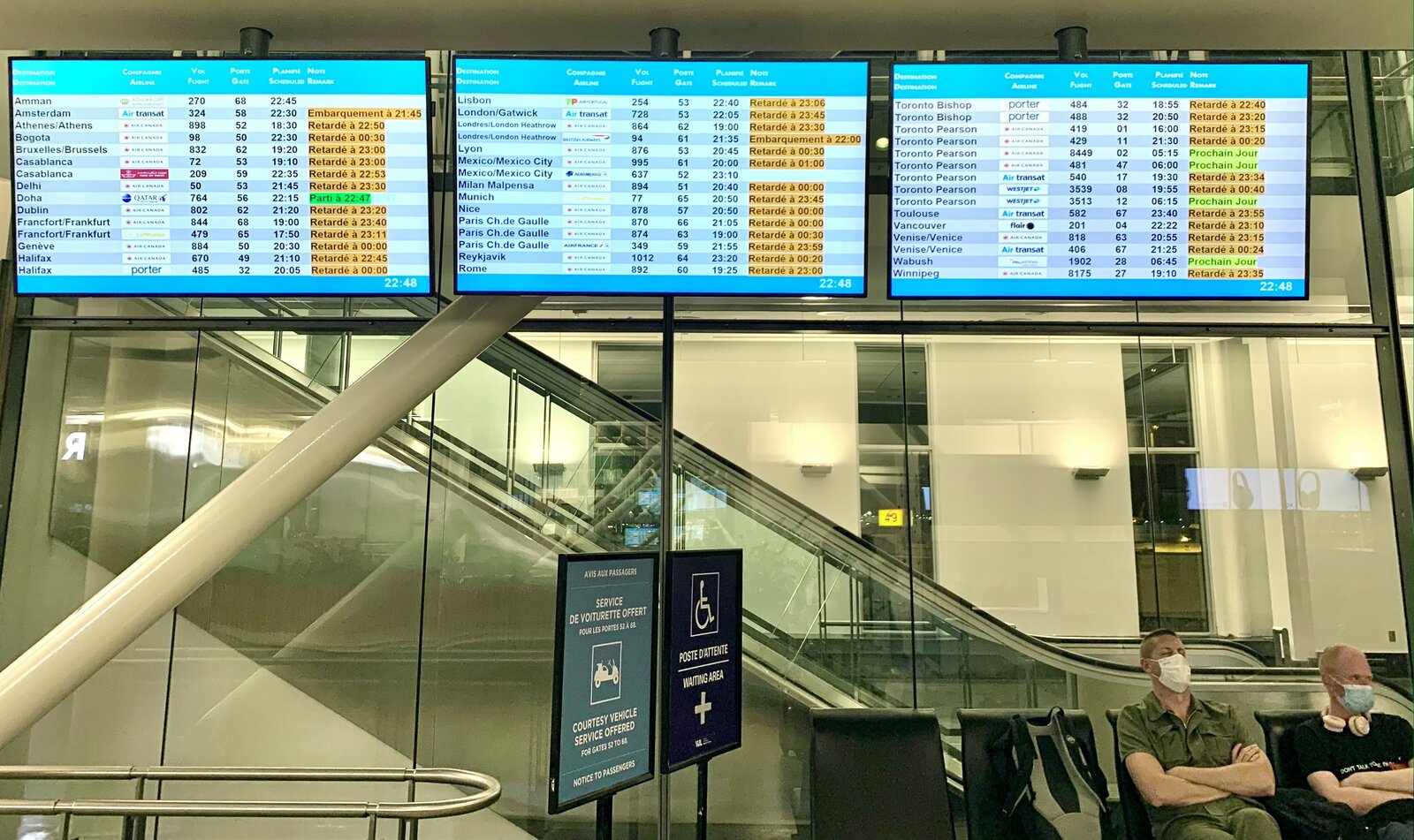
With high-season travel heading into its peak, flight delays might be a big problem, but here are things you can do to avoid it and have a timely departure according to your original ticket. Indeed, airlines’ timetables are jam-packed, leaving minimal time for turnarounds and for unscheduled maintenance. In addition, the summer climate rhymes with thunderstorms which can cause ripple effects that can last for days.
Here’s what you can do to greatly increase your chances of arriving on time, even though the sources for flight delays are out of your control.
Flight Delays – Why do they happen?
Before we tackle what you can do to improve your odds of having an on-time departure and reaching your destination as scheduled, here’s a little review of what most flight delays occur:
Weather
Thunderstorms and snowstorms can cause flight delays for various reasons, from take-off/landing safety to prompting a halt in essential ground operations. Indeed, if there is a heavy storm, your flight may be delayed because the fuelling and baggage handling crew can’t venture out on the tarmac.
Airport constraints
During peak summertime and winter (holidays, spring break), there are a lot of scheduled flights as it’s the high season for travelling. Therefore, you may face a delay because your plane is waiting on the tarmac for a gate to park.
Also, you could be dealing with some metering procedures from immigration as they will ask the airlines to hold the passengers on the plane if they cannot accommodate the crowd in the lines for customs.
Staff shortages
Staff shortages can cause flight delays, from the lack of customs officers, grooming teams, and baggage handlers to crew. For example, if a flight attendant calls in sick at the last minute, the company can contact those on reserve, but they will need time to get to the airport. In the worst-case scenario, a flight delay may even result in a flight cancellation.
Maintenance
Planes often have unscheduled maintenance because they fly so much. Indeed, planes are always in the air, and the odds of something breaking are constantly present. Also, there are a lot of different things that can break on a plane.
Therefore, during that tight turnaround time they spend on the ground, technicians have to fix them, and it can occasionally cause flight delays because some problems may take longer to repair than others.
Flight delays – What can you do?
Early flights
When scheduled for early morning, flights tend to leave on time because the plane may have been sitting on the tarmac for hours, if not overnight. Crew operating those flights are usually already on the ground and not being positioned from another base; maintenance had a bit more time to go over the aircraft’s hiccups, the sky is normally calmer, etc.
Flight delays are also more likely to happen later in the day because they will tally up. Indeed, your plane might be flying the Montreal to Toronto route all day back and forth, so every shred of delay will add up throughout the day as they might not be able to recover.
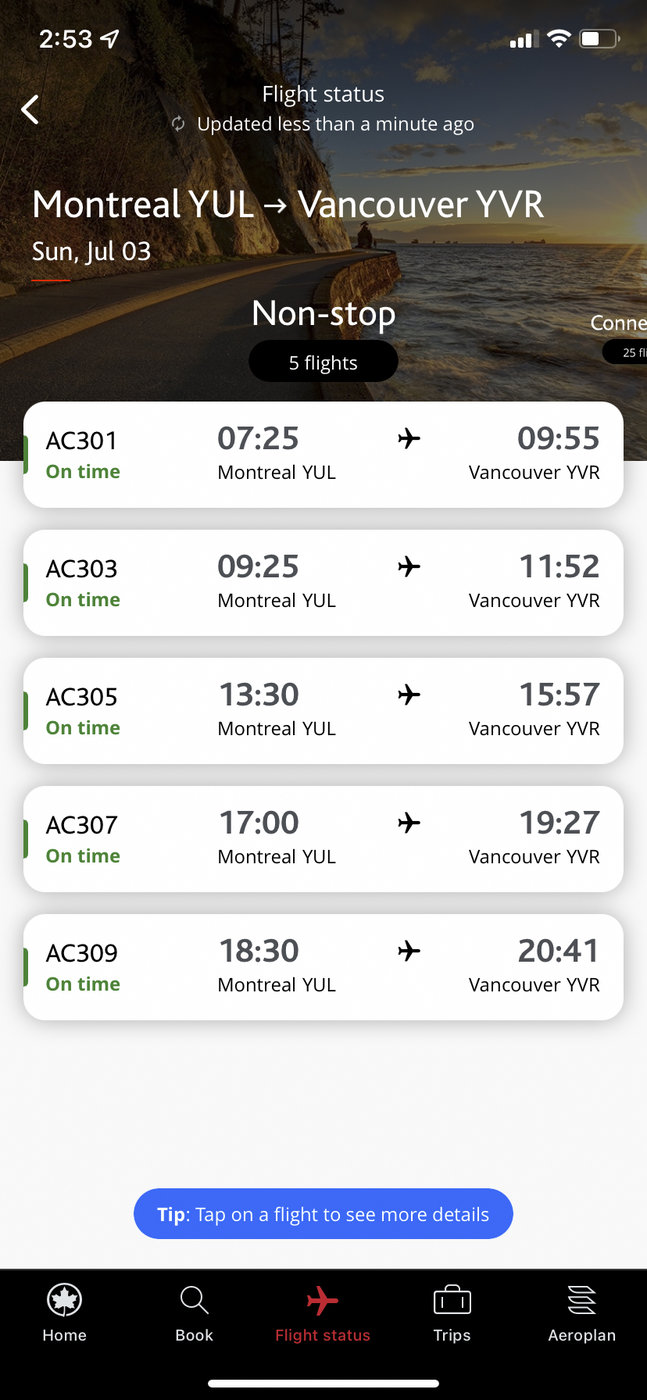
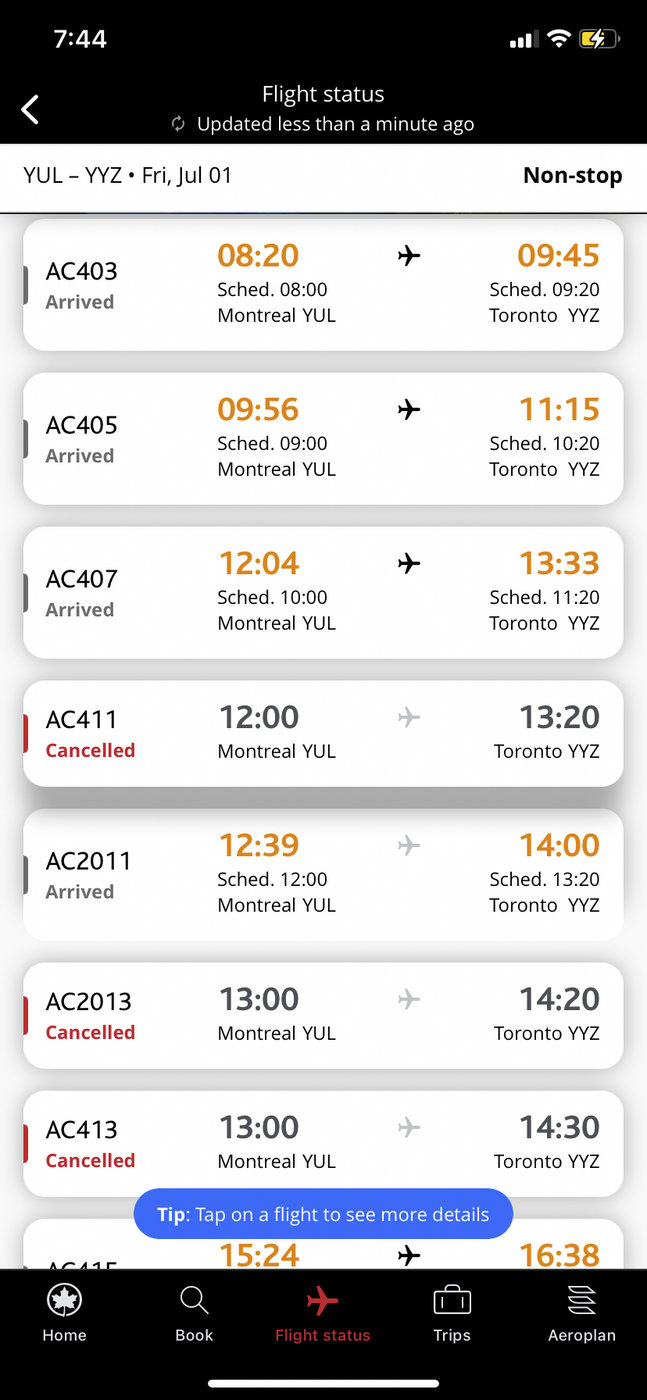
Therefore, booking early flights or choosing to stand by on an earlier departure, especially if you have a connecting flight, can help avoid delays even if it means that you must wake up at, or actually before, the crack of dawn for an on-time departure.
Monitor weather patterns
Most flight delays will be related to weather, and before you accuse the airline of lying to you because the sun is shining above you, there may be a thunderstorm where your plane is coming from.
Weather predictions are fairly accurate, and airlines may even offer you free change in advance, such as the snowmageddon that occurred a few years ago, two days before Christmas. This can happen at any time, even if there is no snow or thunderstorms in sight.
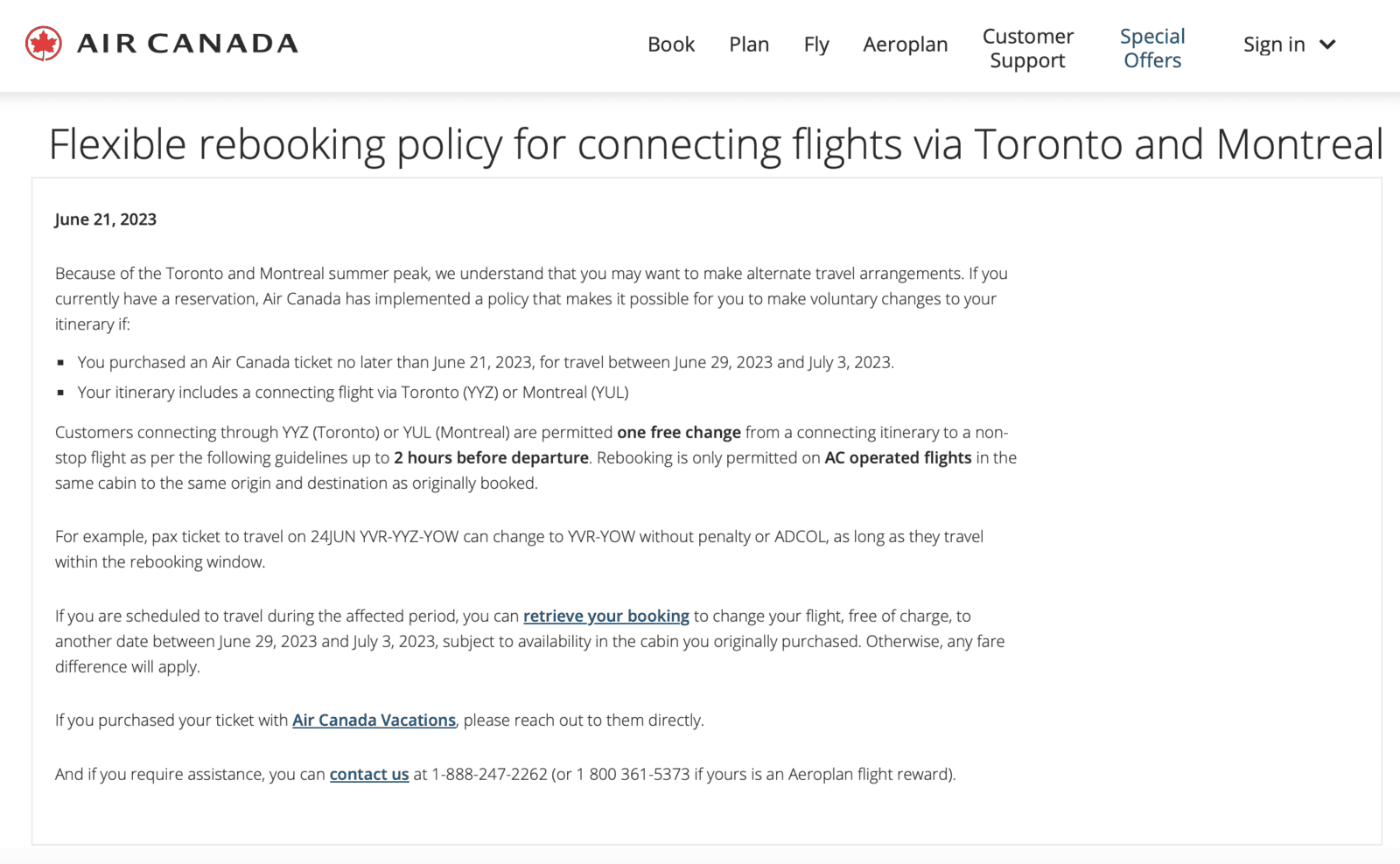
Even if it’s impossible to do it without a fee, think about modifying your travel plans (day and or route) when the elements might have high chance of delaying your flights. If there is one, the fee can be considered as the cost for some peace of mind and assurance that you will make it with an on-time departure and even avoid flight cancellation.
Aircraft Tracking
Air Canada’s app allows you to track where your plane is arriving from, and you can go to a couple of flights back to check the exact departure times. Therefore, if you see that the incoming flight is delayed, chances are that yours will be too. You can also use FlightAware tools for this kind of information for all companies.
When at one of their hubs, be aware that the airline can change aircraft assignments. So, if you plan to get to the airport later because your flight was delayed, don’t because they can shuffle planes around to minimize delays and recover.
That being said, it is always advised to be at the airport on time for your flight if something changes, even if you are not at their hubs. For example, there may be three Air Canada flights leaving Tokyo-Narita that evening (to Vancouver, Toronto and Montreal), and they could switch them depending on what will make more sense for their operations as they will evaluate ongoing connections, crew scheduling issues, etc.

Quick Actions
If you see that your flight is delayed and that it will cause additional problems, such as a missed connection, quickly get in line to speak with an agent and get on your phone to modify your original booking. Customer service agents will start to rebook people who are affected by delays and cancellations, so you will want one of those coveted free spots on available flights before the other passengers concerned!
Flight Delays – Your rights and compensation for a delayed flight
When you face a flight delay, it is a good thing to know what your rights are. You cannot ask for compensation if the cause is out of their control, as with the weather. However, if it’s because of crew constraints, the odds are in your favour.
You can read all about Canada’s Air Passenger Protection Regulations (APPR) here:
Flight Delays – Travel insurance for a delayed or cancelled flight
Compensation is what you are owed by the airline, while reimbursement of unexpected costs is what you need Travel Insurance for.
Indeed, if a severe thunderstorm causes your flight delay, you cannot ask for compensation because it is out of the airlines’ control. However, if that implies a lost hotel night, an additional hotel night where you were delayed, meals until your new departure time, etc., you can claim those fees from your insurance.
Since most people employ credit cards to purchase their flight nowadays, make sure you use the right one since there are fantastic travel insurance on some cards.
Most credit cards will ask you to charge the entire cost of the trip on the card for you to be eligible for flight delay insurance.
It’s important to carefully read your insurance certificate to purchase your trip ‘‘properly’’ and be adequately insured. It’s also important to remember that you can claim your expenses, but your insurance does not compensate you for a flight delay.
What happens when you pay with points, then?
In short, most co-branded credit cards will offer flight delay coverage for their respective rewards program. For example, if you use your TD® Aeroplan® Visa Infinite* Card to pay your Aeroplan award flight’s taxes and fees, you will be covered and will be able to make a claim for compensation.
Bottom Line
In summary, flight delays are common during busy travel seasons, but there are ways to reduce the risk. Understanding the causes of delays, like weather and airport constraints, can help you plan better.
Booking early morning flights and monitoring weather patterns can increase your chances of timely departure as your original booking states. Employing tools to track your aircraft and taking prompt action if delays occur can improve your options for rebooking.
Knowing your passenger rights (so you can claim for compensation when due) and having travel insurance can also provide peace of mind. By being proactive and prepared, you can navigate flight delays more effectively, escalate your chances of reaching your destination on time and avoid flight cancellation altogether.


- Annual fee
- $0 $139No annual fee the first year
- Our valuation
- $1,139Milesopedia first-year estimate First-year valueWelcome bonus$1,000Annual fee rebated$139Total$1,139Rewards on your spending are not included. The calculator that adds them from your own profile is on the card's page.
- Welcome offer
- Up to 50,000 points
No annual fee the first year
Milesopedia first-year estimateFirst-year valueWelcome bonus$1,000Annual fee rebated$139Total$1,139Rewards on your spending are not included. The calculator that adds them from your own profile is on the card's page.
+ First Year Annual Fee Rebate
on TD's website
What to do if the airline refuses to refund?
If the airline refuses to refund, review the airline’s refund policy and your ticket’s terms and conditions. Contact the airline’s customer service to request a refund and document all communications. If they refuse, you can escalate the issue by filing a complaint with relevant aviation authorities or consumer protection agencies. Additionally, you can dispute the charge with your credit card company if the ticket was purchased with a credit card.
What to do if I miss my flight?
If you miss your flight, immediately inform the airline’s customer service desk at the airport. Depending on the airline’s policy and the reason for missing the flight, they may rebook you on the next available flight, possibly with a fee. If you have travel insurance, check if it covers missed flights.
Why are all flights delayed?
With all companies, whether it’s Air Canada or Air Transat, flights can be delayed for various reasons, including bad weather, technical issues with the aircraft, air traffic control restrictions, or operational challenges such as crew availability. Sometimes, delays can be due to security concerns or airport congestion. Airlines and airports prioritize safety, so delays often occur to ensure passengers and crew’s well-being.
When to request compensation for a delayed flight?
You can make a claim for compensation when your flight is significantly delayed, canceled, or if you are denied boarding due to overbooking. The specific conditions for compensation vary by region and airline, but generally, if the delay is within the airline’s control, you are entitled to compensation. It’s essential to know your rights under relevant regulations, such as the RPPA in Canada or the EU261 in Europe, which specifies compensation amounts and conditions.
Our featured card


- Annual fee
- $120
- Our valuation
- $990Milesopedia first-year estimate First-year valueWelcome bonus$990Total$990Rewards on your spending are not included. The calculator that adds them from your own profile is on the card's page.
- Welcome offer
- Up to 110,000 points
Milesopedia first-year estimateFirst-year valueWelcome bonus$990Total$990Rewards on your spending are not included. The calculator that adds them from your own profile is on the card's page.
Ends Sep 22, 2026
on American Express's website
Apply with confidence — no impact on your credit scoreApply with confidenceCheck whether your application will be approved before you submit it, with no impact on your credit score*When you apply for a personal American Express Credit Card, we will tell you whether you are eligible without affecting your credit score. So you can apply with confidence.*Instant decisions are only available for consumer Card applications (also called “personal Cards”).
Our editorial integrity
Our reviews and rankings are based on an objective assessment. Advertisers do not influence our content. We may receive compensation through some links; our analysis and opinions remain independent.