The Cost of a Sporting Event: Cash or Points

Loading article…
The cost of a sporting event comes down to three decisions, and the gap between paying cash and paying with points runs past $2,000 on a single weekend. There is no hidden trick to it: it is the choice of neighbourhood, the moment you book, and the card you pull out on site.
We ran the numbers on real dates, those of the 2026 FIFA World Cup in Canada. The amounts below come from that survey, but the mechanics hold for any fixture that concentrates demand into a few days. For the full plan, see our guide on how to attend a sporting event with your points and our pick of the best credit cards.
A match weekend for two always breaks down the same way: two nights, two return flights, meals on site and the extras. Here is what each line costs depending on whether you pay everything in cash or use what you have accumulated.
| Line | Paid entirely in cash | Paid with your points and your card |
|---|---|---|
| 2 nights of accommodation | $2,100 to $2,550 next to the stadium | $398 in university residence, or one night covered by a certificate |
| Return flights for two | Cash fare, inflated on match dates | From 40,000 Aeroplan or WestJet Rewards points |
| 2 airport lounge visits | $80 | Included, 6 visits a year with the card |
| Welcome bonus to apply | None | 35,000 Scene+ points, or $350 in credit |
The cumulative gap runs from $2,100 to $2,500 on a single weekend, before the flight is even counted. The heaviest share does not come from the points: it comes from the accommodation choice, whether you pay in cash or not.

This is where it hurts. In Toronto, downtown rates jumped about 78% around the June 12 opening date, and the hotel closest to BMO Field is going for $1,045 to $1,275 a night on match nights. Themed packages climb even higher. In Vancouver, the tournament’s priciest host city, the average nightly rate is close to $890, and match nights are up about 49%.
Here’s what a match night in downtown Toronto looks like, and the options that actually cut the bill:
| Option (match night) | Rate per night | Stadium access |
|---|---|---|
| Hotel next to BMO Field | $1,045 to $1,275 | Walking distance |
| Luxury hotel «Soccer 2026» package | $1,988 | Downtown |
| Entry-level downtown chain hotel | From $549 | Public transit |
| Budget suite hotel | $411 (June 12) | Public transit |
| University residence (U of T) | $199 single / $299 double | Public transit |
| Suburbs with GO Train access (Mississauga, Vaughan, Pickering) | Significantly less | GO Transit to Union |
The math is brutal. Two nights right by the stadium run about $2,100 to $2,550. The same two nights in a university residence come to $398, with GO Train suburbs landing somewhere in between while still dropping you at Union in about thirty minutes. Choosing the smart option over premium downtown saves $1,700 to $2,100 on a single weekend.
A free night certificate, like the ones from Marriott Bonvoy, hits its maximum value right here: on a match night worth over $1,000. The same certificate used in the off-season is worth a fraction of that. Otherwise, Scene+ points apply to any accommodation at a rate of 1,000 points = $10 to knock down part of the bill.
For a reader based in Quebec, the instinct is a Montreal–Toronto round trip. On match dates, cash fares climb fast. Short-haul North American reward flights, on the other hand, start around 10,000 points one-way with Aeroplan or WestJet Rewards, a dynamic rate that rises on peak dates but often still lands at 1.5 to 2 ¢ per point, above our valuation. Since most programs let you redeposit points penalty-free, you can lock in a seat early and adjust later, risk-free.
The lesson holds for every knockout stage: reward seats go first when an entire continent travels to the same city on the same dates.
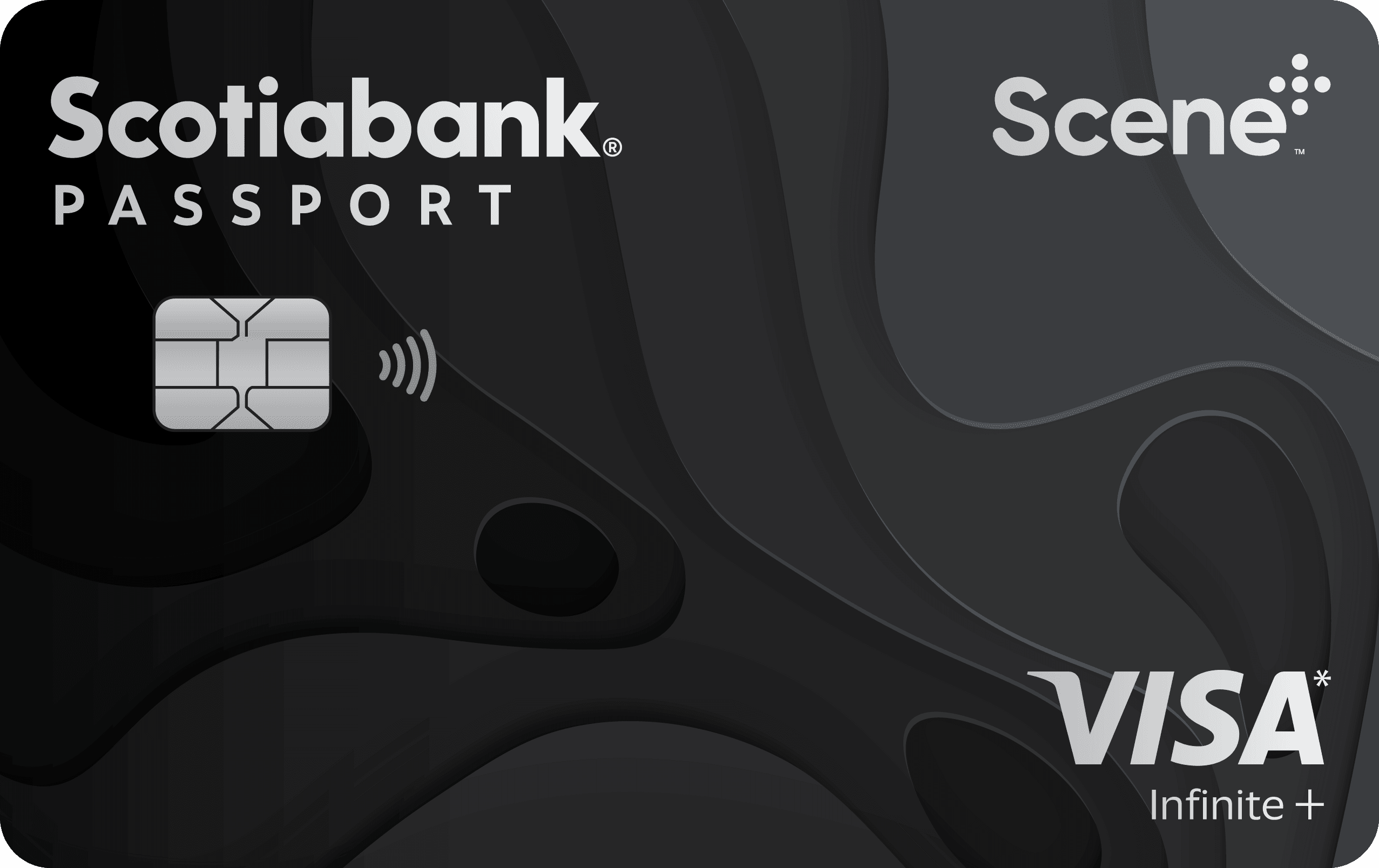
For travel within Canada, the Scotiabank Passport Visa Infinite +* Card plays on three concrete levers, beyond currency exchange.
1. Scene+ earnings on a real match weekend. The card gives 2 points per dollar on transportation, restaurants and entertainment, exactly the three categories of a match weekend. Take a realistic weekend for two: $300 on restaurants and bars, $60 in transportation to the stadium, $100 on entertainment and $80 elsewhere. That’s about 1,000 Scene+ points, or $10. Modest on the weekend alone, but it adds up over time.
2. Airport lounges, in packed terminals. Pearson and YVR are overflowing during the tournament. The 6 included lounge visits per year are worth up to $240 based on our $40-per-visit valuation, which alone covers the card’s $150 annual fee.
3. The welcome bonus. New cardholders get up to 35,000 Scene+ points, a $350 value. Enough to cover one downtown match night, or several nights in the suburbs. Redeemable at a rate of 1,000 points = $10 on any travel purchase.
We named it Best No-Foreign-Transaction-Fee Credit Card in 2024, 2025 and 2026.
on Scotiabank's website
This is where currency exchange comes into play. As soon as you pay in US dollars or pesos, most Canadian cards add 2.5% to every transaction. Over a two-week stay in a US host city, that surcharge adds up fast. The Scotiabank Passport Visa Infinite +* Card charges no foreign transaction fees: that 2.5% stays in your pocket on every meal, every hotel night and every ticket bought on-site.
On the data side, Visa Infinite cardholders get 11 GB of GigSky data a year, enough to keep track of tickets, transportation and the map on site without paying roaming fees. Visa periodically adds boosted data packages during major tournaments, such as the 7 days of unlimited Canada, United States and Mexico data offered in the spring of 2026. Our GigSky eSIM guide walks through the setup. Finally, Visa is FIFA’s official payment partner, and Visa cards are accepted on the official ticketing platform.
The World Cup is just a textbook case. The same playbook (book early, stay on the outskirts, use a no-foreign-transaction-fee card abroad, make the most of lounges, and keep your points flexible) applies to any event that sends demand through the roof. Here’s where it’ll come in handy again.
| Event | When and where | The key asset |
|---|---|---|
| Super Bowl LXI | February 14, 2027, Los Angeles | In the US: zero conversion fees, lounges, and staying on the outskirts to dodge inflated rates |
| Summer Olympics | July 14 to 30, 2028, Los Angeles | Extreme demand over 16 days: book very early with points, zero conversion fees, eSIM |
| Las Vegas F1 Grand Prix | November 19 to 21, 2026 | In the US: zero conversion fees and lounges, staying off the Strip |
| Canadian Grand Prix | Every June, in Montreal | Domestic: 2x Scene+ on transportation and restaurants, staying on the outskirts |
| Rugby World Cup | October 1 to November 13, 2027, Australia | Long-haul: reward flights booked early and zero conversion fees on the ground |
| NHL playoffs, Blue Jays, Grey Cup | Recurring, in Canada | Domestic: 2x Scene+ on transportation, restaurants and entertainment, tickets paid with a Visa card |
Same card, same method. A no-foreign-transaction-fee card that earns on transportation, restaurants and entertainment, and gets you into lounges, stays relevant well beyond any single tournament.
On a match weekend in Canada, most of the savings don’t come from anything complicated, just three decisions backed by numbers. Choosing a smart place to stay over lodging right by the stadium saves $1,700 to $2,100 over two nights. Flying on reward points instead of cash avoids inflated airfares. And the right card covers its own fee through lounge access, earns on the categories of a match weekend and offers up to $350 in welcome value to reinvest in travel. Taken together, those three decisions are worth more than $2,000 on a single trip.
For the next event, preparation matters more than luck: tickets are released in phases, often months ahead. Set up the official ticketing account as soon as the schedule is announced, and read our guide on how to get tickets for a major sporting event.
The tournament ended on 19 July 2026, but the arithmetic on this page still holds. You simply swap the event. A Montreal Canadiens or Toronto Maple Leafs game raises the same three questions: the price of the ticket, the price of the hotel night and the cost of getting there. The volume, however, is not remotely comparable. The World Cup delivered thirteen games in Canada over one month. The seven Canadian NHL teams each play 42 home dates between 29 September 2026 and 10 April 2027.
That flexibility is the real difference. Instead of accepting a date set by a tournament bracket, you pick a quiet week in November or February, when downtown hotel rates drop back to normal. Moreover, a Montreal to Toronto round trip on points is the same route at the same award pricing, whatever the sport. Our NHL travel hub carries the full season schedule, the arena and airport for each city, and the official ticket link for every game.
Downtown, expect $549 to over $1,275 a night on match nights, and considerably more for luxury packages. Rates jumped about 78% around the June 12 opening. Options from $199 to $411 are still available in university residences or suite hotels, and GO Train suburbs cost less.
In most cases, yes. Hotels in Mississauga, Vaughan or Pickering cost a fraction of downtown rates and reach Union Station via GO Train in about thirty minutes. Over two nights, the gap with a hotel right by the stadium easily reaches $1,700 to $2,100.
Short-haul North American flights start around 10,000 points one-way with Aeroplan or WestJet Rewards. Pricing is dynamic and rises on match dates, but the return often still lands at 1.5 to 2 ¢ per point. Book early: reward seats go first.
For a match in Canada, aim for earnings on transportation, restaurants and entertainment, plus lounge access. The Scotiabank Passport Visa Infinite +* Card gives 2 Scene+ points per dollar on these categories, includes 6 lounge visits and offers up to 35,000 welcome points. For matches in the US or Mexico, its zero foreign transaction fees become the deciding factor.
Use an eSIM. Scotiabank Passport Visa Infinite +* Card holders get 11 GB of GigSky data a year, usable abroad with no roaming charges. Visa also runs limited-time boosted data packages around certain major tournaments: check what is in force before you leave.
The tournament ran from June 11 to July 19, 2026, with the final on July 19 in the New York/New Jersey area. In Canada, 13 matches were played in Toronto (6) and Vancouver (7). The figures on this page come from that survey and serve as a benchmark for the next major event.
on BMO's website
Our reviews and rankings are based on an objective assessment. Advertisers do not influence our content. We may receive compensation through some links; our analysis and opinions remain independent.