

Tips for managing finances as a couple

Managing couple’s finances is just as crucial to a relationship as love. Moreover, talking about money is taboo and often a bone of contention. However, communication on finances and the resulting decisions have an impact on the stability of each partner. This article explains how open financial communication can strengthen a couple’s bond and help you achieve your financial goals. We also provide practical tips and tricks for managing your finances as a couple.
Finances as a couple – Pitfalls to avoid
You may sometimes encounter difficulties in managing your finances as a couple. Identifying and avoiding these pitfalls can help maintain a healthy, harmonious financial relationship. Here are some of the most common pitfalls to avoid:
- Hiding expenses or debts: Transparency is essential to maintaining trust between spouses.
- Not respecting different points of view: Recognizing and respecting different financial perspectives is crucial (e.g. what is an essential expense vs. a discretionary expense).
- Not setting a joint budget: Planning your expenses and financial goals together helps you avoid arguments and financial mismanagement.
- Postpone discussions about money: Resolving financial conflicts as soon as they arise, even if they are a bone of contention, is essential to avoid long-term problems.
- Not balancing the distribution of expenses: Finding a fair and equitable balance in your financial contribution (equal share, pro rata income or pooling) and your expenses is necessary to avoid frustration.
- Not saving: Saving regularly is essential to cope with the unexpected and achieve your long-term financial goals (instead of spending before saving, opt for the strategy of paying yourself first).
Tips for managing a couple’s finances
Here are some practical ideas and tips for managing your finances as a couple.
Managing finances as a couple – Communicating effectively about finances
Open and honest communication between partners encourages the sharing of values and financial goals. What’s more, it allows us to quickly identify and resolve your financial problems.
Here are a few tips for good communication:
- Discuss money at the beginning of the relationship (it’s easier to discuss it when things are going well).
- Decide how to manage your finances as a couple (together or individually).
- Draw up a budget (income, expenses, savings) and divide expenses between spouses (day-to-day expenses, major purchases).
- Plan joint expenses as a couple: emergency fund, children, property purchase, vacations, childcare, retirement, inheritance, etc.
- Communicate openly and honestly (don’t hide anything from your partner, such as a personal debt).
Managing finances as a couple – Drawing up a budget
By creating a joint budget, you’ll have an overview of your finances and be able to avoid unpleasant surprises. But, also, to have a better chance of achieving your financial goals.
There are 3 main ways of managing a couple’s finances: sharing equally (50-50), pooling (income and expenses) and pro-rata sharing of income (gross or net).
Here’s more information on each of these approaches, along with the main advantages and disadvantages.
Equal sharing (50-50)
Here are the main elements of the 50-50 approach:
- Share common expenses equally.
- Regularly compare the expenses paid by each partner, or pay a fixed amount into a joint account.
- Keep a personal account for discretionary spending.
- Application: This approach is often used by young couples, childless couples or couples without significant joint expenses.
- Challenge: The couple must agree on what is and what is not a joint expense. What’s more, sharing common expenses equally is not always equitable (e.g. in a couple with a large income gap).
Pooling (income and expenses)
Here are the main elements of the pooling strategy:
- Income is pooled and managed as a family income, used for common and personal expenses. Don’t forget to pool your savings.
- An approach that simplifies financial management, eliminates the need to divide expenses between partners, and values unpaid time (e.g. time devoted to family and household chores).
- How to use: This approach is often used by couples who have been together for several years and by couples with children.
- Challenge: An approach that requires similar financial priorities and mutual trust. Moreover, tensions can arise if one of the partners has a higher income and more authority over financial decisions.
Pro-rata sharing of income
Here are the main elements of the pro-rata income sharing strategy:
- Share joint expenses according to each partner’s income.
- Compare income and expenses on a regular basis.
- Ensure a fair distribution of expenses while preserving a certain financial independence and savings capacity for each partner.
- Determine whether expenses are shared in proportion to gross income, income after tax, income after savings, etc.
- A method that recognizes other forms of contribution, such as taking care of children or household chores (a drop in income means a drop in contributions to common expenses).
- How to use: This approach is often used by couples with a large income gap.
- Challenge: The couple must agree on what is a joint expense and what each person’s contribution is. What’s more, this method is not always fair on the savings side. Despite the fact that expenses are shared in proportion to income, the names of both partners must appear on contracts for the purchase of joint property (e.g., a house).
The financial management method you choose may also vary according to your ability to save or your personal situation (e.g. parental leave after the arrival of a child). It also depends on your marital status (common-law vs. married).
Managing finances as a couple – Managing bank accounts as a couple
The choice between separate bank accounts, joint accounts or both depends on your preferences and your financial situation as a couple. Dividing up financial responsibilities, such as paying bills or saving, can help balance your respective contributions.
Managing finances as a couple – Planning major expenses
By making decisions together about major expenses, such as vacations or buying a car, you build trust and cooperation in your relationship as a couple. Saving regularly for short-, medium- and long-term goals enables you to make your shared dreams come true.
Managing finances as a couple – Saving and investing together
Building up an emergency fund (in a high-interest savings account or TFSA) is essential to help you deal with unexpected expenses and avoid stressful financial situations. Once this is in place, you can start investing together to help you achieve your long-term financial goals. For example, financial planning for your retirement or your children’s education (through an RESP).
Managing finances as a couple – Paying off debts together
As a couple, you need to manage your debts together and prioritize debt repayment as quickly as possible. To do this, you can use strategies to pay off your debts, such as the avalanche method or the snowball method. To avoid financial tensions, you need to communicate openly about your individual and joint debts.
Managing finances as a couple – Tax planning as a couple
By planning your taxes properly as a couple, you can benefit from attractive tax advantages. You can read more about this in the « Taxes » section of our personal finance guide, or consult a financial professional. In this way, you can optimize your tax situation according to your status as a couple, and save money in the long term.
Managing finances as a couple – Sharing financial responsibilities
By dividing up your financial responsibilities fairly within your couple, you’ll strengthen the feeling of partnership and participation. This will ultimately lead to a better understanding of financial responsibilities and better financial management in your relationship.
Managing your finances as a couple – Respecting different points of view on money
Acknowledging and respecting your different values and points of view regarding money enables you to find compromises and solutions that suit each of you. When you work together, you strengthen communication and trust in your relationship as a couple.
Finances as a couple – Joint account
Although covered in a previous section, the way you choose to manage your finances is essential to the effective management of your couple’s finances. Often, a combination of personal accounts for each partner and a joint account is required.
Don’t limit yourself to traditional bank accounts. Indeed, virtual banks such as EQ Bank and Wealthsimple also offer joint accounts.
For example, EQ Bank offers a joint account that combines a chequing account with a high-interest savings account. The interest rate on the Joint Account can be as high as 4% per annum.
Finances for couples – Insurance
Whether you have children or not, ensuring your financial security as a couple is important. Several types of insurance exist.
For example, disability insurance protects your income in the event of inability to work due to illness or injury. It guarantees that you can maintain your standard of living in spite of everything.
Life insurance provides financial protection for your family in the event of premature death. It can help you cover expenses, repay debts and maintain financial stability.
Discussing these elements together helps you understand your needs and insure accordingly. So you have the right coverage to protect your financial future. Don’t hesitate to consult a financial advisor or insurance broker.
Bottom Line
In short, money is often more taboo than sex. Yet managing finances as a couple is essential to avoid pitfalls. Open and honest financial communication strengthens a couple’s bond and helps you achieve your financial goals. This article has explored a wide variety of tips and tricks for managing your finances as a couple.
Frequently Asked Questions
How do you divide your expenses as a couple?
The 3 main methods for dividing expenses in a couple are equal sharing (50-50), pooling (income and expenses) and sharing in proportion to income. Each has its advantages and disadvantages, but it’s up to you to find the one that best suits your relationship.
How to manage finances as a couple?
There are many ways to manage your finances as a couple, both for your budget and for your savings. Above all, open and honest communication helps you share your values, concerns and financial goals as a couple. Then you can create a joint budget, plan important expenses together and finally save and invest with a common strategy.
Who has to pay for what?
It’s up to you, as a couple, to decide on financial responsibilities and the sharing of expenses. Choose the expense allocation method that best suits your values and your couple’s financial goals.
Why make a couple 50-50?
There are many reasons why a couple might want to share common expenses equally (50-50). This approach is often used by young couples, childless couples or couples without significant joint expenses. Although this is a well-known strategy, it does present a few challenges. For example, the couple must agree on what constitutes a joint expense. What’s more, the 50-50 split is not always equitable, as in the case of a couple with a significant income disparity.
Our featured card
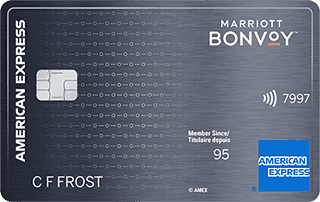

- Annual fee
- $120
- Our valuation
- $990Milesopedia first-year estimate First-year valueWelcome bonus$990Total$990Rewards on your spending are not included. The calculator that adds them from your own profile is on the card's page.
- Milesopedia first-year estimateFirst-year valueWelcome bonus$990Total$990Rewards on your spending are not included. The calculator that adds them from your own profile is on the card's page.
- Welcome offer
- Up to 110,000 points
- Ends Sep 22, 2026
on American Express's website
Apply with confidence — no impact on your credit scoreApply with confidenceCheck whether your application will be approved before you submit it, with no impact on your credit score*When you apply for a personal American Express Credit Card, we will tell you whether you are eligible without affecting your credit score. So you can apply with confidence.*Instant decisions are only available for consumer Card applications (also called “personal Cards”).
Our editorial integrity
Our reviews and rankings are based on an objective assessment. Advertisers do not influence our content. We may receive compensation through some links; our analysis and opinions remain independent.