
Earning Points With a Credit Card

There are two ways to earn points with a credit card:
- Bonus categories multiply your points on groceries, restaurants or gas.
- The welcome offer gives you a large number of points at once, provided you spend a set amount in the first few months.
Together, they can pay for a first trip in less than a year.
How many points can you earn per year?
With $2,000 of spending per month on a well-chosen card, you can earn more than 70,000 points per year, not counting the welcome offer. The amount depends mostly on the share of your spending in bonus categories. Here is an example with the American Express Cobalt® Card.
| Category | Monthly spending | Rate | Points per month |
|---|---|---|---|
| Groceries and restaurants | $1,000 | 5 points per dollar | 5,000 |
| Gas and transit | $200 | 2 points per dollar | 400 |
| Streaming | $50 | 3 points per dollar | 150 |
| All other purchases | $750 | 1 point per dollar | 750 |
| Total | $2,000 | Average of 3.15 points per dollar | 6,300 points, or 75,600 per year |
What those 75,600 points represent:
- Estimated value: about $1,285 per year, at 1.7 cents per Membership Rewards point according to our valuation
- Card annual fee: $191.88
- 5-point rate cap: $2,500 in purchases per month, groceries and dining combined
The rates and fees come from our Cobalt Card page. To compare with other cards in the same program, see our best Membership Rewards cards.
What are bonus categories?
A bonus category is a type of purchase that earns more points than others. In Canada, cards mostly reward groceries, restaurants, gas, transit and recurring bills.
Choose a card whose categories match your biggest expenses. A family that spends mostly on groceries earns more with a card that gives 5 points per dollar on groceries than with a card that gives 2 points everywhere.

To find out which card rewards what, see our guide to credit card spending categories in Canada.
How does a welcome offer work?
A welcome offer is a batch of points given to new cardholders after a minimum spend within a set time frame. For example, a card may require $3,000 in purchases in the first 3 months. Some offers are paid in several stages over the first year.
The welcome offer is often worth more points than a whole year of purchases.
- Check the minimum spend: it should match your normal purchases, without spending more.
- Note the deadline: it usually starts when the card is approved, not at your first purchase.
- Wait for the bonus: the points often arrive on the statement after you reach the minimum.
For actual payout times, read when will I receive my welcome bonus.
What should you check before applying for a card?
Before applying for a card, check three things:
- The minimum income required: some premium cards require a high personal or household income.
- Your credit score: it is the rating banks check to see how reliably you repay your debts.
- The annual fee.
Every application, approved or declined, leaves a mark on your credit file. With American Express, you can find out whether you qualify with no impact on your credit score before submitting your application for a personal card.
In Quebec, some rules differ. For example, American Express charges the Cobalt Card fee there once a year instead of monthly. For all the details, read everything you need to know before applying for a credit card.
Which card should you choose to start?
Choose your first card based on your goal. The four cards below cover the most common profiles. Up-to-date conditions, including the welcome offer and fees, are shown in the card box.
- For groceries and restaurants: the National Bank® World Elite® Mastercard® and the American Express Cobalt® Card give up to 5 points per dollar in these categories.
- To travel with Aeroplan: the TD® Aeroplan® Visa Infinite* Card earns Aeroplan points directly.
- For transferable points: the RBC Avion Visa Infinite Card earns RBC Avion points, transferable to British Airways Club, among others.
Winners of the Milesopedia Awards 2026: the American Express Cobalt® Card (best credit card for restaurants) and the TD® Aeroplan® Visa Infinite* Card (best airline credit card).


| Credit card | Annual fee | Welcome offer | |
|---|---|---|---|
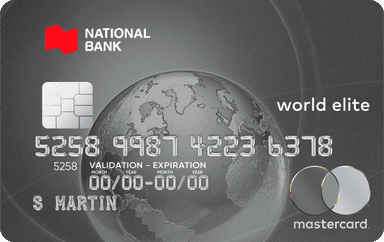

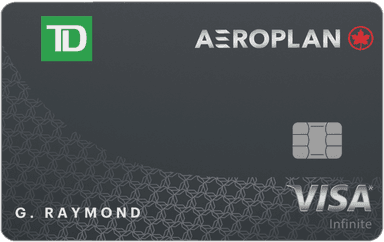
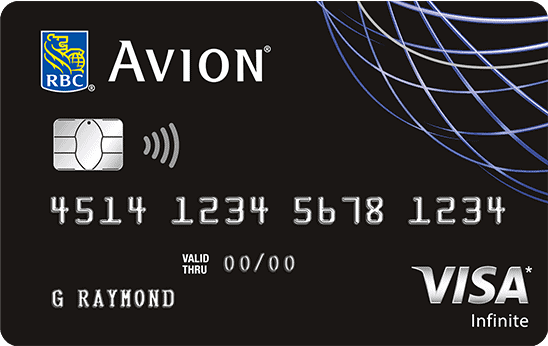
To compare more cards, see our best credit cards for beginners or use the credit card comparison tool.
In summary
To earn points with a credit card, choose a card whose categories match your spending, take advantage of the welcome offer without spending more than planned, and pay your balance in full every month. To see all the options, check out our best credit cards.
Next page: earning points without a new card, with free programs and shopping portals.
To receive the best welcome offers as soon as they launch, subscribe to the Milesopedia newsletter.
Frequently asked questions about earning points
Which credit card earns the most points?
No card wins in every case. Cards that give 5 points per dollar on groceries and restaurants earn the most for households that spend mostly in those categories. For frequent travellers, a card that rewards travel purchases may do better. Compare based on your own spending with the credit card comparison tool.
Does applying for a card lower my credit score?
A card application generally triggers a credit check, which can lower your score slightly for a few months. The effect stays small if you pay your balances on time. However, avoid many applications in a short period. American Express lets you check your eligibility with no impact on your score. Read everything you need to know before applying for a credit card.
How do you reach the minimum spend of a welcome offer?
Apply for your card before a planned expense, such as holiday shopping, repairs or annual insurance. Also move your recurring bills to the new card during the qualifying period. Never spend beyond your budget to reach a minimum: the interest would wipe out the value of the points. See our tips to maximize credit card points.
How many credit cards do you need to get started?
One is enough to get started. First learn how it works, earn its welcome offer and pay it off in full every month. After that, a second, complementary card can cover another category or another program. Experienced users often keep two to four cards. Read beginner level: which credit cards to apply for.
Do you earn points on purchases made abroad?
Yes, but often at the base rate, for example 1 point per dollar. In addition, most cards charge a 2.5% foreign transaction fee on purchases in a foreign currency, which cancels out the value of the points. For travel, a card with no foreign transaction fees is often a better choice. See our no foreign transaction fee credit cards.