Tangerine GIC Rates: Is 4.25% a Good Rate?

Loading article…
Tangerine raised its GIC rates twice this fall: on September 12, 2026, then again before October 5. The 5-year term has moved from 4.00% to 4.25%, and the 3-year term from 3.75% to 4.10%. The same rates apply to non-registered GICs and to Tax-Free, RSP and RIF GICs. US dollar GICs have not moved since their own increase on August 29.
That puts Tangerine GIC rates 1.50 points above Scotiabank, which has owned Tangerine since 2012. Two online banks still do better on the 5-year term: Haventree Bank, at 4.35%, and EQ Bank, which raised its rates on October 2 and now pays 4.30%. The increase is real, then, and it mostly benefits the 3- and 4-year terms. It changes how you should place your money more than how much you put in.
The Tangerine Guaranteed Investment (GIC) stays a simple product: 100% of your principal is guaranteed, the rate is locked for the full term, and there are no service fees. If you would rather make your everyday spending work for you, our best credit cards page covers that side.
Two things stand out in this grid. The curve rises sharply from 18 months on, which rewards a long commitment. Every term under one year, on the other hand, stays below 3.30%, so below what a good high-interest savings account pays in Canada right now.
| GIC term | Annual rate |
|---|---|
| 90 days (3 months) | 2.50% |
| 180 days (6 months) | 2.75% |
| 270 days (9 months) | 3.25% |
| 1 year | 3.60% |
| 1½ years (18 months) | 3.75% |
| 2 years | 3.85% |
| 3 years | 4.10% |
| 4 years | 4.15% |
| 5 years | 4.25% |
Deposits are protected by CDIC, up to $100,000 per account category. Tangerine is a subsidiary of Scotiabank, which places those deposits inside a federally chartered institution.
Tangerine raised its grid twice: on September 12, 2026, then again before October 5. Seven of the nine terms went up, and only the 3- and 6-month terms held steady. In total, you gain +0.35 of a point on the 3-year term, +0.30 on the 1- and 4-year terms, and +0.25 on the 5-year term.
| Term | Before September 12 | September 12 | October 5 | Total change |
|---|---|---|---|---|
| 3 months | 2.50% | 2.50% | 2.50% | Unchanged |
| 6 months | 2.75% | 2.75% | 2.75% | Unchanged |
| 9 months | 3.10% | 3.15% | 3.25% | +0.15 |
| 1 year | 3.30% | 3.50% | 3.60% | +0.30 |
| 18 months | 3.50% | 3.70% | 3.75% | +0.25 |
| 2 years | 3.65% | 3.85% | 3.85% | +0.20 |
| 3 years | 3.75% | 4.00% | 4.10% | +0.35 |
| 4 years | 3.85% | 4.10% | 4.15% | +0.30 |
| 5 years | 4.00% | 4.15% | 4.25% | +0.25 |
On $10,000 placed for five years, moving from 4.00% to 4.25% returns $2,313.47 in interest instead of $2,166.53. The two increases are therefore worth roughly $147 more, on the same principal.
Spread over the term, those $147 come to less than $30 a year. That is too little to justify breaking a GIC already under way, and early redemption penalties would wipe out the gain anyway. For money you have to place right now, though, the spread works in your favour. The rule is simple: new deposit, take the higher rates; existing GIC, let it run to maturity.
Tangerine applies exactly the same grid to all four Canadian dollar plans. A Tax-Free GIC at five years therefore pays 4.25%, just like a non-registered GIC of the same term. Not every institution makes that choice.
The difference sits in the tax treatment, not in the posted return.
Since the rate does not move from one plan to another, put your GICs in whichever account is most tax-efficient for your situation first. Tangerine charges no fees or service charges on registered accounts.
Tangerine also offers US dollar GICs. That grid went up on August 29 for terms of one year and more, then has not moved since. It still sits above the Canadian one, by 0.25 to 0.95 of a point depending on the term.
| Term | Annual rate in US$ |
|---|---|
| 90 days (3 months) | 3.45% |
| 180 days (6 months) | 3.65% |
| 270 days (9 months) | 3.80% |
| 1 year | 4.25% |
| 1½ year (18 months) | 4.30% |
| 2 years | 4.35% |
| 3 years | 4.40% |
| 4 years | 4.45% |
| 5 years | 4.50% |
Here is what a fixed-rate guaranteed investment of $10,000 pays at Tangerine, at current rates, with interest compounded annually on terms of one year and up.
| Term | Rate | Interest on $10,000 | Value at maturity |
|---|---|---|---|
| 1 year | 3.60% | $360 | $10,360 |
| 2 years | 3.85% | $785 | $10,785 |
| 5 years | 4.25% | $2,313 | $12,313 |

These amounts are gross. In a non-registered account, the interest is added to your taxable income for the year it is paid. Depending on your tax bracket, that can take away between a quarter and half of the return.
Between the 1-year at 3.60% and the 5-year at 4.25%, the gap is only 0.65 of a point. Yet you tie up your money four extra years, with no way to cash out early.
Two situations make that trade worthwhile. First, if you expect rates to fall: locking 4.25% for five years then becomes a good deal. Second, if the money is tied to a dated goal, such as a down payment or a retirement date that is close.
Otherwise, you are better off laddering your GICs: split the amount into five tranches with different terms, from 1 to 5 years. Every year one tranche matures and gets reinvested at the going rate. You keep annual liquidity without giving up the long-term rates.
Good, but not the best on the market. Here is what three other institutions post: EQ Bank, Haventree Bank, and Scotiabank, which owns Tangerine. Rates in effect as of October 5, 2026, and as of October 14, 2026 for Haventree Bank.
| Term | Tangerine | EQ Bank | Haventree Bank | Scotiabank |
|---|---|---|---|---|
| 3 months | 2.50% | 2.55% | 2.60% | 2.20% |
| 6 months | 2.75% | 2.80% | 2.80% | 2.30% |
| 9 months | 3.25% | 3.25% | 3.25% | 2.40% |
| 1 year | 3.60% | 3.70% | 4.00% | 2.45% |
| 2 years | 3.85% | 4.00% | 4.20% | 2.50% |
| 3 years | 4.10% | 4.15% | 4.25% | 2.60% |
| 5 years | 4.25% | 4.30% | 4.35% | 2.75% |
The most telling number in the table sits in the last column. Over five years Tangerine pays 4.25% while Scotiabank, which has owned Tangerine since 2012, posts 2.75%. That is 1.50 points apart, inside the same financial group. On $10,000, the gap works out to about $861 of interest over the term.
Against the other online banks the picture is tighter. Since its October 2 increase, EQ Bank matches or beats Tangerine on every term in the table, up to 4.30% at five years. Haventree Bank pays more than Tangerine on every term except 9 months, where the two are tied, reaching 4.35% at five years, ahead of both Tangerine and EQ Bank.
Two practical differences then matter as much as the rate. EQ Bank does not make its RSP, FHSA and business GICs available in Quebec, while Tangerine offers all four plans across the country. On the other hand, EQ Bank goes out to 10-year terms, against 5 years at Tangerine.
Tangerine moves back among the leading Canadian online banks on long terms, without topping them. The 4.25% over five years crushes what the big banks offer, but sits behind Haventree Bank (4.35%) and EQ Bank (4.30% since October 2).
Tangerine's argument is therefore not the highest rate on the market, but the combination of a good rate, all four plans available across the country, and an account you may already hold. If you are shopping on yield alone, look at Haventree Bank first (outside Quebec), then EQ Bank.
If your horizon is shorter or uncertain, the savings account welcome offer or a ladder across several terms stays more flexible, for a comparable return.
To go further on Tangerine products:
To get our rate updates and analysis every week, sign up for our newsletter.
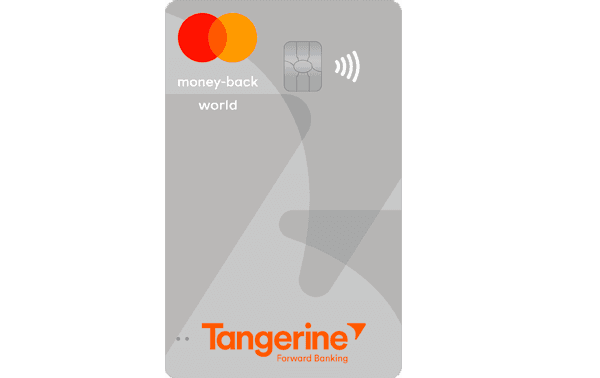
If you already bank with Tangerine and want your everyday spending to work alongside your savings, the Tangerine® Money-Back World Mastercard®* lets you pick your own cash back categories.
on Tangerine's website
Here are the questions that come up most often in the milesopedia community about Tangerine GICs.
The best rate is 4.25% on the 5-year term, as of October 5, 2026. It applies to non-registered GICs as well as Tax-Free, RSP and RIF GICs. US dollar GICs reach 4.50% on the same term, but in another currency.
No. Tangerine Guaranteed Investments are not redeemable before the end of the term you chose. That is the trade-off for the locked-in rate. If you need the money to stay reachable, the Tangerine Savings Account or a short 90-day term is a better fit.
Yes. Tangerine is a CDIC member. Your eligible deposits are protected up to $100,000 per account category, including GICs with terms of five years or less. Tangerine is a subsidiary of Scotiabank.
Tangerine charges no fees or service charges on its Guaranteed Investments. The minimum amount required is shown when you open the investment inside your account, and it varies with the product you choose. Check it before you move your funds.
It depends on your horizon. Over a few months, the Tangerine welcome offer at 4.50% for five months beats short GICs, and the money stays reachable. Over three to five years, the GIC locks in a rate the savings account does not guarantee, since its regular rate drops back to 0.30%.
There is no fixed schedule. Banks adjust their grids with market conditions and Bank of Canada decisions, sometimes several times a year. The rate you get is the one posted on the day you buy, and it stays guaranteed for the whole term.
on Tangerine's website
Our reviews and rankings are based on an objective assessment. Advertisers do not influence our content. We may receive compensation through some links; our analysis and opinions remain independent.