Air New Zealand: a guide for Canadian travellers
Loading article…
Air New Zealand offers a route to Auckland from Vancouver with onward travel across New Zealand. For Canadian travellers, the useful comparison involves the complete journey, exact cabin and any award accessible through Aeroplan. The airline’s own loyalty program is now presented as Koru.
The Vancouver–Auckland route page presents this Canadian departure option. Check the offered dates and operating airline. Other journeys sold on the website can include partner flights, particularly when reaching the long-haul departure from another city.
Our Vancouver YVR lounge guide helps plan time before departure. Confirm the lounge serving your area and your actual admission rights. The guide does not promise access to a particular lounge simply because you hold an Air New Zealand ticket.
For onward travel beyond Auckland, compare final arrival times and connection lengths. Our itineraries for family travel on the South Island and Taupo to Auckland help organize the land journey before you choose the flights.
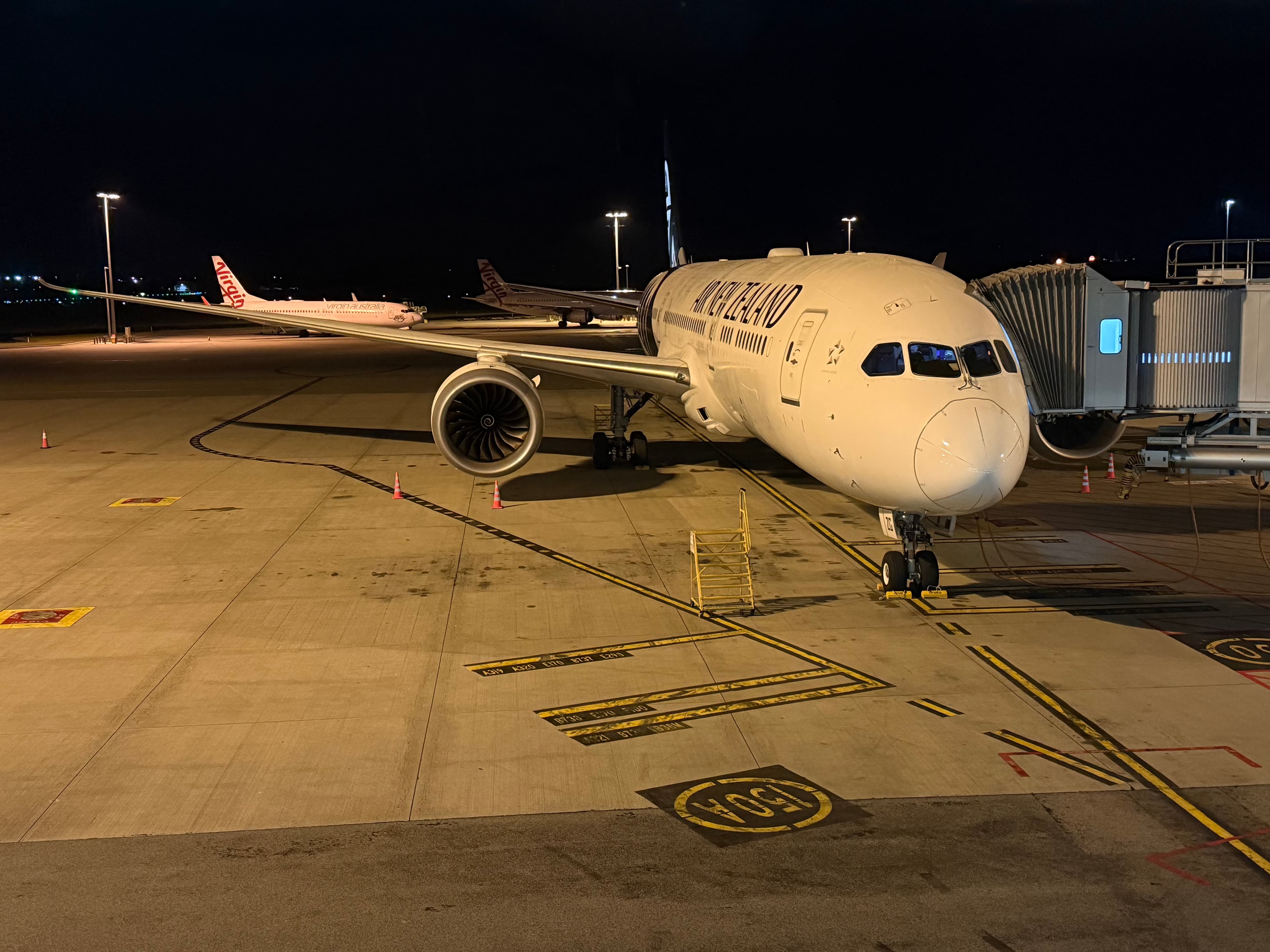
The airline publishes several Boeing 787-9 seat maps. The version 4 map shows Business Premier Luxe and Business Premier alongside Premium Economy and Economy options. Other versions have different layouts; the Dreamliner name alone cannot identify the onboard product.
Compare the map in your booking with the airline’s aircraft information. If the aircraft changes, check your seat and paid options again. A photograph of the newest cabin does not establish that every departure from Vancouver will provide that product.
Business Premier Luxe and Premium Economy are different products. Choose according to the actual seat, your need for sleep and the overall additional cost. For two passengers, examine seat positions before paying more for a category whose arrangement may be less convenient for travelling together.
The seat map also distinguishes options within Economy. Skycouch involves a seating arrangement creating resting space; Economy Stretch and an ordinary Economy seat describe different options. Check exactly what is sold for the number of travellers on your booking rather than assuming the names are interchangeable.
Do not confuse Skycouch with Skynest. A new-product announcement or demonstration image does not prove that the option is being sold on your departure. The booking screen and the chosen product’s conditions should establish what you are actually buying for that flight.
Families can compare ordinary seats together, the additional option and a higher cabin. Check the return trip too, which is easy to overlook during the first comparison. A comfortable outbound arrangement may be unavailable at the same price or on the same aircraft for the journey home.
The airline’s New Zealand flight overview explains that journeys can involve partners. Read the allowances and conditions attached to your ticket rather than assigning Air New Zealand long-haul services to every sector operated by another carrier on the itinerary.
When adding a separately ticketed domestic connection, check that flight’s own rules. Include bags, seat selection and the practical consequences of a schedule change. For hiking or sporting equipment, read the specific conditions before assuming that the ordinary baggage allowance covers the item’s size and handling.
Plan the Auckland transfer using the official information for your route. Controls, any baggage collection and changes of departure area need accounting for in the connection. An itinerary with a short advertised interval may leave little margin for a comfortable start to the trip.
The current website presents Koru as the loyalty program, with Airpoints and Status Points. Airpoints fund rewards, while Status Points support progression through status tiers. They should not be added together as if both were one spendable balance available for a ticket purchase.
The Airpoints flight-spending page explains eligible flights and additional payments. Check the account and ticket conditions before comparing options. Older descriptions of the Airpoints program cannot, by themselves, establish the current program’s booking and membership rules.
The Koru terms explain the separation from other airline programs. You cannot turn an Airpoints balance into Aeroplan points simply because both airlines belong to Star Alliance. Establish which account can actually issue the award you have located before considering how to fund it.
Air New Zealand appears in Air Canada’s Star Alliance network. Our Aeroplan guide helps prepare a partner-award search. A seat offered for cash by Air New Zealand does not prove that a partner award is available on the same flight.
For Business, search several dates before moving points. Confirm that the transpacific portion is in the intended cabin. A short Business connection paired with an Economy long-haul flight does not provide the same experience, even when the overall search result highlights a premium cabin.
For a trip covering both islands, choose the stops before adding several domestic connections. Compare the complete international itinerary and then the local travel needed for the stay. If your decision depends on Skycouch or the newest Business cabin, check that option in both directions before booking a non-refundable local arrangement.
Keep a record of the same dates and passenger count: operating carrier, cabin on each sector, baggage and conditions. Compare journeys you could actually take. A fare for one traveller without checked bags cannot establish the cost for a family needing seats together and several pieces of luggage across the entire itinerary.
After deciding, check every traveller’s name and the local dates. Open the issued ticket details and retain confirmations for purchased services. Following a schedule change, revisit the connections and options; retaining the same booking reference does not establish that the revised journey still meets your requirements or preserves the services you paid for.
Separate the airfare from the budget at the destination. An award does not eliminate airport transfers, travel between cities or meals. Allowing for those expenses makes it easier to compare a premium cabin with a less expensive flight that leaves more of the budget for the activities you actually want to include in the stay.
Start by searching the complete itinerary in Aeroplan. Use the same dates, passenger count and cabin for each comparison. If a seat appears for one traveller, repeat the search for the full party: a single-seat result does not prove that a family can travel together at that price.
A seat sold on Air New Zealand’s website is not necessarily available to a partner program. A missing award result does not prove the aircraft is full either. If the booking tool cannot construct the expected trip, check the possibilities with the issuing program before making a decision about your points.
The points-or-cash calculator can help compare a redemption with a real expense. Use the price of a ticket you would actually purchase with reasonably similar conditions. A very expensive Business Class fare can produce an impressive calculation without representing cash you were ever willing to spend.
The American Express Cobalt® Card earns Membership Rewards points. The Canadian Amex travel-partner directory describes available transfers, including Aeroplan and Flying Blue. Verify the program useful for your booking and the conditions applying to your Canadian account before transferring.
Membership Rewards, Aeroplan points and Flying Blue Miles are separate balances. An airline’s alliance membership does not make its own loyalty program a direct bank-transfer partner. For your Air New Zealand trip, identify the program capable of issuing the desired award, then check the relevant source of points.
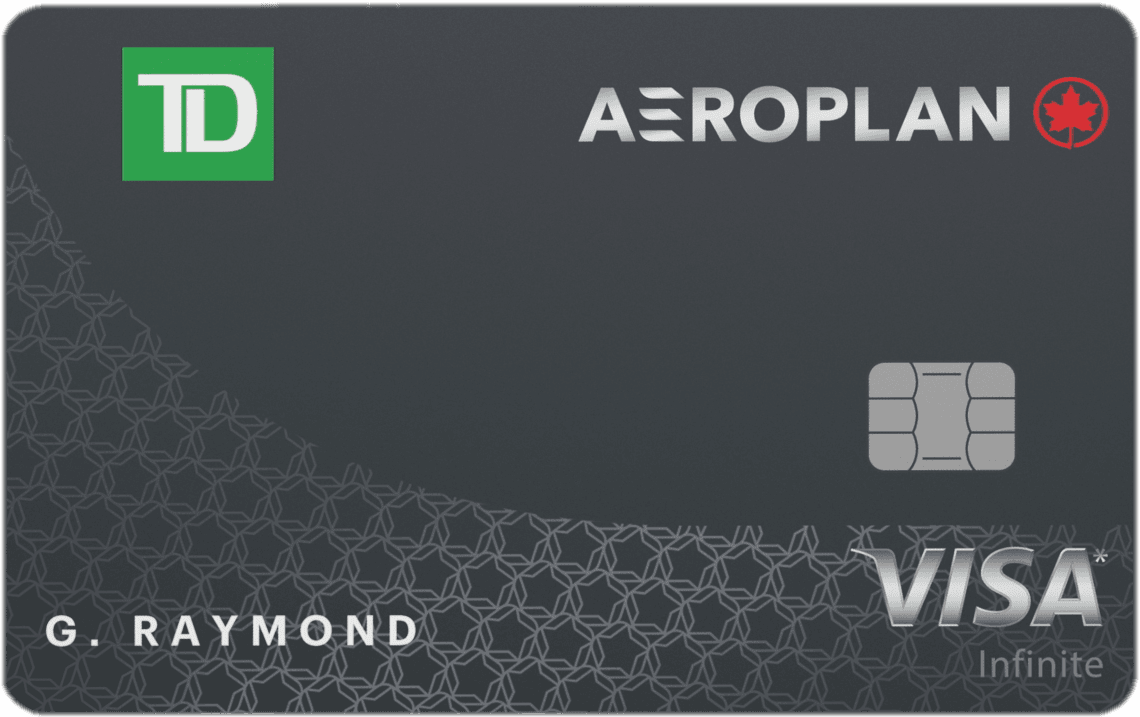
The TD Aeroplan Visa Infinite Card earns Aeroplan points directly. It can support a booking through that program. Benefits applying to certain Air Canada flights should not be promised on a partner-operated flight merely because Aeroplan issued the ticket.
The card panels below display current information from our catalogue. Compare other options in our best Canadian credit cards guide. Include card fees and your ordinary spending pattern. Extra points do not justify interest charges or purchases you would not otherwise make.
| Credit card | Annual fee | Welcome offer | |
|---|---|---|---|
| $191.88 | |||
| $0 |
Record the exact flight, cabin and final price before opening a bank transfer. Read the announced processing time and conditions. Availability can change while the transfer is processed: an award-search result is not an issued ticket and does not necessarily hold a seat.
If part of the required balance is already in your airline account, calculate only the shortfall. Keep practical alternative dates or routings in mind without treating them as a reason to transfer a large speculative balance. Once points arrive, complete the booking and check that a ticket number exists for each passenger.
A payment receipt or booking reference should not replace confirmation that the tickets were issued. Review names, local dates, airports and every segment’s cabin. This matters especially for an overnight departure arriving in Auckland on the following calendar day.
Consider buying points after locating an available award. Add the purchase price to the ticket’s cash charges and necessary extras. Compare that complete cost with a fare usable on your actual dates, rather than a theoretical lowest price for a different month.
If your account displays a purchase offer, check its deadline, eligibility and crediting time. An older promotional article cannot establish that a bonus remains available today. Buying the operating airline’s points does not automatically add funds to a separate Aeroplan account.
A purchase does not reserve the seat while payment and crediting are processed. If the budget depends on one precise award, consider the risk that it disappears and leaves you with points but no suitable flight. For urgent travel, a cash ticket may be more practical than waiting for several transfers or purchases.
For two travellers, first confirm two seats in the intended long-haul cabin. If only one sector is in Business, identify which one. Compare a nearby travel date before accepting a much longer journey: moving departure by a day may be more useful than adding another connection.
When travelling with checked bags, compare the initial Economy fare, that fare with required extras, and the next fare family. Apply the same baggage needs in both directions. Choose the total and conditions that suit the trip rather than the lowest number on the first booking screen.
For separate connections, include the time and cost of a possible overnight stay. Consider what you would do if the first flight changes schedule after purchase. Before booking, verify official destination and transit requirements for your passport and actual route; a flight listing is not a substitute for this check.
Air New Zealand is worth comparing when its route through Auckland, cabin and available awards fit your destination. Our Air Canada guide provides another point of comparison. Repeat the search with your own dates instead of treating an example itinerary as guaranteed availability.
Use the operating airline’s information for the onboard product and the issuing program’s conditions for the award ticket. After a schedule change, recheck the flights and paid services; a different departure time can alter the usefulness of a connection or seat-selection purchase.
Receive program developments and practical advice through the Milesopedia newsletter.
on TD's website
Our reviews and rankings are based on an objective assessment. Advertisers do not influence our content. We may receive compensation through some links; our analysis and opinions remain independent.