

Questrade vs Wealthsimple: Which Is Better?

If you’re hesitating between Questrade vs Wealthsimple, you’re not alone. These two platforms are among the most popular online brokers for investing in the stock market in Canada. But which one is truly the best for you?
To understand Wealthsimple’s strategy, listen to our podcast interview with its Chief Growth Officer, Simon Lejeune.
In this article, we compare fees, trading tools, self-directed investing, ETFs, financial ecosystem, and investor profiles. You’ll know exactly which platform to choose based on your strategy, transaction frequency, and long-term goals.
On one side, Questrade is a pure online broker offering advanced tools. On the other, Wealthsimple focuses on simplicity, commission-free trading, and an integrated financial ecosystem including a chequing account and credit card.
Questrade vs Wealthsimple: Key Differences
Before diving into the details, here are the major distinctions.
First, Questrade is a comprehensive traditional broker, designed for self-directed investing and active investors. Next, Wealthsimple is a simplified platform, mobile-oriented, integrated with other financial services.
Next, the management of U.S. dollars constitutes a structural difference. Questrade allows you to maintain USD balances in most accounts. Wealthsimple charges 1.5% conversion fees unless you hold a plan that includes a USD account.
Furthermore, trading tools are more advanced at Questrade. Conversely, Wealthsimple favors a streamlined and user-friendly interface.
Finally, Wealthsimple offers a complete financial ecosystem, including a chequing account and Visa Infinite card, while Questrade is a pure broker.
Questrade vs Wealthsimple: At a Glance
| Feature | Questrade | Wealthsimple |
|---|---|---|
| Stocks & ETFs | Commission-free | Commission-free |
| Options | From $0.99/contract, decreasing with volume | Commission-free, no per-contract fee |
| USD account | Yes, avoids repeated conversion | Requires a paid plan ($10/month under $100,000 in assets) |
| Currency conversion | ~1.5%, Norbert’s Gambit long established | ~1.5%, Norbert’s Gambit in beta since March 2026 (web only, $9.95 plus tax per transaction) |
| Trading tools | Advanced (Questrade Edge Desktop/Web) | Simplified, mobile-first interface |
| Banking ecosystem | None yet (Questbank pending, 2026) | Chequing account and Visa Infinite credit card |
| Best for | Active traders, frequent USD investors | Beginners, integrated ecosystem seekers |
Questrade vs Wealthsimple – Fees: Detailed Comparison
Both platforms advertise commission-free transactions on stocks and ETFs. However, the reality deserves nuance.
Stocks and ETFs
At Questrade, buying stocks and ETFs is commission-free. Selling stocks and ETFs has also been free for several years. There are no inactivity fees.
At Wealthsimple, buying and selling stocks and ETFs are commission-free. There are also no inactivity fees.
At first glance, perfect equality. However, the gap appears as soon as we talk about currencies and options.
Options
At Questrade, fees for options contracts start at $0.99 per contract for lower monthly volumes, and gradually decrease as the total monthly contract volume increases.
At Wealthsimple, options trading is offered commission-free with no per-contract fees for successfully executed orders, which is currently unique among Canadian brokers.
Thus, for simple fee structure, Wealthsimple is currently the most economical since options are offered without per-contract fees.
However, Questrade may remain relevant for experienced options traders seeking advanced tools, better management of complex strategies, or more specialized features.
Currency Conversion
At Questrade, conversion fees are approximately 1.5%. However, you can hold U.S. dollars and use strategies like Norbert’s Gambit to reduce fees.
At Wealthsimple, conversion is also approximately 1.5%. However, without a plan that includes a USD account, each U.S. transaction involves automatic conversion.
Therefore, for frequent investing in U.S. stocks, Questrade often becomes more economical in the long term.
Self-Directed Investing: Platform and Tools
Both platforms allow self-directed investing, but the experience differs considerably.
Analysis Tools and Charts
Questrade offers Questrade Edge Desktop and Edge Web. You have access to advanced charts, technical indicators, and detailed market data.
Conversely, Wealthsimple offers a simplified interface with basic charts. The goal is ease of use rather than analytical depth.
Therefore, for an active or experienced investor, Questrade offers more tools.
Mobile Experience
Wealthsimple excels on mobile. The app is intuitive, fast, and designed to simplify investing.
Questrade also offers a mobile app, but the experience is more oriented toward functionality than simplicity.
Thus, for a beginner or passive long-term investor, Wealthsimple may seem more user-friendly.
Investing in U.S. Dollars
If you invest in U.S. stocks, this section is crucial.
Questrade allows you to open registered and non-registered accounts with a USD balance. You can hold your U.S. currency and avoid repeated conversions.
Wealthsimple requires a paid plan to maintain a USD balance. Otherwise, each U.S. stock transaction triggers a conversion.
Currently, both brokers allow Norbert’s Gambit: Questrade has offered it for a long time with no particular additional fees, while Wealthsimple has offered it since March 2026, though still in beta (web only, with a $9.95 plus tax journaling fee per transaction).
Consequently, if you invest regularly in the United States, Questrade offers more flexibility for now.
Questrade vs Wealthsimple – Financial Ecosystem
This is where Wealthsimple clearly stands out. In addition to brokerage, Wealthsimple offers:
- A no-fee chequing account: Wealthsimple chequing account
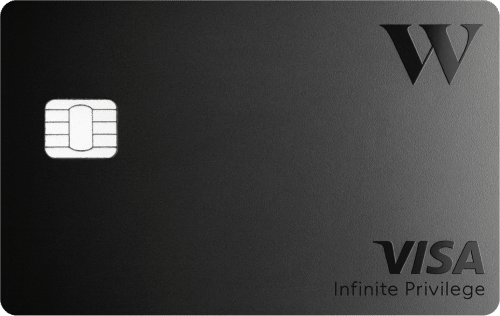
- A Wealthsimple Visa Infinite and Infinite Privilege card.
- Integrated management between cash and investments.
- Tax filing software.
You can consult our guide on the Wealthsimple chequing account and our analysis of the Wealthsimple credit card.
Conversely, Questrade does not offer integrated banking services. It remains focused on brokerage for now. However, Questrade recently obtained approval for a federal banking license for Questbank, which could transform its platform into a comprehensive financial ecosystem.
Thus, if you want to centralize your finances in a single ecosystem, Wealthsimple has an advantage.
Questrade vs Wealthsimple – Passive Investing and ETFs
For a long-term investor in ETFs, both platforms allow commission-free purchases.
However, Questrade offers more tools to build a diversified portfolio and analyze data. Wealthsimple facilitates quick execution and simple management.
If you use index ETFs and invest a few times per year, both options are viable.
To learn more, consult our Questrade review and our guide on Wealthsimple.
For Which Investor Profile?
The choice between Questrade vs Wealthsimple depends primarily on how you invest, your level of experience, and your exposure to U.S. markets.
Beginner
For a new investor who wants to buy their first ETFs or a few Canadian stocks, Wealthsimple offers a more intuitive experience. The interface is simple, the mobile app is user-friendly, and the absence of commission facilitates the first steps.
Long-Term ETF Investor
For a long-term index strategy with few annual transactions, both platforms are suitable. However, Wealthsimple favors simplicity of execution, while Questrade offers more analytical tools to build a more structured portfolio.
U.S. Dollar Investor
For a portfolio exposed to U.S. stocks, Questrade has the advantage. The ability to hold USD balances and avoid repeated conversions reduces costs in the long term.
Active investor
For someone who analyzes markets, uses advanced charts, and executes multiple transactions per month, Questrade is generally better suited. Its Edge platform offers more technical depth.
Options Trader
For an investor who regularly trades options, Questrade’s fee structure and specialized tools may prove more competitive depending on volume.
User Seeking an Integrated Ecosystem
For centralized management combining investing, cash, and credit card, Wealthsimple offers a more comprehensive integrated approach.

Conclusion
In summary, in the Questrade vs Wealthsimple duel, there is no universal winner.
- Choose Wealthsimple if you favor simplicity, mobile, and banking integration.
- Choose Questrade if you want advanced tools, better USD account management, and more control.
Your decision should reflect your transaction frequency, your exposure to U.S. markets, and your level of experience. To learn more, subscribe to our newsletter and compare the best credit cards to optimize your finances alongside your investments.
Questrade vs Wealthsimple – FAQ
Which credit card should you choose in Canada?
The right credit card choice depends on your profile – income, expenses, objective (travel, cash back, balance transfer). To compare options according to your criteria, use our credit card comparator. You can also consult our ranking of the best credit cards of the month, updated monthly by the Milesopedia team.
What is Questrade?
Questrade is a Canadian online broker that allows you to invest in stocks, ETFs, options, and other products through registered and non-registered accounts.
Does Questrade have fees?
Yes. While stocks and ETFs are commission-free, fees apply to options and currency conversions.
How does Questrade make money?
Questrade generates revenue through options fees, currency conversion fees, and certain administrative fees.
What is Wealthsimple?
Wealthsimple is a Canadian platform offering Wealthsimple Trade (formerly Self-directed Investing), managed portfolios, and integrated banking services.
Is Questrade better than Wealthsimple?
It depends. Questrade is often preferable for active investors and USD accounts, while Wealthsimple is better suited for beginners and those who want an integrated ecosystem.
Our featured card
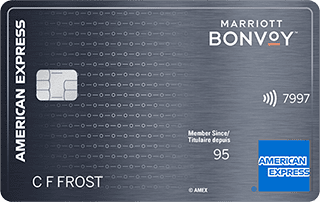

- Annual fee
- $120
- Our valuation
- $990Milesopedia first-year estimate First-year valueWelcome bonus$990Total$990Rewards on your spending are not included. The calculator that adds them from your own profile is on the card's page.
- Welcome offer
- Up to 110,000 points
Milesopedia first-year estimateFirst-year valueWelcome bonus$990Total$990Rewards on your spending are not included. The calculator that adds them from your own profile is on the card's page.
Ends Sep 22, 2026
on American Express's website
Apply with confidence — no impact on your credit scoreApply with confidenceCheck whether your application will be approved before you submit it, with no impact on your credit score*When you apply for a personal American Express Credit Card, we will tell you whether you are eligible without affecting your credit score. So you can apply with confidence.*Instant decisions are only available for consumer Card applications (also called “personal Cards”).
Our editorial integrity
Our reviews and rankings are based on an objective assessment. Advertisers do not influence our content. We may receive compensation through some links; our analysis and opinions remain independent.