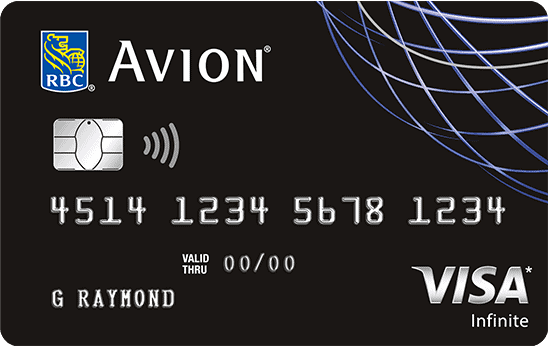
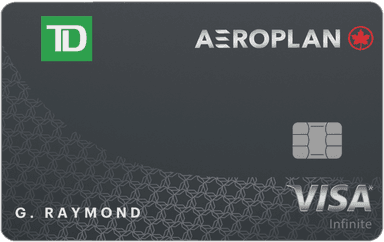
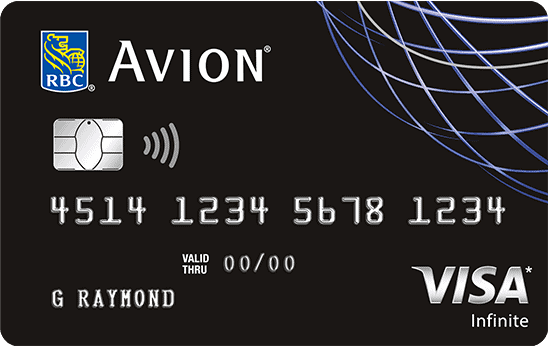
Head to Head: RBC Avion Visa Infinite vs TD Aeroplan Visa Infinite

Loading article…
Here are two Visa Infinite credit cards that earn two very different travel currencies:
This is probably the most common matchup in Canada. On one side, Avion bets on a fixed price chart and on flexibility. On the other, Aeroplan bets on Air Canada. The RBC Avion vs TD Aeroplan question therefore comes down to how you actually travel. If you are weighing other travel cards instead, our comparisons of Avion RBC vs CIBC Aventura, Avion RBC vs Scotiabank Passport and Avion Rewards vs American Express Membership Rewards round out the picture.
| Credit card | Annual fee | Welcome offer | |
|---|---|---|---|
| $120 | |||
| $0 |
We base our analysis on the major differences between these two credit cards:
Here are both cards side by side. We then break down each line.
| Criteria | RBC Avion Visa Infinite Card | TD® Aeroplan® Visa Infinite* Card |
|---|---|---|
| Annual fee | $120 | $139, waived the first year |
| Additional card | $50 | $75 |
| Income required | $60,000 personal or $100,000 household | $60,000 personal or $100,000 household |
| Earning | 1.25 pt/$ on travel; 1 pt/$ elsewhere | 1.5 pt/$ in 5 categories ($80,000 annual cap); 1 pt/$ elsewhere |
| Welcome bonus | Up to 70,000 Avion points, until November 25, 2026 | Up to 50,000 Aeroplan points, no published end date |
| Emergency medical | 15 days (3 days at age 65 and over) | $2,000,000, 21 days (4 days at age 65 and over) |
| Airport lounges | No access | No access |
| Free checked bag | Not listed on the card page | Yes, cardholder plus up to 8 companions |
| Milesopedia valuation | 1.5 cents per point | 2.0 cents per point |
Both banks structure their bonus differently. RBC pays a large chunk on approval; TD spreads its own over a full year.
The RBC Avion Visa Infinite Card currently offers up to 70,000 Avion points:
The TD® Aeroplan® Visa Infinite* Card, meanwhile, runs a public offer of up to 50,000 Aeroplan points, plus a first year annual fee rebate:
This is where the two cards separate the most. RBC keeps a very simple grid, while TD boosts five specific categories.
The RBC Avion Visa Infinite Card earns 1.25 Avion points per dollar on travel spending and 1 point per dollar on everything else. No everyday category gets a boost.
The TD® Aeroplan® Visa Infinite* Card earns 1.5 Aeroplan points per dollar in five categories:
Every other purchase earns 1 Aeroplan point per dollar.
This detail changes a lot. The boosted categories on the TD® Aeroplan® Visa Infinite* Card are capped at $80,000 in annual spending. Past that point, the rate drops back to 1 point per dollar.
In practice, that cap works out to about $6,700 a month across those five categories combined. Few households reach it. Heavy spenders should still watch it, though. RBC has no equivalent cap, since its grid carries no everyday bonus category.
An earn rate means nothing without the point value. Here is the return in cents per dollar, at Milesopedia valuations.
| Type of spending | RBC Avion Visa Infinite Card | TD® Aeroplan® Visa Infinite* Card |
|---|---|---|
| Gas, groceries, EV charging | 1 pt/$, or 1.50 cents/$ | 1.5 pt/$, or 3.00 cents/$ |
| Travel in general | 1.25 pt/$, or 1.88 cents/$ | 1 pt/$, or 2.00 cents/$ |
| Direct Air Canada purchases | 1.25 pt/$, or 1.88 cents/$ | 1.5 pt/$, or 3.00 cents/$ |
| All other purchases | 1 pt/$, or 1.50 cents/$ | 1 pt/$, or 2.00 cents/$ |
Milesopedia values the Avion point at 1.5 cents and the Aeroplan point at 2.0 cents. That 33% gap explains much of the result, but it hides a nuance.
RBC publishes a fixed chart for its air travel rewards, reserved for Avion Elite members. You therefore know the point cost ahead of time.
These amounts are round trips; a one way costs half. Taxes and surcharges stay on you. See the real value of Avion points and the full redemption chart.
The RBC chart acts as a guaranteed floor. A ticket to Europe priced at $1,300 costs 65,000 points, whatever the date. On the other hand, if the fare goes past the category maximum, you pay the difference in cash.
Aeroplan works differently. Its pricing moves with availability. Our 2.0 cent valuation is an average: it climbs to 2.2 cents in business class and 2.8 cents in first, yet it falls to 1.0 cent on hotels and 0.5 cent on merchandise. In short, Aeroplan rewards the search effort, while Avion rewards simplicity.
Note that Avion membership tiers matter: Avion Distinction members reach neither this chart nor the airline partners. The Avion Rewards program page details those rules.
The RBC Avion Visa Infinite Card costs $120 a year, plus $50 per additional card. Its foreign currency conversion fee sits at 2.5%.
The TD® Aeroplan® Visa Infinite* Card costs $139, but TD waives that fee the first year. The additional card runs $75. Over twelve months, the TD card therefore costs nothing.
Both cards ask for exactly the same income: $60,000 personal or $100,000 household. The purchase interest rate differs slightly, at 20.99% with RBC and 21.99% with TD.
This is where the gap is widest. Emergency medical coverage on the TD® Aeroplan® Visa Infinite* Card reaches $2,000,000 for 21 days, or 4 days from age 65. With RBC, the protection lasts 15 days, or 3 days from age 65.
TD also covers baggage better: $1,000 for delay and $1,000 for loss, against $500 and $500 with RBC. Both cards carry $1,500 in trip cancellation and $5,000 in trip interruption coverage.
On the other hand, RBC covers risks absent from our TD data: travel accident up to $500,000, rental car collision up to $65,000 for 48 days, hotel burglary up to $2,500, 90 day purchase protection and a one year extended warranty. Mobile device coverage reaches $1,500 with RBC against $1,000 with TD.
Neither card grants airport lounge access. On that point, the tie is perfect.
The TD® Aeroplan® Visa Infinite* Card does offer the first checked bag free for the cardholder and up to 8 companions on the same booking. It adds a NEXUS rebate of up to $100, once per 48 month period. The RBC Avion Visa Infinite Card page lists neither benefit.
RBC makes up ground elsewhere: concierge service, a Petro-Canada saving of 3 cents per litre with 20% more points, 50 Be Well points per dollar at Rexall, 12 months of DashPass and Hertz privileges.
One answer does not fit everyone. Here are two distinct profiles.
You fly Air Canada by default. In that case, the TD® Aeroplan® Visa Infinite* Card takes it. You earn faster, your point is worth more, your bag flies free and your medical coverage holds for 21 days. Year one costs nothing either.
You shop the best fare, whatever the carrier, and you have no appetite for chasing award seats. In that case, the RBC Avion Visa Infinite Card serves you better.
So which card wins this duel? The TD® Aeroplan® Visa Infinite* Card wins on raw numbers: earning, point value, insurance and the free bag. It is the default pick for anyone who flies Air Canada.
The RBC Avion Visa Infinite Card still has a real reason to exist, though. Its fixed price chart turns points into a predictable currency, which stays rare. Its current welcome bonus is also slightly more generous, and its property insurance covers more situations.
Finally, nothing forces you to choose. Plenty of readers hold both. To compare with the rest of the market, see our best credit cards page or our comparison of TD Aeroplan Visa Infinite vs WestJet World Elite. Subscribe to our newsletter as well.
| Credit card | Annual fee | Welcome offer | |
|---|---|---|---|
| $120 | |||
| $0 |
Here are frequently asked questions in the milesopedia community about these two cards.
The RBC Avion Visa Infinite Card leads with up to 70,000 Avion points, until November 25, 2026. The TD® Aeroplan® Visa Infinite* Card offers up to 50,000 Aeroplan points, with no published end date, plus a first year fee rebate. At Milesopedia valuations: roughly $1,050 against $1,000. The gap, once $250, now comes down to about $50.
Milesopedia values the Avion point at 1.5 cents and the Aeroplan point at 2.0 cents. The RBC fixed price chart still reaches 2.00 to 2.33 cents per point on air travel rewards, provided you are an Avion Elite member. Our analysis of the value of Avion points breaks down each scenario.
The TD® Aeroplan® Visa Infinite* Card, without question. It earns 1.5 Aeroplan points per dollar on groceries, or about 3.00 cents of value per dollar. The RBC Avion Visa Infinite Card does not boost that category and earns 1 Avion point per dollar, or about 1.50 cents.
The 1.5 point per dollar categories on the TD® Aeroplan® Visa Infinite* Card apply up to $80,000 in annual spending. Past that, the rate falls back to 1 point per dollar. That works out to roughly $6,700 a month across gas, groceries, Air Canada purchases and Hyatt stays combined.
Only the TD® Aeroplan® Visa Infinite* Card offers the first checked bag free, for the cardholder and up to 8 companions on the same booking. The RBC Avion Visa Infinite Card page does not list that benefit.
For emergency medical, the TD card dominates: $2,000,000 for 21 days, or 4 days at age 65 and over, against 15 days with RBC, or 3 days at age 65 and over. The RBC card, however, adds rental car collision, hotel burglary, purchase protection and an extended warranty.
Correct. Neither the RBC Avion Visa Infinite Card nor the TD® Aeroplan® Visa Infinite* Card grants airport lounge access. Our best credit cards page lists the options that do.
Yes, since the two cards come from different issuers. Plenty of readers put groceries and gas on the TD card, then travel purchases on the RBC card. Both welcome bonuses stack too, as long as you meet each spending threshold.
on RBC's website
Our reviews and rankings are based on an objective assessment. Advertisers do not influence our content. We may receive compensation through some links; our analysis and opinions remain independent.