

Porter adds temporary fuel surcharges on reward tickets

Porter Airlines announced the addition of temporary fuel surcharges on reward tickets booked through the VIPorter program. Until now, the Canadian carrier stood out precisely because of the absence of these additional fees on point redemptions. This change alters the calculation for all VIPorter point holders—and for those earning via the BMO VIPorter World Elite Mastercard.
Here is what we know, what it means in practice, and how to limit the impact on your future bookings.
What Porter announced
Porter Airlines is now applying a $40 temporary fuel surcharge (also known as YQ) on all flights booked with VIPorter points. Previously, these reward tickets were exempt from fees beyond mandatory airport taxes. The surcharge is added to the existing point cost and must be paid in Canadian dollars at the time of booking.
In practice, this means that a Porter reward ticket is no longer « tax-free. » You must now budget for an additional $40, regardless of the destination.
Porter introduced this surcharge at $40 per direction on March 23, 2026, amid surging oil prices, then cut it in half to $20 on June 24, 2026. The relief was short-lived: on July 20, 2026, Porter went back to a $40 surcharge per direction after another sharp jump in jet fuel prices, triggered by Iran’s closure of the Strait of Hormuz on July 11, 2026 following renewed U.S. strikes. Jet fuel prices jumped 17.6% in one week according to the International Air Transport Association (IATA). In the email sent to VIPorter members, the airline said it was sorry to have to reverse course, noting this wasn’t the direction it wanted to take, but that its commitment to remove the surcharge once the market allows remains unchanged.
Fuel surcharge amounts
Porter has indicated that the fuel surcharge is $40, per direction, per person, and that it is fixed for all destinations. This amount was reduced to $20 on June 24, 2026, before going back up to $40 on July 20, 2026 due to the renewed spike in fuel prices.
This amount is in addition to the usual airport taxes and fees.
For a round trip, the fuel surcharge must be doubled. For example, a Montreal – Toronto round-trip reward ticket that used to cost about $30 in taxes now costs about $110 in total fees ($30 in taxes plus $80 in surcharges for both directions).
Impact on the value of VIPorter points
The appeal of the VIPorter program was partly based on low-cost point redemptions in dollars. With this surcharge, the value proposition changes.
Before vs. after surcharges
Let’s look at a concrete example per direction for a Toronto – Montreal reward flight in economy class.
| Element | Before | After (estimate) |
|---|---|---|
| VIPorter points required | 8,000 points | 8,000 points |
| Airport taxes and fees | ~$30 | ~$30 |
| Fuel surcharge | $0 | $40 |
| Total in dollars | ~$30 | ~$70 |
The number of points required remains the same. However, the bill in dollars increases significantly.
Decreasing value per point
When the dollar cost of a reward ticket increases, the effective value of each point decreases. In concrete terms, you « save » less by using your points since you still have to take out your wallet to cover the surcharge.
Before booking a reward ticket, systematically compare it with the price of a paid ticket. In some cases, especially on routes with high surcharges, paying for the ticket in cash might be more advantageous.
Why Porter is adding these surcharges
Like many airlines, Porter is impacted by the soaring price of oil linked to events in the Middle East.
How to limit the impact
Despite this bad news, several strategies allow you to continue getting the most out of your VIPorter points and program-related cards.
- Compare before booking: Check the price of a paid ticket on the same route and dates. If the surcharge reduces the advantage of the reward ticket too much, pay in cash and save your points for a better opportunity.
- Book early: The lowest paid fares are often available well in advance. By booking early, you can compare the real cost (points + surcharge) with a low-priced purchased ticket.
- Use VIPorter promos: Porter occasionally offers discounts on reward tickets (fewer points required). Combined with a modest surcharge on a short-haul flight, these promos remain attractive.
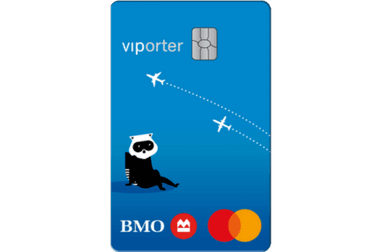
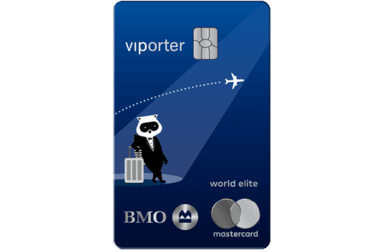
- Maximize earning via BMO: The BMO VIPorter World Elite Mastercard and the BMO VIPorter Mastercard remain the best tools for earning VIPorter points daily. The faster you earn, the more your points cover the total cost of the ticket.
- Consider other programs: If you often travel on long routes, compare the value of VIPorter points with Aeroplan points or American Express Membership Rewards on similar routes. Or use Alaska Mileage Plan points to travel with Porter without paying a fuel surcharge.
Should you keep your VIPorter cards?
The question is worth asking. Fuel surcharges reduce the advantage of reward tickets, but they do not eliminate it completely, especially as Porter continues to expand its network, notably through the codeshare agreement signed with British Airways in June 2026. Here is a quick assessment.
The cards remain relevant if…
- You enjoy the Porter experience: Quick boarding at Billy Bishop, onboard service, comfortable seats on the E195-E2. The travel aspect remains a factor.
- You benefit from the BMO card’s side perks: Free checked bags, priority boarding, access to VIPorter lounges.
It is better to reconsider if…
- You earn points slowly: If your earning rate is low, the time required to obtain a reward ticket (points + high surcharge) reduces the perceived value.
- You have access to competitive alternatives: A program like Aeroplan offers more flexibility and partners, even if it also imposes surcharges.
To compare options, visit our page on the best credit cards in Canada. You will find alternatives categorized by reward type and program.
| Credit card | Annual fee | Welcome offer | |
|---|---|---|---|
| $0 | |||
| $0 |
Bottom Line
Porter’s temporary fuel surcharges on VIPorter reward tickets now track the ups and downs of the oil market: after a brief reprieve at $20 per direction this summer, the surcharge climbed back to $40 on July 20, 2026, due to another spike in jet fuel prices tied to geopolitical instability. The value of VIPorter points therefore remains volatile from one booking to the next, since more dollars must be spent for each redemption when the market tightens. Porter maintains its commitment to remove the surcharge once prices stabilize, but there’s no guaranteed timeline.
That said, the program remains interesting on short routes and for those who value the Porter experience. The key is to systematically compare the total cost of a reward ticket (points converted to dollar value + taxes + surcharge) with the paid price before booking.
To receive our analyses as soon as they are published, subscribe to our newsletter. We are following this matter closely and will keep you informed of any developments.
Porter Surcharges – Frequently Asked Questions
What is a temporary fuel surcharge on a reward ticket?
A fuel surcharge (YQ) is a dollar amount that the airline adds to the cost of a ticket booked with points. It is added to airport taxes and must be paid in cash, even if the ticket is « free » in points.
How much are Porter fuel surcharges?
As of July 20, 2026, Porter’s temporary fuel surcharge amount is $40, per direction, per person, regardless of the destination. It had been reduced to $20 on June 24, 2026, before going back up due to another spike in fuel prices tied to geopolitical instability. Porter still aims to remove it entirely if prices normalize for good.
Are my existing reward tickets affected?
No. Reward tickets already issued are not affected retroactively. However, if you modify or reissue an existing ticket, the surcharge could apply to the new booking.
Does the number of points required for a reward ticket change?
No. The number of VIPorter points required to book a reward ticket remains the same. The fuel surcharge is an additional amount paid in dollars, which is added to the point cost.
How do I know if a Porter reward ticket is still worth it?
Compare the total cost of the reward ticket (points converted to dollar value + taxes + surcharge) with the price of a paid ticket on the same route. If the difference is small or non-existent, pay in cash and save your points for a better opportunity.
Could surcharges decrease in the future?
Recent experience shows these surcharges move in both directions with the market: reduced to $20 in June 2026, then back up to $40 on July 20, 2026 after another jump in fuel prices. If oil prices drop significantly and durably, Porter could reduce or remove the surcharge again, as it has committed to. That said, in the airline industry, surcharges—even « temporary » ones—have historically tended to stick around in some form once introduced.
Our featured card
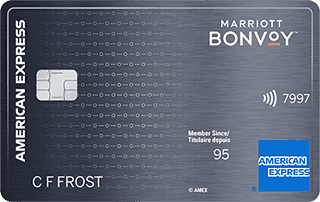

- Annual fee
- $120
- Our valuation
- $990Milesopedia first-year estimate First-year valueWelcome bonus$990Total$990Rewards on your spending are not included. The calculator that adds them from your own profile is on the card's page.
- Milesopedia first-year estimateFirst-year valueWelcome bonus$990Total$990Rewards on your spending are not included. The calculator that adds them from your own profile is on the card's page.
- Welcome offer
- Up to 110,000 points
- Ends Sep 22, 2026
on American Express's website
Apply with confidence — no impact on your credit scoreApply with confidenceCheck whether your application will be approved before you submit it, with no impact on your credit score*When you apply for a personal American Express Credit Card, we will tell you whether you are eligible without affecting your credit score. So you can apply with confidence.*Instant decisions are only available for consumer Card applications (also called “personal Cards”).
Our editorial integrity
Our reviews and rankings are based on an objective assessment. Advertisers do not influence our content. We may receive compensation through some links; our analysis and opinions remain independent.