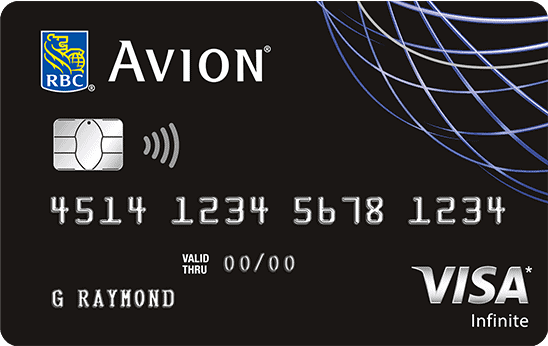
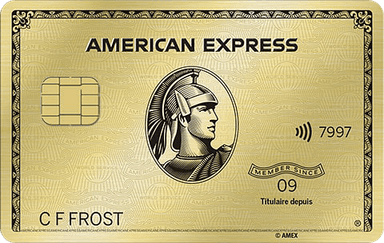
Head to Head: RBC Avion Visa Infinite vs American Express Gold Rewards Card

Loading article…
Here are two travel credit cards that earn transferable points, on two different networks:
On paper, the two cards look alike: flexible points, airline partners and solid travel insurance. Yet the RBC Avion vs Amex Gold matchup comes down to very concrete details: annual fees, income requirements, insurance, the welcome bonus and network acceptance. For the value of both points currencies, our comparison of RBC Avion Rewards vs American Express Membership Rewards goes further. If you are weighing another card, see our RBC Avion vs TD Aeroplan comparison or our list of the best credit cards in Canada.
| Credit card | Annual fee | Welcome offer | |
|---|---|---|---|
| $120 | |||
| $250 |
We base our analysis on the major differences between these two credit cards:
Here are both cards side by side, as of October 20, 2026. We then break down each line.
| Feature | RBC Avion Visa Infinite Card | American Express Gold Rewards Card |
|---|---|---|
| Network | Visa | American Express |
| Annual fee | $120 | $250 |
| Additional card | $50 | First one free, then $50 |
| Minimum income | $60,000 personal or $100,000 household | None |
| Welcome bonus | Up to 70,000 Avion points (by November 25, 2026) | Up to 60,000 Membership Rewards points in the first year |
| Earn rate | 1.25 points per dollar on travel, 1 point elsewhere | 2 points per dollar on travel, gas, groceries and drugstores, 1 point elsewhere |
| Annual travel credit | None | $100 |
| Airport lounges | None | 4 Plaza Premium visits per year in Canada |
| Purchase interest rate | 20.99% | 21.99% |
| Foreign transaction fee | 2.5% | 2.5% |
The two bonuses carry a similar value, but they pay out at very different speeds. RBC pays half of its bonus on approval; American Express pays its bonus month by month.
The RBC Avion Visa Infinite Card offers up to 70,000 Avion points:
The American Express Gold Rewards Card, for its part, offers up to 60,000 Membership Rewards points in the first year:
The catch with the Amex offer is consistency. One month under $1,000 costs you 5,000 points, with no way to make it up. American Express also excludes current and former holders of this card.
At 1.7 cents per point under Milesopedia valuations, the RBC bonus is worth about $1,190 and the Amex bonus about $1,020. After annual fees, the gap widens in year one:
This is the first concrete gap between the two cards. The RBC Avion Visa Infinite Card costs $120 a year, against $250 for the American Express Gold Rewards Card, according to American Express's official card page.
American Express offsets part of that with an annual travel credit:
For additional cards, RBC charges $50. American Express includes the first additional card free, then charges $50 for each one after that.
Minimum income is a clear dividing line. RBC asks for a personal income of $60,000 or a household income of $100,000. American Express requires no minimum income for its cards in Canada. Finally, the purchase interest rate is 20.99% with RBC and 21.99% with Amex.
The Amex card earns noticeably faster on everyday spending. The RBC card only boosts travel.
The RBC Avion Visa Infinite Card earns 1.25 Avion points per dollar on eligible travel purchases and 1 point per dollar on everything else.
The American Express Gold Rewards Card earns:
Milesopedia values both the Avion point and the Membership Rewards point at 1.7 cents. The comparison is therefore apples to apples.
| Spending category | RBC Avion Visa Infinite Card | American Express Gold Rewards Card |
|---|---|---|
| Groceries (Canada) | 1 point, about 1.7% | 2 points, about 3.4% |
| Gas (Canada) | 1 point, about 1.7% | 2 points, about 3.4% |
| Drugstores (Canada) | 1 point, about 1.7% | 2 points, about 3.4% |
| Travel | 1.25 points, about 2.1% | 2 points, about 3.4% |
| Everything else | 1 point, about 1.7% | 1 point, about 1.7% |
Take a household that spends $24,000 a year, split as follows:
Here is each card's net gain after the annual fee:
That math assumes every merchant takes Amex, however. That is not always the case.
This criterion weighs more than the numbers suggest. The RBC Avion Visa Infinite Card runs on the Visa network, accepted almost everywhere in Canada and abroad.
American Express has widened its network: according to American Express, over 110,000 places in Canada started accepting its cards in 2023 alone. Some merchants still refuse Amex, though, including some grocers and small businesses. In those cases, you pay with another card and the 2 points per dollar vanish.
In practice, an Amex cardholder almost always keeps a Visa or Mastercard as backup. The RBC card can stand on its own.
Both cards offer solid coverage, but not in the same places.
The RBC card stands out on emergency medical insurance: no claim maximum, 15 days of coverage, and 3 days from age 65. The Amex card covers up to $5,000,000 for 15 days, but only for cardholders under 65.
RBC also covers trip interruption, hotel burglary and mobile devices better. On the other hand, the Amex rental car coverage goes higher, up to a $85,000 manufacturer's suggested retail price. Here is the detail.
| Coverage | RBC Avion Visa Infinite Card | American Express Gold Rewards Card |
|---|---|---|
| Emergency medical | No claim maximum, 15 days (3 days from age 65) | Up to $5,000,000, 15 days, under 65 only |
| Trip cancellation | $1,500 per person | $1,500 per person ($3,000 maximum) |
| Trip interruption | $5,000 per person | $1,500 per person ($6,000 maximum) |
| Flight delay | $500 | $500, combined with baggage delay |
| Lost or stolen baggage | $500 | $500 |
| Travel accident | $500,000 | $500,000 |
| Rental car | MSRP up to $65,000, 48 days | MSRP up to $85,000, 48 days |
| Hotel burglary | $2,500 | $500 |
| Purchase protection | 90 days | 90 days, $1,000 per occurrence |
| Extended warranty | 1 extra year | Up to 1 extra year |
| Mobile device | $1,500 | None |
The Amex card takes the lead here. It includes 4 complimentary visits per calendar year to Plaza Premium lounges across Canada, regardless of airline. It also includes a Priority Pass membership, but each visit there carries a fee.
On top of that come a $50 statement credit on NEXUS application or renewal fees and The Hotel Collection benefits from American Express.
The RBC Avion Visa Infinite Card grants no lounge access. It leans on its partners instead: 3 cents off per litre at Petro-Canada with 20% more Petro-Points and Avion points, 50 Be Well points per dollar at Rexall, 12 months of DashPass and Hertz privileges.
Both programs let you transfer points to airline partners, but the partner lists differ.
American Express Membership Rewards points transfer to seven partners: Aeroplan, Asia Miles, The British Airways Club, Etihad Guest, Flying Blue, Hilton Honors and Marriott Bonvoy. According to American Express, 60,000 Membership Rewards points become:
Avion points transfer to American Airlines AAdvantage, The British Airways Club, Cathay Pacific Asia Miles and WestJet Rewards. RBC also offers a fixed chart: a round trip almost anywhere in Canada or the United States with a fare up to $750 costs 35,000 Avion points.
To compare the real value of the two currencies, read our RBC Avion vs American Express Membership Rewards analysis and the Avion Rewards and American Express Membership Rewards program pages.
One answer does not fit everyone. Here are three distinct profiles.
You travel often, or you are 65 or older. In that case, the RBC Avion Visa Infinite Card protects you better:
The one exception: if you often rent high-end cars, the higher Amex limit tips the scale.
You are aiming for Aeroplan, Flying Blue or a Marriott hotel. In that case, the American Express Gold Rewards Card takes it. It earns twice as fast on everyday spending and opens seven transfer partners, Aeroplan included.
You want a single card in your wallet. In that case, the RBC Avion Visa Infinite Card remains the safe choice. The Visa network works where Amex is refused, and its annual fee is less than half.
So which card wins this duel? The American Express Gold Rewards Card wins on earning, transfers and lounges. It suits the reader who concentrates grocery, gas and travel spending on one card and keeps a Visa as backup.
The RBC Avion Visa Infinite Card wins on three solid strengths, though: a $120 annual fee, near-universal acceptance and broader medical coverage. Its 70,000-point bonus is also easier to earn, with a deadline of November 25, 2026.
Finally, the two cards come from different issuers. Nothing stops you from pairing them: the Amex for groceries and gas, the RBC card wherever Amex is refused. You can also compare the best Amex Membership Rewards cards and the best RBC Avion cards.
To catch offers like these as they land, subscribe to our newsletter.
| Credit card | Annual fee | Welcome offer | |
|---|---|---|---|
| $120 | |||
| $250 |
Here are frequently asked questions from the Milesopedia community about these two cards.
The RBC Avion Visa Infinite Card offers up to 70,000 Avion points for applications submitted by November 25, 2026, or about $1,190 at our valuation. The American Express Gold Rewards Card offers up to 60,000 Membership Rewards points, or about $1,020, provided you spend $1,000 every month for a year. Details are on the American Express Gold Rewards Card page.
The RBC Avion Visa Infinite Card costs $120 a year, against $250 for the American Express Gold Rewards Card. The Amex annual travel credit does cut its net cost by $100 if you book an eligible trip through American Express Travel Online. The RBC card stays the cheaper option either way.
No. American Express requires no minimum income for its cards in Canada, including the Gold Rewards Card. The RBC Avion Visa Infinite Card, on the other hand, requires a personal income of $60,000 or a household income of $100,000. That is a real advantage for self-employed workers and young professionals.
The RBC card covers emergency medical better: no claim maximum and 3 days of coverage from age 65, while the Amex medical coverage is for cardholders under 65. RBC also covers trip interruption better. Amex, however, offers a higher limit on rental cars. Our ranking of the best credit cards for insurance lists other options.
Partly. The American Express Gold Rewards Card includes 4 complimentary visits per calendar year to Plaza Premium lounges across Canada, plus a Priority Pass membership whose visits carry a fee. The RBC Avion Visa Infinite Card grants no airport lounge access.
The American Express Gold Rewards Card, with 2 points per dollar at eligible grocery stores in Canada, or about 3.4 cents of value per dollar. The RBC Avion Visa Infinite Card earns 1 Avion point per dollar on groceries, or about 1.7 cents. Check that your grocery store accepts American Express, though.
Yes, since the two cards come from different issuers. Plenty of readers use the Amex for groceries, gas and travel, then the RBC card at merchants that refuse Amex. You collect both welcome bonuses that way, as long as you meet each spending threshold.
on RBC's website
Our reviews and rankings are based on an objective assessment. Advertisers do not influence our content. We may receive compensation through some links; our analysis and opinions remain independent.