
Foreign Currency Purchases and ATM Fees Explained
Why a €100 dinner costs more than the exchange rate says: the network rate, a network fee, your card’s FX fee and foreign ATM charges, and which ones you can avoid.
Imagine that you're out experiencing your well-planned trip to Spain. You’ve budgeted carefully for your time abroad, and you've been watching the exchange rates daily, so why does your €100 dinner in Barcelona show up as $157 on your credit card statement instead of the $152 the exchange rate said it should be?
Between the network conversion rate, a hidden network fee, and your card’s foreign transaction fee, spending with a Canadian credit card abroad can result in a final charge that's higher than expected. Then, if you're planning to withdraw cash at a foreign ATM, you'll find yourself facing two more fees on top of these.
In this article, we'll explain what each of these fees actually are, which ones can't be avoided, and which ones you can minimize or get rid of entirely.
Foreign Currency Purchases
While travelling abroad, you might think that you just swipe your card and your purchase priced at €100 gets exchanged to Canadian dollars at the same rate you found on Google or your bank’s website.
You might then be surprised when you check your credit card statement to see that your purchase has cost you more than you were expecting.
This is because when you use your credit or debit card abroad, your purchase will include some or all of the following charges:
- Exchange rate as set by Visa, Mastercard, American Express, etc.
- Network fee of up to 1% as set by Visa, Mastercard, and American Express
- A foreign transaction fee (typically 2.5% for Canadian credit cards)
This usually means that final purchase price will be calculated like this: €100 × network conversion rate × (1 + 0.01 + 0.025) = CAD total. In other words, you pay roughly 3.5% more than the network rate alone.
But what exactly are these charges, and are there any ways to avoid them? Let’s go over each part of your foreign currency purchase so that you understand what each part is, what you can control, and what you can’t.

Conversion/exchange rate
The conversion (or exchange) rate that is used when you make a purchase in a foreign currency using your Canadian card is set by your card’s payment network (e.g., Visa, Mastercard, Amex).
Currency exchange rates are constantly changing, so the comparative value of your $100 CAD to euros will fluctuate day to day, month to month, and year to year.
As an example, the fluctuating value between the Canadian and US dollar has been a constant talking point for travellers who cross these borders. In the past 20 years, the Canadian dollar has been worth as much as ~$1.10 USD (in 2007) and as little as ~$0.70 USD (as of mid-November 2026), shifting purchasing power along with it.
Unfortunately, there’s not much you can do to save on the current exchange rates while you're abroad; however, we do have two pieces of advice:
- If the payment machine gives you the option to choose between home currency and the local currency, always choose the local currency. Although it can feel counter-intuitive, if you choose your home currency, it can trigger dynamic currency conversion (DCC) which lets the foreign merchant set the exchange rate, and this is usually unfavourable. By choosing to purchase in local currency, the exchange rate is set by the card issuer (e.g., Visa, Mastercard, Amex), which is traditionally better.
- If you’re planning to do a lot of overseas spending over many trips, consider setting up multiple accounts holding different currency types through a company like Wise. This can lower fees and give you the ability to exchange money when rates are in your favour.
Network fee
Hidden in your Canadian credit card's foreign currency charges is a network fee that’s usually around 1%. The “network” that this fee refers to is the credit card network (e.g., Visa, Mastercard, Amex) that supports your card, the payment terminals, and the agreements among the many financial institutions that support these systems.
Since this fee gets lumped in with the currency conversion, you probably would have never noticed it without being told, which is actually good since there’s also nothing you can do about this cost anyways.
FX fee
The third part of any foreign currency purchase made on a Canadian credit card is the foreign transaction (FX) fee, which is typically around 2.5%.
This fee is charged by the financial institution that issued your card and represents a markup on the exchange rate that can be seen as a sort of service charge for facilitating the currency exchange and network that allows these transactions abroad.
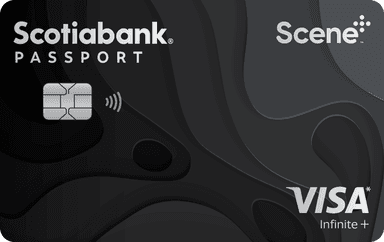
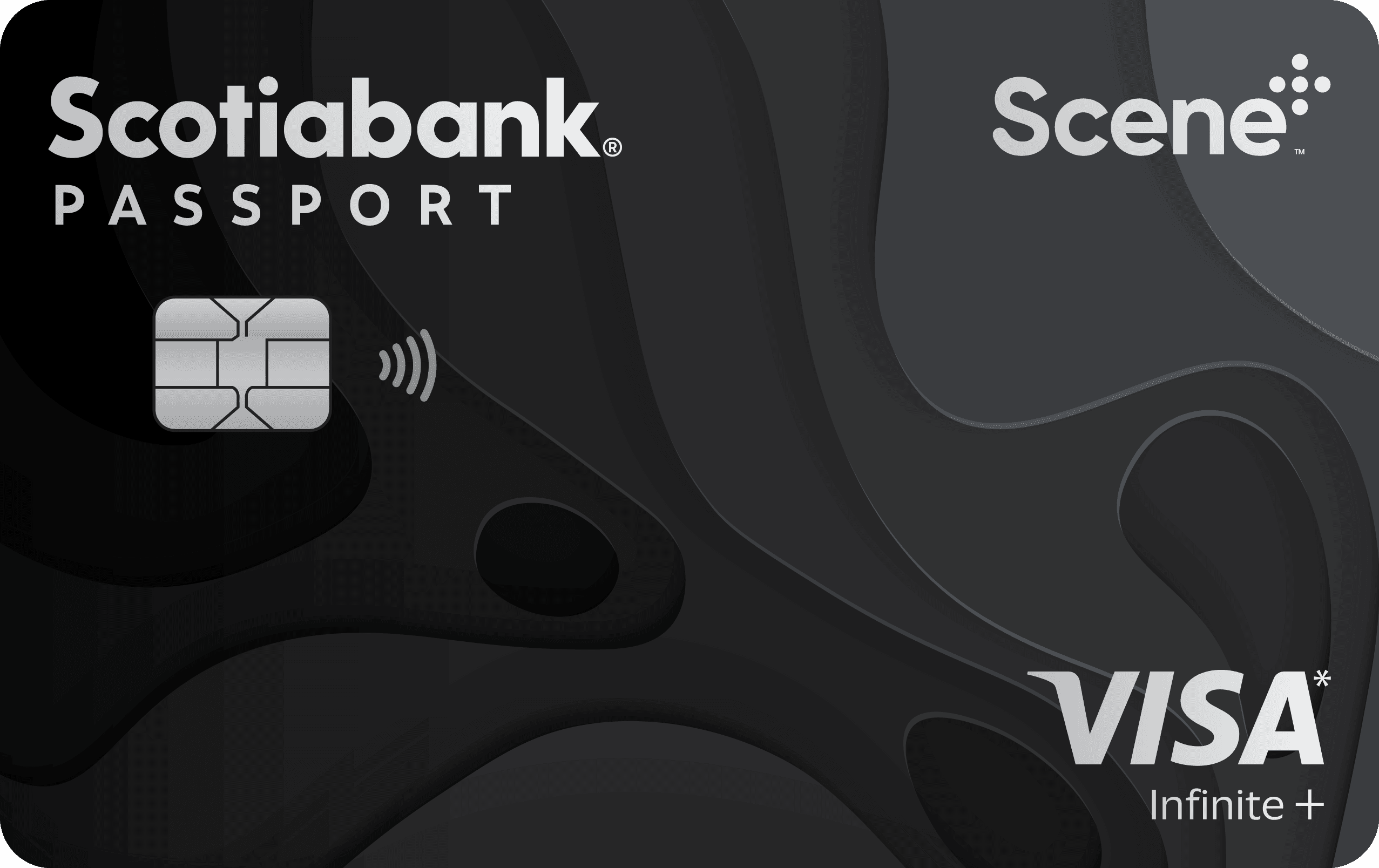
The good news for those looking to save money while travelling abroad or purchasing online in a foreign currency is that this is the one part of the fees and conversion structure that can be avoided. Specifically, you can skip paying the 2.5% fee by putting your foreign currency spending on a no-FX credit card like the Scotiabank Passport Visa Infinite +* Card.
We’ve written a complete guide to the best no-FX credit cards in Canada, so check that out to learn more about this and other cards that can save you money and earn you rewards on your foreign currency purchases.
| Credit card | Annual fee | Welcome offer | |
|---|---|---|---|

Debit card transaction fees
If you’re considering using your debit card for in-person purchases while you travel, be aware of the following fees and tips:
- Only debit cards that are linked with payment networks like Visa and Mastercard will likely work abroad. These cards can be identified by the Visa or Mastercard symbol on the card. Just keep in mind that even these linked Visa/Mastercard debit cards will not work all the time, so it’s best to have at least one other payment card (ideally a credit card) to make sure you’re covered.
- Canadian debit cards incur nearly identical fees as Canadian credit cards, namely the current exchange rate, network fee (around 1%), and foreign transaction fee (often 2.5%, depending on your bank).
- If your bank account only comes with a set number of debit transactions per month, going over this limit while abroad (or at home) will incur additional transaction fees as set out by your account’s terms and conditions.
ATM Fees and Withdrawing Cash
With the ins and outs of using your credit card for in-person or online foreign currency purchases covered above, let’s now look at what fees and “traps” to watch out for when you’re withdrawing cash from a foreign ATM using your Canadian debit card.
First, when you use your debit card to withdraw cash from an ATM abroad, you may face some or all of these charges:
- Foreign ATM fee from your home bank
- Fee from the foreign financial institution who owns the ATM you’re using
- Currency conversion rates that are higher than expected
- Network and foreign transaction fee
Foreign ATM transaction fee
The first fee that many Canadians will face when withdrawing money from ATMs outside of Canada is a foreign ATM transaction fee from their home bank.
This fee is usually between $2–5 CAD depending on who you bank with and what type of bank account you have. However, there are premium bank accounts that do not charge this fee at all, so if you’re planning to make a lot of foreign withdrawals, this style of account may be beneficial to you.
In terms of this fee, our advice is to do a little research on what your bank charges for foreign ATM withdrawals so that you’re not surprised by these additional charges that appear separately on your account’s statement. If you withdraw cash often, a prepaid card that reimburses ATM fees can cost less than your debit card, so compare the best prepaid cards with no foreign transaction fees before you go.
If you’re lucky (or if you plan accordingly), your bank may be affiliated with other banks around the world, allowing you to use these associated ATMs for free or for a discounted fee. For example, Scotiabank is part of the Global ATM Alliance, giving their customers fee-free access to eligible ATMs in a number of countries around the world. Additionally, you can find Scotiabank branches and ATMs in a handful of countries like Mexico, Jamaica, and the Dominican Republic. Keep in mind that fee-free access doesn’t apply at every Scotiabank ATM abroad (Costa Rica and Panama are among the exclusions), so check Scotiabank’s Global ATM Alliance page before you go.
ATM fee from the foreign bank
On top of the foreign ATM fee that your home bank may charge you, you’ll also likely face a fee from the financial institution whose ATM you’re using in the foreign country. These fees vary widely depending on the country you’re visiting and the ATM you’re using. To give you an idea, here are some possible fee ranges:
- Spain: €0.50–7.00 ($0.80–11.00 CAD)
- Mexico: $25–50 MXN (~$2–4 CAD)
- Japan: ¥110–220 (~$1–2 CAD)

In my experience, this fee is presented to you towards the beginning of your withdrawal request with language on the ATM screen like “This transaction will incur an additional fee of €5. Would you like to proceed?” At this point, you can decide whether you’re willing to pay the fee or if you would prefer to cancel the transaction and find a cheaper option.
With a bit of research, you can usually find a bank or two in the country you're visiting that’s known for offering lower fees. We recommend that you research which ATM charges the lowest fees before you head out on your trip (Reddit and travel forums can be good sources for up-to-date information).
For example, on a recent trip to Spain, I did some research on Reddit and learned that I could withdraw money from Unicaja ATMs without incurring any local charges while using my Canadian debit card, and when I tried, it worked!
Currency conversion rates at ATMs
To make sure you get the best currency conversion rate possible when withdrawing from a foreign ATM, you’ll want to decline the initial rate offered by the ATM.
Similarly to the conversion rate advice we gave above for foreign currency purchases made on your credit card, declining an offer from a bank may feel counter-intuitive; however, it’s almost always the better financial choice.
When withdrawing from a foreign ATM, you will likely be shown a screen that says something like “You may select to perform this transaction in your home currency.” Or it will show you your requested withdrawal amount and a bunch of information about the conversion rate, how much you’ll receive in the local currency, and the amount that will be withdrawn from your account.
If you were to say yes to these conversion rates, you’ll trigger dynamic currency conversion (DCC), which lets the ATM owner set their own exchange rate that may be considerably worse than the standard network rate set by your card’s network.
As an example of this in action, when withdrawing cash in Spain from the Unicaja ATM, I was offered a conversion rate of €100 = $170 CAD, which I declined. After finishing the transaction and taking my cash, I checked my bank account and confirmed the final conversion was in fact €100 = ~$160 CAD, so in this case, declining the conversion saved me nearly $10 CAD!
Network and foreign transaction fees
When you withdraw money from a foreign ATM using your Canadian debit card, you will likely incur network fees and foreign transaction fees similar to those incurred when you spend in foreign currency using your credit card.
Specifically, you can expect to be charged around a 1% network fee and, at most major banks, a 2.5% foreign transaction fee when you withdraw cash from a foreign ATM. Just note that these fees will be added to the final converted amount that’s withdrawn from your account, so you won’t notice them as a separate line item on your statement.
How to Save on Foreign Currency Purchases and ATM Fees
To make sure your foreign currency purchases and ATM withdrawals go as smoothly as possible, we’ve put together a list of tips below. Read through these and our full guide to saving on foreign currency purchases and ATM fees so that you’re as prepared as possible for your next trip abroad.
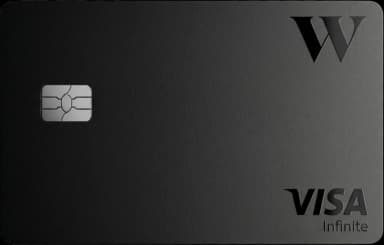
- Save the 2.5% fee on all your foreign currency purchases by choosing a no-FX credit card like the Scotiabank Passport Visa Infinite +* Card or the Wealthsimple Visa Infinite +* Card.
- Select local currency when given the option on a foreign currency purchase in a store, restaurant, or hotel.
- Research which ATM charges the lowest fees (Reddit and travel forums can be good sources for up-to-date information).
- Check if your bank is affiliated with any banks in the cities you’re visiting, or if it perhaps has its own branches/ATMs available in country to save on ATM fees.
- Avoid taking money out through private ATMs or those not attached to a bank. These machines tend to charge very high fees and/or have terrible conversion rates, and they’re more likely to be tampered with, making them less secure.
- Sign up for a premium or international bank account that waives international ATM fees.
Bottom Line
Although international spending can feel a bit confusing at times, with a bit of planning and research, you can easily and safely use your credit card and debit card for purchases and ATM withdrawals in countries around the world.
We hope this article has helped you better understand the related fees and conversion rates and that you’re feeling well-prepared for your upcoming travels abroad.

- Annual fee
- $150
- Our valuationMilesopedia first-year estimate First-year valueWelcome offer$350Total$350Rewards on your spending are not included. The calculator that adds them from your own profile is on the card's page.
- $350
- Welcome offer15,000 points after $3,000 in 3 months and 20,000 more after $10,000 total in 6 months. Eligible accounts must be opened by January 3, 2027.
- Up to 35,000 points
- Ends Jan 3, 2027
on Scotiabank's website
Want more tips on spending abroad and getting more from your rewards? Subscribe to our newsletter and get our latest guides and offers every week.