Scotiabank Gold American Express® CardScotiabank Gold American Express® CardEarn up to 50,000 bonus Scene+ points + no annual fee in your first year

The Registered Education Savings Plan (RESP): What You Need to Know

The Registered Education Savings Plan (RESP): What You Need to Know
Share

There is no question that one of the most fulfilling responsibilities is being a parent. However, the youth are the future, and planning for your kid’s success can be a challenge – especially with the seemingly unlimited paths they can take. As you have seen with our TFSA and RRSP series, you can use several financial vehicles to achieve great wealth in this country. Preparing for your children’s future is no different. So, what tool can we use this time to help instill value in our children and help fund their education down the line?

If you want to give your child a head start, look no further. This article will talk about the Registered Education Savings Plan (RESP).

What is an RESP

The RESP is an investment account made for the sole purpose of funding your child’s future education, whether that be university, college, or skills training programs. Like the TFSA and RRSP, the RESP is a tax-advantaged account, allowing you to invest and see growth tax-free.

The RESP functions with three main parties:

  1. The Subscriber: This person makes contributions to the RESP. While this is generally the child’s parents, there are no restrictions on who can be the subscriber. This, of course, is subject to limitations based on the type of RESP you have.
  2. The Promoter: Generally, the financial institution that pays your contributions and income earned on those contributions to your child when they attend post-secondary education.
  3. The Beneficiary: This refers to your child who will receive contributions from the promoter. To be a beneficiary, your child must have been a resident of Canada when the designation is made and hold a valid SIN number. A child can be the beneficiary on more than one RESP but within certain limits.

While children use their RESP contributions at different stages, the subscriber will make contributions on behalf of the beneficiary over a set period. Once the beneficiary has been accepted and is attending qualified post-secondary, the promoter will make what is called an Educational Assistance Payment (EAP). The subscriber can also make withdrawals known as Post-Secondary Education Payments (PSE).

Types of RESPs

Anyone can open an RESP. You can open one jointly with a spouse or common-law partner. There are three types of RESP plans that you can take advantage of to help fund your child’s education:

Individual (Non-family) RESP plans:

With an individual plan, only one beneficiary can be named at any given time. This is ideal for a family with one child or if you are not directly related to the beneficiary.

Family RESP

If you have more than one child, the family RESP may be beneficial as you can designate funds to multiple children once they are enrolled in post-secondary. The only stipulation is that the children be related to you, either by blood or adoption.

This includes children, stepchildren, grandchildren, brothers, and sisters. Beneficiaries must also be under the age of 21.

Group RESP

Similar to the individual plan, the group plan is for one child only, and they do not have to be related to you. Your money is pooled in with several other children of the same age and is actively invested in low-risk investments. The amount you receive is dependent on how much money is in the group account, and each group differs with its rules and regulations.

Though there are more restrictions with a group plan, you do have less stress when determining the types of investments to put your money into.

Benefits of an RESP

1. Giving your child a head start

Post-secondary education can be costly. With the average undergraduate tuition cost being $6,693, you are giving your child a great head start over their peers. They won’t have to think about a student loan and can leverage their education towards a fulfilling career.

You are giving them an invaluable tool for their wealth-building journey.

2. Tax-sheltered growth

When saving for your child’s education, you save perhaps thousands of dollars on all gains made within the account. While the beneficiary will be subject to taxes on any income withdrawn, a student’s income is so low that they may not pay very much or anything at all when it comes down to it.

This gives you the option to invest in a wide range of investments, including ETFs, options, guaranteed investments certificates (GIC’s), and bonds, all tax-free.

3. Government Matching

Government matching aka more money to fund your children’s education in the form of grants, bonds, and incentives. An example of this is the Canada Education Savings Grant (CESG).

This is another excellent feature of the RESP that promises a match of 20% of annual contributions you make to an RESP up to a lifetime limit of $7,200. Outside of the numerous provincial incentives available, children from modest-income families may also qualify for the Canada Learning Bond.

4. Flexibility

Post-secondary is undoubtedly a great path to pursue, but it isn’t for everyone, realistically speaking. The RESP offers excellent flexibility if you have a child who does not school. You could name a new beneficiary by transferring the RESP in their name, converting the RESP into an RRSP, or closing and withdrawing from the RESP.

Maybe the doors aren’t fully closed either. If by chance, your child decides that they do want to go to school later on in their life, an RESP can remain open for up to 35 years.

Contribution Limits

The RESP has no annual contribution limit. There is, however, a lifetime limit of $50,000 for a single beneficiary. This becomes important if you have more than one RESP opened for a single beneficiary.

To make use of the CESG, the amounts you deposit per year should be in line with the annual grant provided. Since the annual CESG grant you are eligible for is $500, a good rule to keep in mind is contributing up to $2,500 each year to your child’s RESP.

You should also avoid over contributing to an RESP. For each month that you over contribute, you will be paying a 1% tax per month on your share of excess contributions. This tax will continue until you withdraw the extra amount from the RESP.

Withdrawal limits

Before you attempt to withdraw money from your RESP, there are several rules you must be aware of. To keep it short and sweet, here are some general guidelines:

  • The subscriber is the only one who can make withdrawals to the account on behalf of the beneficiary.
  • Once the beneficiary is enrolled to attend post-secondary high school, you can request payments on their behalf to help pay for their studies. The current withdrawal limit is $5,000 or $2,500 if the beneficiary is part-time. This will be EAP, which are withdrawals of investment earnings and government grants, or the PSE made by the subscriber.
  • Withdrawals done as PSE are not taxable and can be withdrawn tax-free. EAP’s on the other hand are considered taxable income. But remember, most students have low income and enough tuition and education credits not to feel the effects of this.

How to Open a RESP

The best way to open an RESP is to visit any financial institution and simply open an account on behalf of your child. You have many choices, but choosing a provider that best suits your needs and has relatively low fees is recommended. You also want to ensure that your child has a SIN number and supporting documents like a birth certificate.

Pro tip: You may not make huge contributions initially but rest assured that the small payments will add up and make a massive difference in your children’s lives over the long term.

Conclusion

The RESP is an excellent opportunity to keep your children in a position to win to all the parents out there. So please continue to improve your knowledge of these financial products, and your kids will indeed thank you when it comes time to use their education.

Have you opened an RESP for your children? Tell us how that is going!
Annual fee
$191.88
Our valuation
$255
Milesopedia first-year estimateFirst-year valueWelcome bonus$255Total$255Rewards on your spending are not included. The calculator that adds them from your own profile is on the card's page.
Welcome offer
Up to 15,000 points
Apply Now

on American Express's website

Apply with confidence — no impact on your credit scoreApply with confidenceCheck whether your application will be approved before you submit it, with no impact on your credit score*When you apply for a personal American Express Credit Card, we will tell you whether you are eligible without affecting your credit score. So you can apply with confidence.*Instant decisions are only available for consumer Card applications (also called “personal Cards”).

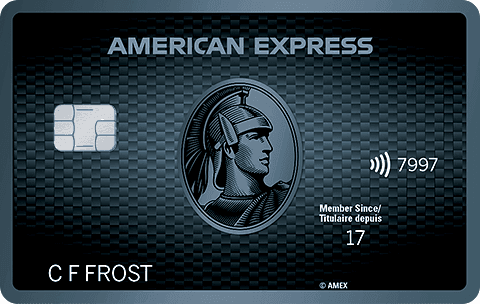
The American Express Cobalt® Card is the best credit card from American Express, whether you want points for travel or cash back.

American Express Cobalt® Card welcome offer

The welcome bonus is paid out monthly over your first 12 months. You earn 1,250 Membership Rewards points for each monthly billing period in which you charge $750 in net purchases to your card, in any category (1X, 2X, 3X or 5X). That adds up to 15,000 Membership Rewards points over the year, a welcome offer we value at $255.

Earning the full bonus means $9,000 in net purchases spread across 12 monthly billing periods. This offer rewards steady monthly spending rather than one large purchase.

You can use these points as statement credits on everyday or travel purchases, at the same rate either way: 1,000 points = $10.

You can also transfer them to Aeroplan, Avios (British Airways and Qatar Airways), Flying Blue, Marriott Bonvoy or Hilton Honors. With the full welcome bonus, that is a choice between:

  • 15,000 Aeroplan points
  • 15,000 Avios points
  • 15,000 Flying Blue Miles
  • 18,000 Marriott Bonvoy points

If hotel points are what you are after, our ultimate guide to Marriott Bonvoy and our complete map of Marriott Bonvoy hotels by category show what those points can actually buy.

American Express Cobalt® Card benefits

Here is what the card gives you, starting with the benefits cardholders use most.

  • 5X points on eligible eats and drinks in Canada: groceries, restaurants and bars, home food delivery and convenience stores. A spend cap applies.
  • 3X points on eligible streaming subscriptions in Canada.
  • 2X points on eligible gas, public transit and ride sharing purchases in Canada.
  • 1 additional point on eligible hotel and car rental bookings made through American Express Travel Online.
  • 1X point per dollar on everything else, with no category restrictions.
  • Points that hold the same value either way: 1,000 points = $10 as a statement credit, or a 1:1 transfer to several airline and hotel loyalty programs.
  • No minimum income requirement, as with every American Express Canada card.
  • Additional cards at no extra cost: the first and every other supplementary card is $0.
  • The Hotel Collection: a room upgrade when available, 12pm check-in and late check-out when available, and up to $100 USD in hotel credit on amenities charged to the room for a stay of two or more consecutive nights, booked through American Express Travel.
  • Front Of The Line® presale and reserved tickets for concerts and theatre performances, plus offers and events curated for cardmembers through Amex Experiences.
  • A soft credit check before you apply: you can see whether you will be approved with no impact to your credit score. This applies to American Express personal card applications.

To see how it compares with the rest of the line-up, read our round-up of the best credit cards from American Express in Canada.

The 5X categories and where they apply

The 5X rate is the reason most people carry this card. In Canada it covers four kinds of merchants:

  • Groceries: Metro, IGA, Sobeys, Super C, Safeway, Whole Foods.
  • Restaurants and bars: sit-down meals, takeout and drinks.
  • Home food delivery.
  • Convenience stores: Couche-Tard, 7-Eleven.

The 2X rate covers gas stations such as Esso, Shell and Petro-Canada, along with public transit and ride sharing.

With the American Express Cobalt® Card, you earn between 1 and 5 points per dollar:

Category Points per dollar
Grocery (Metro, IGA, Sobeys, Super C, etc.) 5
Home food delivery 5
Restaurants and bars 5
Convenience stores 5
Streaming services 3
Service station 2
Transport 2
Travel 1
Other 1

That works out to a 1 to 5% return on those purchases. For example, if you spend $1,000 per month across groceries, restaurants and food delivery, you earn $50 back per month, or $600 per year from that category alone. Transfer the points to a program such as Aeroplan instead and the return can be higher.

You can also stack these categories with the hundreds of stores that offer 5x points.

American Express Cobalt® Card insurance coverage

The card comes with a broad insurance package. The amounts below are the coverage limits; conditions, age limits and exclusions are set out in the certificate of insurance linked in the Insurance section above.

Travel insurance

  • Emergency medical: up to $5,000,000 for the first 15 days of a trip.
  • Travel accident: accidental death and dismemberment of up to $250,000 for you, your spouse and dependent children under age 23 when travelling on a common carrier (plane, train, bus or ship) and the tickets are charged to your card. Supplementary cardholders and their families are covered too.
  • Flight delay: up to $500 for necessary hotel, meal and sundry expenses bought within 48 hours when you are delayed or denied boarding for four hours or more and no other transportation is available. This $500 is an aggregate limit per occurrence, shared with missed connection and delayed baggage coverage.
  • Delayed baggage: up to $500 for essential clothing and sundries bought within four days when your outbound luggage is delayed six hours or more. This $500 is an aggregate limit per occurrence, shared with missed connection and flight delay coverage.
  • Lost or stolen baggage: up to $500 per occurrence for all insured persons combined, for checked or carry-on baggage and personal effects in transit, when the airline tickets are charged to your card. Within that limit, jewellery is capped at $300 per occurrence and golf clubs, including golf bags, at $250 per occurrence.
  • Hotel and motel burglary: up to $500 against the loss of most personal items if your hotel or motel is burglarized, when the stay is charged to your card.

Rental car insurance

Theft and damage coverage is included for a rental car with an MSRP, for its model year, of up to $85,000 excluding all taxes, for rentals of up to 48 days. To use it, decline the Loss Damage Waiver (LDW) or any similar option from the rental company and charge the full rental to your card. There is no cost for this coverage, and it replaces the daily insurance the rental company charges, usually $16 to $23 per day.

Mobile device insurance

Your device is covered for up to $1,000 per occurrence when it is charged to the card, for up to two years from the date of purchase. The payout is based on the depreciated value of the device, which falls by 2% of the purchase price for every completed month, less a 10% deductible. Theft and accidental damage coverage starts on the 91st day after purchase, because the first 90 days are covered by purchase protection.

Purchase protection and extended warranty

Eligible items charged to your card are insured against accidental physical damage or theft for 90 days from the purchase date, up to $1,000 per occurrence for all items combined. The card also extends the original manufacturer’s warranty by up to one additional year on eligible items, with indemnification limited to $10,000 per insured item and $25,000 per Cardmember per policy year for all items combined.

American Express Cobalt® Card fees

  • Card fee: $15.99 per month, which equals $191.88 per year, for residents outside Quebec. Quebec residents are billed $191.88 per year.
  • Additional cards: $0.
  • Purchase interest rate: 21.99%.
  • Cash advance interest rate: 21.99%.
  • Foreign transaction fee: 2.5%.
  • Minimum income required: none.

Because the fee is billed monthly rather than in one annual charge, you can stop and restart the cost in step with how much you are actually using the card.

Annual fee

Primary card$191.88
Additional card$0

Annual income required

Individual$0
Household$0

Conversion fees

2.5%

Earning rate

  • 5xRestaurants
  • 5xGroceries
  • 5xConvenience
  • 3xStreaming
  • 2xTransit
  • 2xGas & EV
  • 1xAll spending

Value

1st Year Value$1,828
2nd Year Value$799

Transfer partners

  • AeroplanAirline
  • British Airways ClubAirline
  • Cathay Asia MilesAirline
  • Etihad GuestAirline
  • Flying BlueAirline
  • Hilton HonorsHotel
  • Marriott BonvoyHotel

Travel insurance

Travel medical (under 55)Up to $5,000,000 / 15 days
Travel medical (55-64)Up to $5,000,000 / 15 days
Delayed BaggageUp to $500
Lost BaggageUp to $500
Flight DelayUp to $500
Hotel BurglaryUp to $500
Travel AccidentUp to $250,000

Purchase protection

Purchase ProtectionUp to $1,000 / 90 days
Extended Warranty+1 years
Mobile DeviceUp to $1,000 / 2 years
Auto Rental Collision (primary)Up to $85,000 / 48 days

Our featured card

Featured
Annual fee
$120
Our valuation
$990
Milesopedia first-year estimateFirst-year valueWelcome bonus$990Total$990Rewards on your spending are not included. The calculator that adds them from your own profile is on the card's page.
Welcome offer
Up to 110,000 points
Ends Sep 22, 2026
Apply Now

on American Express's website

Apply with confidence — no impact on your credit scoreApply with confidenceCheck whether your application will be approved before you submit it, with no impact on your credit score*When you apply for a personal American Express Credit Card, we will tell you whether you are eligible without affecting your credit score. So you can apply with confidence.*Instant decisions are only available for consumer Card applications (also called “personal Cards”).

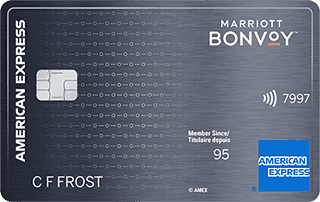
The Marriott Bonvoy® American Express®* Card is the best credit card in Canada for free hotel nights.

New Cardmembers can earn up to 110,000 Marriott Bonvoy® points with the current offer:

  • Earn 80,000 points after you spend $6,000 on your Card in your first 6 months of Cardmembership.
  • Plus, earn 30,000 points by making a purchase during your 15th month of Cardmembership.

This offer ends on September 22, 2026. The annual fee is $120, and there is no annual fee on Additional Cards, so you can add a partner or a family member at no extra cost.

Every year after your first Card anniversary, you receive an Annual Free Night Award good for a redemption of up to 35,000 points at eligible hotels and resorts worldwide. At a valuation of 0.9 cents per Marriott Bonvoy point, that certificate is worth roughly $315, which on its own more than covers the $120 annual fee. That is the main reason to keep this Card year after year instead of cancelling it.

To get the most out of the certificate, aim it at a night that would otherwise price close to the 35,000 point ceiling.

The Card also gives you 15 Elite Night Credits each calendar year and automatic Marriott Bonvoy Silver Elite status. Those credits count toward the next Elite tier, so you begin every year 15 nights ahead of where you would otherwise start.

You move up to Gold Elite status automatically when you reach $30,000 in purchases on the Card in a year, or when you combine 10 qualifying paid nights within one calendar year with the 15 Elite Night Credits from your Card.

Marriott Bonvoy points are generally valued at 0.9 cents each. On that basis, the 110,000 point welcome offer is worth about $990, and an Annual Free Night Award used at its full 35,000 point ceiling is worth about $315.

Marriott Bonvoy points pull their weight on free nights rather than on gift cards or merchandise, which is why this Card should be judged on the hotel stays it produces.

You earn 5 points per dollar on eligible purchases at participating Marriott Bonvoy hotels and 2 points per dollar on all other purchases. Points can be redeemed for free nights with no blackout dates at more than 7,000 hotels around the world.

The Card carries a solid package of coverages: $500,000 travel accident insurance, flight delay, baggage delay, lost or stolen baggage and hotel or motel burglary at $500 each, car rental theft and damage up to $85,000 for rentals of up to 48 days, Purchase Protection for 90 days and a one year Extended Warranty.

Two things to plan around: the 2.5% foreign transaction fee on purchases made in a foreign currency, and the 21.99% purchase interest rate, which makes this a Card to pay in full every month. Like all American Express Canada Cards, no minimum income is published for this Card, and you can see whether you would be approved before you apply, with no impact on your credit score.

Annual fee

Primary card$120
Additional card$0

Annual income required

Individual$0
Household$0

Conversion fees

2.5%

Earning rate

  • 5xMarriott Bonvoy hotels
  • 2xAll spending

Value

1st Year Value$1,437
2nd Year Value$312

Travel insurance

Delayed BaggageUp to $500
Lost BaggageUp to $500
Flight DelayUp to $500
Hotel BurglaryUp to $500
Travel AccidentUp to $500,000

Purchase protection

Purchase ProtectionIncluded
Extended Warranty+1 years
Auto Rental Collision (primary)Up to $85,000 / 48 days

Our editorial integrity

Our reviews and rankings are based on an objective assessment. Advertisers do not influence our content. We may receive compensation through some links; our analysis and opinions remain independent.