QuickBooks for Small Business: How to Manage Your Accounting Simply

Loading article…
Are you a small business owner or self-employed in Quebec looking for a simple way to manage your accounting? QuickBooks Online is often presented as the default solution, but is it truly necessary for your situation?
In this article, you will understand how to organize small business accounting, what you need to track daily, and in which cases QuickBooks becomes useful or, conversely, superfluous. The objective is simple: to help you make a clear decision.

Small business accounting does not need to be complex. It essentially relies on tracking a few key elements related to your income, expenses, and tax obligations.
First, you must track your income. Every amount received must be recorded with the date, client, and service rendered. Next, you must document your business expenses, such as software, phone, travel, or equipment.
Furthermore, in Quebec, managing GST and QST is essential as soon as your revenue exceeds $30,000. You must therefore clearly track taxes collected and paid.
Finally, simple tracking of your clients and invoices allows you to quickly know who has paid you and who still owes you money.
In summary, accounting is not a matter of complexity, but of consistency.
For a small business, tracking four main elements is enough to maintain healthy and functional accounting.
If you regularly track these four elements, you already have a solid accounting foundation, even without complex software.
To learn more, consult our complete guide on QuickBooks: Plans, Pricing, and Features.
QuickBooks can be an excellent tool for a small business. However, it is not always indispensable depending on your activity level.
Its main advantage is automating several accounting tasks, such as categorizing transactions or generating financial reports. This becomes useful when your activity starts to grow.
However, for a very small business with few transactions, QuickBooks can sometimes be more complex than necessary. In these cases, a simpler solution may suffice.
The challenge is therefore not whether QuickBooks is good, but whether it is suitable for your level of complexity.

QuickBooks truly makes sense in certain specific situations.
It becomes relevant if you have several active clients and regular income to manage. It is also very useful when you exceed approximately $30,000 in annual revenue and need to manage GST and QST in a structured way.
Moreover, if you work with an accountant, QuickBooks greatly facilitates collaboration.
Finally, as soon as you want to automate your bank tracking and reduce manual entry, the software becomes a real time-saver.
In these cases, QuickBooks is no longer a luxury, but a productivity tool.
Conversely, QuickBooks is not always the best option.
If you have a side activity or a micro-business with few transactions, complex software may be unnecessary. Similarly, if you have fewer than 20 transactions per month, bookkeeping can easily be managed with a spreadsheet.
Finally, if your budget is limited or your needs are very simple, solutions like Excel or Wave may be perfectly sufficient.
The goal is to avoid paying for features you do not use.
If you choose QuickBooks for your small business, you do not need to use all its features.
Start by connecting your bank account to automate transaction imports. Then, configure only the essential expense categories for your activity.
Create simple invoices with your basic information and payment terms. Finally, review your income and expenses once a week to stay in control.
A common mistake is wanting to configure everything from the start. In reality, simplicity is more effective.
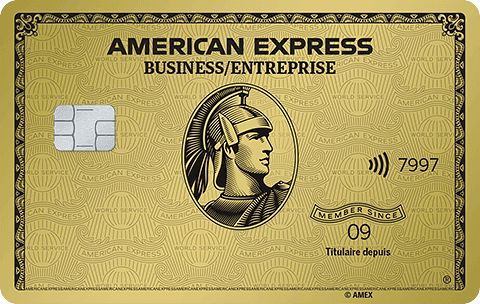
A big part of your accounting comes down to your expenses. Paying for your subscriptions, equipment, and travel with a business credit card simplifies two things at once.
To compare options, see our selection of the best business credit cards. However, pay the balance in full each month: interest quickly cancels out the value of the rewards.
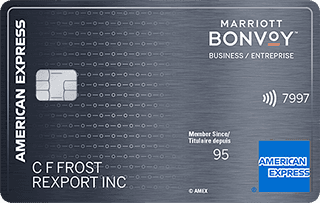
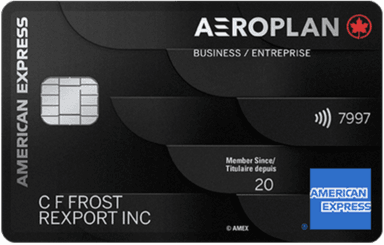
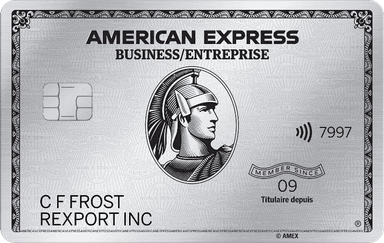
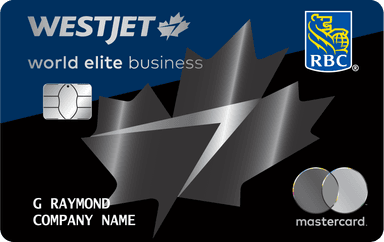
| Credit card | Annual fee | Welcome offer | |
|---|---|---|---|
| $150 | |||
| $599 | |||
| $799 | |||
| $175 | |||
| $199 |
QuickBooks is not the only option for managing small business accounting.
Wave is a free alternative that is well-suited for beginners. Excel or Google Sheets also remain effective solutions for very small structures with few transactions.
Finally, Momenteo is an interesting option for self-employed workers in Quebec thanks to its simplicity and French interface.
The right tool is the one you actually use every week.
To learn more, consult our QuickBooks vs. Alternatives Comparison for Bookkeeping Software.
Let’s take the example of a self-employed worker in Quebec who earns $45,000 per year.
They have about ten active clients and approximately 15 to 25 transactions per month. Their expenses are mainly related to their home office, phone, and software.
In this case, they could use QuickBooks, but it is not mandatory. A simpler solution like Wave or Excel could suffice, provided good discipline is maintained.
The key is not the software, but regularity.
Small business accounting does not need to be complicated to be effective. QuickBooks is an excellent tool for a small business, but only when your activity level justifies it.
If your business is still simple, start simple. If it grows, you can evolve to a more comprehensive tool like QuickBooks.
The best accounting system is the one you actually use, not the one with the most features.
No, no software is mandatory. You only need to keep accurate accounting records.
Not necessarily, but it can be oversized for a very small operation.
As soon as it becomes difficult to manually track your income and expenses, QuickBooks software becomes useful.
Yes, Wave and Excel are popular solutions for small structures.
Yes, that is even one of its main advantages in Canada.
QuickBooks does indeed allow you to track and generate tax reports tailored to Quebec.
on American Express's website
Apply with confidenceCheck whether your application will be approved before you submit it, with no impact on your credit score*When you apply for a personal American Express Credit Card, we will tell you whether you are eligible without affecting your credit score. So you can apply with confidence.*Instant decisions are only available for consumer Card applications (also called “personal Cards”).
Our reviews and rankings are based on an objective assessment. Advertisers do not influence our content. We may receive compensation through some links; our analysis and opinions remain independent.