Head to Head: Marriott Bonvoy American Express Card vs American Express Cobalt Card
Marriott Bonvoy or Cobalt? Welcome bonus, fees, earn rates, insurance and the free night award: our numbers-based comparison and our verdict for each type of traveller.
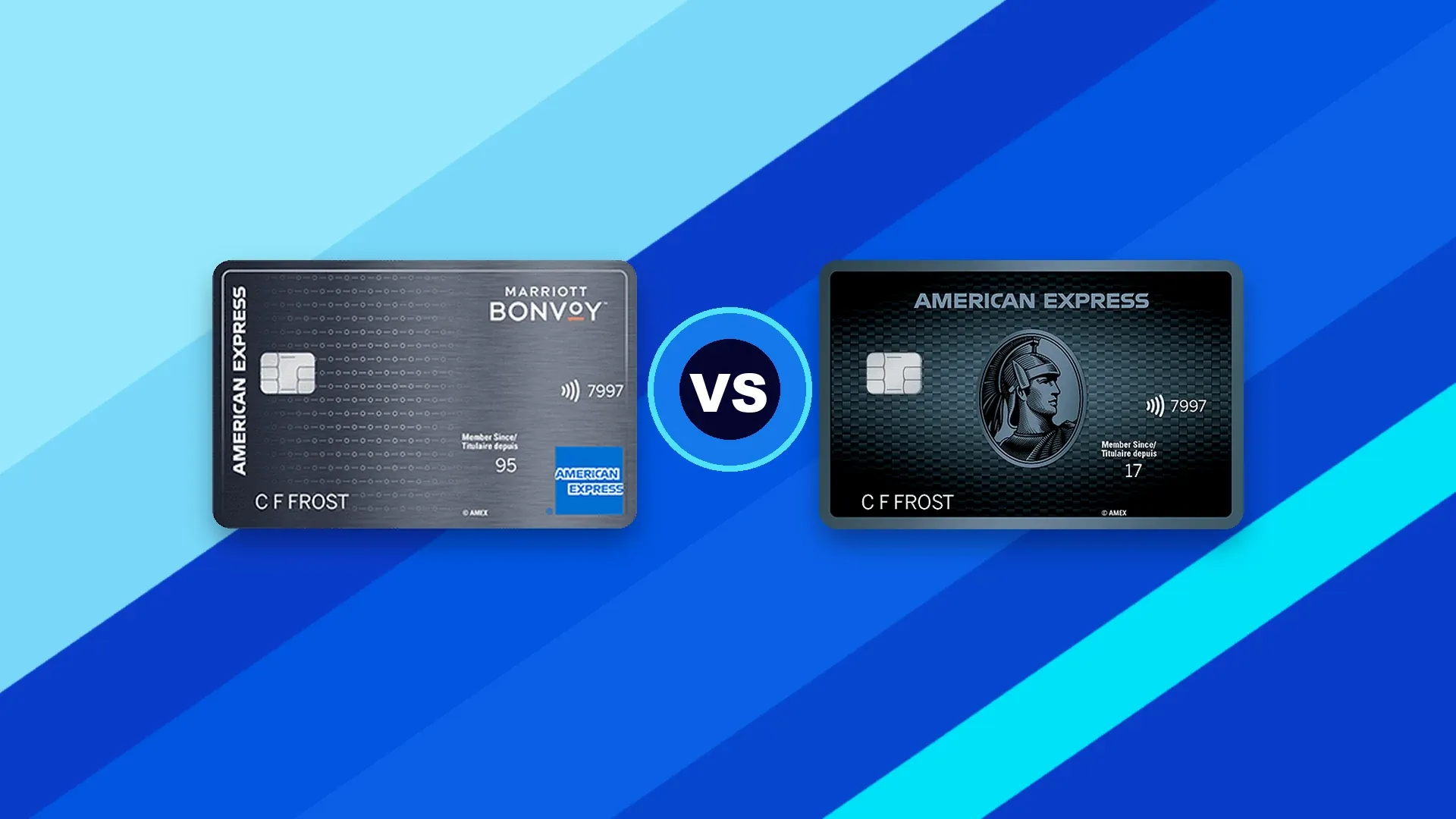
Pick the American Express Cobalt Card to earn the most points on groceries and dining, and the Marriott Bonvoy American Express Card only if you actually sleep at Marriott hotels. Both cards come from American Express and neither requires a minimum income, but their points behave very differently: one speaks to a single hotel chain, the other travels almost anywhere.
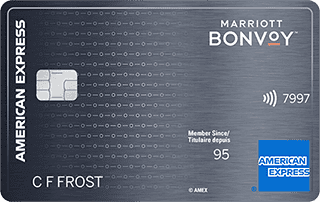
- The Marriott Bonvoy® American Express®* Card, a co-branded card that earns Marriott Bonvoy points
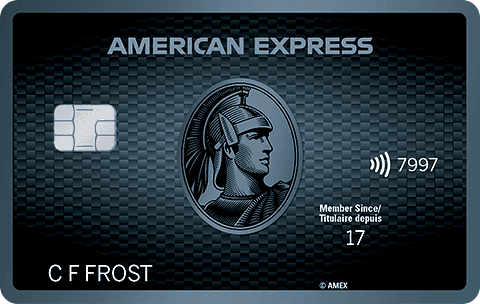
- The American Express Cobalt® Card, the card that earns transferable Membership Rewards points
Here is the numbers-based breakdown: welcome bonuses, fees, points per dollar, insurance and an example on $30,000 of spending. You will quickly see whether your everyday life leans toward hotels or groceries.

The figures below come from American Express's official pages and our own point valuations. Here are the differences that matter to you.
- Welcome bonus: edge to the Marriott Bonvoy card, up to about $700 versus $255 for the Cobalt
- Everyday earning: edge to the Cobalt, up to an 8.5% return on groceries and dining, on $2,500 of spending a month
- Point flexibility: edge to the Cobalt, with transfers to Aeroplan, Avios and Marriott
- Annual benefit: edge to the Marriott Bonvoy card, with a Free Night Award every year
- Travel medical insurance: included with the Cobalt only, for those under 65
- Annual fee: $120 for the Marriott Bonvoy card, $191.88 for the Cobalt
The comparison table
The table below summarizes both cards. Dollar values for points use our default valuations: 1.0¢ per Marriott Bonvoy point and 1.7¢ per Membership Rewards point.
| Feature | Marriott Bonvoy card | Cobalt card |
|---|---|---|
| Annual fee | $120 | $191.88 ($15.99 per month) |
| Additional cards | $0 | $0 |
| Minimum income | None | None |
| Welcome bonus | Up to 70,000 Bonvoy points (about $700) | Up to 15,000 Membership Rewards points (about $255) |
| Best earn rate | 5 points per dollar at Marriott hotels | 5 points per dollar on groceries and dining (up to $2,500 a month) |
| Rate on other purchases | 2 points per dollar | 1 point per dollar |
| Point value (Milesopedia) | 1.0¢ | 1.7¢ |
| Point transfers | To airlines, at a ratio that reduces their value | Aeroplan and Avios 1:1, Marriott Bonvoy 1:1.2 |
| Annual benefit | Free Night Award after the first year (up to 35,000 points) | None |
| Travel medical insurance | No | Yes (under 65), first 15 days |
| Foreign transaction fee | 2.5% | 2.5% |
| Purchase interest rate | 21.99% | 21.99% |
Welcome bonus
This is the only area where the Marriott Bonvoy card clearly wins in year one. It offers up to 70,000 Marriott Bonvoy points:
- 60,000 points after $3,000 in purchases in the first 3 months
- 10,000 points after a $500 purchase in month 13
At 1.0¢ per point, that is worth about $700 in hotel stays. Note that the second tranche only arrives at the start of year two, so you have to keep the card and pay the annual fee a second time to get it.
The Cobalt works differently. It awards 1,250 Membership Rewards points for each monthly billing period in which you spend at least $750, up to 15,000 points in the first year.
That means $9,000 in purchases spread over 12 months. At 1.7¢ per point, the bonus is worth about $255. Current and former Cobalt cardholders are not eligible.
If you transfer those 15,000 points to Marriott Bonvoy at a 1:1.2 ratio, you get 18,000 Bonvoy points. Even in Marriott's own currency, the Cobalt's bonus is much smaller.
Annual fee and income requirement
The Marriott Bonvoy card costs $120 a year, with no first-year waiver. Additional cards are free.
The Cobalt is billed monthly: $15.99 a month, or $191.88 a year. Additional cards are also free.
Neither card requires a minimum personal or household income. The purchase interest rate is 21.99% on both, and both charge a 2.5% foreign transaction fee. If you travel a lot outside Canada, neither is ideal for paying abroad.
Earning points
This is where the gap opens up. The Marriott Bonvoy card has a simple two-tier structure:
- 5 points per dollar at participating Marriott Bonvoy hotels
- 2 points per dollar on all other purchases
The Cobalt focuses on everyday categories:
- 5 points per dollar at restaurants, cafés, bars and stand-alone grocery stores, and on food or grocery delivery, up to $2,500 in combined spending per month
- 3 points per dollar on streaming services
- 2 points per dollar on gas, transit and rideshare
- 1 point per dollar on all other purchases
To compare apples with apples, we translate each rate into value per dollar spent. The next table gives you the result with our valuations. Keep in mind that convenience stores do not count toward the Cobalt's 5x at the grocery store.
| Category | Marriott Bonvoy card | Cobalt card |
|---|---|---|
| Marriott hotels | 5 points = 5.0¢ | 1 point = 1.7¢ |
| Groceries, restaurants, bars, food delivery | 2 points = 2.0¢ | 5 points = 8.5¢ |
| Streaming services | 2 points = 2.0¢ | 3 points = 5.1¢ |
| Gas, transit, rideshare | 2 points = 2.0¢ | 2 points = 3.4¢ |
| Other purchases | 2 points = 2.0¢ | 1 point = 1.7¢ |
The result is striking: even at Marriott hotels, the Marriott Bonvoy card (about a 5% return) does worse than the Cobalt at the grocery store (about 8.5%).
And if you transfer your Membership Rewards points to Marriott, every dollar spent on groceries with the Cobalt gives you 6 Bonvoy points. That is three times what the Marriott Bonvoy card earns outside its hotels.
Redeeming points
Marriott Bonvoy points are worth the most for one thing: booking nights at the 30-plus brands in the Marriott portfolio. You can also convert them to airline miles, but the conversion cuts their value sharply. Our Marriott Bonvoy program page covers every redemption option.
The Cobalt's Membership Rewards points are far more flexible. You can transfer them 1:1 to Aeroplan or British Airways Avios, convert them to Marriott Bonvoy at 1:1.2, or use them as a statement credit at 1,000 points for $10. Our American Express Membership Rewards guide lists every partner.
In other words, Cobalt points can always become Marriott points, while the reverse is rarely a good idea.
Insurance
Both cards share most of the standard American Express protections, with one major difference: the Cobalt includes travel medical insurance for those under 65, which the Marriott Bonvoy card does not offer. Here is what each card covers when you travel.
| Coverage | Marriott Bonvoy card | Cobalt card |
|---|---|---|
| Travel medical | Not included | Up to $5,000,000, first 15 days (under 65) |
| Travel accident | Up to $500,000 | Up to $250,000 |
| Flight delay | Up to $500 (combined with delayed baggage) | Up to $500 (combined with delayed baggage) |
| Lost or stolen baggage | Up to $500 | Up to $500 per trip |
| Hotel burglary | Up to $500 | Up to $500 |
| Car rental | Vehicles up to $85,000, 48 days | Vehicles up to $85,000, 48 days |
| Purchase protection | 90 days, up to $1,000 per occurrence | 90 days, up to $1,000 per occurrence |
| Extended warranty | 1 year | 1 year |
| Mobile devices | Not included | Up to $1,000 |
Annual benefits
This is where the Marriott Bonvoy card earns its fee for the right profile. After each anniversary of your account, it gives you a Free Night Award valid at a hotel costing up to 35,000 points per night. You therefore receive it only after your first year.
Its value depends on the hotel you choose. Used on a night that truly costs the maximum, it is worth about $350 based on our valuation; at a hotel that costs half as many points, it is worth half as much. Our guide to the Amex Marriott Bonvoy Free Night Award explains how to get the most out of it.
The card also gives you:
- automatic Silver Elite status
- 15 Elite Night Credits per year, which speed up your path to higher tiers
- Gold Elite status if you put $30,000 in purchases on the card in a year, or if you combine 10 qualifying paid nights with the card's 15 Elite Night Credits
The Cobalt has no comparable annual benefit. It does give you access to The Hotel Collection from American Express, with a credit of up to 100 US dollars on eligible stays of two nights or more booked through Amex Travel, plus one extra point per dollar on hotels and car rentals booked online through Amex Travel.
A worked example
Take a traveller who puts $30,000 a year on their card, split as follows:
- Groceries and restaurants: $9,000
- Gas and transit: $2,400
- Streaming: $300
- Marriott hotels: $4,000
- Other purchases: $14,300
Here is what each card earns them in one year, excluding the welcome bonus.
| Spending | Marriott Bonvoy card | Cobalt card |
|---|---|---|
| Marriott hotels ($4,000) | 20,000 points | 4,000 points |
| Groceries and restaurants ($9,000) | 18,000 points | 45,000 points |
| Gas and transit ($2,400) | 4,800 points | 4,800 points |
| Streaming ($300) | 600 points | 900 points |
| Other purchases ($14,300) | 28,600 points | 14,300 points |
| Total | 72,000 Bonvoy points | 69,000 Membership Rewards points |
| Estimated value | $720 | $1,173 |
| Annual fee | $120 | $191.88 |
| Net value | $600 | $981 |
With the Marriott Bonvoy card, they also get, from year two, the Free Night Award (up to $350) and reach Gold Elite status thanks to their $30,000 in spending. Transferred to Marriott, the Cobalt's 69,000 points would become 82,800 Bonvoy points.
Even for this Marriott-loyal traveller, the Cobalt earns more: $981 net versus $600. The Free Night Award brings the Marriott Bonvoy card to about $950, and the gap almost closes. Gold Elite status can tip the balance, provided you actually use it.
Verdict by profile
The Marriott-loyal traveller
Both cards, ideally together. The Cobalt earns points on groceries and dining, which you can transfer to Marriott when needed. The Marriott Bonvoy card pays for your stays, collects the annual certificate and helps you climb the Elite tiers. On its own, the Marriott Bonvoy card pays for itself as soon as you use its Free Night Award, which is usually worth more than the $120 annual fee.
The traveller who wants flexibility
The Cobalt, hands down. Its points can become Aeroplan points, Avios, Marriott points or a simple statement credit. You are never locked into a single chain.
The big grocery and dining budget
The Cobalt again. At $1,000 a month in groceries and restaurants, it earns 60,000 Membership Rewards points a year, worth about $1,020.
Under the same conditions, the Marriott Bonvoy card would earn only 24,000 Bonvoy points, worth about $240.
Conclusion
The Marriott Bonvoy card is a good card for a narrow audience: travellers who spend several nights a year at Marriott properties and who will use their Free Night Award. For them, it pairs very well with a transferable points card. For everyone else, the Cobalt is the better choice, because its points are worth more and can always join Marriott when the time comes.
To go further, read our Cobalt vs Gold American Express comparison, our ranking of the best Marriott Bonvoy credit cards and our list of the best credit cards for groceries. The official terms are on American Express's pages for the Marriott Bonvoy card and the Cobalt card. To access member-only offers, create your free member account.
| Credit card | Annual fee | Welcome offer | |
|---|---|---|---|
| $120 | |||
| $191.88 |
Frequently asked questions: Marriott Bonvoy vs Cobalt
Can you transfer Cobalt points to Marriott Bonvoy?
Yes. The Cobalt's Membership Rewards points convert to Marriott Bonvoy points at a 1:1.2 ratio: 15,000 points become 18,000 Bonvoy points. This transfer is rarely the best use of your points, because they are worth more when transferred to Aeroplan. See our value of points and miles in Canada page to compare.
How much is the Marriott Bonvoy card's Free Night Award worth?
At most, it is worth one night costing 35,000 points, or about $350 based on our valuation of 1.0¢ per Bonvoy point. Its real value depends on the hotel you pick: the lower the points price, the less the certificate is worth. You also have to use it before it expires.
Which card has the lower annual fee?
The Marriott Bonvoy card costs $120 a year, versus $191.88 for the Cobalt, which is billed monthly. The $71.88 difference is quickly covered by the Cobalt's extra points if you spend regularly on groceries and dining.
Is there a minimum income for these cards?
No. Neither the Marriott Bonvoy card nor the Cobalt requires a minimum personal or household income. Approval still depends on your credit history.
Does the Marriott Bonvoy card include travel medical insurance?
No, and that is its main weakness. It covers flight delays, baggage, hotel burglary and car rentals, but not emergency medical care abroad. The Cobalt includes travel medical insurance for the first 15 days of a trip, if you are under 65.
Can you hold both cards?
Yes, and it is often the best strategy for a Marriott-loyal traveller. The Cobalt earns on everyday spending and the Marriott Bonvoy card handles your stays and the annual certificate. Our ranking of the best hotel credit cards shows other combinations.