EU VAT Refund: Everything You Need To Know
Loading article…
While travelling in Europe, there’s a good chance that you’ll end up buying a souvenir or two to bring home for yourself or a loved one. Maybe you’ll find a beautiful rug, some stunning glass or pottery, or a full suitcase's worth of new clothes.
What you may not know about these purchases is that nearly all of them will be subject to Europe’s value-added tax or VAT, with standard rates ranging from 8.1% (Switzerland) to 27% (Hungary) depending on the country, and lower reduced rates on some items.
However, if you’re not a resident of Europe, much of the VAT that you’re charged can be refunded when you head home. It just requires a bit of admin work and some planning.
In this article, we’ll explain Europe’s VAT system and how you, as a non-European resident, can potentially recoup some of this expense.

VAT stands for value-added tax, and similarly to sales taxes and government taxes in Canada (e.g., HST, GST, PST, QST), these taxes are collected to pay for things like roadways, schools, hospitals, and much more. However, unlike Canada, where the sales tax rates range from 5% to 15%, or the US, where the average sales tax is around 7.5%, the EU countries levy an average sales tax of over 20%.
Another difference is that in Europe, these taxes are built into the posted price that you see on the tag and not added as extra at the register like they are in Canada and the US.
That said, there is an understanding that as a non-European resident, you don’t get to take full advantage of the benefits of these taxes. Because of this, and partially as an incentive to spend money while you’re in each country, European governments offer non-residents the opportunity to get some of these taxes back in the form of a refund.
VAT refunds are available to non-EU residents and EU citizens who reside outside of the region. To be eligible for the VAT refund, you'll also need the following:
Also, keep in mind that your purchases generally need to leave the EU by the end of the third month after the month you bought them. Since nearly all tourist visas limit visitors to 90 days or less, this shouldn't be a concern, but it's worth knowing about nonetheless.
| Country | Standard VAT rate | Min. purchase in local currency | Approx. minimum in CAD |
|---|---|---|---|
| Austria | 20% | €75.01 | ~$119 |
| Belgium | 21% | €125.01 | ~$199 |
| Bulgaria | 20% | About €128 (check with the store) | ~$203 |
| Croatia | 25% | €100.01 | ~$159 |
| Cyprus | 19% | €50 | ~$80 |
| Czech Republic | 21% | 2,001 CZK | ~$131 |
| Denmark | 25% | 300.01 DKK | ~$64 |
| Estonia | 24% | €38.01 | ~$60 |
| Finland | 25.5% | €40 | ~$64 |
| France | 20% | €100.01 | ~$159 |
| Germany | 19% | €50.01 | ~$80 |
| Greece | 24% | €50 | ~$80 |
| Hungary | 27% | 68,001 HUF | ~$298 |
| Ireland | 23% | €75 | ~$119 |
| Italy | 22% | €70.01 per receipt | ~$111 |
| Latvia | 21% | €44 | ~$70 |
| Lithuania | 21% | €40 | ~$64 |
| Luxembourg | 17% | €74 | ~$118 |
| Malta | 18% | €50 per receipt | ~$80 |
| Netherlands | 21% | €50 | ~$80 |
| Poland | 23% | 200 PLN | ~$73 |
| Portugal | 23% | €61.50 | ~$98 |
| Romania | 21% | About €175 in RON, per invoice | ~$278 |
| Slovakia | 23% | €100.01 | ~$159 |
| Slovenia | 22% | Over €50 per invoice | ~$80 |
| Spain | 21% | No minimum | No minimum |
| Sweden | 25% | 200 SEK | ~$29 |
| Iceland (non-EU) | 24% | 12,000 ISK | ~$140 |
| Norway (non-EU) | 25% | 315 NOK | ~$47 |
| Switzerland (non-EU) | 8.1% | 300 CHF | ~$514 |
| Turkey (non-EU) | 20% | 1,000 TRY | ~$29 |
| Northern Ireland (UK) | 20% | £30 | ~$56 |
| Great Britain (UK) | 20% | No tourist refund | N/A |
Note that in the table above, minimum spending amounts are typically per store rather than a cumulative total of multiple purchases within the same country.
Iceland, Norway, Switzerland, Turkey and the United Kingdom are not part of the EU. In those countries, you get your forms validated when you leave that specific country, under its own rules: Norway, for example, requires your purchases to leave the country within 30 days. Great Britain no longer offers tax-free shopping to tourists, but Northern Ireland still does.
Your VAT refund is processed whenever you depart the EU – whether that's to head back home or onward to another destination. Regardless of how many countries you visit within the EU, the refund is only processed once at your point of departure from the region (and not when you leave each individual country).
In the simplest terms, the steps to process your VAT refund are as follows:
Depending on the mode of transportation you're using to depart from the EU (e.g., plane, train, bus, car, or boat) and where you've made your refund-eligible purchases, there are a few helpful things to know to make the last few steps of the refund easier.
Some stores in the EU are advertised as tax-free, and these are places that won’t charge the VAT in the first place. Often found in touristy areas, these shops are specifically designed for the benefit of visitors.
Additionally, some stores process the VAT refunds in-house, immediately refunding the tax back to your credit card. This option is most common in larger department stores where you'll find a refund kiosk to facilitate this process.
However, in both situations, you’re typically still required to get your receipts/forms stamped by customs and then you'll have to mail them back to the shops to prove that the purchase left the region. Mail the validated documents right away, since operators like Planet can re-charge your card if they don't receive them within 21 days. Luckily, you can often deposit your documentation in a mailbox at the border, train station, or airport after it's been stamped by the customs official. Failing to do so can result in the refund being cancelled.
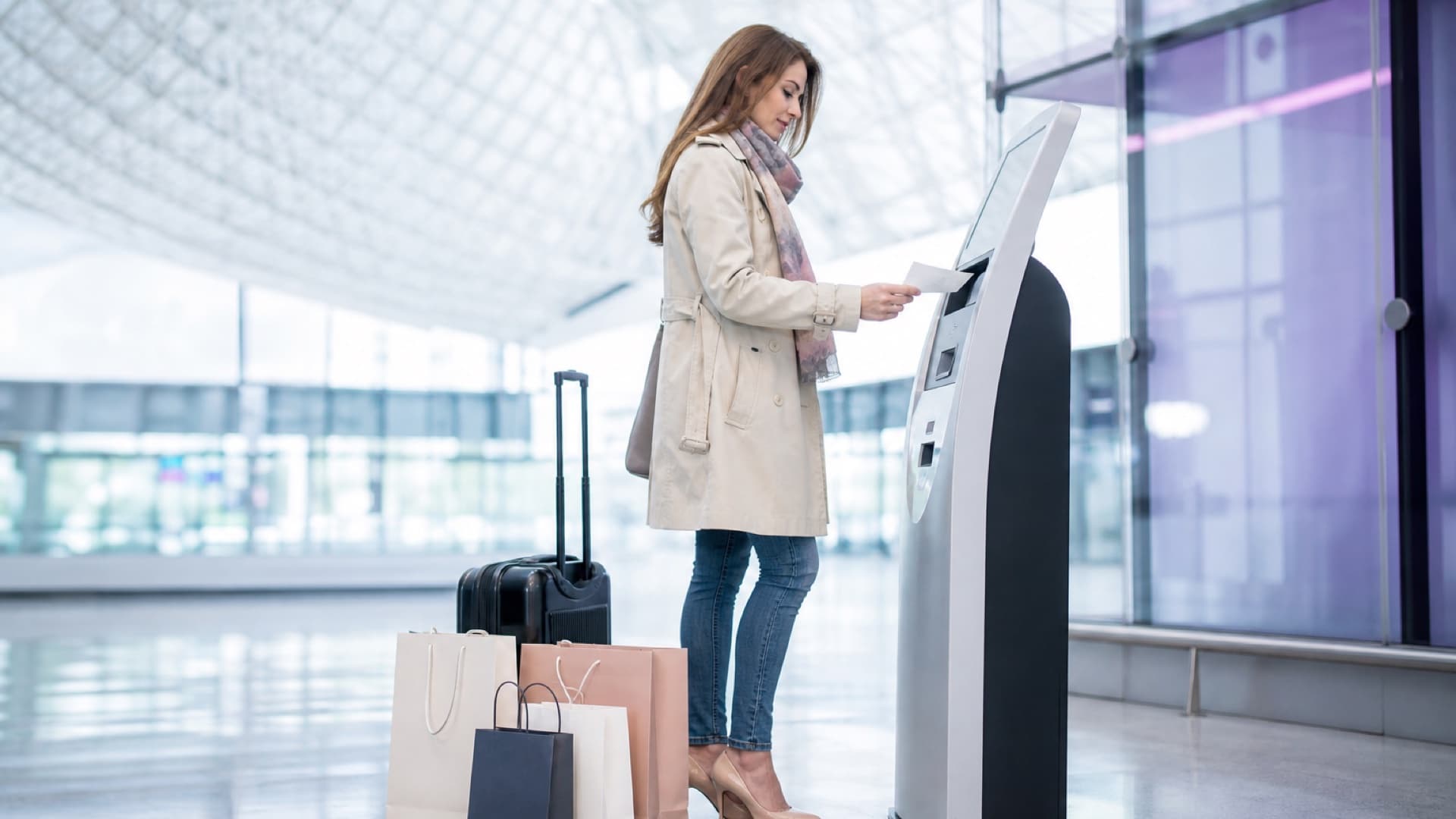
Most major airports in the EU will have customs officials and related kiosks to process your VAT refund before you board your plane. These facilities are often located before you go through security, so do some research prior to arriving at the airport to note where they're located.
You'll also want to leave a decent amount of extra time to get everything processed as the lines can sometimes be long and slow-moving. Also note that you may need to show the purchased items to customs officials, so it's best to go through this process before checking your bag.
To process your VAT refund at a major airport, first get your receipts and refund documents stamped by a customs official, and then head to the designated VAT refund kiosks.
VAT refunds are frequently processed by third-party companies like Planet or Global Blue, and these companies usually charge a commission fee to process your refund in cash or back to your credit card in the local currency. If you prefer to get your refund in a different currency, you may be able to do so, but you'll likely be charged an undesirable exchange rate for the convenience.
If you're departing from a small airport that doesn't have these refund-processing kiosks/agents, you'll need to process your refund by mailing the relevant documents to the designated organization/company. In these cases, there is typically a drop-box located near the customs agent and a pre-addressed stamped envelope is often provided.
If you're departing by train, your refund documents can often be processed at the last station within the EU. This sometimes requires that you get off the train to process your EU exit and your VAT refund; however, sometimes the customs agents will board the train and process departures and refunds onboard.
To find out what your options are, it's best to ask at the train station where you're purchasing your ticket as they'll have the most up-to-date information related to your particular routes.
If you're departing by car, bus, or boat, you'll need to get your paperwork stamped by a customs official at your point of exit.
In the case of cruise ships, there should be a customs person available at the terminal where you board. For travel by car or bus, you'll likely have to get your forms stamped by a customs person at the border when you leave the EU. These forms can then be mailed for your refund.
However, sometimes, depending on where you're departing from and how you're travelling, it just won't be feasible or reasonable to find an eligible customs official, so you unfortunately won't be able to process your refund.
As you're planning your trip to Europe (or elsewhere), it's a good idea to consider which of your credit cards is best suited for foreign currency spending.
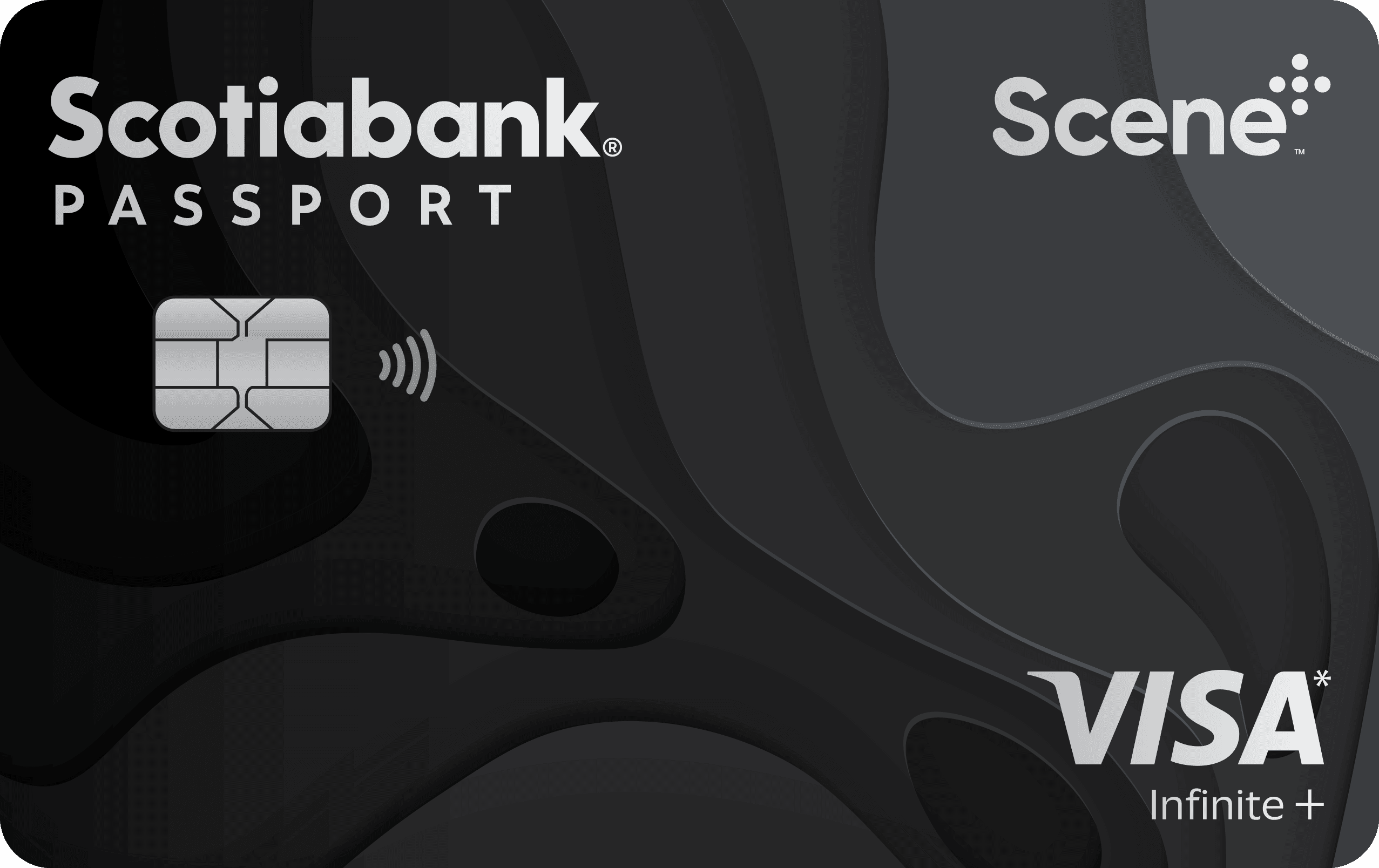
Since most Canadian credit cards charge a 2.5% foreign transaction (FX) fee on all foreign currency purchases, we recommend that travellers consider an option like the Scotiabank Passport Visa Infinite +* Card. Not only does this card not charge FX fees, immediately saving you 2.5% on all your purchases, but it also gives you an array of travel perks like free airport lounge access, travel insurance coverage, and more.
Check out our guides on cards with no FX fees and the best travel credit cards to confirm that you're not missing out on valuable rewards and savings.
on Scotiabank's website
Processing your EU VAT refund is a fairly simple process that can net you some significant savings across your European travels.
As you enjoy your adventures across this beautiful region and fill your suitcases with local treasures, don't forget to keep the following key considerations in mind to make sure you're able to process your refund fully, easily, and efficiently:
For more information on European travel, check out our related guides below, and sign up for a free Milesopedia membership to stay informed on lots of exciting travel and rewards news and to gain access to members-only content.
on Scotiabank's website
Our reviews and rankings are based on an objective assessment. Advertisers do not influence our content. We may receive compensation through some links; our analysis and opinions remain independent.